
Polyurea-Polyaspartic Garage Floor Coating in Northville, MI
QUESTIONS? NEED A QUOTE?
Welcome to another MotorCity Flooring and Coatings showcase. We show you the details and photos of various projects of garage floor coating in Northville, MI. On this page, you’ll find detailed project stories from locations throughout Northville—real installations that demonstrate our commitment to quality, durability, and professional craftsmanship.
Our specialist teams serve every neighborhood in Northville with comprehensive floor coating services, from pristine new construction garages like Golden Meadow Drive and White Stone Court to challenging basement transformations like Westridge Lane.
Each project begins with thorough concrete preparation: diamond grinding to remove contaminants, repairing cracks and pitting, and addressing moisture concerns specific to Michigan’s climate. We then apply our advanced polyurea-polyaspartic coating system—a hybrid technology that combines the incredible durability of polyurea with the UV stability and fast cure times of polyaspartic topcoats.
This dual-component system creates floors that withstand the harsh weather cycles of Michigan without cracking, peeling, or yellowing. The chemical-resistant surface repels oil, salt, and automotive fluids while standing up to constant pressure from vehicle tires and foot traffic.
Every installation is covered by our industry-leading warranty.
Explore our Northville projects below to see our process, results, and the difference a professional polyurea-polyaspartic garage floor coating installation would make in your own home.
Garage Floor Coating on
Lochmoor Circle West in Northville
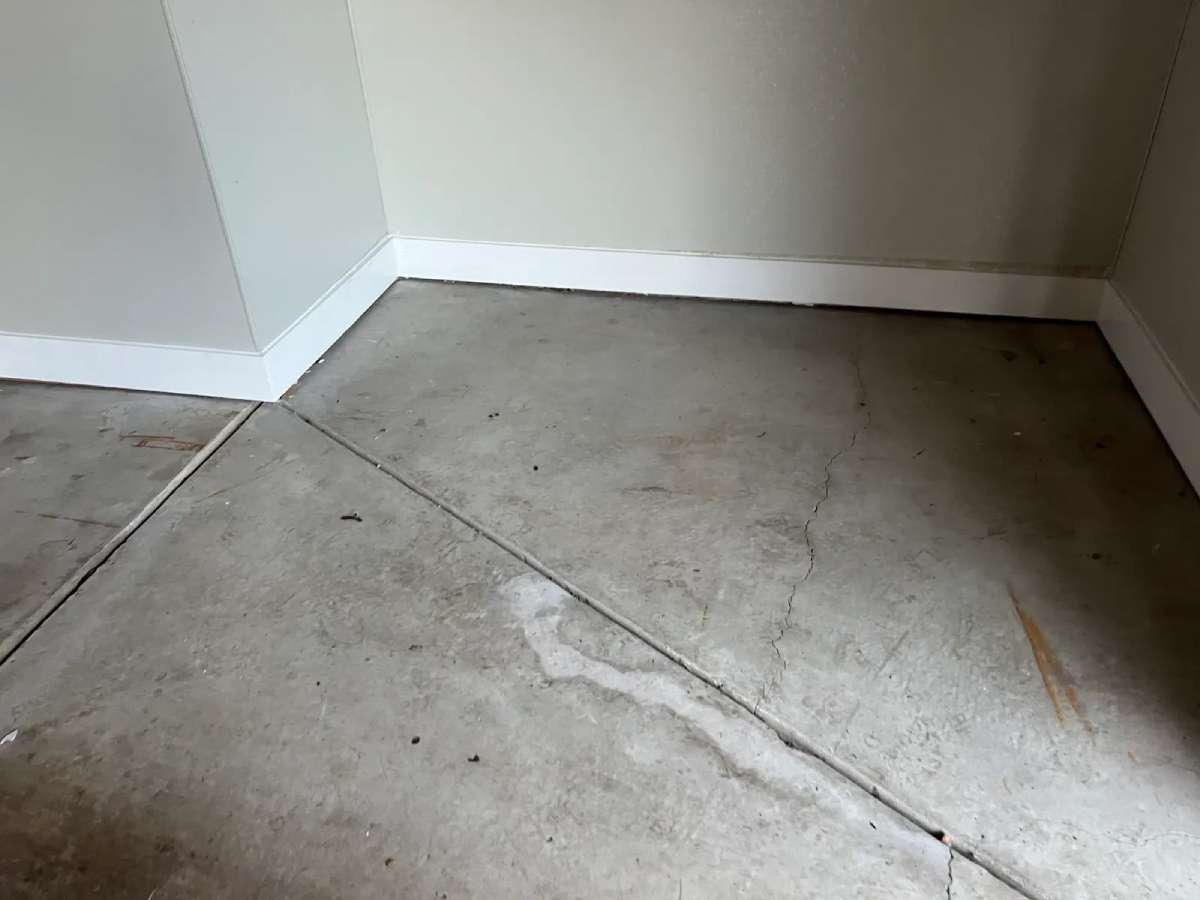
Our crew arrived at a residence on Lochmoor Circle West in Northville, Michigan to transform a nearly 600-square-foot garage that had developed the telltale signs of years of vehicle storage: oil stains, scattered pitting, and hairline cracks spreading from the control joints. This was a garage in an otherwise beautifully maintained home—the kind of space where the floor simply hadn’t kept pace with the rest of the property.
The Challenge
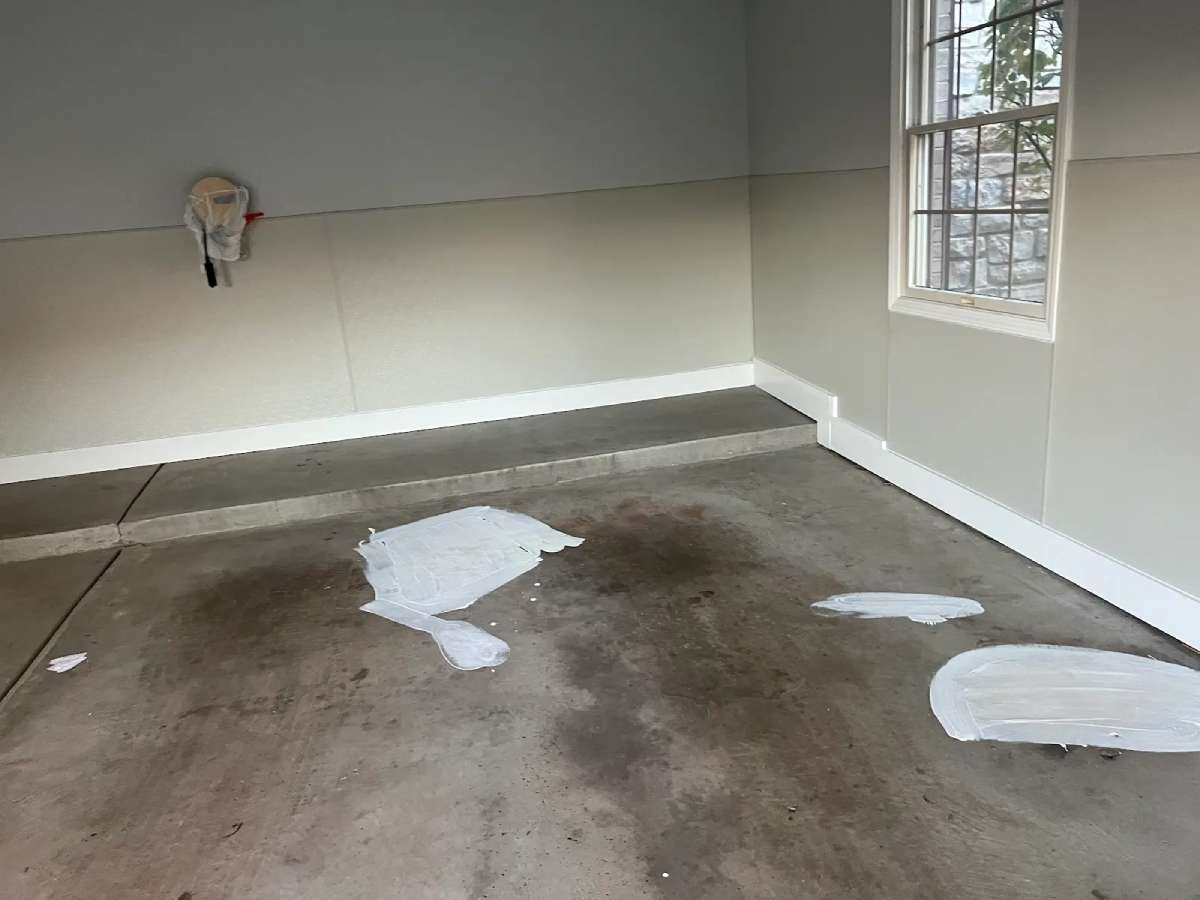
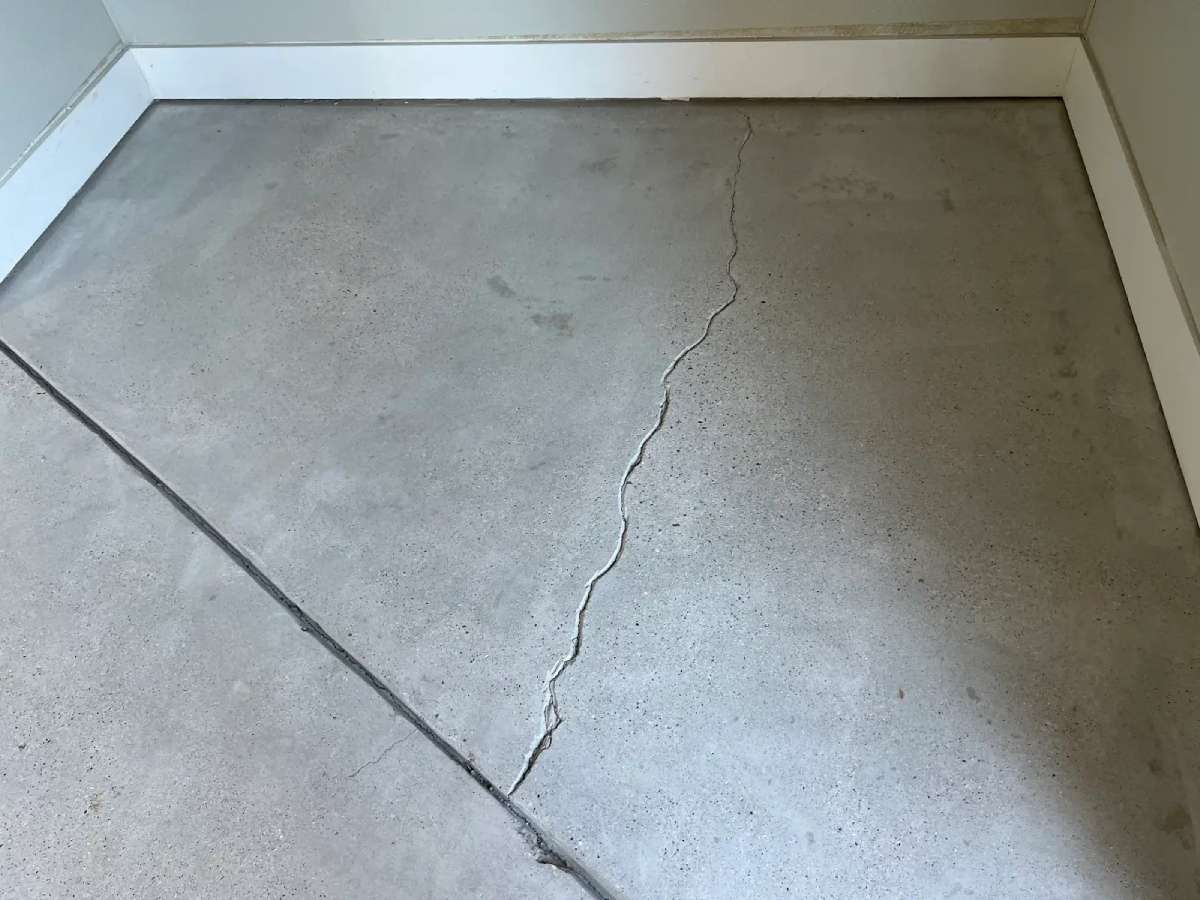
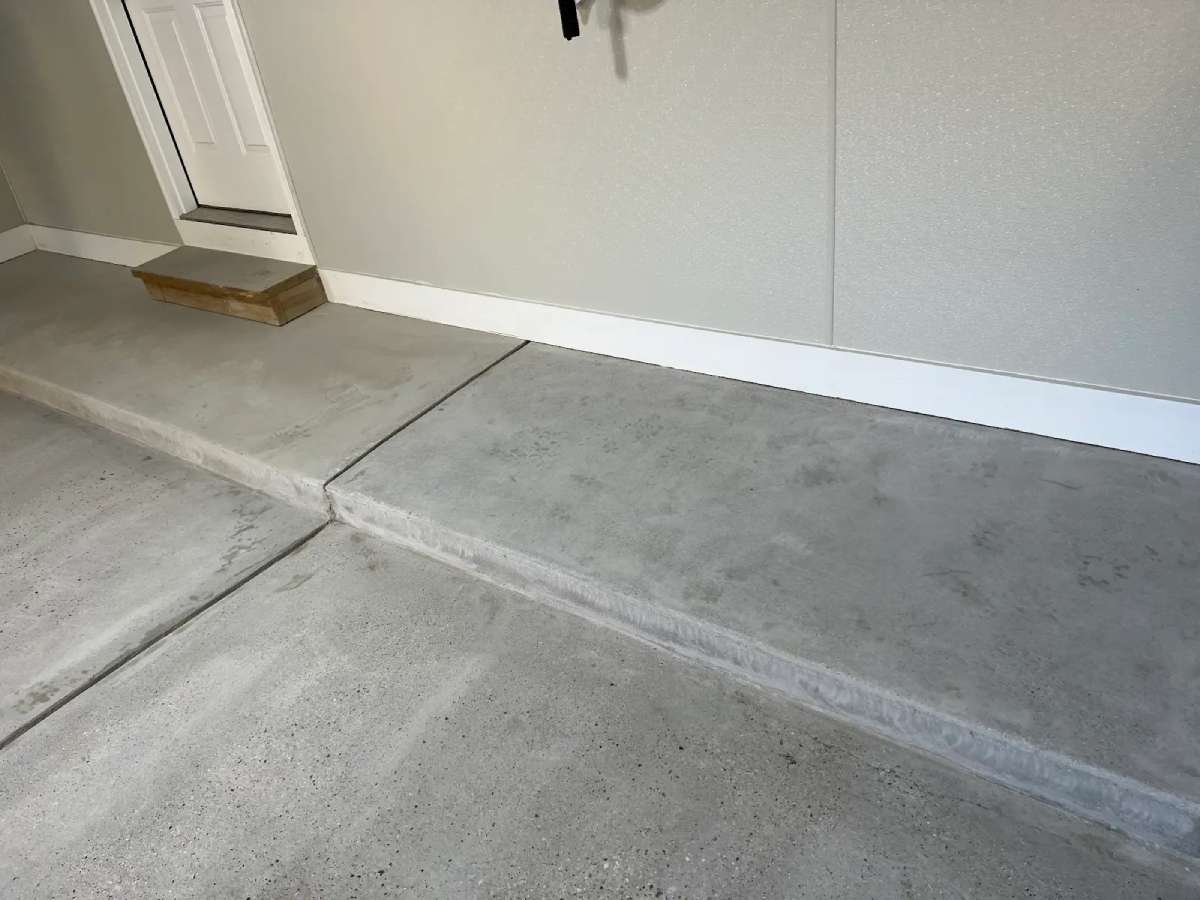
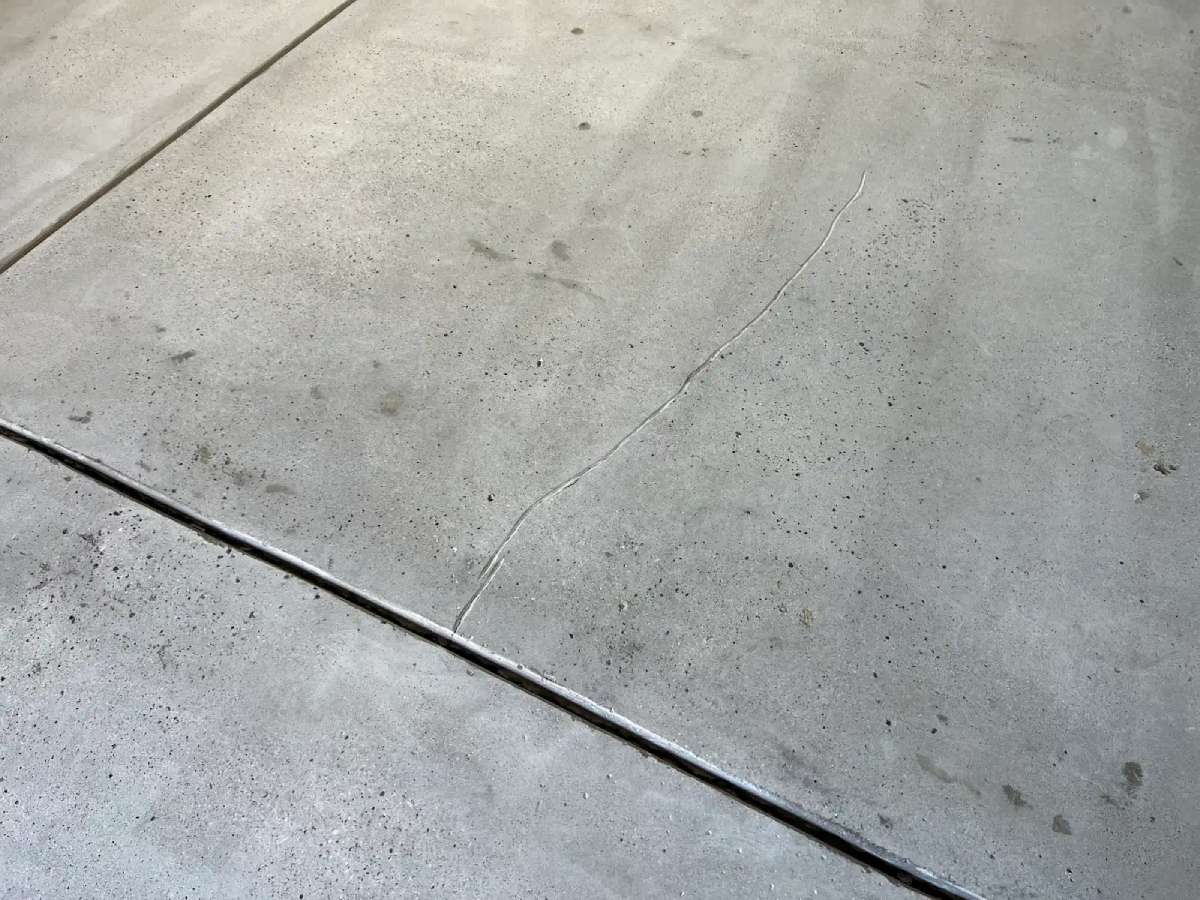
The before photos reveal concrete showing its age in multiple ways. Dark oil stains had penetrated the surface in the typical parking positions, requiring extraction before any coating could properly bond. Pitting dotted the surface throughout, and cracks had begun radiating from the control joints. The homeowners wanted a floor that would match the clean aesthetic of their finished garage walls—complete with crisp white baseboards and a window that let natural light flood the space. They also requested the coating extend all the way to the driveway edge for a seamless transition.
The Work
This job required oil extraction before surface preparation could begin—a critical step that many DIY approaches skip, leading to coating failure. Once the contaminants were drawn out, diamond grinding with an MC3.8 configuration profiled the concrete throughout all 599 square feet plus the 22 linear feet of vertical lip around the perimeter.
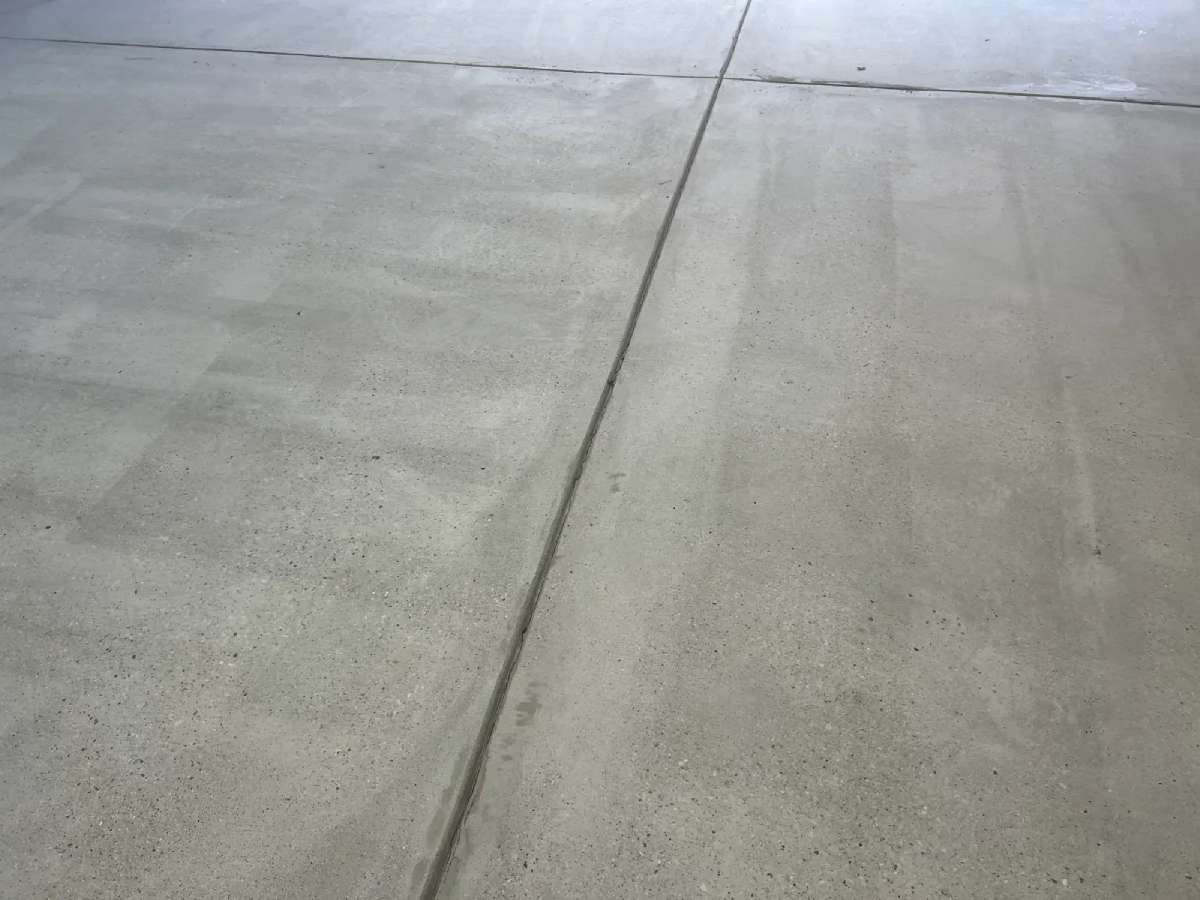
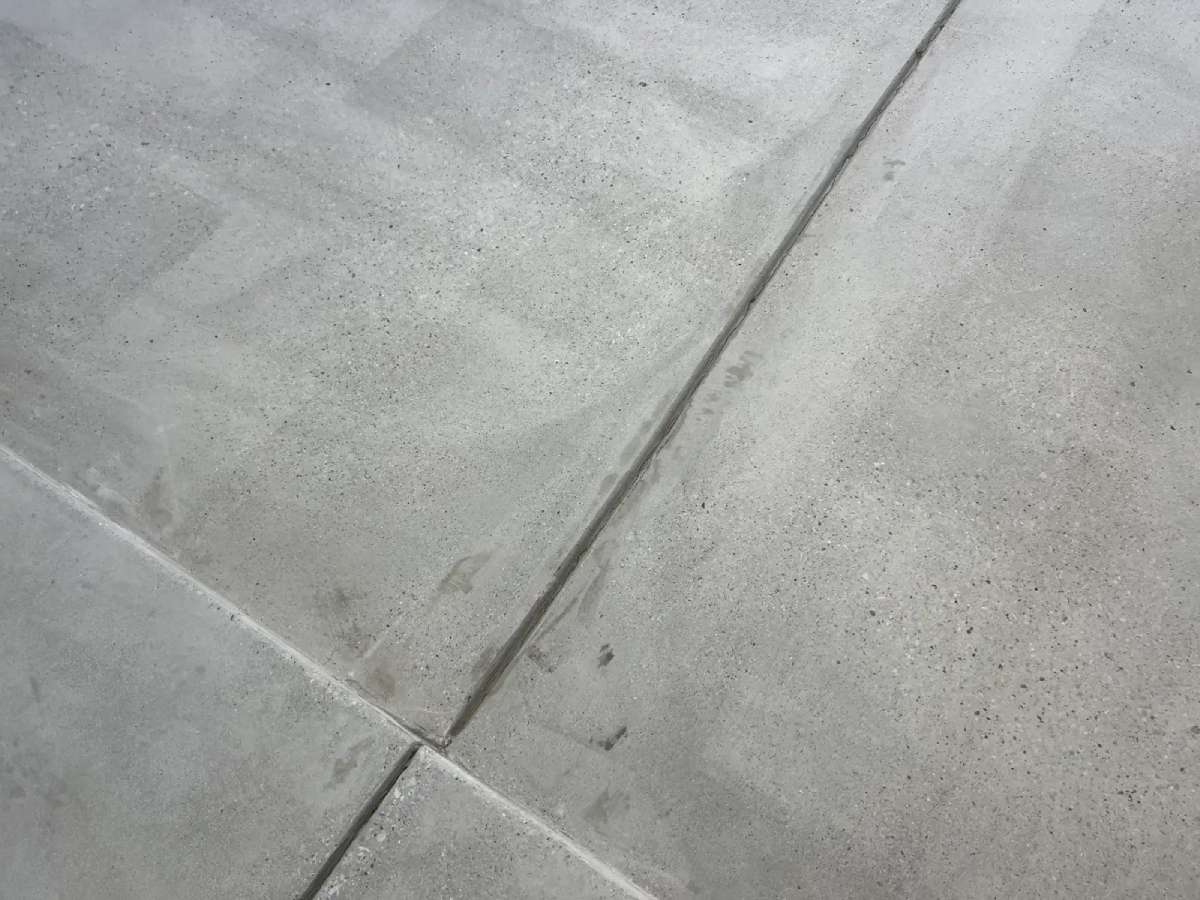
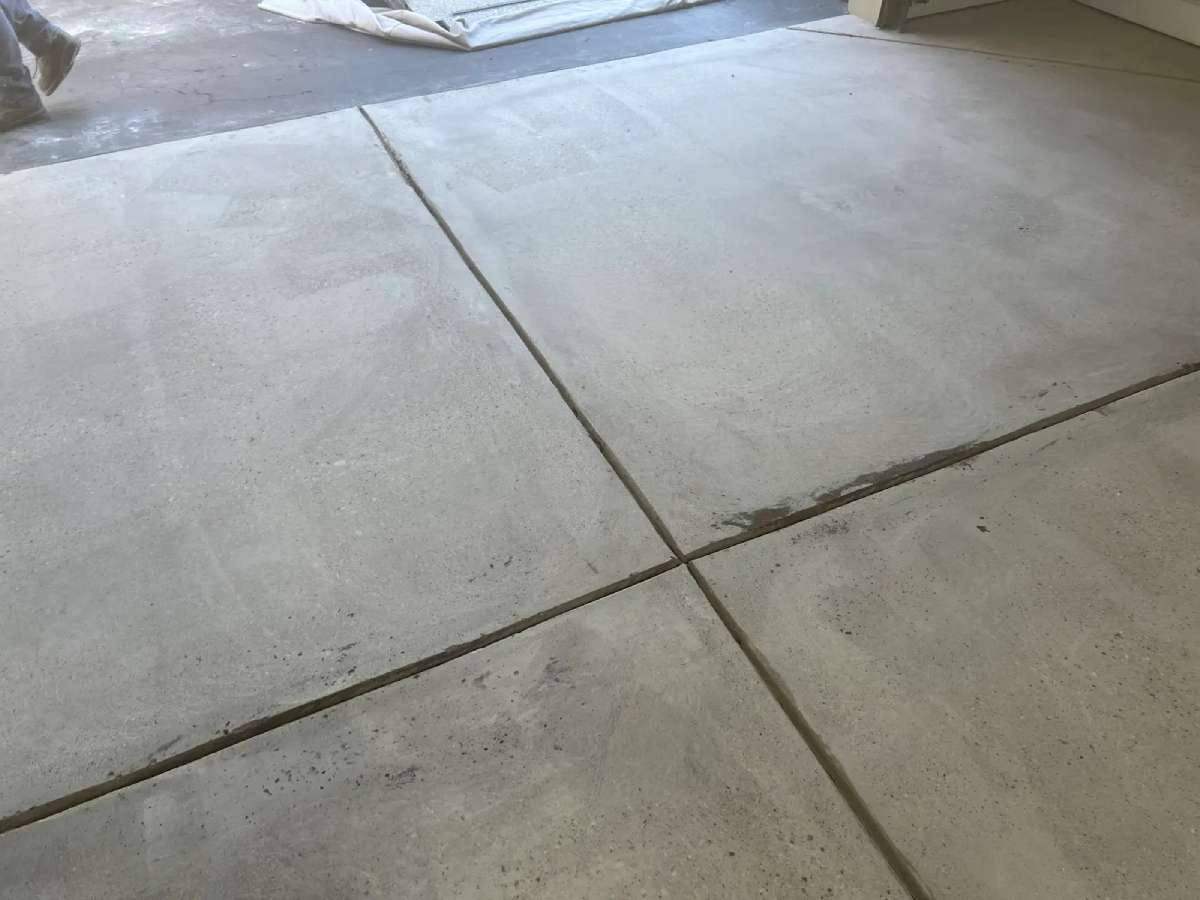
The “mender” photos capture the repair phase: white patches of filler addressing the scattered pitting and crack damage, with polyurea joint filler sealing the cross-pattern control joints. The “ground” photos show the floor wet from post-grinding cleanup, ready for coating—a uniform grey canvas with the control joints now appearing as clean geometric lines rather than debris-catching grooves.
Materials Applied:
- MR 50 Moisture Primer: 5L total (2.5L Part A, 2.5L Part B)
- Base Coat: 9L total (6L Part A, 3L Part B) grey
- Flake: 4 boxes Pebble Beach thrown, 2 boxes recovered (2 boxes retained)
- Clear Coat: 13L total (9L Part A, 4L Part B)
- Traction: 10 cups sand, 24-grit broadcast
The Result
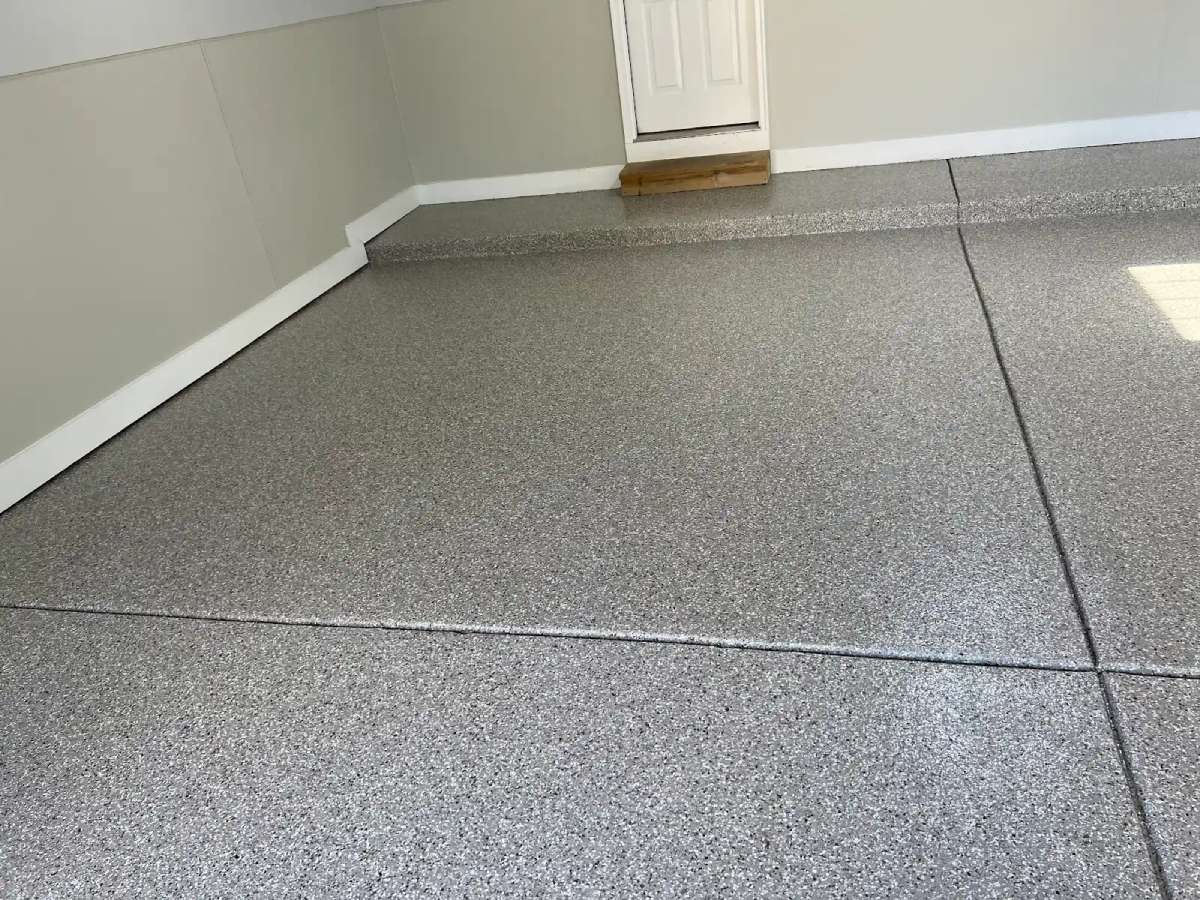
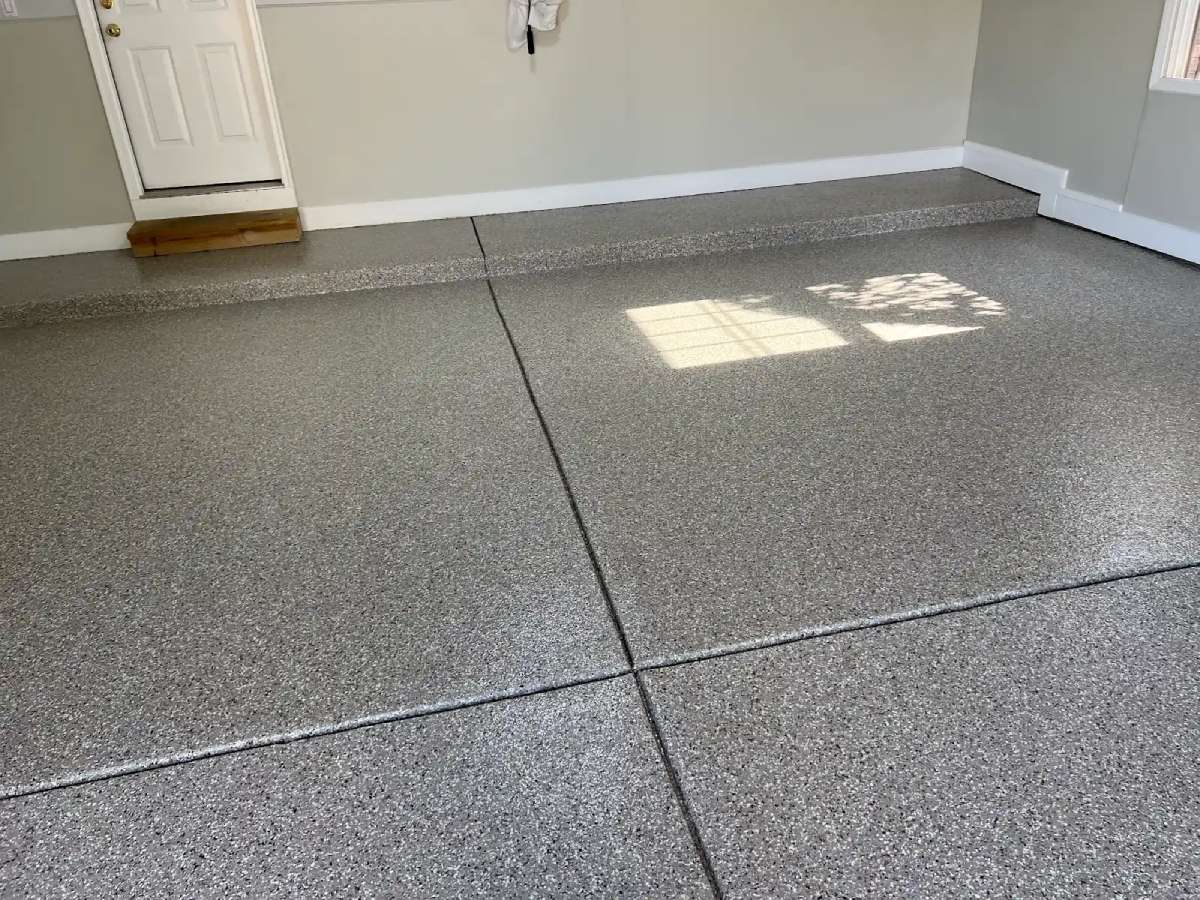
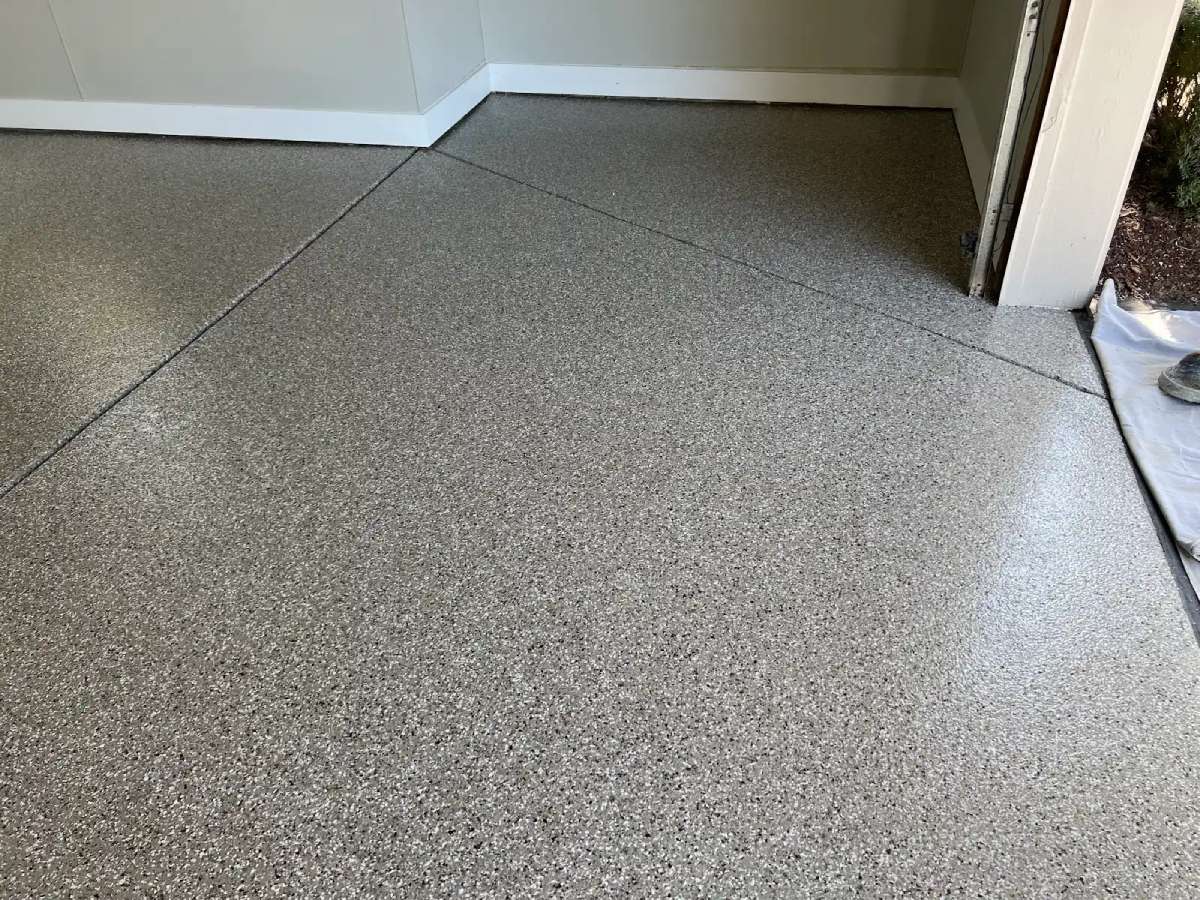
The transformation speaks for itself. Sunlight streaming through the garage window now reflects off a flawless Pebble Beach finish—that sophisticated blend of warm tans, greys, and subtle earth tones that complements virtually any vehicle or garage aesthetic. The control joints remain visible as subtle geometric features, their cross-pattern now a design element rather than a maintenance concern. The wooden step leading to the house entry stands in clean contrast to the new floor, and the coating extends seamlessly to the driveway edge as requested.
The oil stains that once marked the parking positions? Gone completely. The pitting and cracks? Invisible beneath the multi-layer system.
The Bottom Line
This Lochmoor Circle West installation demonstrates why oil extraction and proper surface preparation matter. The homeowners now have a garage floor that matches the quality of the rest of their Northville home—a space where they can park without worrying about new stains penetrating the surface, where road salt and moisture meet a barrier designed to handle Michigan’s demanding climate. The Pebble Beach finish brings warmth and sophistication to what was once just another stained concrete slab.






Click on the photos to enlarge them
Garage Floor Coating on
Golden Meadow Drive in Northville
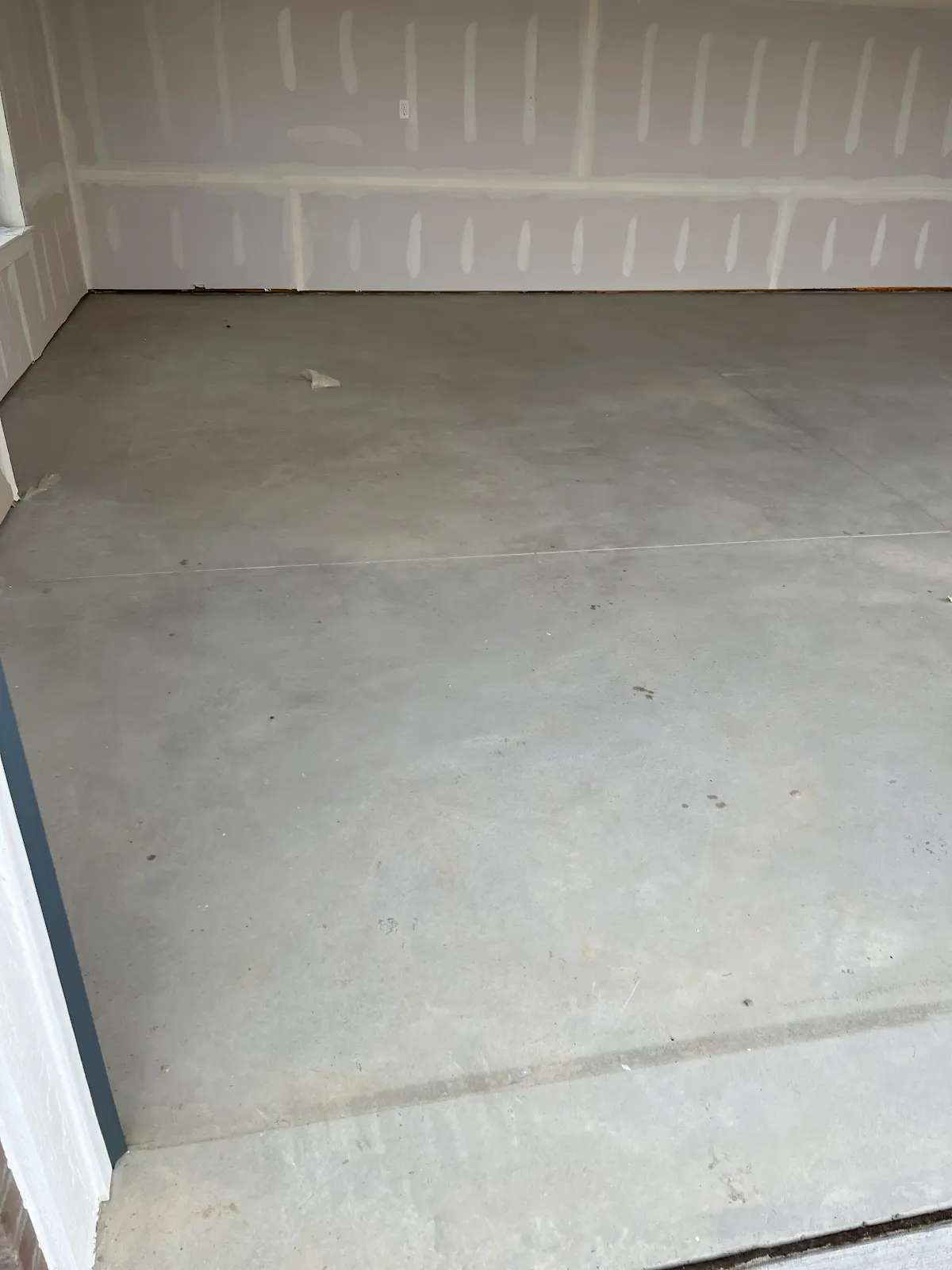
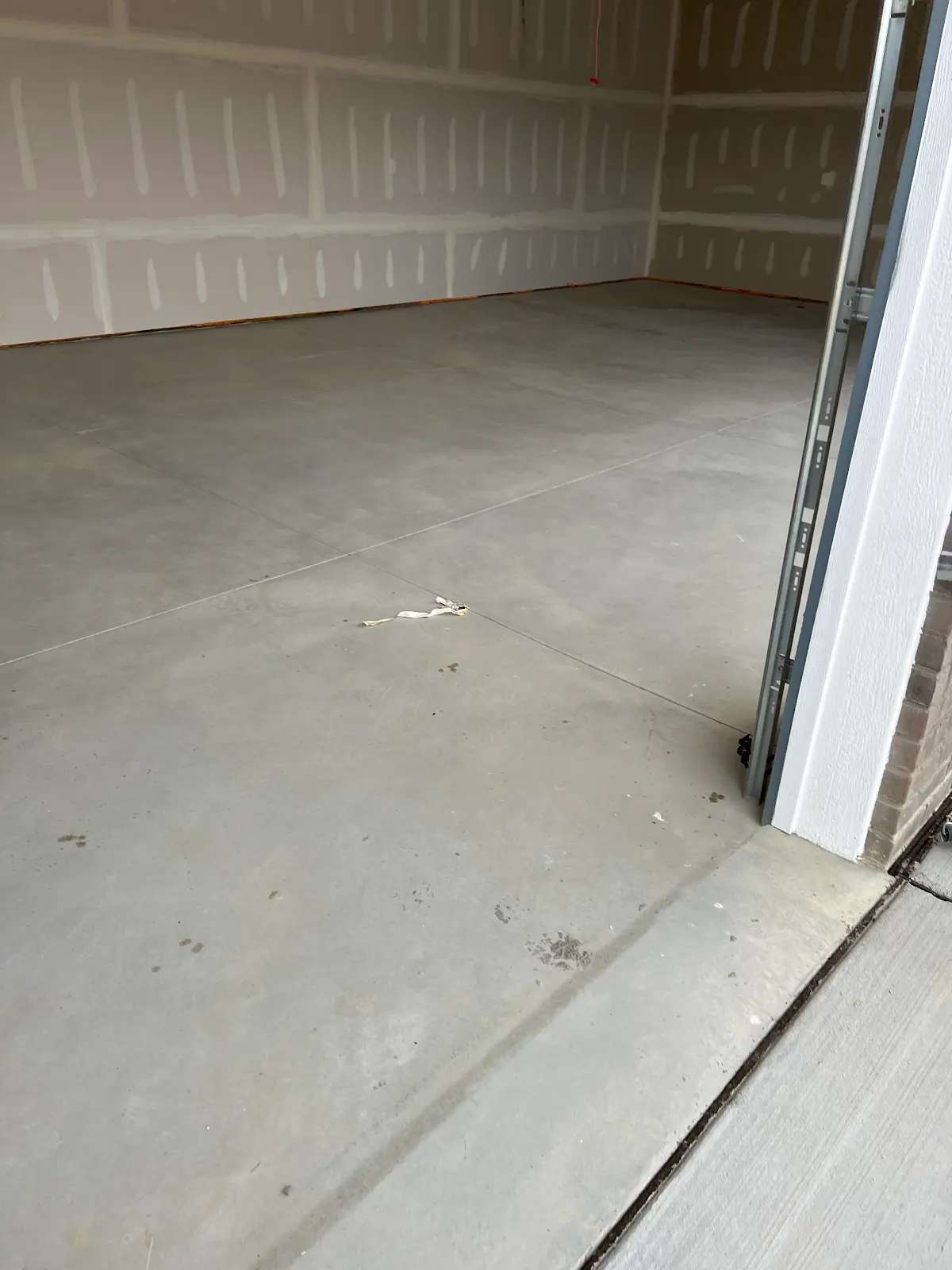
Our crew arrived at a new construction home on Golden Meadow Drive in Northville, Michigan—one of those rare jobs where we were called in before the first oil drip, the first hot tire mark, or the first winter road salt has a chance to penetrate the concrete. The 789-square-foot garage featured that distinctive new-build look: clean concrete with subtle trowel marks still visible, control joints cut in precise geometric patterns, and drywall fresh enough that the homeowners were still deciding on wall paint colors.
The Challenge
The before photos tell an unusual story for our industry. This wasn’t a remediation project—no oil stains to extract, no accumulated grime from years of use, no significant cracking to address. Just a few minor stress cracks beginning to telegraph along the control joints, the kind that appear as concrete cures and settles into its final state. The homeowners had done their research and understood something most don’t: it’s far easier to protect new concrete from day one than to restore it after years of exposure to Michigan’s freeze-thaw cycles, road salt, and vehicle fluids.
Their request was straightforward—transform the garage before they moved in, extending the coating across the main floor and down the two steps leading to the driveway. They’d selected Silver Creek for its blend of grey, tan, and brown tones that would complement the home’s modern aesthetic while hiding the inevitable dust and debris that accumulates in any working garage.
The Work
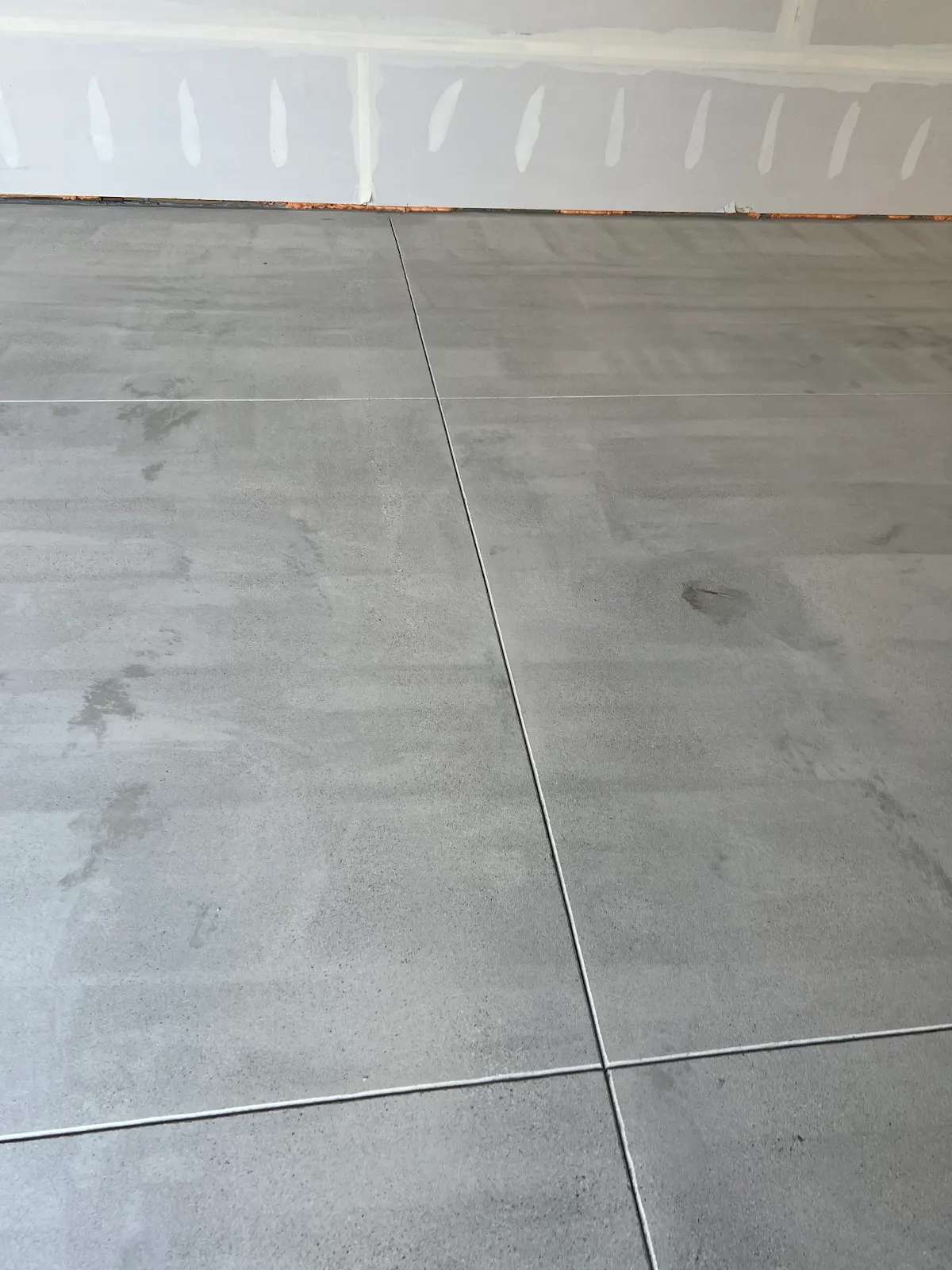
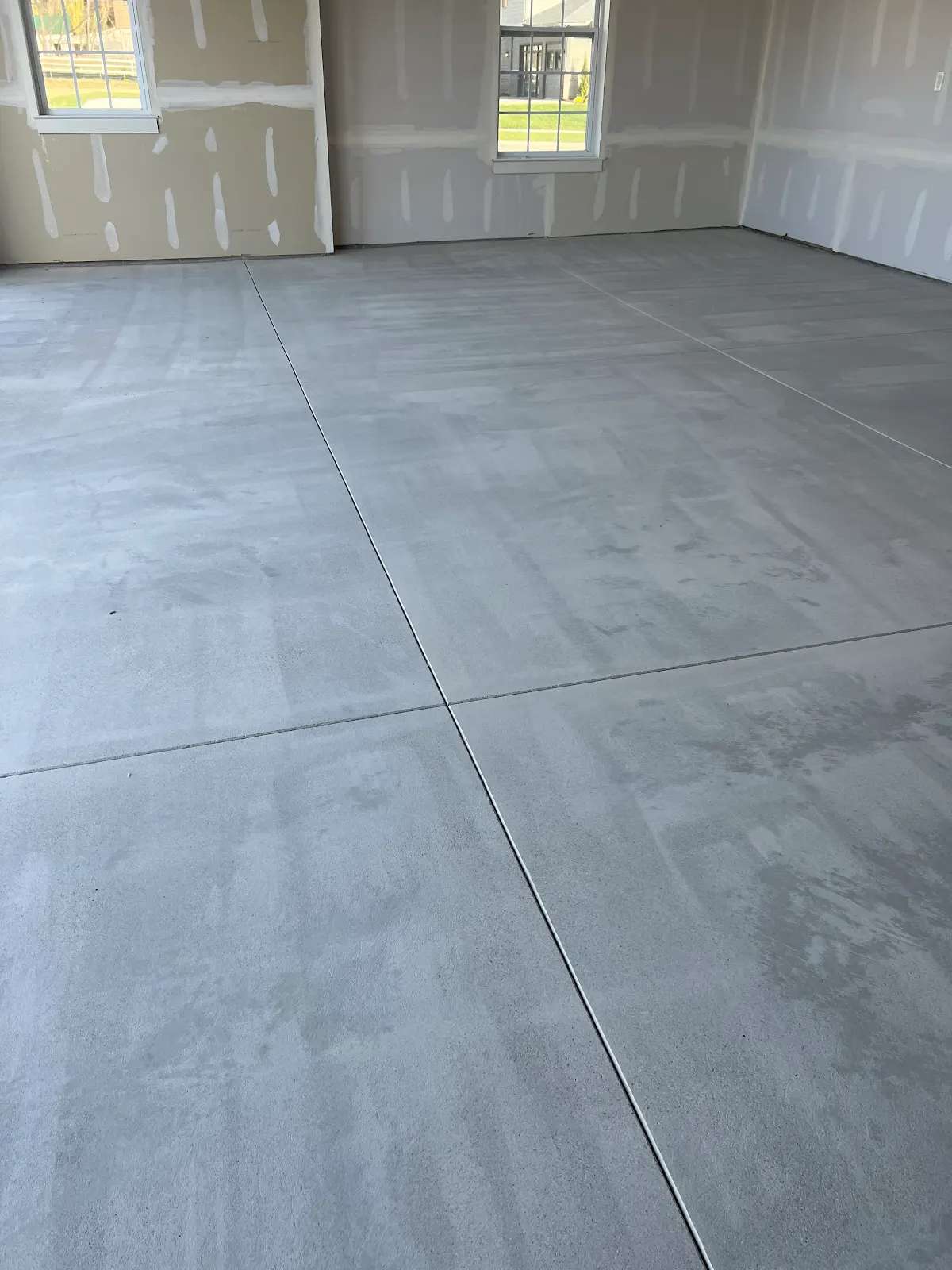
New concrete presents its own preparation requirements. Despite the clean appearance, the surface still required profiling to ensure proper mechanical bonding—especially critical since there’s no margin for error when coating concrete that hasn’t been tested by real-world use. Diamond grinding with an MC3.9 configuration opened the pore structure throughout all 789 square feet.
The “ground” photos capture the floor post-preparation: that characteristic wet grey appearance from cleanup, with control joints appearing as clean lines and the surface texture uniform throughout. Only five small spots required mender—minor stress cracks along the joints that we V-bladed and filled, more as preventive maintenance than structural necessity.
Materials Applied:
- MR 50 Moisture Primer: Applied to all 789 sq ft
- Base Coat: Grey polyurea-polyaspartic system
- Flake: Silver Creek broadcast throughout
- Clear Coat: Polyaspartic topcoat system
- Traction: 16-grit Garage Grip broadcast
The Result
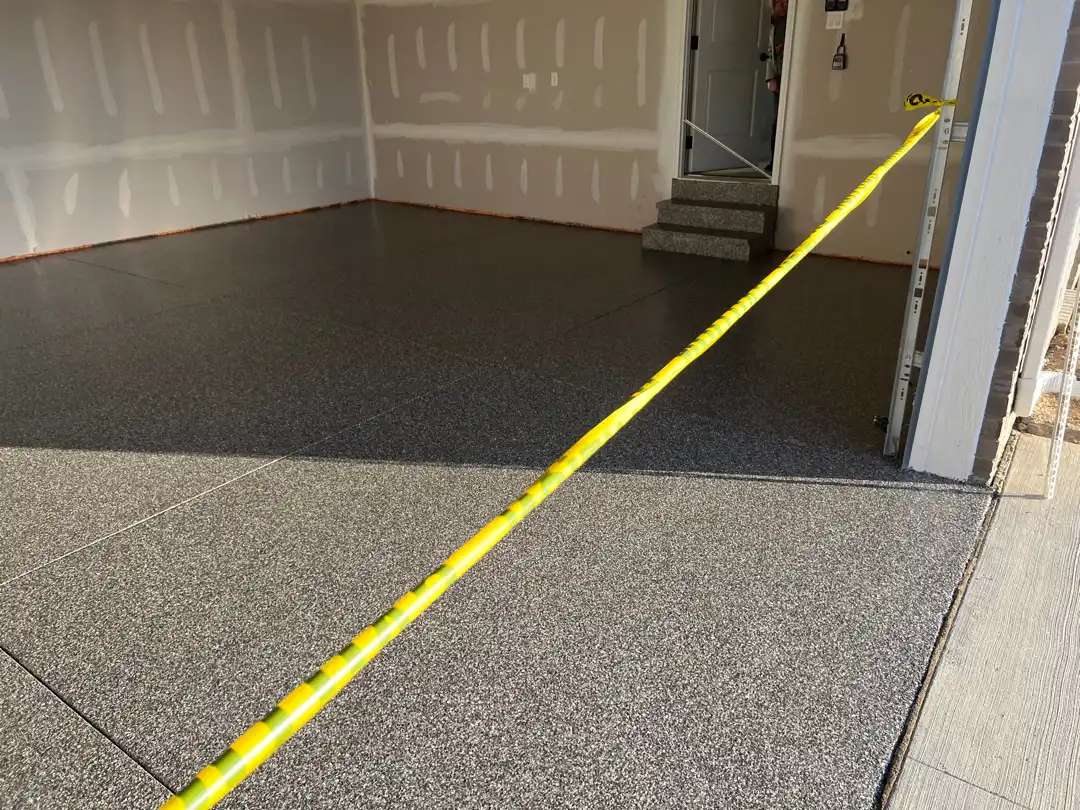
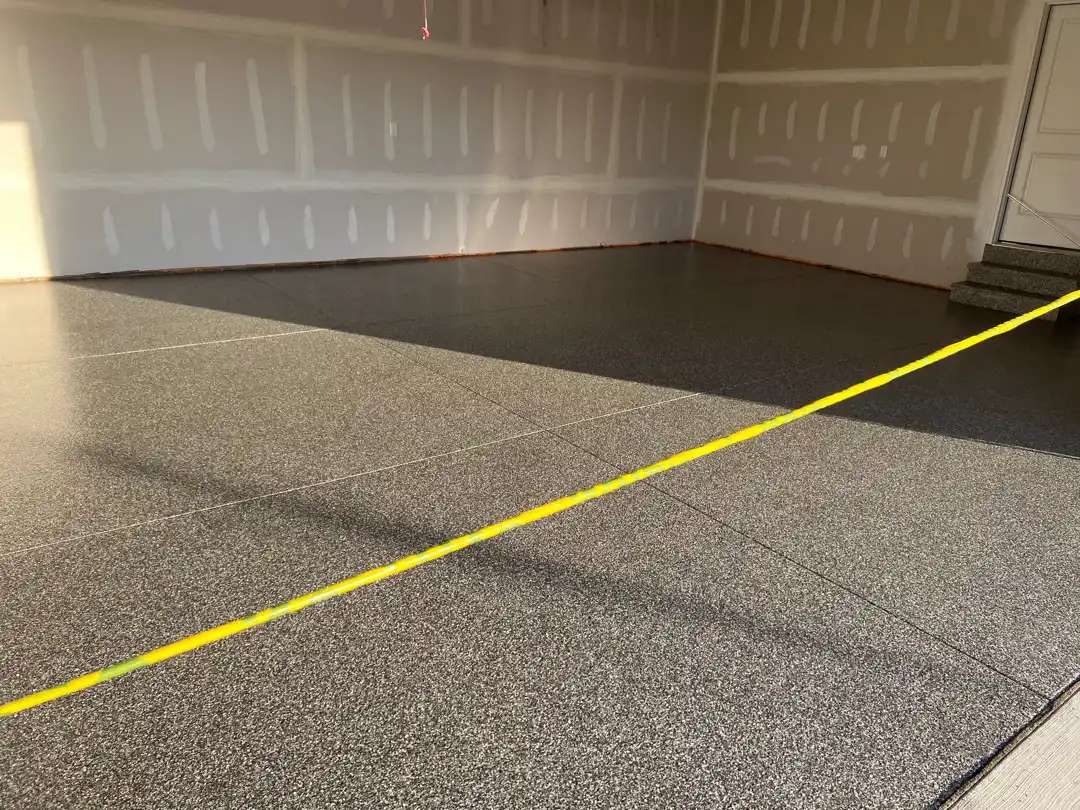
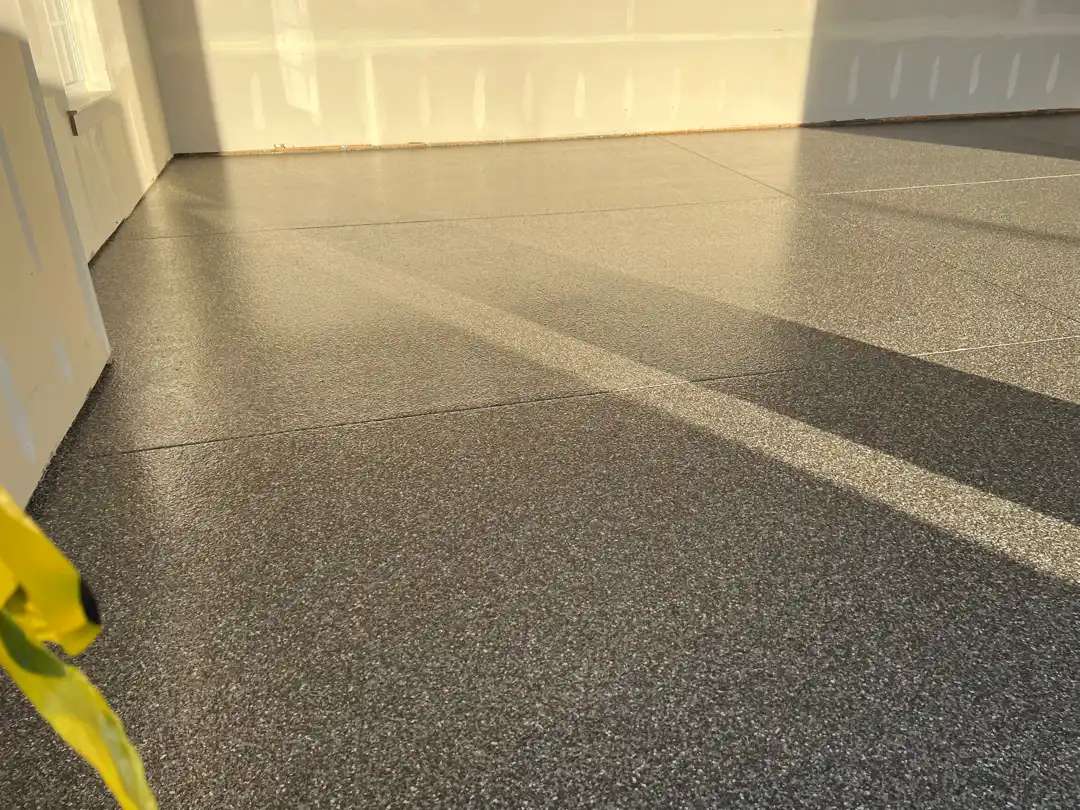
The finished photos showcase what proactive floor protection looks like. The Silver Creek blend of grey, charcoal, and subtle earth tones creates depth and visual interest across the space, with the flake pattern catching light from both the overhead fixtures and natural light streaming through the garage door. The two steps transition seamlessly from garage to driveway, their coating carrying the same pattern without interruption.
The control joints remain visible as subtle geometric features, their V-bladed profiles now sealed and protected rather than exposed to become collection points for debris and moisture. The yellow squeegee visible in several shots marks the boundary where coating meets driveway—a clean transition line that defines the protected zone.
Most importantly, the floor is now ready for whatever the homeowners throw at it: vehicles tracking in winter slush, dropped tools, spilled fluids. The coating went down over pristine concrete, ensuring maximum adhesion and longevity.
The Bottom Line
This Golden Meadow Drive installation represents the ideal scenario in floor coating: protecting an investment before damage occurs rather than repairing it afterward. The homeowners will never know what oil stains look like on their garage floor, never watch hairline cracks widen with each freeze-thaw cycle, never wonder if that spill is penetrating deep into the concrete. Their garage is now finished to the same standard as the rest of the space. The Silver Creek finish brings warmth and sophistication to what could have remained just another grey slab, and the 16-grit traction ensures safety without compromising the clean aesthetic they were after.






Click on the photos to enlarge them
Garage Floor Coating on
Waterwheel Road in Northville
The Challenge
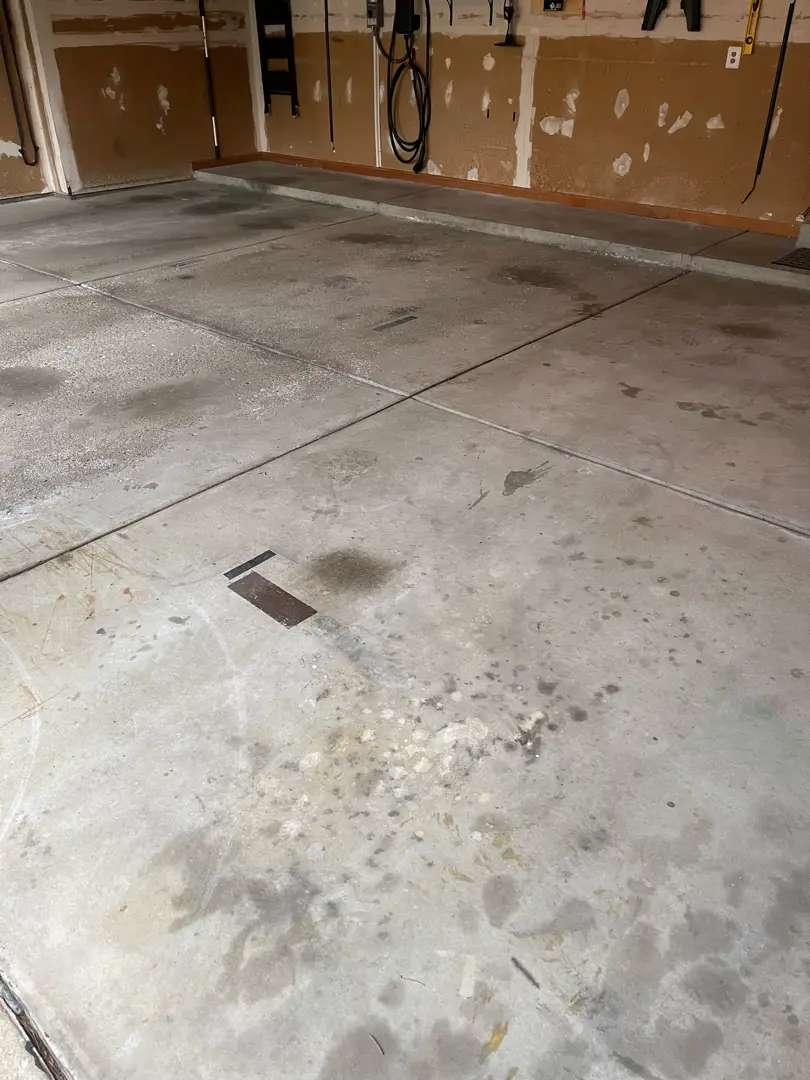
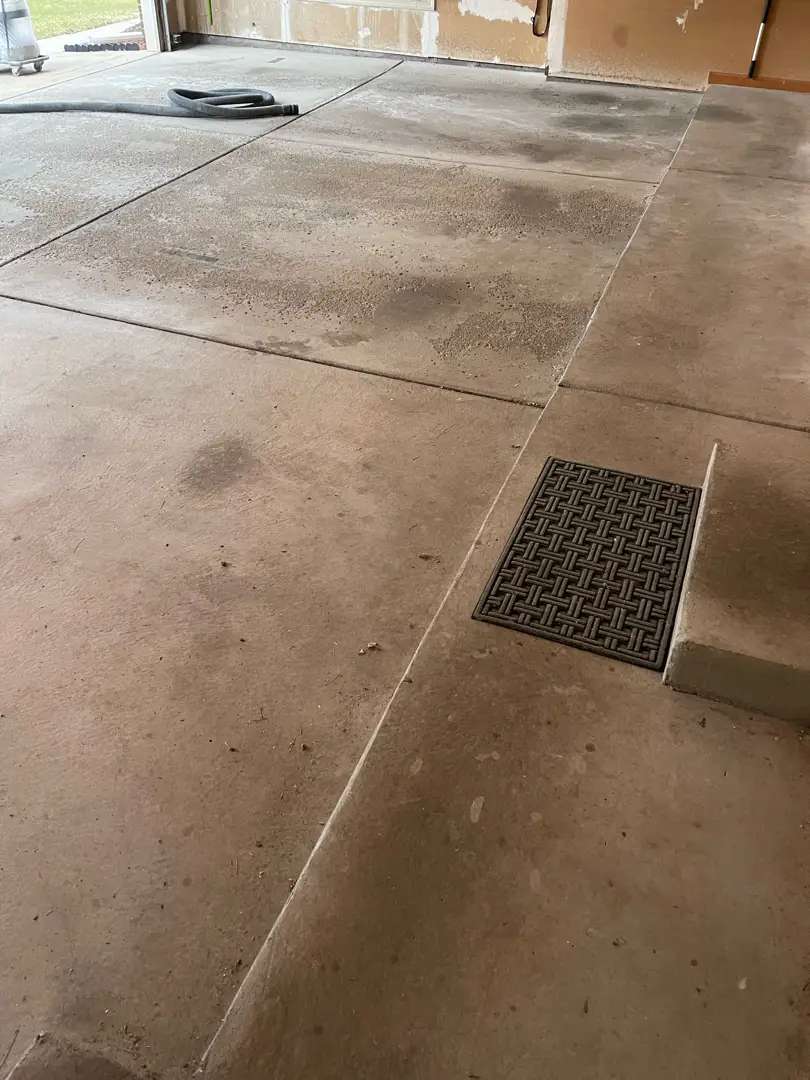
The before photos reveal a concrete surface marked by the inevitable consequences of unprotected garage use in Michigan. Dark oil stains had penetrated the concrete in multiple locations, creating the permanent shadows that no amount of scrubbing can remove once they’ve soaked into bare concrete. The floor showed scattered pitting throughout—not catastrophic, but enough to trap dirt and create an uneven surface. A few hairline cracks had developed along the control joints, the kind that widen with each freeze-thaw cycle if left unaddressed.
A floor drain sat in the middle of the space, requiring careful detailing around its perimeter. The garage included one concrete step that would need coating integration, plus 29 linear feet of vertical lip along the walls where the homeowners wanted the coating extended for a finished, professional appearance. The homeowner had clearly invested significant time and resources into creating an organized, functional garage workspace—complete with overhead storage racks, wall-mounted tool systems, and charging stations for power equipment. The floor was the final piece that needed upgrading to match the space’s potential.
The Work
Diamond grinding with an MC3.2 configuration profiled all 578 square feet, opening the concrete’s pore structure for optimal coating adhesion. The grinding revealed the full extent of the oil penetration—areas where staining had soaked deep into the slab over years of use. Our crew paid particular attention to the floor drain area and the concrete step, ensuring proper surface preparation in these detail-critical zones.
The repair phase addressed the scattered pitting and hairline cracks throughout the garage. White patches of polyurea mender appear in the process photos, marking each repair location. The control joints received special attention—these geometric lines that divide the floor into sections needed to be properly prepared to prevent future edge lifting or coating failure at these stress points.
Materials Applied:
- MR 50 Moisture Primer: Applied per manufacturer specifications
- Base Coat: Tan polyurea-polyaspartic system
- Flake: Pebble Beach broadcast throughout
- Clear Coat: Polyaspartic topcoat system with 16-grit Garage Grip
- Coverage: 578 sq ft main floor, 29 linear feet vertical, 1 concrete step
The Result
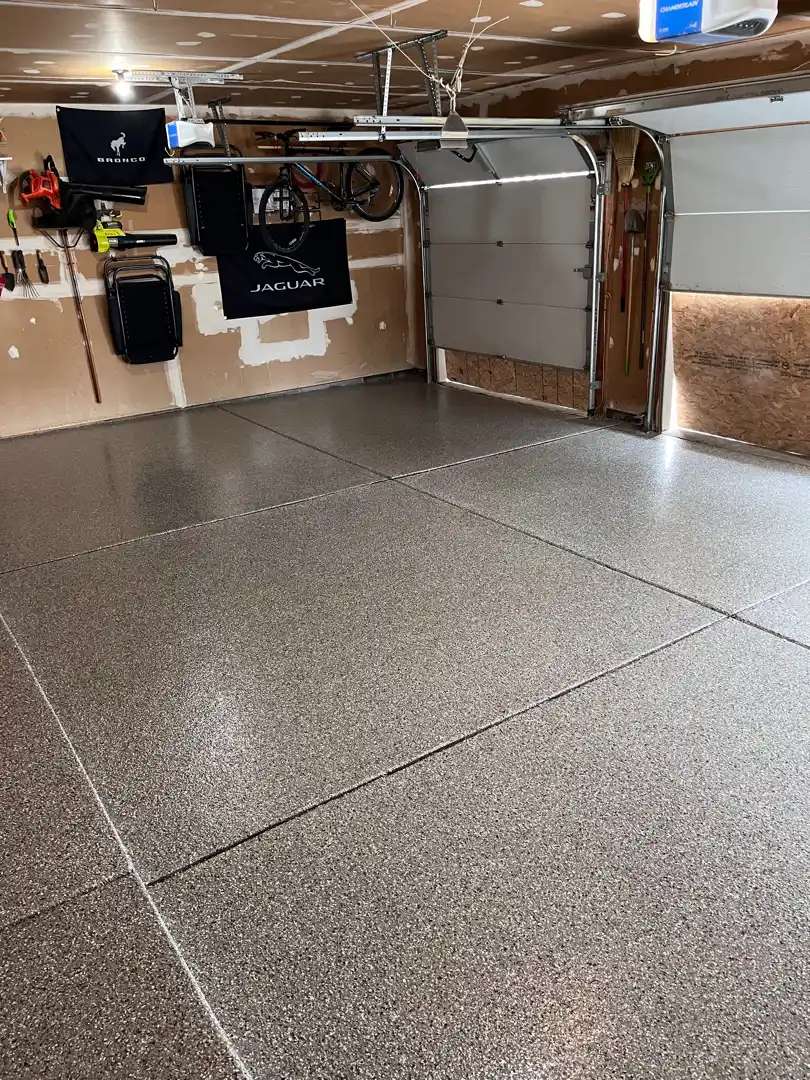
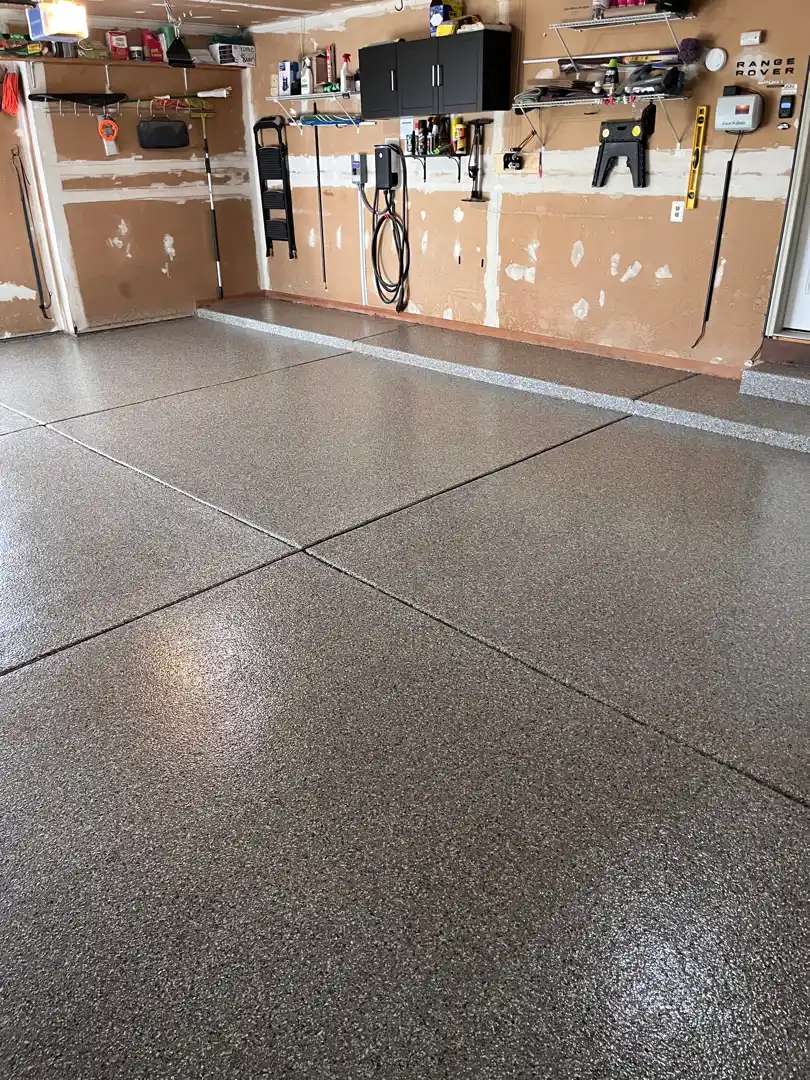
The transformation is striking. Pebble Beach’s sophisticated blend of warm tan, beige, and cream tones creates a natural, inviting aesthetic that complements the garage’s organizational systems perfectly. The flake pattern adds depth and visual interest while helping disguise the minor dust and debris that accumulates in any working garage. The coating extends seamlessly up the 29 linear feet of vertical lip, creating clean transitions at the walls, and flows smoothly over the concrete step.
The oil stains that once marked parking positions? Completely invisible beneath the multi-layer coating system. The pitting and cracks? Sealed and protected, no longer collection points for dirt or moisture. The floor drain sits within the coated surface, properly detailed and integrated.
Most importantly, the floor now matches the quality and functionality of everything else in this garage. The homeowner’s Bronco and Jaguar wall art, the organized tool systems, the bike storage—all of it now sits above a floor that’s finished to the same professional standard. The 16-grit traction provides safe footing without compromising the glossy, easy-clean surface, and the polyurea-polyaspartic system ensures this floor will handle decades of automotive use, tool drops, and Michigan winters without the staining, pitting, or deterioration that plagued the original concrete.
The Bottom Line
This Waterwheel Road installation demonstrates what happens when homeowners finally complete the garage transformation they’ve been building toward. Every organizational system, every wall-mounted accessory, every carefully chosen detail now sits in a space with a floor worthy of the investment. The Pebble Beach finish brings warmth and sophistication to a garage that’s clearly more than just a place to park—it’s a functional workspace where the floor will never again be the weak link.




Click on the photos to enlarge them
Garage Floor Coating on
White Stone Court in Northville
Our crew arrived at a new construction home on White Stone Court in Northville, Michigan—part of an active development where fresh foundations were still being poured on neighboring lots. The 749-square-foot garage represented that critical window in a new build where homeowners make the choice: protect the concrete with a garage floor coating immediately or wait until damage forces the issue years later. The homeowners here chose protection, calling us in before the first vehicle ever rolled across their threshold.
The Challenge
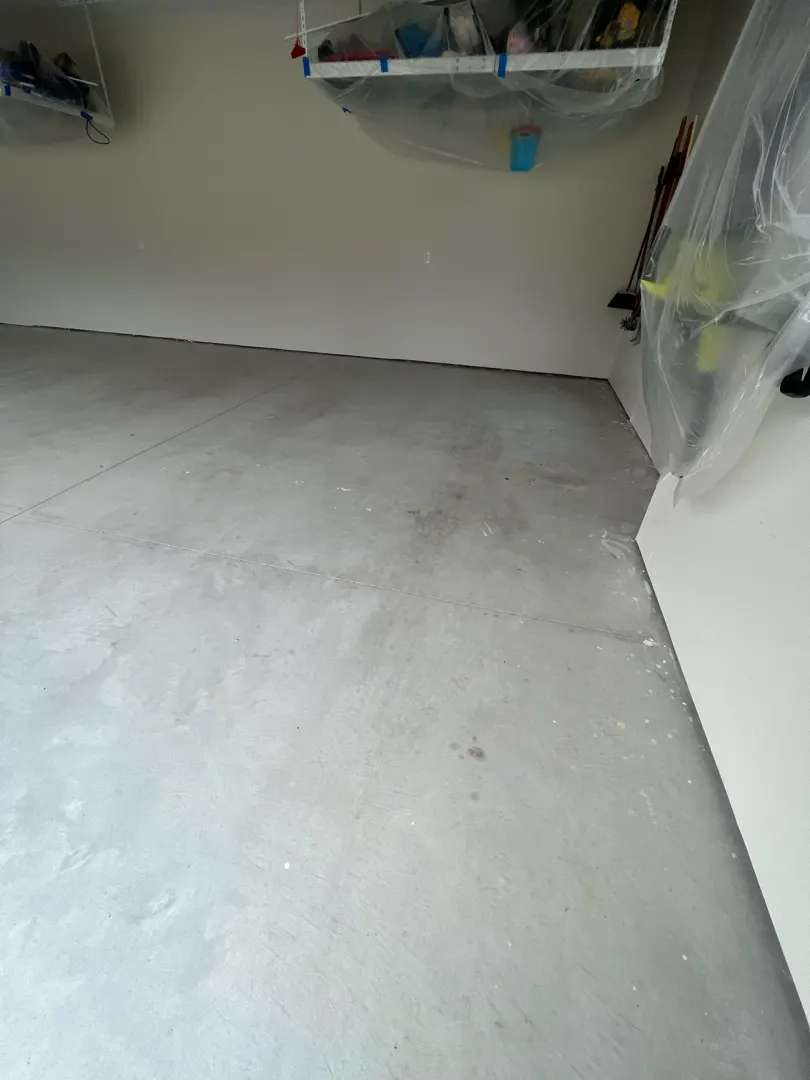
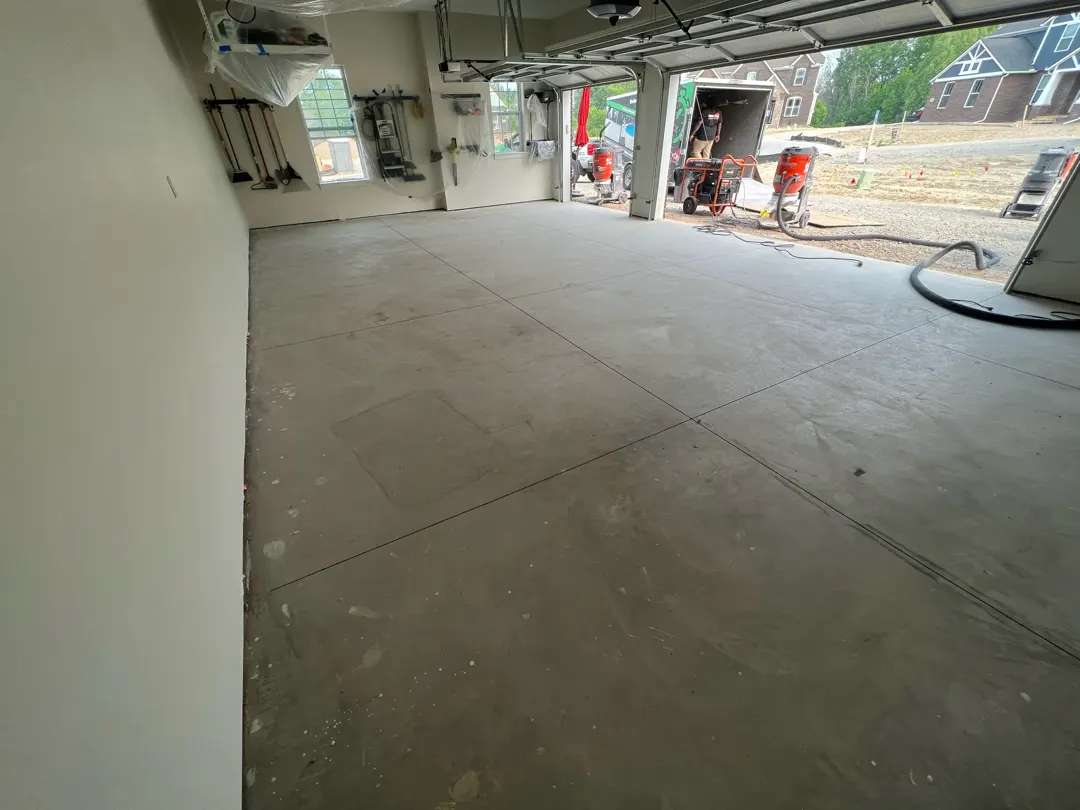
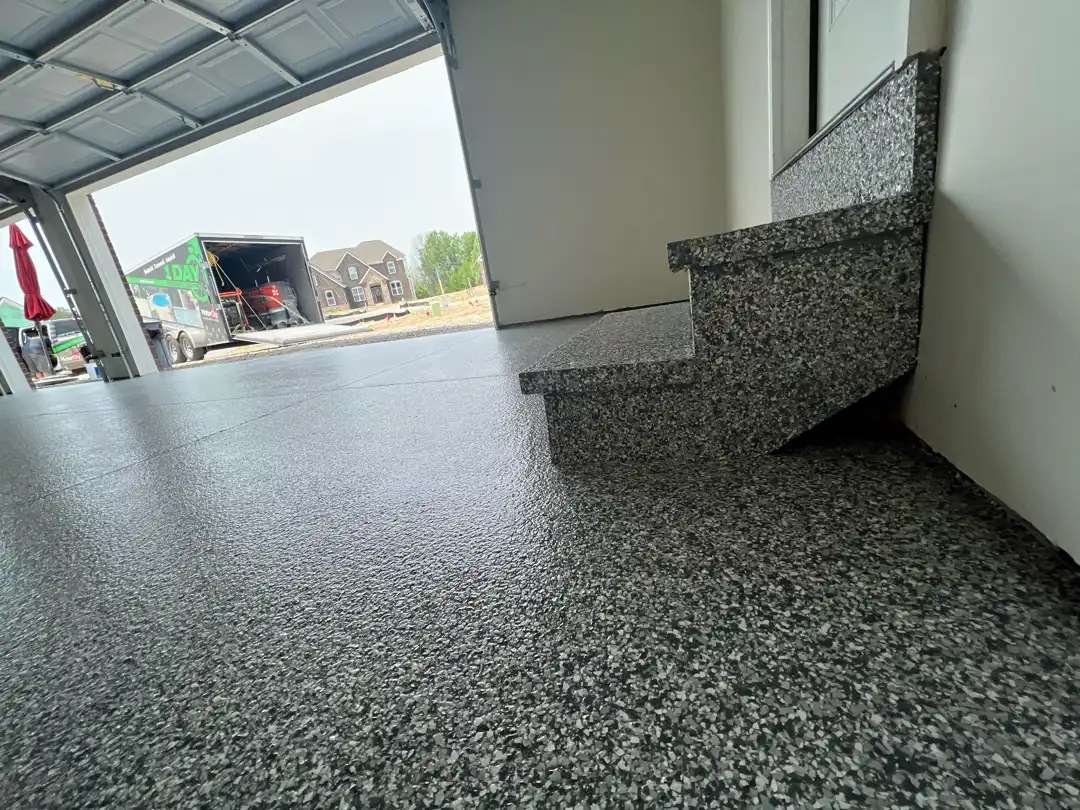
The before photos capture a garage in that pristine new-construction state: control joints cut in precise geometric patterns, concrete showing only the subtle variations from the finishing process, and walls painted that builder-standard cream. Three wooden steps led up to the interior door, their raw lumber awaiting whatever finish the homeowners would eventually apply. Through the open garage door, the construction site sprawled—gravel drives, contractor trucks, neighboring homes in various stages of completion.
This wasn’t a remediation project requiring oil extraction or crack repair. The concrete bore no stains, no pitting, no accumulated damage. Just the faint moisture patterns and minor discoloration that appear as new concrete completes its curing process. The homeowners wanted the coating extended all the way to the driveway edge for a seamless transition. For this, they selected SlateStone (a dark, most dramatic flake blend option) to create a modern aesthetic that complements the contemporary design of this home.
The Work
Even pristine concrete requires proper mechanical profiling for coating adhesion. Diamond grinding with an MC-4.2 configuration opened the pore structure throughout all 749 square feet, creating the surface profile necessary for the polyurea-polyaspartic system to achieve maximum bond strength. The three wooden steps required careful detailing—coating right up to where wood meets concrete without compromising either surface.
The before photos show the garage in that intermediate state common to new construction: mechanically complete but aesthetically unfinished, with overhead storage racks installed but walls still awaiting the homeowners’ organizational touches. The concrete displays that characteristic wet-grey appearance from the final cleanup after grinding, control joints appearing as clean lines ready to be sealed and protected rather than becoming collection points for debris.
Materials Applied:
- MR 50 Moisture Primer: Applied per manufacturer specifications
- Base Coat: Grey polyurea-polyaspartic system
- Flake: SlateStone broadcast throughout
- Clear Coat: Polyaspartic topcoat system
- Traction: 16-grit Garage Grip broadcast
The Result
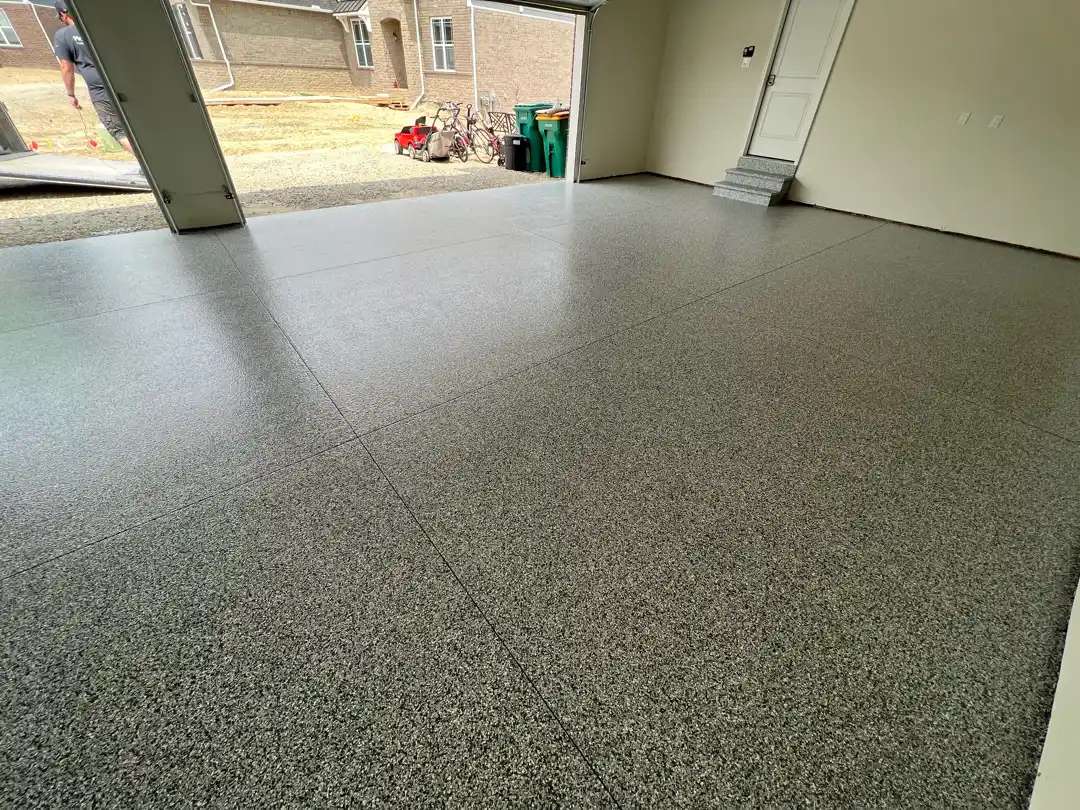
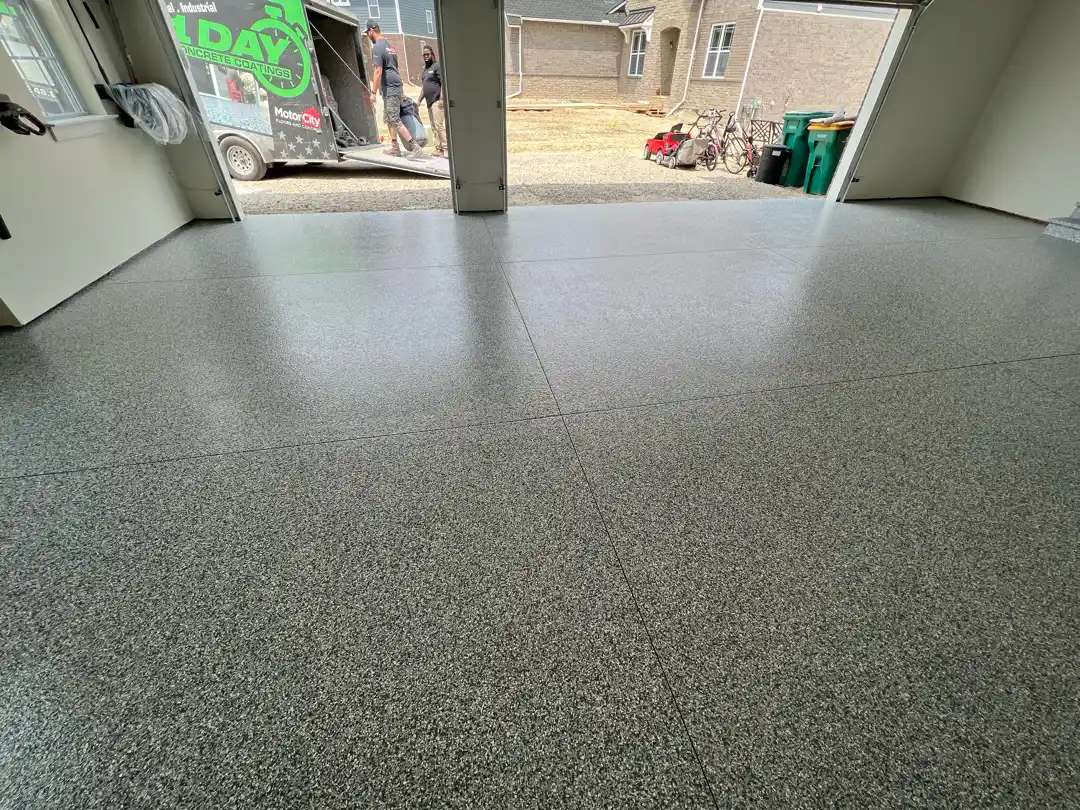
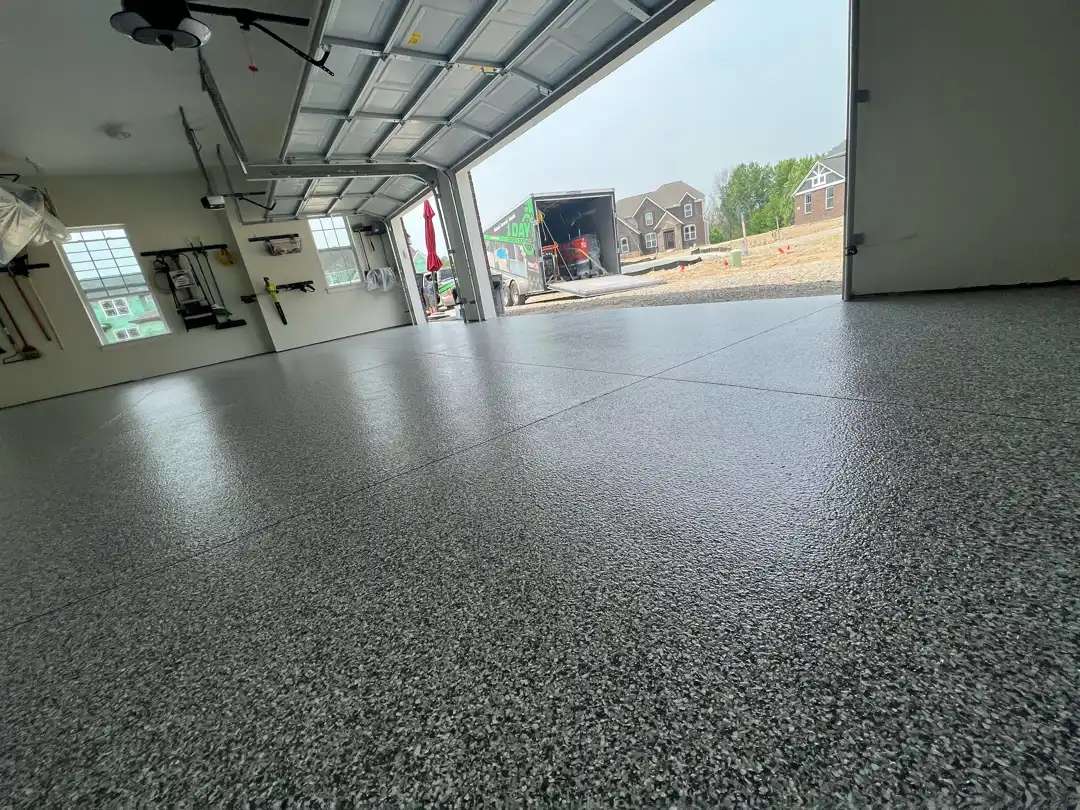
The transformation is dramatic. The SlateStone deep charcoal and grey tones create an almost industrial-modern aesthetic that stands in striking contrast to the light walls and wooden steps. The darker flake pattern brings depth and visual weight to the space, with individual flakes catching light from the overhead fixtures and windows to create subtle shimmer across the entire floor.
The coating extends seamlessly to the driveway edge as specified, with control joints now visible as subtle geometric features rather than potential failure points. The three wooden steps stand out against the finished floor, their natural lumber tones providing organic contrast to the sleek coating below. Through the open garage door, the active construction site remains visible—a reminder that this home is part of a growing neighborhood, but already ahead of the curve with a garage finished to a higher standard than most of its future neighbors.
Most importantly, this floor will never know what oil stains look like. It will never experience the slow deterioration that comes from winter salt and moisture penetration. The homeowners moved into a space where the garage floor coating protects their concrete, and is ready for vehicles, storage, or other purposes.
The Bottom Line
This White Stone Court installation represents good proactive homeownership. Rather than treating the garage as an afterthought, the homeowners understood that new concrete is the ideal canvas for floor coating. The SlateStone finish brings a level of modernity that elevates the entire space. It makes this garage feel less like a utilitarian box and more like an extension of the living areas. With 16-grit traction for safety and a polyurea-polyaspartic system designed to handle the local demanding climate, this 749-square-foot space is protected for the long haul.




Click on the photos to enlarge them
Garage Floor Coating on
Richmond Drive in Northville
The Challenge
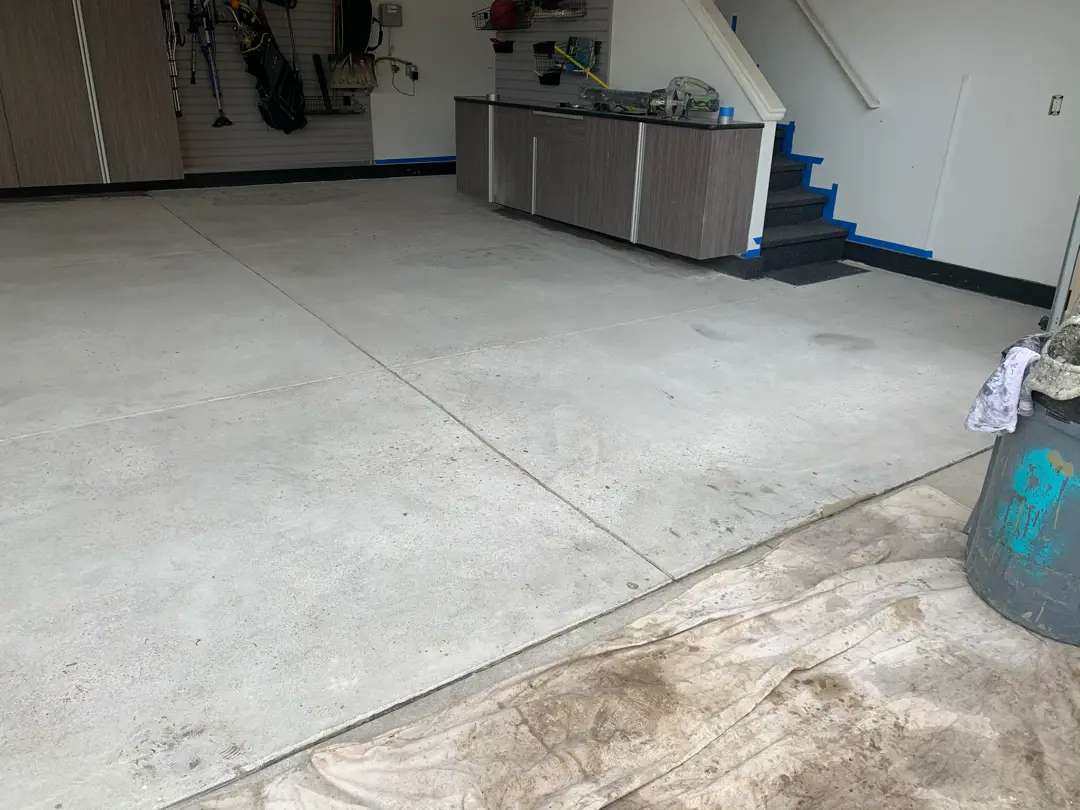
The before photos reveal a garage caught between two eras. The walls showcased modern white slatwall organization systems with carefully arranged tools and accessories. The premium workbench and cabinet system suggested a homeowner who valued quality and functionality. But the floor—a tan-based epoxy with scattered black flakes—looked tired, dated, and completely out of sync with the rest of the space’s modern aesthetic.
Worse than the aesthetic mismatch, the epoxy showed signs of wear and aging typical of these older coating systems. The close-up images capture the full extent of the problem: uneven flake distribution, areas where the coating had thinned, and the overall dull appearance that comes when epoxy loses its luster. The coating had penetrated deep into the control joints, meaning removal would require meticulous attention to detail.
The project scope was comprehensive: 904 square feet of main floor, 6 wooden steps that would need coating integration, and an impressive 102.8 linear feet of vertical surfaces extending 12 feet up the walls—a substantial vertical application that would create a truly finished, showroom appearance.
The Work
Epoxy removal dominated the first phase of this project. Using professional equipment, our crew systematically stripped away the old coating across all 904 square feet. The “ground” photos capture the floor mid-process: bare concrete with ghosting from the old epoxy, control joints cleaned of every trace of the previous coating, and a surface ready for proper preparation. This step alone separated this project from simple overlay attempts—we were starting fresh, doing it right.
Diamond grinding with MC-4 configuration followed, profiling the entire surface to create optimal mechanical bonding. Our crew paid special attention to the 6 wooden steps, ensuring proper surface preparation for coating adhesion to this different substrate. The 102.8 linear feet of vertical surface also required careful preparation—this wasn’t just a floor coating but a comprehensive garage transformation.
Materials Applied:
- MR 50 Moisture Primer: 3L total (1.5L Part A, 1.5L Part B)
- Base Coat: 18.5L total (12L Part A, 6.5L Part B) – Black
- Flake: 6 boxes Carbon thrown, 2.5 boxes recovered (3.5 boxes retained)
- Clear Coat: 34L total (17L Part A, 17L Part B)
- Traction: 10 cups sand, 24-grit broadcast
The Result
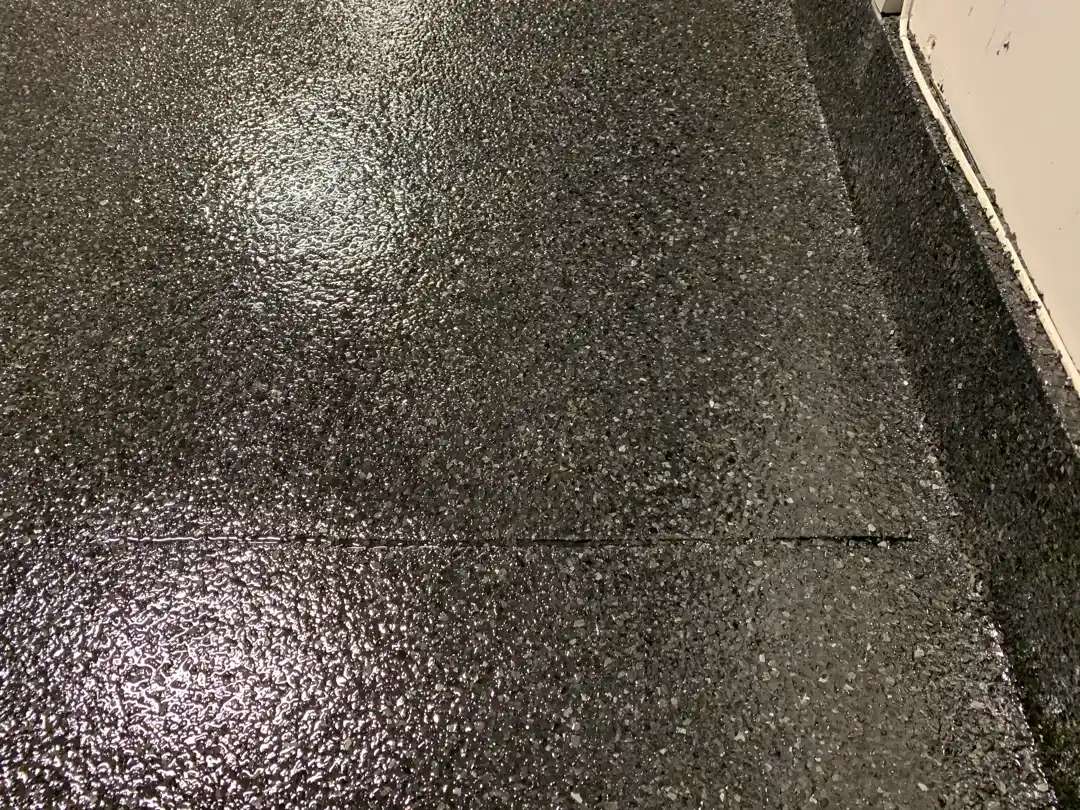
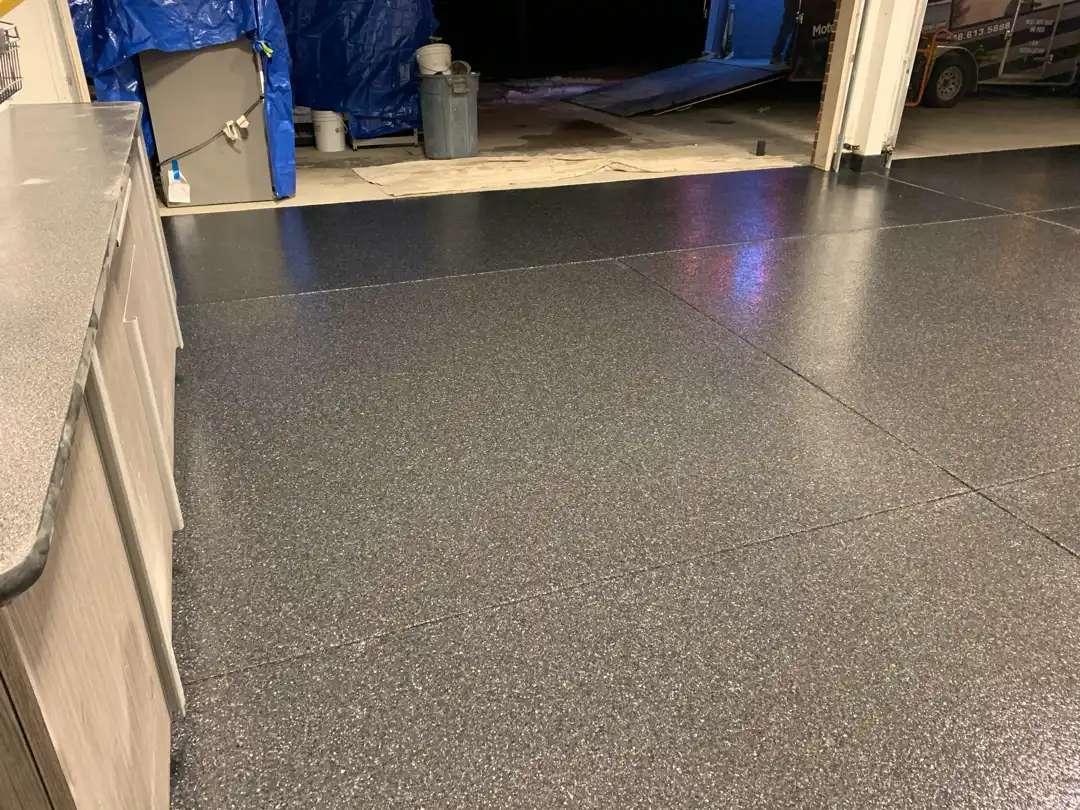
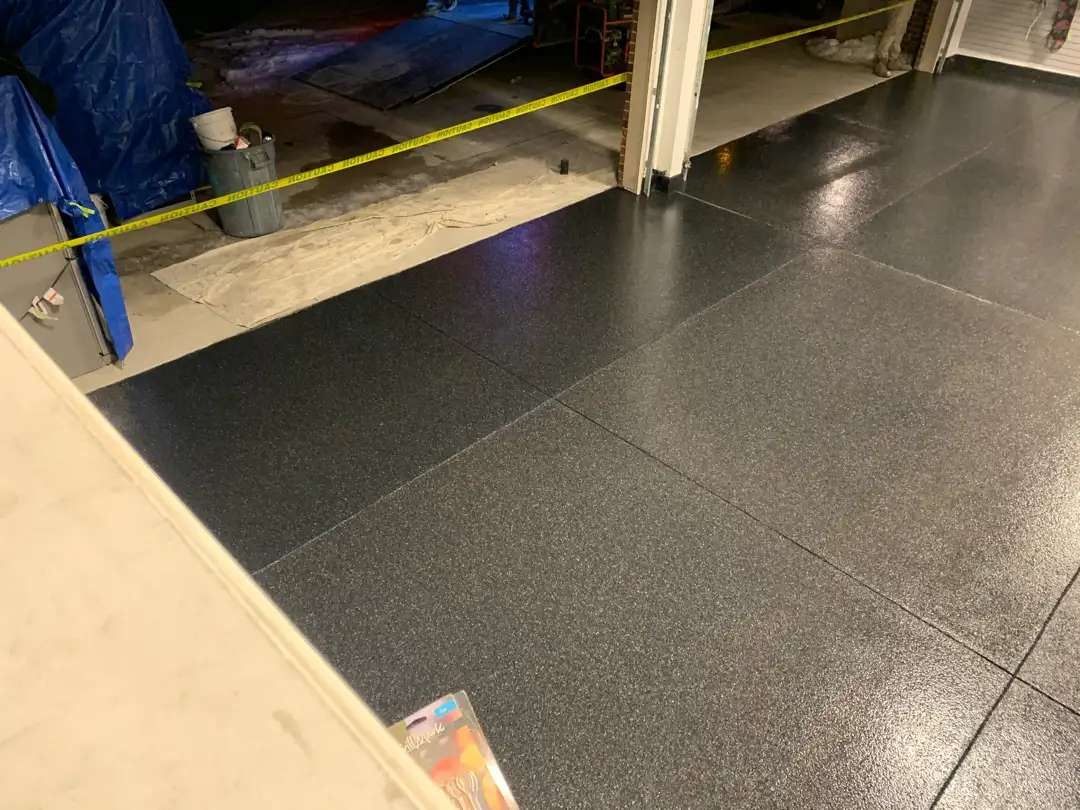
The transformation is nothing short of stunning. Where dated tan and black flakes once fought against the modern aesthetic, a sleek Carbon finish now commands attention with sophisticated, contemporary style. The black base creates dramatic impact, while the Carbon flake blend—featuring black, grey, and white flakes—adds subtle depth and visual interest without overwhelming the space.
The coating flows seamlessly across all 904 square feet, up the 102.8 linear feet of vertical surfaces, and over all 6 wooden steps. The vertical application creates an exceptionally polished, finished appearance—the coating extends well up the walls, tying everything together with clean, professional transitions. The steps are beautifully integrated, their coating matching the floor’s sophisticated finish.
Most importantly, the floor now matches the quality and modern aesthetic of everything else in this garage. The premium workbench and cabinet system, the organized slatwall systems, the carefully curated tool collection—all of it now sits above a floor that finally lives up to the space’s potential. The 24-grit traction provides safe footing on both horizontal and vertical surfaces without compromising the glossy, modern appearance.
The Bottom Line
This Richmond Drive installation represents professional epoxy removal and replacement at its finest. Rather than attempting to coat over a failing system or living with an outdated aesthetic, the homeowners made the right choice: complete removal and installation of a modern polyurea-polyaspartic system that will outlast the original epoxy by decades. The Carbon finish brings contemporary sophistication to a garage that’s clearly more showpiece than storage space, and the comprehensive vertical application creates the kind of finished appearance that sets this installation apart. What began as a disappointing mismatch between old flooring and modern systems is now a cohesive, stunning garage that impresses from floor to ceiling.








Click on the photos to enlarge them
Garage Floor Coating on
Lyonhurst Circle in Northville
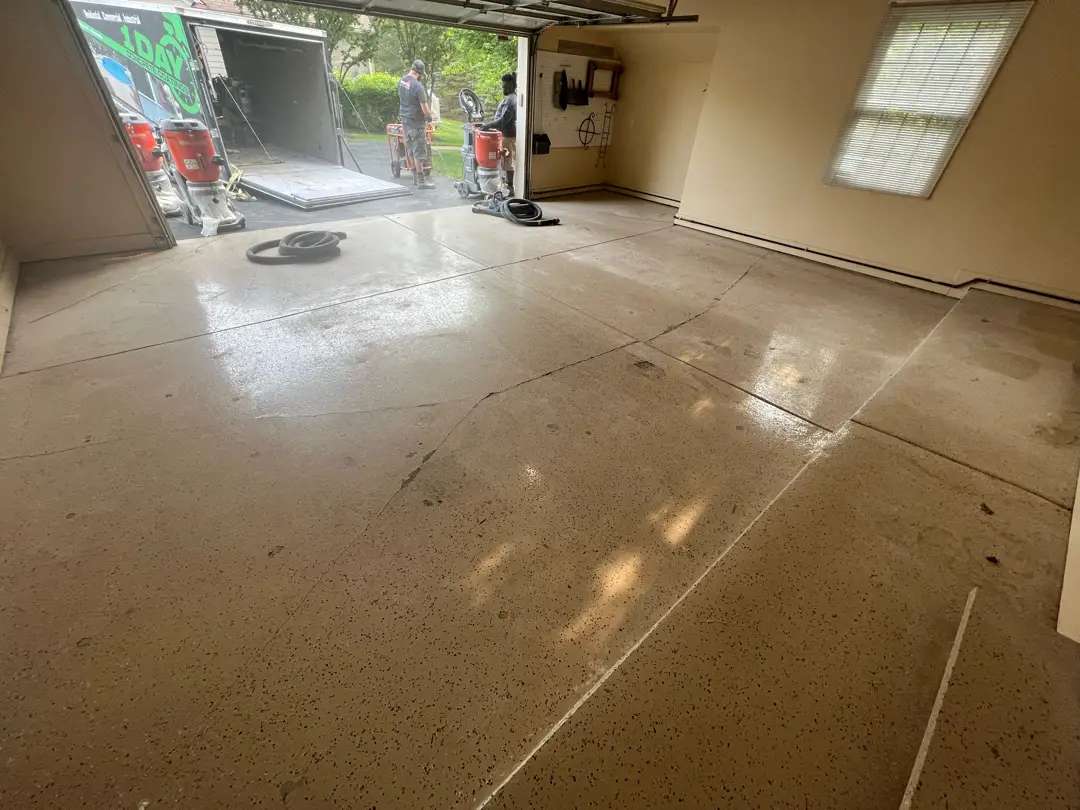
Our crew was called to a residence on Lyonhurst Circle in Northville, Michigan to address a 548-square-foot garage where an old epoxy coating had reached the end of its serviceable life. The homeowners had watched their garage floor deteriorate over time, and despite the space’s organization and cleanliness, the floor told a troubling story: widespread failure of the original coating system, visible cracking, and extensive brown staining that suggested deep-seated issues beneath the surface.
The Challenge
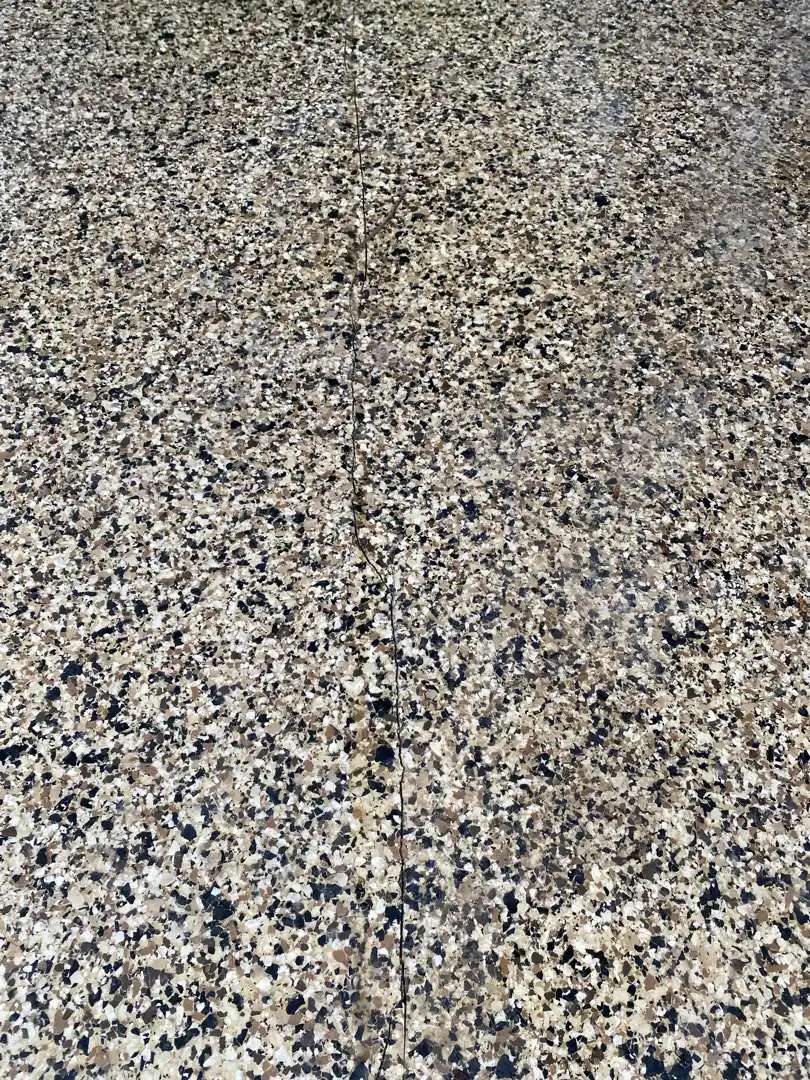
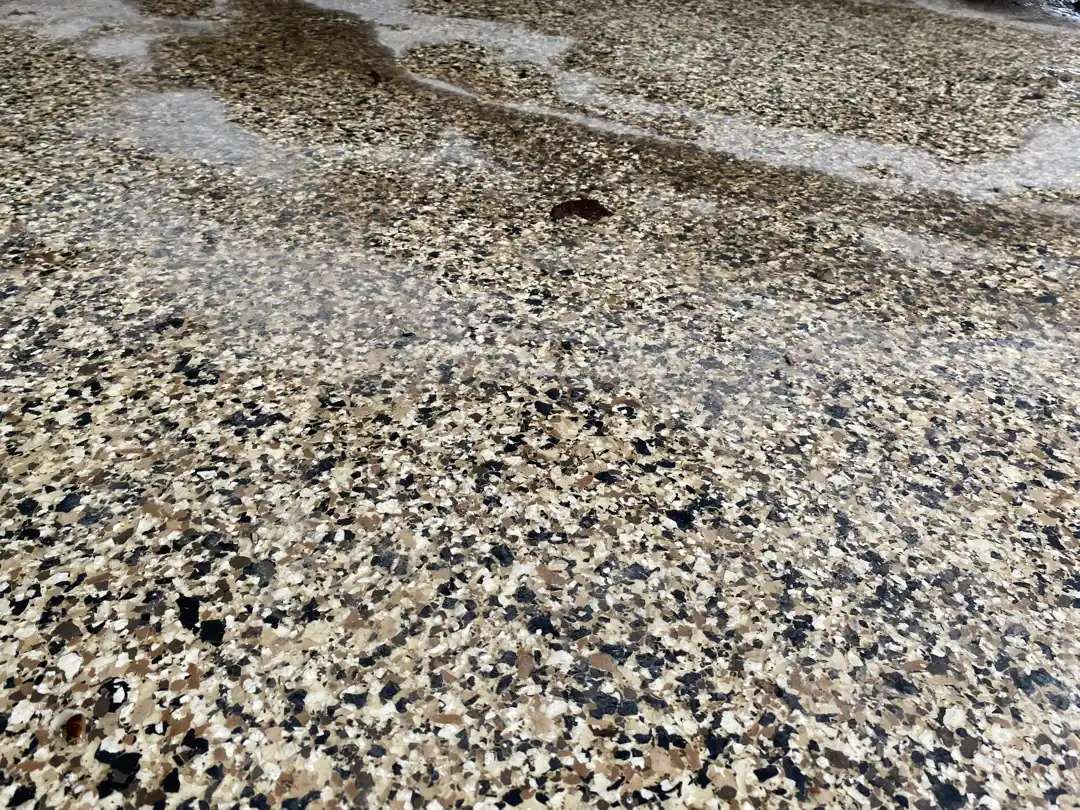
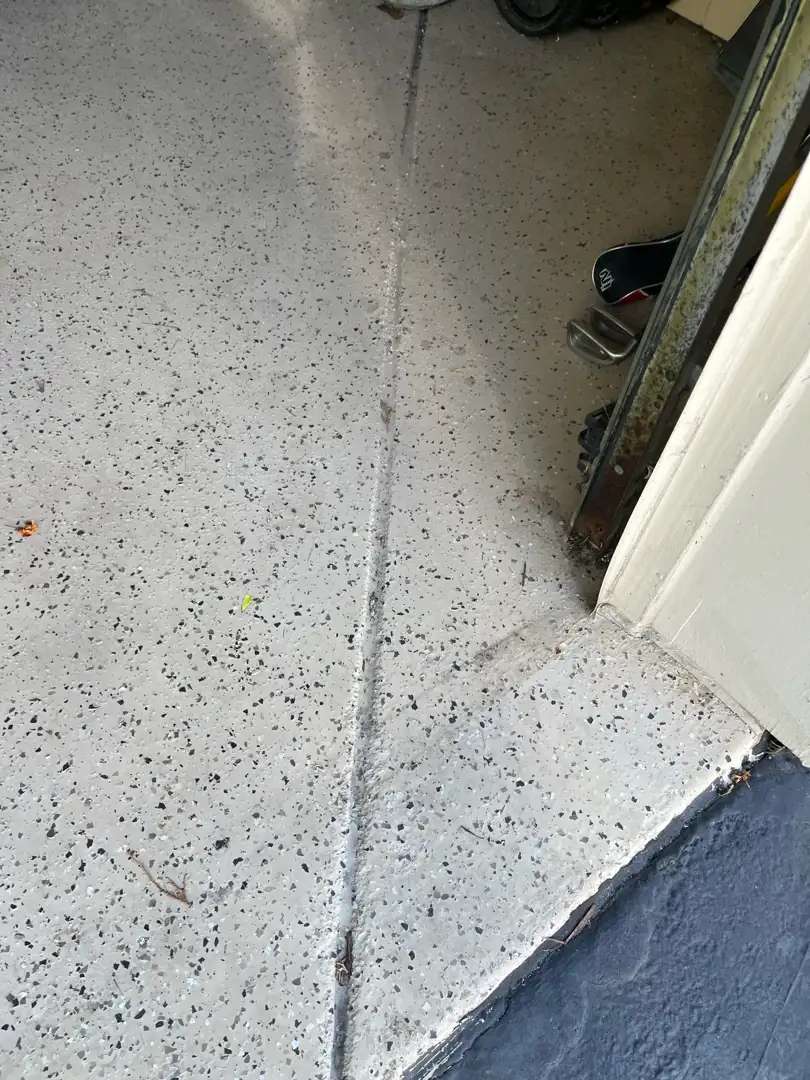
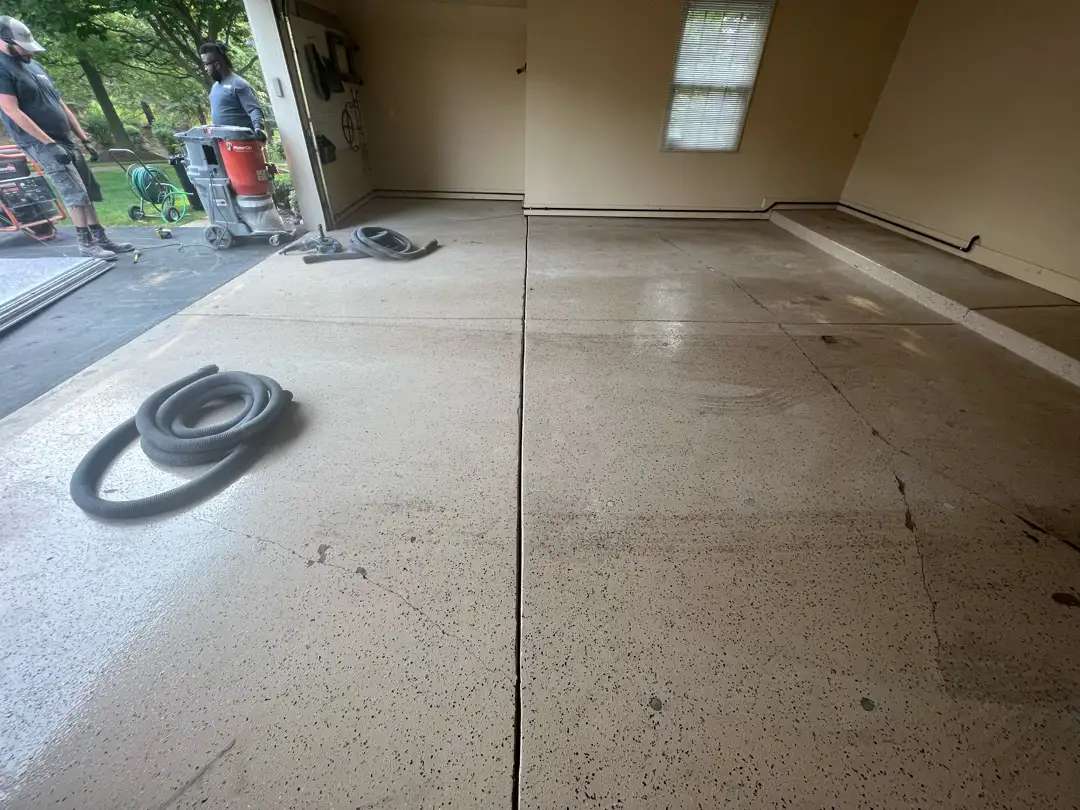
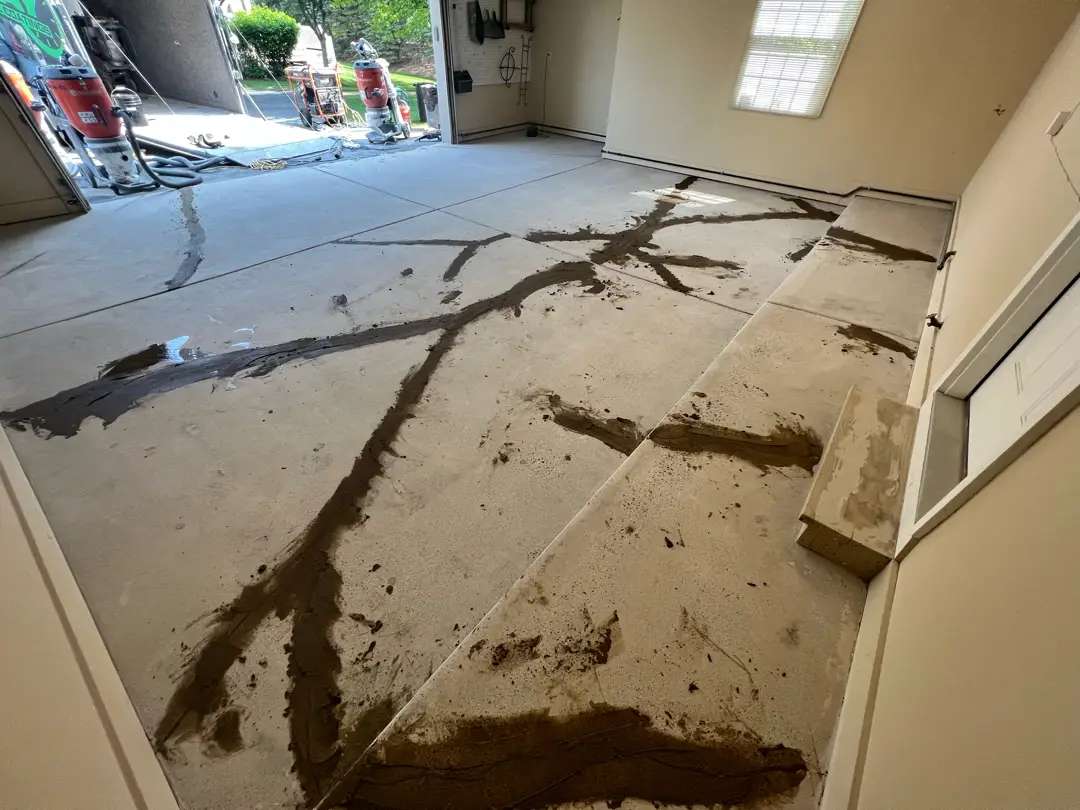
The before photos capture a garage in distress. The original tan-based epoxy with black and white flakes had aged poorly, but the real problems ran deeper. Dark brown staining spread across multiple sections of the floor like rust-colored fingers reaching through the concrete—evidence of adhesive breakdown, moisture intrusion, or substrate contamination that had compromised the coating from below. Multiple cracks traversed the slab, their paths clearly visible through the translucent coating.
Close examination revealed the extent of the damage: the epoxy had lost adhesion in several areas, creating a surface that was no longer structurally sound. The brown residue patterns suggested that whatever was happening beneath the coating would only worsen over time. This wasn’t a floor that could be patched or overlaid—it required complete removal, remediation, and professional crack repair before any new coating could be applied.
The project scope extended beyond the main floor: 22 linear feet of vertical lip would need coating to create a finished, professional appearance, and a single wood step required integration into the new system. Most critically, the cracks visible in the before photos needed proper repair to prevent telegraphing through the new coating and to provide long-term structural stability.
The Work
Epoxy removal dominated the early phase of this restoration. Our crew systematically stripped away every trace of the old coating across all 548 square feet, working methodically to expose the bare concrete beneath. The removal process revealed the full extent of the substrate issues—areas where the brown staining had penetrated, zones where the concrete showed signs of moisture movement, and the true depth of the existing cracks.
With the slate wiped clean, our team turned to crack repair. Using professional-grade flexible repair compounds, we addressed each fissure in the concrete, filling and sealing them to prevent future movement from compromising the new coating. This critical remediation step would ensure the new polyurea-polyaspartic system had a sound foundation.
Diamond grinding with MC3.8 configuration followed, creating optimal surface profile across the entire floor. The wood step received special preparation to ensure proper coating adhesion to this different substrate material. The 22 linear feet of vertical surface—wall bases extending upward to create a finished appearance—were also prepared for coating application.
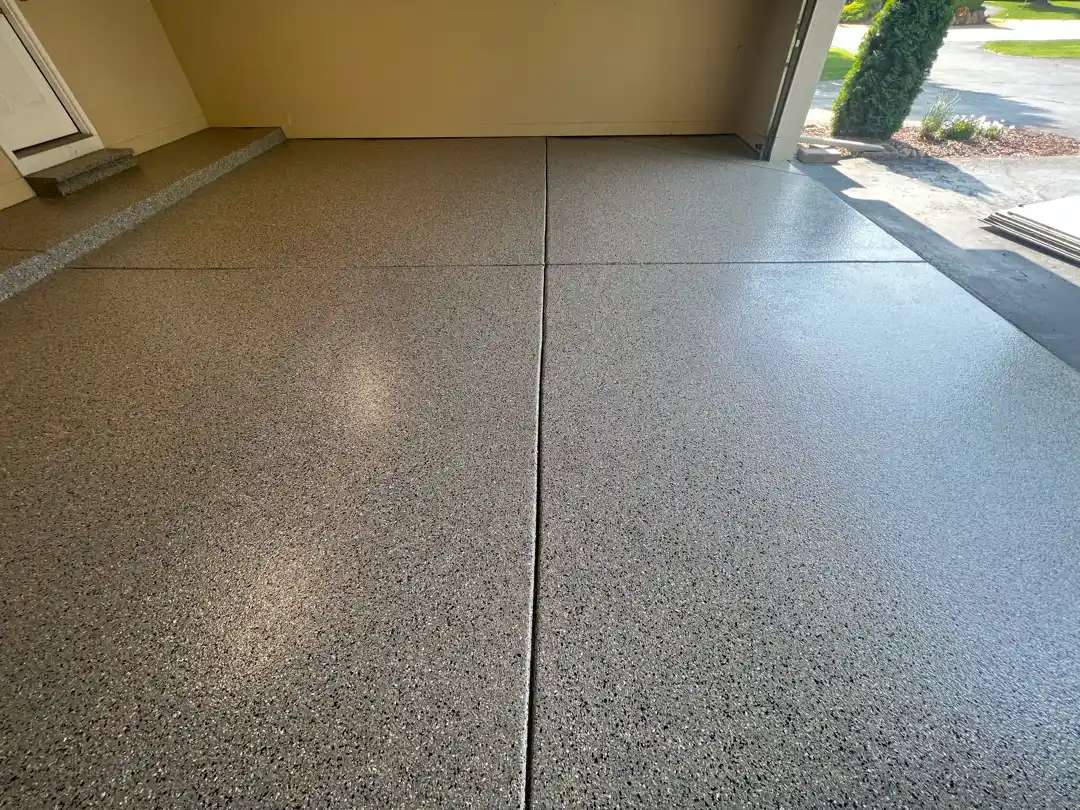
With the substrate properly prepared and repaired, our crew applied the full polyurea-polyaspartic system in Mediterranean—a sophisticated blend of tan, brown, and beige flakes that would bring warmth and elegance to the space. The 16-grit traction additive was broadcast into the final clear coat, providing sure footing without compromising the coating’s glossy, professional appearance.
The Result
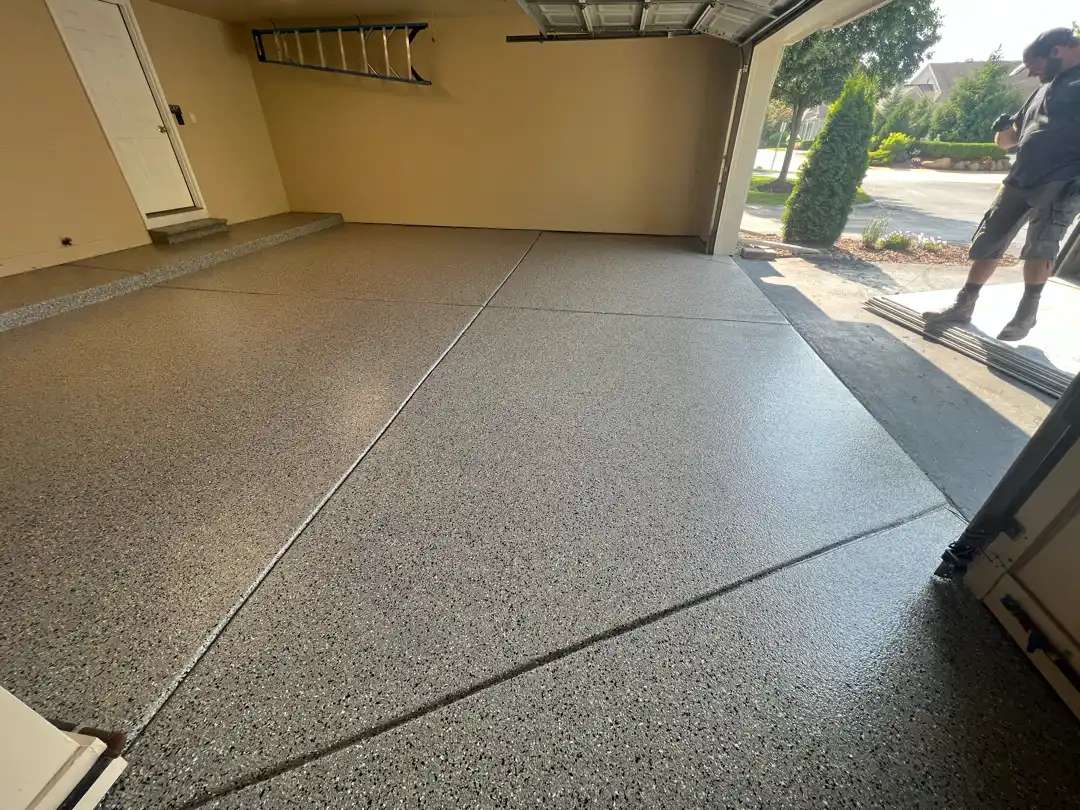
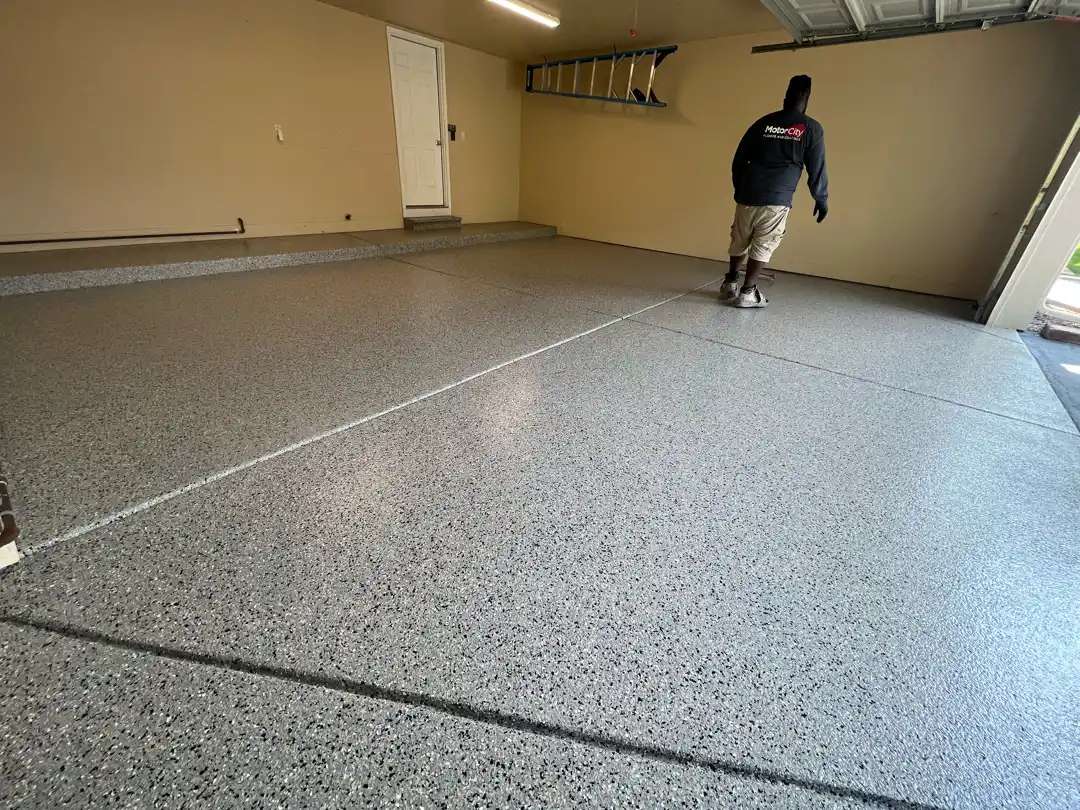
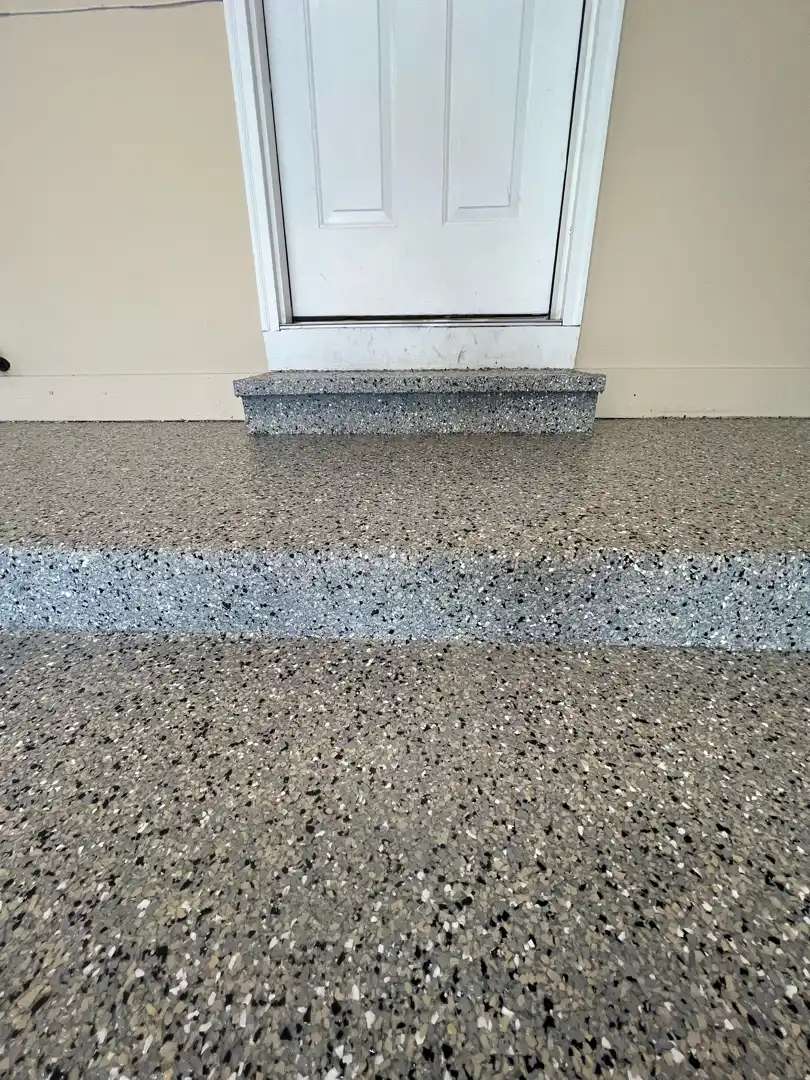
The transformation is stunning. Where brown staining and failing epoxy once dominated, a flawless Mediterranean finish now spans all 548 square feet. The warm tan and brown tones create an inviting, sophisticated aesthetic that elevates the entire garage. The coating flows seamlessly across the floor, up the 22 linear feet of vertical lip, and over the wood step with perfect integration at every transition.
The repaired cracks have disappeared beneath the new coating, their flexibility and proper preparation ensuring they won’t telegraph through or compromise the system’s integrity. The vertical applications create an exceptionally finished look—coating extending up the wall bases ties everything together with clean, professional transitions that set this installation apart from basic floor-only applications.
Most importantly, the homeowners now have complete confidence in their garage floor. The mysterious brown staining, the structural concerns about cracking, the aesthetic disappointment of a failing coating—all of these problems have been permanently resolved with a modern polyurea-polyaspartic system that will outlast the original epoxy by decades.
The Bottom Line
This Lyonhurst Circle installation represents comprehensive garage floor restoration done right. Rather than attempting to coat over failing epoxy or patching visible problems, the homeowners chose complete removal, proper crack repair, and installation of a superior coating system. The Mediterranean finish transformed a problematic, deteriorating floor into a sophisticated, high-performance surface that enhances the entire space. The extensive vertical work and integrated step coating demonstrate attention to detail that creates a truly finished appearance. What began as a concerning floor failure is now a garage that impresses from the ground up—quite literally, with coating flowing from floor to walls in one seamless, beautiful system designed to perform flawlessly for decades in Michigan’s demanding climate.









Click on the photos to enlarge them
Professional Polyurea Garage Floor Installation -
Honey Tree Lane, Northville, MI
Project Overview
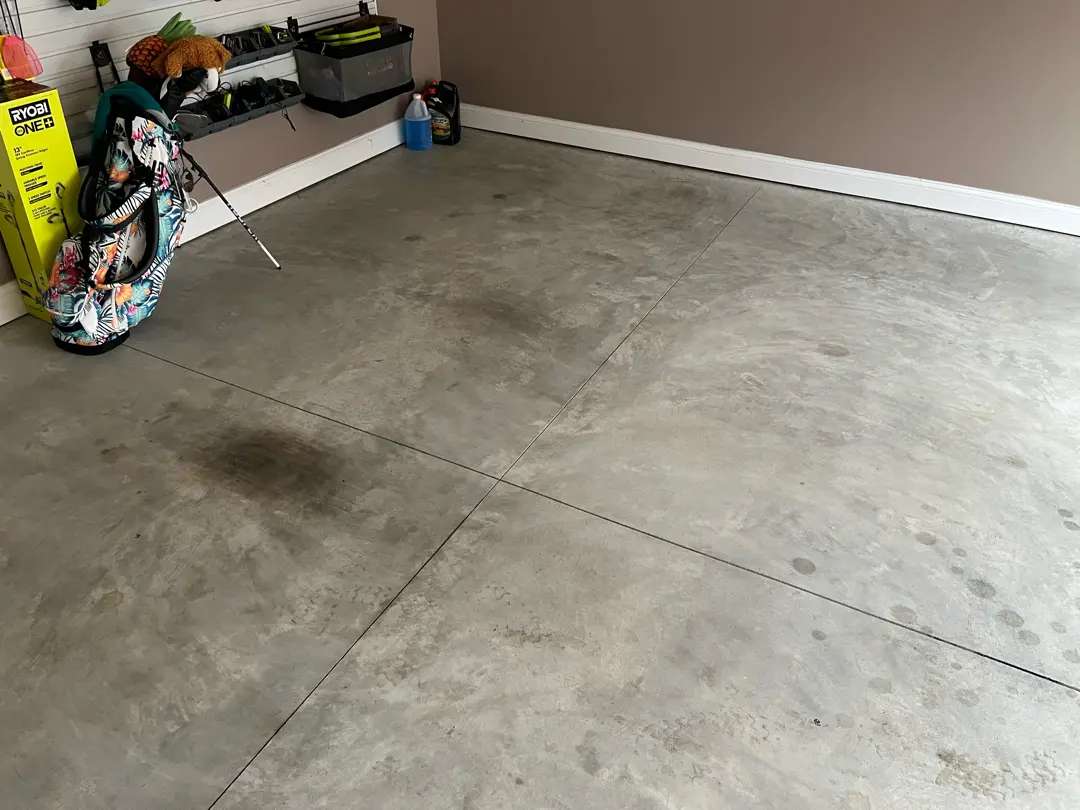
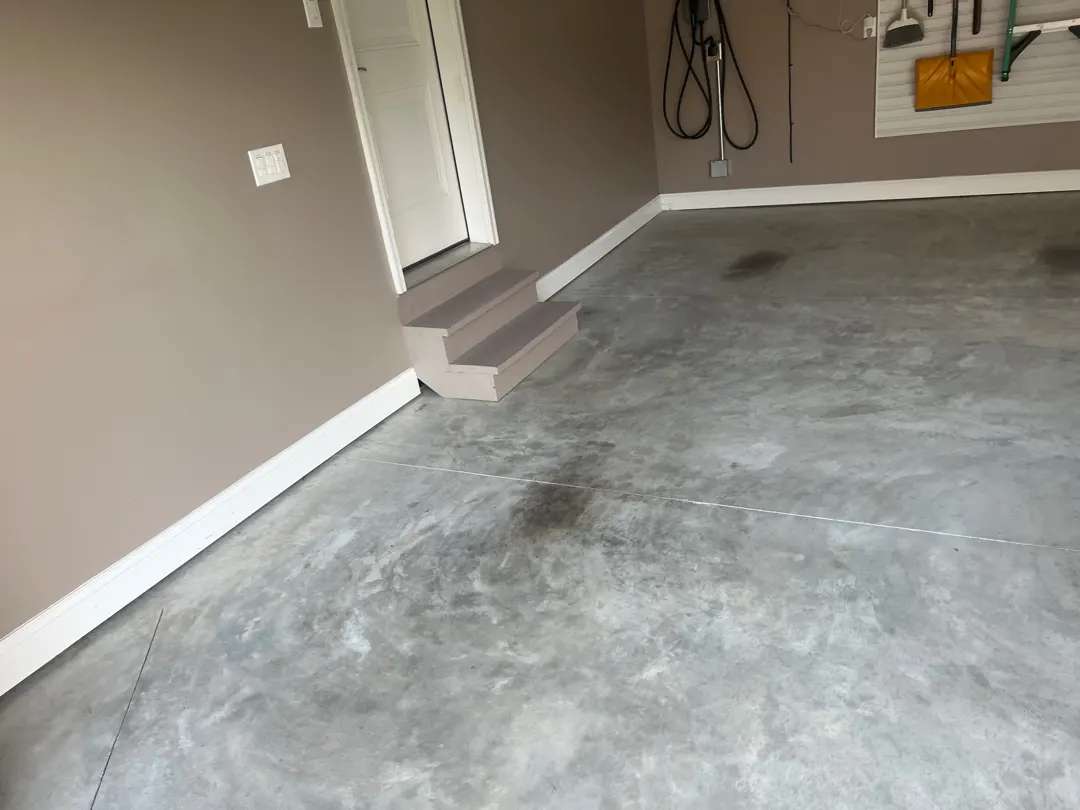
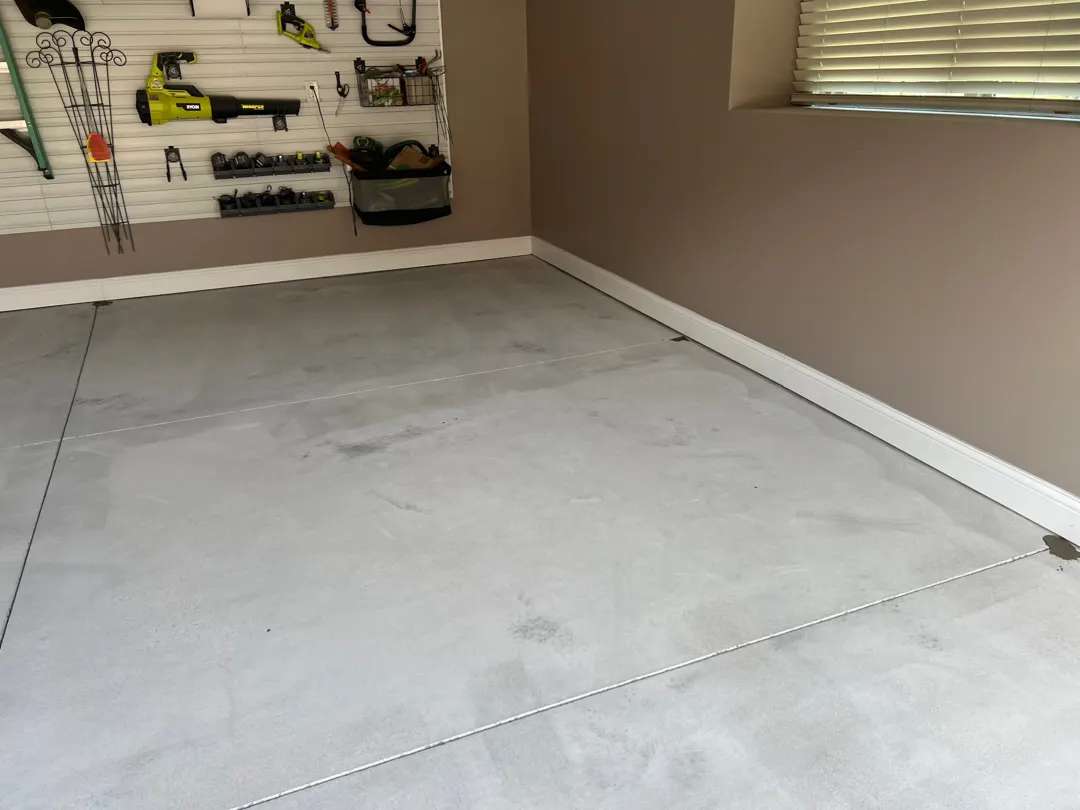
The homeowners at this Northville residence contacted MotorCity Flooring and Coatings seeking a durable, professional-grade garage floor coating system for their 397-square-foot attached garage. The space featured standard concrete slab construction with visible control joints and exhibited typical garage floor conditions including oil staining, surface discoloration, and general wear from vehicle traffic and storage use.
Initial Concrete Condition
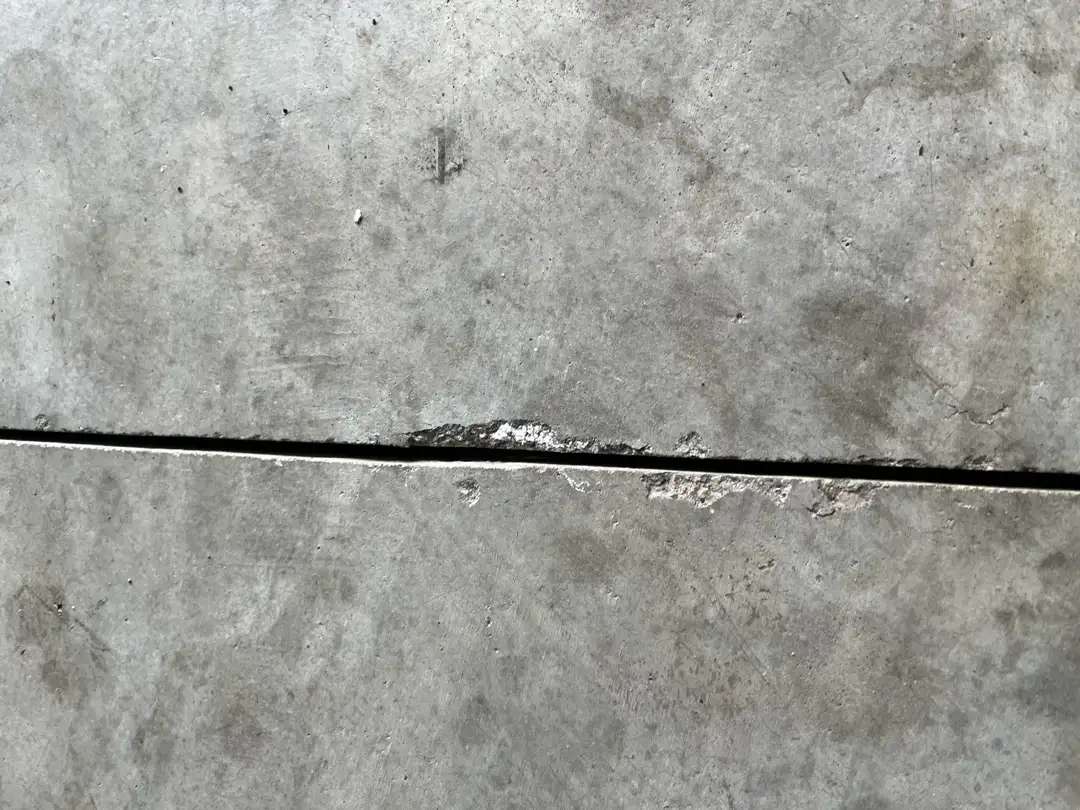
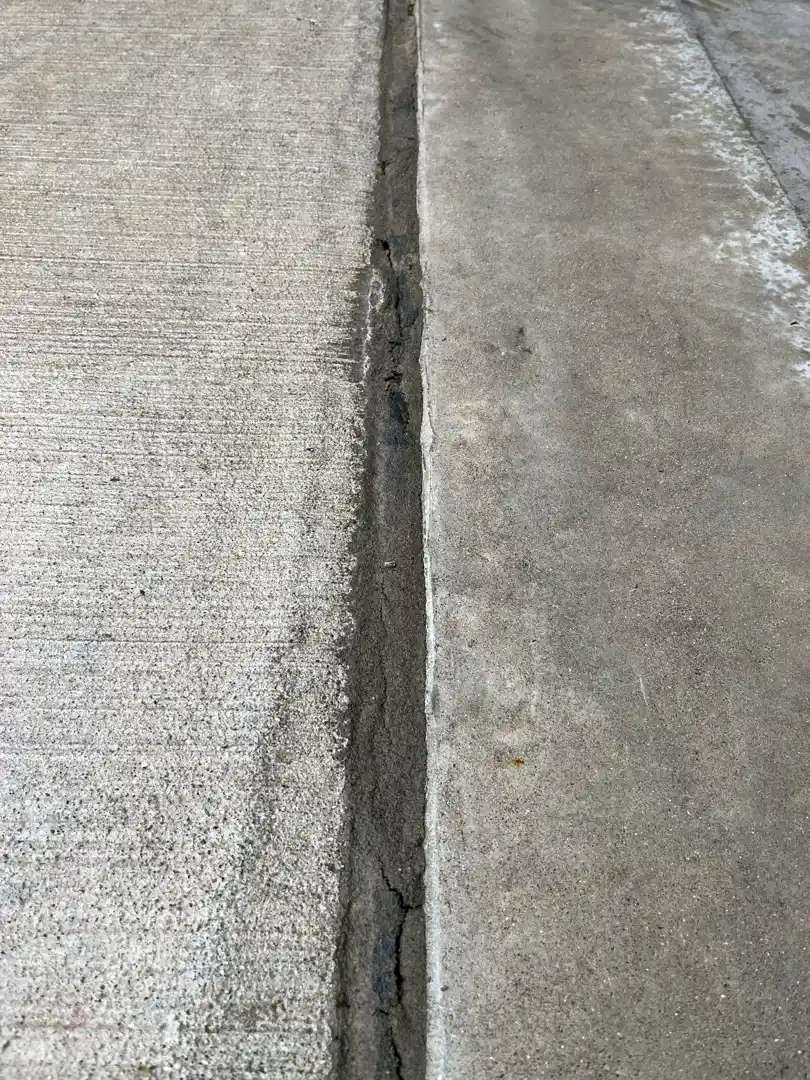
The existing concrete slab showed moderate surface contamination with multiple oil stains concentrated in the vehicle parking areas. The floor displayed the characteristic gray patina of aged concrete with darker spots where automotive fluids had penetrated the porous surface over time. Control joints were present throughout the slab, creating the typical expansion joint pattern necessary for concrete movement. While the substrate was structurally sound with no significant cracking or spalling, the surface porosity had allowed various contaminants to absorb into the concrete matrix, creating the mottled appearance common in garage environments.
Surface Preparation Process
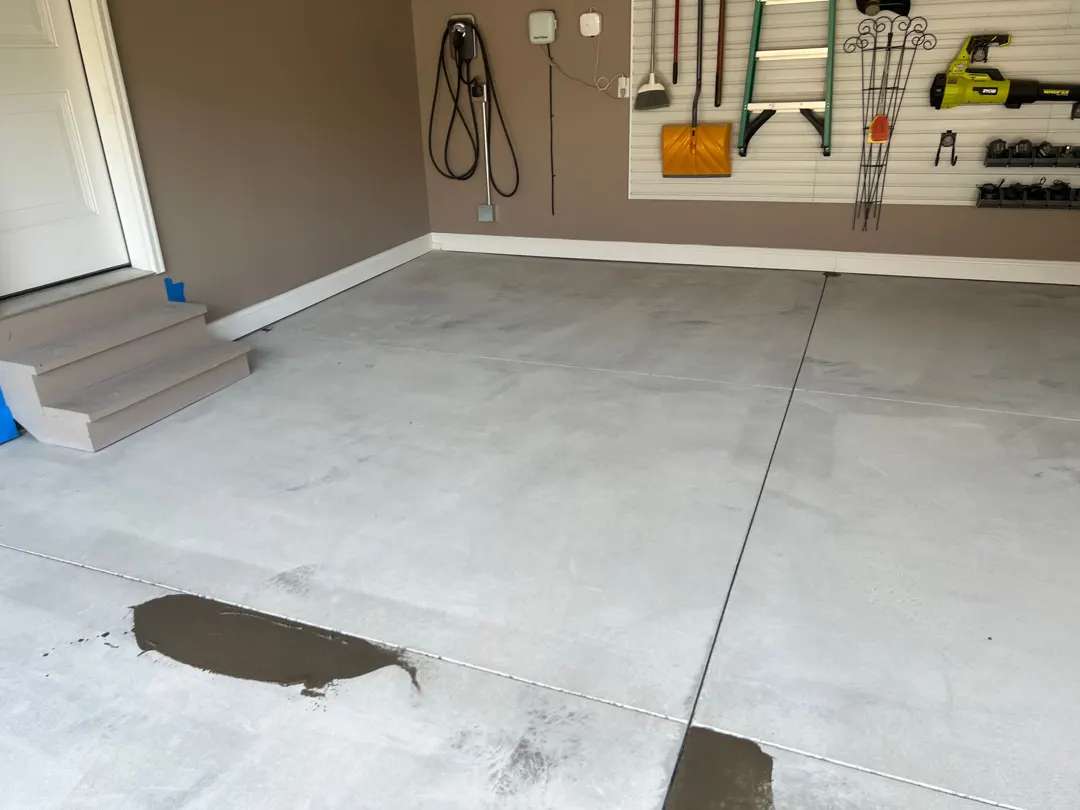
The installation team began with comprehensive concrete surface preparation using professional-grade diamond grinding equipment. This mechanical abrasion process served multiple critical functions: removing the concrete’s porous surface layer where contaminants had penetrated, opening the concrete’s pore structure for optimal coating adhesion, and creating the proper concrete surface profile (CSP) required for polyurea systems.
The grinding process exposed fresh concrete aggregate while removing the contaminated surface layer. Particular attention was paid to the oil-stained areas, where repeated grinding passes ensured complete removal of petroleum-based contaminants that could compromise coating adhesion. The control joints received detailed attention, with grinding extending into the joint channels to ensure proper coating coverage and adhesion along these critical areas.
Following mechanical preparation, the team conducted thorough dust extraction and surface cleaning. Any residual grinding dust was removed through both dry vacuuming and damp mopping procedures, ensuring a contamination-free substrate for coating application. The prepared surface exhibited the slight texture and matte appearance characteristic of properly abraded concrete.
Coating System Application
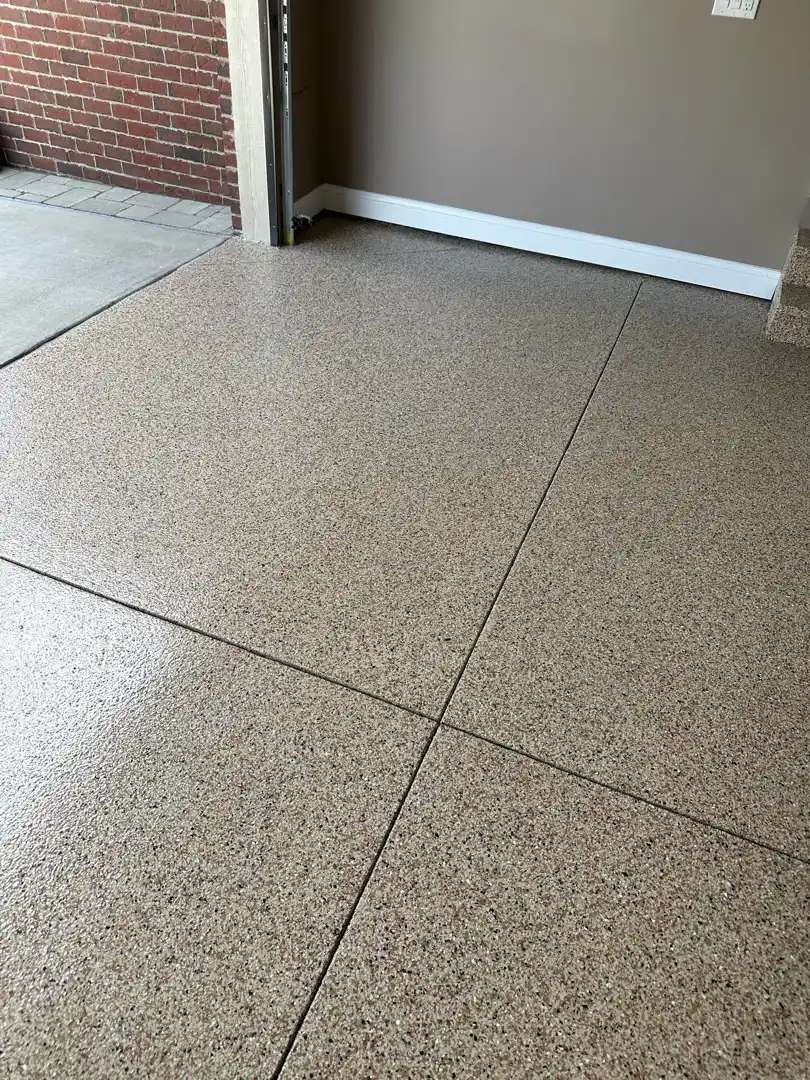
MotorCity Flooring applied their professional-grade NC3.7 polyurea/polyaspartic coating system in the homeowner’s selected Pecan color. This neutral tan tone provides the warmth of natural wood tones while maintaining a clean, contemporary aesthetic that complements the garage’s existing wall colors and overall design.
The installation proceeded in carefully coordinated phases:
Base Coat Application: The first polyurea layer was roller-applied to the prepared concrete, working the material into the abraded surface profile. This base coat penetrates the concrete’s open pores, creating the primary mechanical and chemical bond that anchors the entire system. The team used systematic application techniques, maintaining wet edges and ensuring uniform coverage across the entire 397-square-foot floor area..
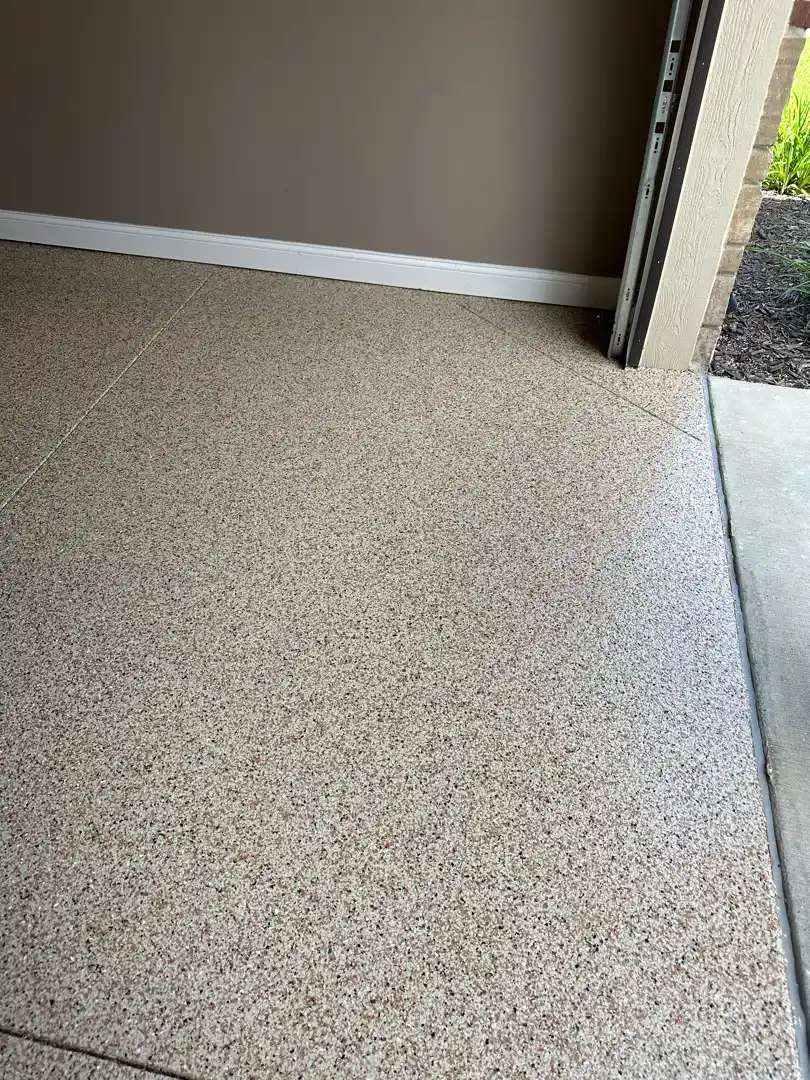
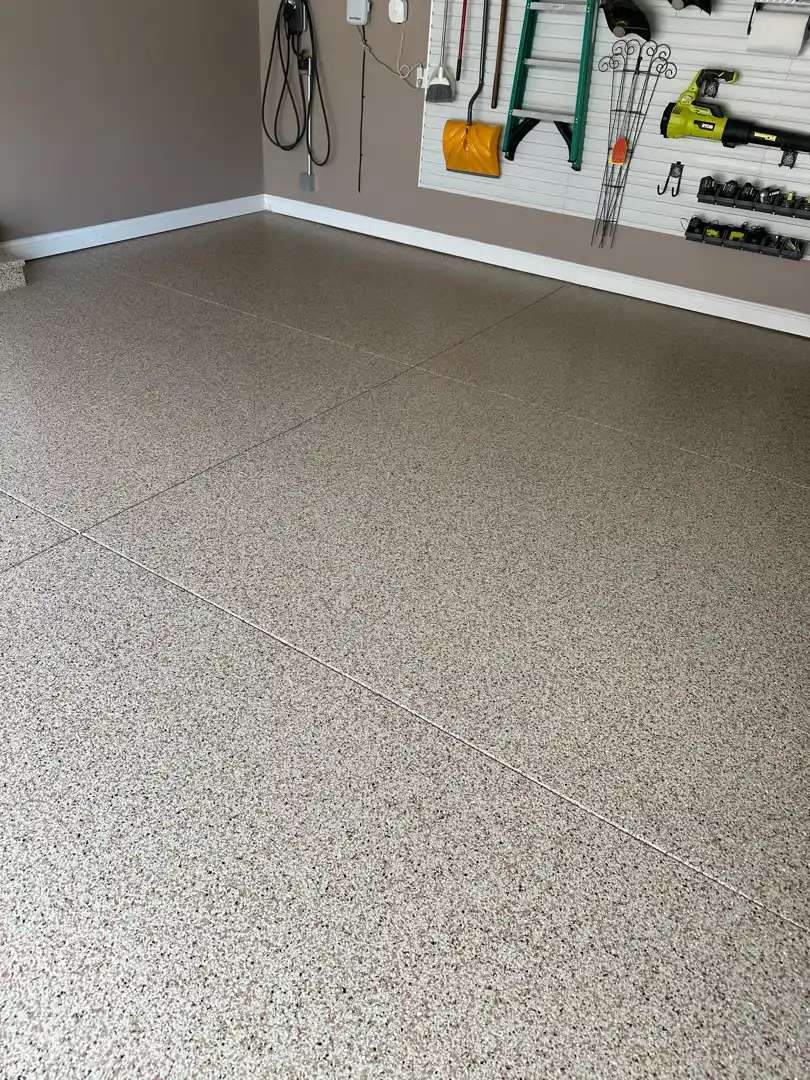
Decorative Flake Broadcast: While the base coat remained in its open time window, decorative color flakes were broadcast across the wet surface. These vinyl flake chips serve both aesthetic and functional purposes, creating visual depth and texture while adding slip resistance to the finished floor. The flake pattern provides the attractive speckled appearance visible throughout the completed installation, with color chips ranging from light tans to darker browns that complement the Pecan base color.
Top Coat Application: After appropriate cure time, a clear polyaspartic top coat was applied over the flake-embedded base layer. This final layer encapsulates the decorative flakes, provides the coating system’s chemical and abrasion resistance, and creates the finished surface texture. For this installation, 16-grit aluminum oxide was added to the top coat, creating a matte finish with enhanced traction properties. This texture additive prevents the floor from becoming slippery when wet while maintaining the coating’s easy-clean properties.
Control Joint Treatment: The concrete’s existing control joints were incorporated into the coating system rather than being filled. The coating system bridges these joints, creating a continuous surface while allowing the concrete’s natural expansion and contraction movement. This approach prevents the coating from cracking at joint locations while maintaining the floor’s monolithic appearance.
Step Integration
The installation included coating application to two wooden steps leading from the garage floor to the home’s interior entry door. These steps received the same coating system as the main floor, with particular attention to edge detail and coverage consistency. Coating these steps in the matching Pecan color creates design continuity between the garage floor and entry transition while providing the same durable, easy-clean surface on these high-traffic areas.
Technical Specifications
- Square Footage: 397 sq ft
- Coating System: NC3.7 polyurea/polyaspartic
- Color: Pecan (warm tan/beige)
- Texture Additive: 16-grit aluminum oxide
- Surface Profile: Diamond ground to CSP-2
- Decorative Elements: Full vinyl flake broadcast
- Additional Surfaces: 2 wooden steps
- Vertical Coverage: None (no cove base)
- Repairs: None required
- Removal: None (no existing coating)
Performance Characteristics
The completed floor system delivers comprehensive performance across multiple criteria. The polyurea/polyaspartic chemistry provides exceptional chemical resistance to automotive fluids, road salts, and common garage chemicals. The coating’s non-porous surface prevents stain absorption, allowing spills to be wiped clean rather than penetrating into the substrate. The 16-grit texture additive ensures safe footing even when the floor is wet from rain, snow melt, or washing activities.
The coating system’s UV stability prevents yellowing or color shift from sunlight exposure through windows or during door-open periods. The flexible polyurea chemistry accommodates the concrete’s thermal expansion and contraction cycles without cracking or delaminating. The decorative flake broadcast hides minor imperfections and provides visual interest while the coating’s semi-gloss finish maintains a professional appearance without excessive glare.
Final Results
The transformation from stained, porous concrete to a professional-grade coated surface dramatically improved both the garage’s appearance and functionality. The Pecan color creates a warm, inviting atmosphere while the flake broadcast adds visual depth and sophisticated texture. The coating’s smooth, non-porous surface makes the space significantly easier to maintain, with dust, dirt, and spills remaining on the surface for easy removal.
The integration of the wooden steps into the overall coating system creates design continuity, ensuring a cohesive appearance from the garage floor through the entry transition. The matte texture from the 16-grit additive provides confident traction without the ultra-high grip feel of coarser textures, creating an ideal balance between safety and ease of cleaning.
The homeowners gained not just a beautiful floor, but a functional upgrade that will protect their concrete investment for decades while making their garage a more pleasant, usable space. The professional installation quality ensures long-term performance, with proper adhesion, uniform coating thickness, and detailed edge work that prevents premature failure modes common to inferior installations.
Maintenance Recommendations
The completed floor requires minimal maintenance to preserve its appearance and performance. Regular dust mopping or sweeping removes loose debris, while occasional damp mopping with pH-neutral cleaners maintains the coating’s appearance. The non-porous surface means spills can be wiped immediately without risk of staining, and the chemical-resistant properties ensure that automotive fluids, deicing salts, and other common garage contaminants won’t damage the coating system.
This Northville installation exemplifies MotorCity Flooring’s commitment to quality workmanship, professional-grade materials, and customer satisfaction, delivering a garage floor system that combines exceptional durability with refined aesthetic appeal




Click on the photos to enlarge them