 Skip to content
Polyurea Garage Floor Coatings in St. Clair Shores, MI
QUESTIONS? NEED A QUOTE?
Concrete Garage Floor Coatings in St. Clair Shores:
4 Actual Case Studies with Before/After Photos
This page documents 4 garage floor coating projects in St. Clair Shores, MI. St. Clair Shores is a waterfront community on Lake St. Clair, in Macomb County. Each of these case studies shows how our polyurea-polyaspartic floor coating system turns damaged concrete slabs into durable, great-looking floors.
Each case study walks you through the starting condition of the floor, the preparation and repair work needed, and the finished result. The “before and after” photos document the progress of each project, and show how a great concrete floor coating can transform an entire space.
St. Clair Shores Garage Floor Coating Case Studies
Click on the street names to jump to any of these 4 concrete floor coating projects. If you live nearby one of these streets and would like to see how these garage floors look like now, call us to check if we can organize a visit with the homeowners.
Quality Garage Floor Coatings
Winter road salt, freeze-thaw cycles, automotive fluids, and daily vehicle traffic degrade unprotected garage concrete over time. The damage typically appears as oil staining, cracking, surface pitting, and laitance buildup that prevents coatings from bonding correctly.
St. Clair Shores garages face the same Michigan climate conditions that affect every community in the region — plus the added humidity and moisture exposure that comes with proximity to Lake St. Clair. Even newer slabs in good structural condition require proper mechanical preparation before any coating system can bond. Polyurea-polyaspartic systems provide reliable, long-term protection against these conditions and deliver a finished appearance that bare concrete or epoxy products cannot match.
NEW Garage Floor Coating
on Centennial Street
Centennial Street, St. Clair Shores, MI
The Starting Point
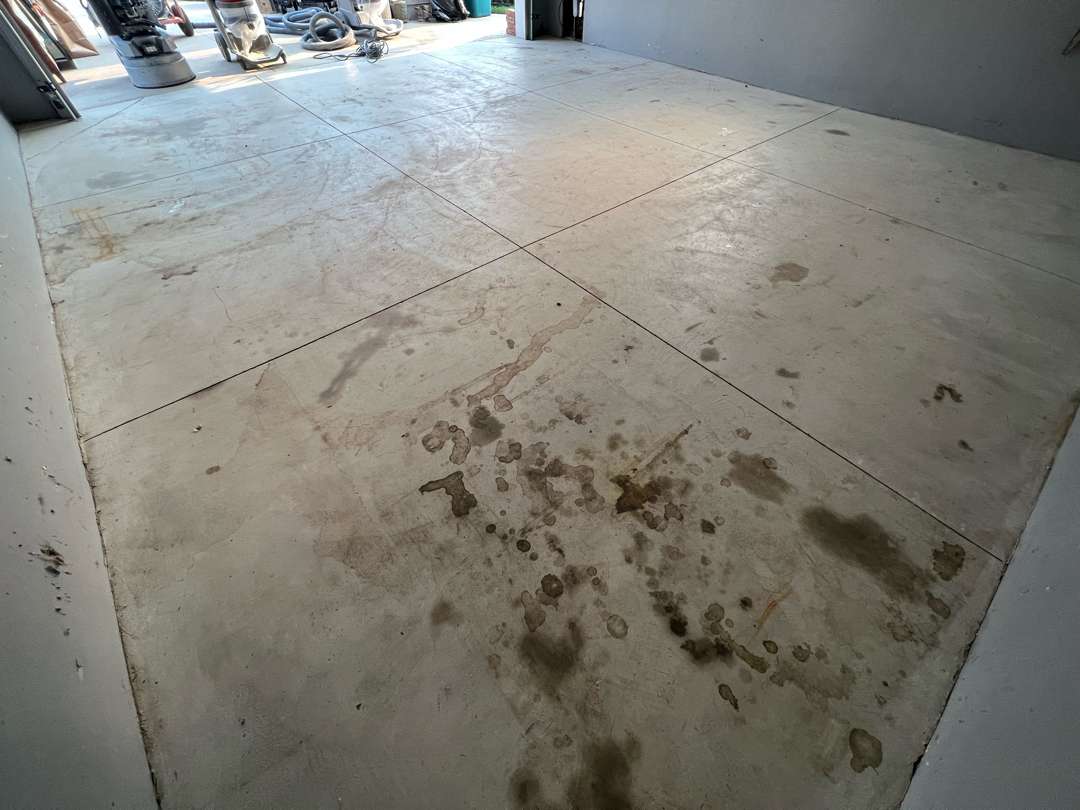
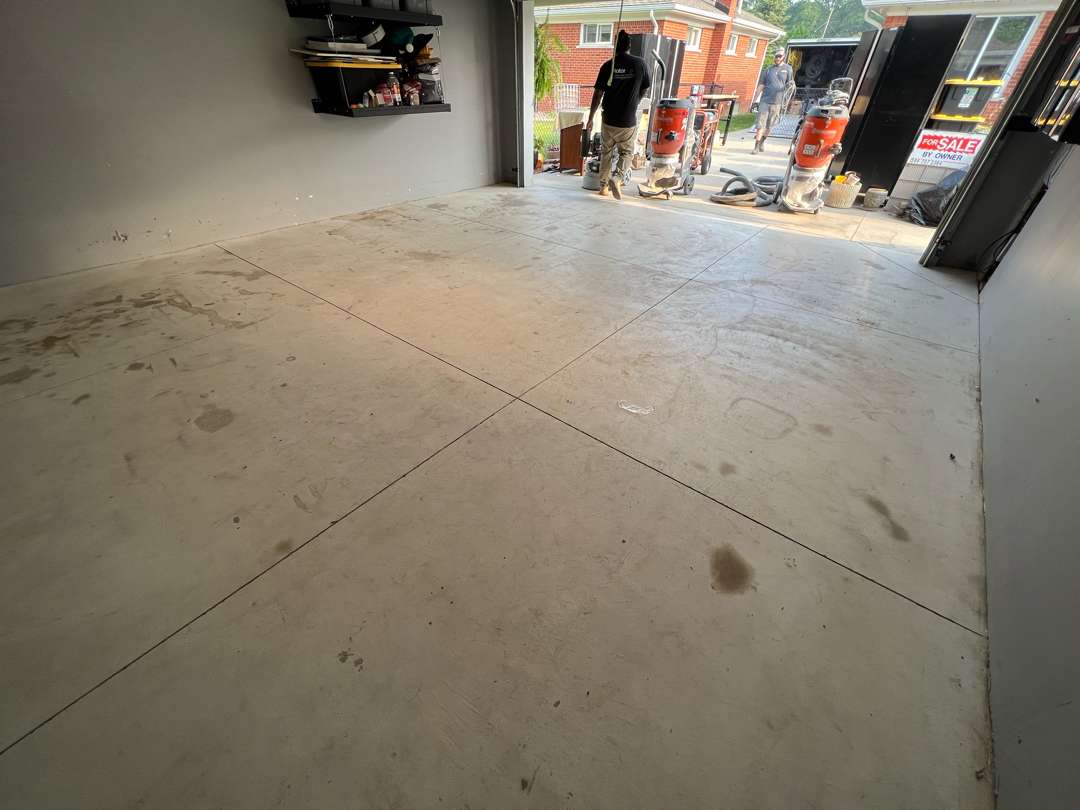
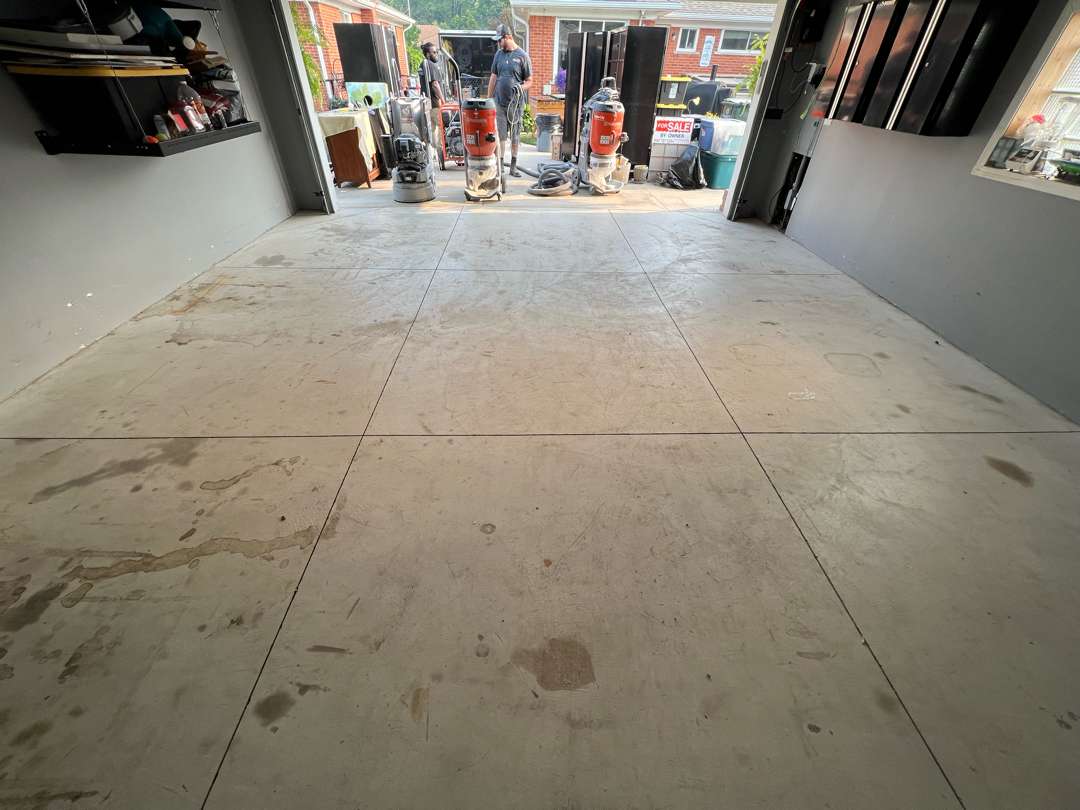
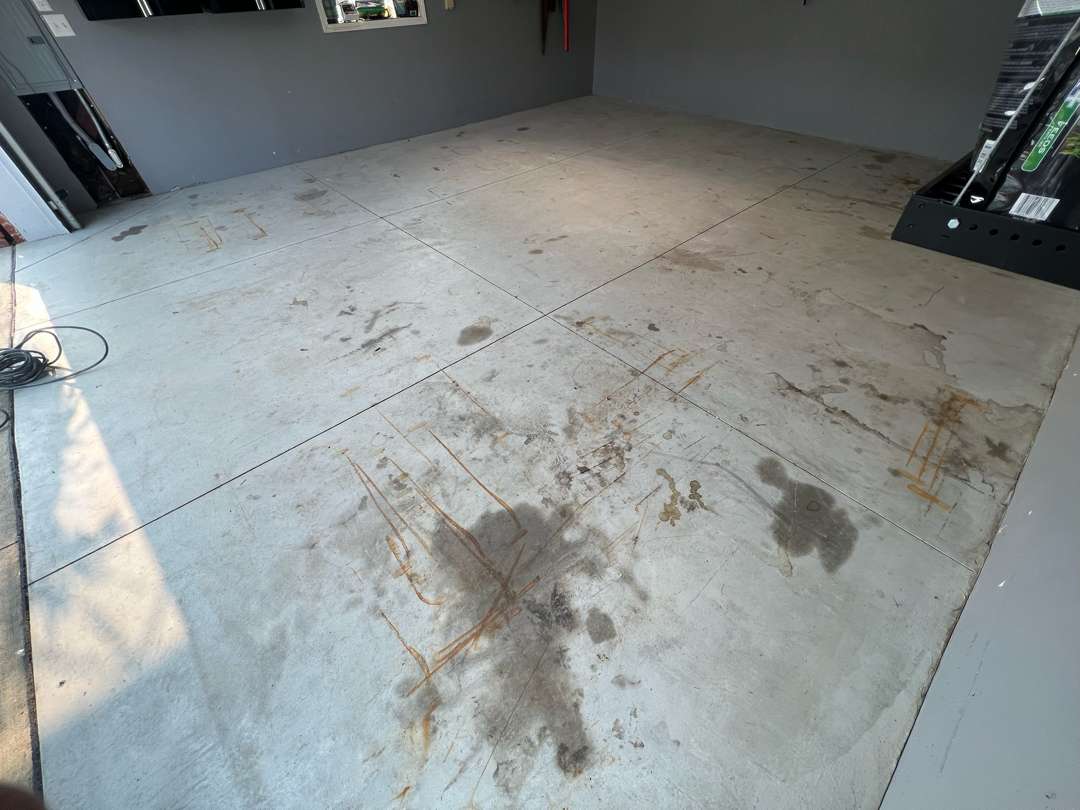
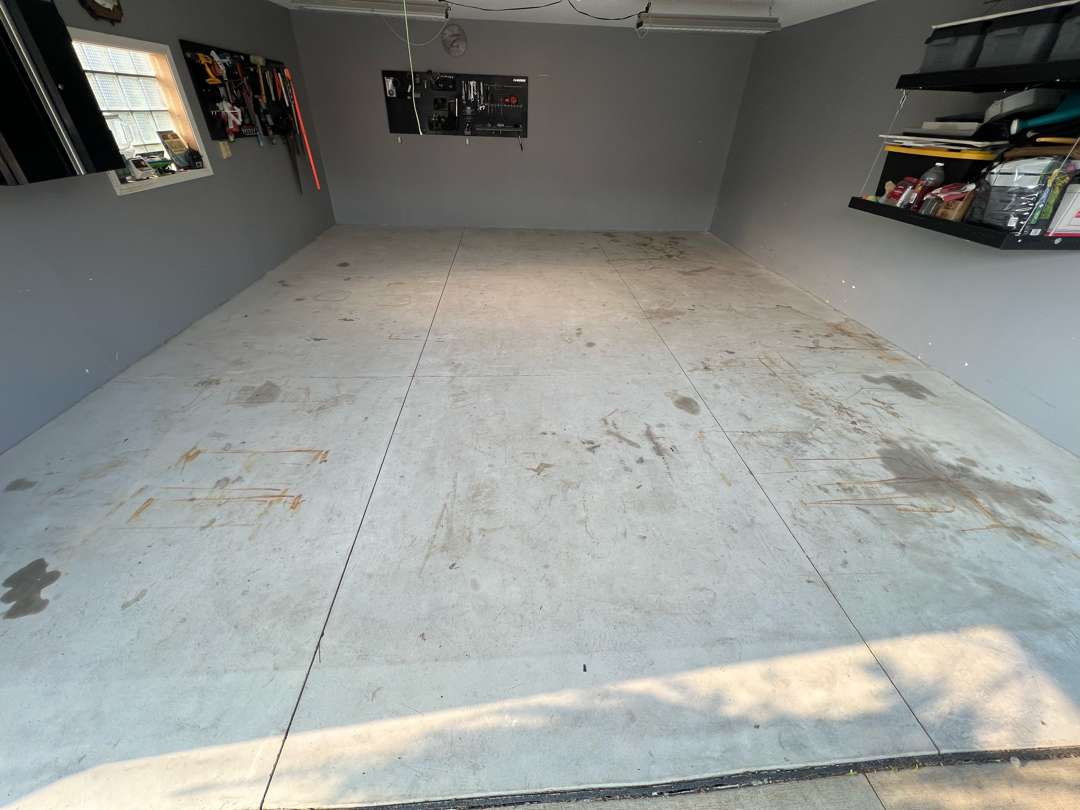
Not every concrete slab arrives in poor condition. The garage at this Centennial Street property had relatively new concrete — light in color, structurally sound, and free of the cracking and pitting that our crews meet so often in Michigan garages.
However the slab was marked with many oil spots and rust-colored scuff marks from equipment and metal objects. No prior coating was present, which greatly simplifies the process (no epoxy removal). Our scope of work did not include any steps or vertical surfaces.
At 380 square feet, this concrete floor coating job is a 1-day installation project.
Preparing New Concrete
New concrete still requires full diamond grinding before any polyurea-polyaspartic system can bond. The laitance layer — the weak surface layer that forms as concrete cures — must be removed to expose the open pore structure that the coating needs to grip. Our crew ground the full 380 square feet to remove the laitance and open the surface throughout.
The oil spots were addressed during this phase. Our crew evaluated the spots on the day of the installation — the grind cleared it from the surface without the need for additional treatment (prior oil removal step).
The scuff marks lifted with the laitance layer. Our team vacuumed the full floor when the grind was complete. The slab was clean, open, and consistent across every panel: no repair work required.
Coating Application
Our clients had selected Slatestone — a cool, neutral blend of mid-grey, charcoal, and white flakes. Our crew applied the MC-3.5 polyurea-polyaspartic coating system across the prepared surface.
Then we broadcast the Slatestone flakes into the wet polyurea base coat to achieve a full and even coverage across all four panels of the slab. the next stage consisted in applying the clear polyaspartic topcoat with 16-grit traction additive throughout.
The 16-grit traction keeps the underfoot feel smooth, but offers a reliable, non-slippery grip.
The Finished Floor
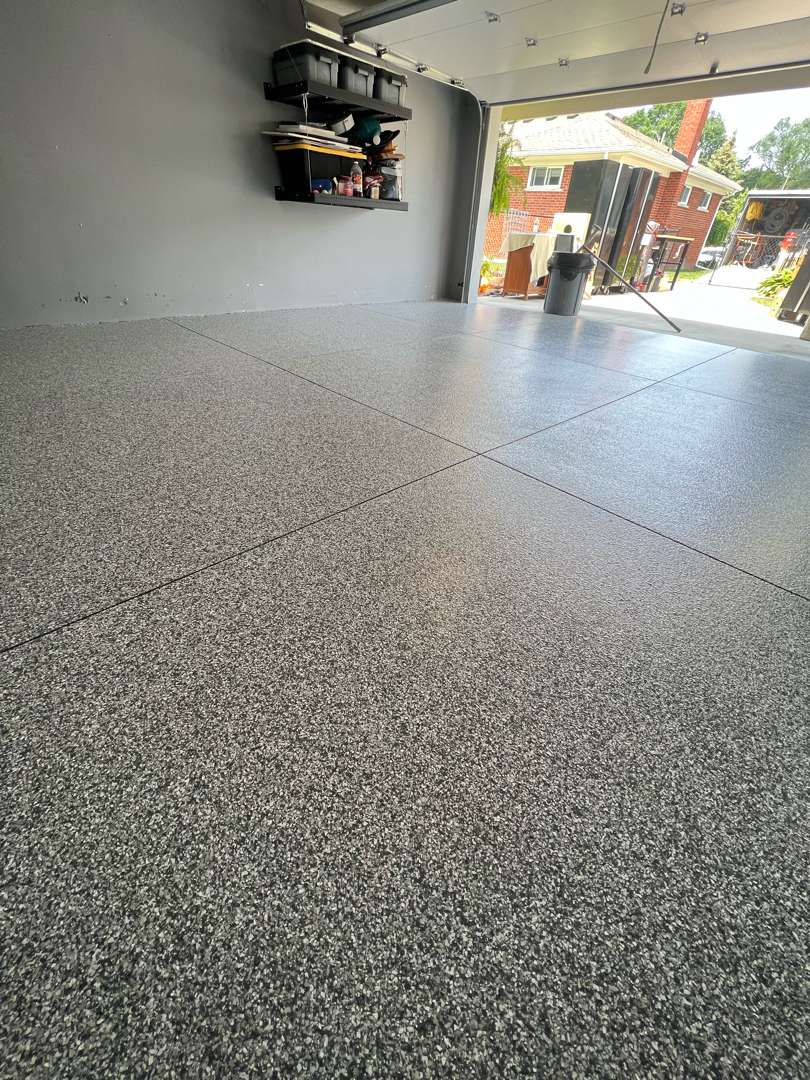
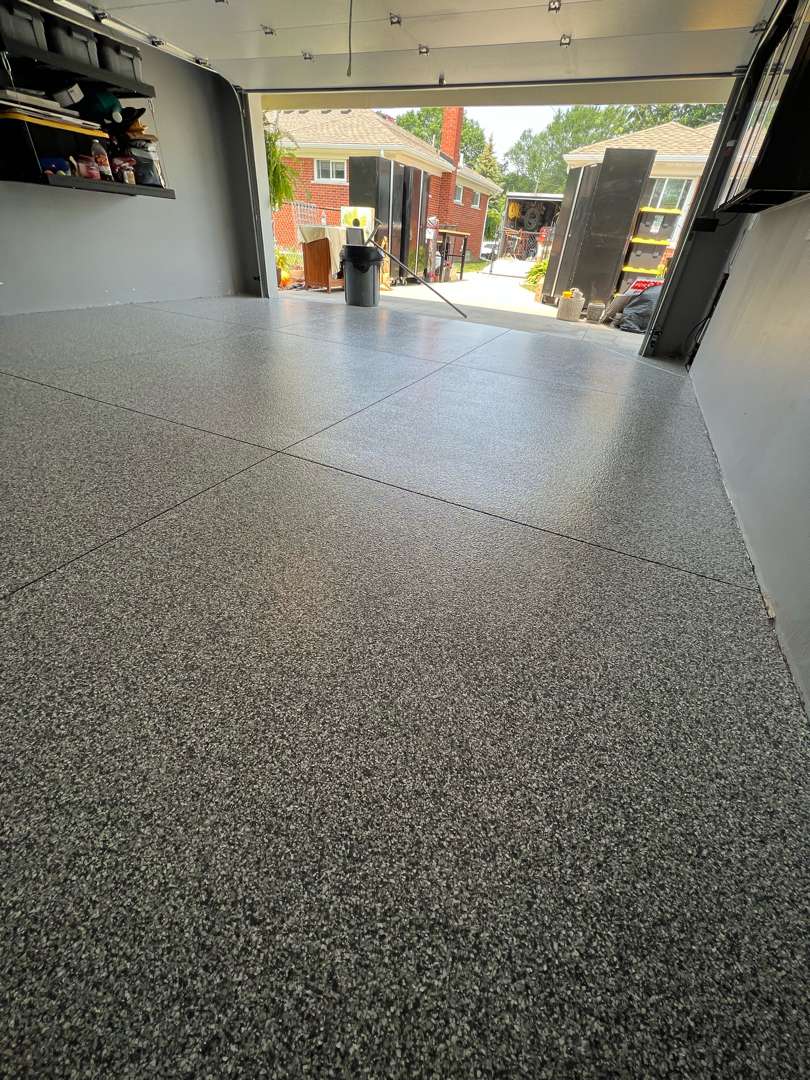
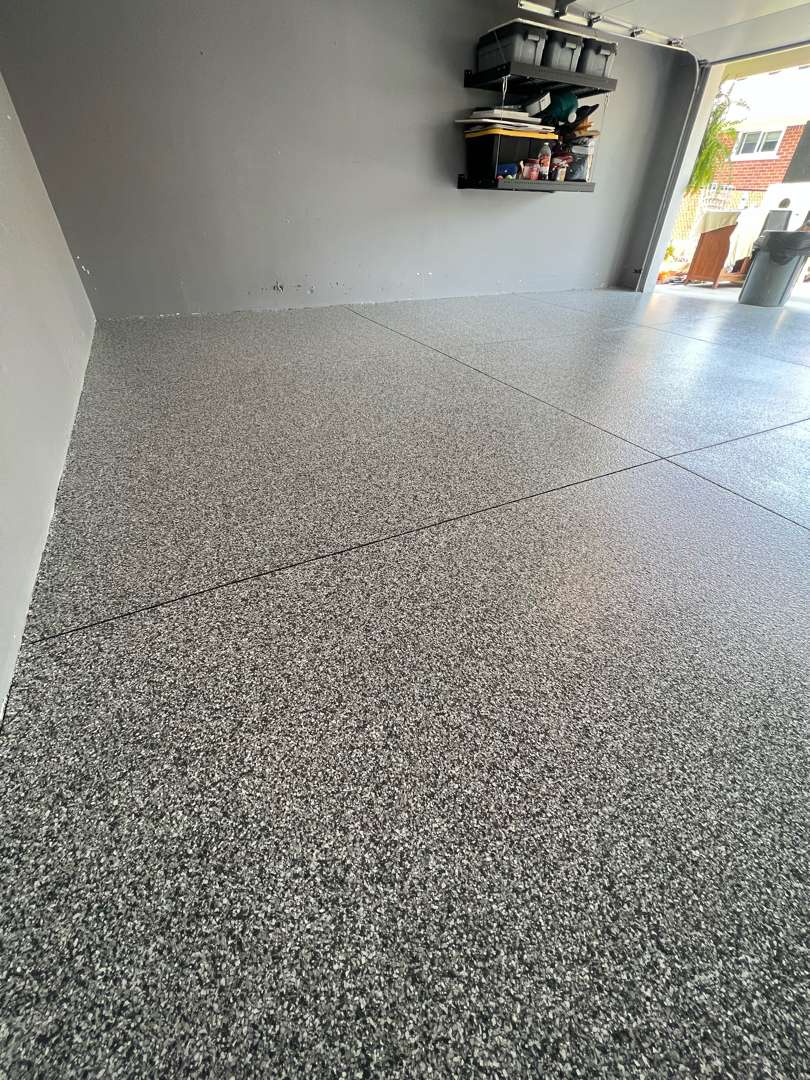
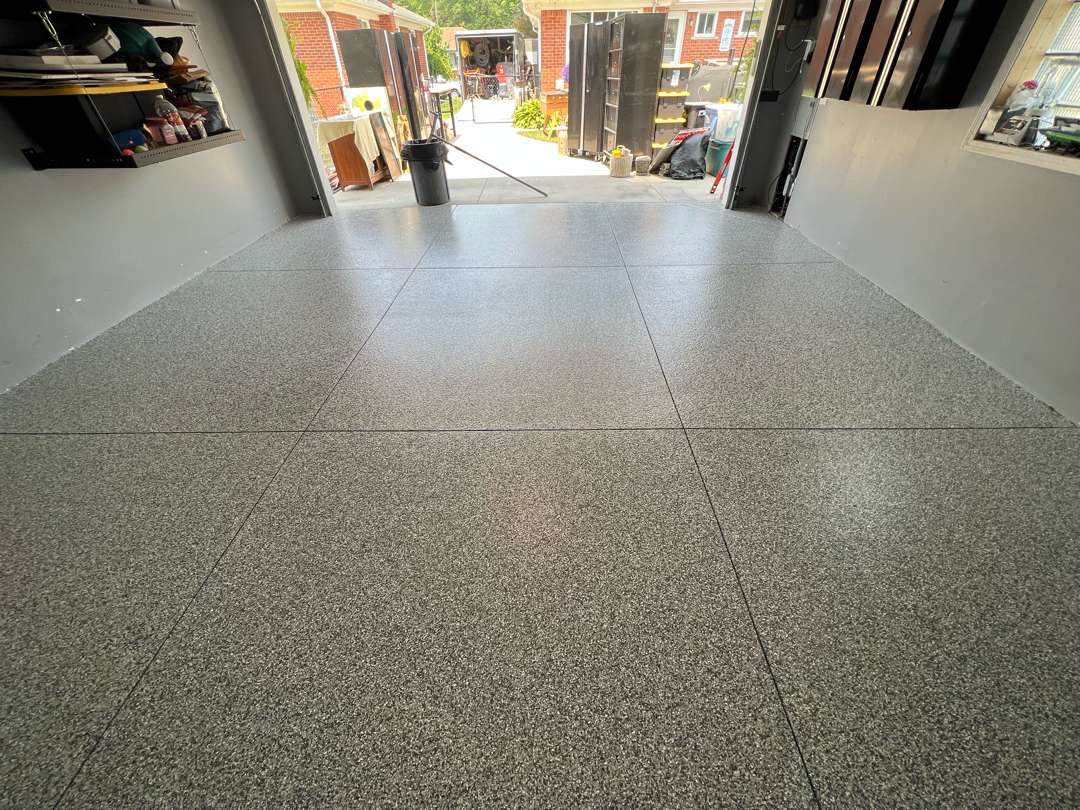
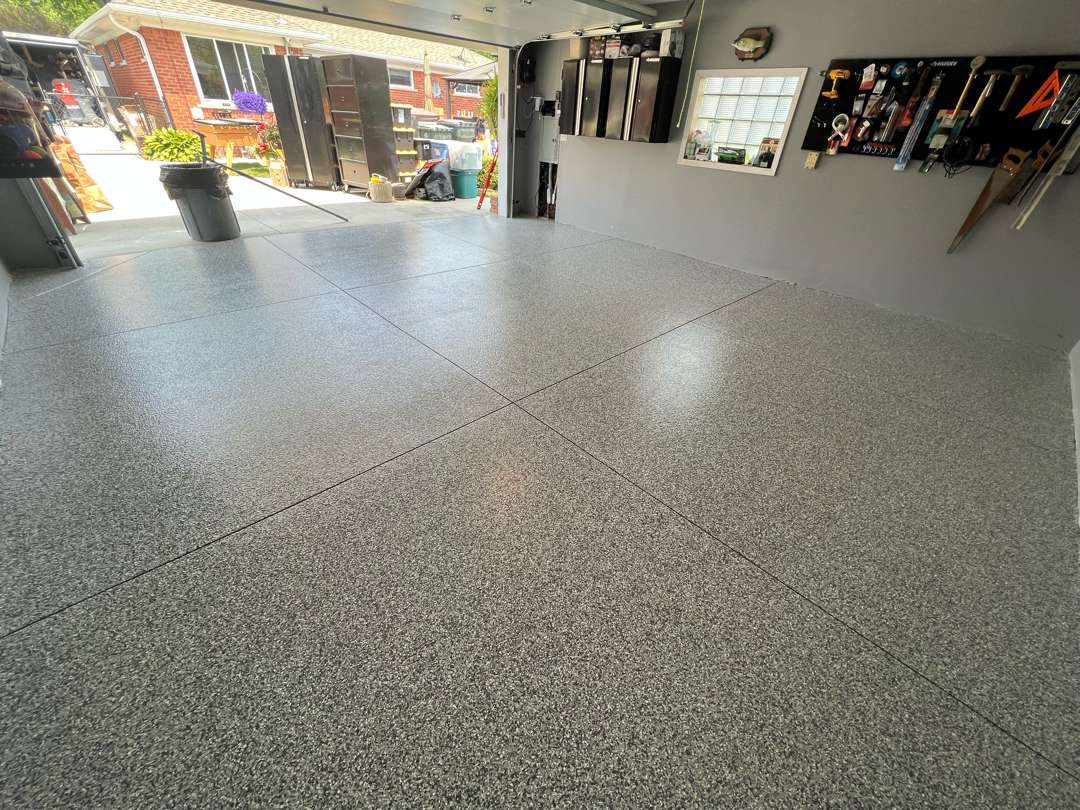
Slatestone suits this garage well. The cool grey tone of the flakes reads consistently with the paint on the walls — the floor and the interior finish the space on a monochromatic analogous color palette. The four control joints form a clean cross pattern through the finished surface. Every panel reads the same color and flake density from wall to wall.
The oil spots and scuff marks are just a bad memory. The laitance layer that was preventing any coating from bonding was removed early in the installation process.
New concrete only needs proper preparation and the dual-layer system we install, that seals, protects, and finish its surface.
Testimonials - What other clients say
Leif Britting
Carol Murray
Garage Floor Coating Job
on Liberty Street
Liberty Street, St. Clair Shores, MI
Not a Great Concrete Slab to Start With
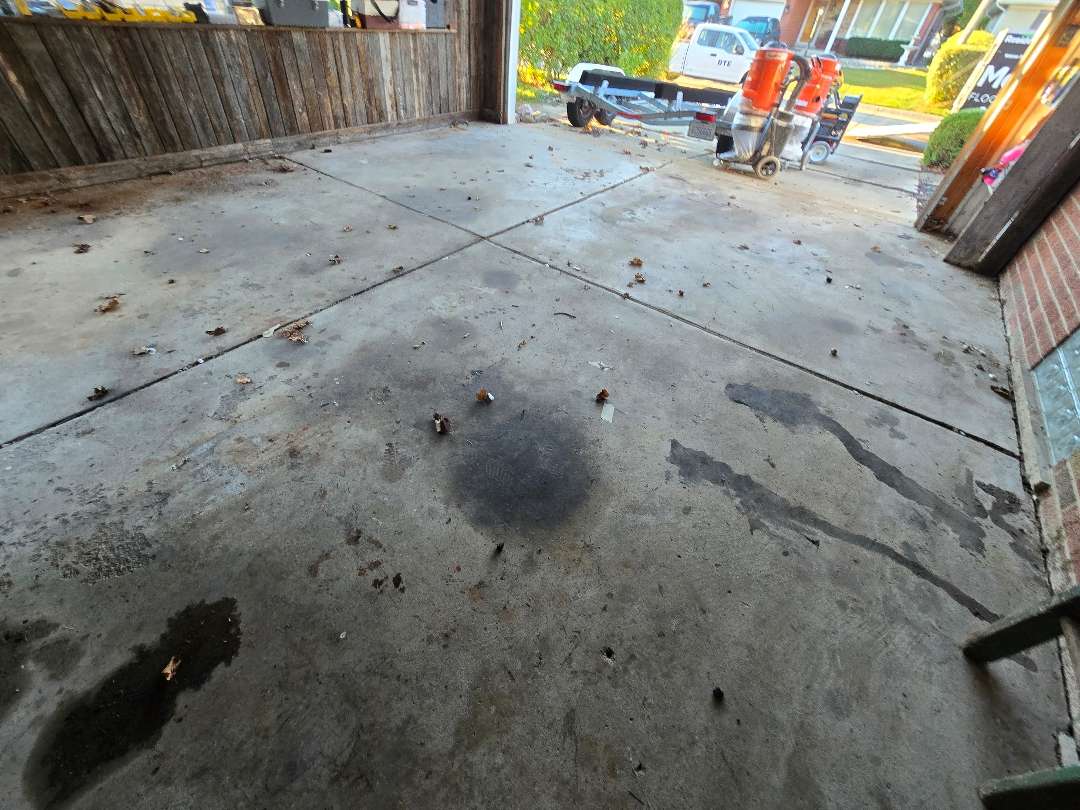
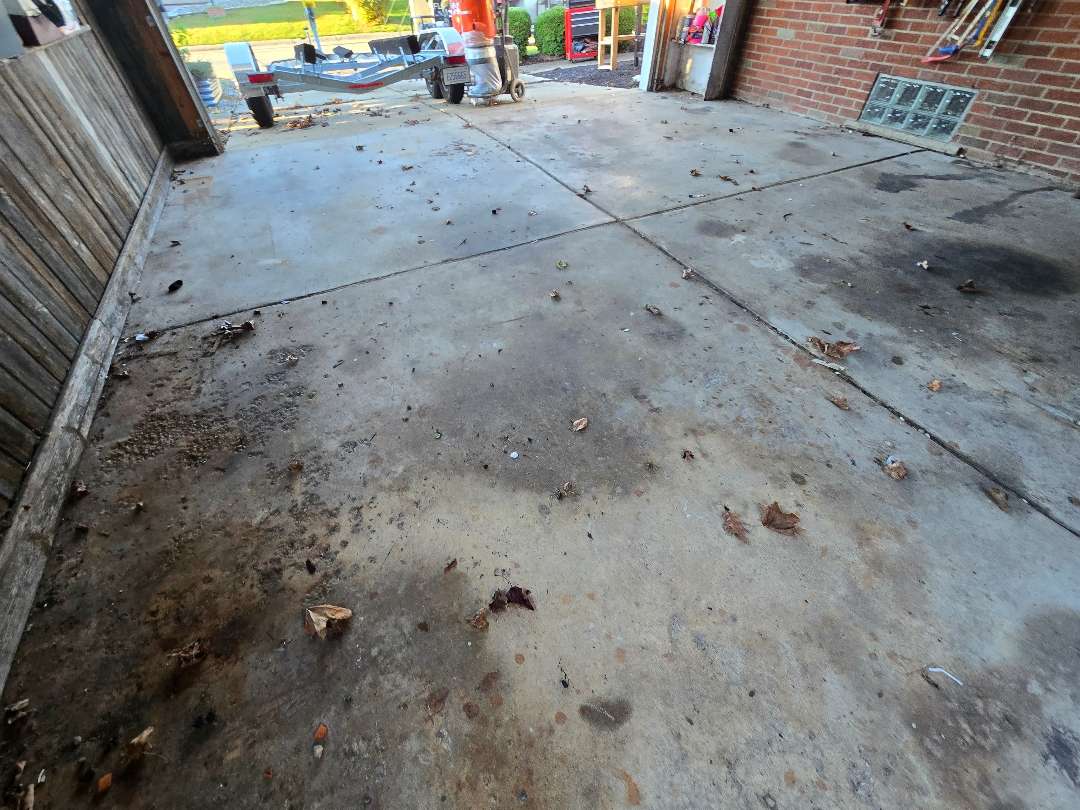
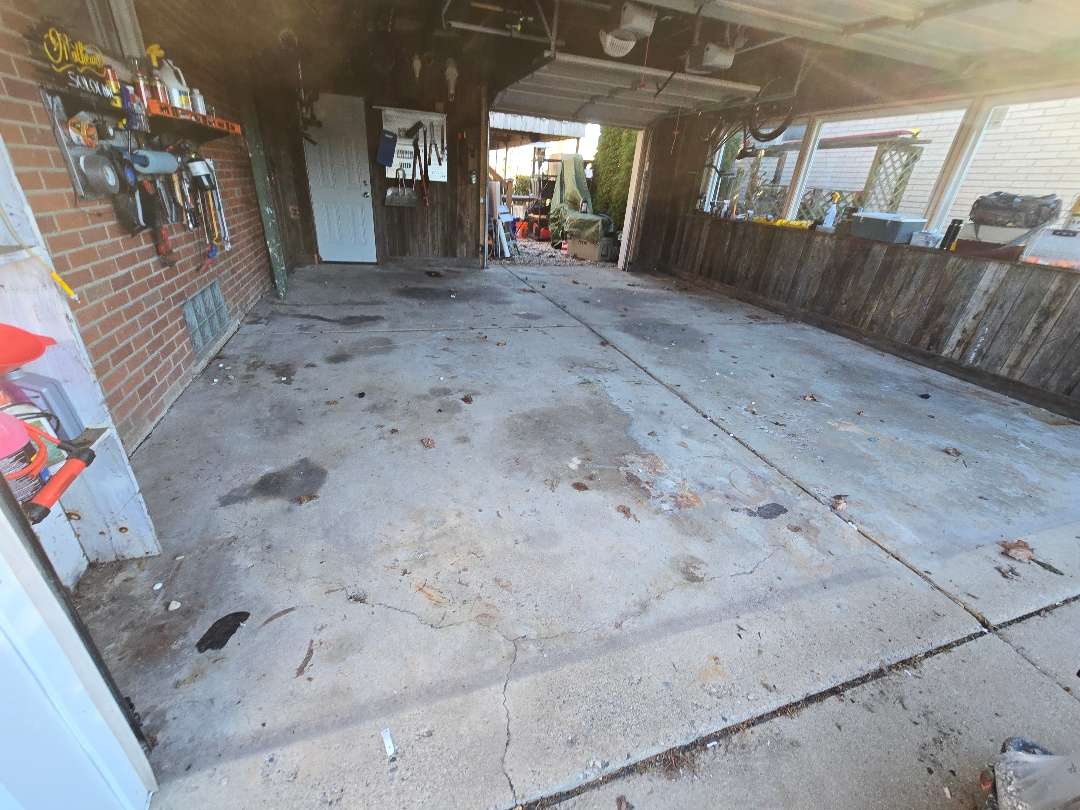
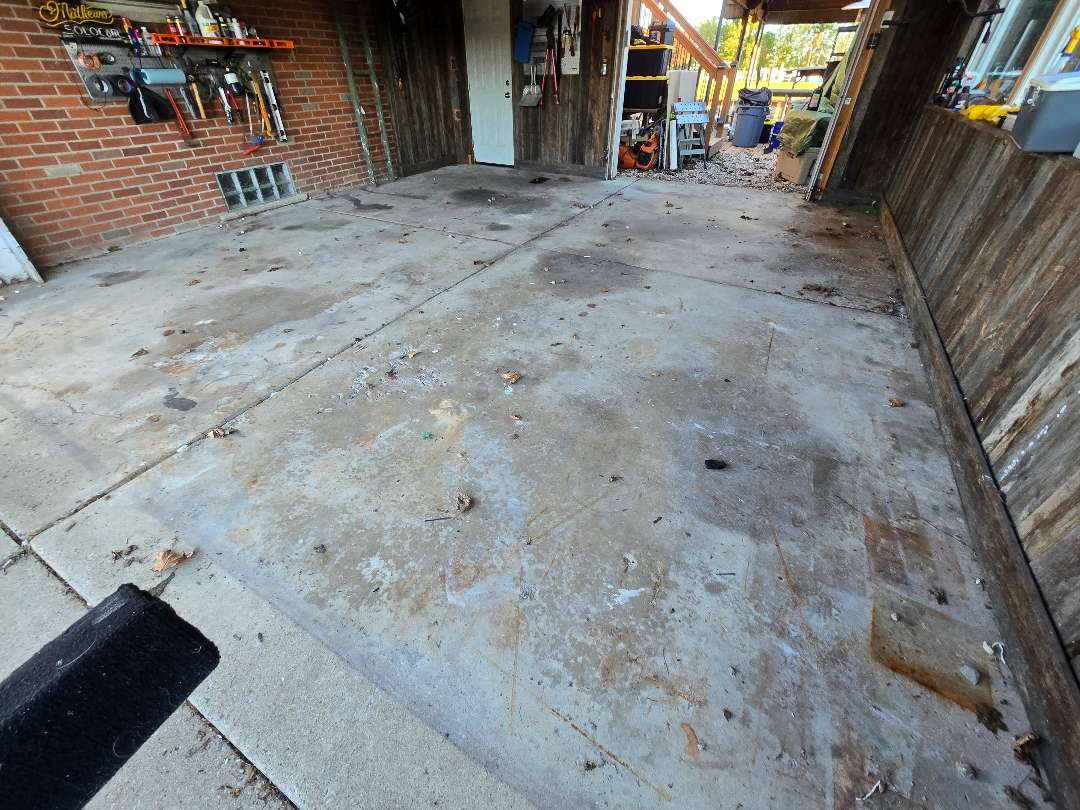
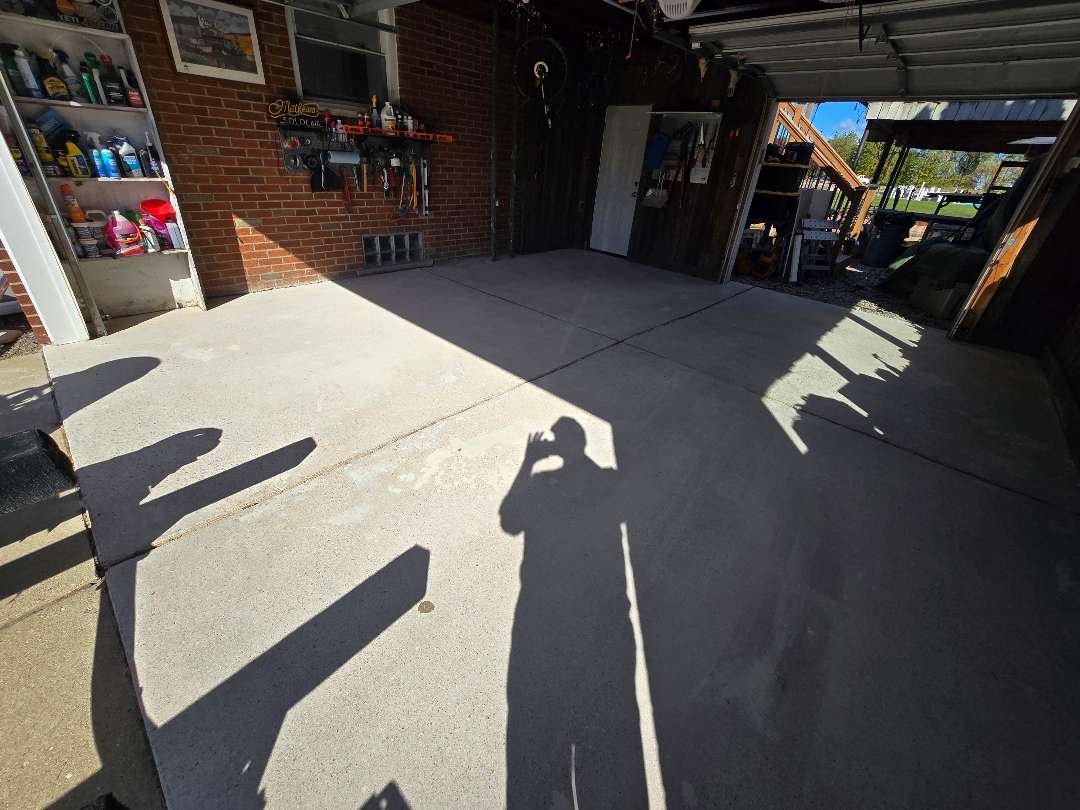
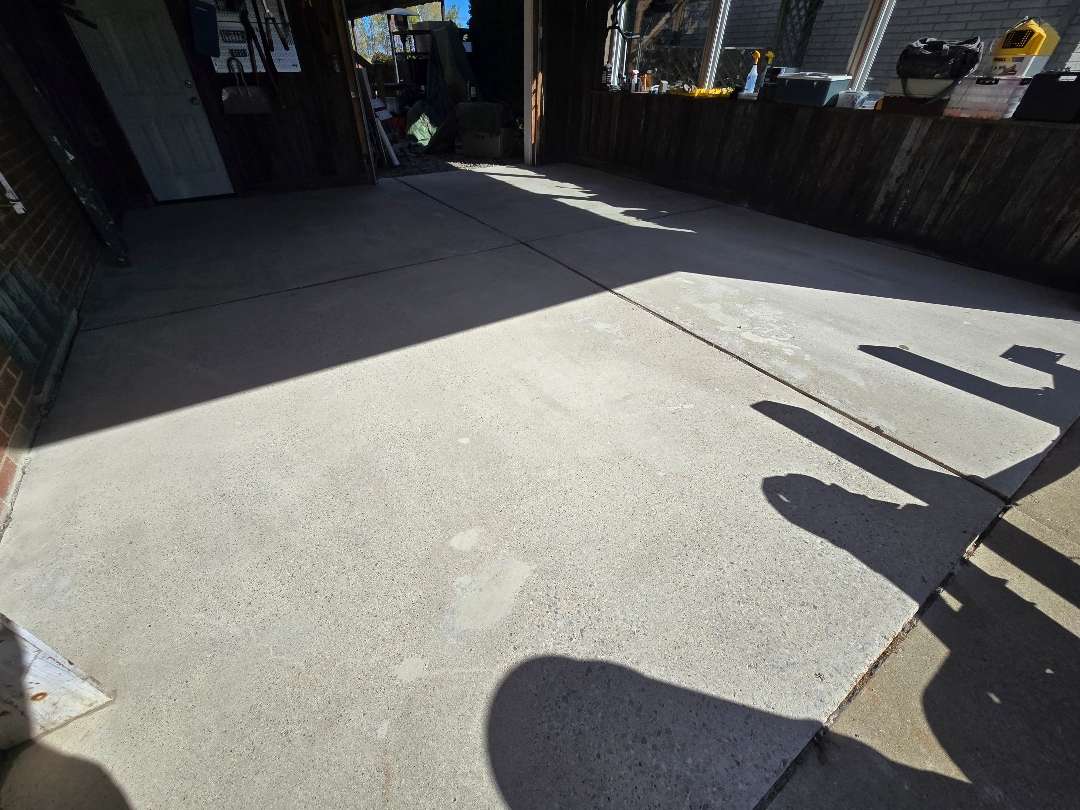
The 289-square-foot slab at this Liberty Street garage showed the kind of accumulated damage that builds over years of heavy use. Large oil stains over multiple zones across the surface. Several areas with deep pitting, genuine material loss in the concrete. A hairline crack through one of the panels. Surface contaminated throughout, with no previous epoxy coating present.
Our crew did a lithium vapor meter test before any work began. The reading confirmed moisture vapor transmission above threshold. The slab required a moisture vapor barrier before the polyurea-polyaspartic floor coating system could go down.
The scope of work did not include vertical surfaces or steps.
First Grind
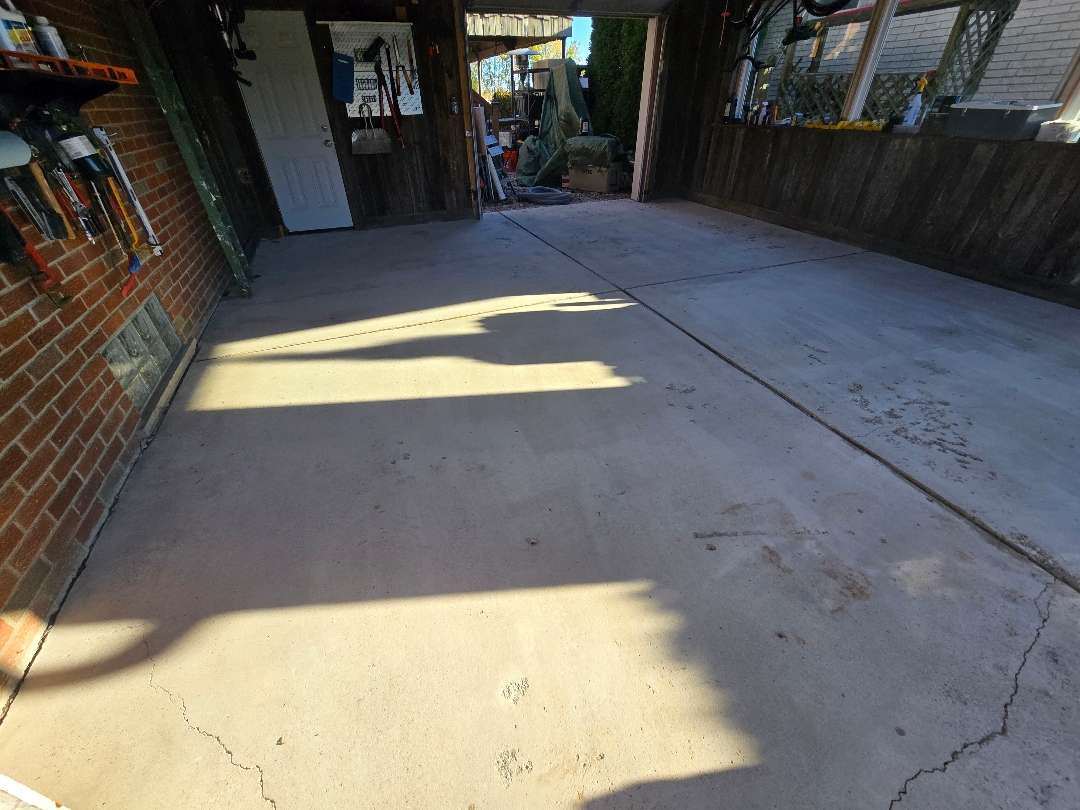
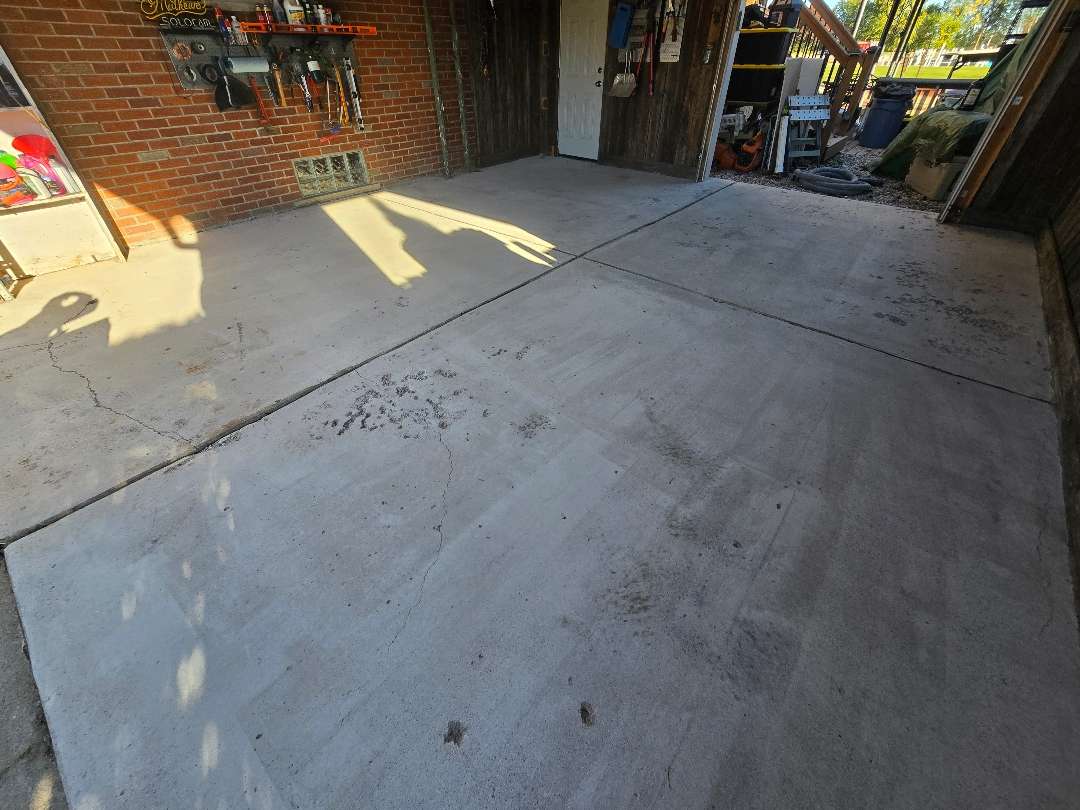
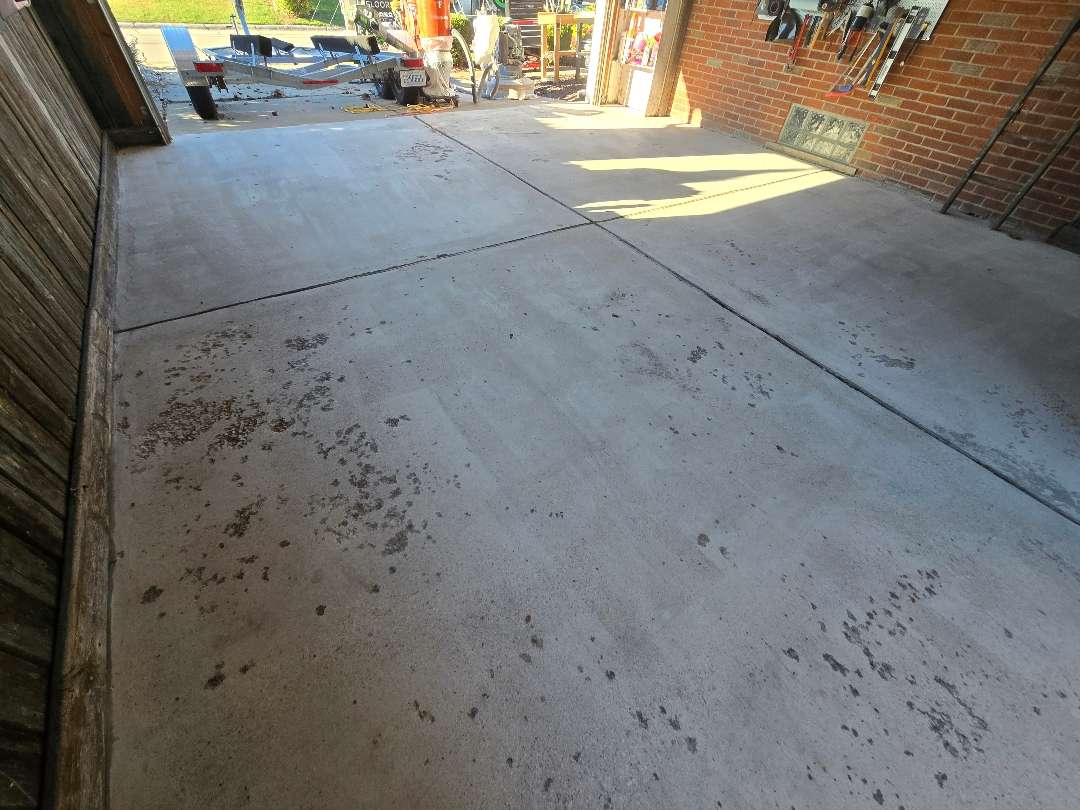
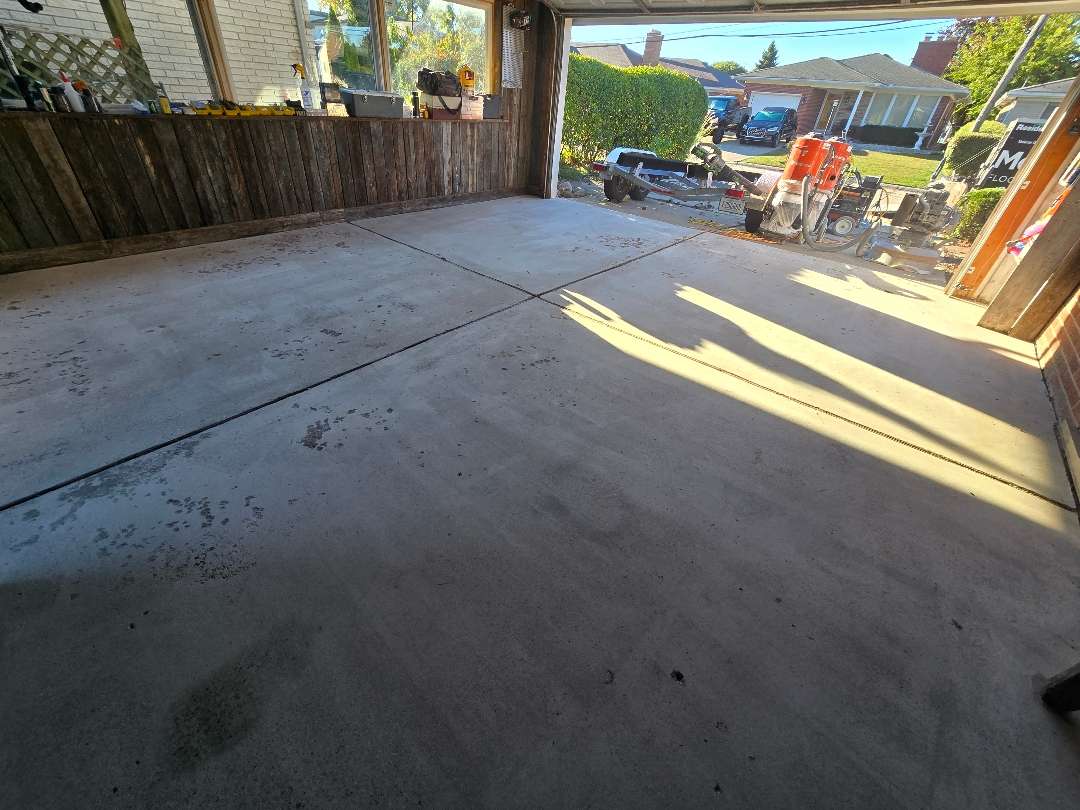
Our crew began with a full diamond grind across all four panels of the slab. The first pass removed the laitance layer and opened the pore structure of the concrete. It also exposed the full depth of the pitting and confirmed the crack path.
The oil contamination remained partially present after the first grind — the depth of the saturation required further treatment. Our team vacuumed the floor after the grind pass was complete. The surface was open and profiled, ready for the “patch and flood” phase.
Patch, Flood Coat, Second Grind
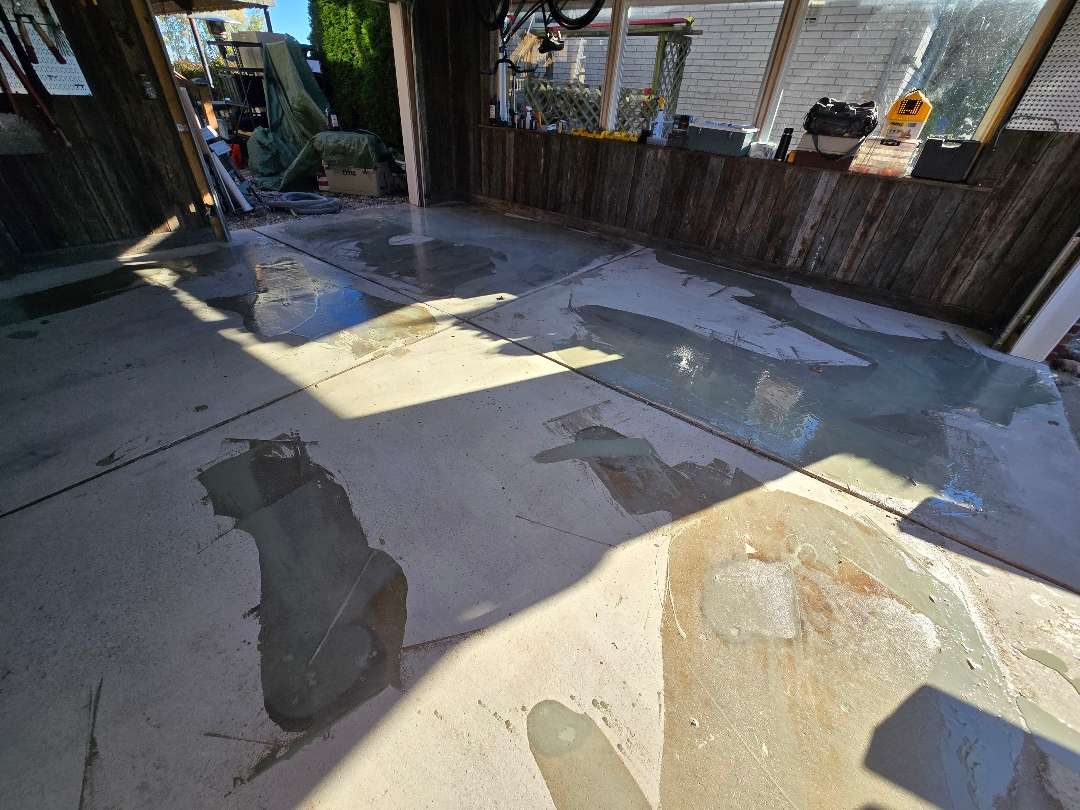
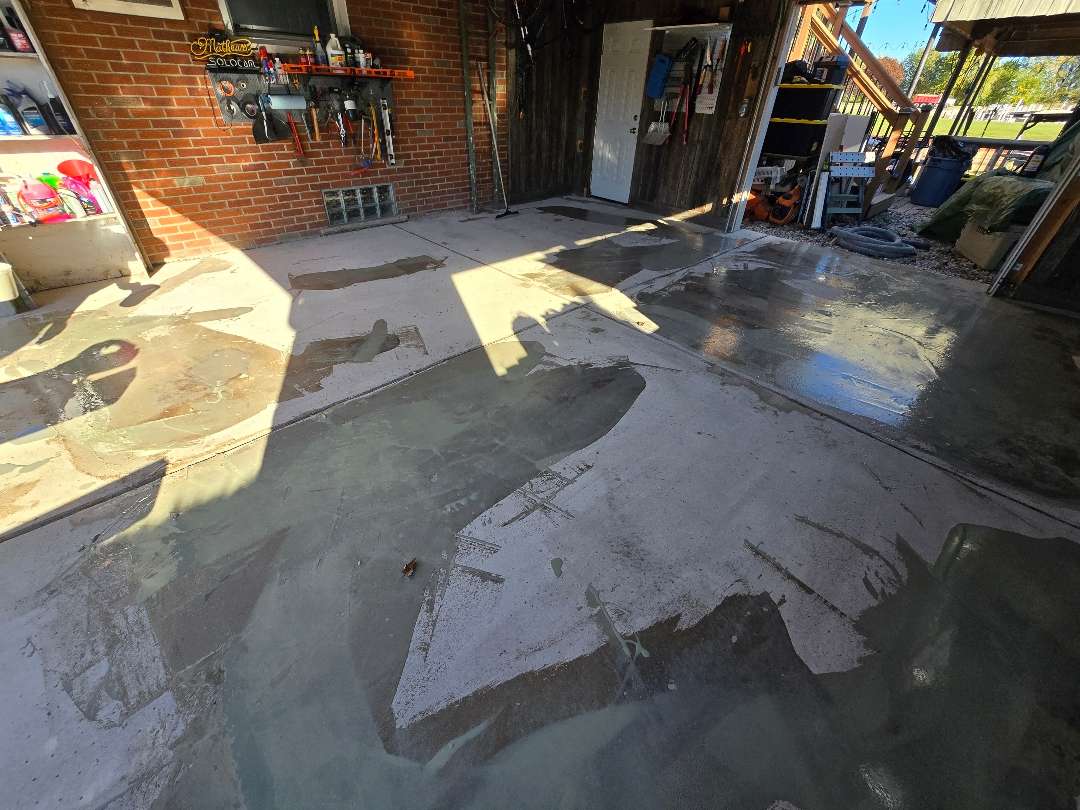
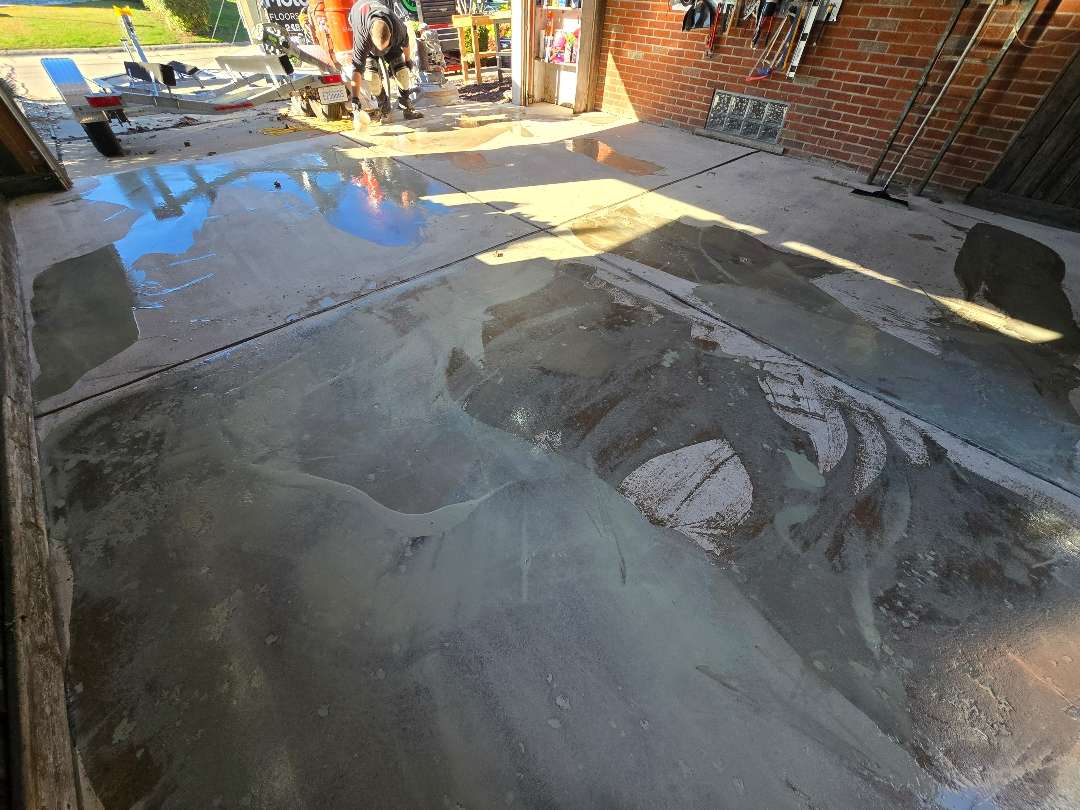
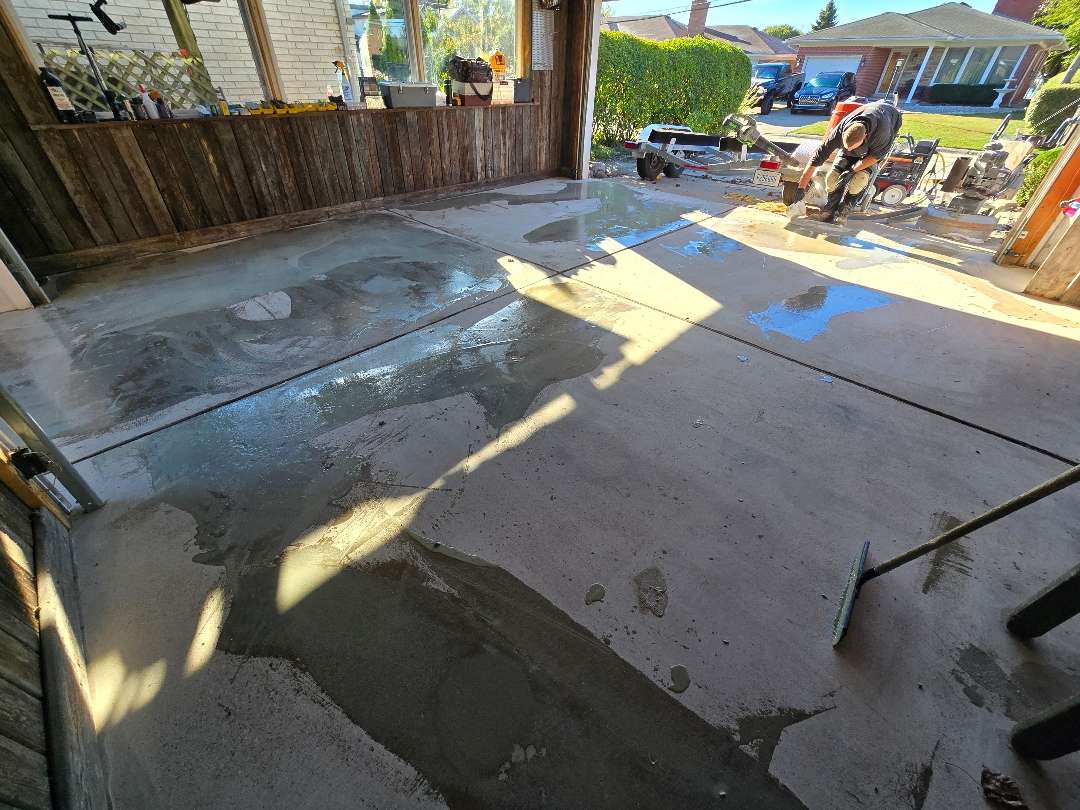
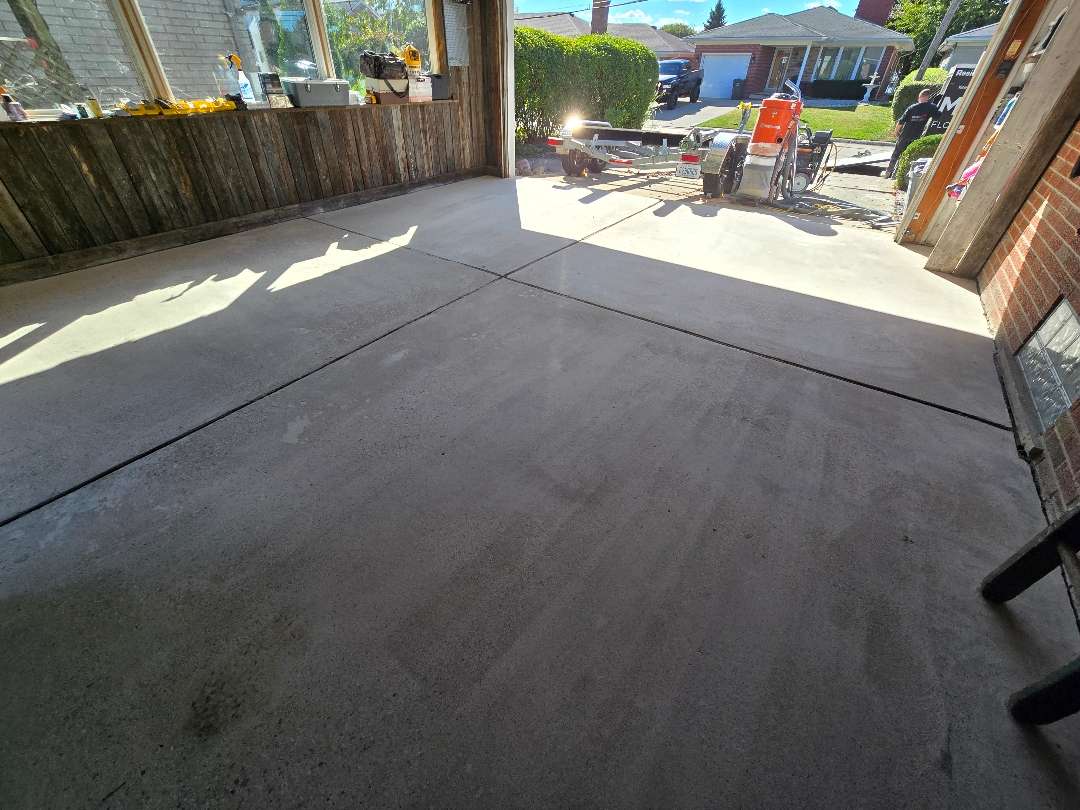
We filled the large pits with a cementitious patching compound, then applied a flood coat across the slab. The flood coat leveled the surface and encapsulated the remaining oil contamination. It also filled the hairline crack and the smaller surface voids throughout the floor.
We ground the slab a second time after the flood coat cured. The second pass knocked down the high points of the patch material. It brought the surface to a consistent profile across all four panels.
Once the second pass was doen, we vacuumed the floor again. At this point, the slab was flat, clean, and ready for the moisture vapor barrier.
Moisture Vapor Barrier
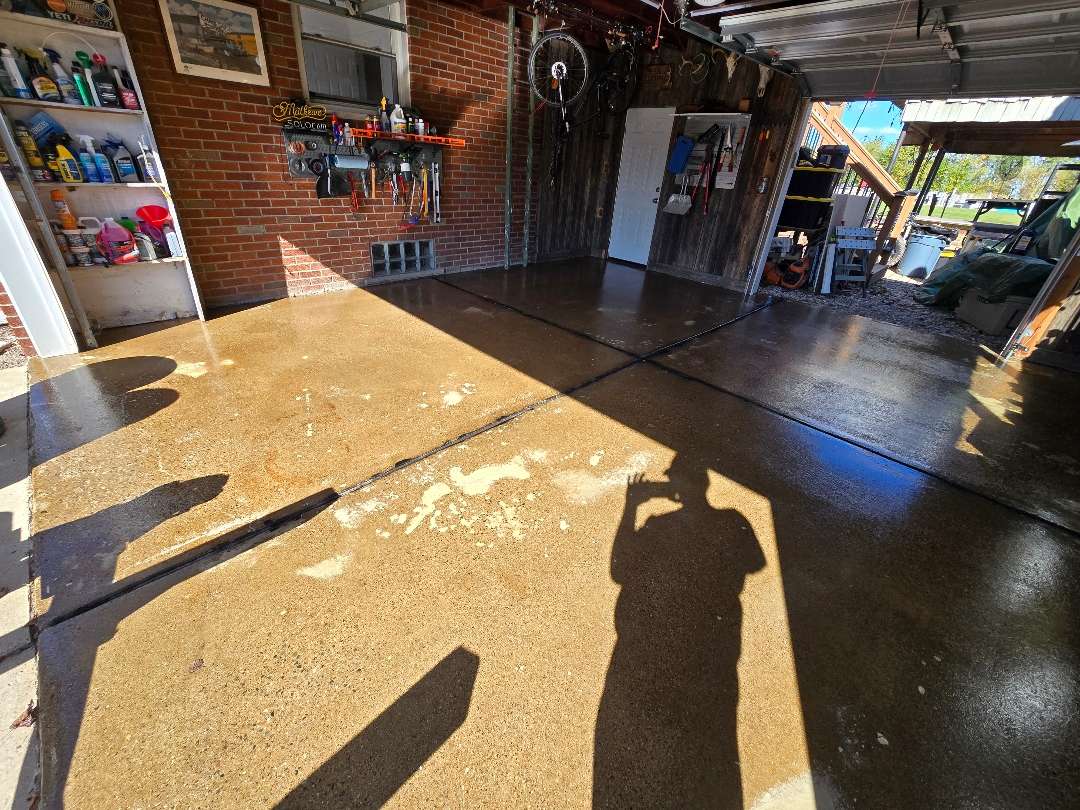
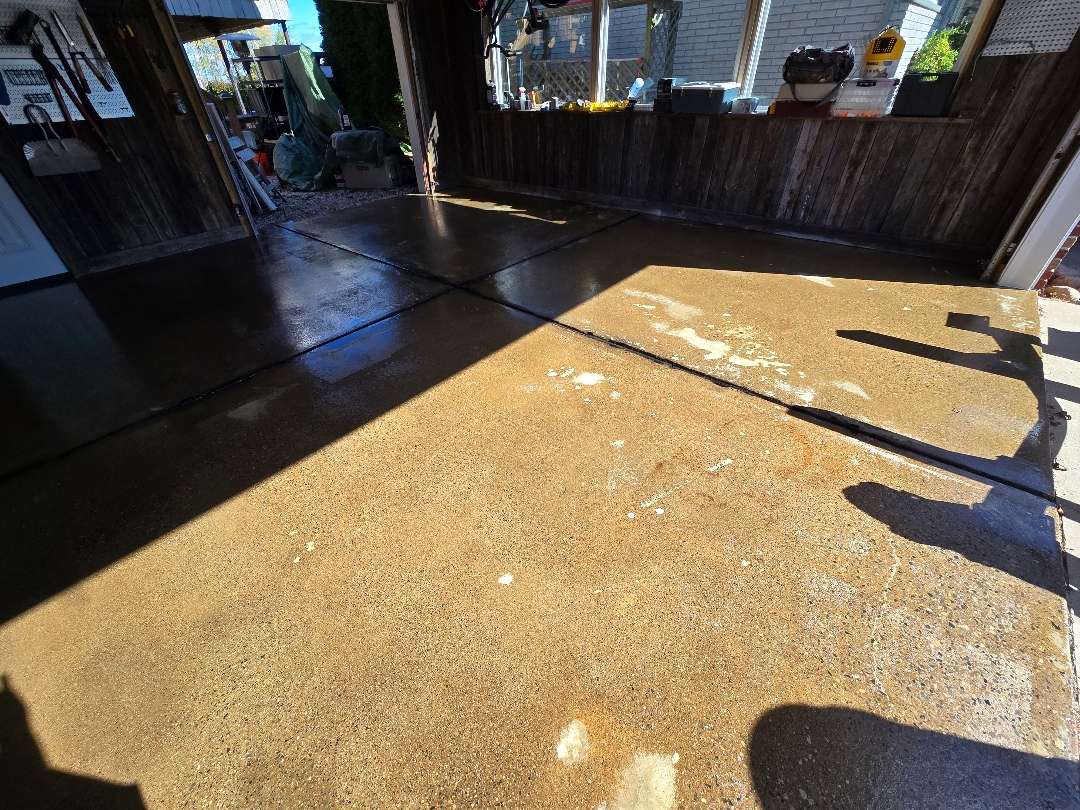
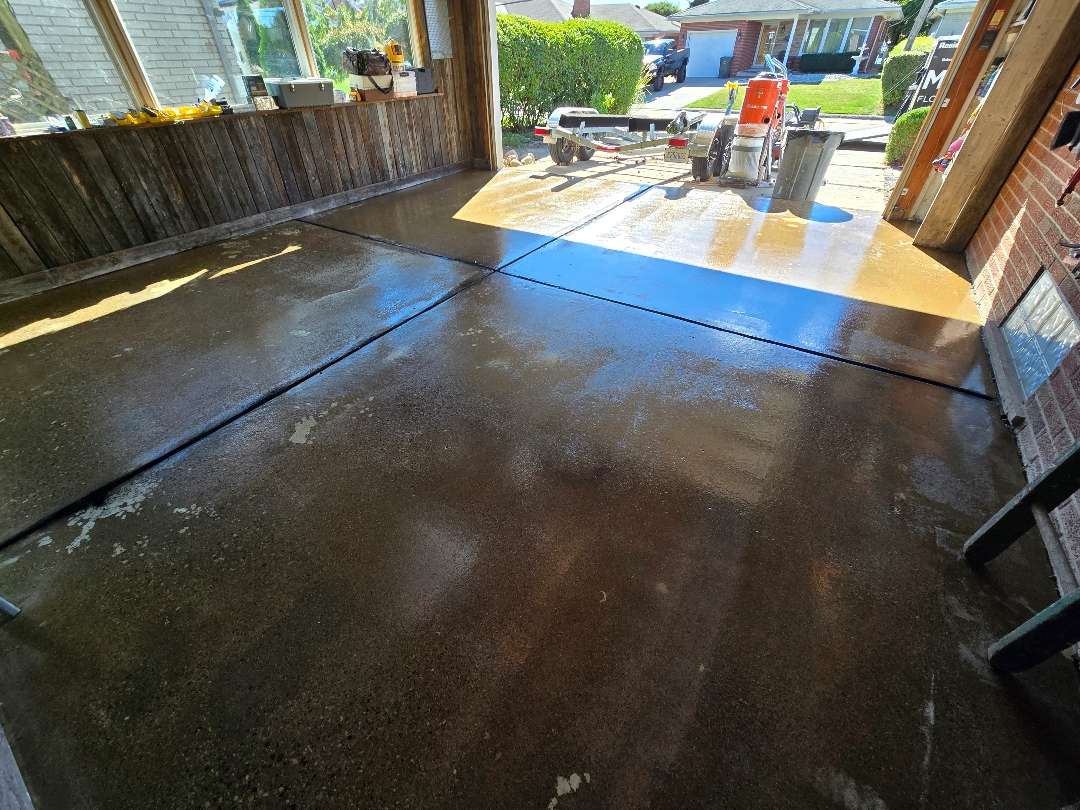
The LVM test result required a moisture vapor barrier before any finish coating. We applied the MC-4.9 moisture vapor barrier coat across the full 289 sq. ft. We worked the material into the prepared surface profile. The barrier coat seals the slab against vapor transmission, and serves as the bonding layer for the polyurea base coat to follow.
Our Dual-Layer Coating System
We applied the H-5 polyurea base coat over the cured moisture vapor barrier, then broadcast “Autumn Brown” flakes into the wet base coat in full coverage across all four panels. Autumn Brown carries warm charcoal, brown, and cream tones. This blend reads rich and consistent in both natural and artificial light.
Our crew applied the clear polyaspartic topcoat with 36-grit traction additive throughout. The 36-grit is well-suited to a working garage that sees regular foot traffic and vehicle use.
The Finished Floor
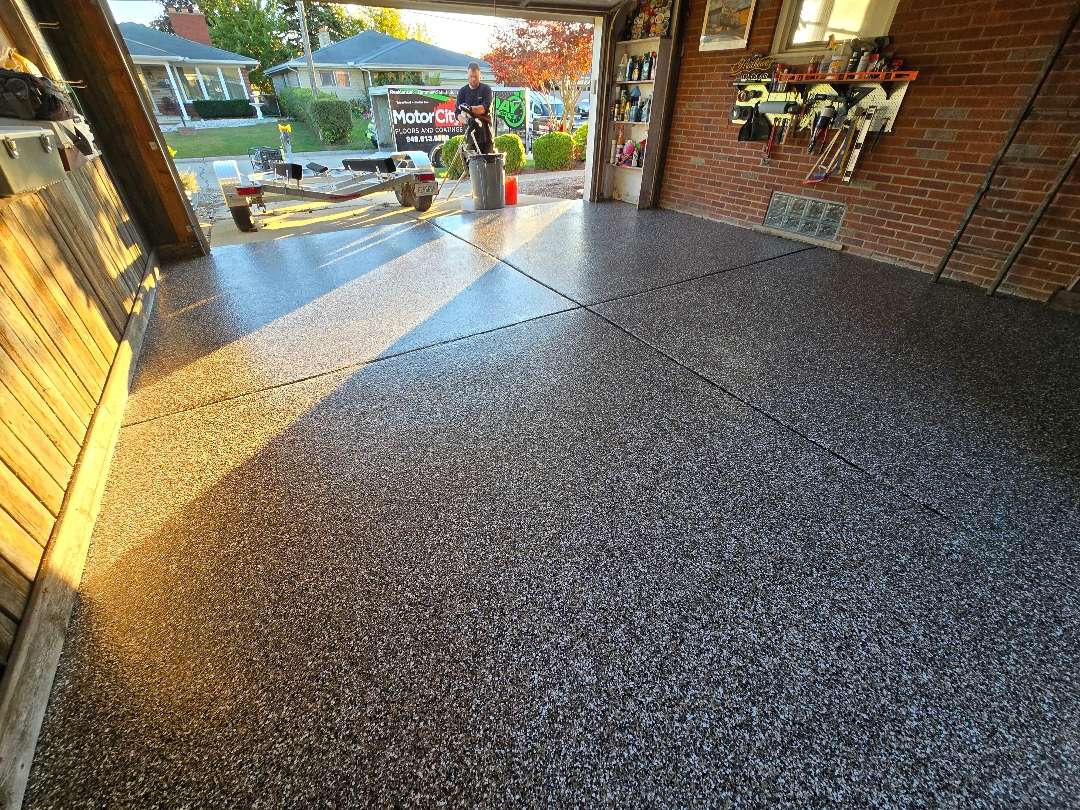
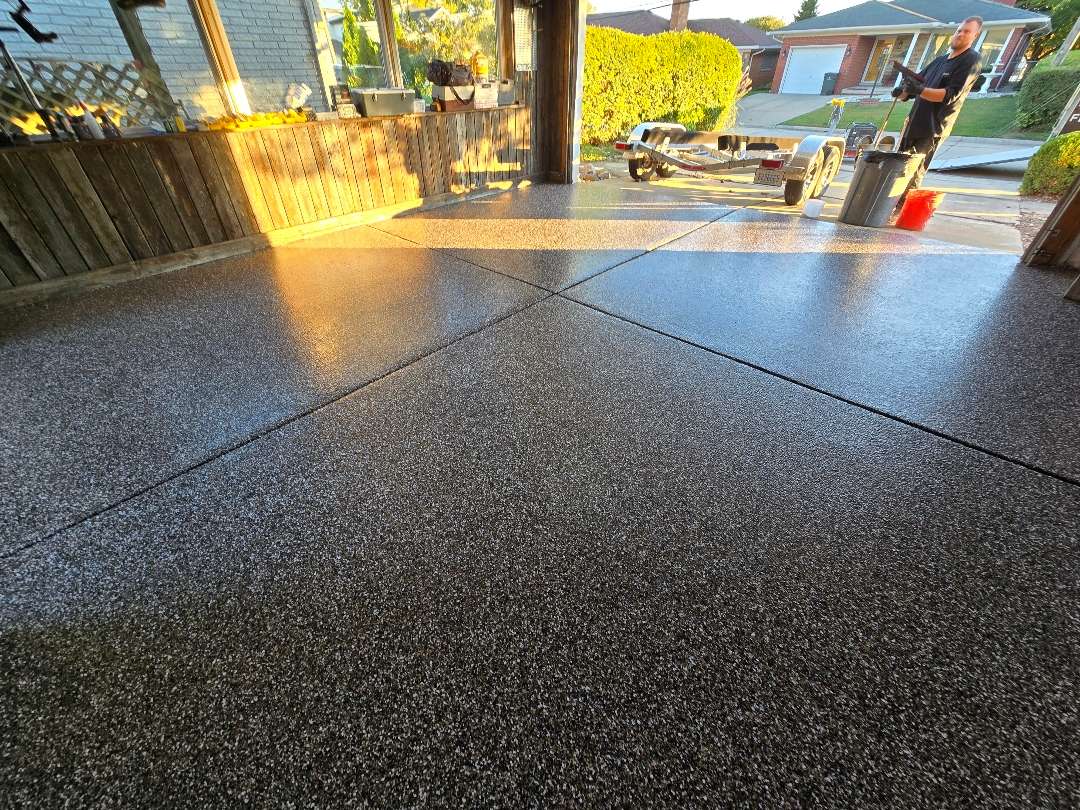
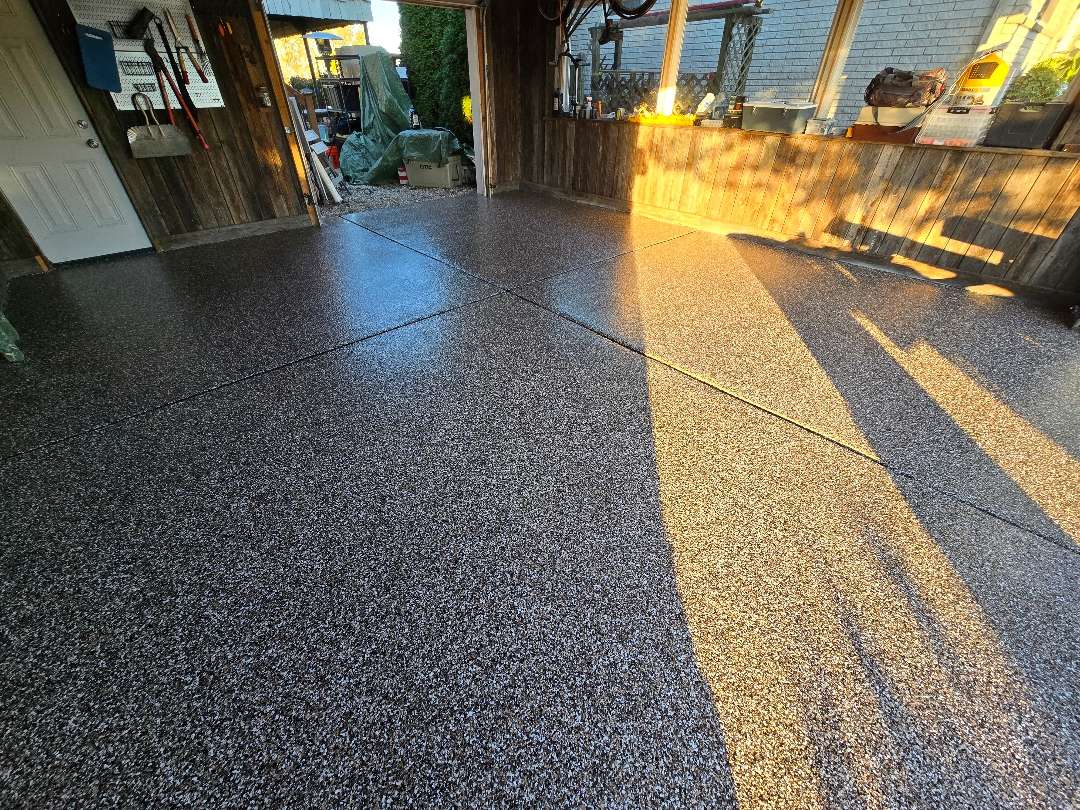
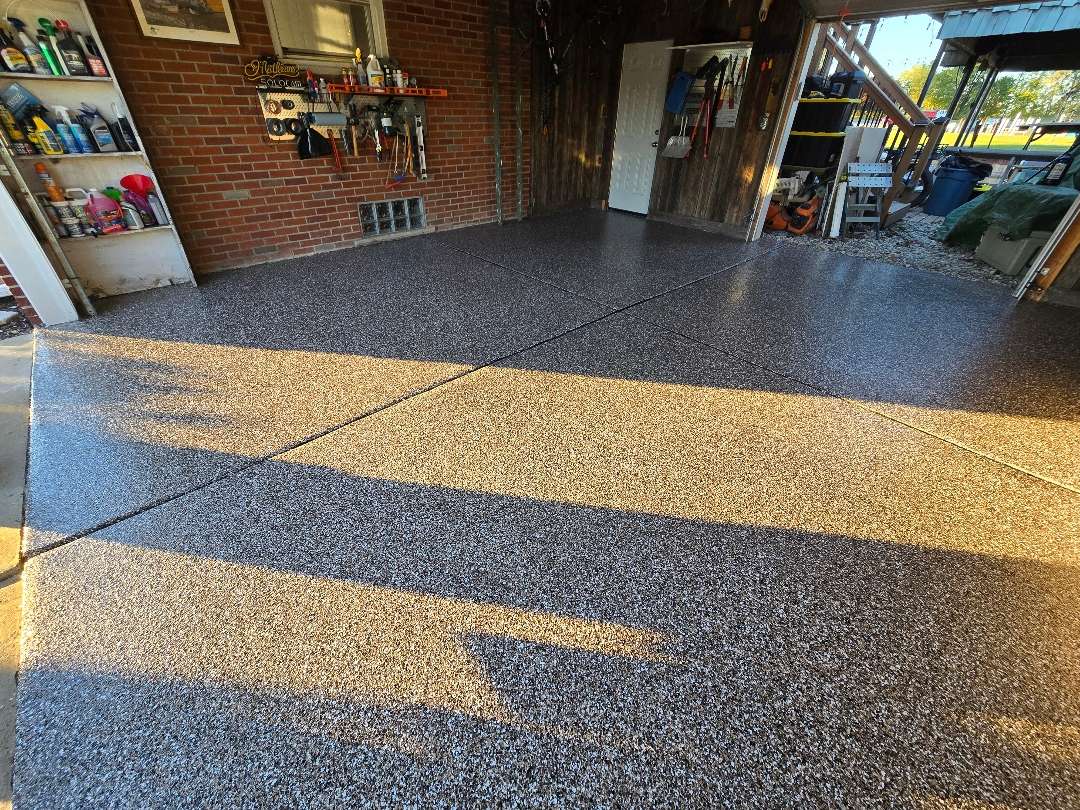
The “Autumn Brown” flake blend works well in this garage. The warm tone matches the walls. The four panels of the slab finish at the same flake density and color read throughout.
The raised platform at the rear received the same coverage as the main field — the floor reads as one continuous surface from front wall to back.
The oil stains are gone. The rust deposits along the joints are gone. The pitting that ran through every panel is sealed and flat. The 22 linear feet of vertical transitions are coated and consistent with the floor. All 515 square feet — horizontal and vertical — are finished and protected.
Testimonials - Our Clients Speak...
Tonya Cook
Kevin Lynch
CONCRETE GARAGE Floor Coating
JOB on Hoffman Street
Hoffman St., St. Clair Shores, MI
An Oil- Stained Garage Slab
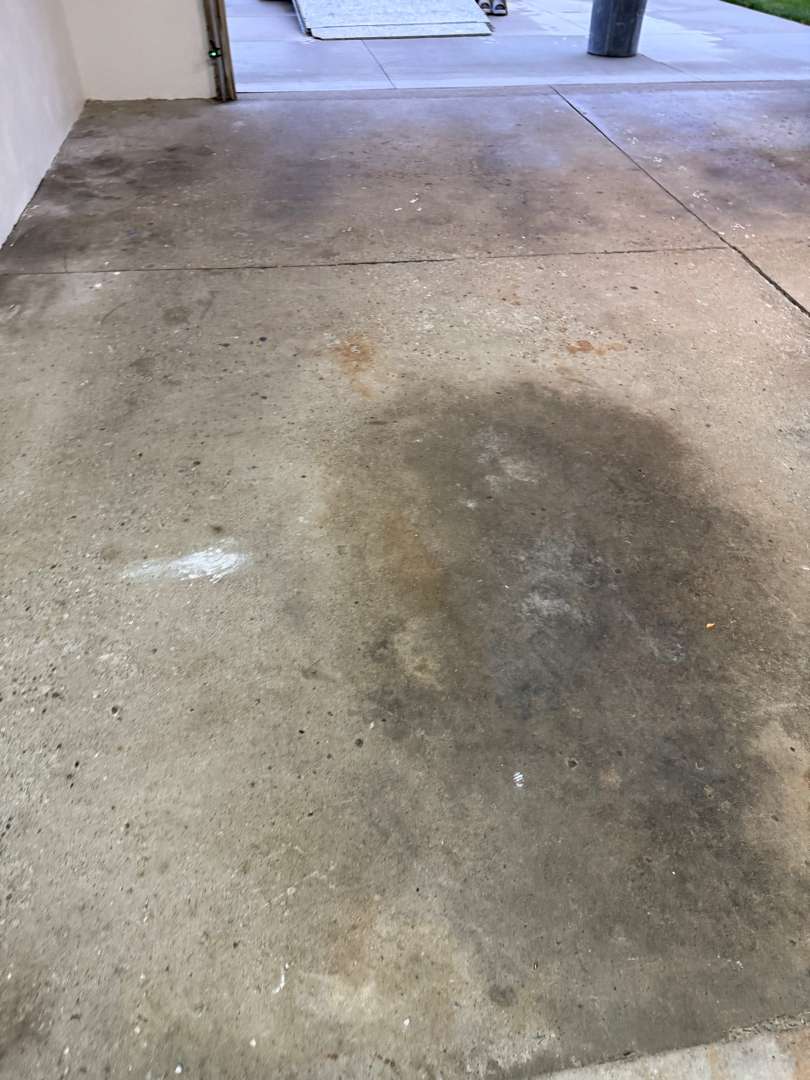
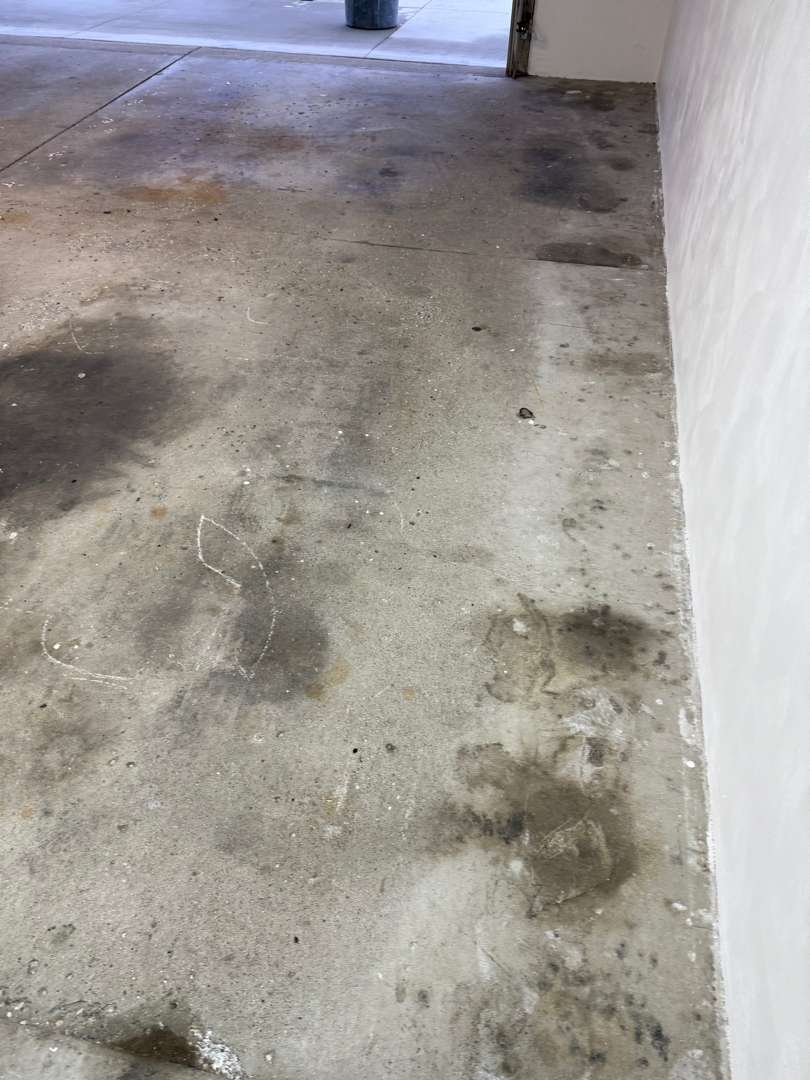
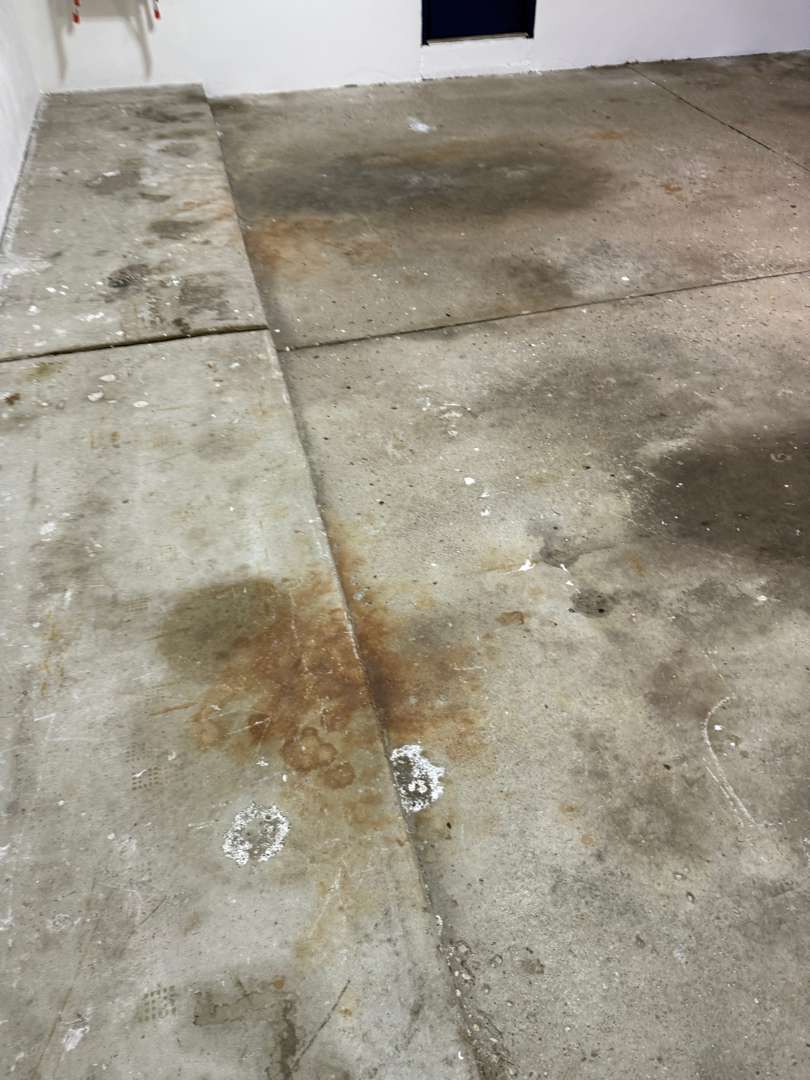
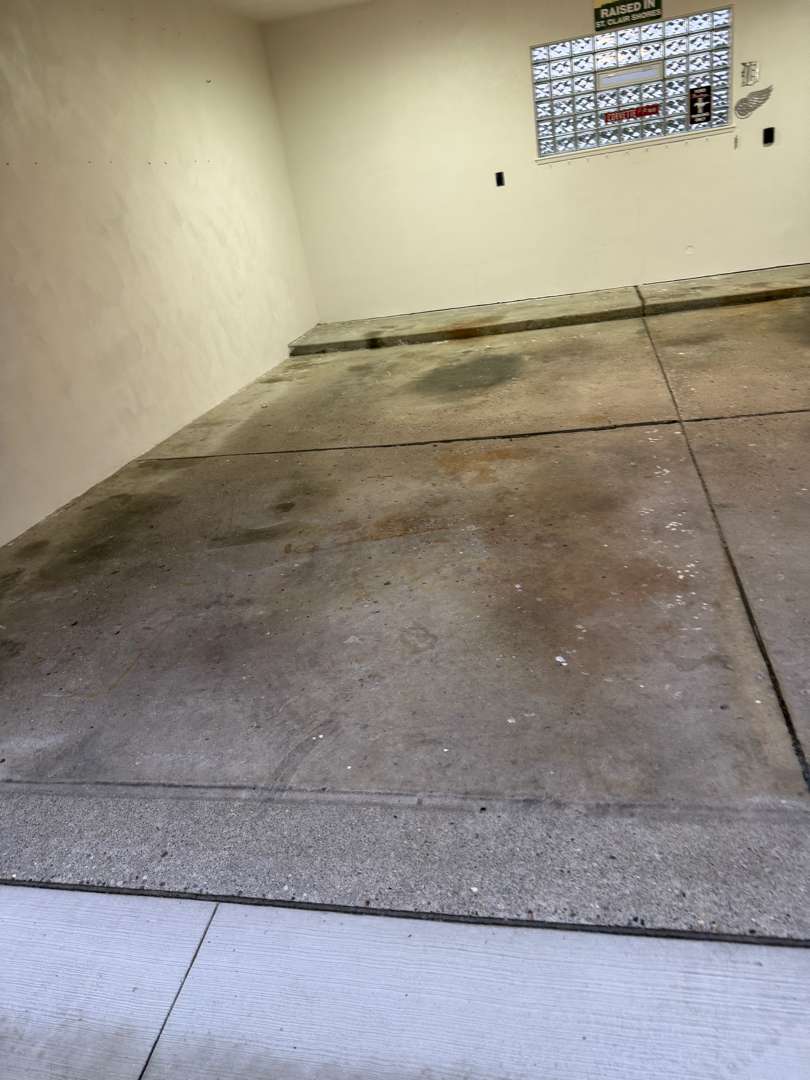
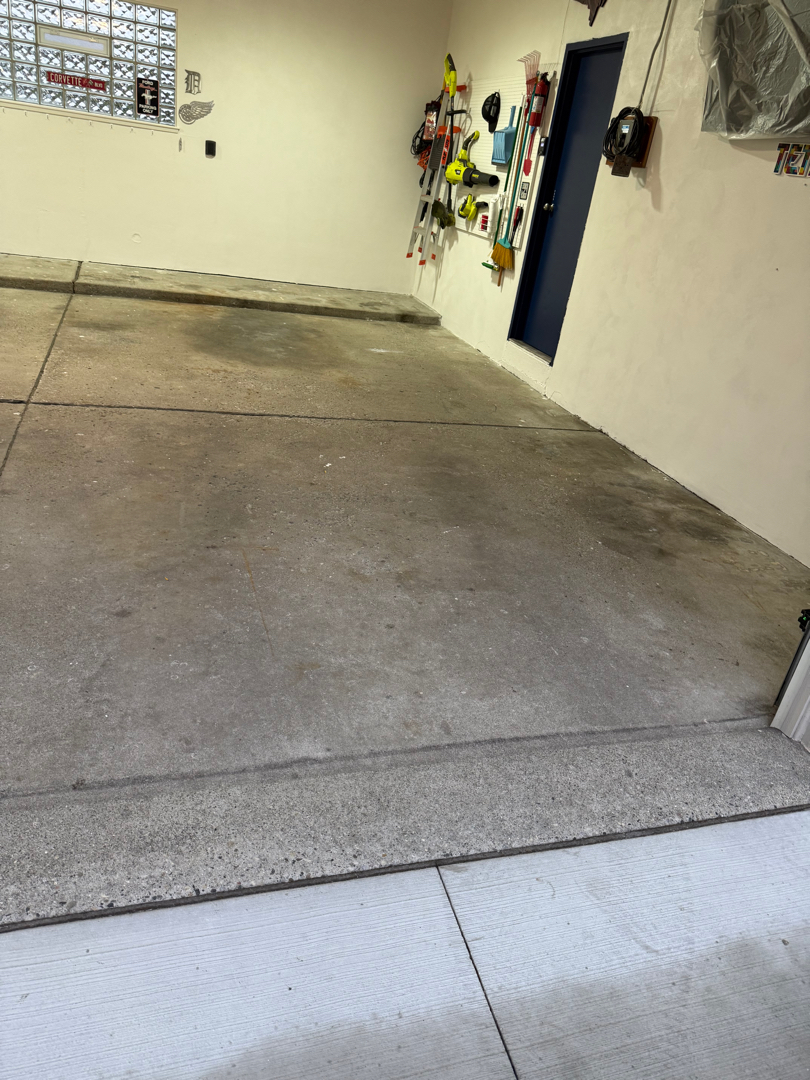
The slab at this Hoffman St. garage measured 515 square feet. The garage itself was in good shape — freshly painted white walls, a glass block window, sports memorabilia, tools organized on the wall.
The concrete had not kept pace with the rest of the space.
We observed pitting distributed across the full surface. No single zone was spared — the material loss showed in every panel. Oil staining on two areas in the mid-section of the slab. Rust-colored deposits formed along the control joint lines.
White paint drips from a prior wall project had dried onto the concrete along the wall edge. Chalk markings were present across the mid-panels. No cracks anywhere in the slab.
The project scope included 22 linear feet of vertical surfaces (the face of the raised platform at the rear of the garage). No steps.
We took a lithium vapor meter reading on arrival. The reading was within range for the MC-3.1 system. No moisture vapor barrier required.
Surface Prep
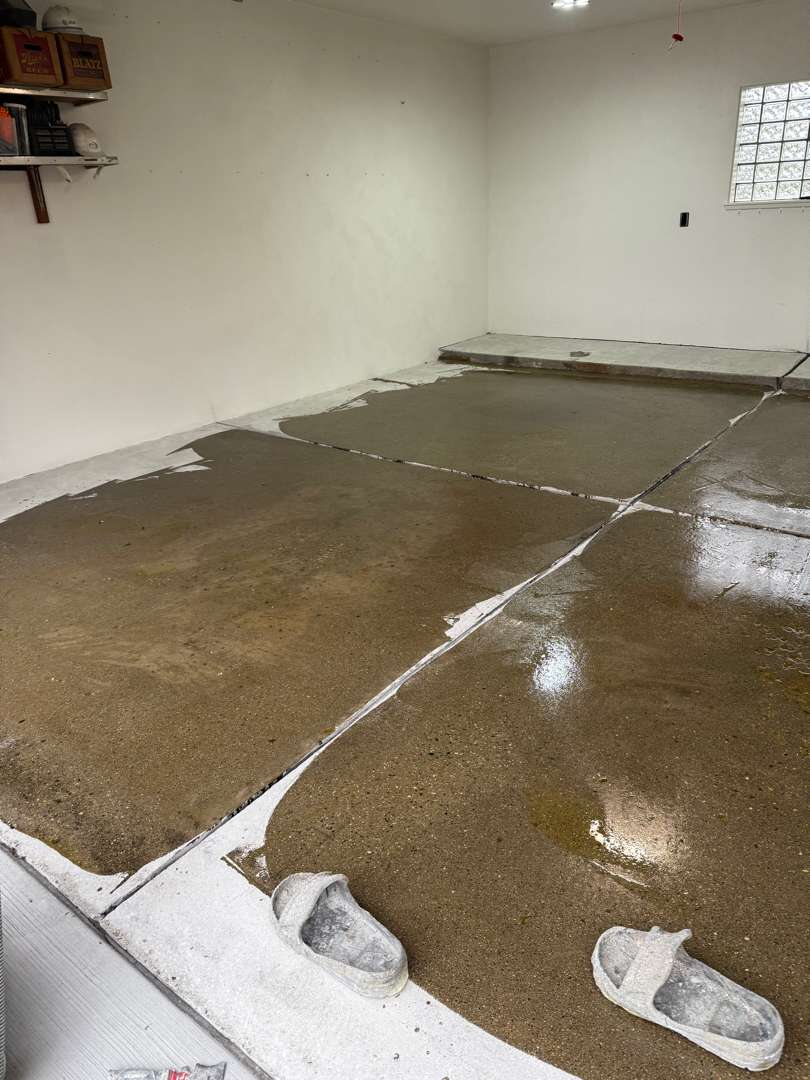
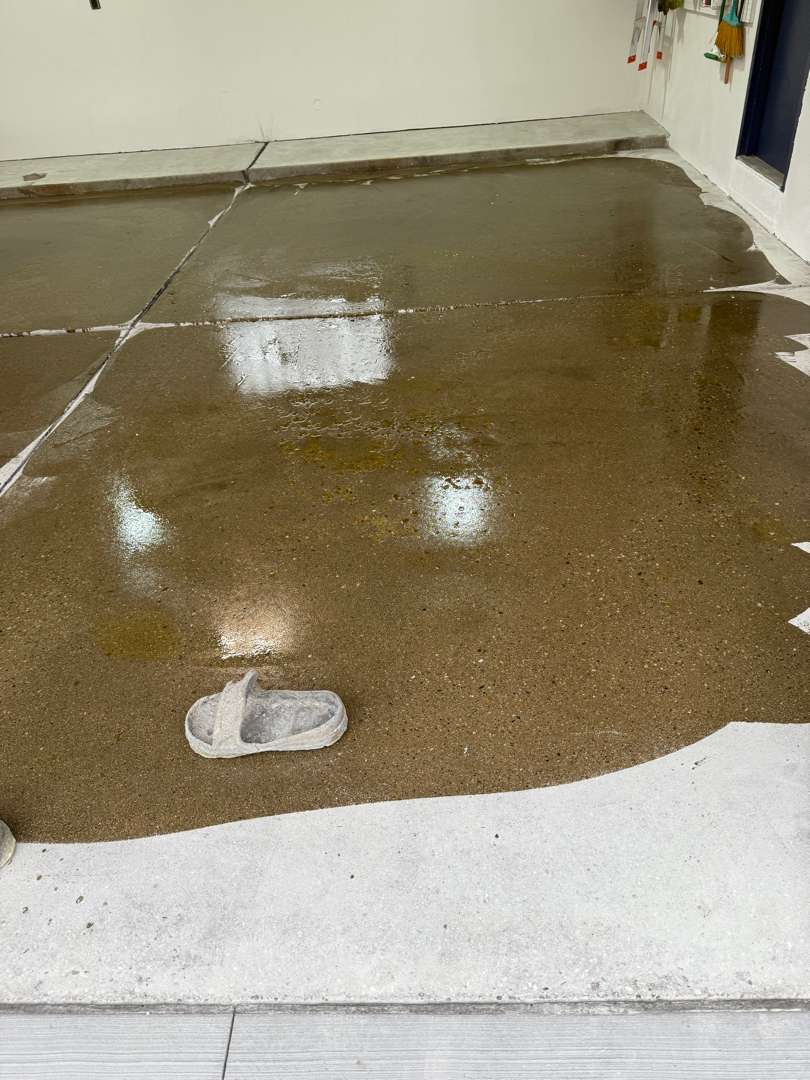
We diamond-ground the full 515 sq.ft slab to remove the laitance layer and open the surface for coating. The grind lifted the paint drips, cleared the chalk markings, and exposed the full extent of the pitting across all four panels. We evaluated the oil zones after the grind: the contamination had remained at the surface and it came up cleanly with the laitance.
We filled each pitted area with cementitious patching compound, then applied a flood coat across the prepared slab. Flooding levels the pitted areas and brings the surface to a consistent profile.
The team worked the vertical face of the rear platform into the same sequence: 22 linear feet of vertical surface patched and flooded. When the patch material had cured, we vacuumed the entire surface. The slab was flat, clean, and consistent from wall to wall.
Dual-Layer Coating
We applied a MC-3.1 polyurea base coat with the H-4 formulation across the 515 sq.ft. slab and the 22 linear feet of vertical surface. We then broadcast Sandstone flakes into the wet base coat across every panel.
The Sandstone color is a composite of warm tan, cream, light brown, and black flakes. This blend worked well with this garage; it reads evenly in natural light from the glass block window and in overhead interior light.
We applied the clear polyaspartic topcoat with 16-grit traction additive throughout the horizontal field. The 16-grit traction gives the surface a reliable grip for foot traffic and vehicle use.
Awesome Result!
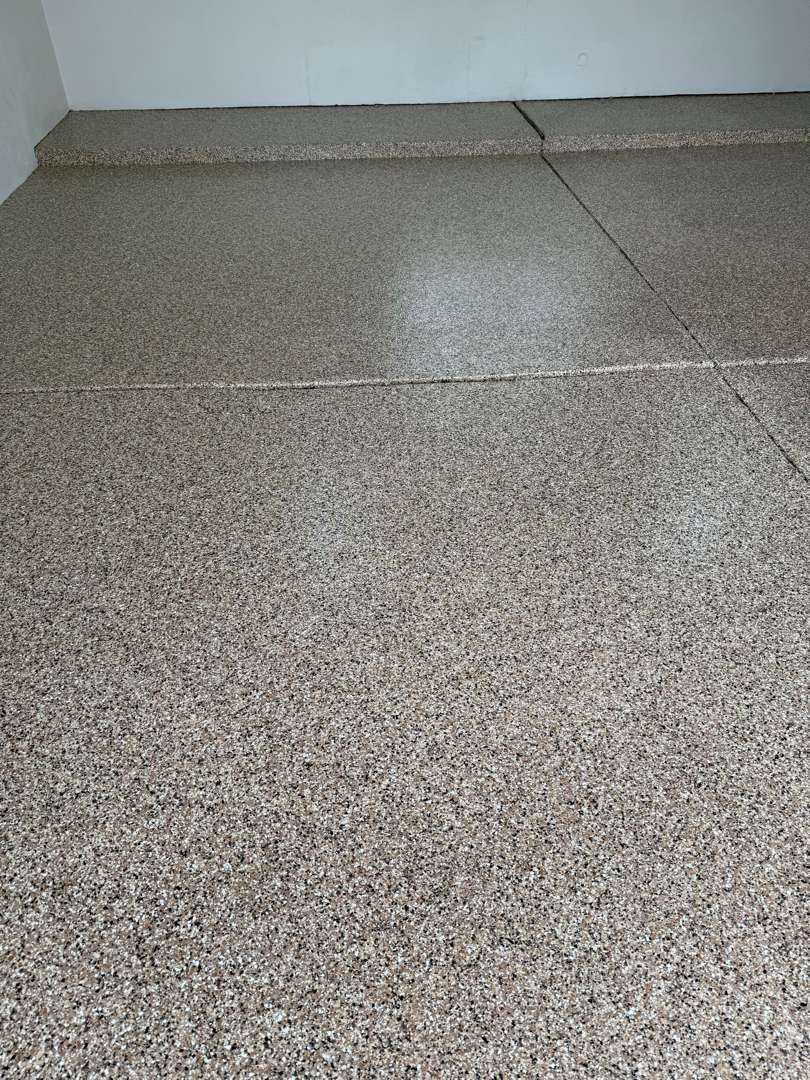
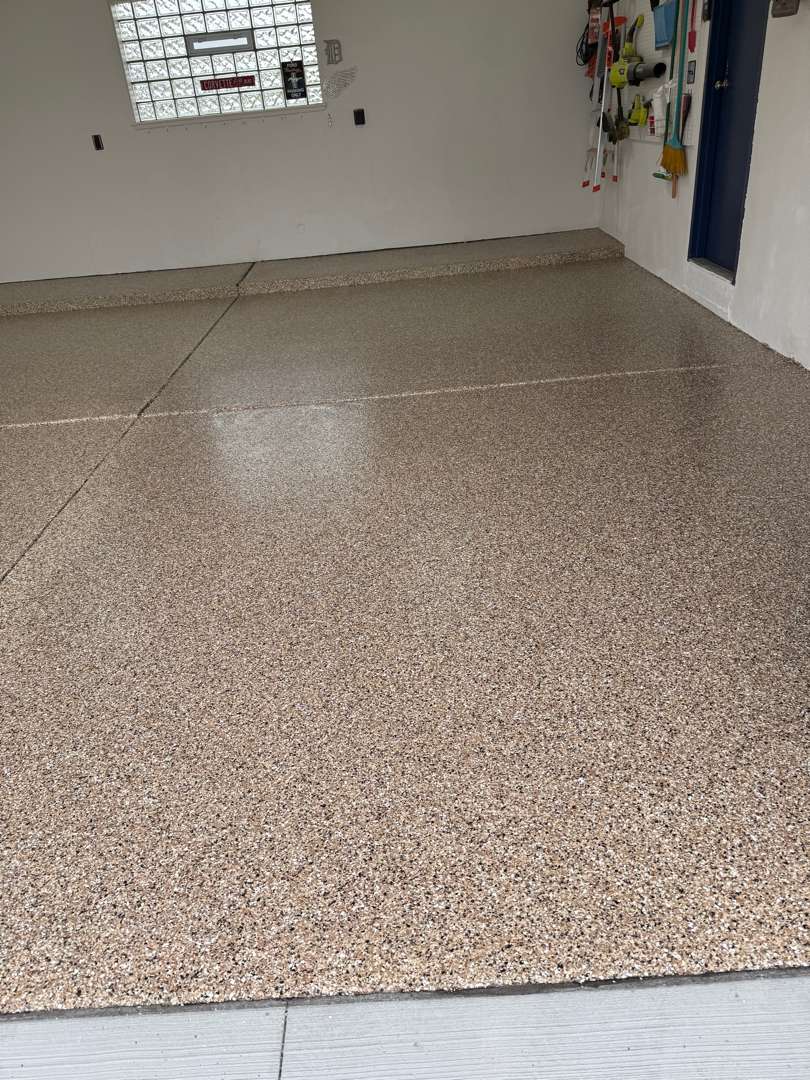
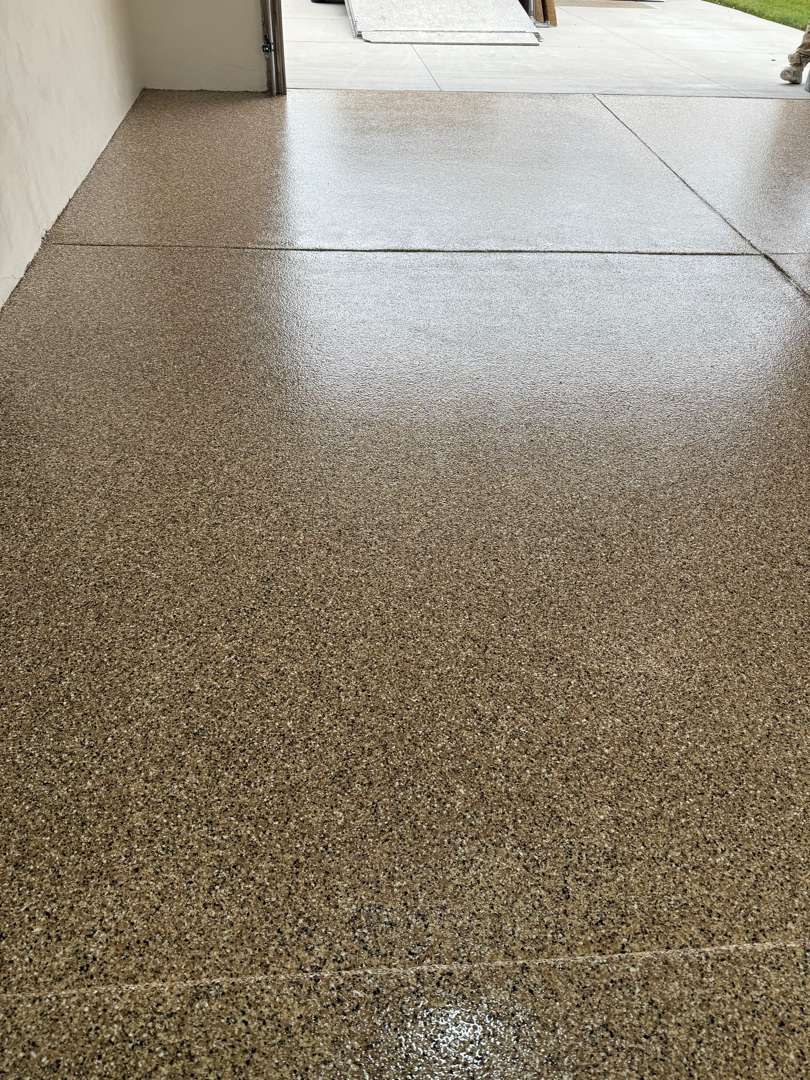
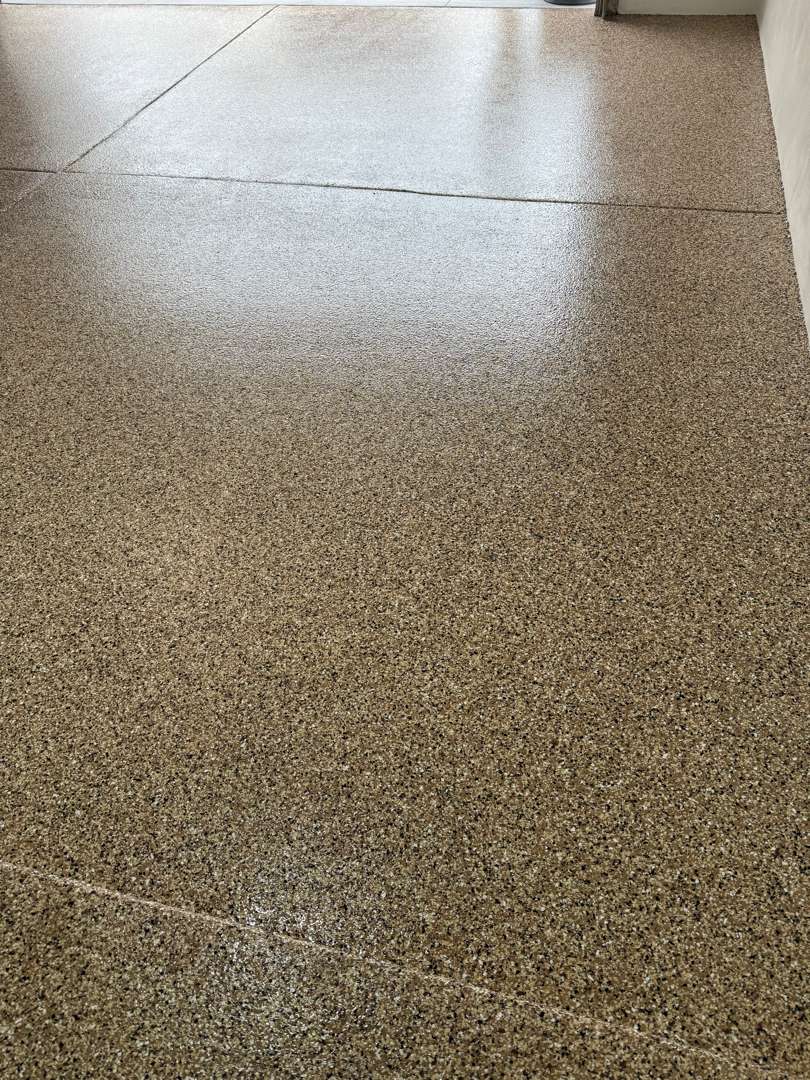
As mentioned above, the Sandstone blend works with this space. Against white walls, the warm tone reads clearly without competing with the interior. The raised platform at the rear finishes the floor; the transition is coated and continuous. Control joints are well-defined and clean through the finished surface on every panel.
With this dual layer coating, no pitting left, no oil stains visible. No paint drips, no chalk markings either. The surface is sealed, protected, and has a nice sheen to it.
Testimonials - Other Clients' Voices
David Zimmer
Philip Michalek
NEW Garage Floor Coating
on Harper Avenue
Harper Ave. , St. Clair Shores, MI
The Starting Point
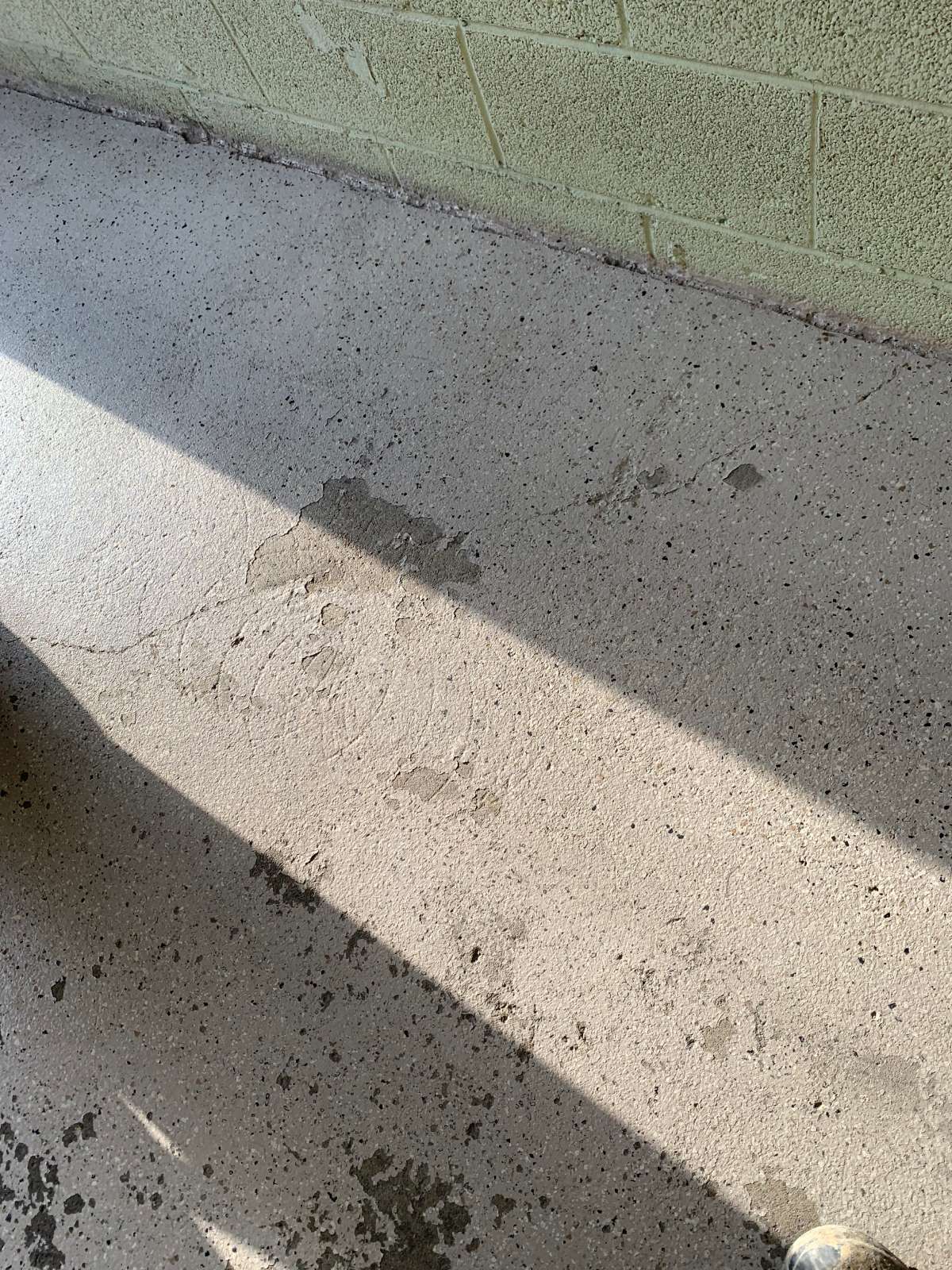
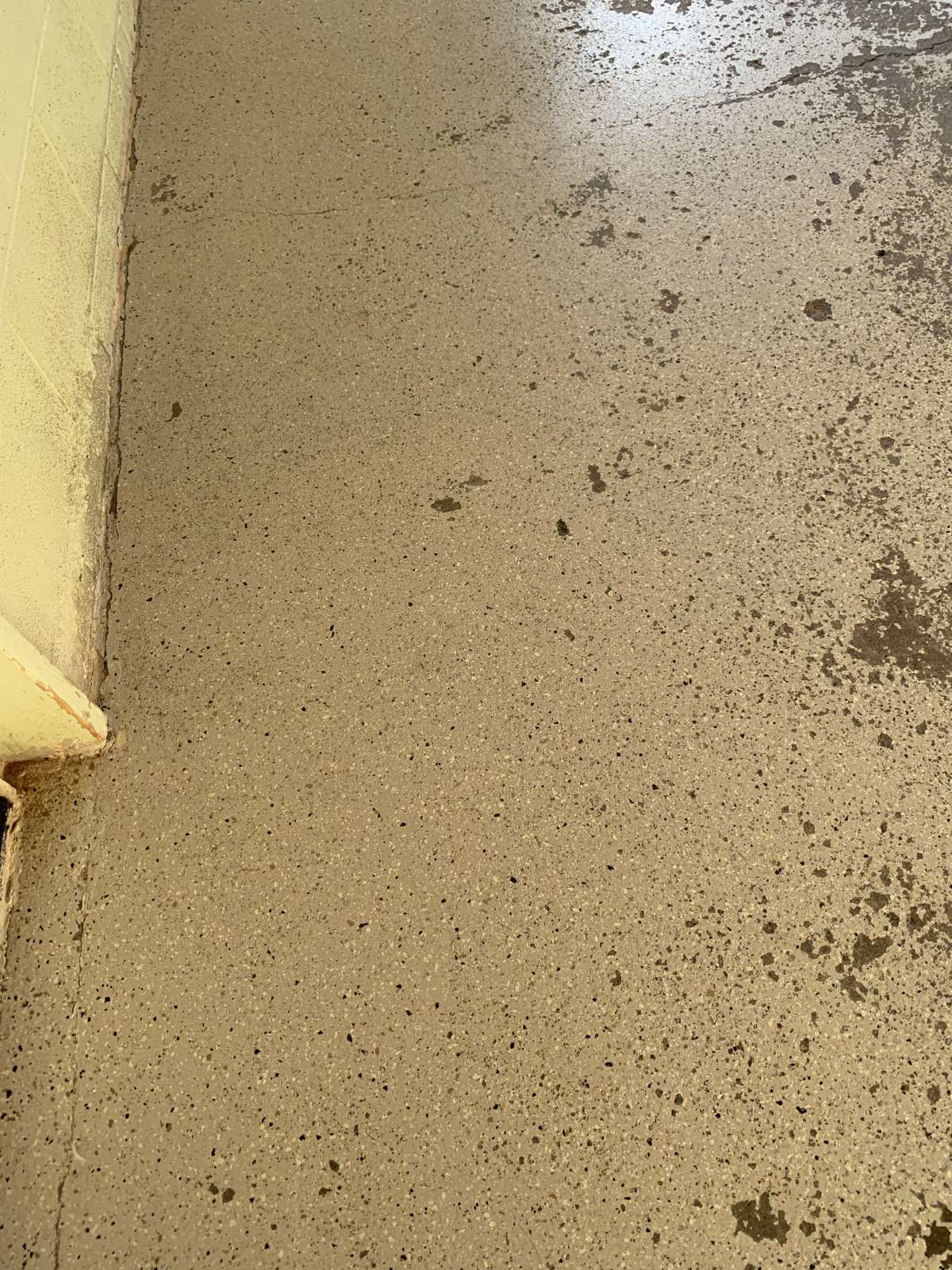
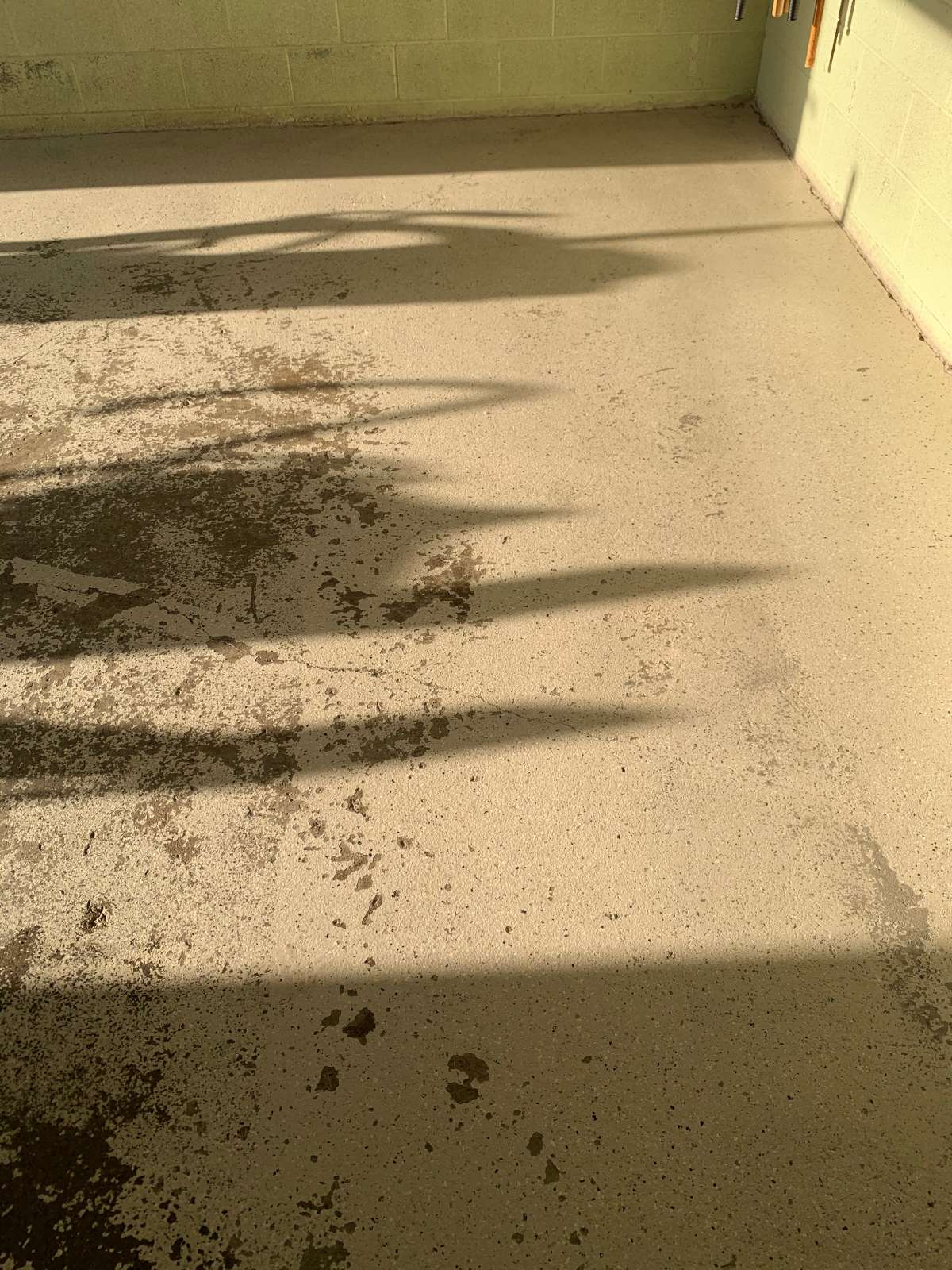
There was significant surface damage on the concrete slab of this garage, on Harper Ave. You can see in the photos that there was heavy pitting distributed all across the slab. There were also oil stains in multiple areas. A footprint impression had dried into the surface near the wall.
The block walls — painted a pale sage green — were in good condition. No cracks visible. The job did not include any steps.
Our crew evaluated the surface on arrival. they determined that the pitting depth and oil saturation required full mechanical preparation before any coating could go down.
Preparing the Surface
We diamond-ground the slab to remove the laitance layer and open the pores of the concrete for full adherence of the polyurea base coat. The grind cut through the footprint impression and it removed the surface contamination across the oil stains.
After the grind pass, we filled the pits with a cementitious patching compound. When the patch material had cured, we vacuumed the floor.
At this point, the surface was flat, open, and consistent — ready for coating.
Appliyng the Coating
We applied the polyurea base coat: 8 liters of base with 4 liters of activator. Then we broadcast Driftwood flakes into the wet base coat across the entire surface. The Driftwood blend is made up of predominantly white and cream flakes with tan, light brown, and black accents. This blend reads bright and consistent under overhead fluorescent light.
The crew then applied the clear polyaspartic topcoat over the cured flake layer to seal and protect the finish.
A Beautiful Finished Floor!
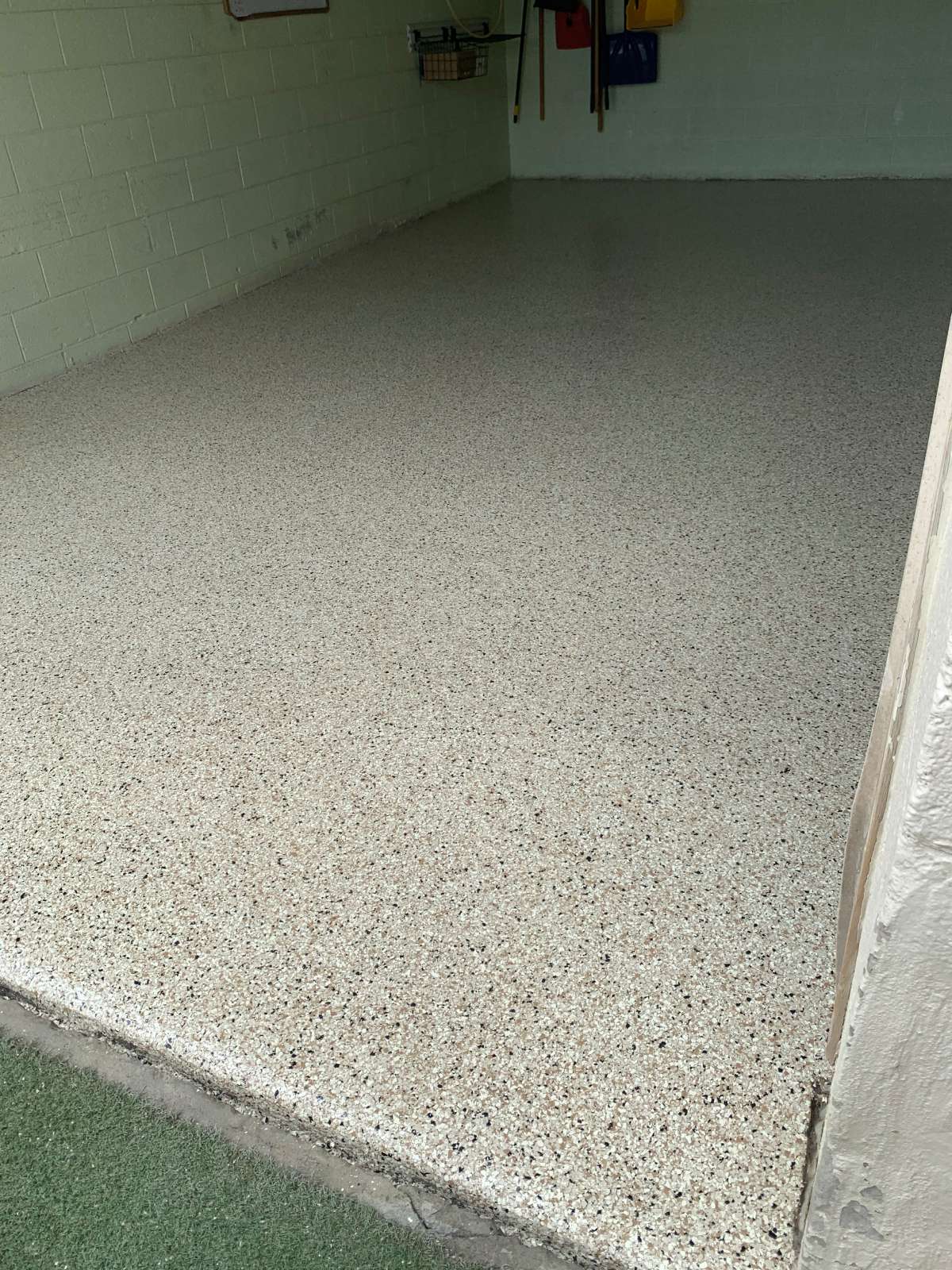
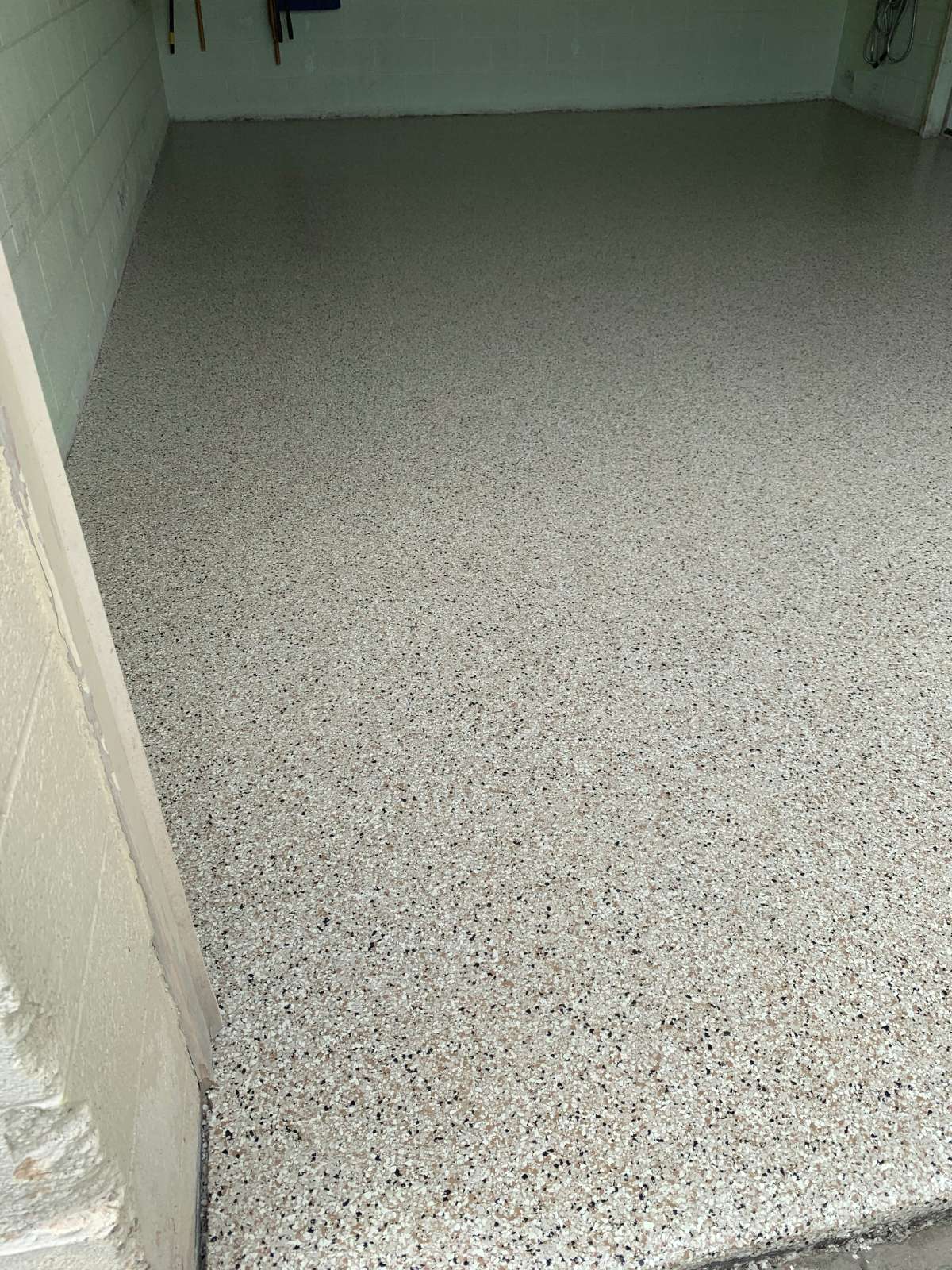
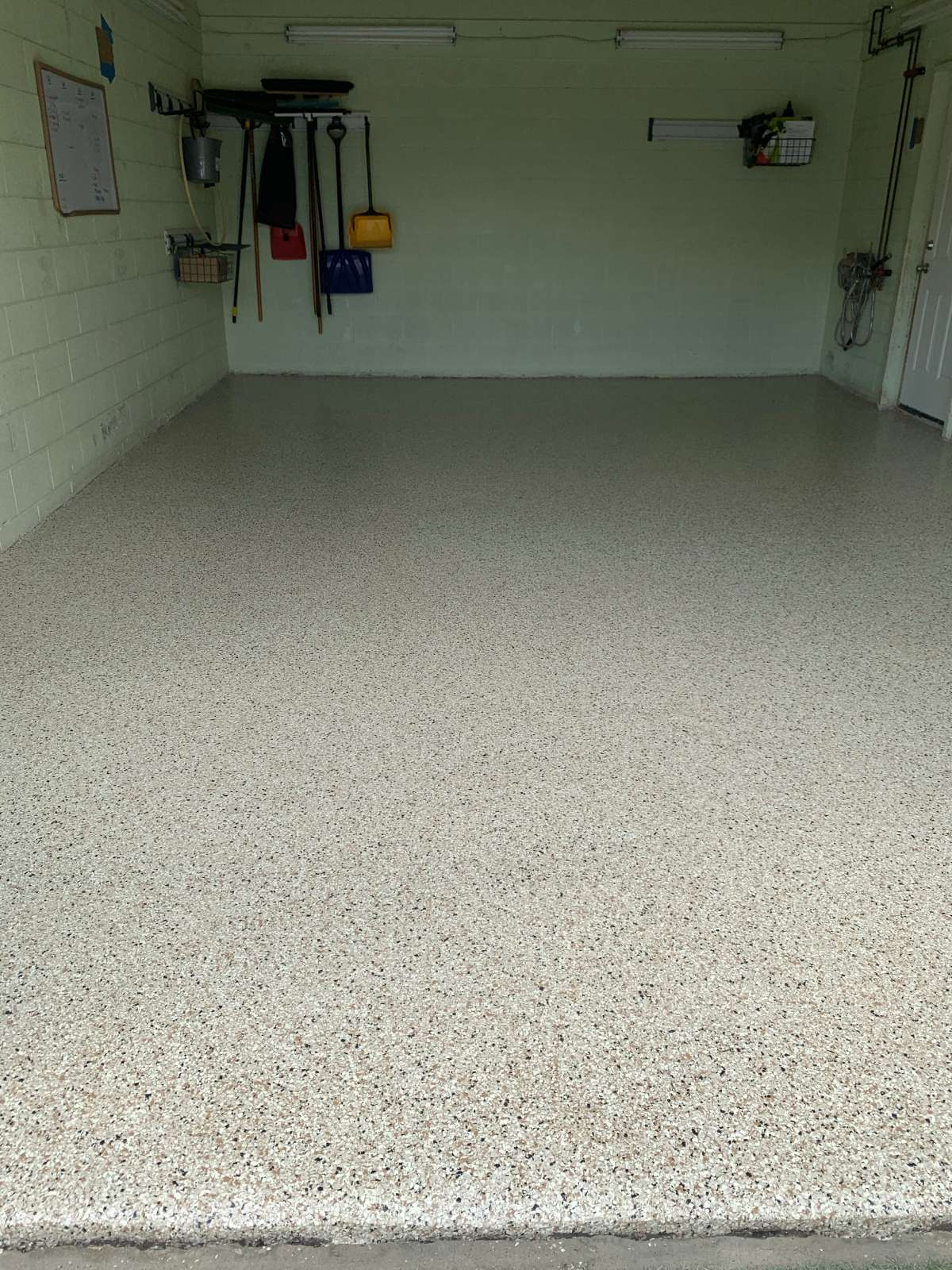
We think Driftwood is a good choice for a block-wall garage. The light flake tone reflects the overhead lighting well. The finished floor feels bright and clean against the pale green block — the two surfaces work together to open the space visually.
The heavy pitting that covered the full slab is sealed, and the oil stains are gone. The footprint impression has disappeared. The floor is protected and it is finished wall to wall.
Testimonials - Voices of Our Clients
Mark Eaton
Kallil Kazan
Serving St. Clair Shores & Nearby Communities
The MotorCity Advantage
MotorCity Floors and Coatings specializes in professional-grade polyurea-polyaspartic systems. These dual-coating systems are replacing epoxy products constrained by older chemistry. Our systems deliver strong chemical resistance, superior durability, greater flexibility, shorter cure times, and proven UV stability that maintains color for decades. We back every installation with an industry-leading warranty.
Each project includes thorough diamond grinding preparation, flexible polyurea crack repair, and careful application to ensure consistent coverage across the full slab. Even on newer concrete in good condition — as our crew found at the Centennial Street property in St. Clair Shores — full diamond grinding is required to remove the laitance layer and open the pore structure of the concrete before any base coat goes down. There are no shortcuts in preparation. The quality of the finished system depends entirely on the quality of the surface beneath it.