 Skip to content
Garage Floor Coating in Troy, MI
QUESTIONS? NEED A QUOTE?
Why Troy Homeowners Choose MotorCity
★ 4.9 rating · 488 Google reviews
- ✓ Lifetime warranty
- ✓ One-day installation
- ✓ BBB accredited (since 2020)
- ✓ Licensed & insured
Upgrading Garage Floor Coating in Troy with Polyurea-Polyaspartic Coatings
Last updated: July 30, 2026
On this page, we document 8 garage floor coating projects in Troy, MI. Our dual-coating systems have converted worn concrete slabs into durable, attractive garage floors. Troy is an Oakland County city with a wide range of residential properties — from newer subdivisions with freshly poured concrete to established neighborhoods where homes and garages have accumulated decades of Michigan weather and daily use.
Many of the properties where we apply our polyurea-polyaspartic floor coating systems had accumulated the wear and tear of the harsh Michigan climate. As you will see in these case studies, our garage floor coating specialists work with concrete slabs in a wide variety of conditions: some needed only standard surface preparation. Others required significant remediation — DIY coating removal, oil extraction, crack and pitting repair, and moisture barrier application — before the polyurea and polyaspartic coats could go down. We describe the process and results, and include the before-and-after photos for each job.
See more of our work on the Michigan case studies hub, including our nearby Sterling Heights garage floor coating project.
Troy Garage Floor Coating Case Studies
These 8 case studies carefully document the condition of the concrete slab, the challenges we encountered, and the steps our crew took to prepare and restore the concrete slab before applying the dual-layer system. Each project reflects a variety of conditions to be addressed, and shows the consistent quality standards MotorCity Floors and Coatings applies to every installation.
Quality Garage Floor Coatings
Winter road salt, freeze-thaw cycles, automotive fluids, and daily vehicle traffic degrade unprotected garage concrete over time. The damage typically appears as oil staining, cracking, surface pitting, and adhesion failure in previously coated floors.
Several of our jobs of garage floor coating in Troy involved concrete beneath failed DIY epoxy or deteriorating painted coatings — a condition that recoating over the old surface cannot fix. Polyurea-polyaspartic systems provide reliable protection against these conditions and deliver an appearance that bare concrete or epoxy products cannot match.
Garage Floor Coating
on Lyster Lane
Lyster Lane, Troy, MI
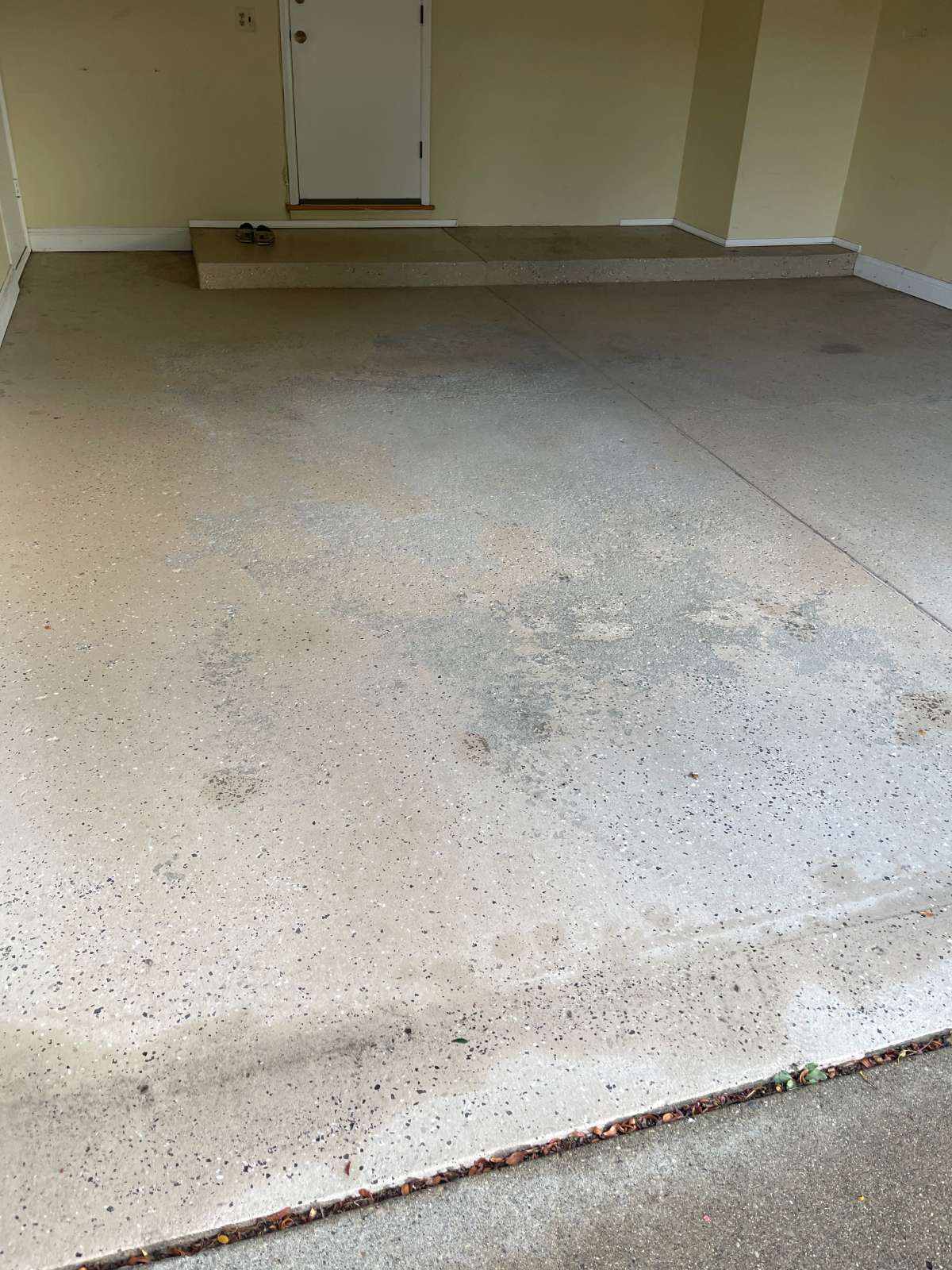

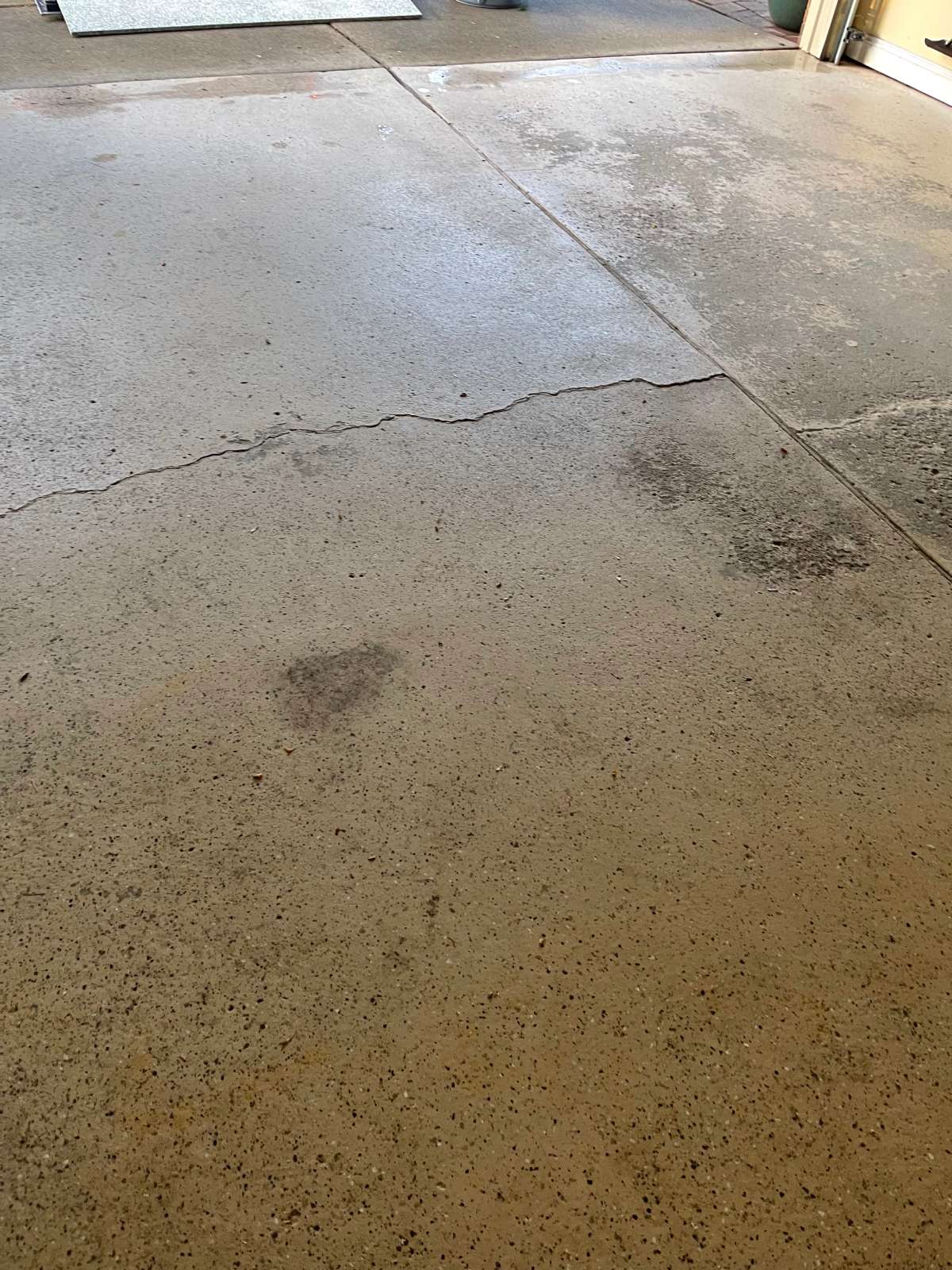
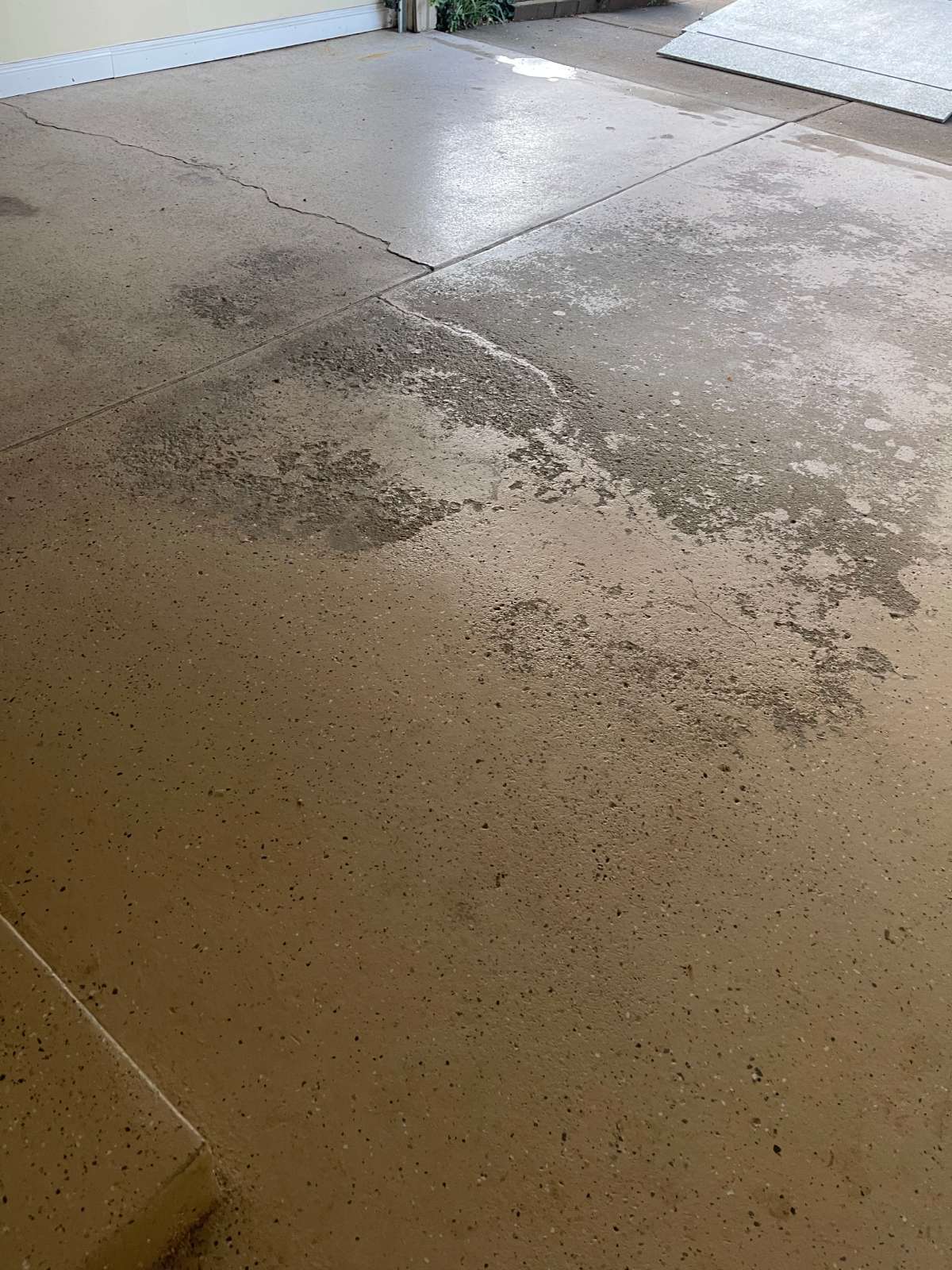
The 334-square-foot garage at this Lyster Lane property had a history of DIY repair. A self-applied epoxy coating had since failed. Residue from the old epoxy remained across the surface alongside oil stains and general surface staining.
Two cracks crossed the slab. The vehicle parking zone showed heavier pitting than the surrounding field.
A raised platform runs along the back wall. The coating scope included both the face and the surface of the platform. No steps were in scope.
Epoxy Removal and Surface Preparation
Coating over a failed surface bonds to the old material, not to the concrete. The old epoxy had to come off before anything new could go down. Our crew diamond-ground the full 334 square feet to open the concrete and remove the residue.
The grinding also cleared the oil stains and surface contamination throughout. Our team vacuumed thoroughly after each pass.
Crack Repair and Parking Zone Treatment
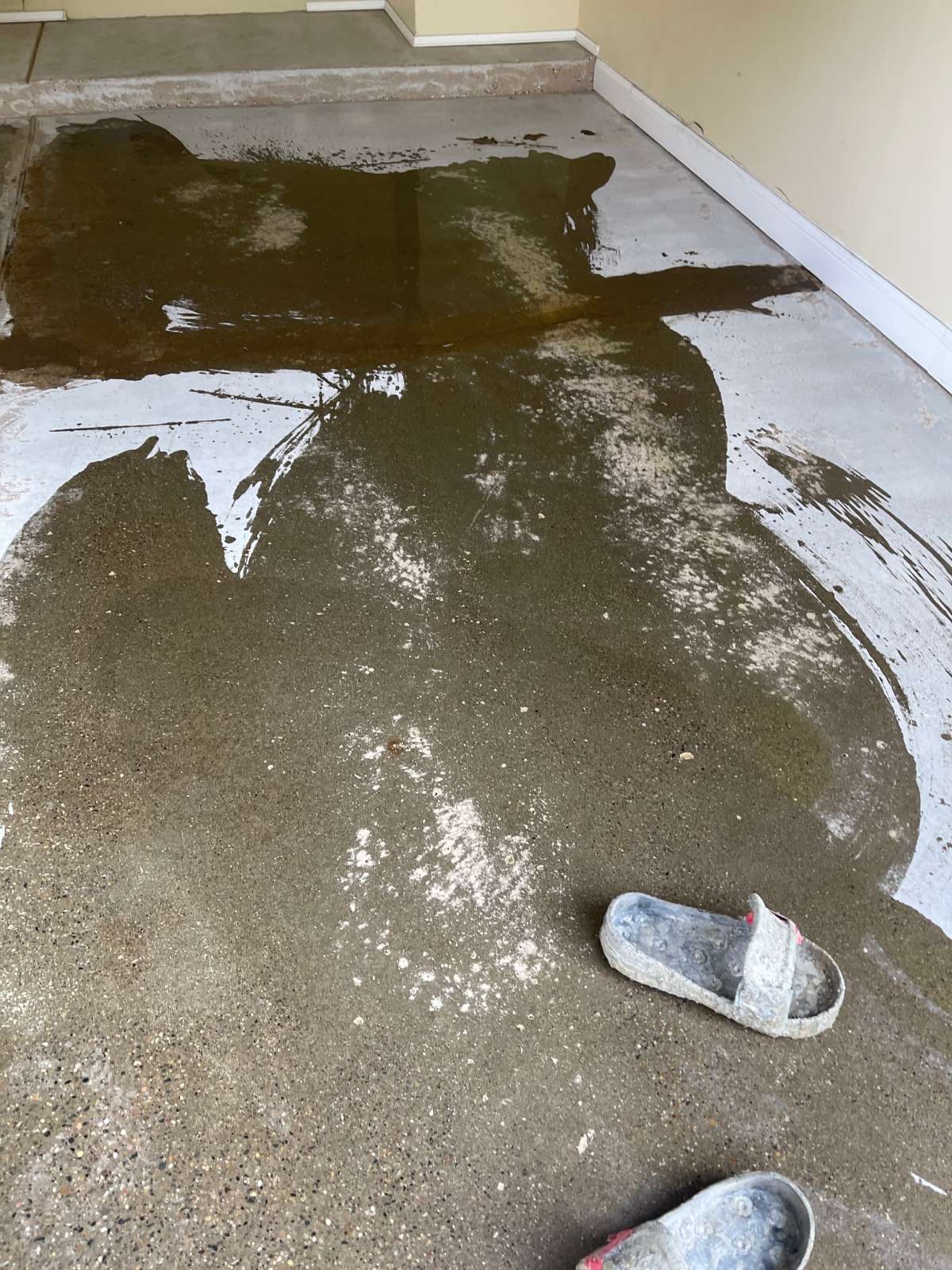

Our crew worked mender compound into each crack and brought each repair flush. The heavier pitting in the parking zone required a different approach. Our crew applied MR-50 primer broadly across the pitted parking area.
MR-50 works into the concrete from within rather than sitting on top of the surface. We allowed full cure before the coating phase began.
Pecan — Floor and Platform
Our crew applied the MC-3.5 polyurea base coat by roller across all 334 prepared square feet. We cut in along the platform base and up the face by hand.
Our crew broadcast Pecan flake into the wet base coat across the full floor. We carried the broadcast up the platform face and across the surface at the same time. Pecan carries a warm blend of tans, browns, and creams throughout. After cure and excess flake recovery, our team applied the polyaspartic topcoat with traction additive throughout.
Epoxy Gone, Pitting Sealed, 334 Square Feet Finished
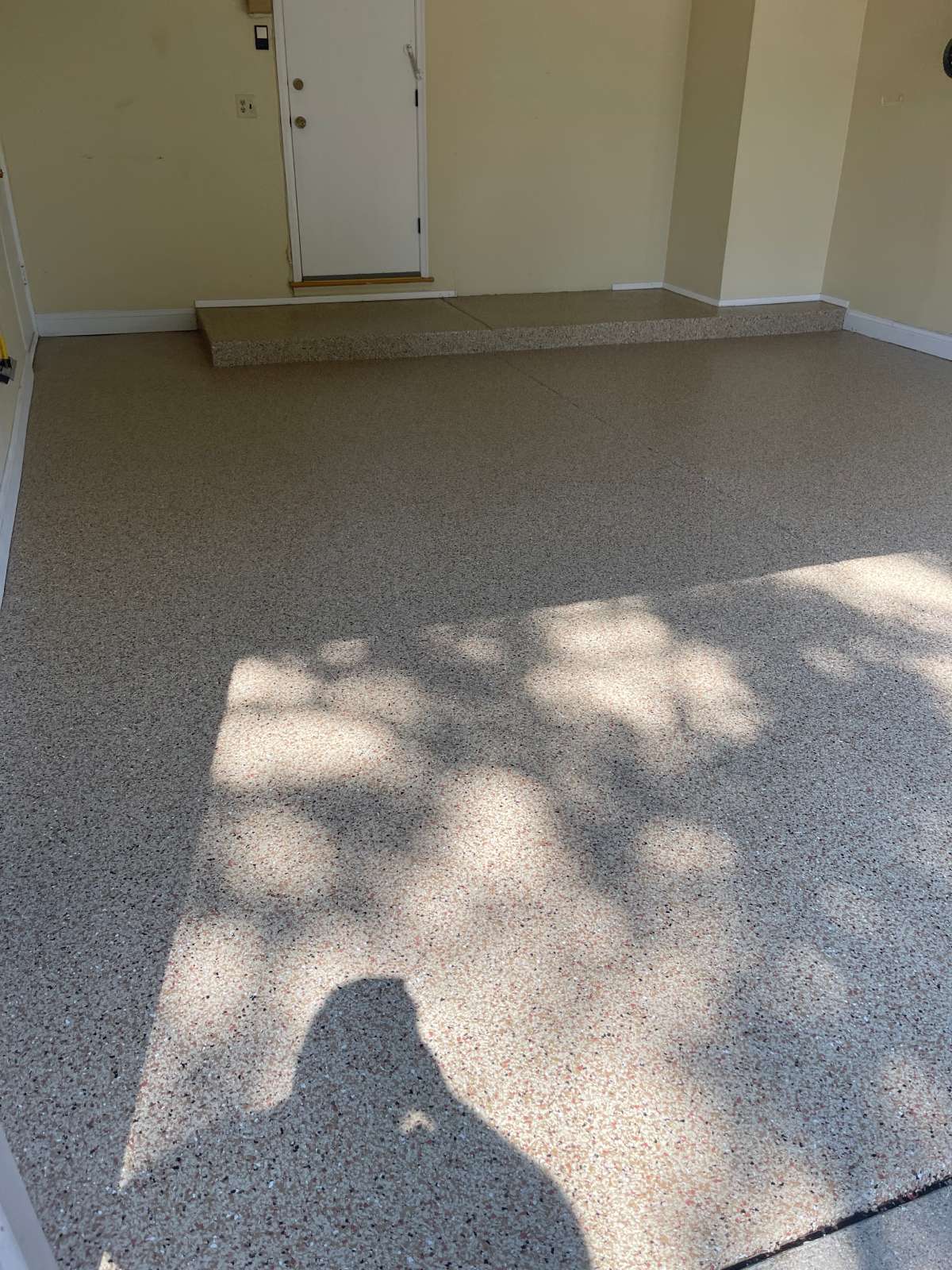
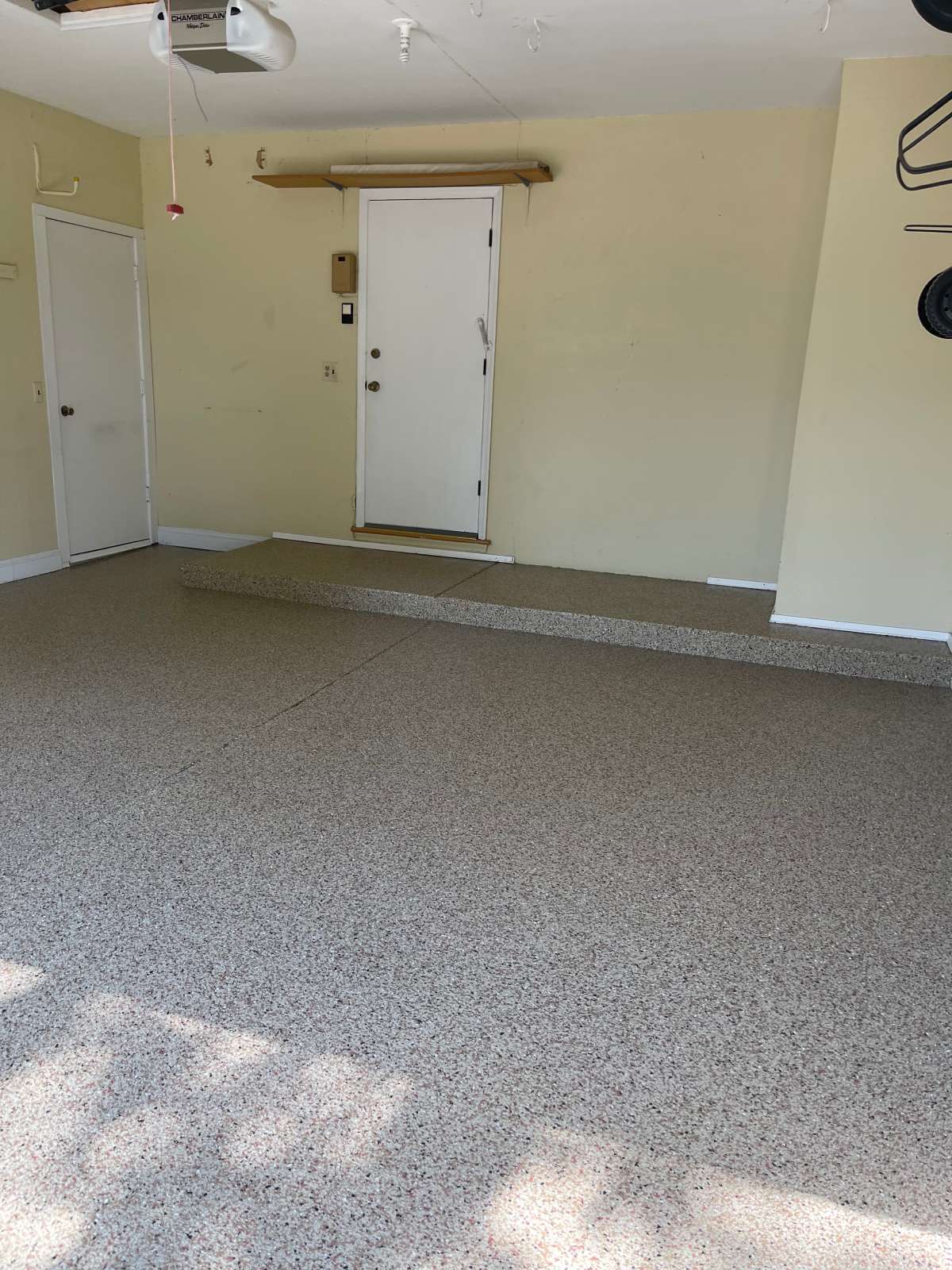
Pecan runs wall to wall across all 334 square feet. The warm tone suits the space and works well against the light walls. The platform carries the same flake and finish as the main floor. The coating runs continuously from the slab up the face and across the surface without a break.
The oil stains are gone. The failed epoxy residue is gone. The pitting in the parking zone is sealed. The cracks are sealed.
Testimonials - Voices of Our Clients
Tim Okenka
2nd time we have used them we liked their product and service so much.
First did garage floor a year ago and now for our loggia floor.
Looks great and they did an excellent job including clean up.
Angela Watson
Garage Floor Coating
on Audley Court
Audley Court, Troy, MI
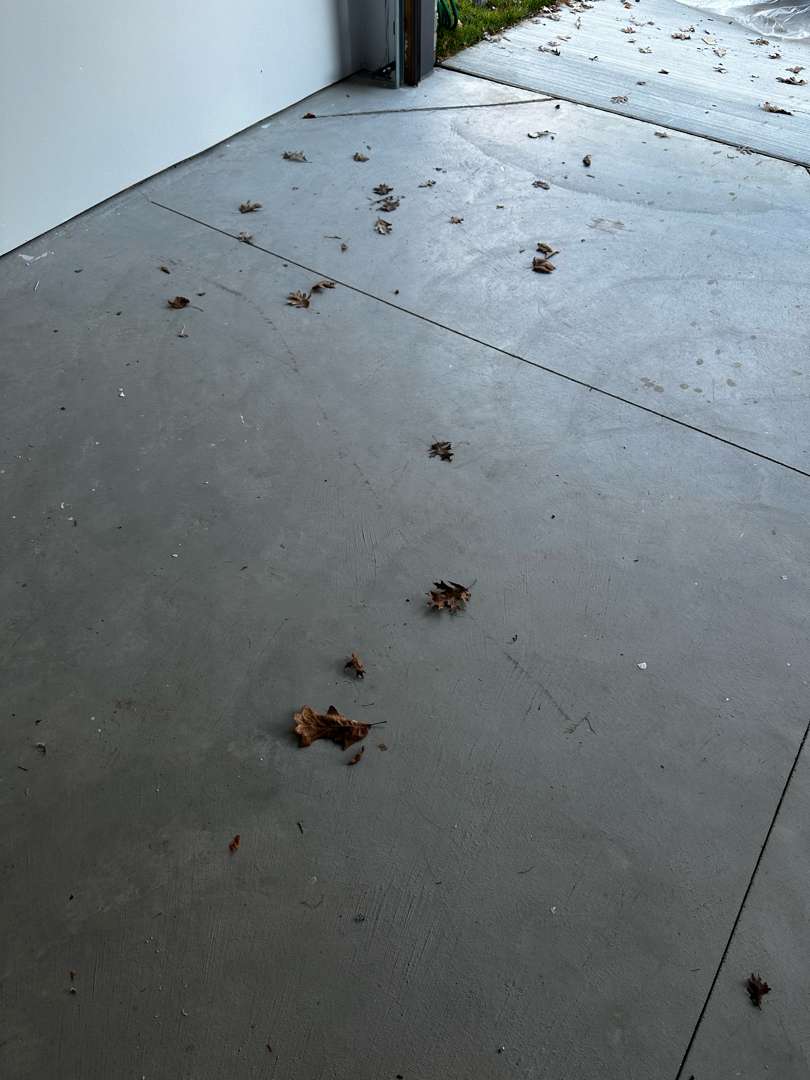
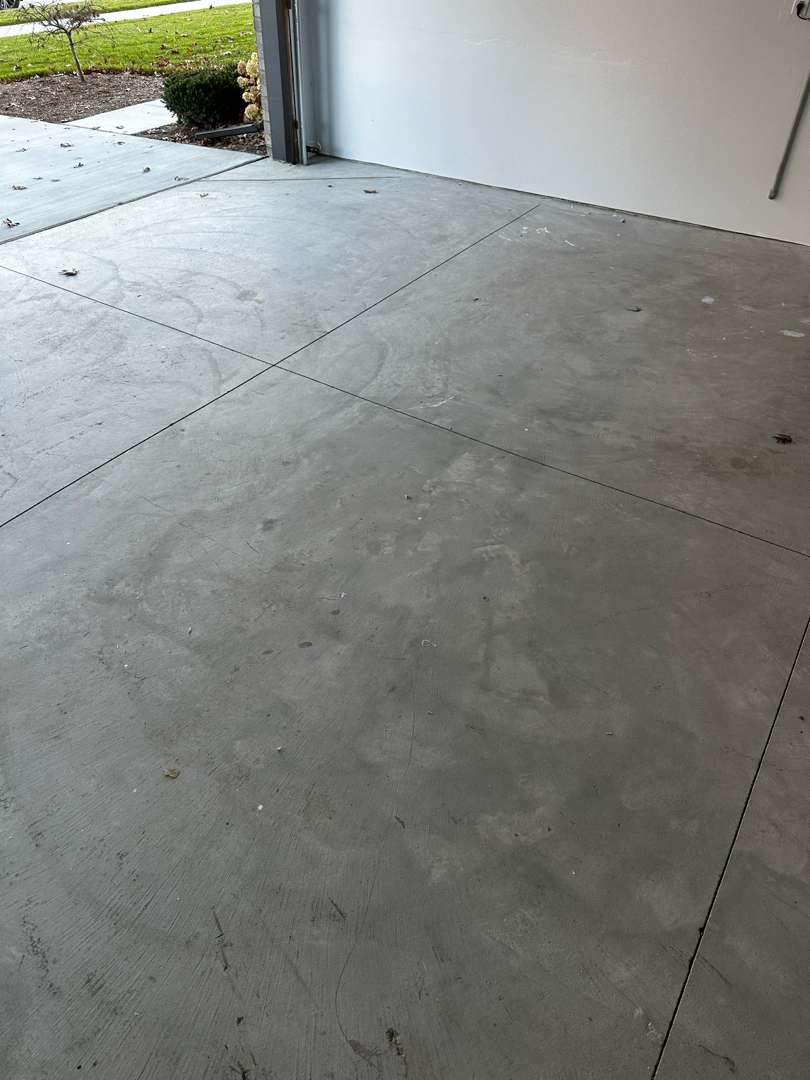
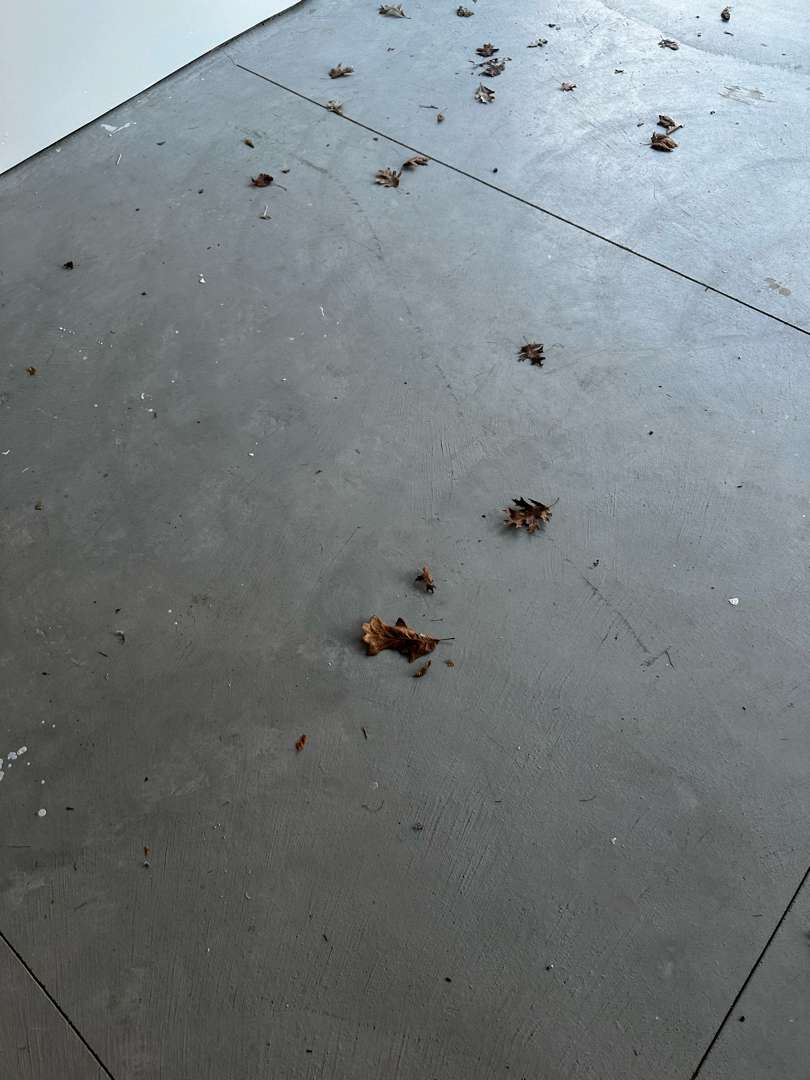
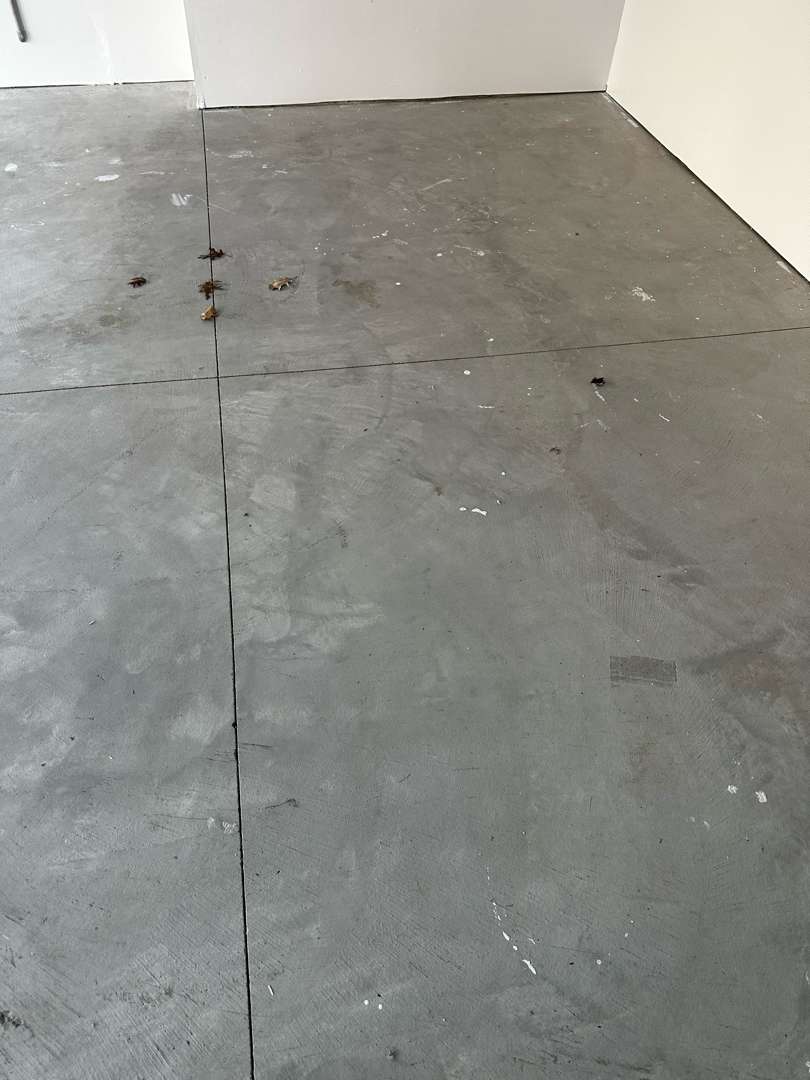

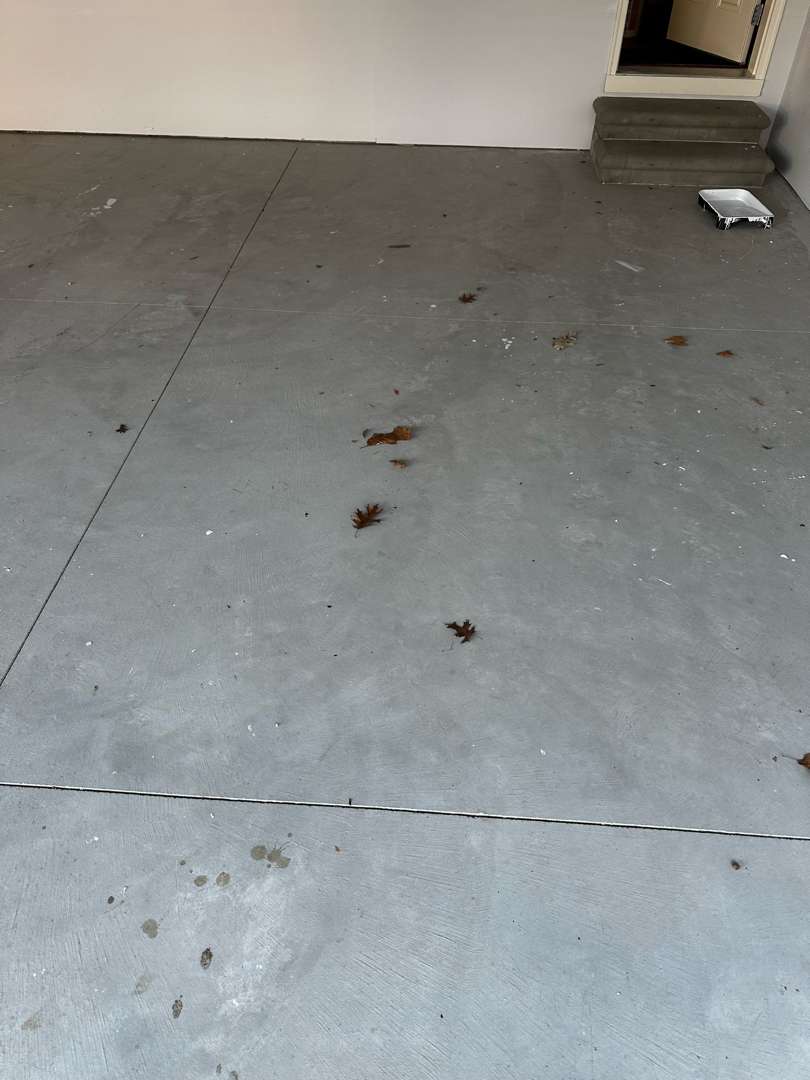
The Audley Court garage was 573 square feet of new concrete. The slab showed no staining, no cracking, and no structural damage. Fallen leaves and light dirt had accumulated while the garage sat open.
Two concrete steps lead to the interior door. Both steps were included in the scope.
Debris Clearing and Surface Preparation
Step Preparation
Silvercreek on 573 Square Feet
Our crew applied the MC-4 polyurea base coat by roller across all 573 prepared square feet. We applied base coat to both step treads and risers at the same time.
Our crew broadcast Silvercreek flake into the wet base coat across the full floor. We carried the broadcast across both step surfaces at the same time. Silvercreek carries a deep charcoal blend with dark and light grey chips throughout. After cure and excess flake recovery, our team applied the polyaspartic topcoat with 16-grit traction additive throughout.
New Concrete, Two Steps, One Finish
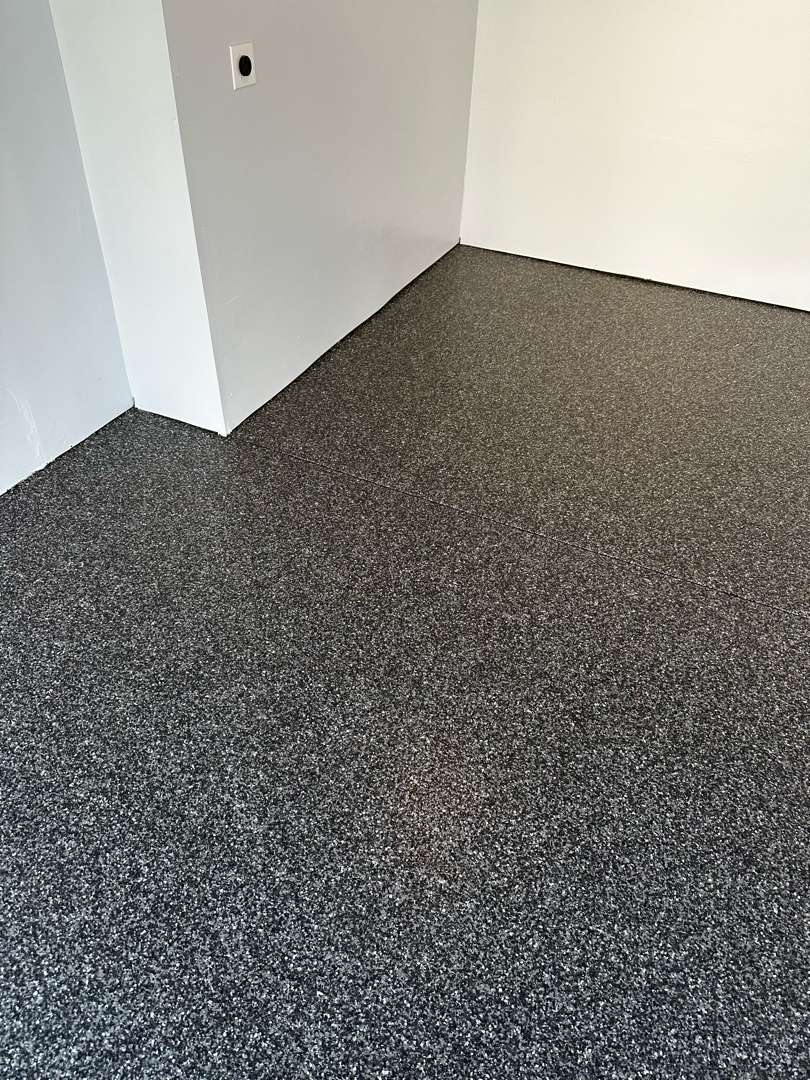
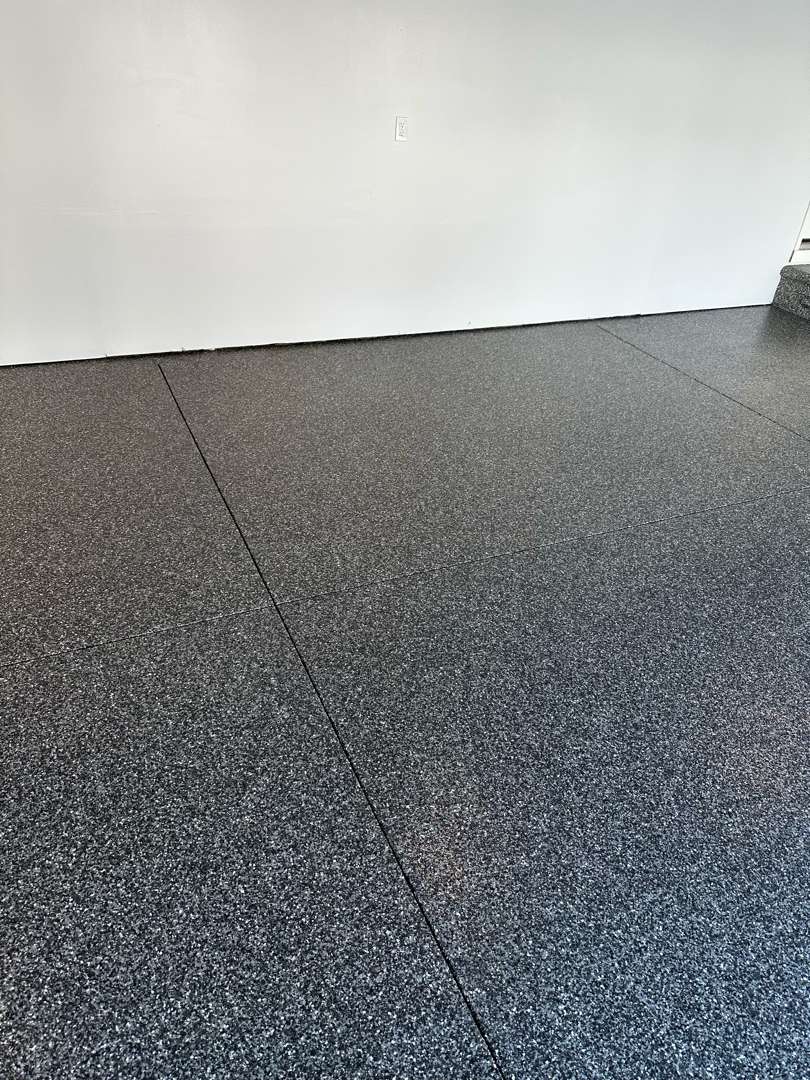
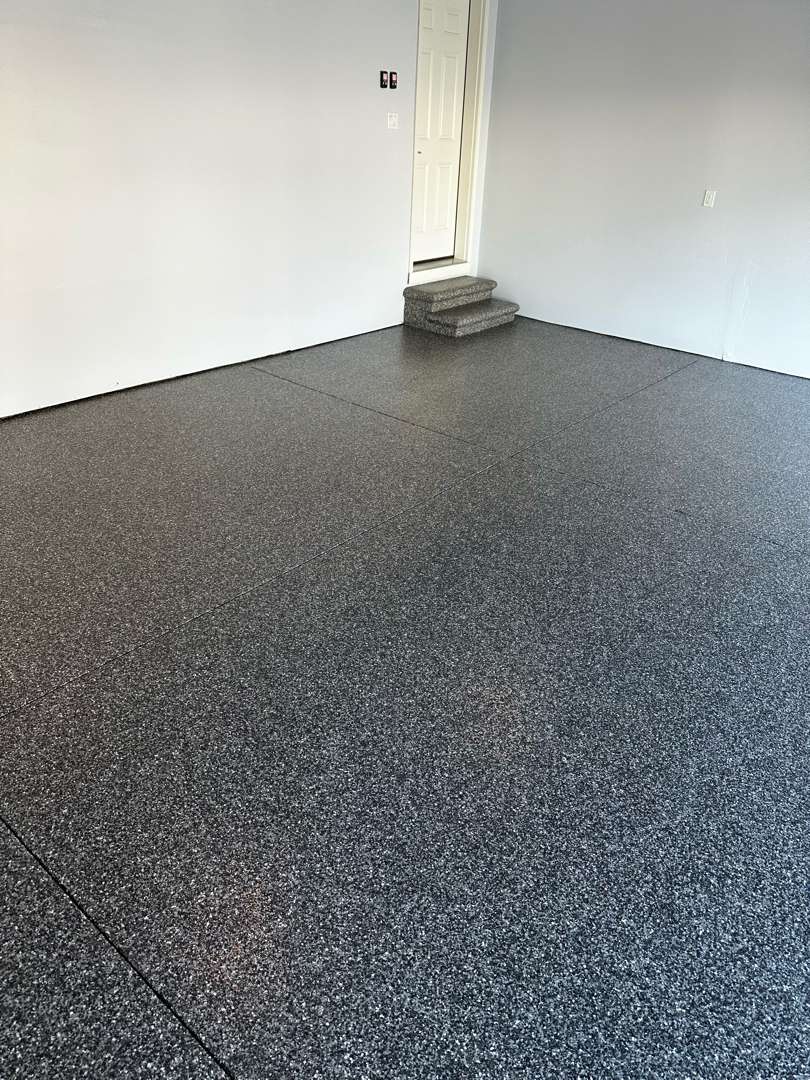
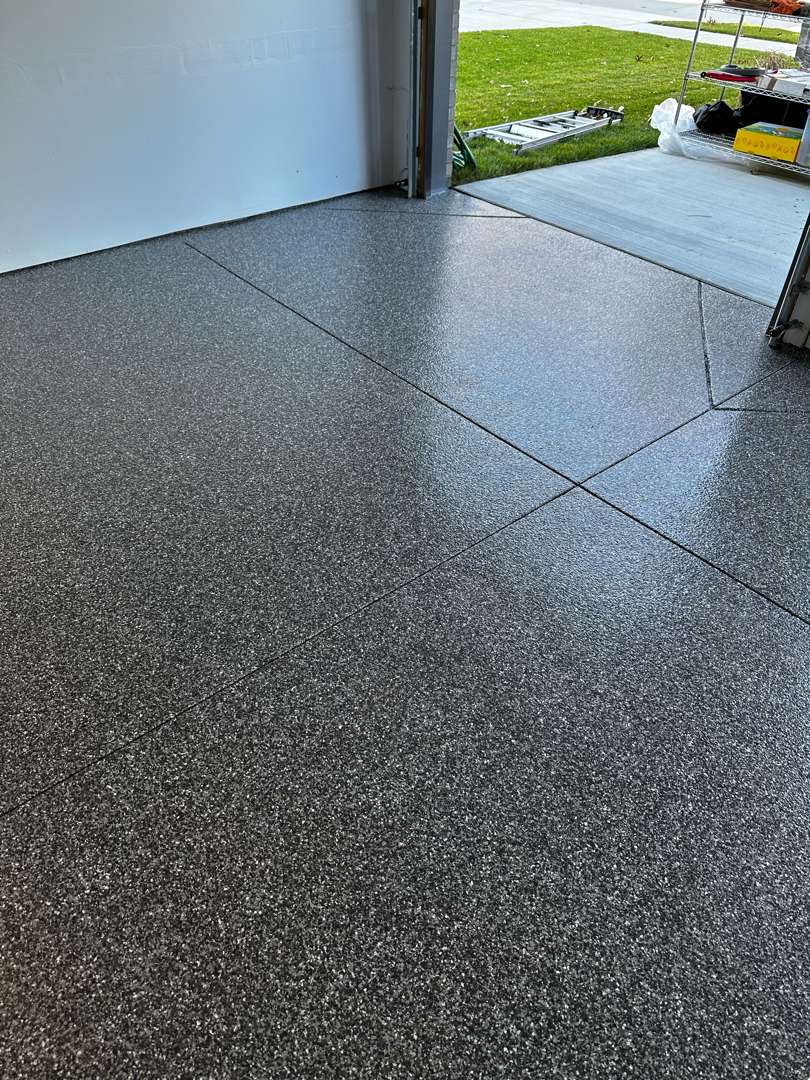

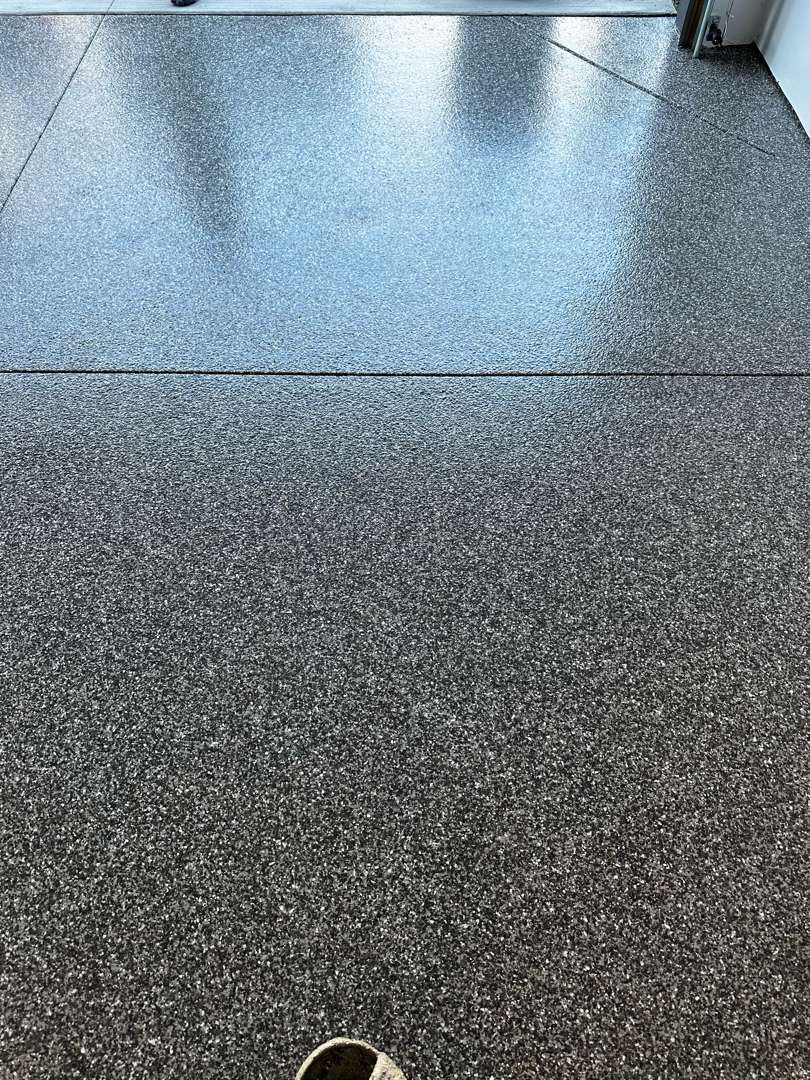
Silvercreek runs wall to wall across all 573 square feet. The deep charcoal tone contrasts cleanly against the bright white walls. Both steps carry the same flake and finish as the main floor. The coating runs from the slab up each tread and riser without interruption.
The debris is gone. The laitance is gone. 16-grit provides firm grip underfoot throughout.
Testimonials - Voices of Our Clients
Krysten Krupin
We had the company come in to do my husbands entire garage floor& in our basement we had the laundry room & a storage room floor done all at the same time !
We couldn’t be more pleased with their professionalism & respect for our home. They were pleasant to deal with.
It was a cold day and with both areas being worked on; the men made sure to keep my back door closed when going in & out the door & didn’t mind our pets.
The only thing I wasn’t made clear on was the smell indoors, I knew it would be strong , but we didn’t expect that we would have to leave the house for the entire night. ..we would have just made better plans prior to knowing, because we ended up moving our entire family of 5 for the night and 3 pets as well. . No big deal just a heads up! 😊
It’s been weeks now and we are pleased with the results my husband has dropped tools and things in the garage and there’s been no chipping ! The laundry room floor cleans up so well now. & even has a shiny sheen to it ! We are Truly Loving it !
Brian R
If you are looking to have your garage floor finished with epoxy, DON’T DO IT. Friends of ours had their garage floor coated by MotorCity Floors and Coatings and we were extremely impressed. The following week we contacted Rob about getting a quote to have our garage floor finished. The price was right and the coating system surpasses any epoxy floor that the DYI can provide.
Our install date was delayed due to weather and this was explained to us upfront. Who can control the weather in Michigan anyway. Rob’s crew (Joe and two others) were at our house right on time for the Saturday install. If it wasn’t for the showroom finished floor, we would never have known they were there. The crew finished the job in a day as specified! We couldn’t be happier with MotorCity Floors and Coatings and their floor coating system. Again if you are thinking of doing an epoxy floor, DON’T DO IT! CALL MOTORCITY FLOORS AND COATINGS INSTEAD.
Garage Floor Coating
on Vanderpool Avenue
Vanderpool Avenue, Troy, MI
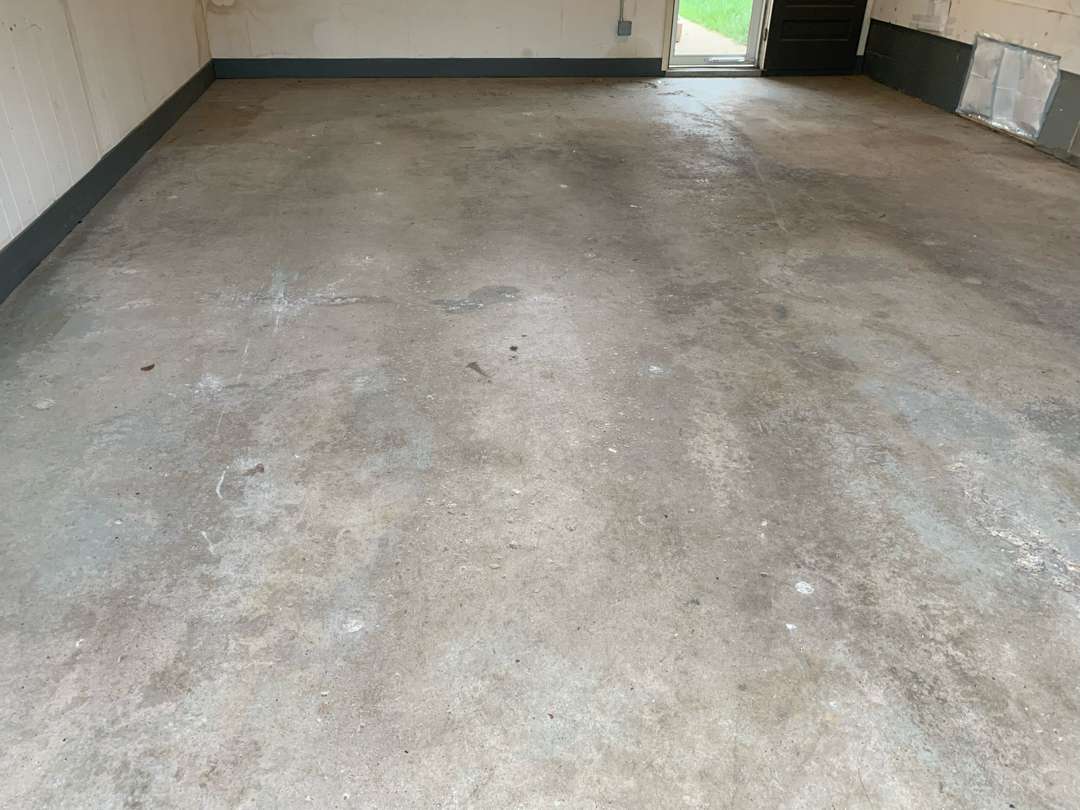
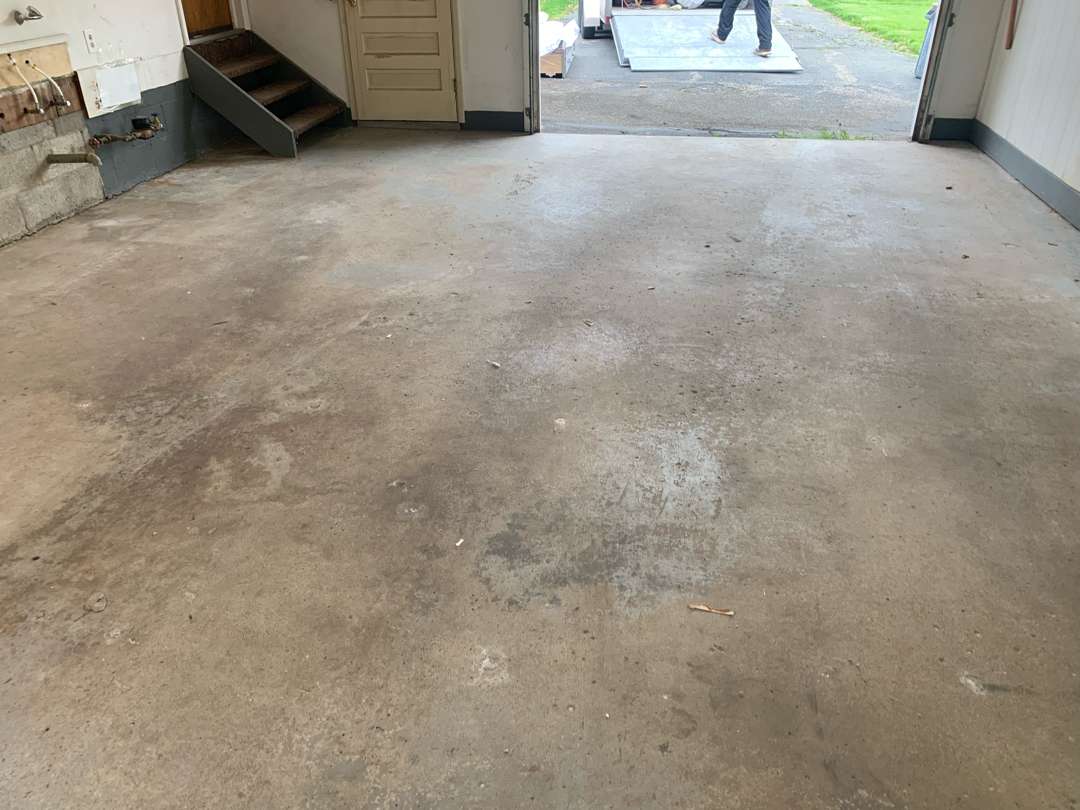

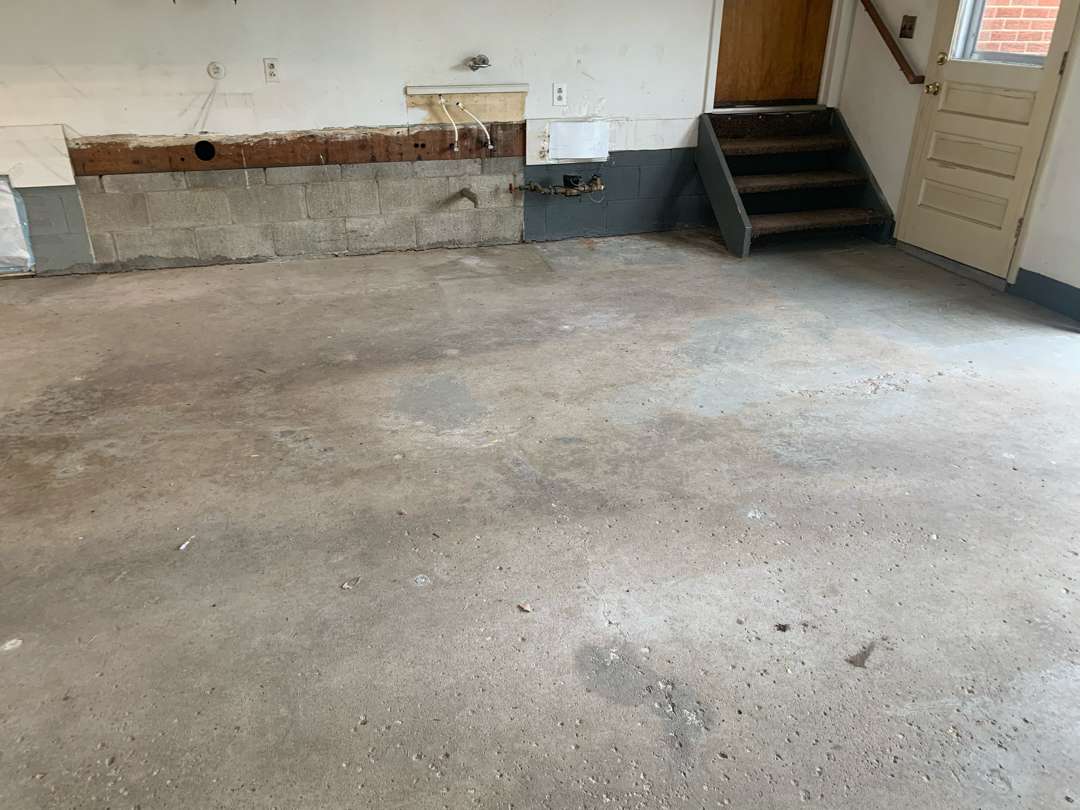
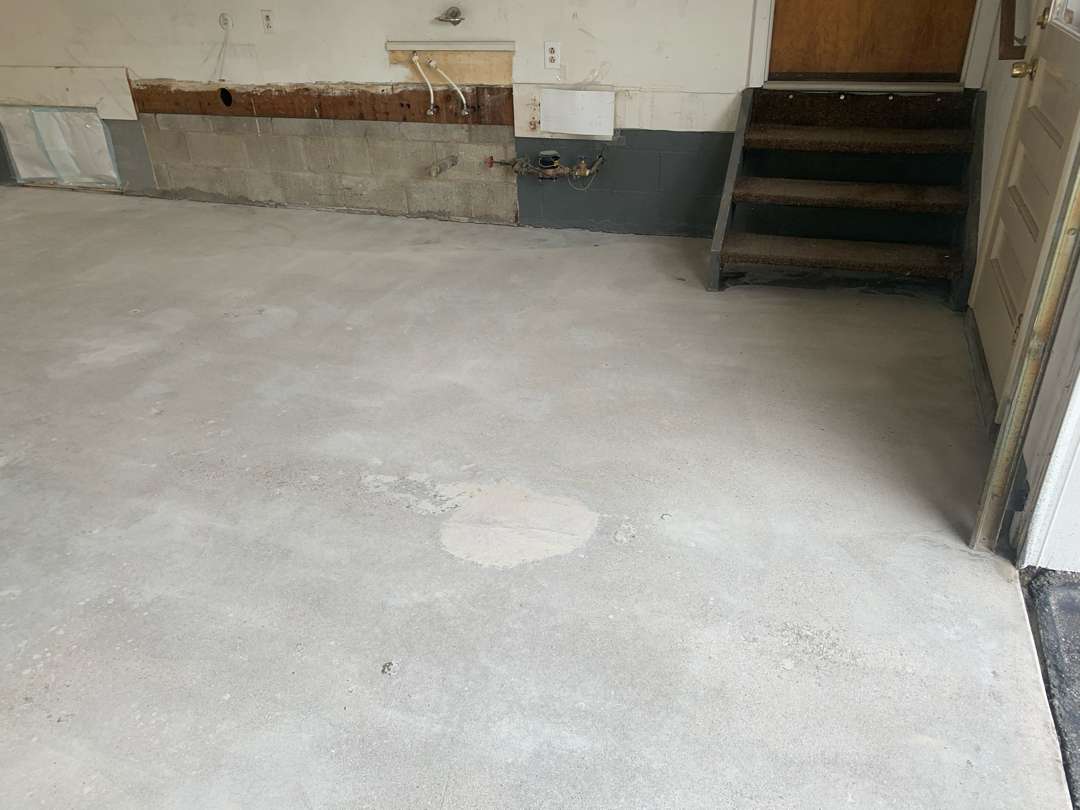
The Vanderpool Avenue garage was 414 square feet mid-renovation. An exposed concrete block wall ran along one side. The slab showed years of accumulated surface wear — staining, oil spots, and scratch marks throughout.
Patches of a painted coating had lost adhesion and were flaking off across multiple sections. The old coating had to come off completely before the slab could be assessed. No steps and no vertical surfaces were in scope.
Coating Removal and First Grind

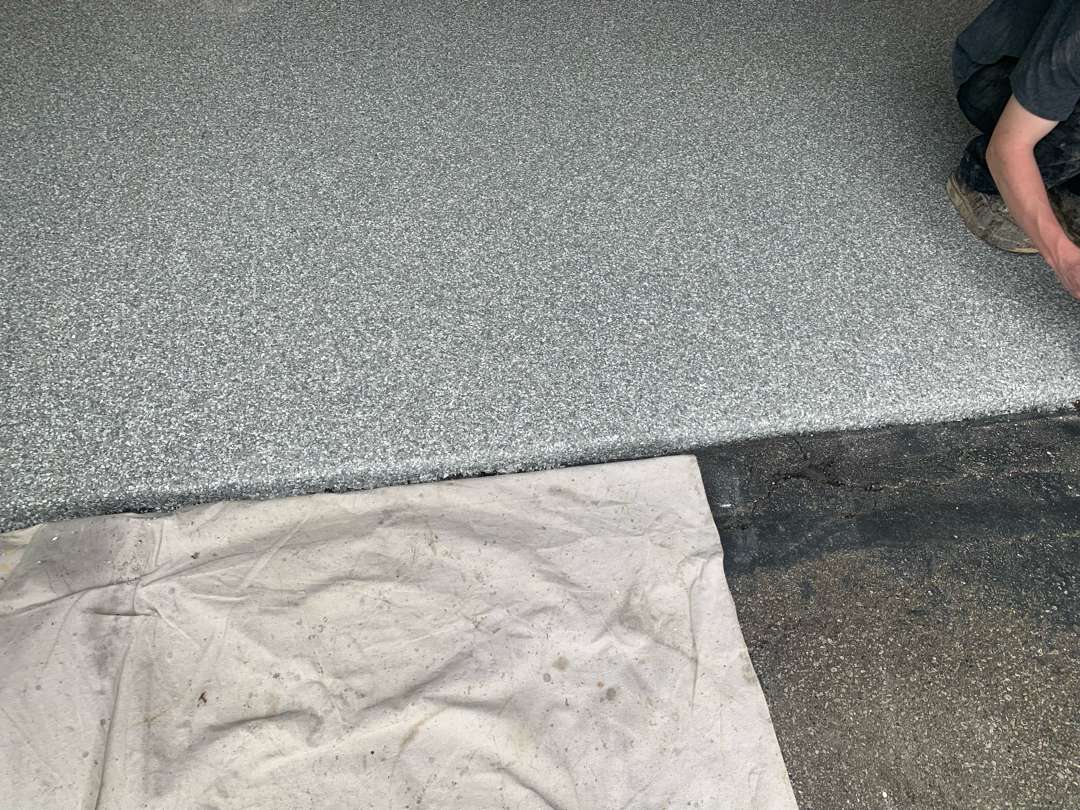

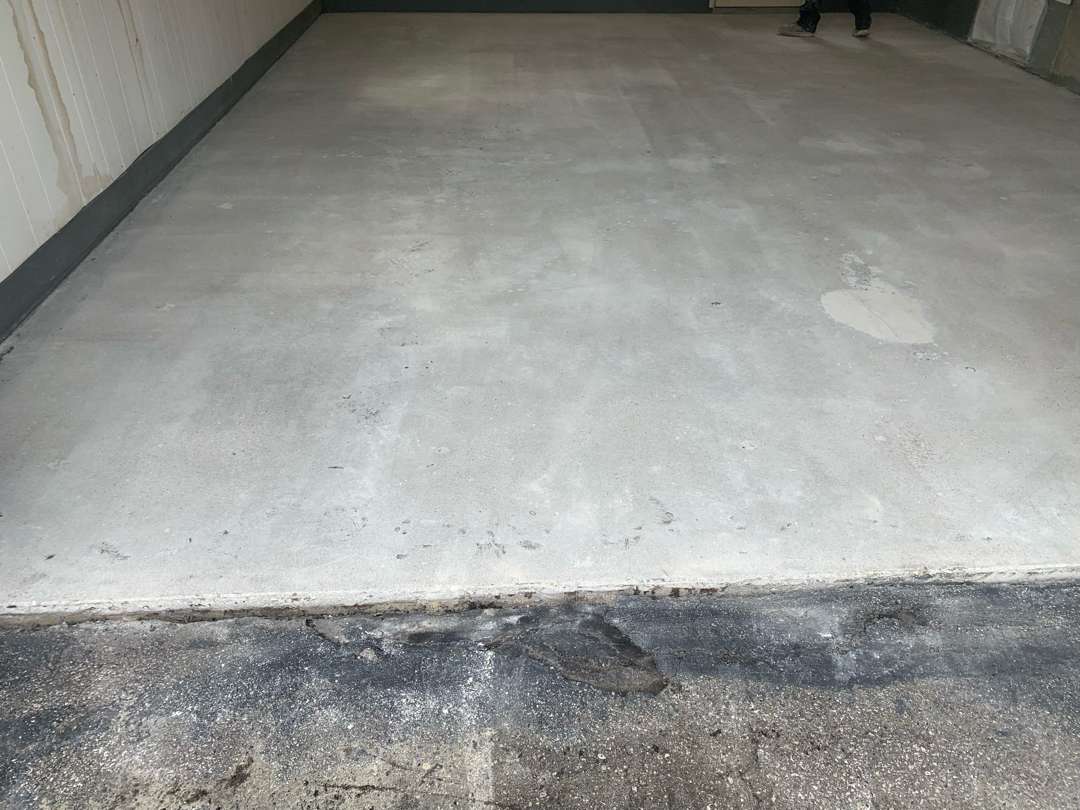
Our crew diamond-ground the full 414 square feet to remove the failing painted coating. The old material came off pass by pass. With the coating gone, the full condition of the concrete became visible. Surface damage and pitting spread broadly across the floor rather than in isolated zones.
Full-Floor Mender Application
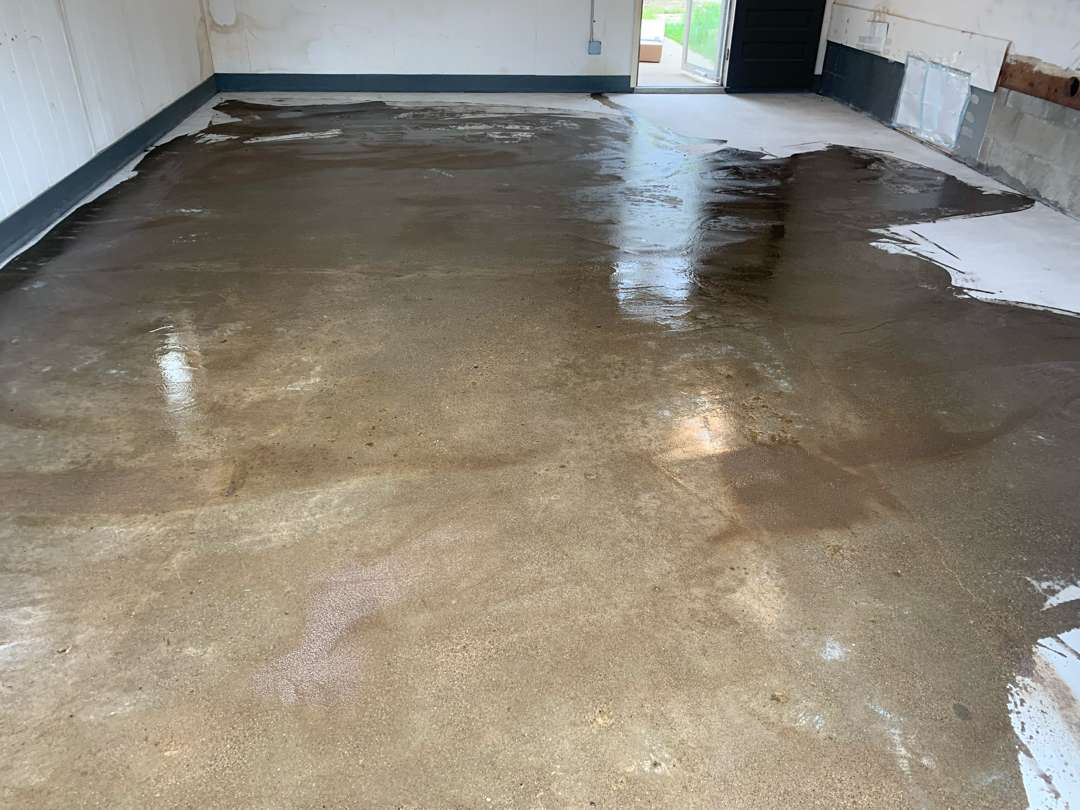
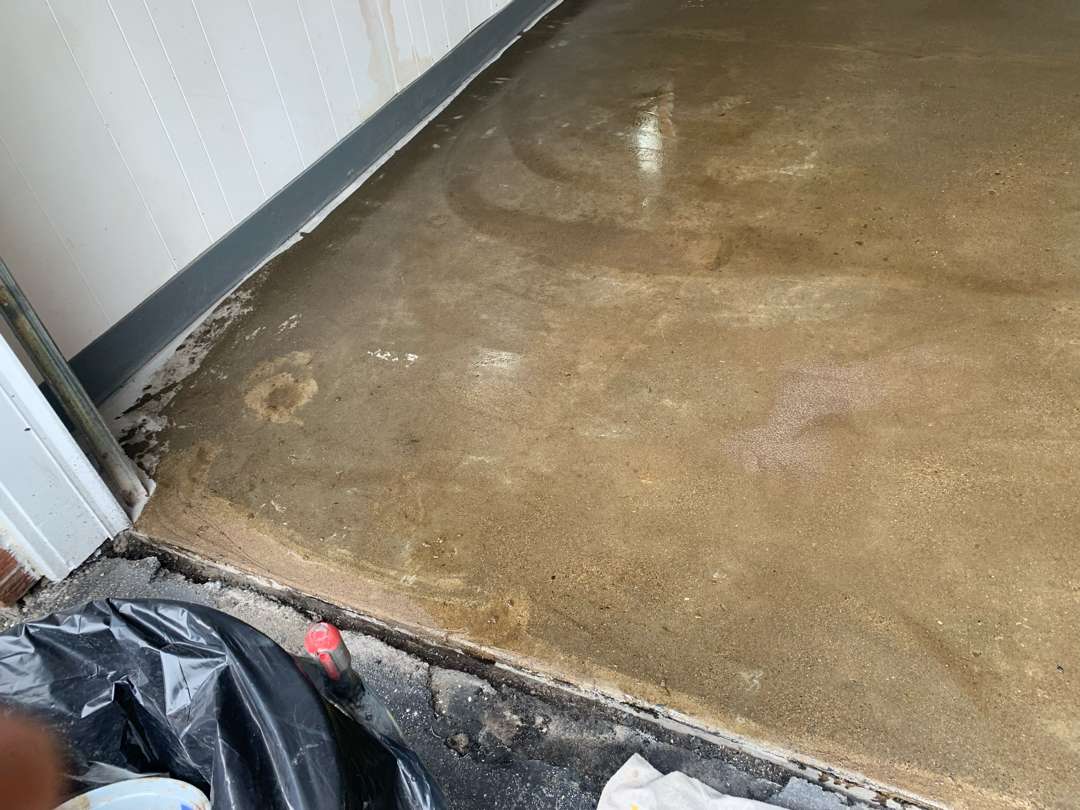
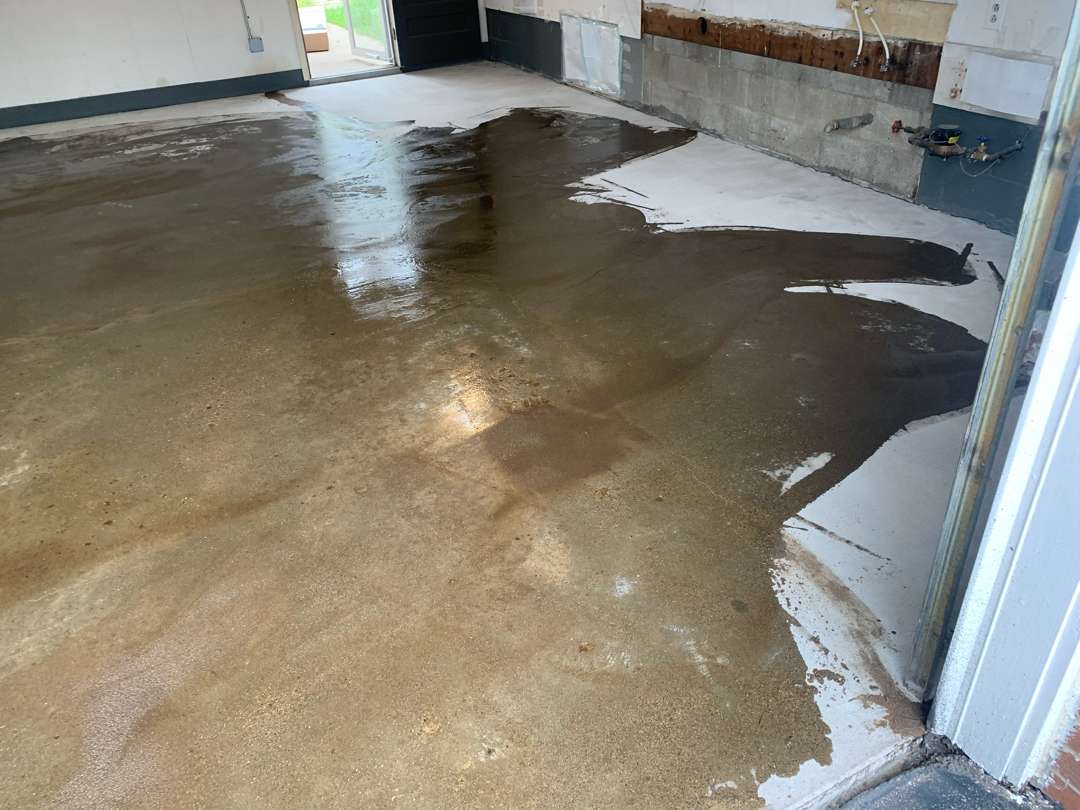
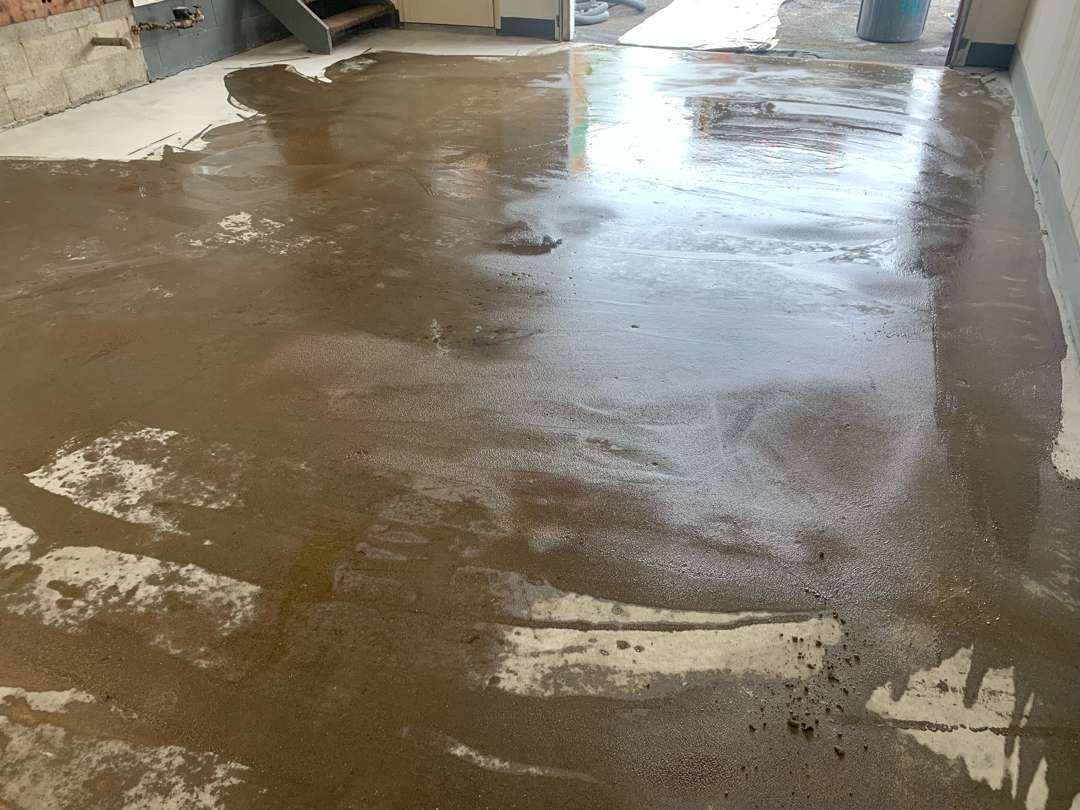
Damage distributed broadly across a slab requires a flood coat, not spot repairs. Spot repairs on broadly damaged concrete leave an uneven profile a coating cannot bridge. Our crew pulled a wet coat of mender compound across the full 414 square feet.
We spread and troweled it to even coverage throughout. Our team allowed full cure time before the second grind.
Second Grind


Stoney Creek on 414 Square Feet
Old Coating Gone, Damage Sealed, 414 Square Feet Finished
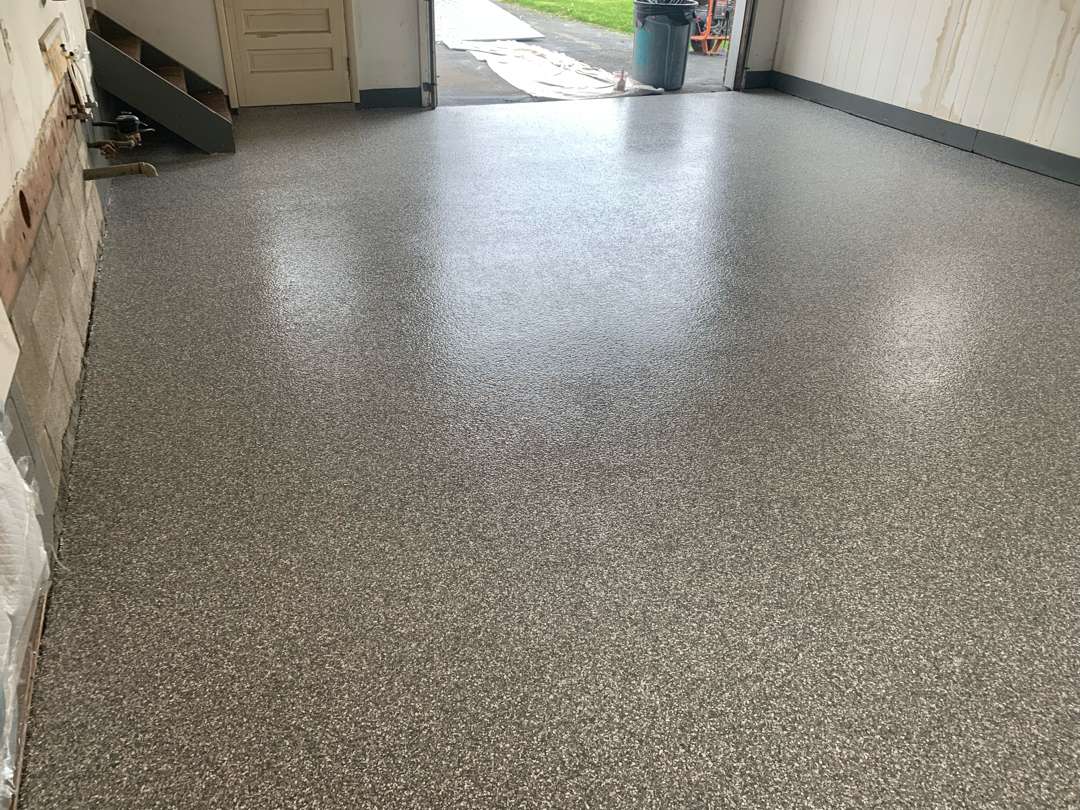
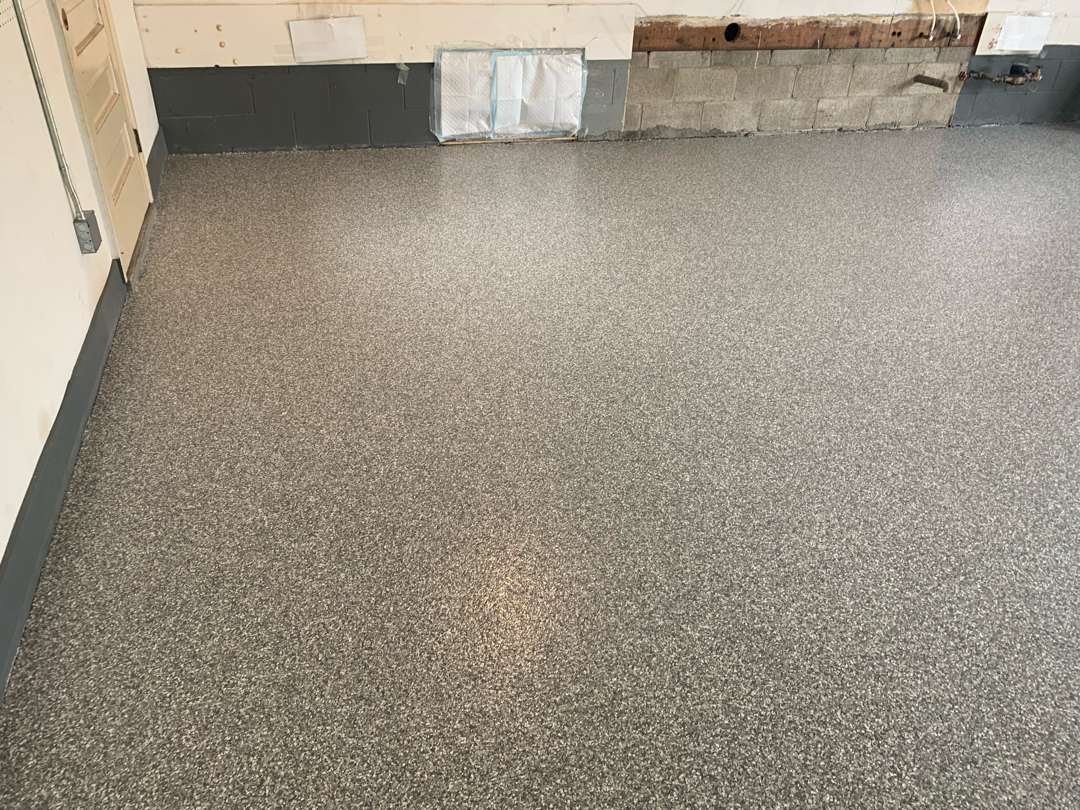
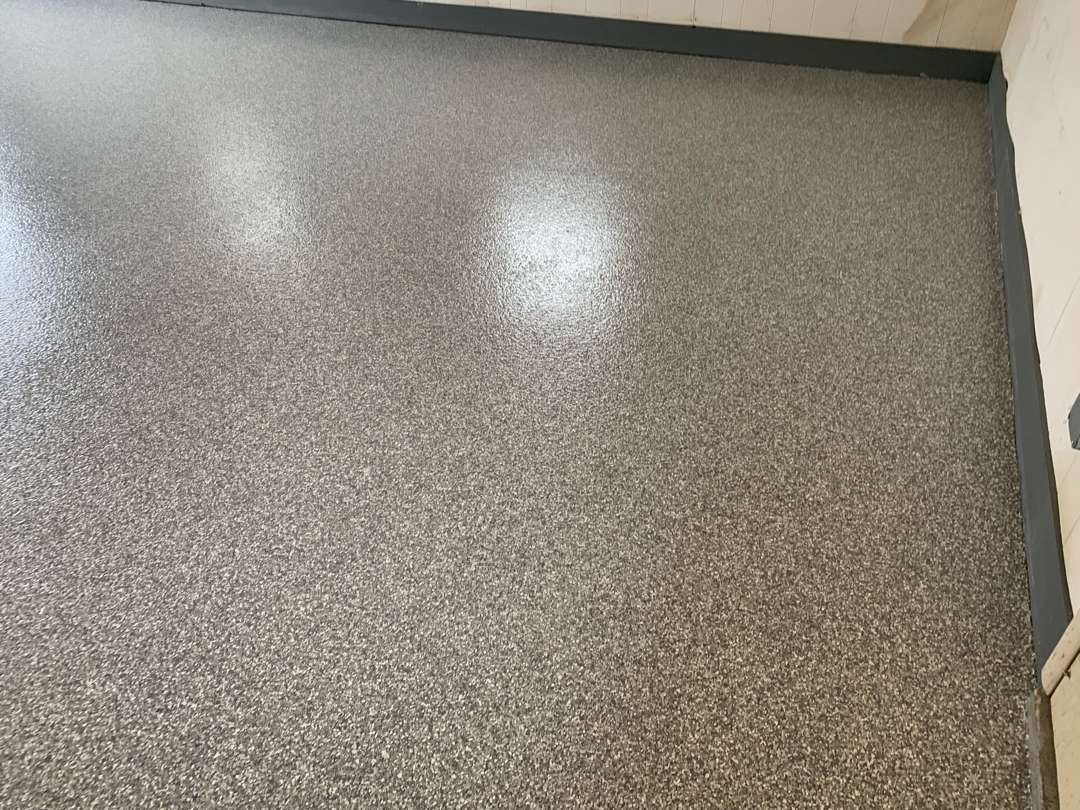
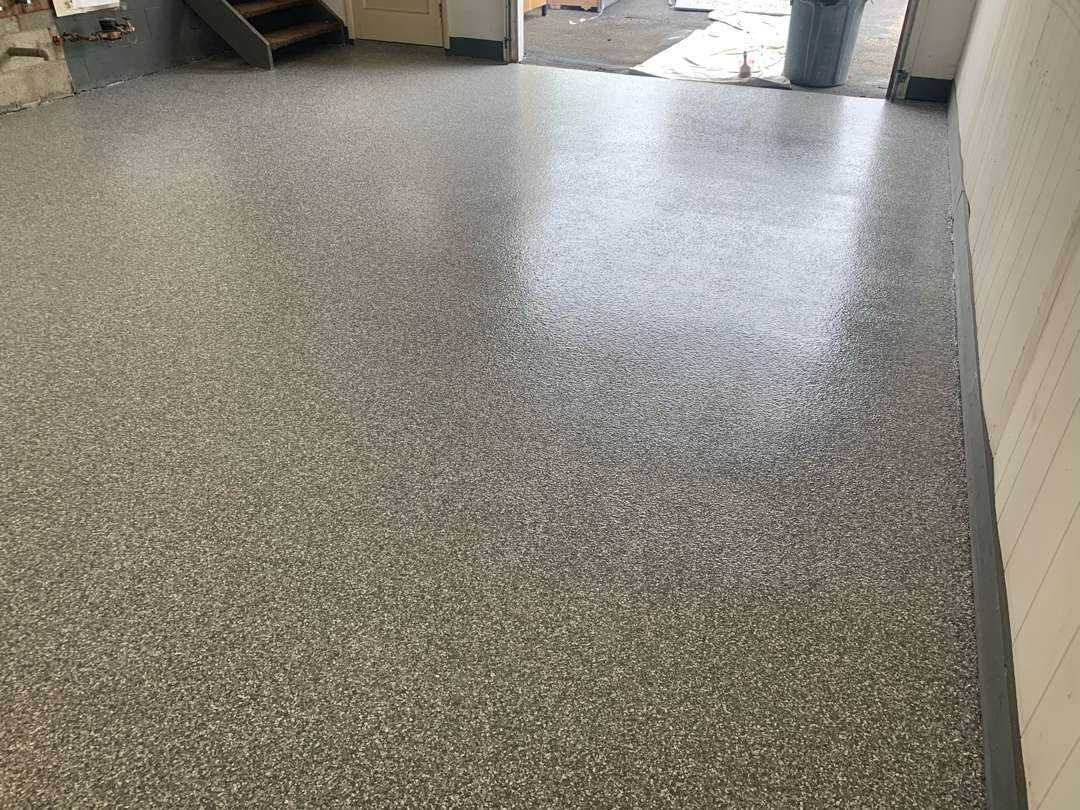
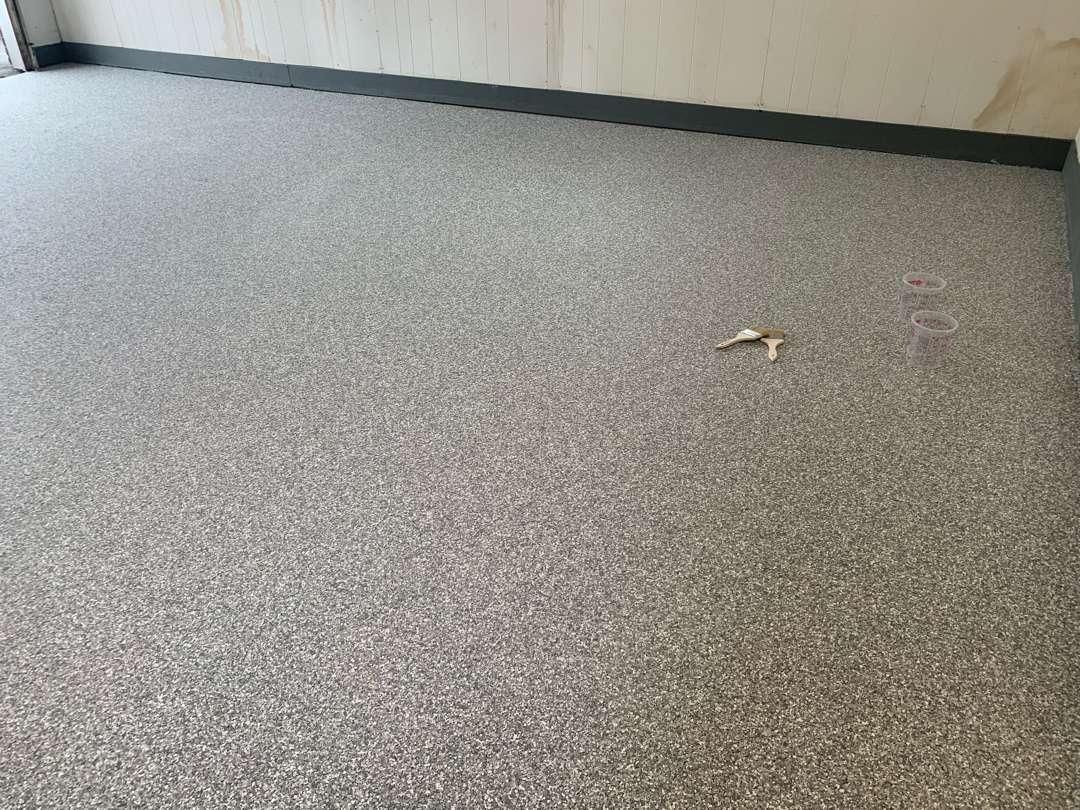
Stoney Creek runs wall to wall across all 414 square feet. The charcoal tone gives the space a finished character.
The oil stains are gone. The old coating is gone. The pitting is sealed and flat. 16-grit provides firm grip underfoot throughout.
Testimonials - Voices of Our Clients
Marianna Sneideraitis
Bethany Dawn
Garage Floor Coating
on Lexington Drive
Lexington Drive, Troy, MI
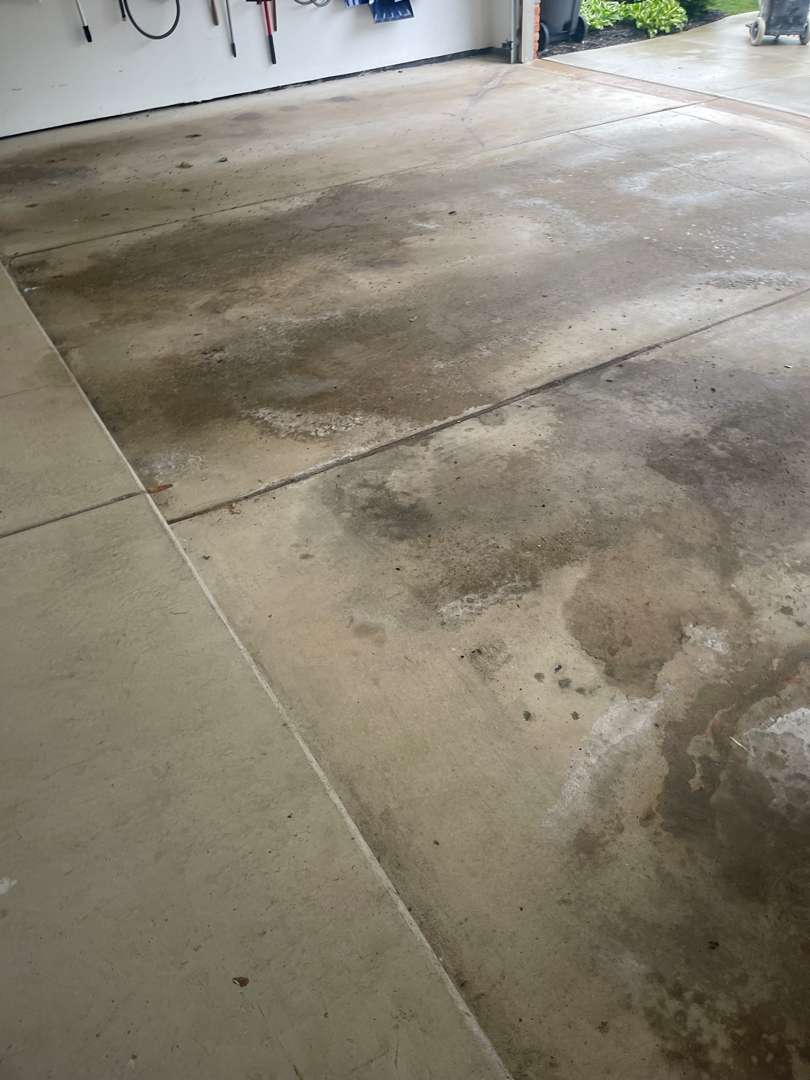
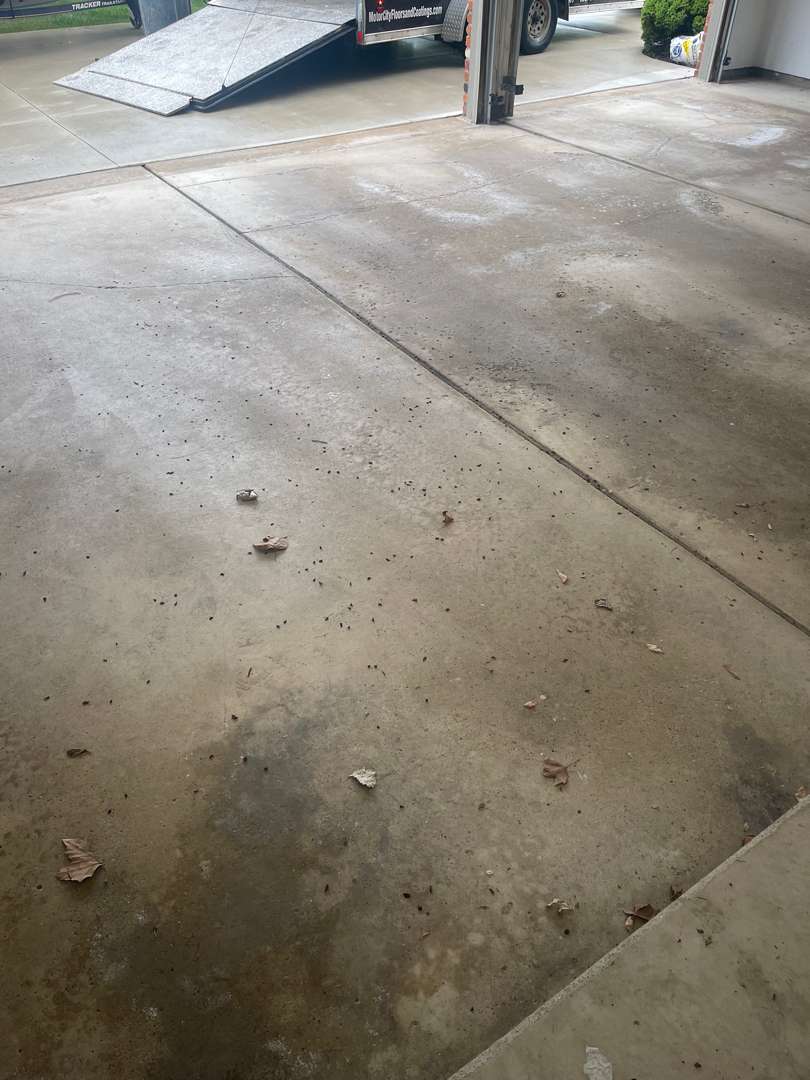
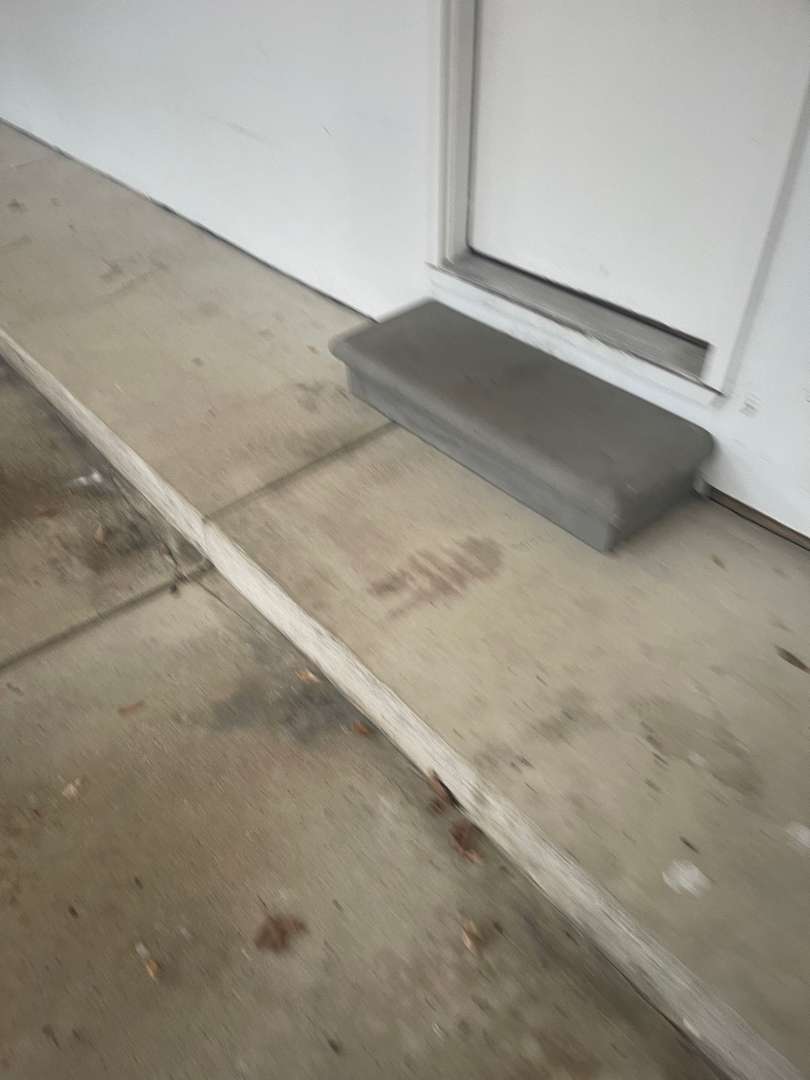
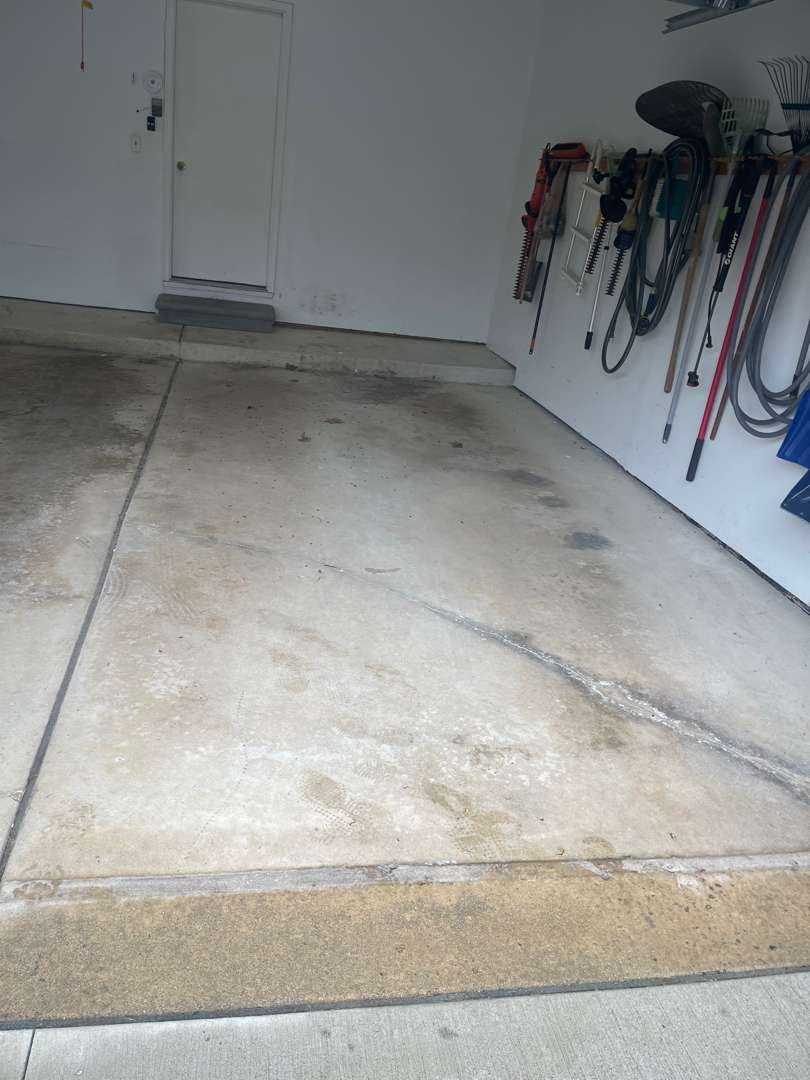
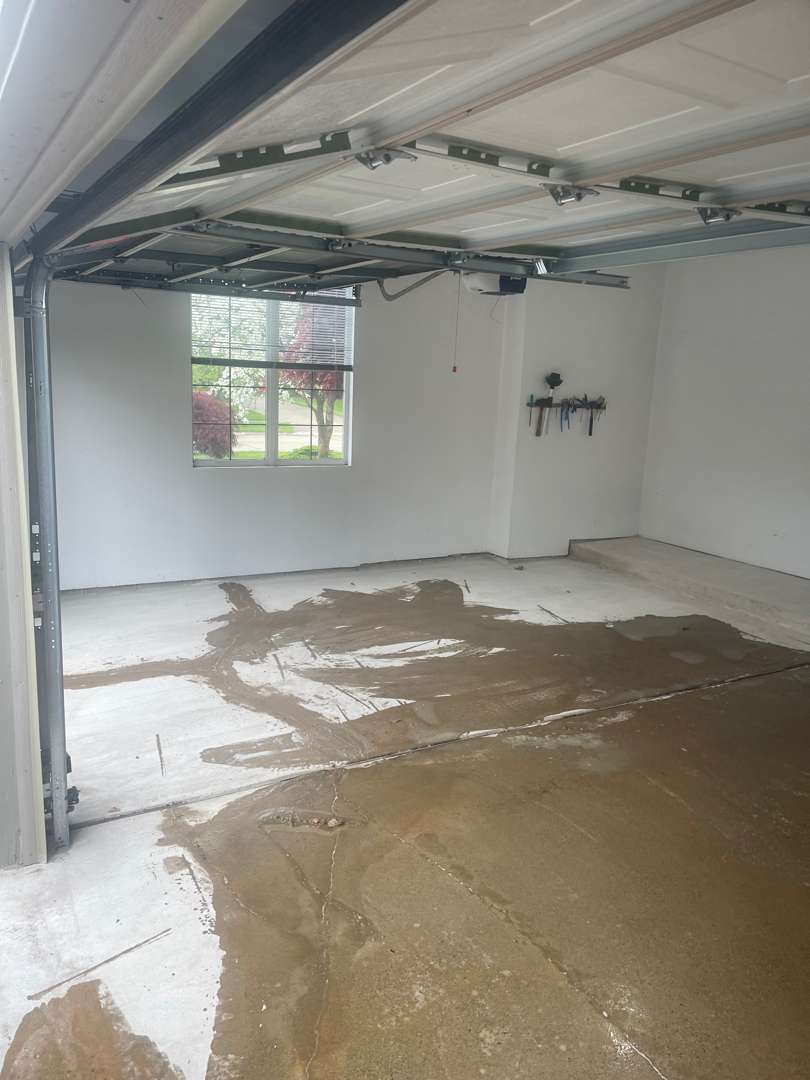
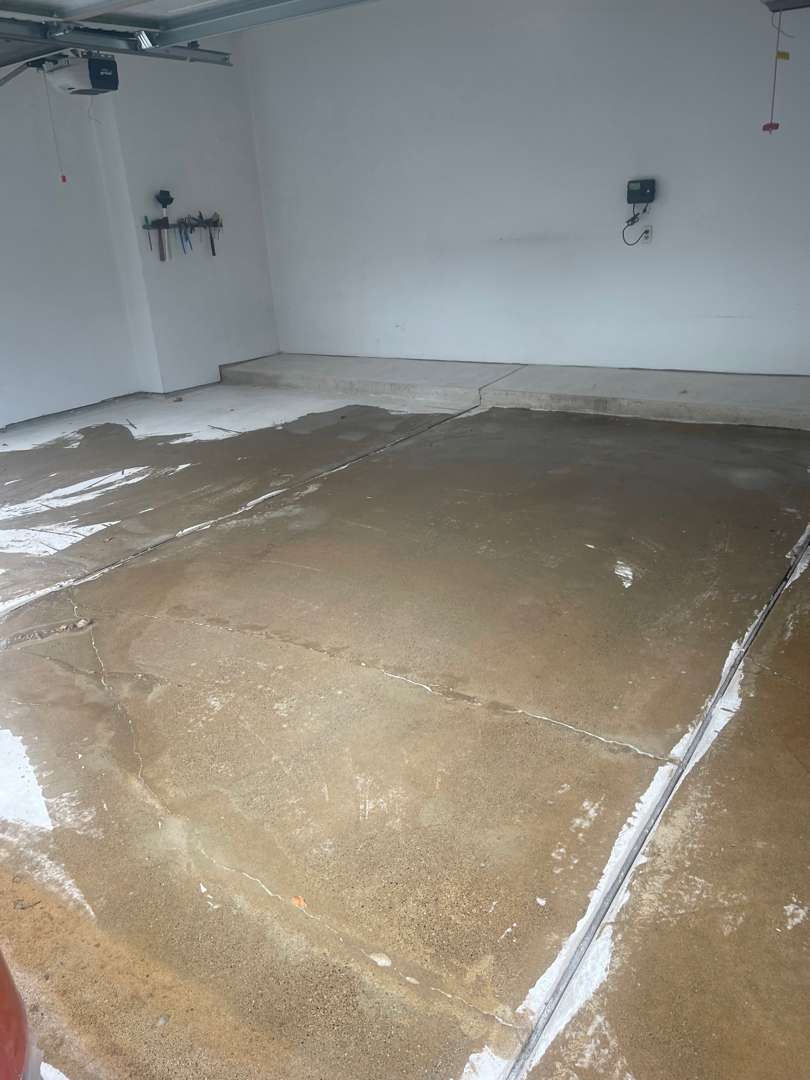
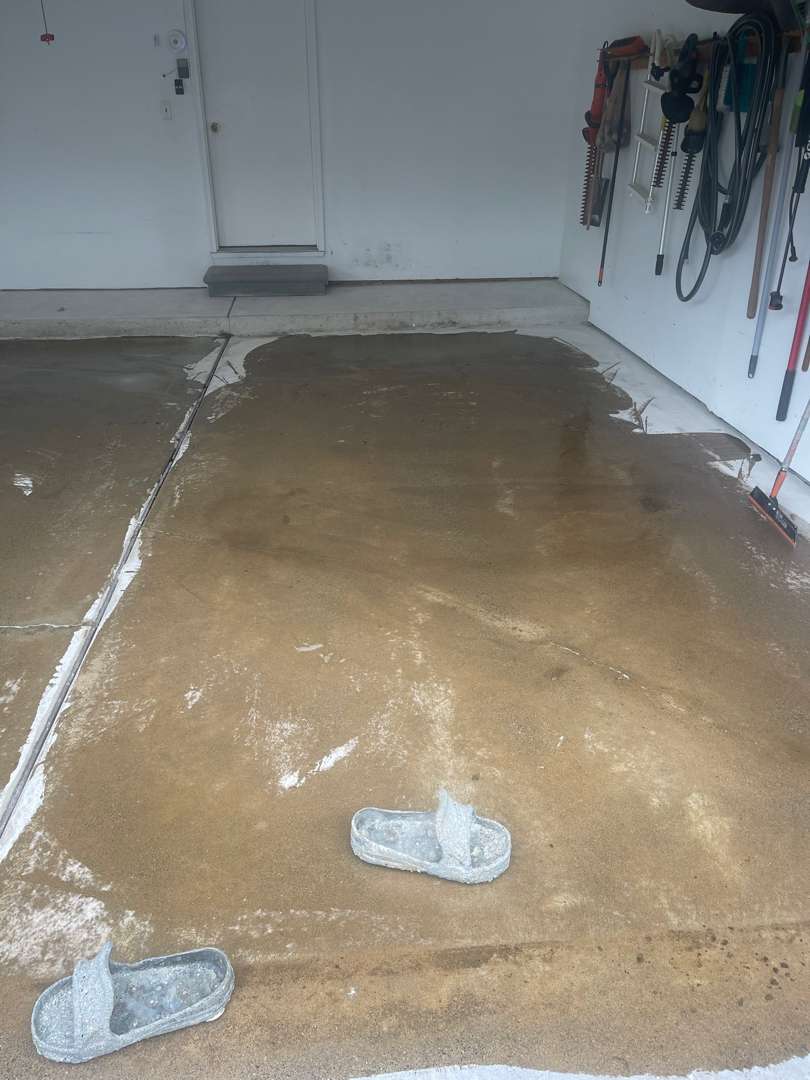
The 595-square-foot slab at this Lexington Drive garage showed years of accumulated damage. Pitting spread across the floor in clusters throughout the field. Cracks ran across the concrete in multiple directions. Oil stains and surface staining covered broad areas.
One concrete step leads to the interior door. The step was included in the scope.
Grinding
Crack and Pitting Repair
Step Preparation
Our crew prepared the concrete step by hand before coating. We abraded the tread and riser to create the profile the coating needs to grip. Grinding equipment cannot reach the nosing and edges of a step.
Hand abrasion is the required method for those surfaces. Our crew confirmed the step ready before the base coat went down.
Slate Stone on 595 Square Feet
Our crew applied the MC-4 polyurea base coat by roller across all 595 prepared square feet. We applied base coat to the step tread and riser at the same time.
Our crew broadcast Slate Stone flake into the wet base coat across the full floor. We carried the broadcast across the step surfaces at the same time. Slate Stone carries a cool grey blend with light and dark chips throughout. After cure and excess flake recovery, our team applied the polyaspartic topcoat with 24-grit traction additive throughout.
Cracks Sealed, Pitting Gone, 595 Square Feet Coated
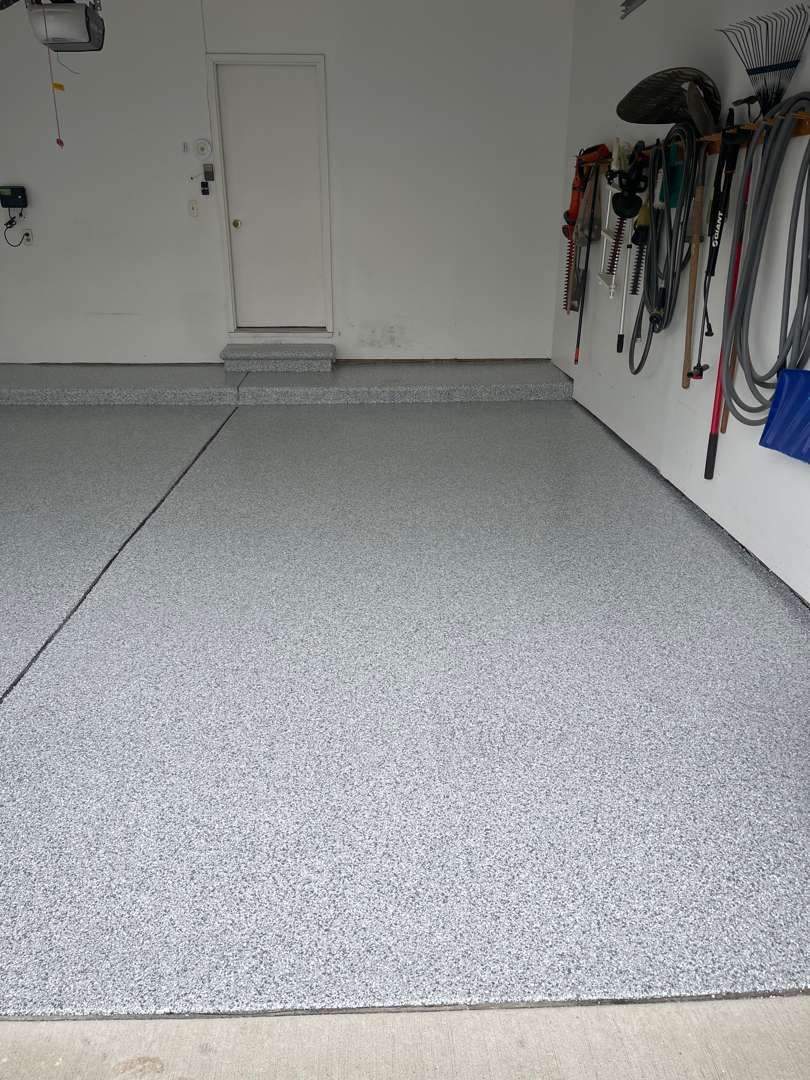
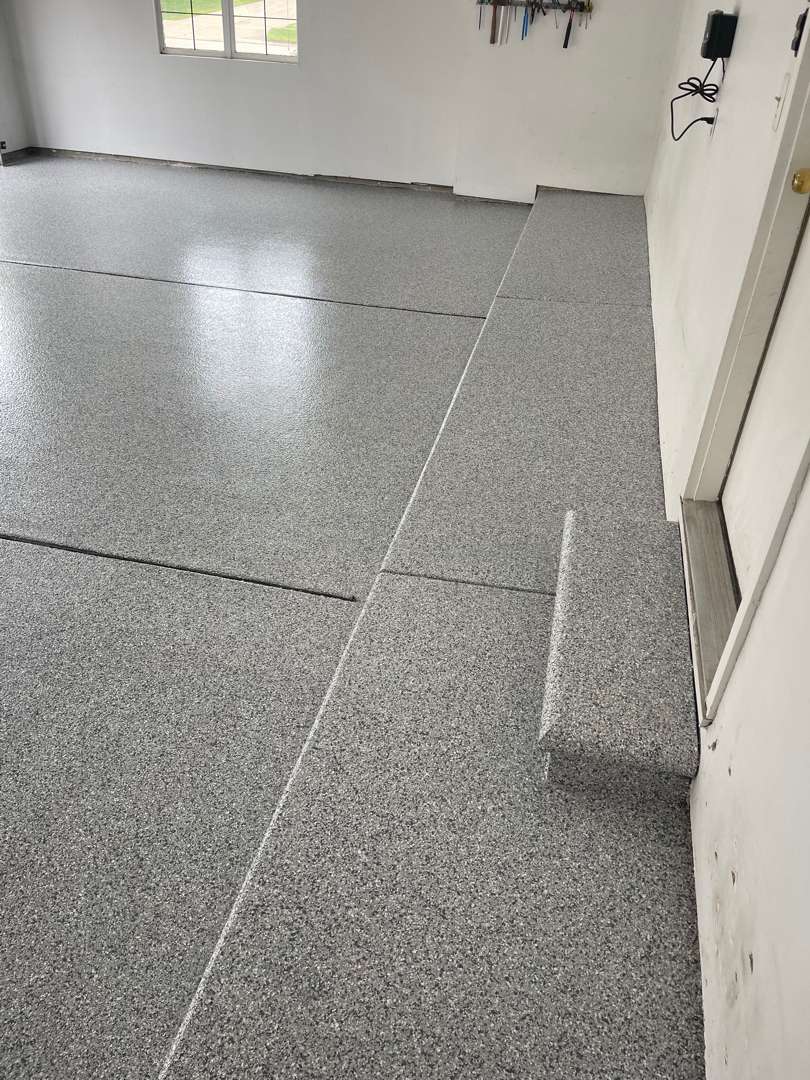
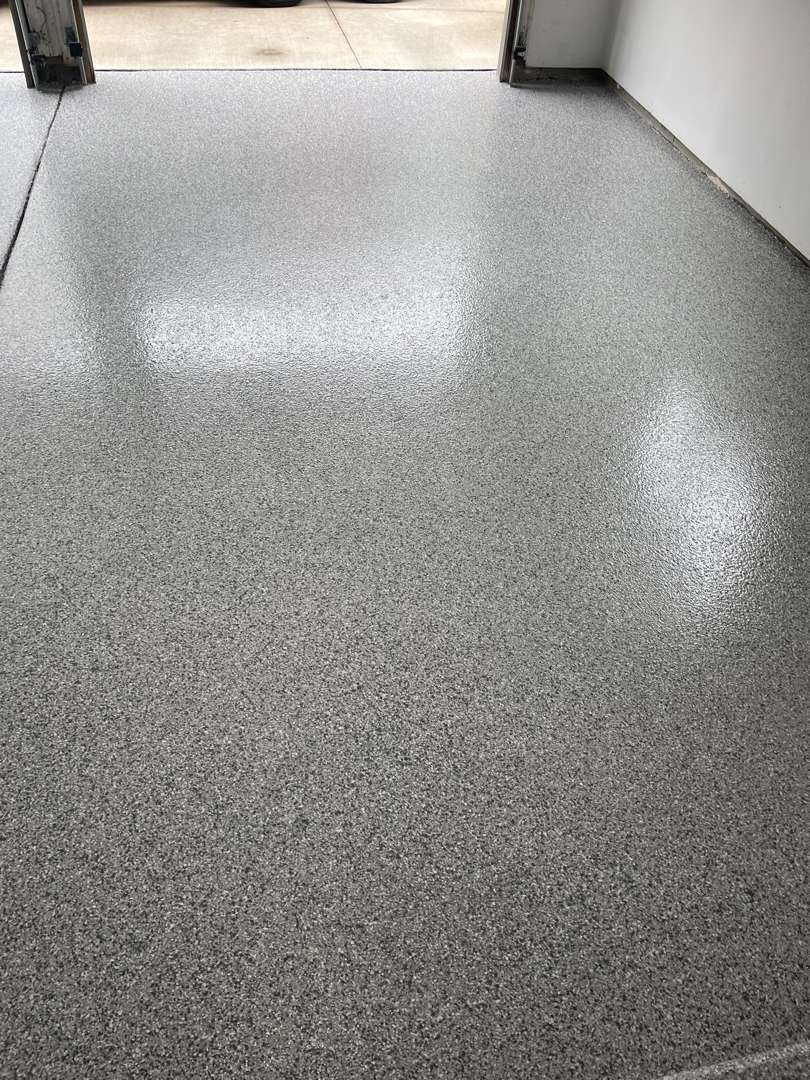
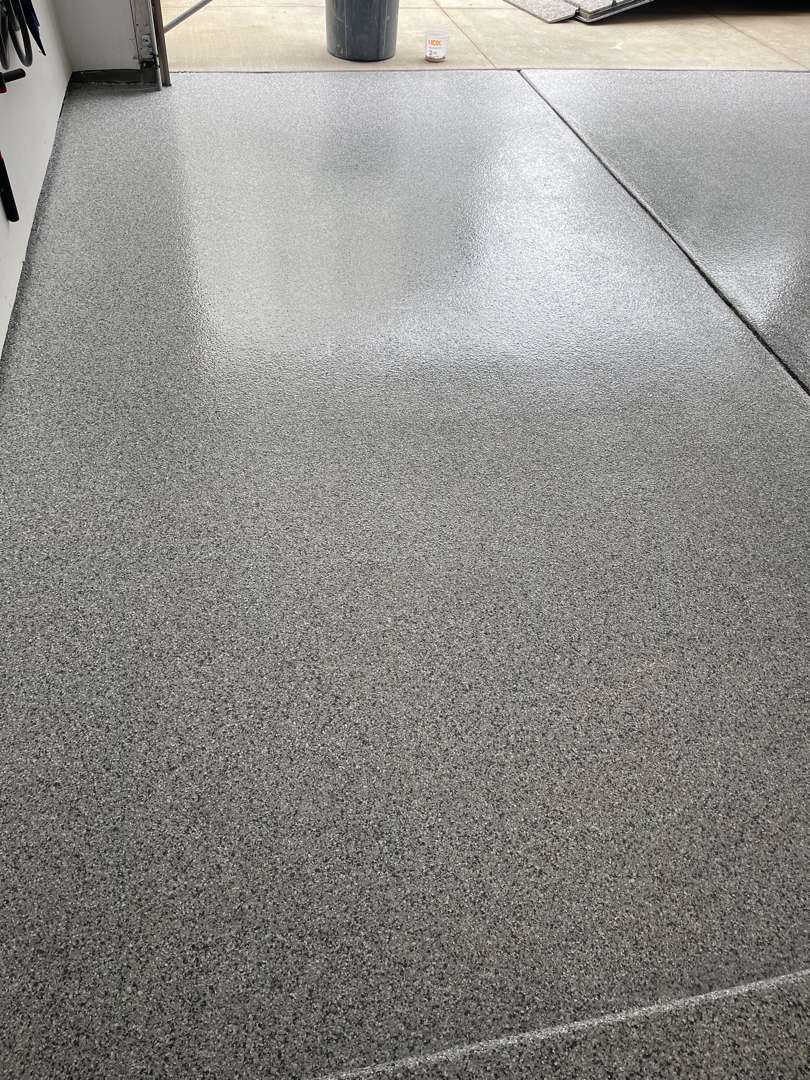
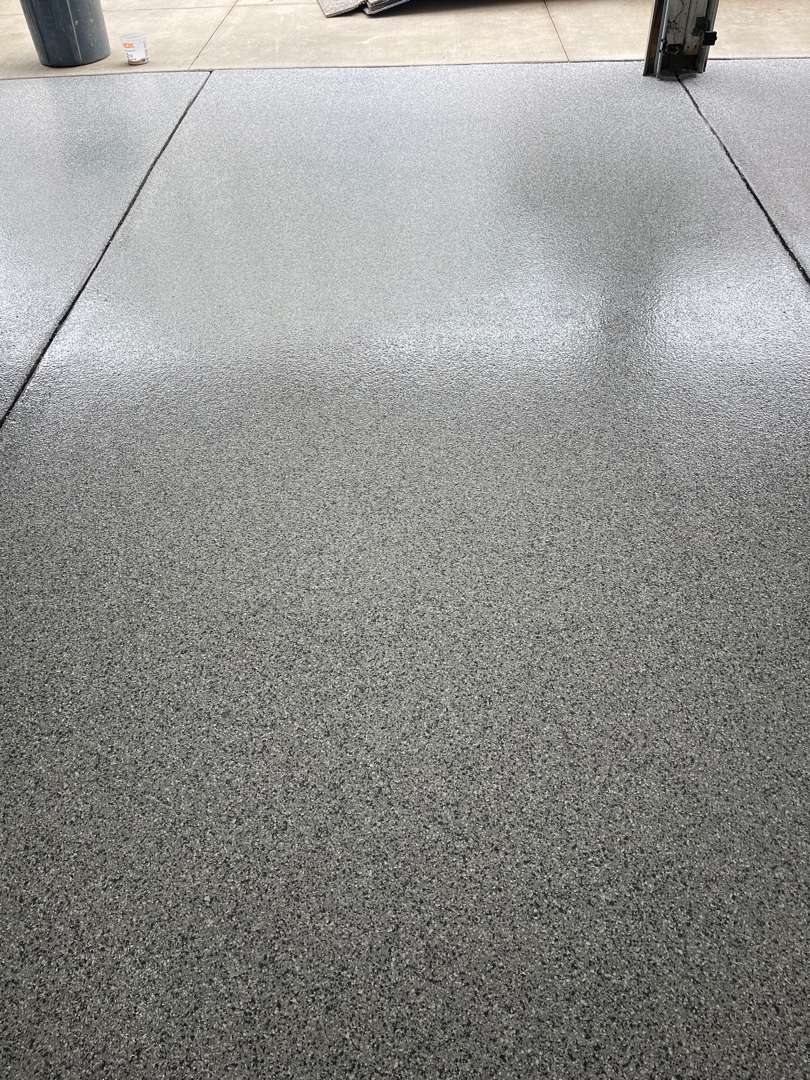
Slate Stone runs wall to wall across all 595 square feet. The cool grey tone reads cleanly against the bright white walls. The step carries the same flake and finish as the main floor.
The cracks are sealed. The pitting is gone. The oil stains are gone. 24-grit provides firm grip underfoot throughout.
Testimonials - Voices of Our Clients
Al Hildreth
Harvey Dorsey
Garage Floor Coating
on Orchard Trail Drive
Orchard Trail Drive, Troy, MI
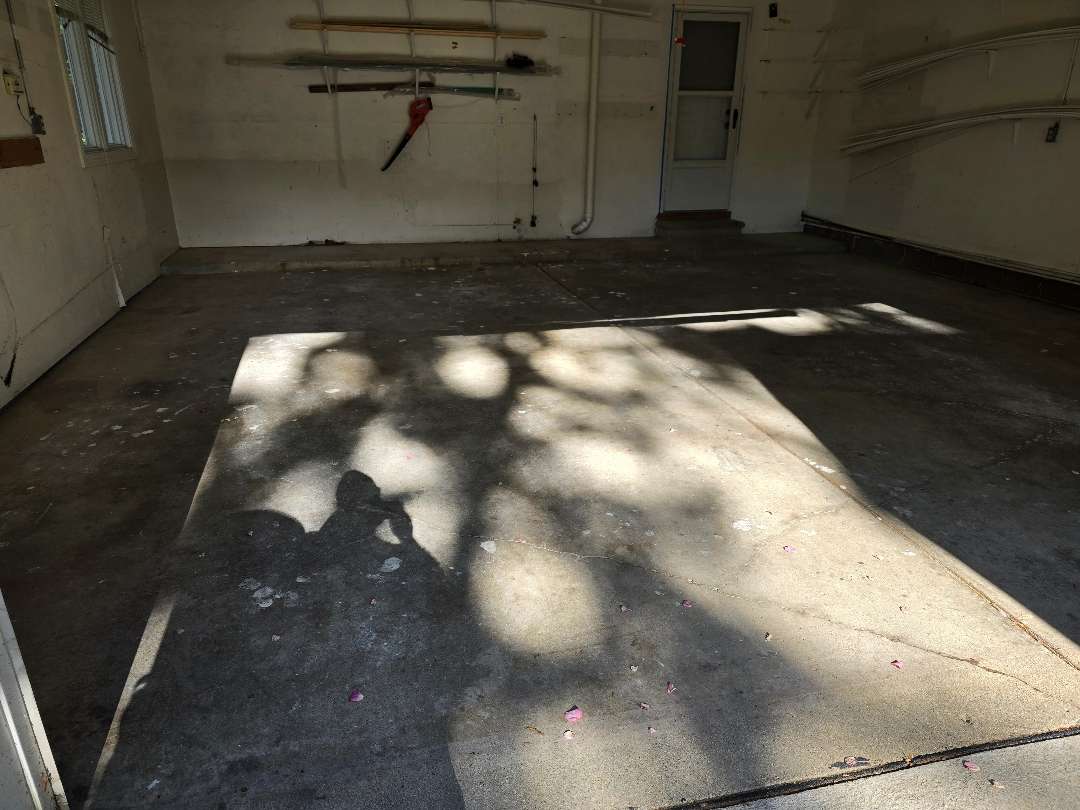
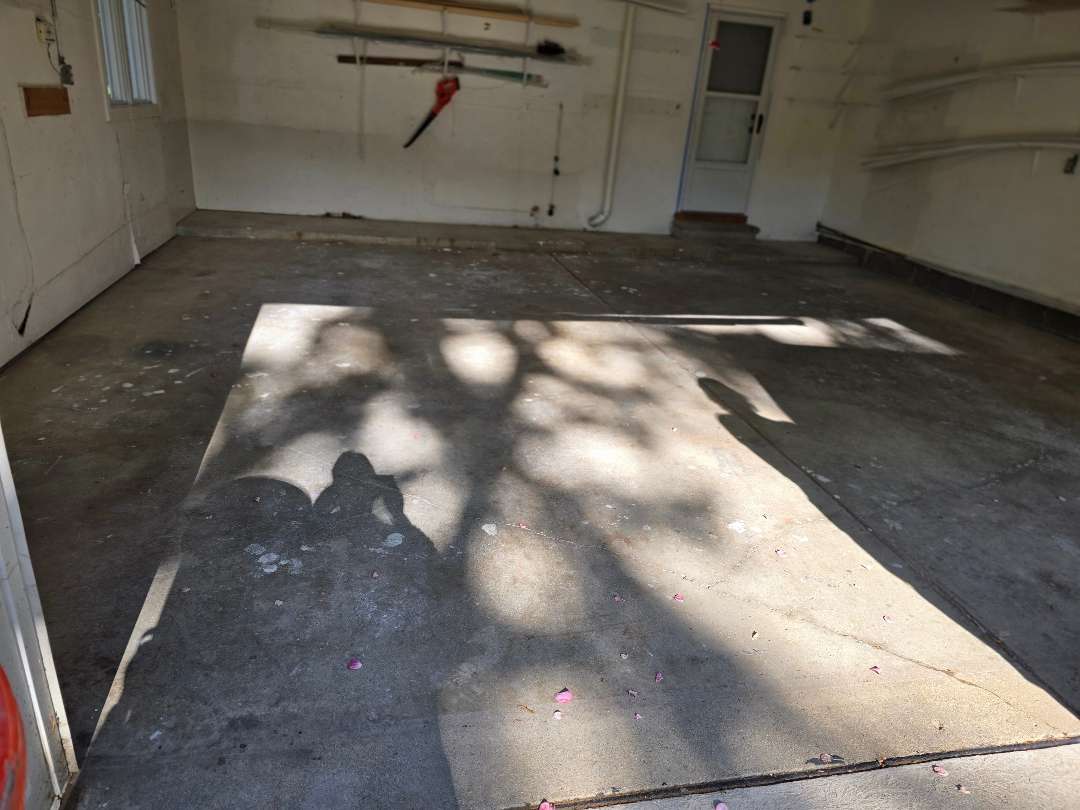
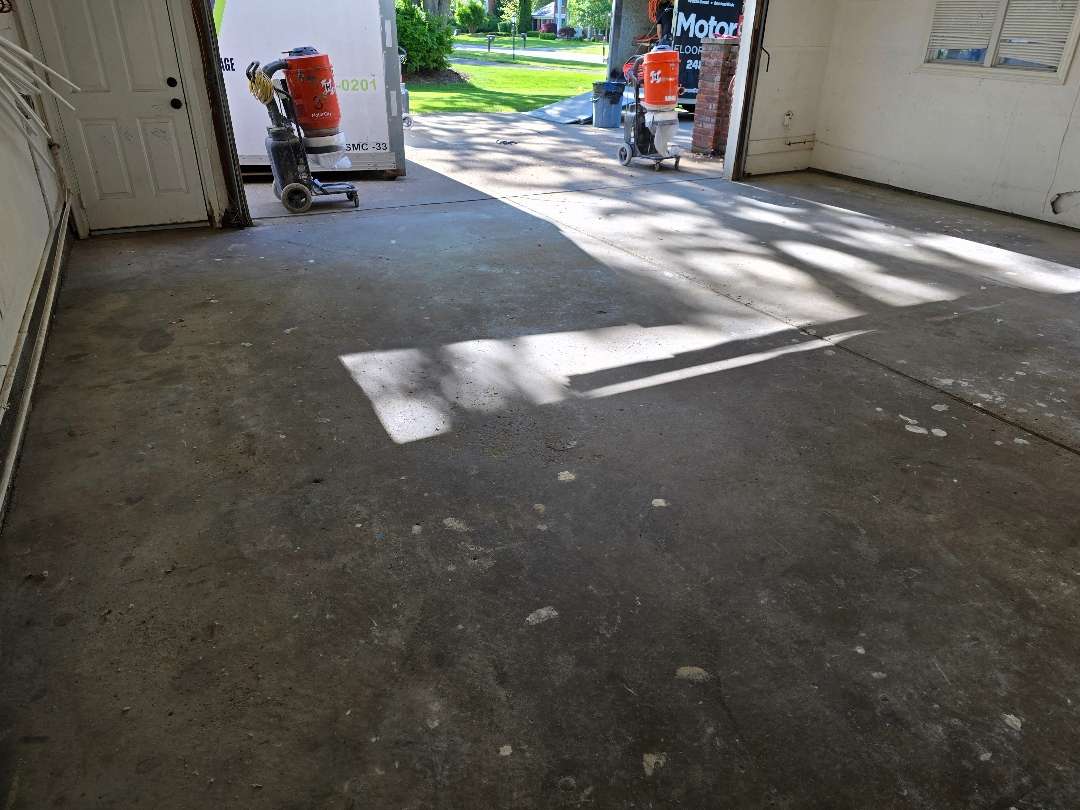
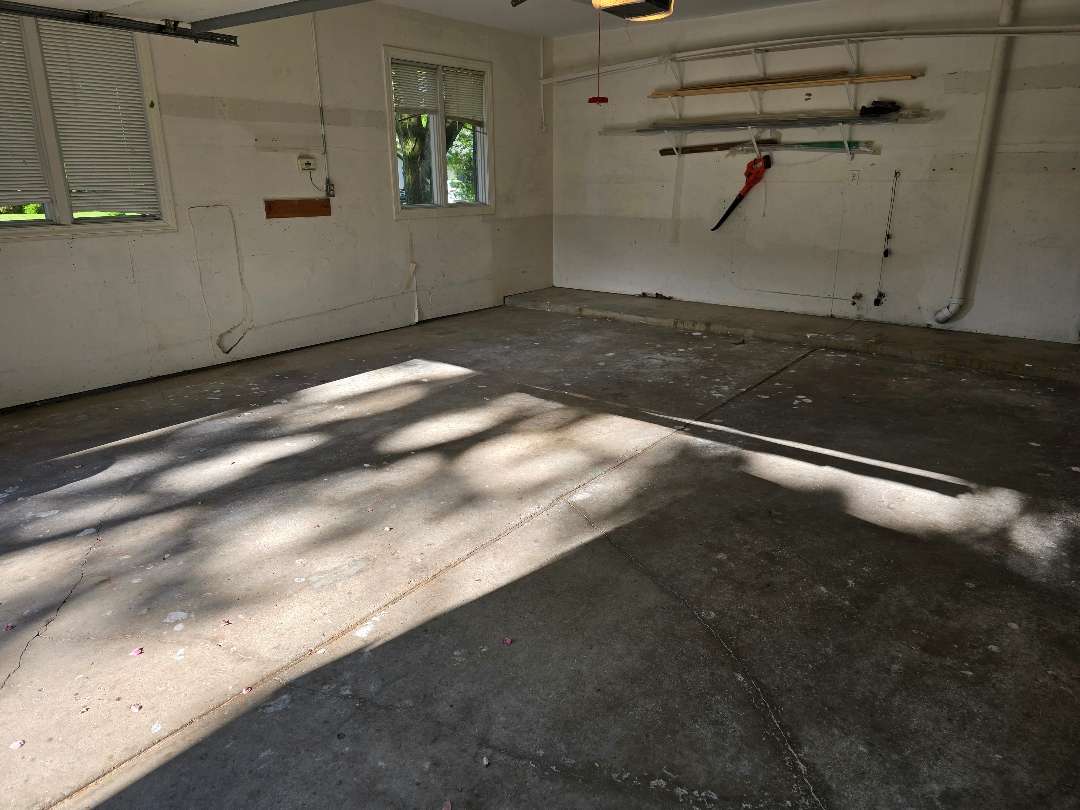
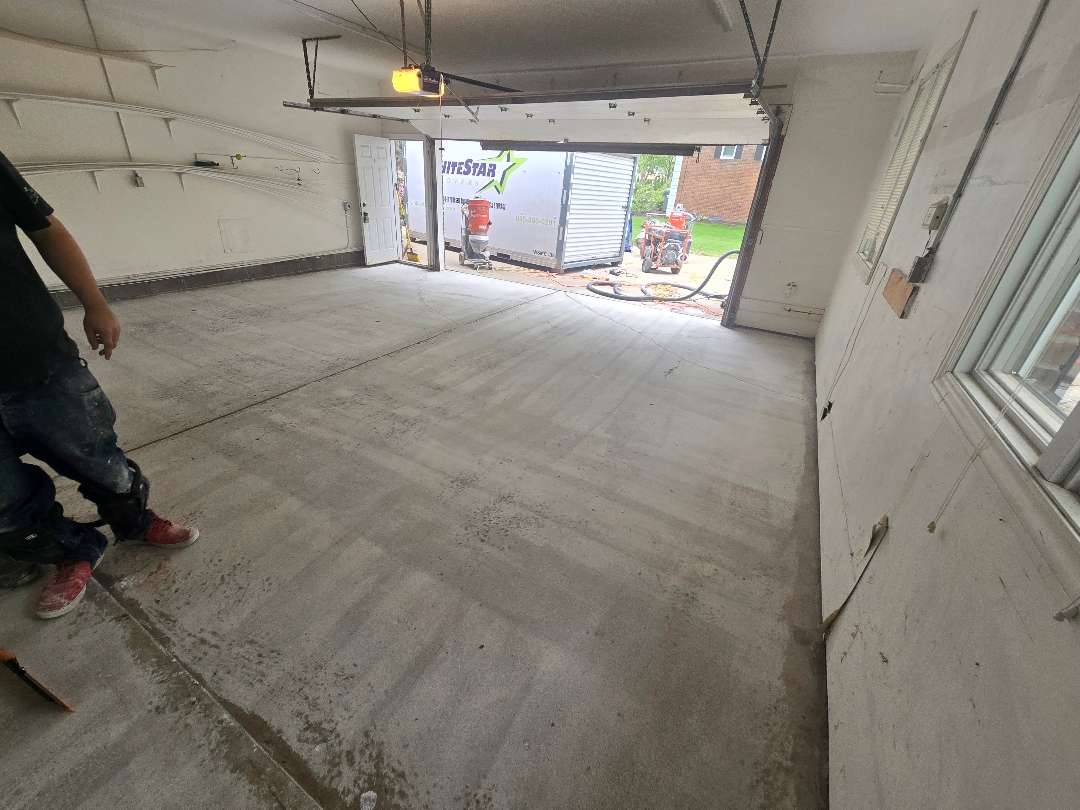
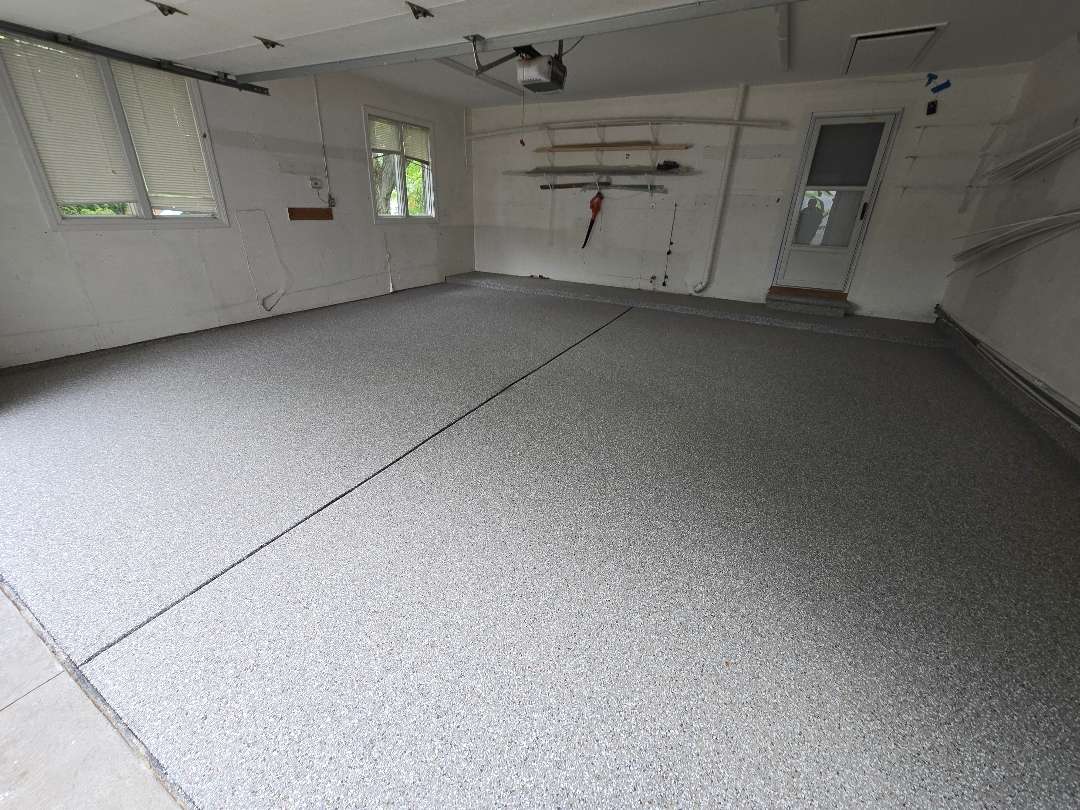
The Orchard Trail Drive garage was 530 square feet covered in a failing painted coating. The paint had lost adhesion across most of the surface — flaking and peeling throughout. One concrete step leads to the interior door and was included in the scope.
Paint Removal and First Grind
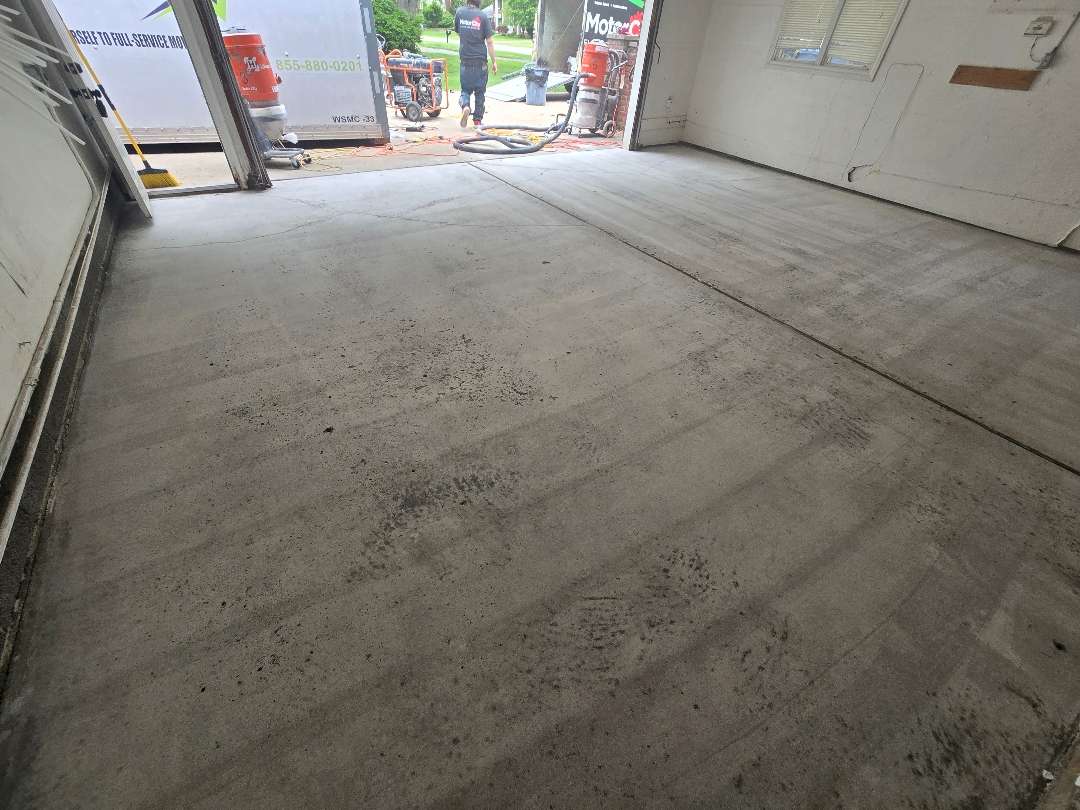
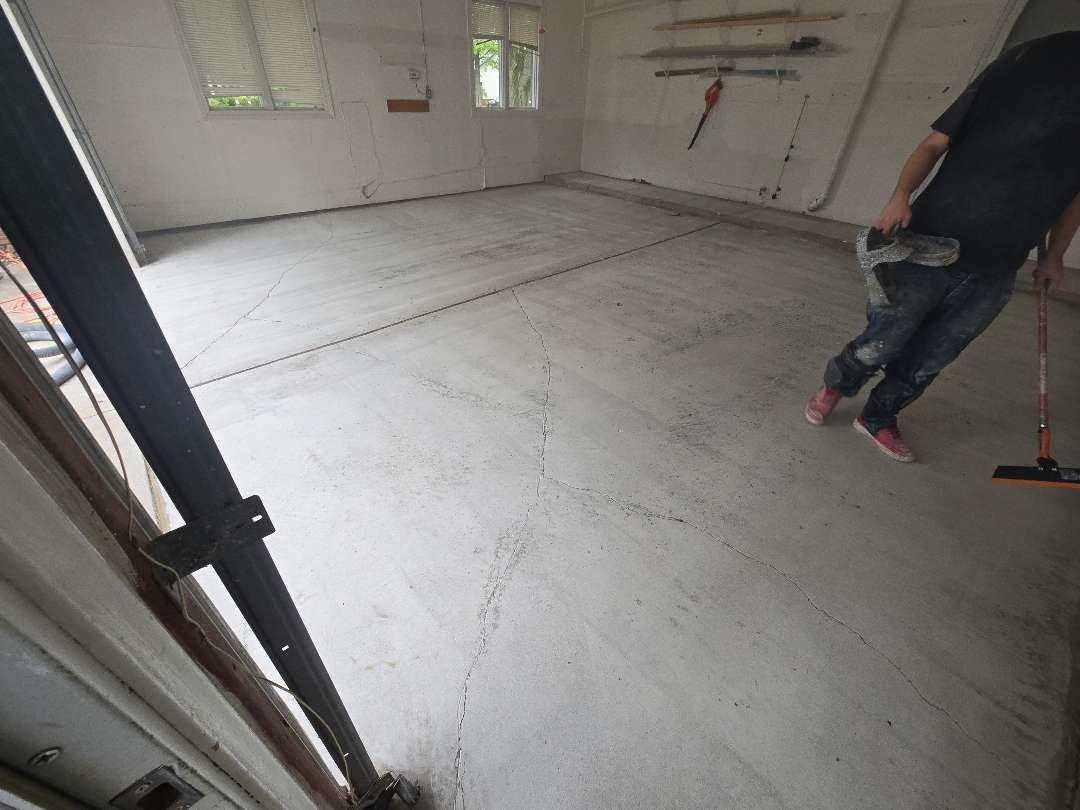
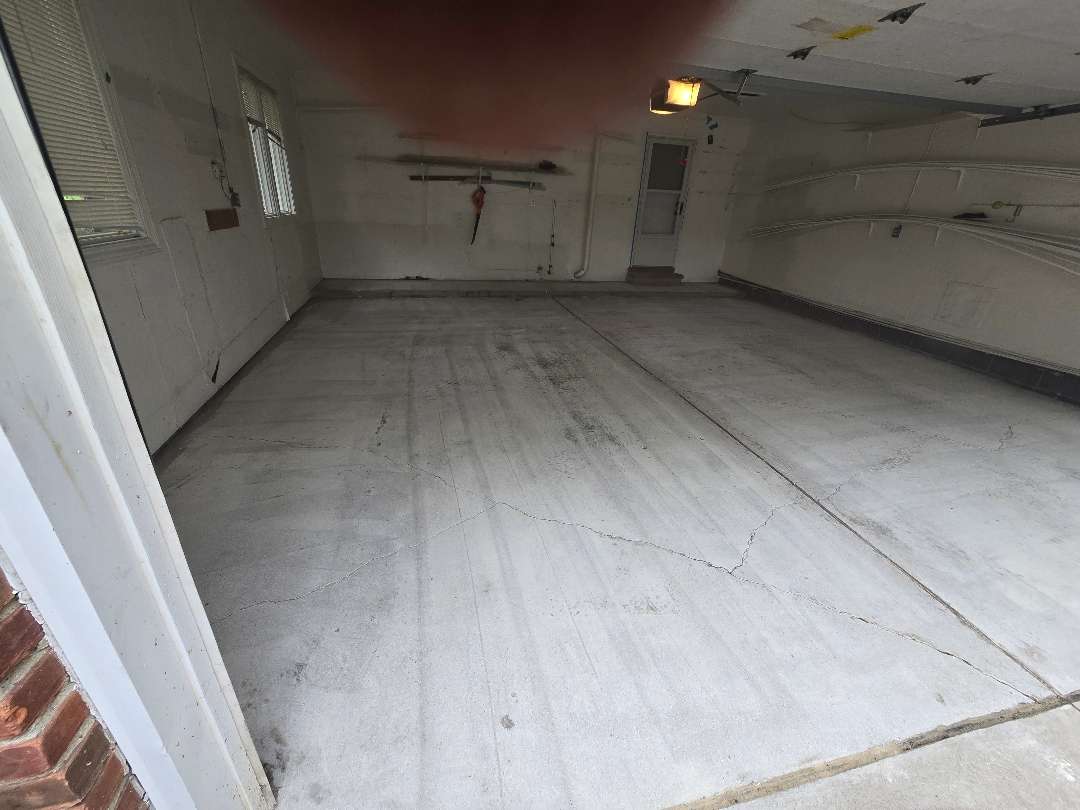
What the Paint Was Hiding


Crack Repair and Flood Coat


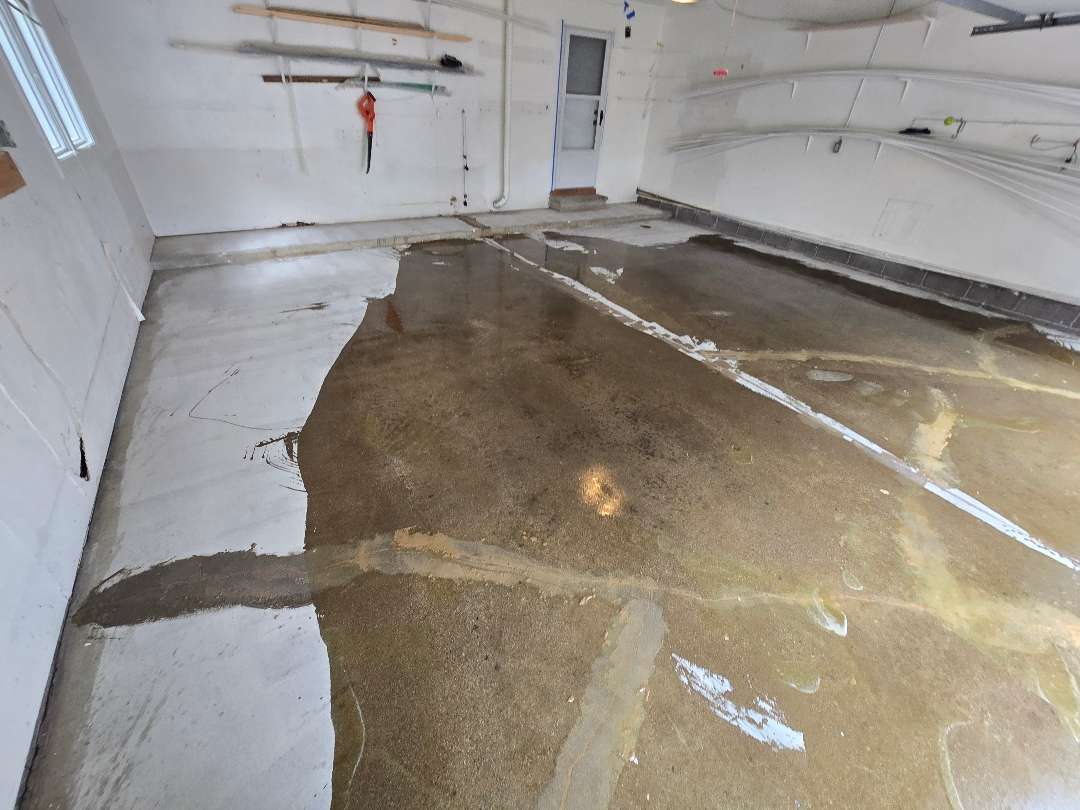
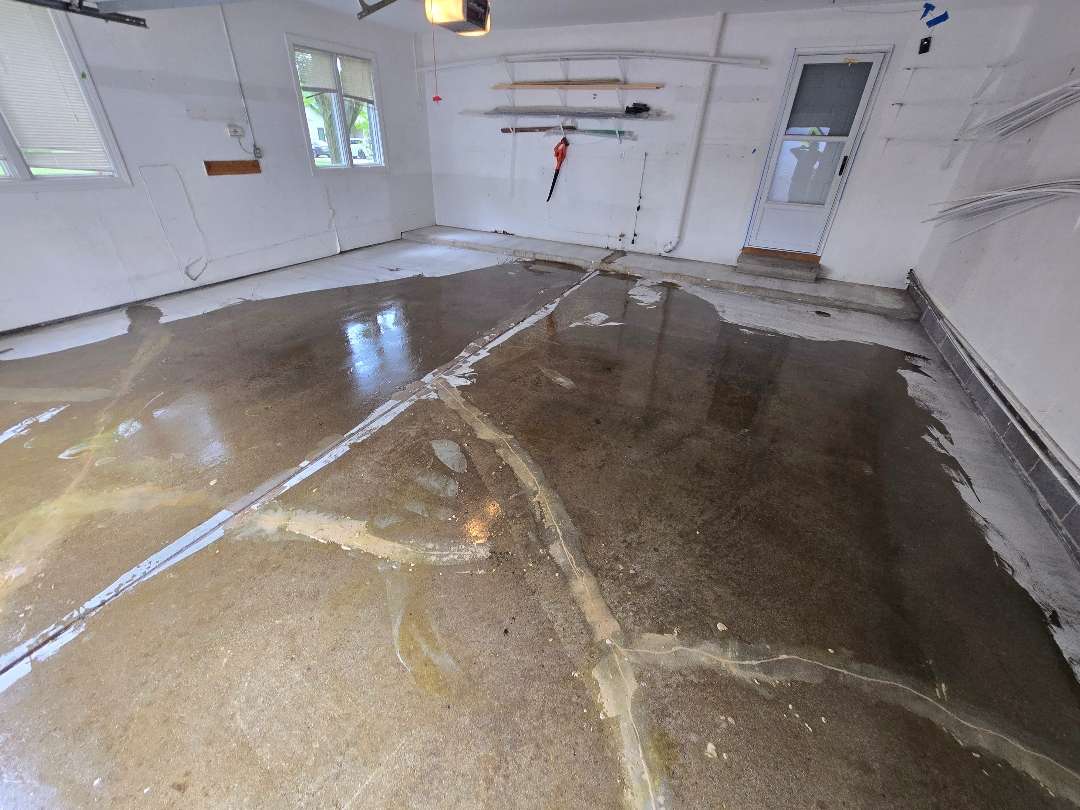
Our crew worked mender compound into each crack and brought every repair flush. The damage extended broadly enough to warrant a flood coat across much of the floor. Our crew pulled mender compound across the affected zones and troweled it to even coverage. We allowed full cure time before proceeding.
Step Preparation
Our crew prepared the concrete step by hand before coating. We abraded the tread and riser to create the profile the coating needs to grip. Grinding equipment cannot reach the nosing and edges of a step.
Hand abrasion ensures full coverage across those surfaces. Our crew confirmed the step ready before the base coat went down.
Pebble Beach on 530 Square Feet
Our crew applied the MC-4.1 polyurea base coat by roller across all 530 prepared square feet. We applied base coat to the step tread and riser at the same time.
Our crew broadcast Pebble Beach flake into the wet base coat across the full floor. We carried the broadcast across the step surfaces at the same time. Pebble Beach carries a light silvery-grey blend with white and dark chips throughout. After cure and excess flake recovery, our team applied the polyaspartic topcoat with 24-grit traction additive throughout.
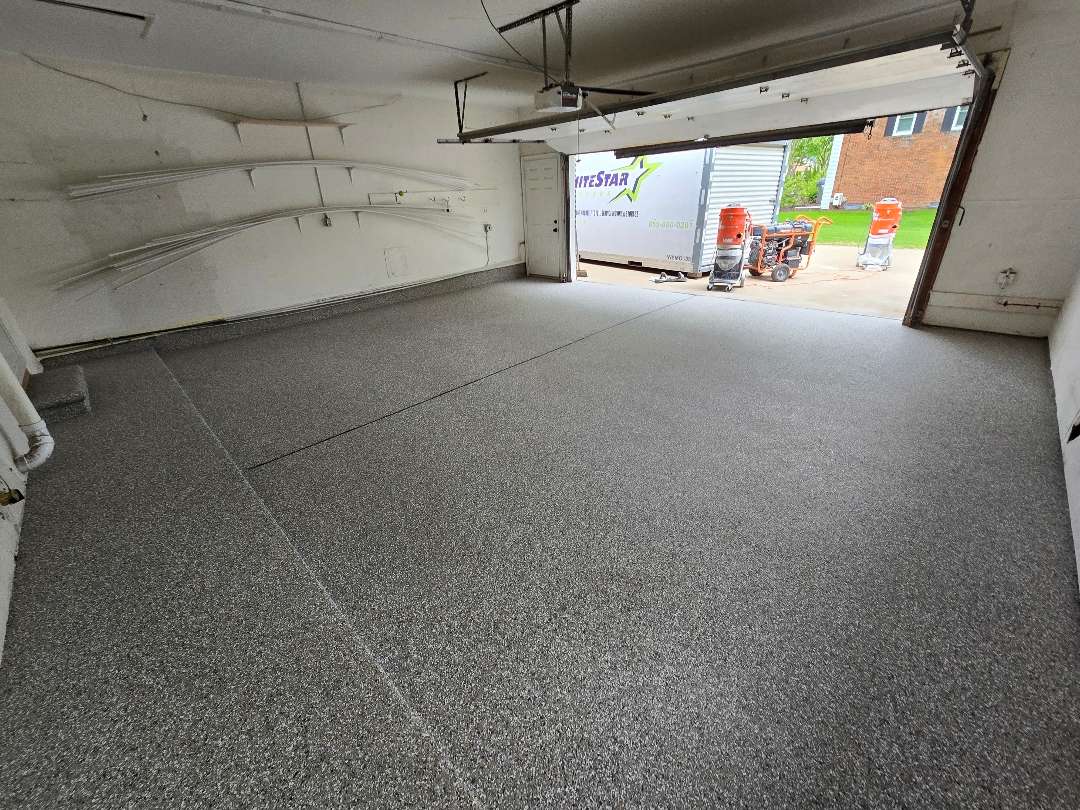
Paint Gone, Cracks Sealed, 530 Square Feet Finished
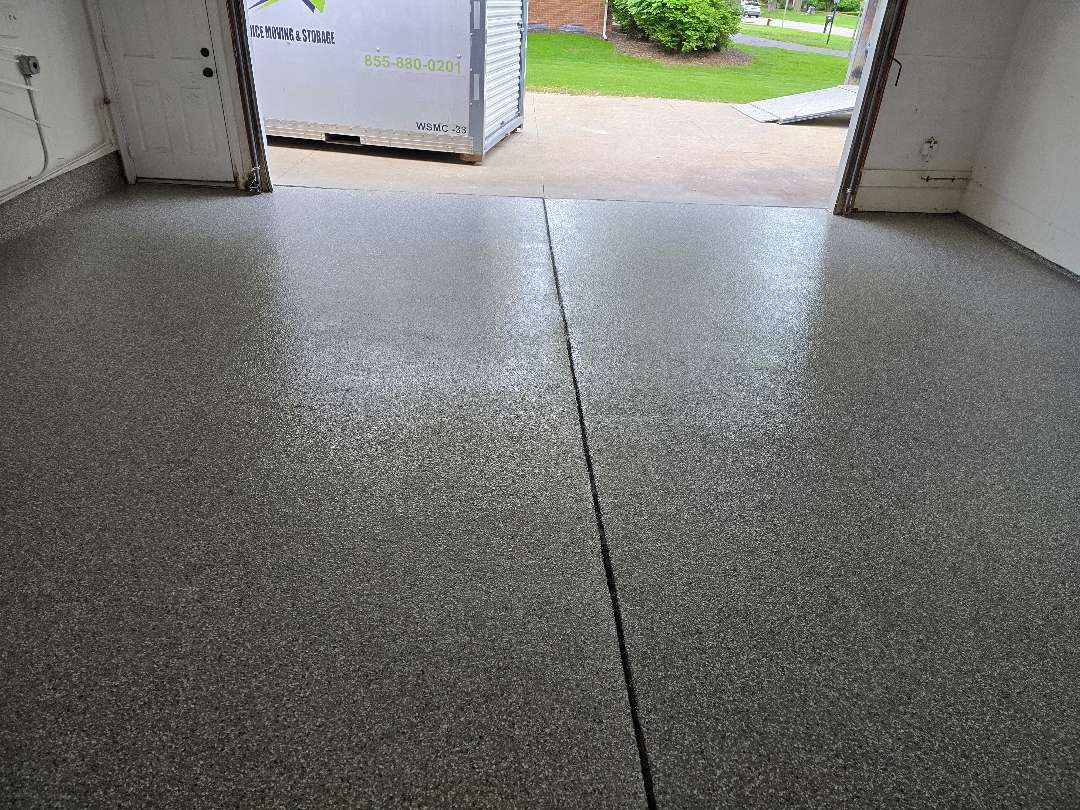
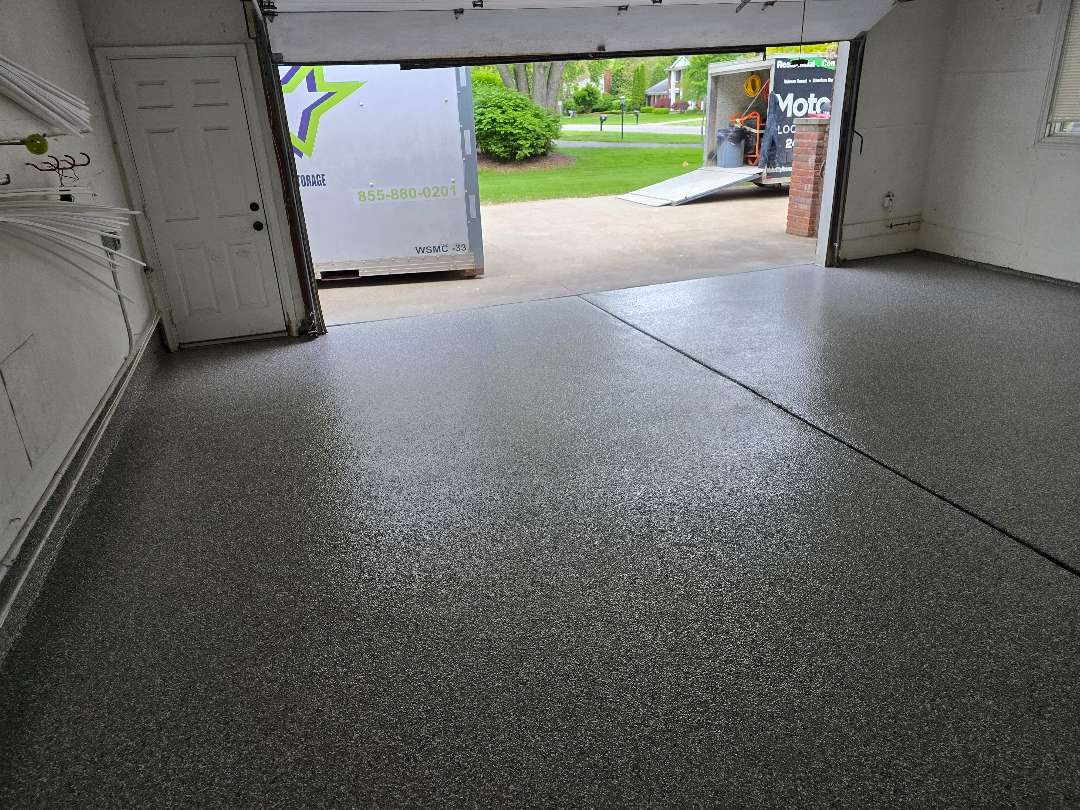
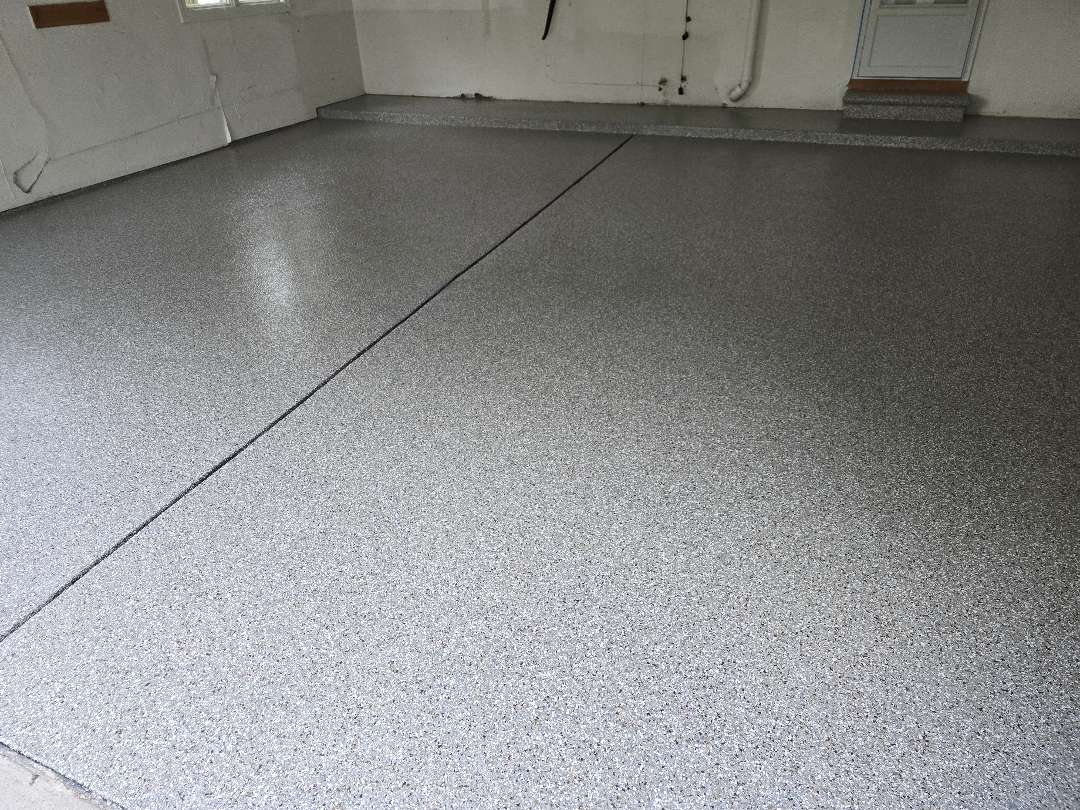
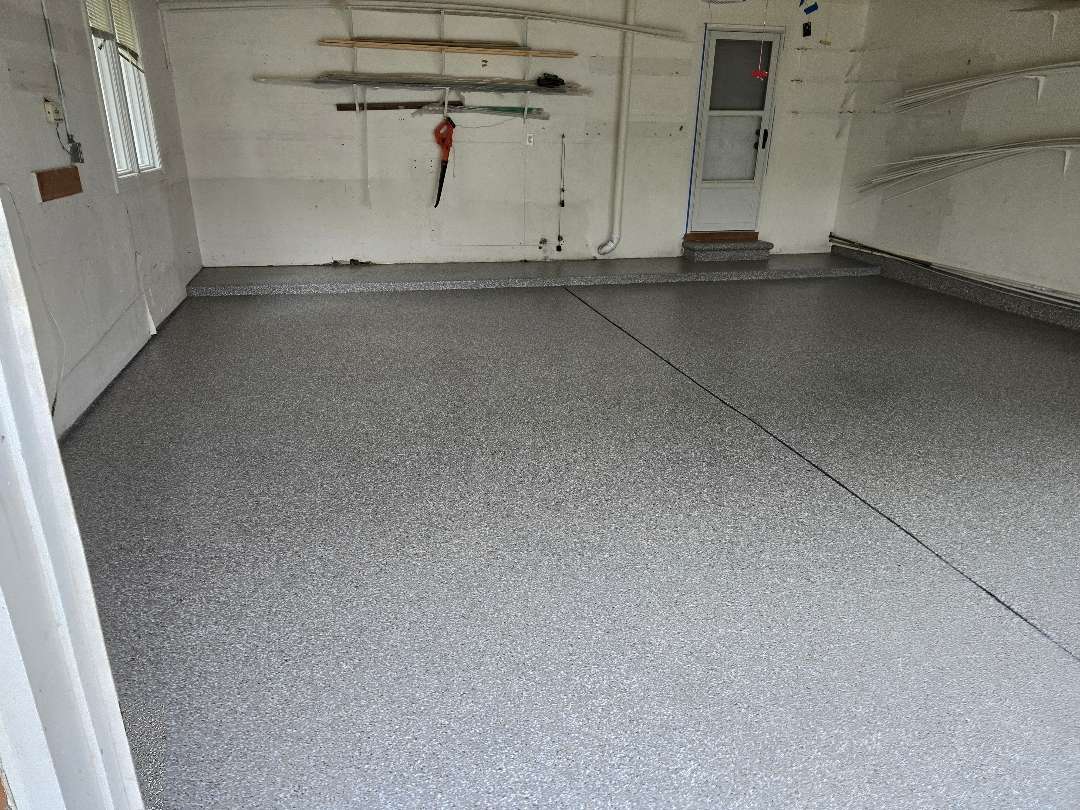
Pebble Beach runs wall to wall across all 530 square feet. The light grey tone reads cleanly against the white walls. The step carries the same flake and finish as the main floor.
The cracks are sealed. The failed coating is gone. 24-grit provides firm grip underfoot throughout.
Testimonials - Voices of Our Clients
Bill Mason
Billy Vickers
Garage Floor Coating
on Longfellow Drive
Longfellow Drive, Troy, MI
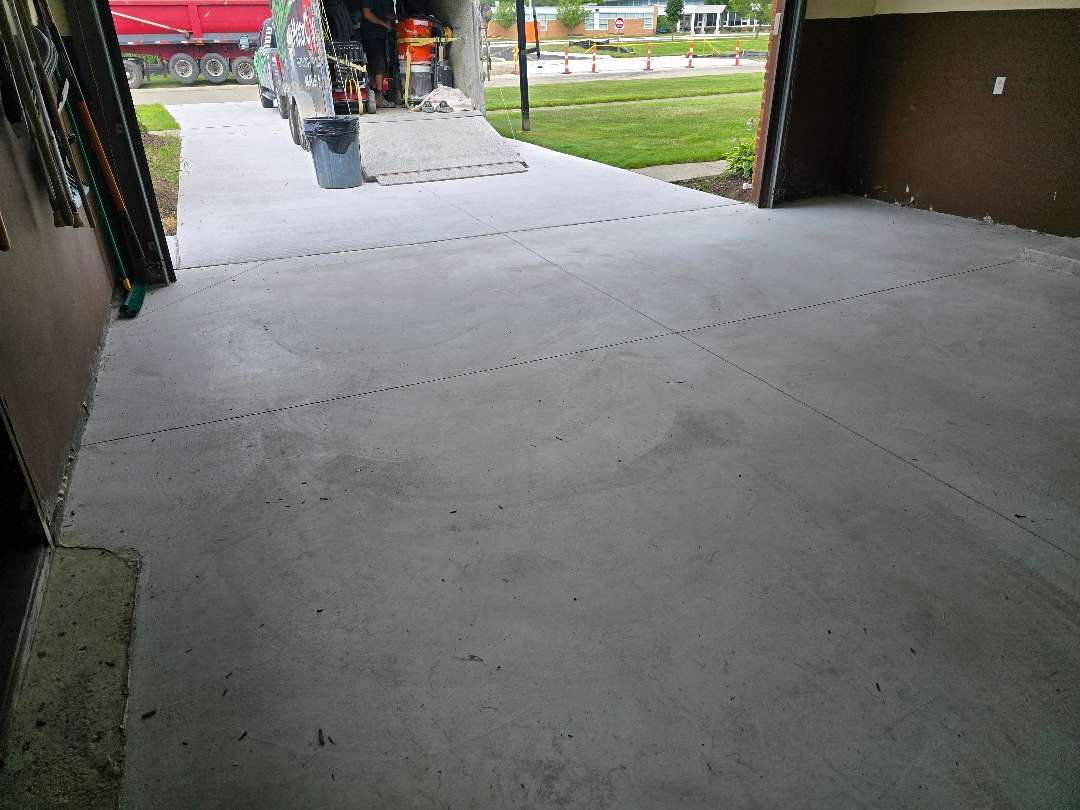
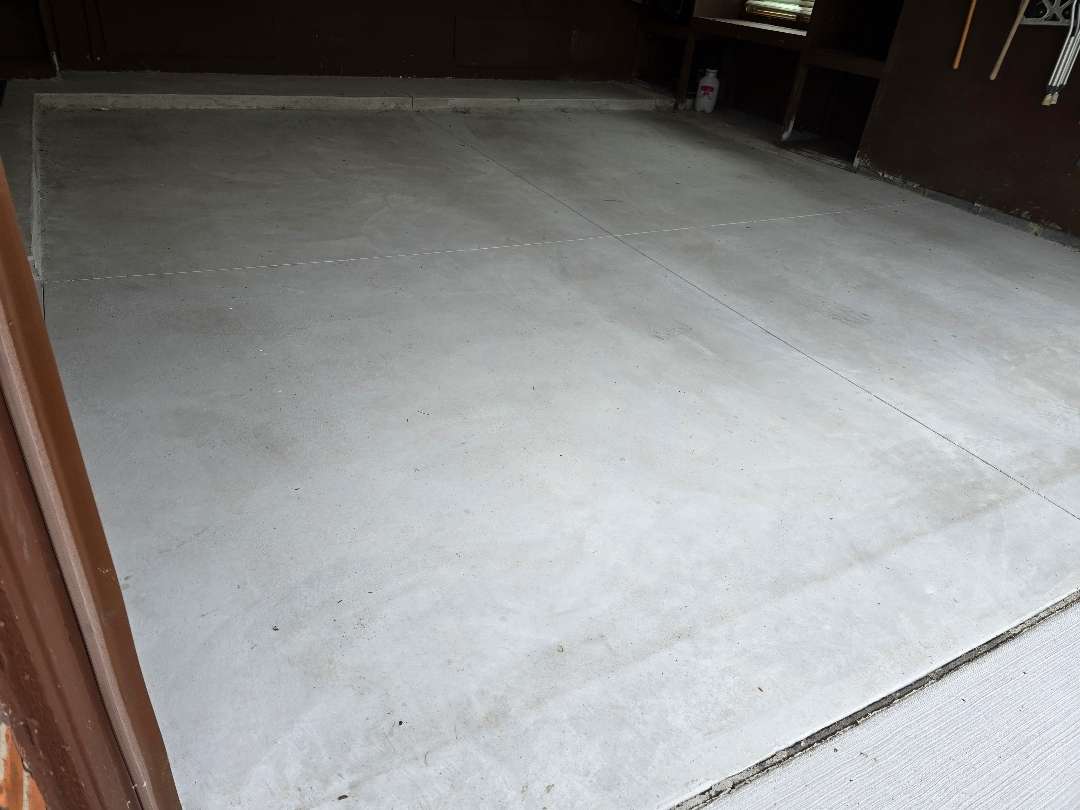
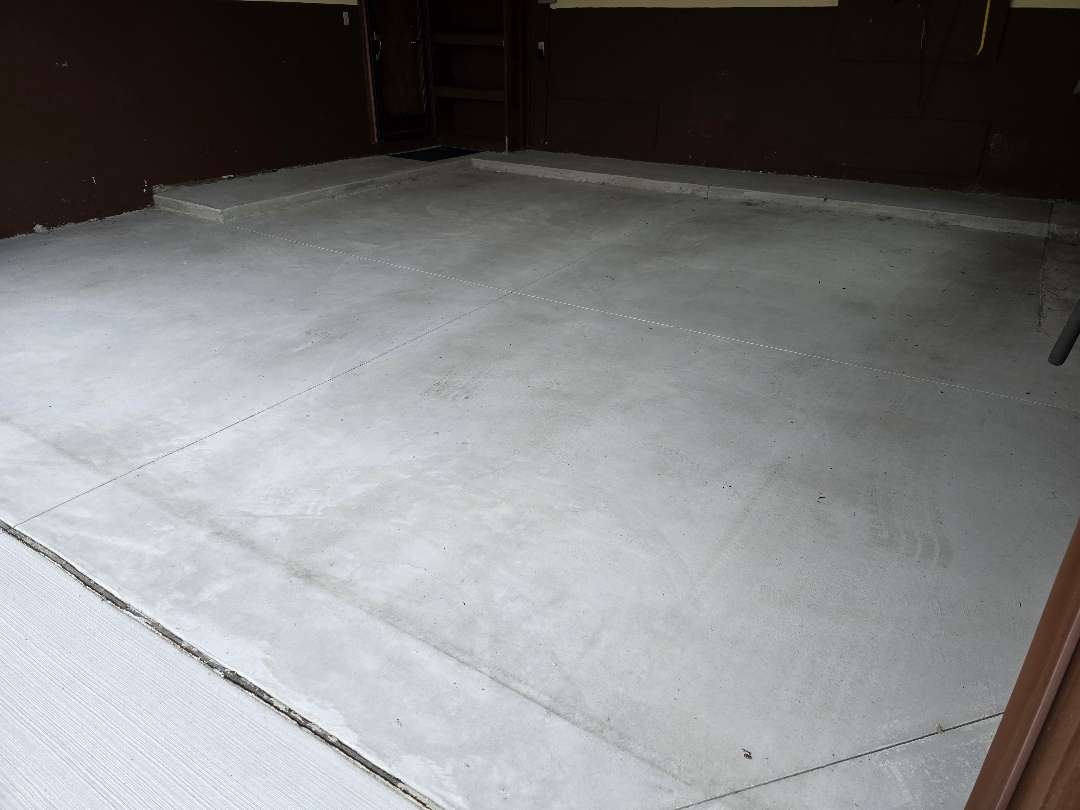
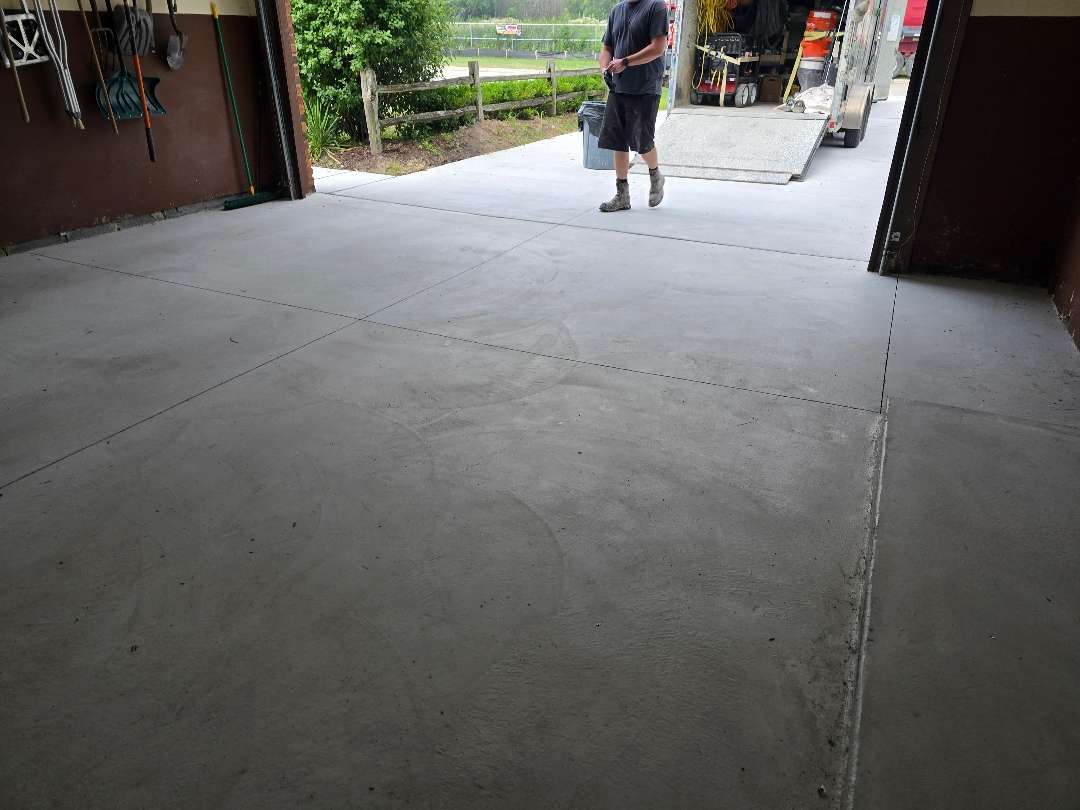
The Longfellow Drive garage was 400 square feet of new concrete. The slab showed no staining, no cracking, and no structural damage. A raised platform runs along the back wall.
The coating scope included both the face and the surface of the platform. No steps were in scope.
Grinding New Concrete
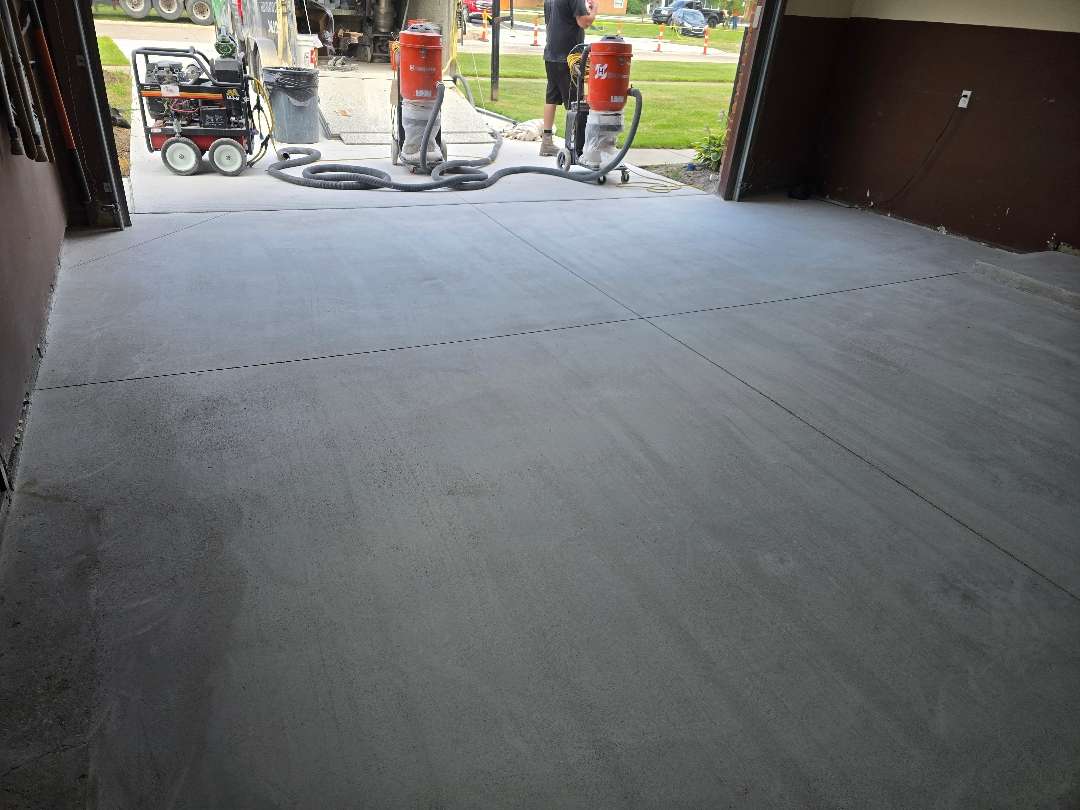
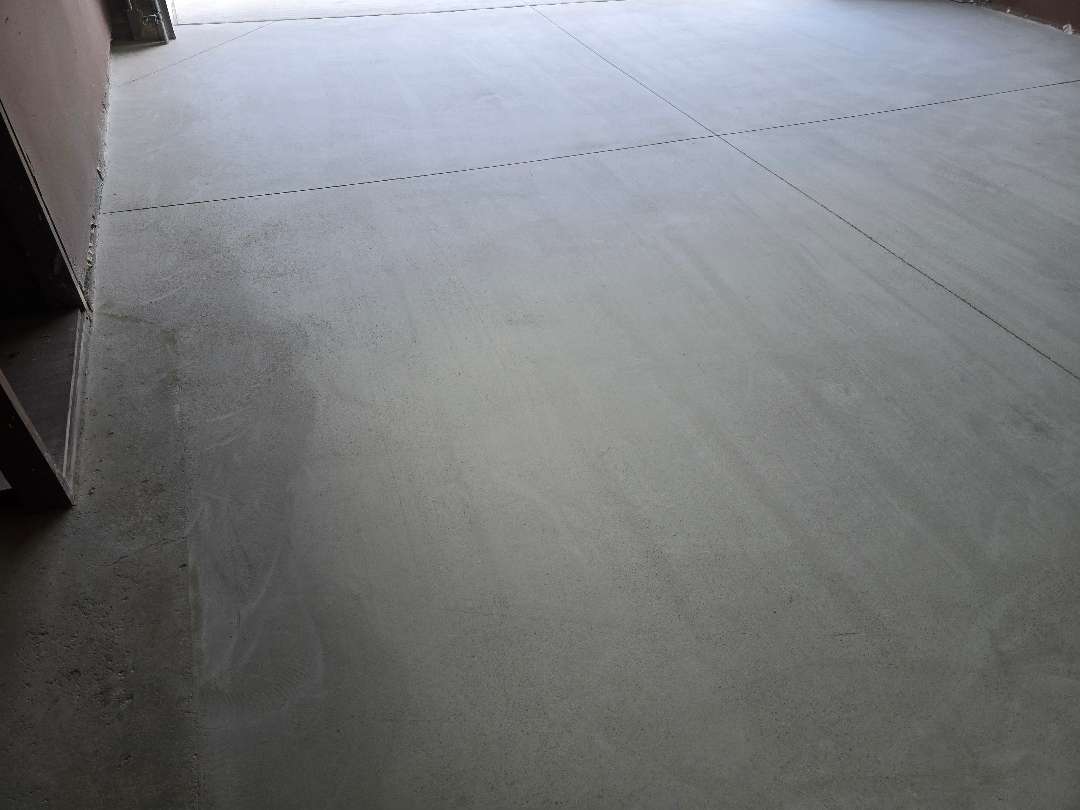
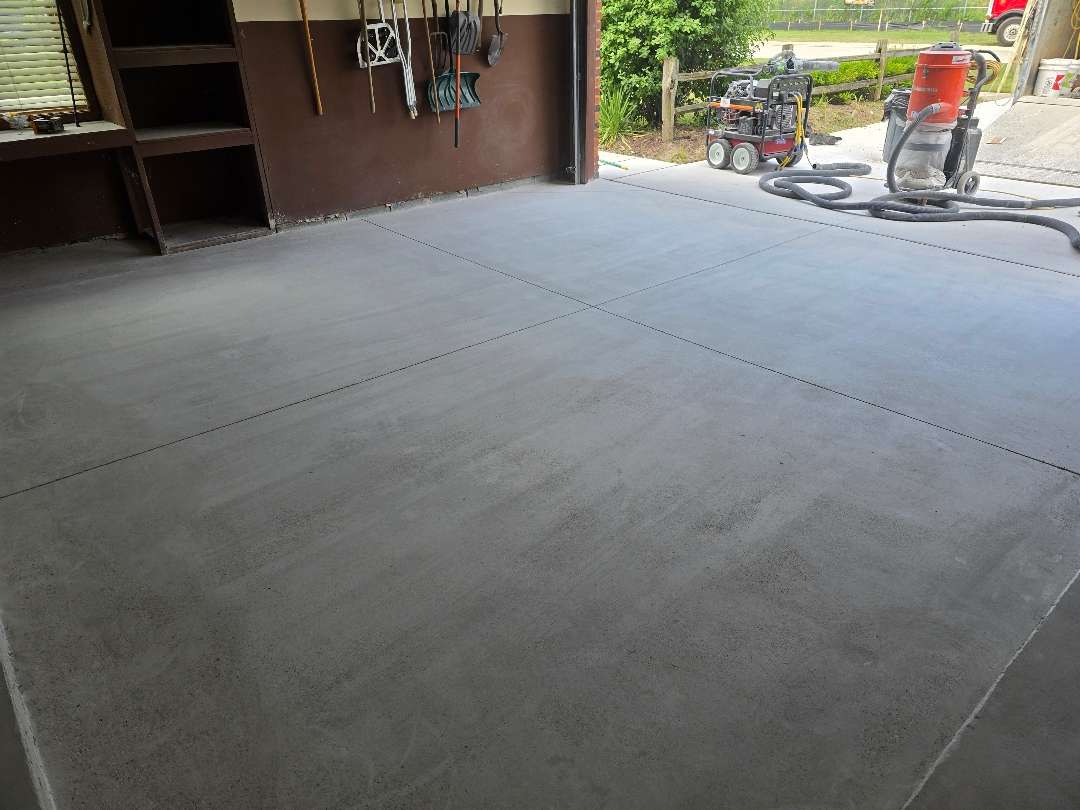
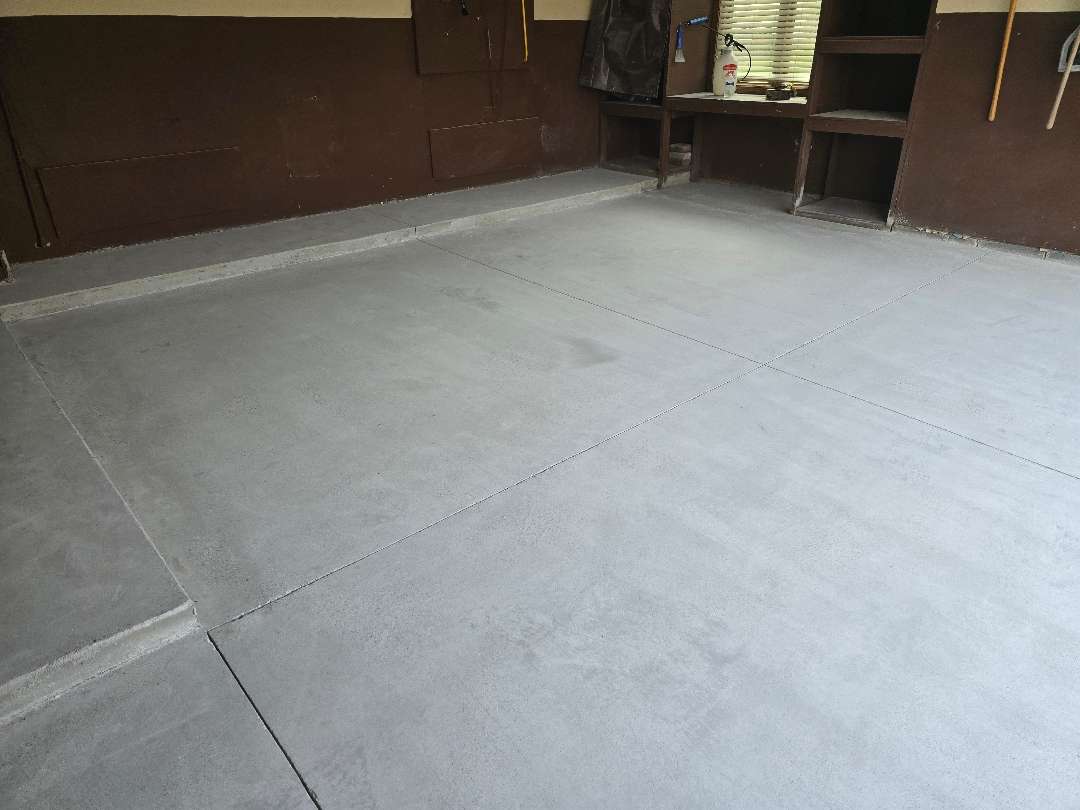
New concrete carries a laitance layer from the curing process that blocks coating adhesion. Our crew diamond-ground the full 400 square feet to remove the laitance throughout. Our team vacuumed thoroughly when the grind was complete.
Surface Confirmation
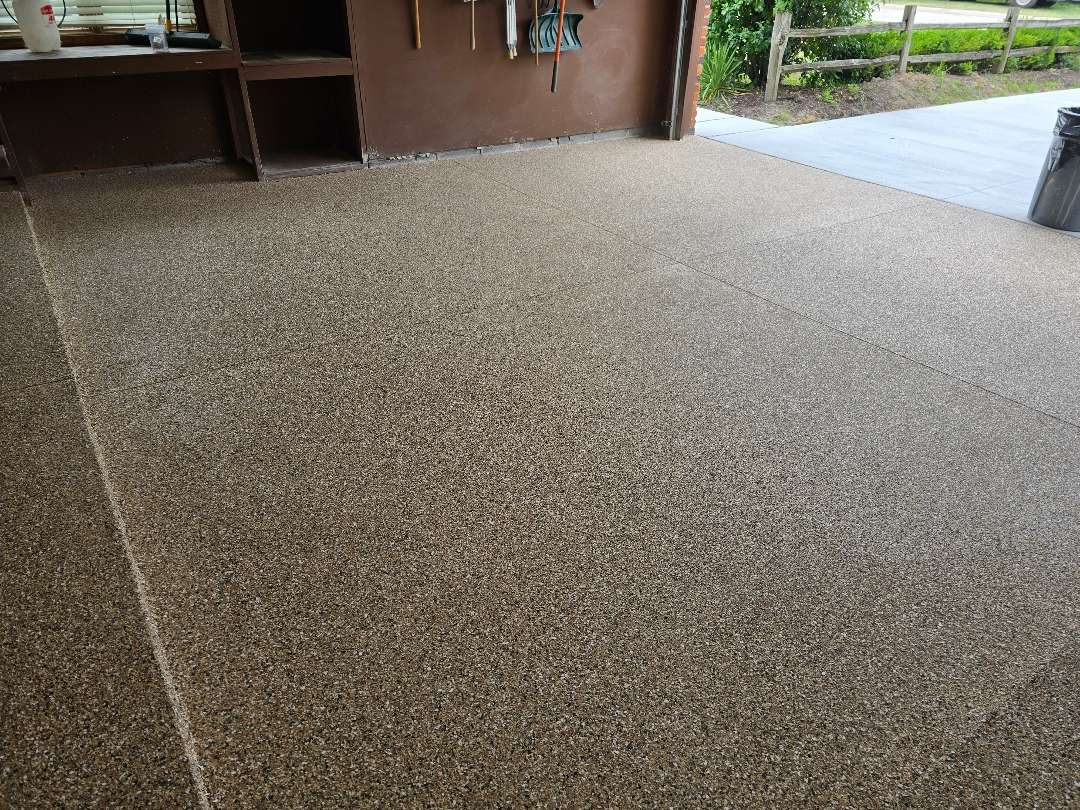
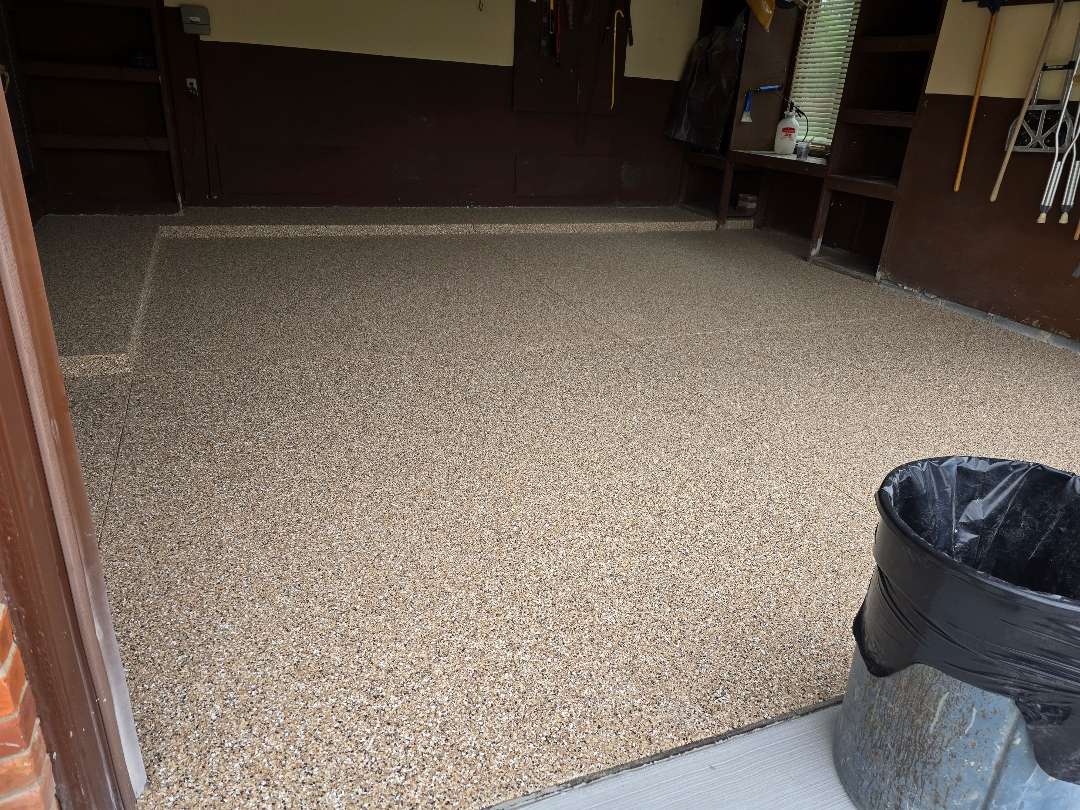

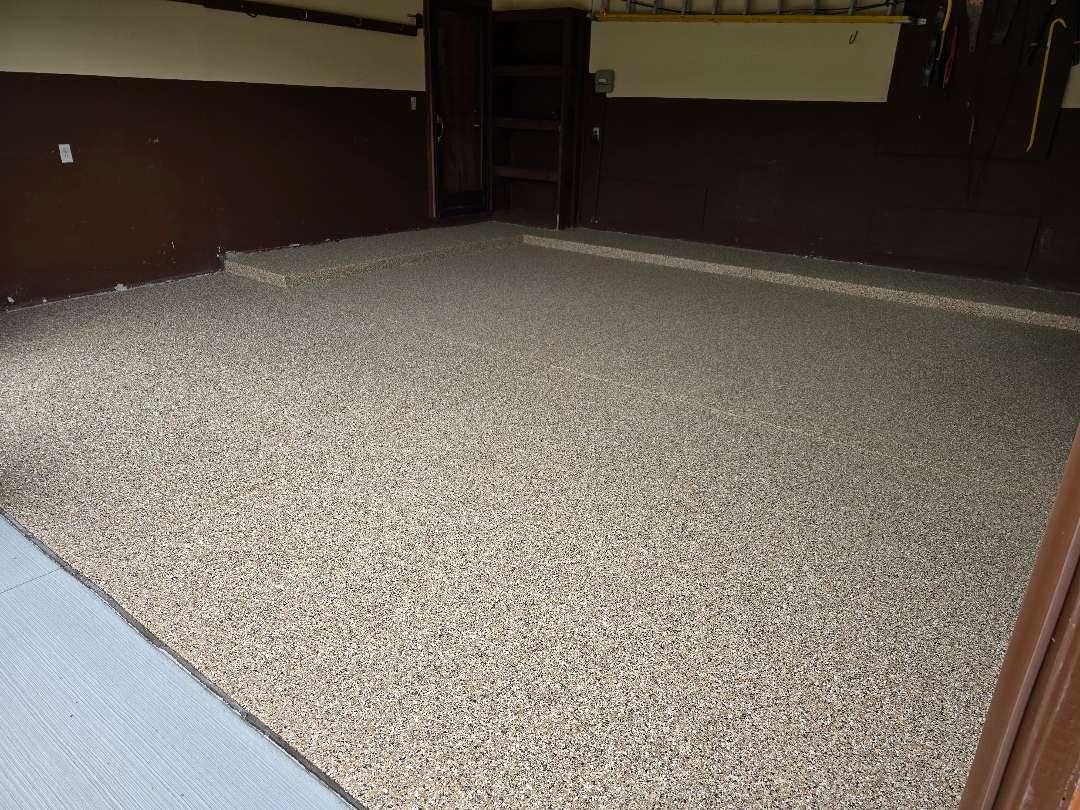
Chestnut — Floor and Platform
Our crew applied the MC-3.8 polyurea base coat by roller across all 400 prepared square feet. We cut in along the platform base and up the face by hand.
Our crew broadcast Chestnut flake into the wet base coat across the full floor. We carried the broadcast up the face and across the platform surface. Chestnut carries a warm blend of browns, tans, and creams throughout. After cure and excess flake recovery, our team applied the polyaspartic topcoat with 24-grit traction additive throughout.
New Concrete, Platform Included, 400 Square Feet Protected
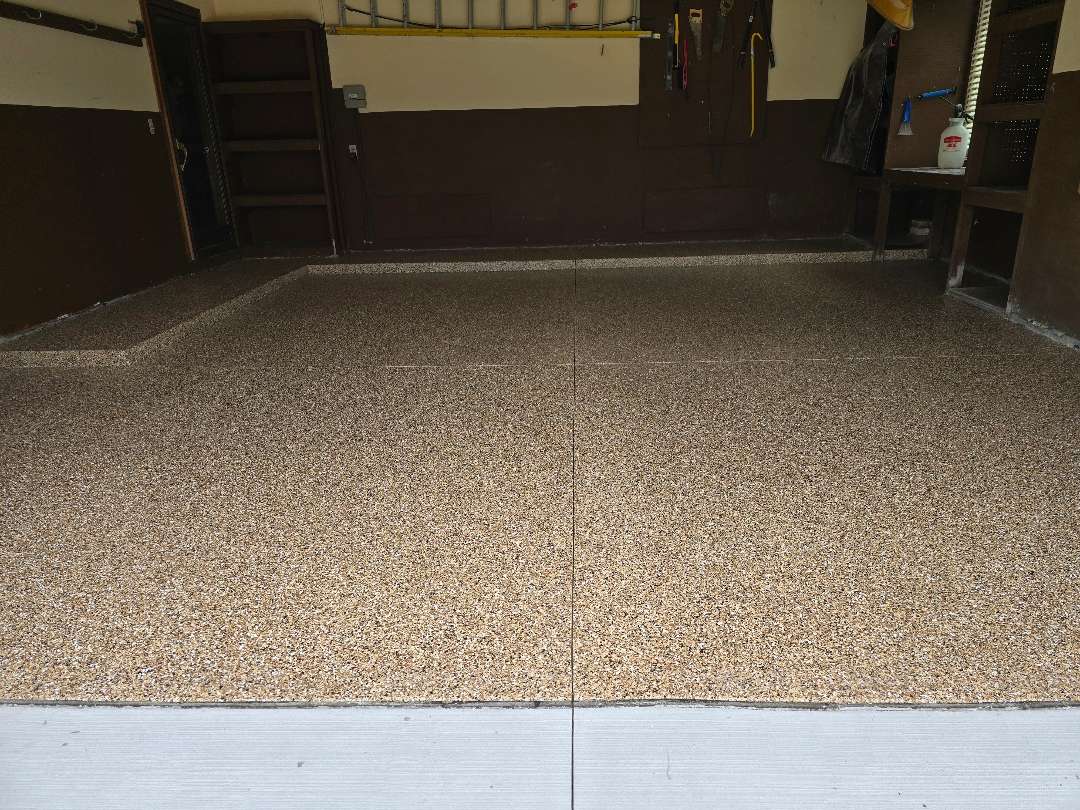
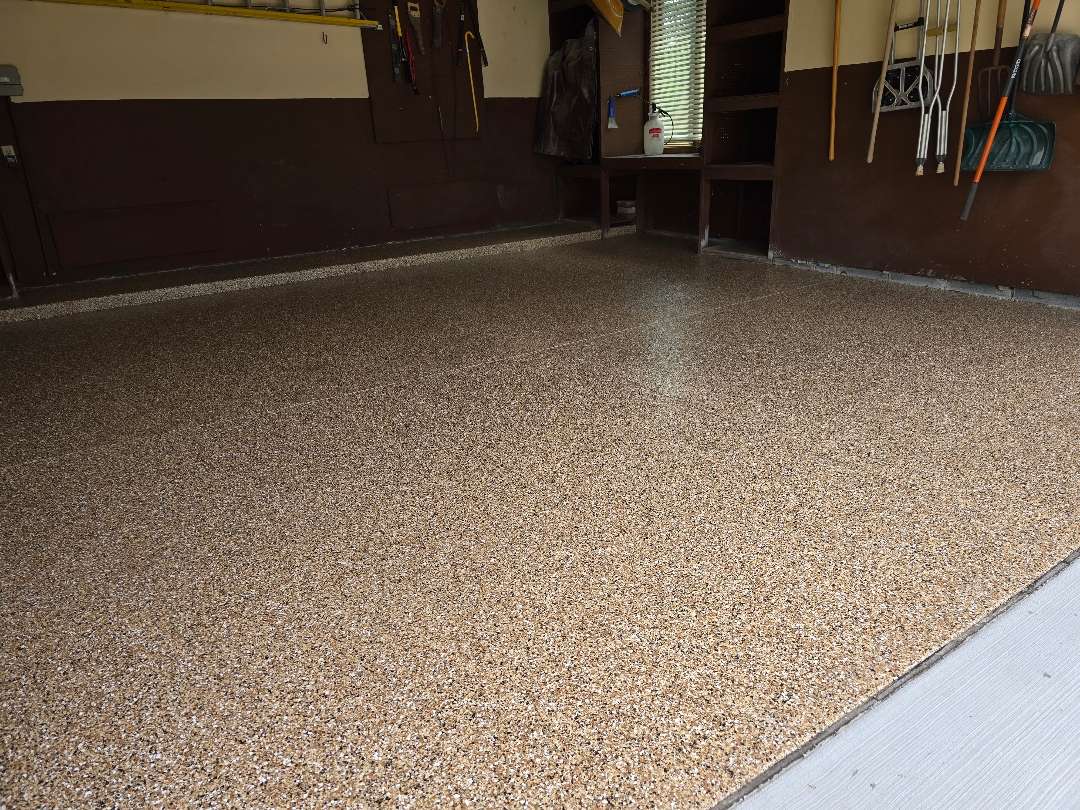

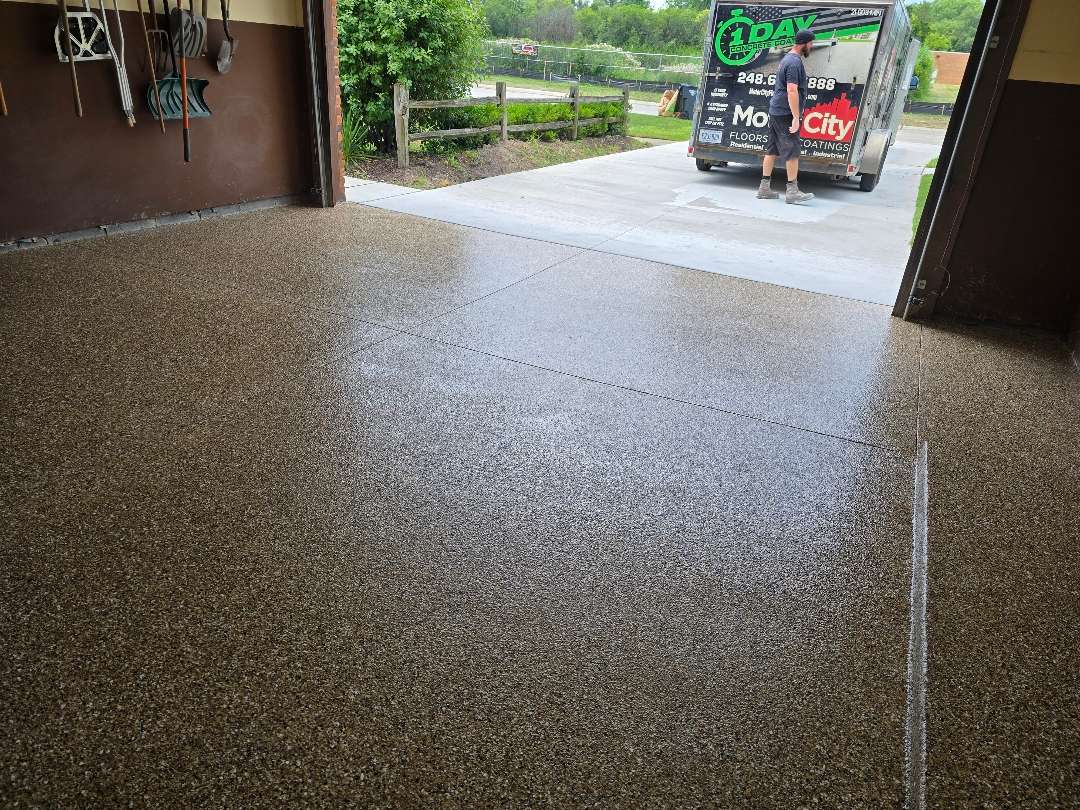
Chestnut runs wall to wall across all 400 square feet. The warm tone pairs well with the dark wainscoting on the walls. The platform carries the same flake and finish as the main floor.
The coating runs continuously across both surfaces. 24-grit provides firm grip underfoot throughout.
Testimonials - Voices of Our Clients
Susan Z
Japhia Hall
Garage Floor Coating
on Trillium Drive
Trillium Drive, Troy, MI
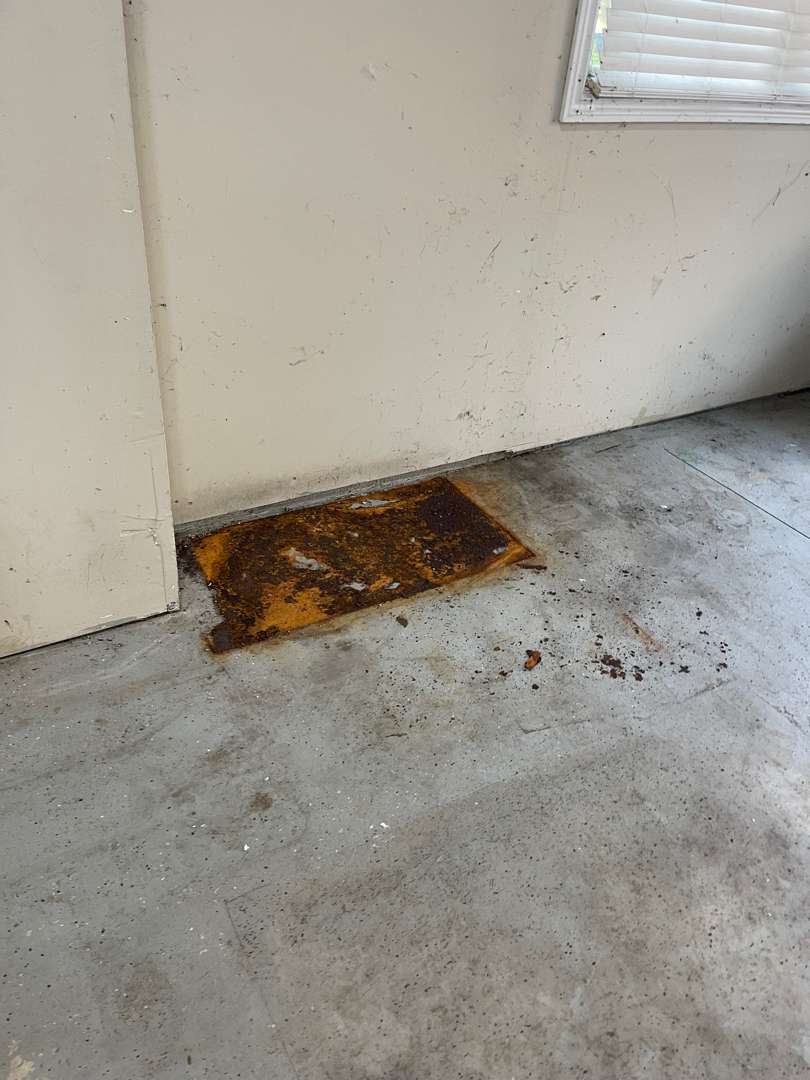
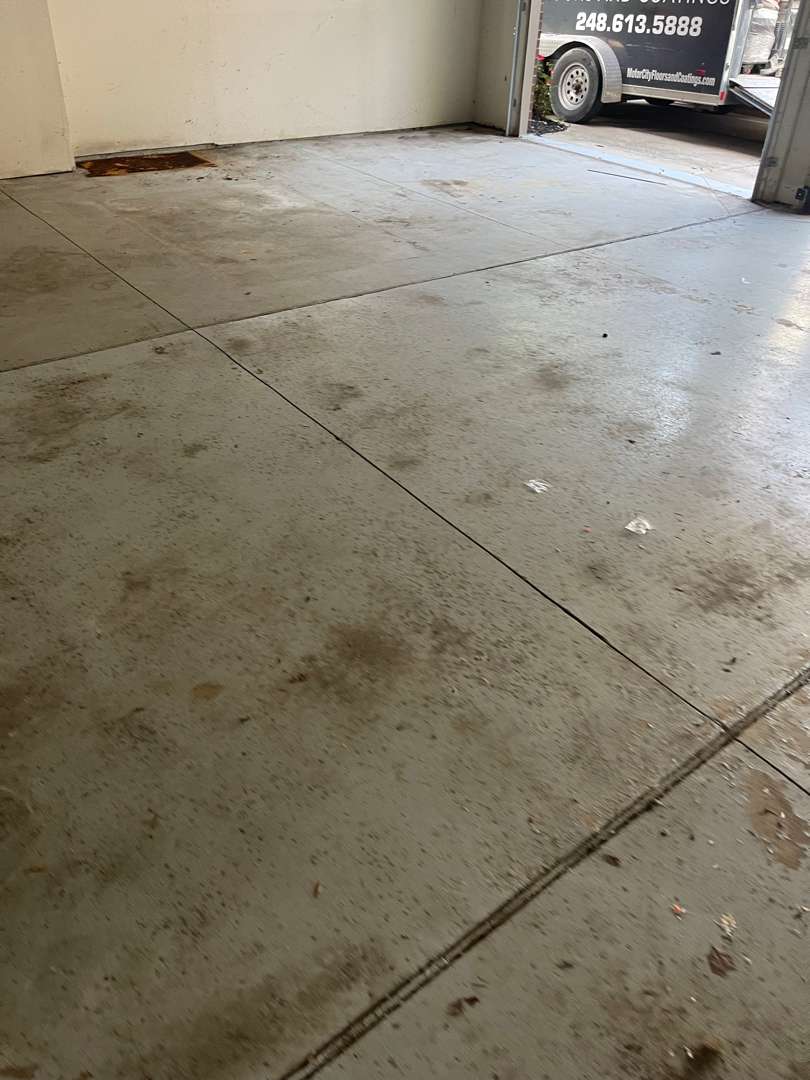

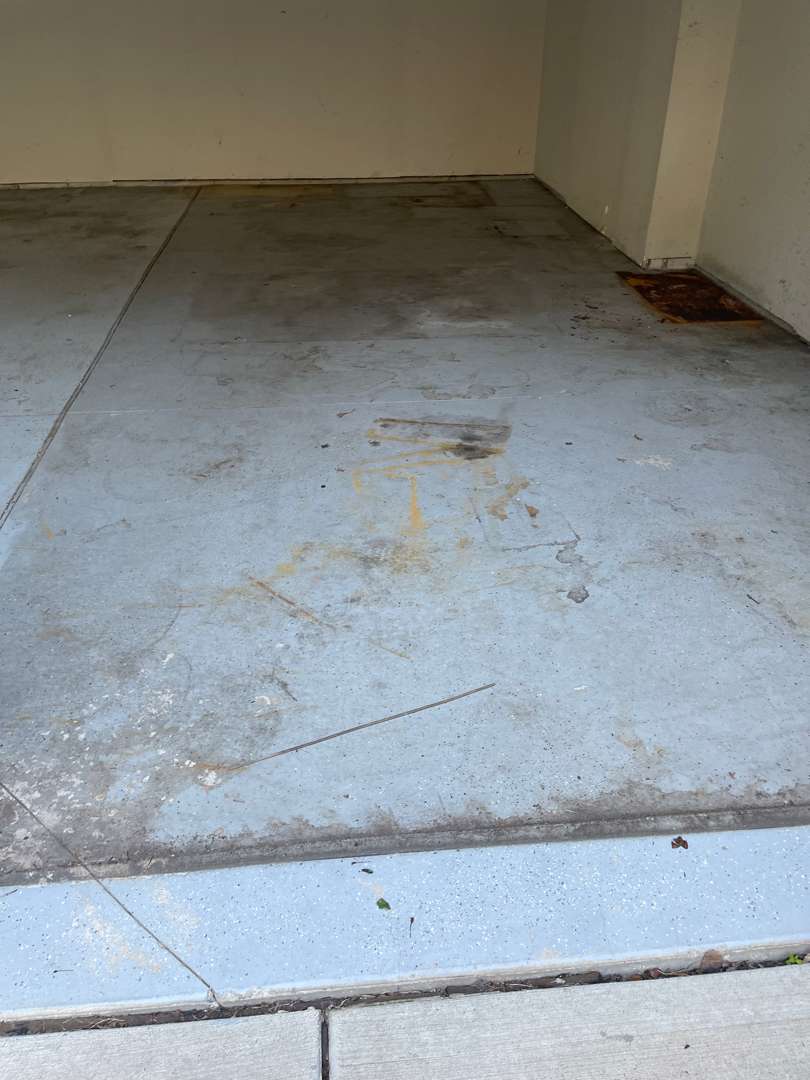
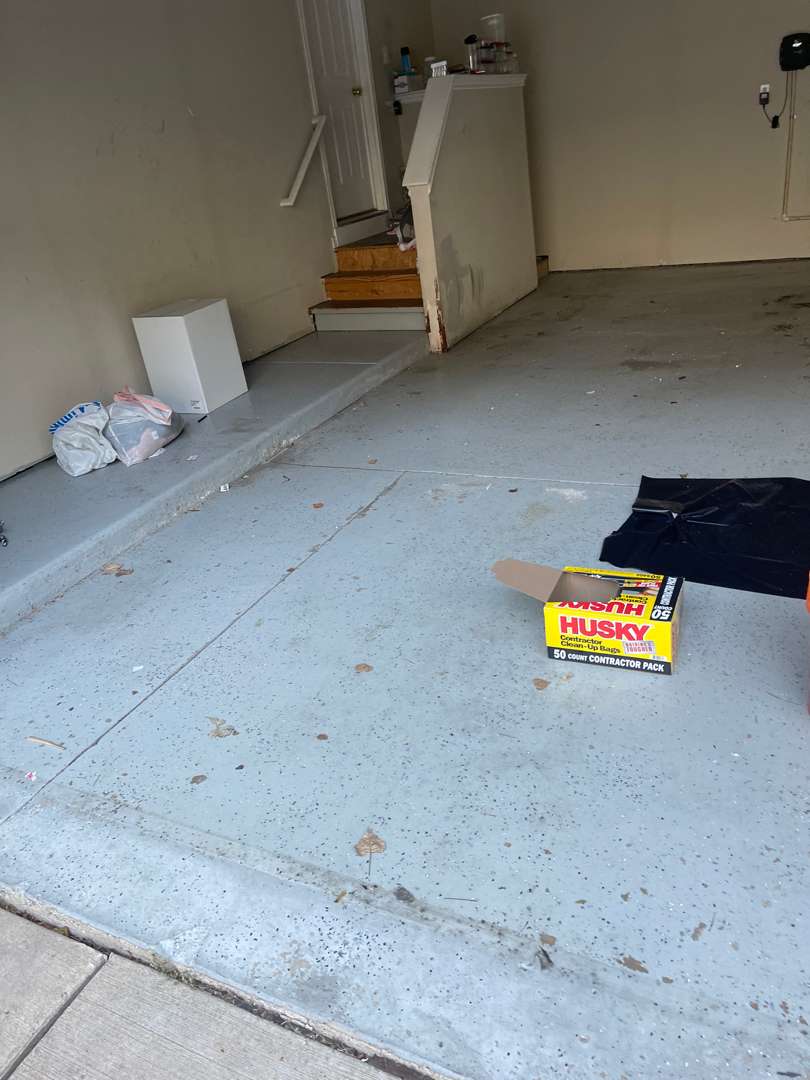
The Trillium Drive garage was 695 square feet covered in a failed DIY epoxy kit. The coating had lost adhesion across much of the slab — peeling and worn in multiple areas. Oil staining and surface staining were visible beneath and around the failing epoxy.
Minor cracks and pitting were present across the slab. A heavily rusted drain cover sat in one corner of the floor.
Two concrete steps and a landing lead to the interior door. A 15-linear-foot vertical lip runs along the perimeter. Both were included in the scope.
Epoxy Removal and Surface Preparation
Crack and Pitting Repair
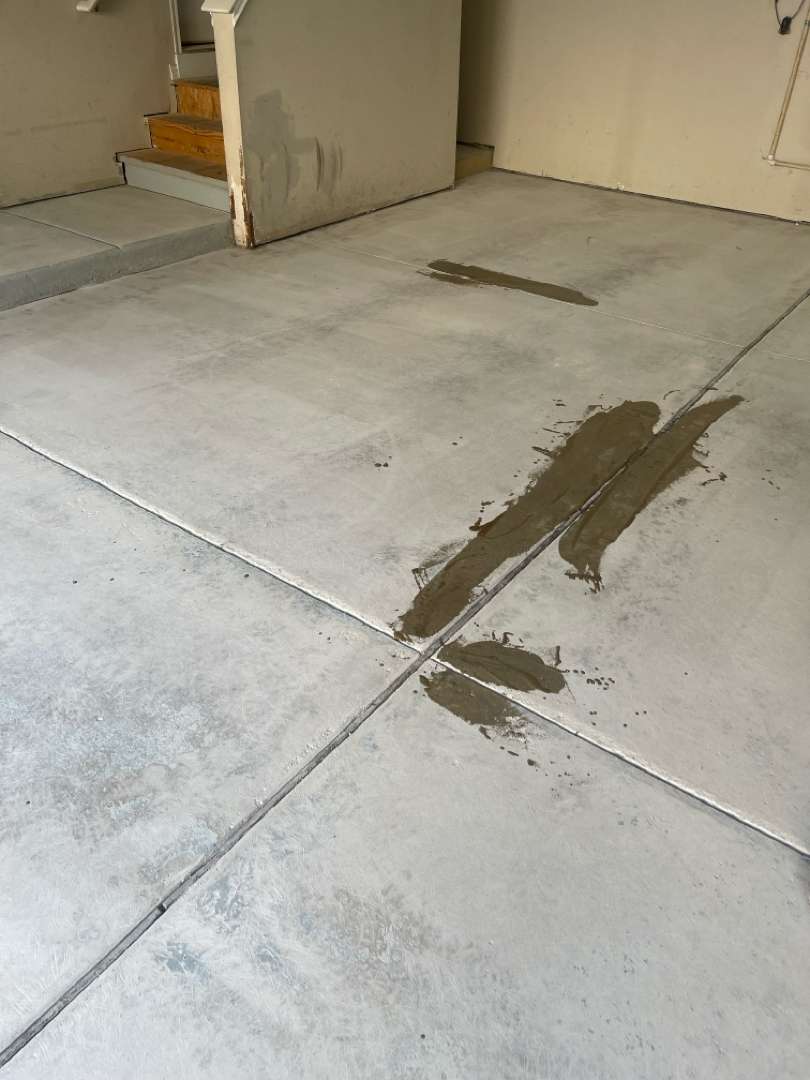
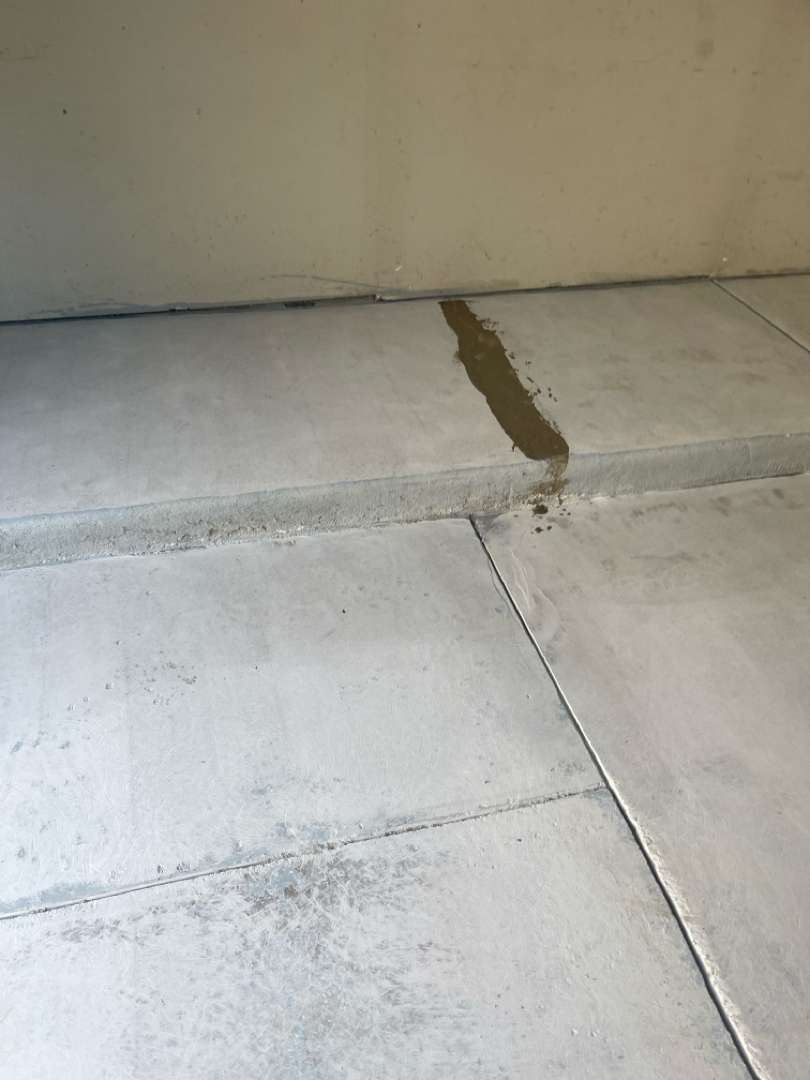
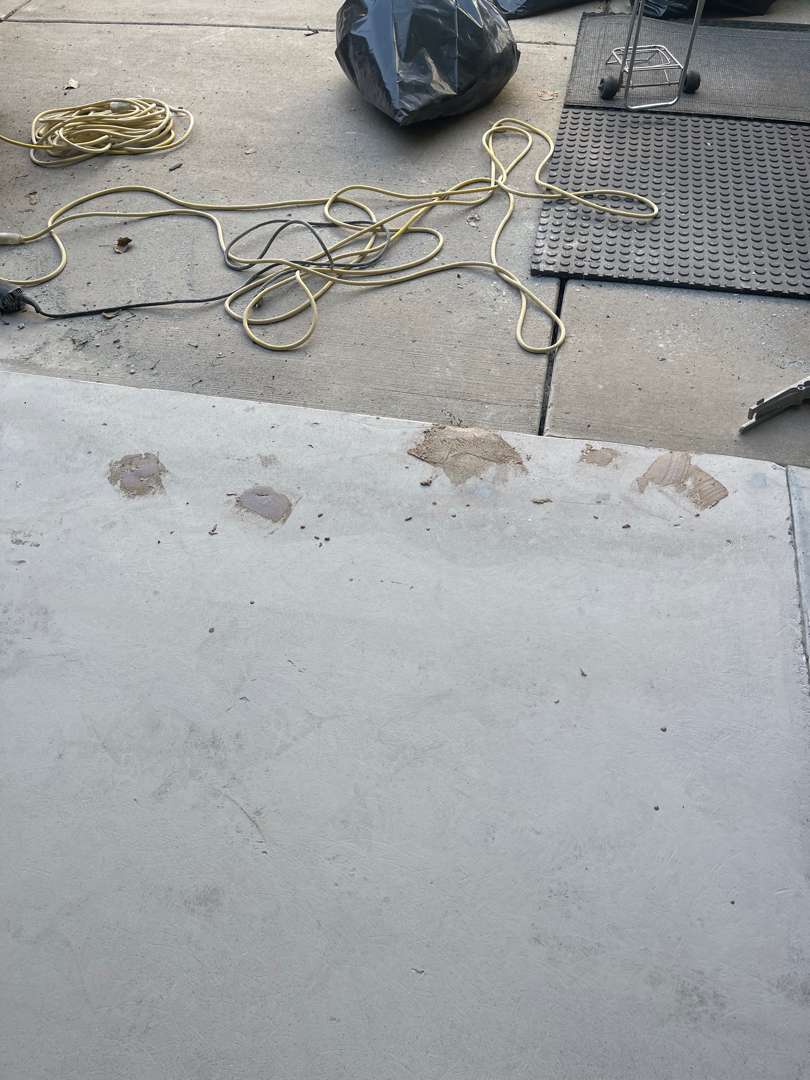
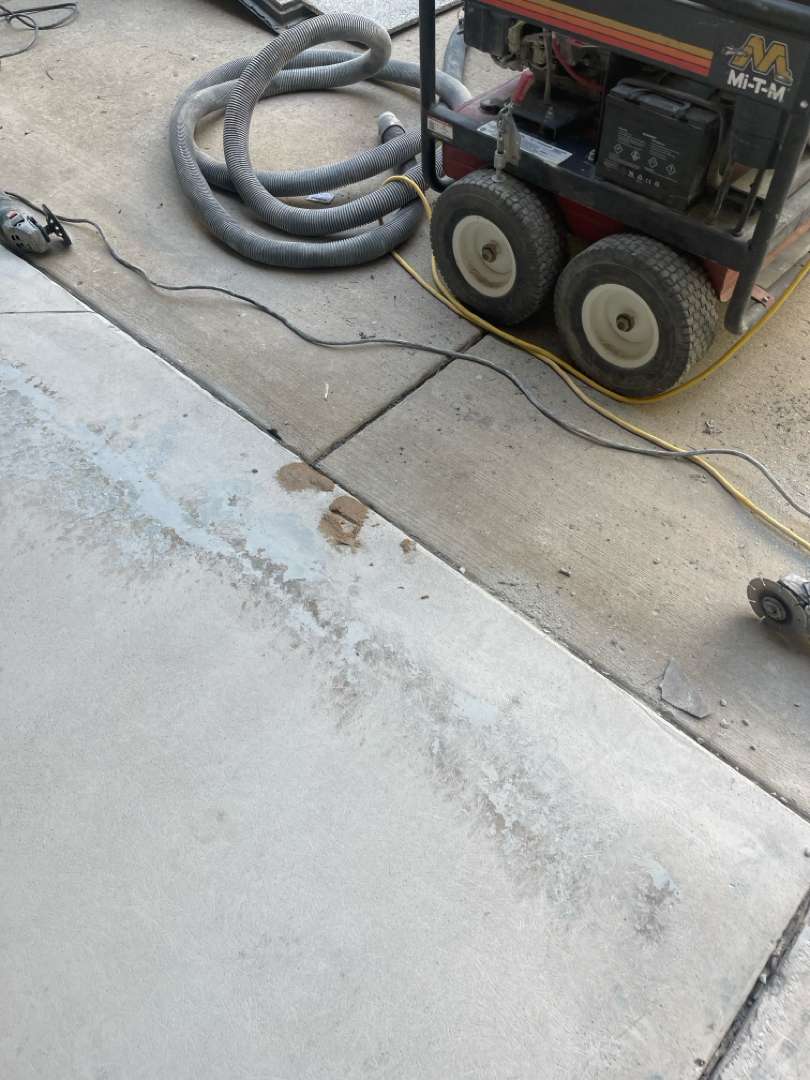
Steps, Landing, and Lip Preparation
Pebble Beach — Floor, Steps, Landing, and Lip
Our clients selected Pebble Beach for all 695 square feet. Our crew applied the MC-3.8 polyurea base coat by roller across the full prepared slab. We cut in by hand on both steps, the landing, and the vertical lip.
Our crew broadcast Pebble Beach flake into the wet base coat across the full floor. We carried the broadcast across the steps, landing, and lip at the same time. Pebble Beach carries a silvery-grey blend with white and dark chips throughout. After cure and excess flake recovery, our team applied the polyaspartic topcoat with 36-grit traction additive throughout.
695 Square Feet — Epoxy Gone, Every Surface Finished
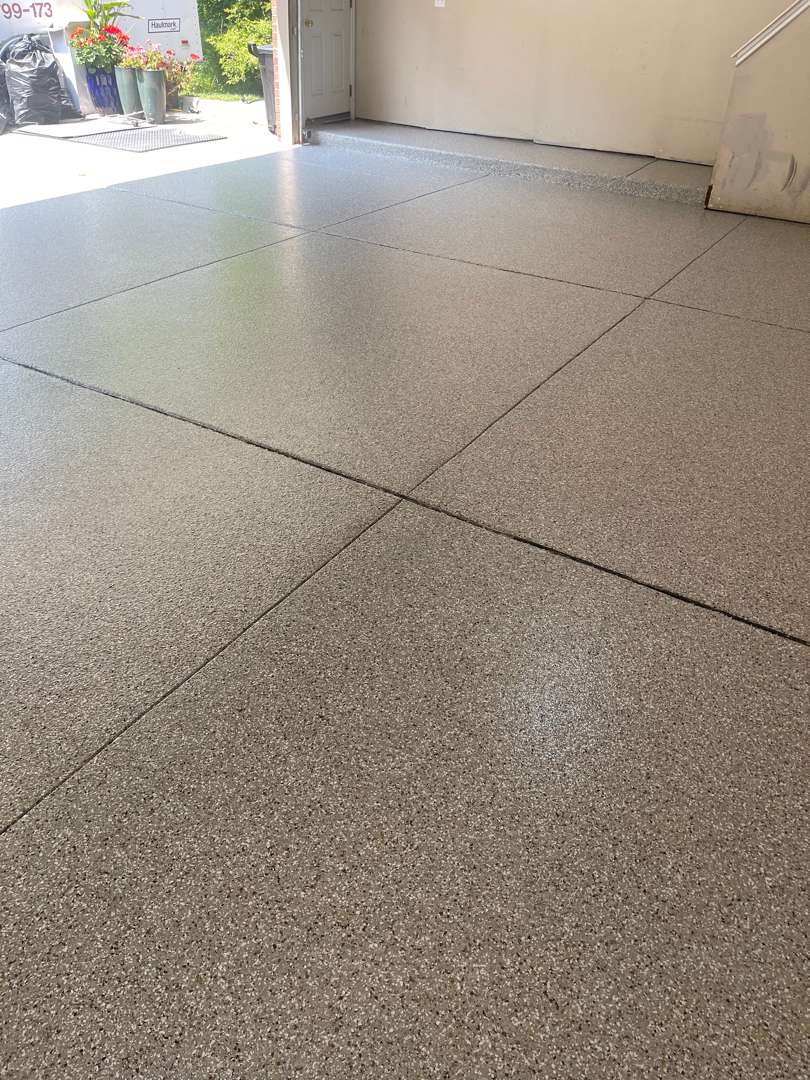
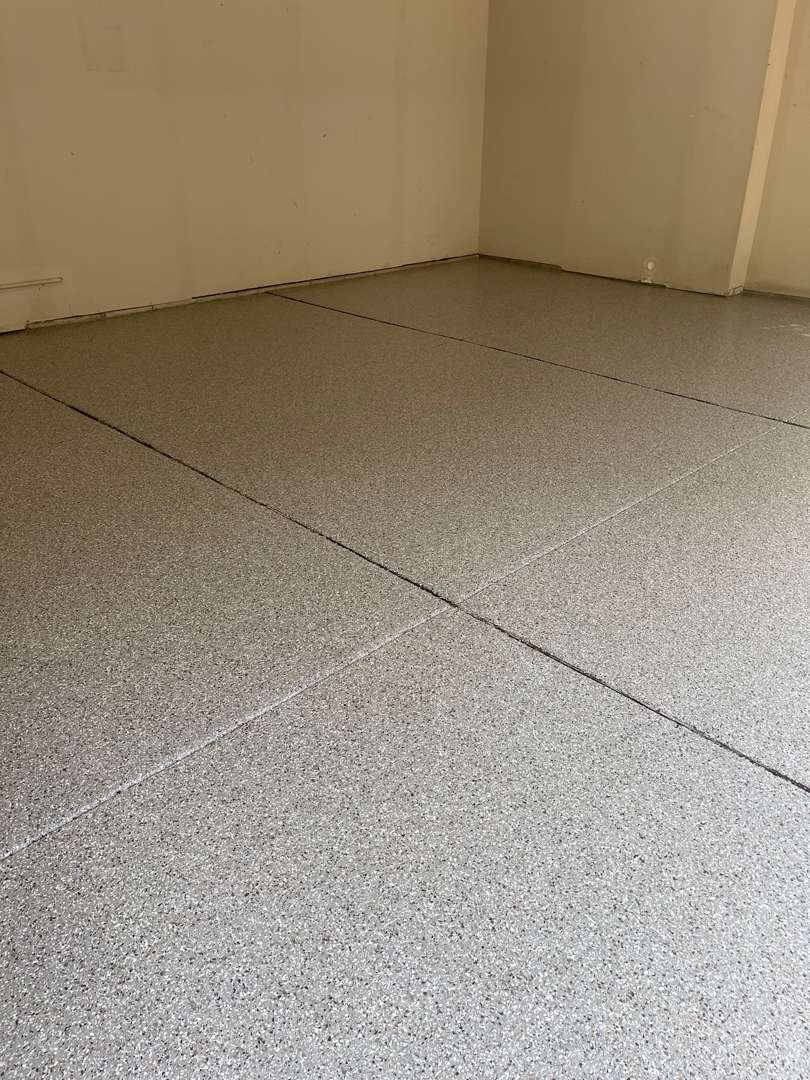
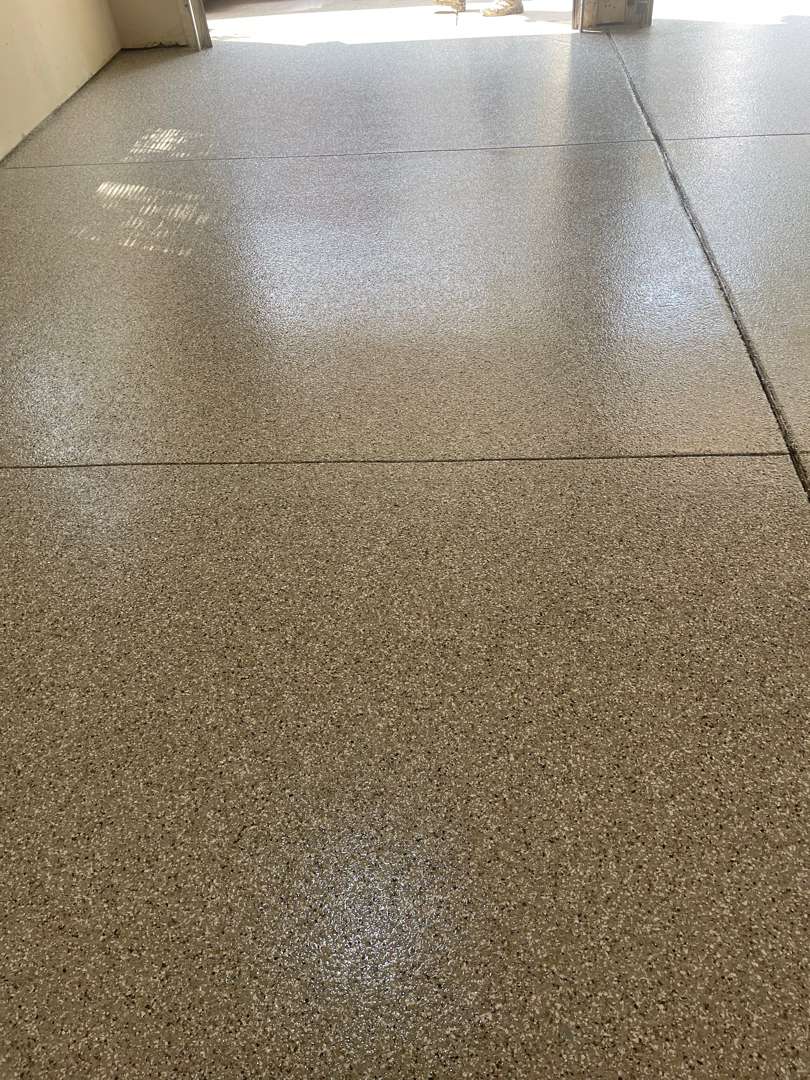
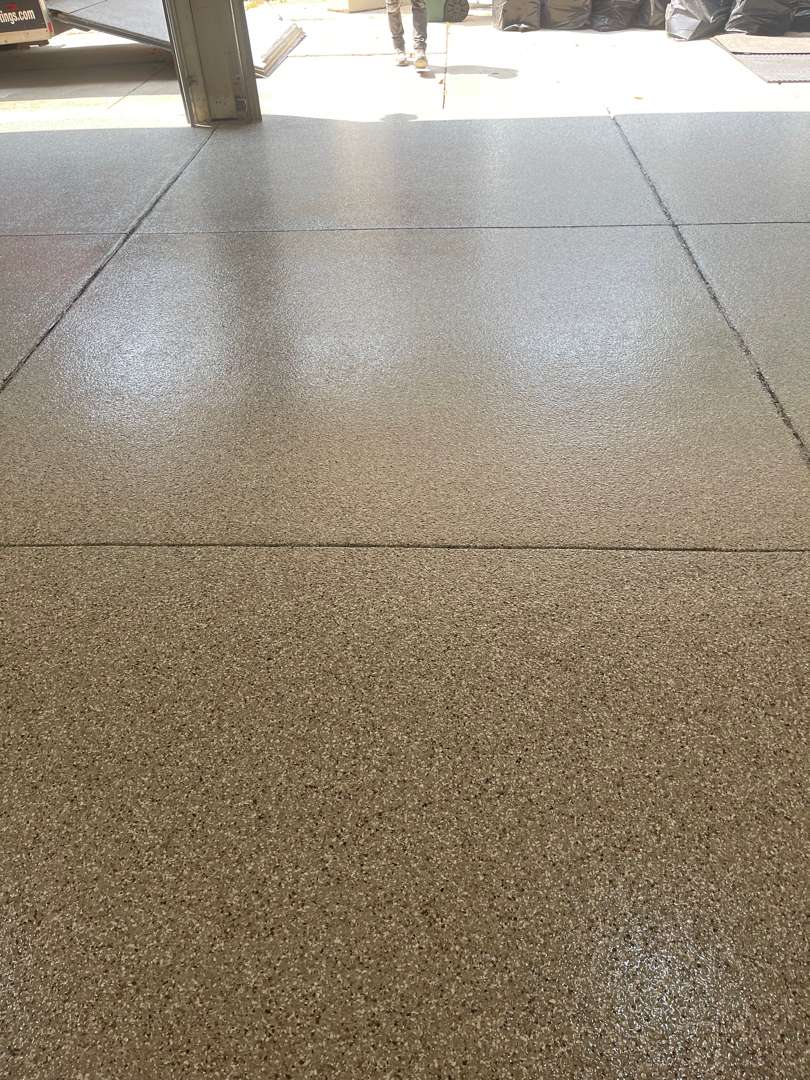
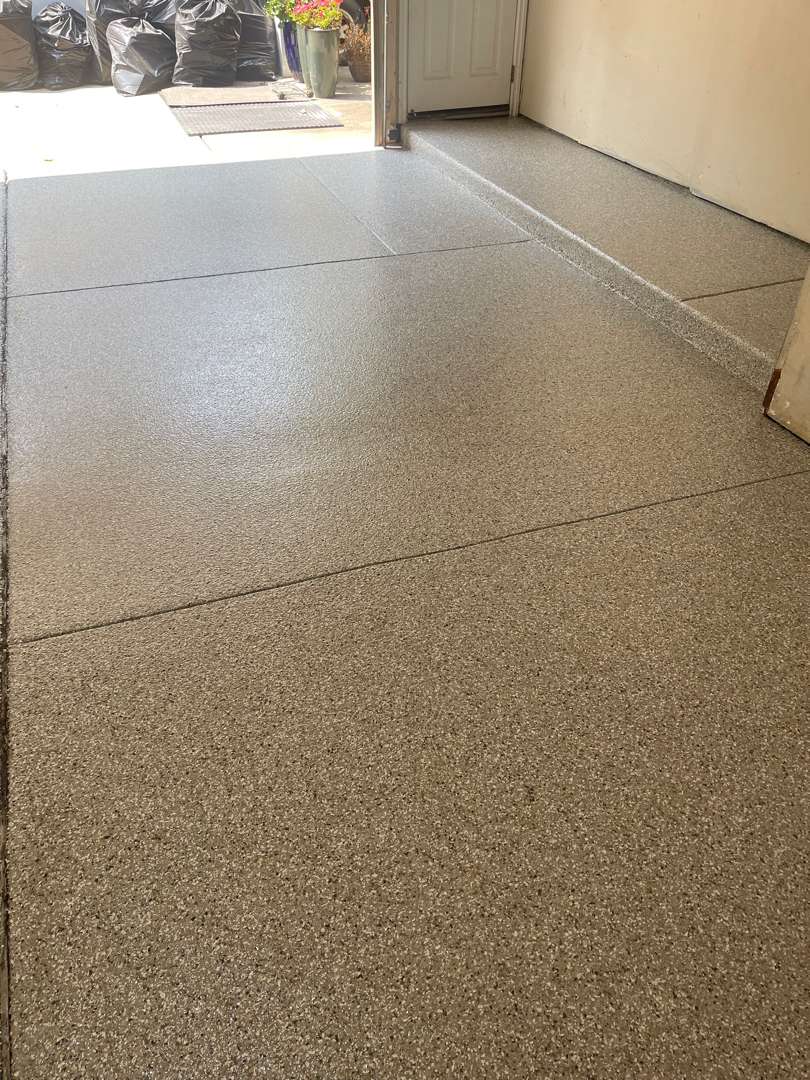
Pebble Beach runs wall to wall across all 695 square feet. The silvery-grey tone reads cleanly against the cream walls. The steps, landing, and vertical lip all carry the same flake and finish as the main floor. The coating runs continuously from the slab through every transition in scope.
The failed epoxy is gone. The oil staining is gone. The cracks are sealed. 36-grit provides firm grip underfoot throughout.
Testimonials - Voices of Our Clients
Beth pavlik
My job was finished for the garage floor yesterday (with the highest winds we’ve seen in a while). Just wanted you to know we LOVE it. It’s exactly what we wanted. And your crew was the upmost professional. Thanks again
Mark Veenendaal
Garage Floor Coating
on Whitney Court
Whitney Court, Troy, MI
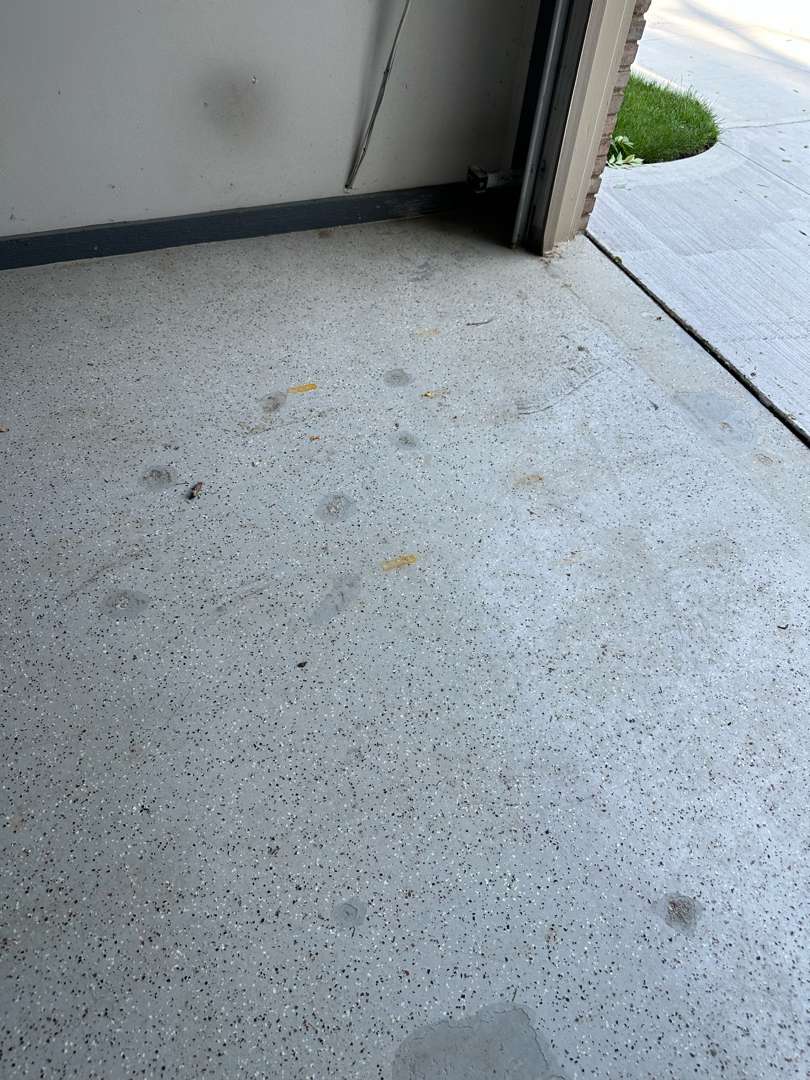
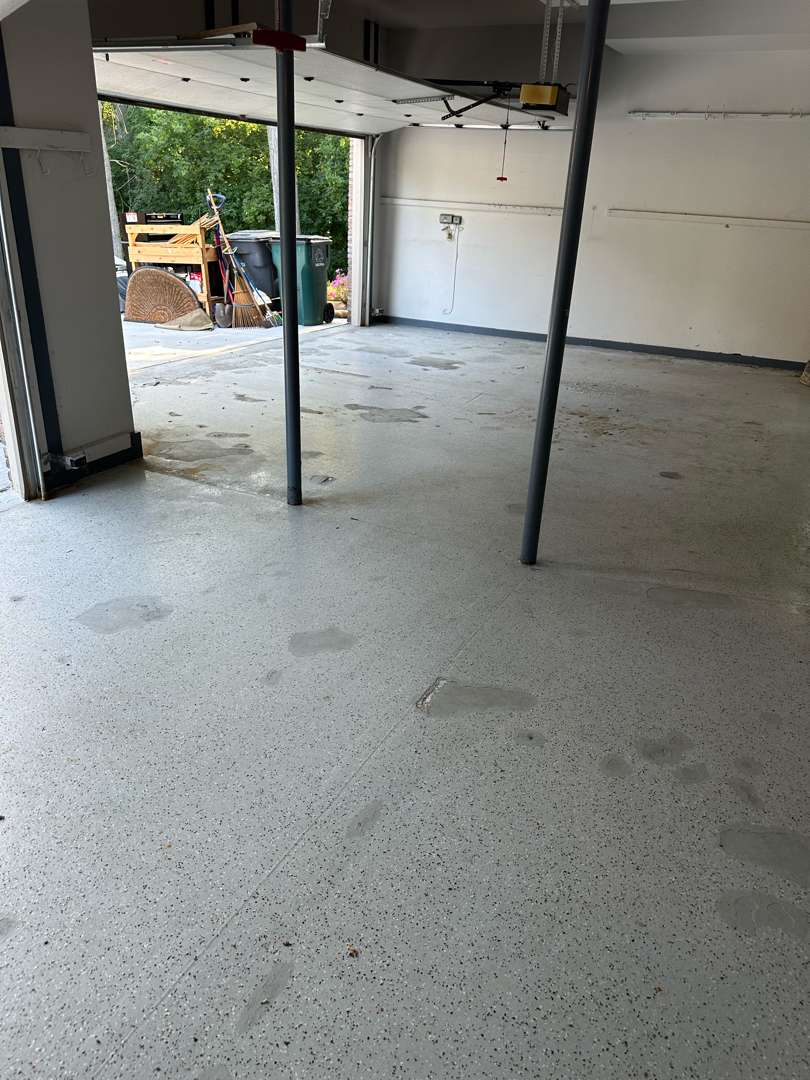
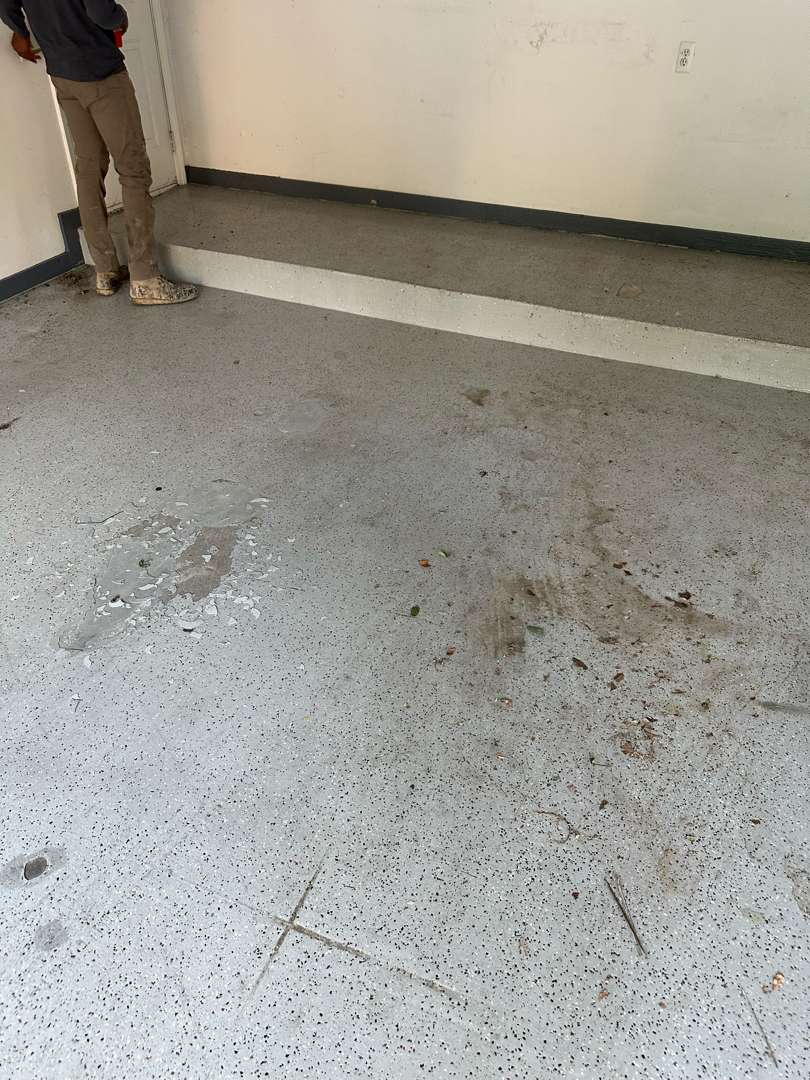
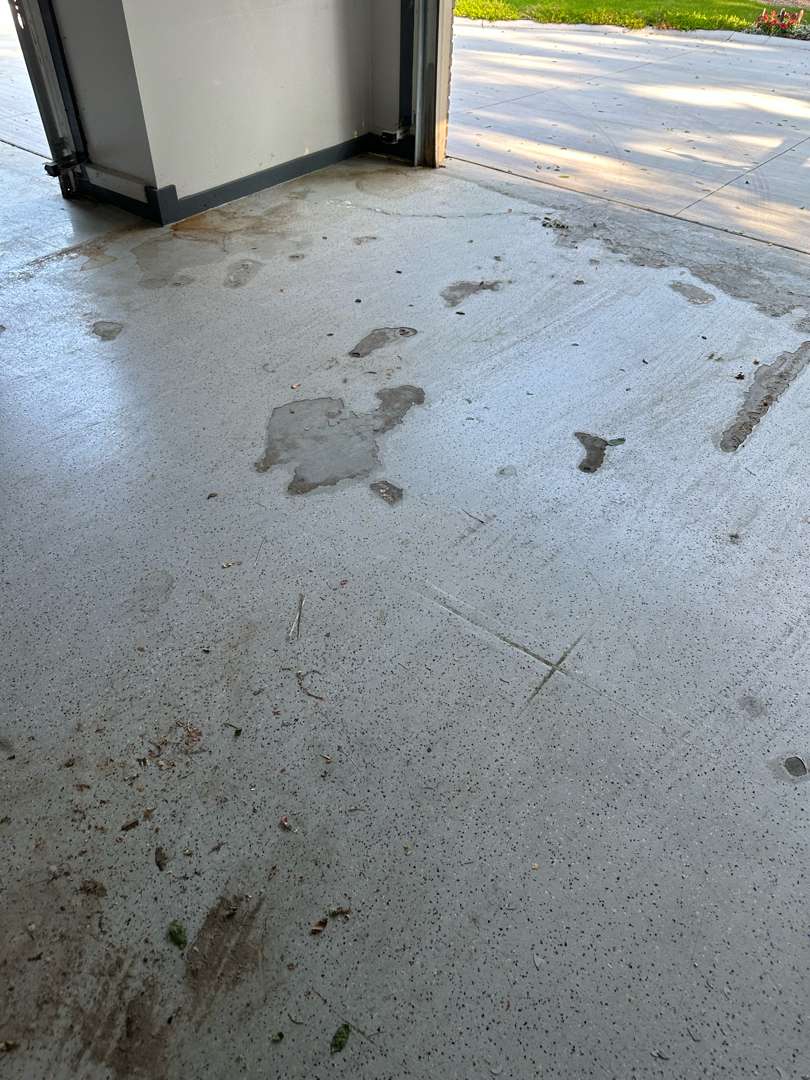
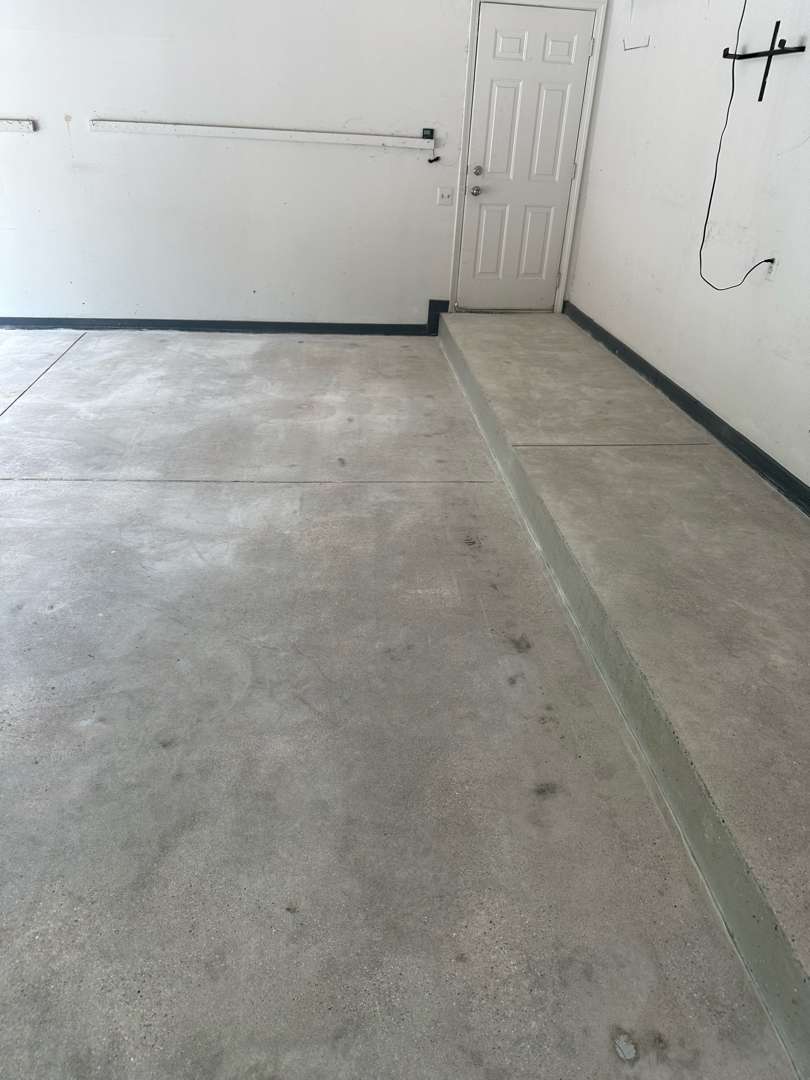
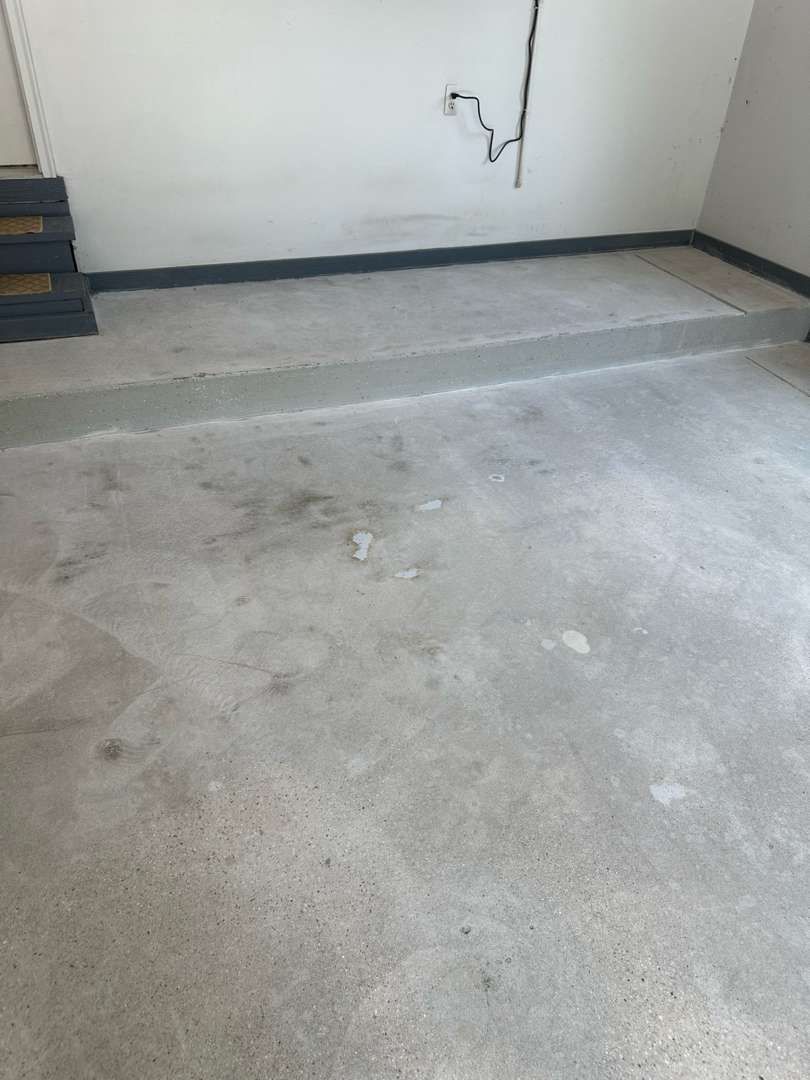
The Whitney Court garage was 663 square feet covered in a failing epoxy coating. The epoxy had lost adhesion and was peeling up in multiple spots across the slab. Oil staining was visible beneath and around the failing material.
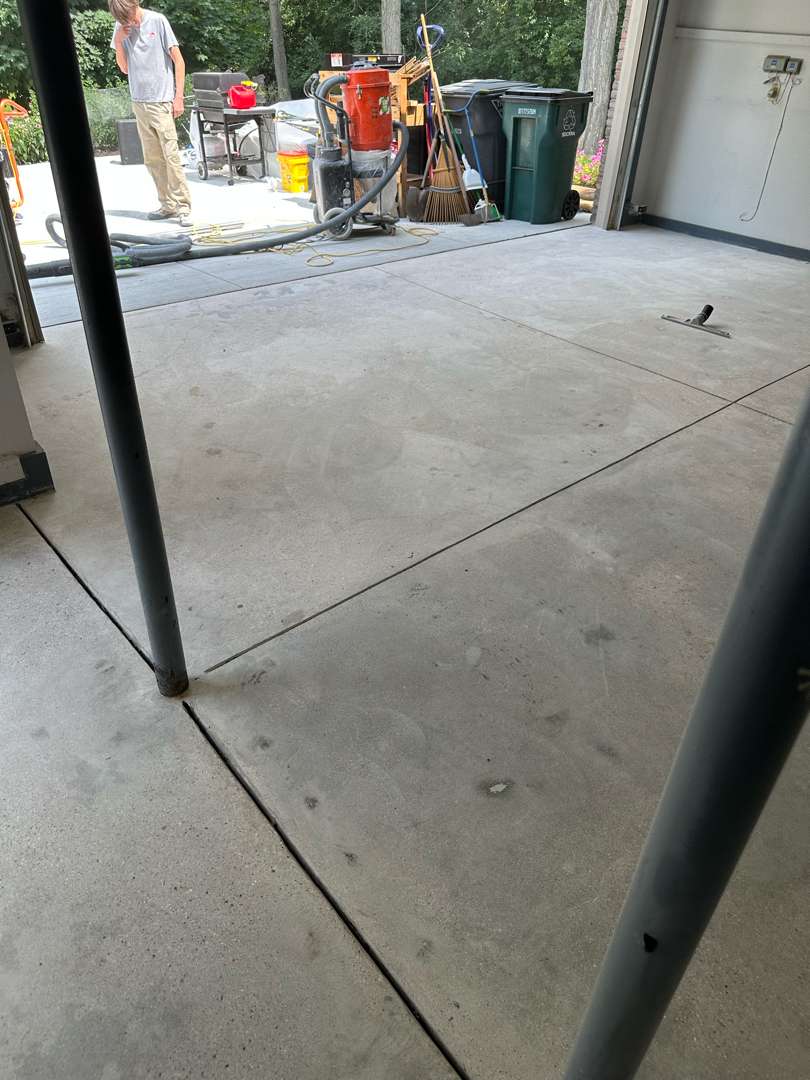
Epoxy residue had worked its way into the saw cuts across the slab. Minor cracks and pitting were present in spots throughout the floor. A raised step platform runs along the back wall. The platform tread and face were included in the scope.
Epoxy Removal and Saw Cut Clearance

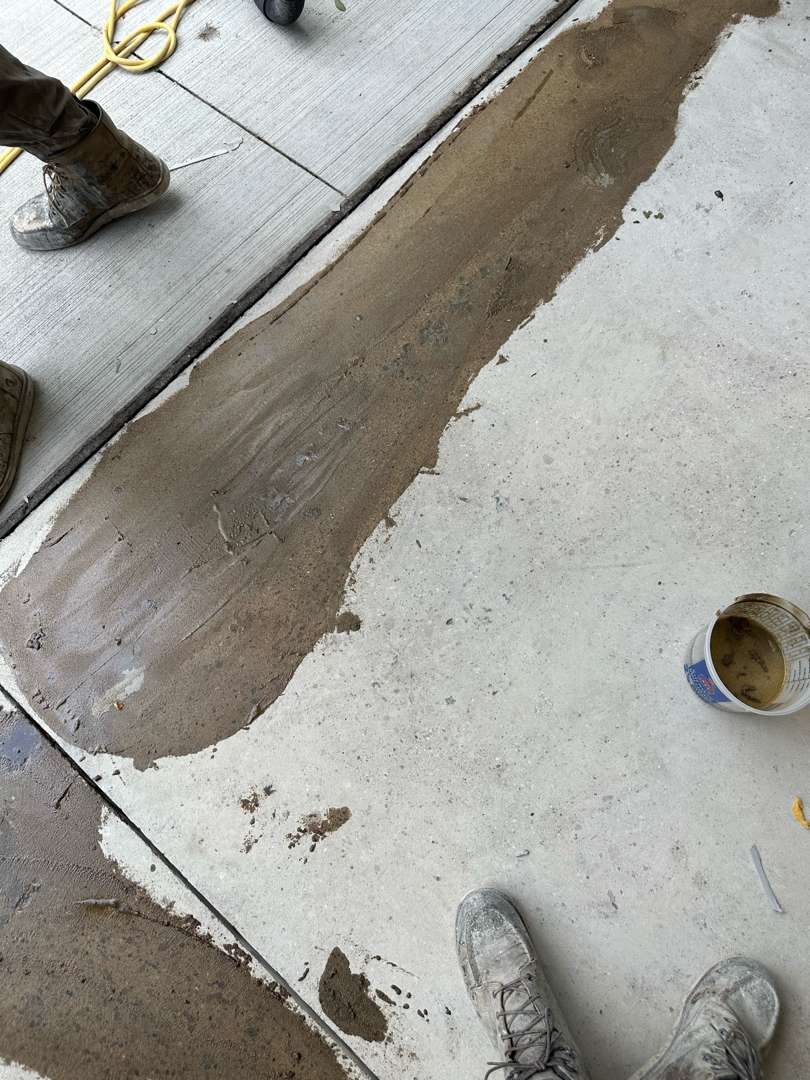

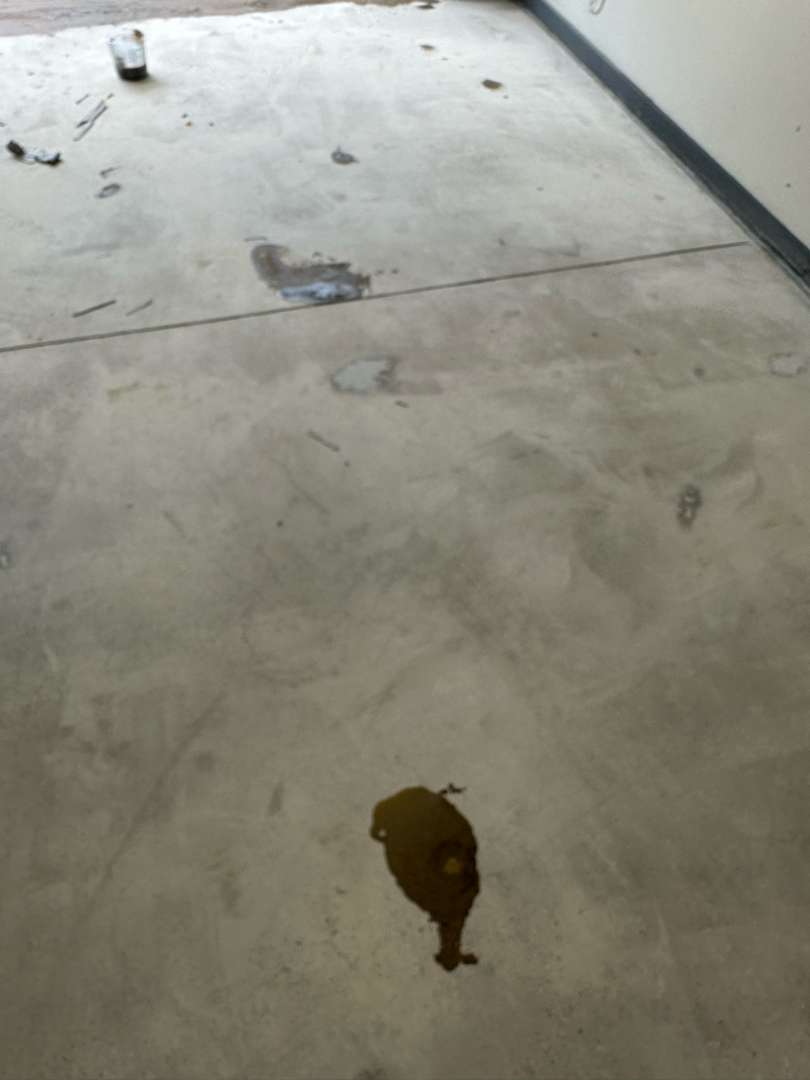
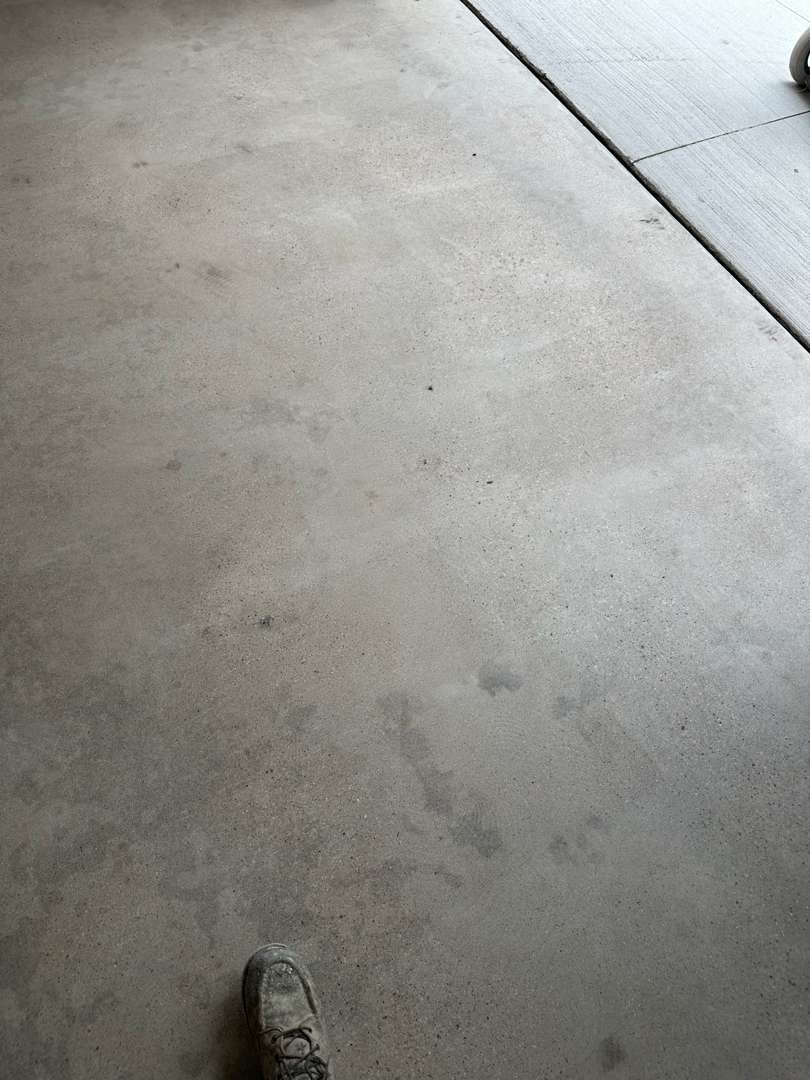
Epoxy residue in saw cuts creates a non-bonding layer the new system cannot bond through. Both the old coating and the residue in the cuts had to come out. Our crew diamond-ground the full 663 square feet to remove the failing epoxy throughout. The grinding also cleared the epoxy residue from every saw cut across the slab.
Our team vacuumed thoroughly after each pass. The slab came out of preparation clean, open, and free of the old material.
Crack and Pitting Repair
Platform Preparation
Stoney Creek — Floor and Platform
Our clients selected Stoney Creek for all 663 square feet. Our crew applied the MC-4 polyurea base coat by roller across the full prepared slab. We cut in along the platform tread and face by hand at the same time.
Our crew broadcast Stoney Creek flake into the wet base coat across the full floor. We carried the broadcast across the platform tread and face at the same time. Stoney Creek carries a charcoal blend with grey and white chips throughout. After cure and excess flake recovery, our team applied the polyaspartic topcoat with 16-grit traction additive throughout.
Saw Cuts Clear, Epoxy Gone, 663 Square Feet Sealed
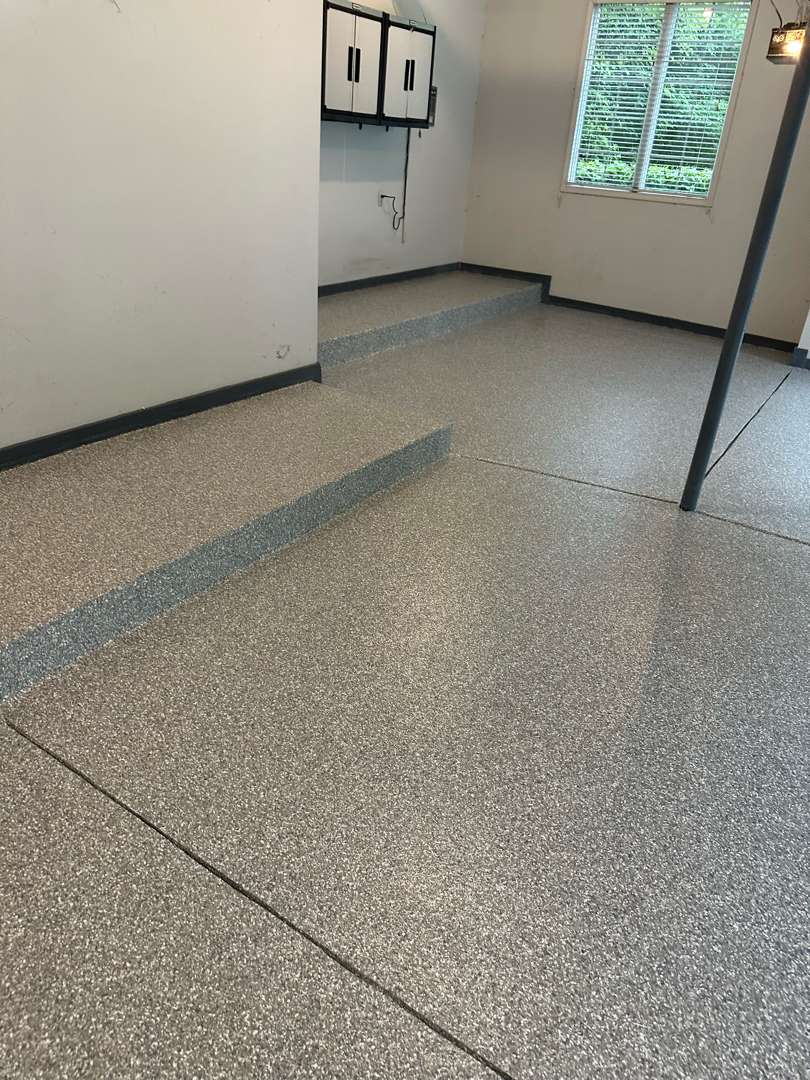
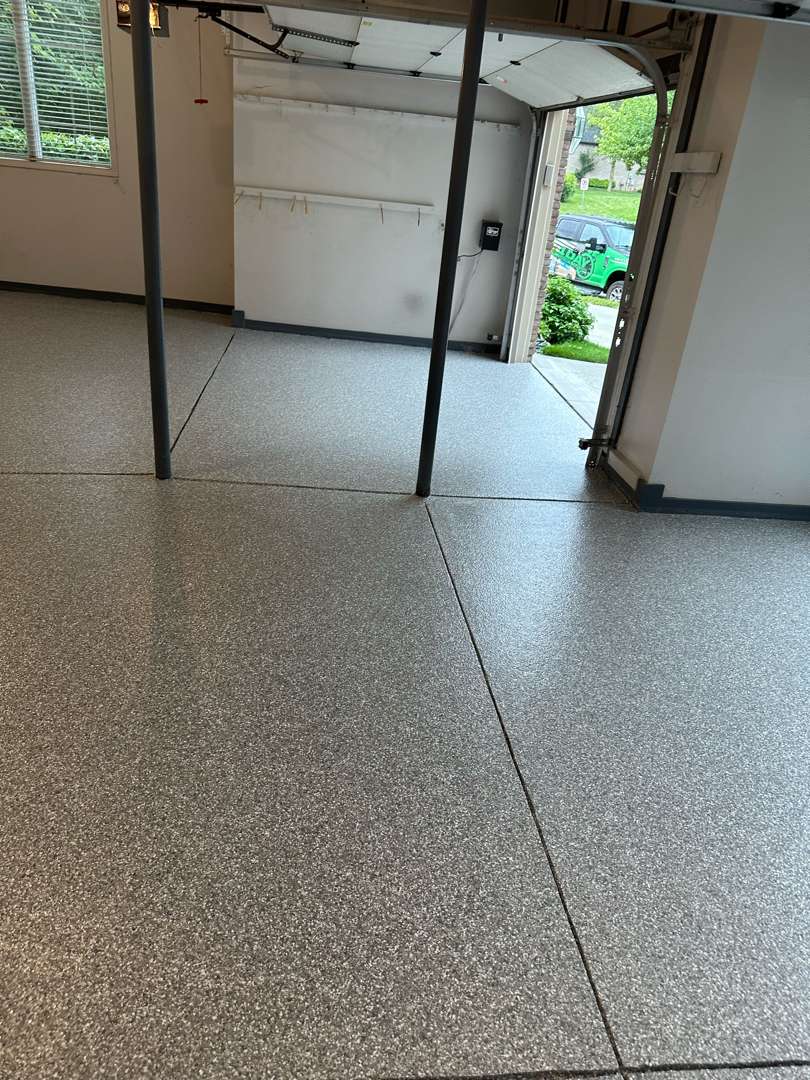
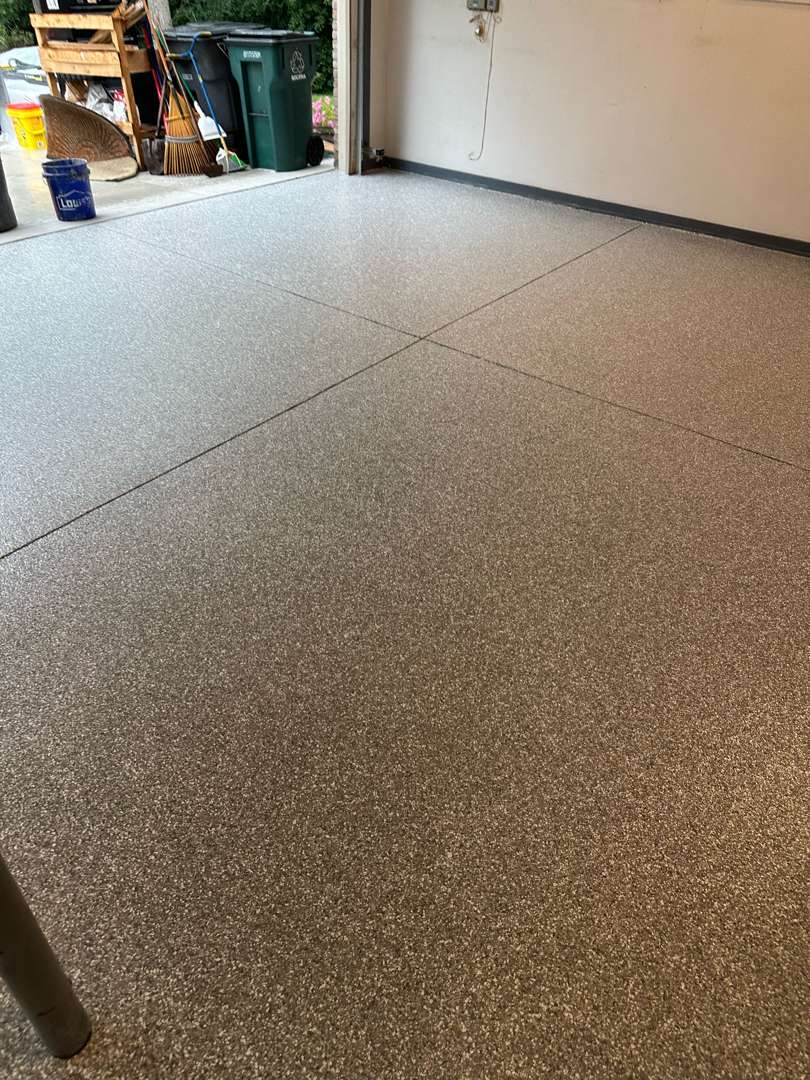
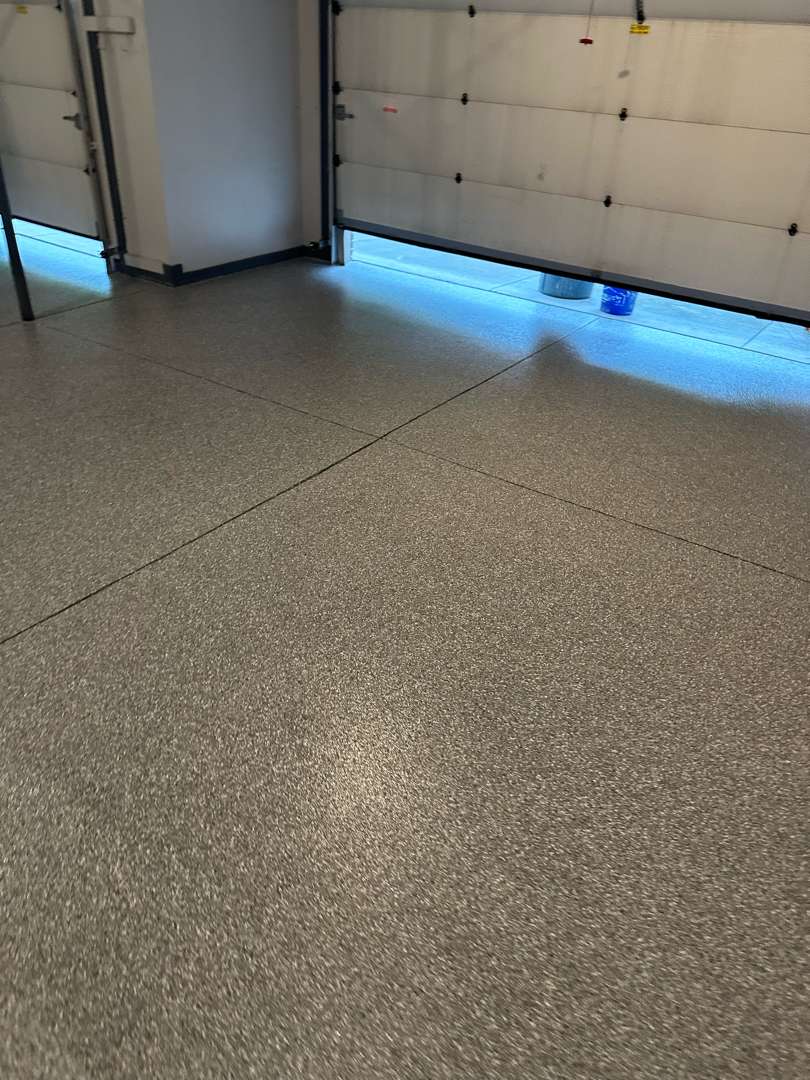
Stoney Creek runs wall to wall across all 663 square feet. The charcoal tone sits well against the light walls and gives the space a grounded character. The platform carries the same flake and finish as the main floor.
The saw cuts are clear. The epoxy is gone. The oil staining is gone. 16-grit provides firm grip underfoot throughout.
Testimonials - Voices of Our Clients
Michael Sutherland
Motor City Floors and Coatings did an amazing job on our garage floor. They arrived on time, finished in a timely manner and left a phenomenal finished product.
Diana DiRita
What These Troy Slabs Actually Needed: Polyurea-Polyaspartic vs. Epoxy
Four of the eight Troy projects on this page involved removing a failed prior coating before our polyurea-polyaspartic system could go down: a self-applied epoxy kit at Lyster Lane, a failing epoxy coating with residue packed into the saw cuts at Whitney Court, a peeling painted coating at Vanderpool Avenue, and another failing painted coating at Orchard Trail Drive. In every case, the old material had lost adhesion and had to be fully ground off before the concrete was ready for anything new.
This is the practical difference between epoxy and polyurea-polyaspartic systems: epoxy is more prone to peeling, yellowing, and adhesion failure over time, especially in Michigan’s freeze-thaw climate, while polyurea-polyaspartic systems cure faster, flex with the slab, and resist UV fading. We cover this in more depth in our own posts on why polyurea outperforms epoxy, common reasons epoxy floors fail, and the main benefits of polyurea over epoxy. For the full breakdown using the Lyster Lane and Trillium Drive projects as evidence, see our epoxy concrete floor coating in Troy vs polyurea comparison.
Serving Troy & Oakland County
Beyond Troy, we regularly install polyurea-polyaspartic garage floor coatings for homeowners in Birmingham, Bloomfield Hills, Royal Oak, and Farmington Hills. If you’re nearby and considering a garage floor upgrade, reach out for a free quote.
FAQ
Find answers to your technical questions about polyurea-polyaspartic garage floor coatings.
Epoxy residue filling saw cuts creates a soft, non-bonding layer that blocks the new coating system from reaching the concrete surface beneath it. On Whitney Court in Troy, a failed epoxy coating had lost adhesion across the 663-square-foot slab and worked its way into the saw cuts as it deteriorated. Our crew used diamond grinding to remove the failed coating and clear the epoxy residue from the cuts simultaneously. MotorCity Floors and Coatings grinds to bare, clean concrete — including full clearance of all saw cuts — before any new coating goes down.
A full-floor flood coat is required when damage is distributed broadly enough that spot repairs would leave an uneven surface profile across the slab. On Vanderpool Avenue in Troy, pitting and surface damage after coating removal covered the full 414-square-foot floor rather than isolated zones. On Orchard Trail Drive, cracking extended broadly enough after paint removal to warrant the same approach. MotorCity Floors and Coatings uses full-floor flood coats whenever damage distribution makes targeted repair insufficient to produce a consistent, coatable surface.
Steps, landings, and vertical lips receive the same polyurea-polyaspartic system as the main floor, prepared and coated to produce a continuous finished surface throughout the space. On Trillium Drive in Troy, the scope included two concrete steps, a landing, and 15 linear feet of vertical lip along the perimeter — all coated with the same Pebble Beach system and 36-grit traction as the 695-square-foot main floor. MotorCity Floors and Coatings carries the coating through every transition included in the scope without leaving surfaces uncoated.
MR-50 primer is a penetrating repair material used when pitting is concentrated in zones with deep surface damage or prior contamination, while standard mender compound is used for crack filling and surface-level void repair. On Lyster Lane in Troy, heavier pitting had developed specifically in the vehicle parking zone. Our crew applied MR-50 broadly across the pitted parking area, using it as both a repair material and a penetrating bond coat. MotorCity Floors and Coatings selects the repair material based on damage type, depth, and location across every installation.
The MotorCity Advantage
MotorCity Floors and Coatings specializes in professional-grade polyurea-polyaspartic systems. These dual-coating systems are replacing epoxy products constrained by older chemistry. Our systems deliver strong chemical resistance, superior durability, greater flexibility, shorter cure times, and proven UV stability that maintains color for decades. We back every installation with an industry-leading warranty.
Each project includes thorough diamond grinding preparation, flexible polyurea crack repair, and careful application to ensure consistent coverage across the full slab. When prior coatings are present — as our crew found at properties on Lyster Lane and Vanderpool Avenue — we strip the existing system completely before any new material goes down. This step ensures the polyurea-polyaspartic system bonds directly to the concrete rather than to a compromised surface above it.