 Skip to content
Garage Floor Coating in Farmington Hills, MI
QUESTIONS? NEED A QUOTE?
Why Farmington Hills Homeowners Choose MotorCity
★ 4.9 rating · 488 Google reviews
- ✓ Lifetime warranty
- ✓ One-day installation
- ✓ BBB accredited (since 2020)
- ✓ Licensed & insured
Last updated: July 30, 2026
Welcome to MotorCity Flooring and Coatings’ showcase of examples of garage floor coating in Farmington Hills, MI. In this page, you will find detailed project stories from locations all around Farmington Hills—real installations that demonstrate our commitment to quality and durability.
Our specialist teams serve every neighborhood in Farmington Hills with comprehensive garage floor coating services. Each project begins with thorough concrete preparation: diamond grinding to remove old coatings and contaminants, repairing cracks and pitting, and addressing moisture concerns. We then apply our advanced polyurea-polyaspartic coating system—a hybrid technology that combines the incredible durability of polyurea material with the UV stability and fast cure times of polyaspartic coating.
This dual-component system creates a floor that withstands the harsh weather cycles of Michigan—from sub-zero winters to humid summers—without cracking, peeling, or yellowing. The chemical-resistant surface repels oil, salt, and automotive fluids while standing up to the constant pressure from vehicle tires and foot traffic.
Every garage floor installation includes decorative flakes for a professional appearance and customizable traction levels for safety. The result? A garage floor coating that shows very strong UV resistance, reduced hot tire pickup, greater flexibility, excellent chemical resistance, good abrasion resistance, a wide temperature application range, and a better temperature cycling than epoxy. Our floor coating system cures in hours rather than days and comes with our industry-leading warranty.
For ultimate convenience, we install your new floor coating in just 1 day. We come early in the morning and operate discreetly to minimize noise inconvenience to your neighbors. You don’t need to be home if you have other things to do.
Explore the 10 projects below to see our process, results, and the difference professional installation makes.
For a side-by-side breakdown using the Sheffield Drive and Amber Drive projects as evidence, see our epoxy floor coating in Farmington Hills comparison.
Garage Floor Coating
on Oak Forest Drive
Oak Forest Drive, Farmington Hills, MI
Lead Tech: Brad
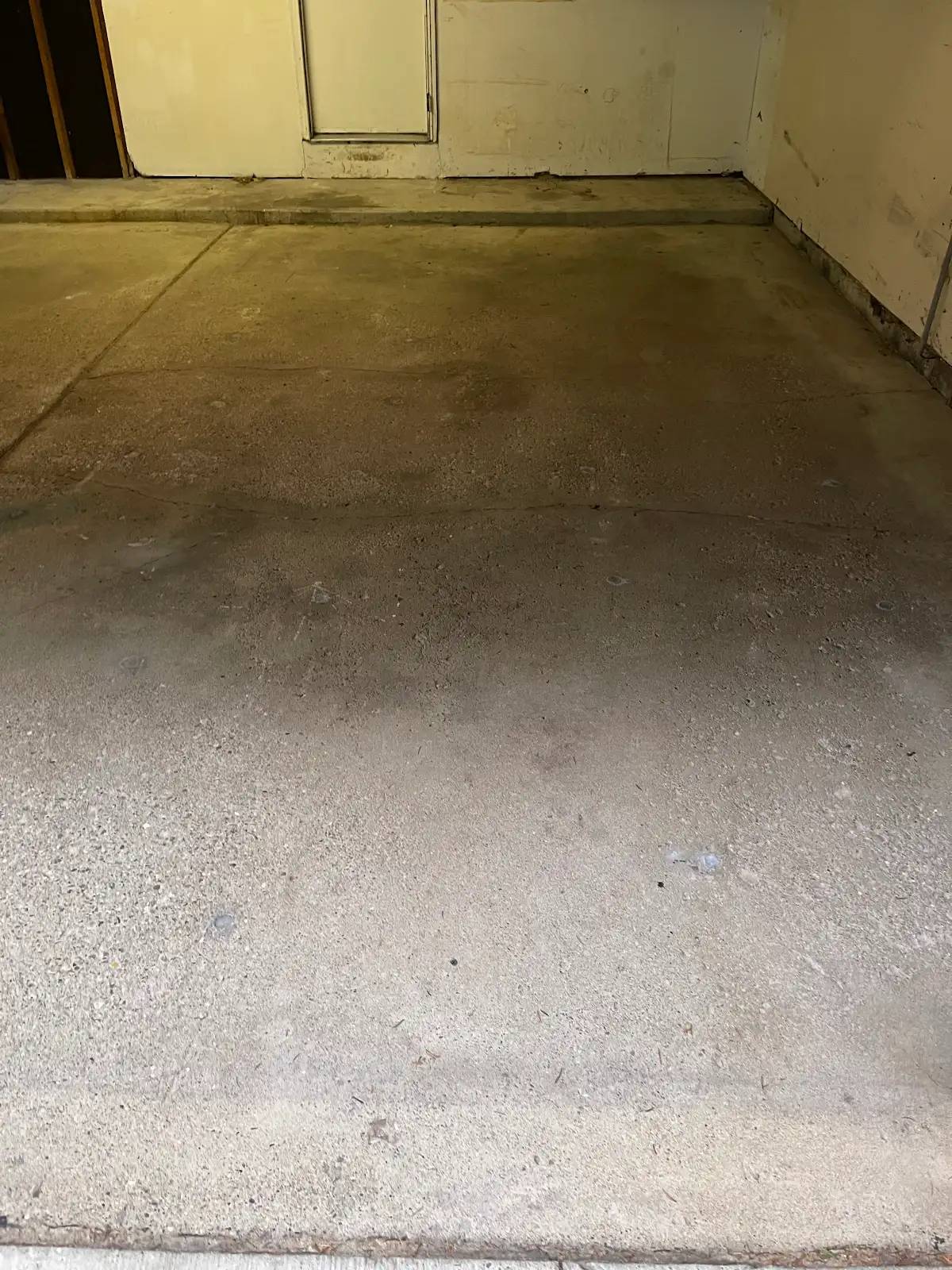

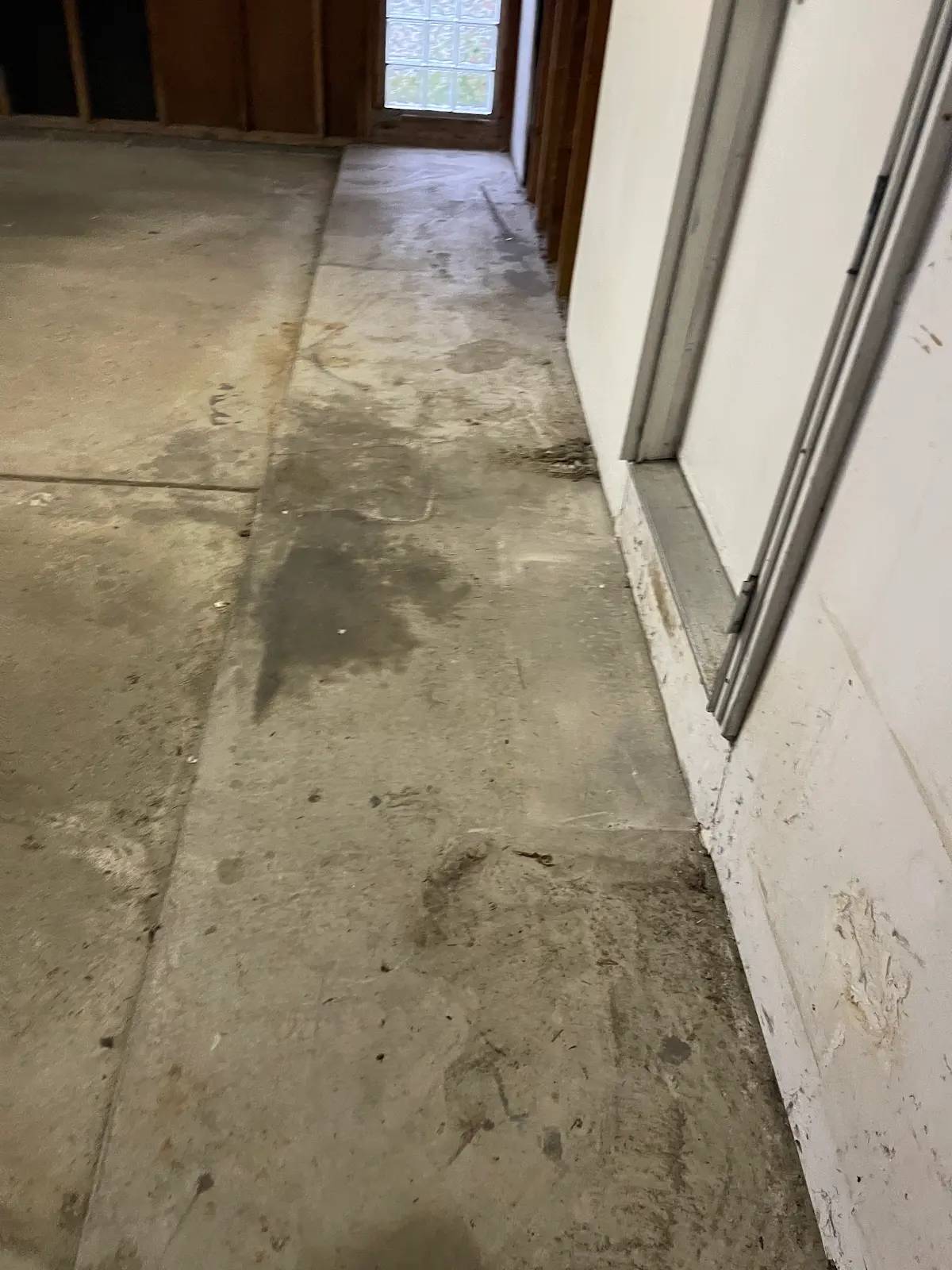
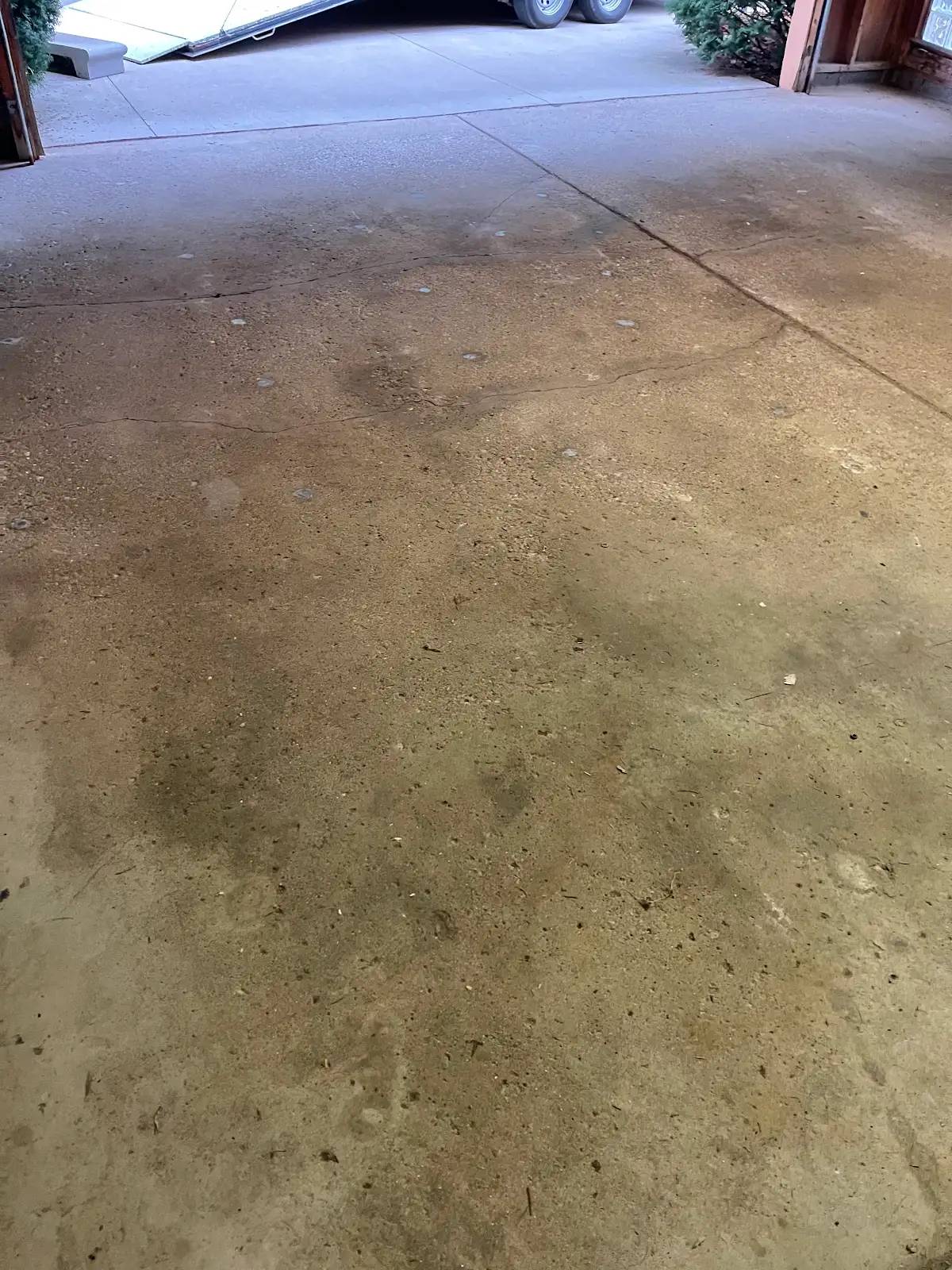

Brad and his crew found 484 square feet of concrete in rough condition. Pitting and cracking were scattered across the surface. Moisture content read at 3.4%. The slab showed the worn look of years of use.
The scope included 22 linear feet of vertical lip transitions and one concrete step. The coating needed to extend to the edge of the driveway for a seamless finish.
Surface Preparation
No existing coating required removal. Our crew prepared the concrete with 24-grit shark grip for aggressive surface profiling. This grit level ensures proper adhesion across the full slab before any material goes down.
The Build-Up
Our crew worked through the system methodically. The foundation layer mixed 6 liters each of MR-50 primer Part A and Part B. Our crew added 2 cups of sand for grip and void filling. The Siberian base coat used 5 liters of Part A and 2.5 liters of Part B.
Our crew broadcast 4.5 boxes of color flake across the wet base coat. Our team recovered 2 boxes for reuse, a 44% recovery rate. The clear topcoat used 8 liters of Part A and 4 liters of Part B. It locked in the flakes under a hard surface.
Application Detail
Our crew used 3-inch chip brushes for edge work and 18-inch rollers for broad coverage. Our team measured each batch with quart cups throughout. The job filled three trash bags by completion.
Our crew brought the coating up and over the 22 linear feet of vertical lip. We coated the concrete step to match the main floor. The system carried through to the edge of the driveway. It creates a continuous transition from garage to exterior.
484 Square Feet, Pitting Sealed, Driveway-to-Door Coverage


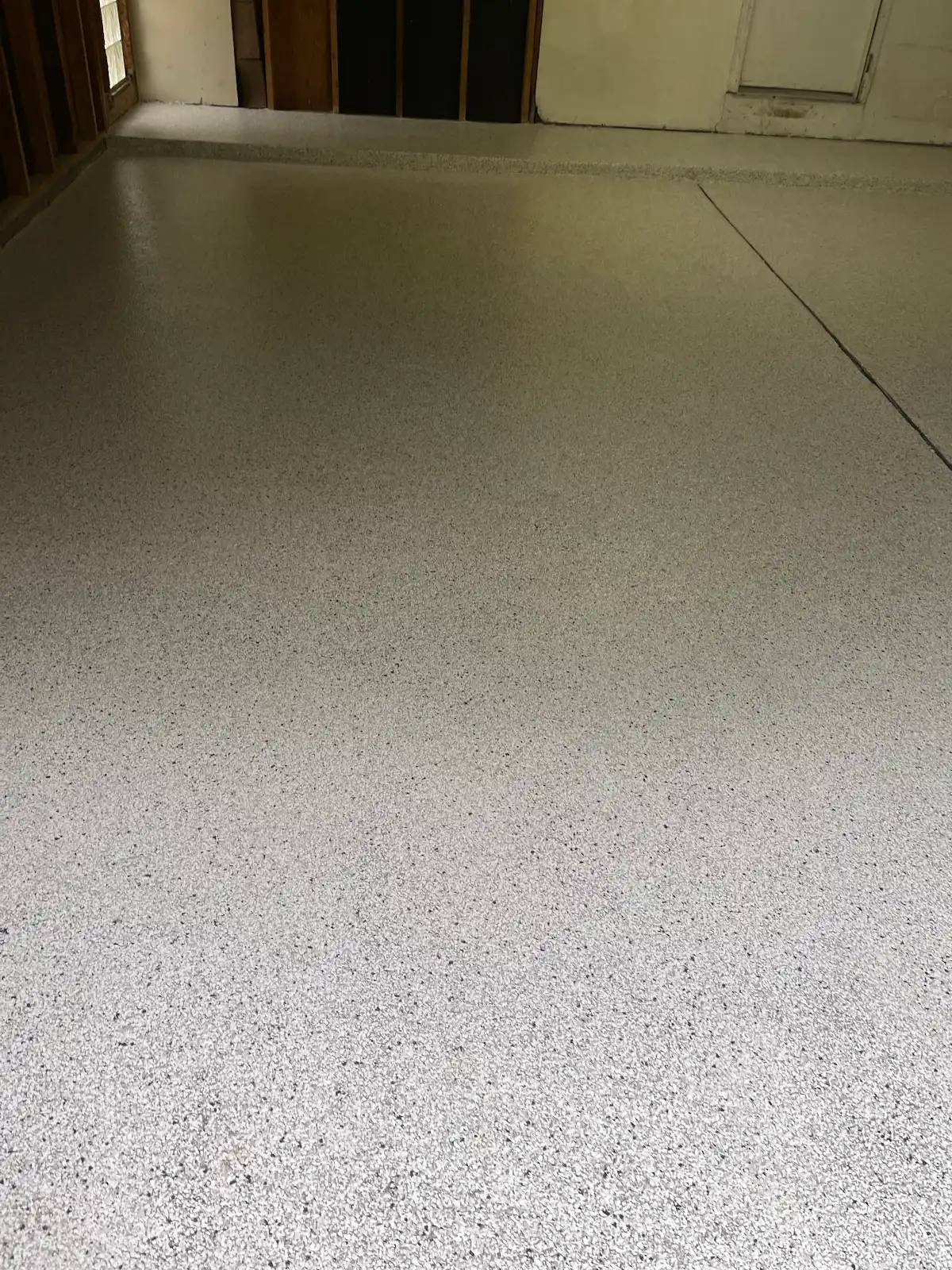

Siberian runs wall to wall across all 484 square feet. The light grey and tan blend with decorative flake transforms the space from utilitarian to refined. The step and vertical lip carry the same finish as the main floor.
The pitting and cracking are sealed. The driveway transition reads as one continuous surface.
Testimonials - What other clients say
Sara Menzies
Roger Kimble
Garage Floor Coating
on Shadowglen Dr.
Shadowglen Drive, Farmington Hills, MI
Lead Tech: G. Cain, Truck #5
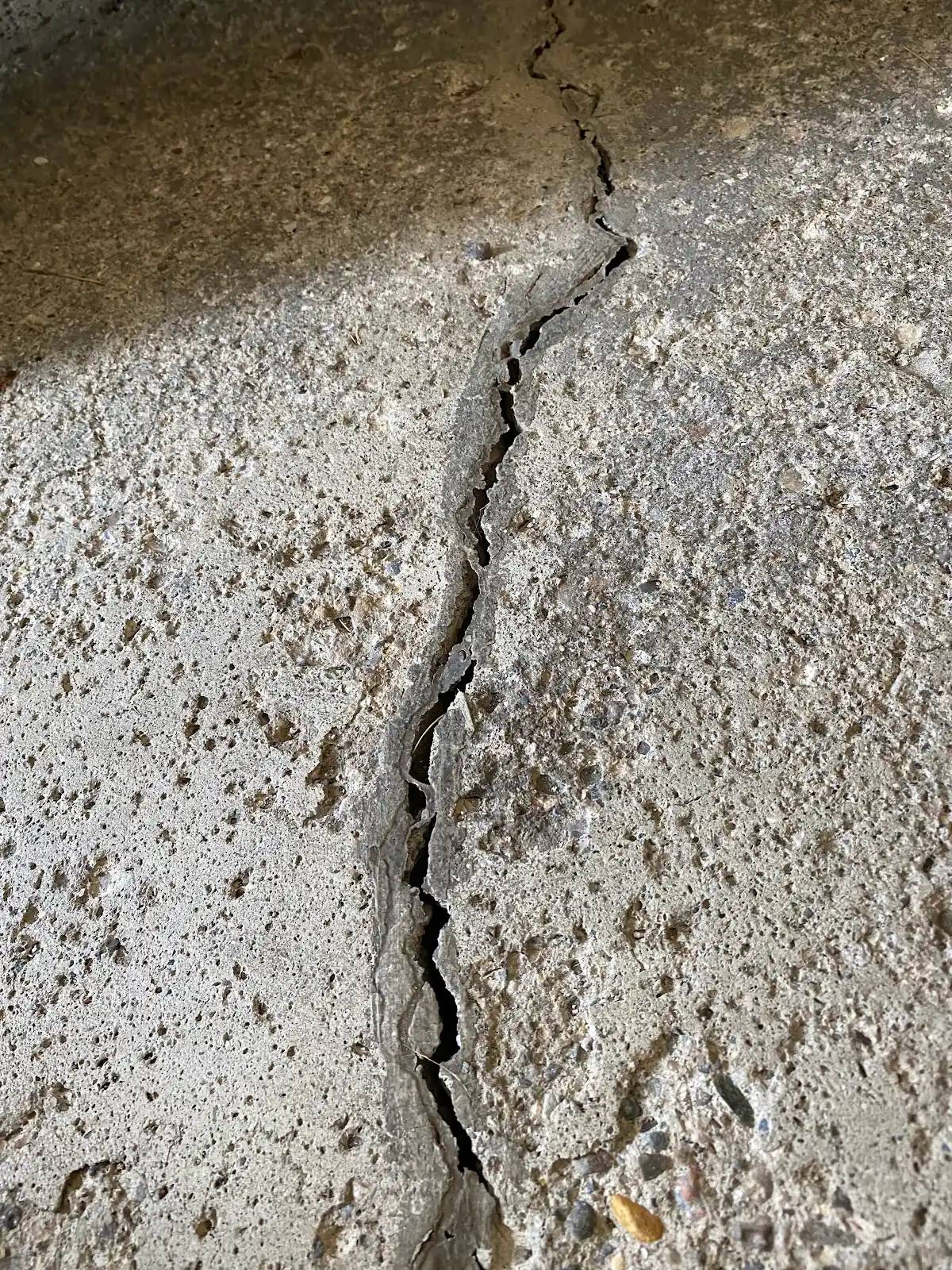


G. Cain and his crew found 462.89 square feet of badly damaged concrete. Jagged cracks ran across the surface. Heavy pitting covered the slab throughout. Loose concrete had concentrated in the middle sections on both sides of the garage.
Moisture content read at 3.9%. The scope included two concrete steps and 22.07 linear feet of vertical lip. Coating needed to extend seamlessly to the edge of the driveway.
Setting Expectations
Before work began, G. Cain discussed the scope of damage with the client. The cracking and pitting repairs fell outside warranty coverage. The damage was too extensive for standard terms. The client understood and approved the work.
Felt paper covered roughly half the garage floor and remained in decent condition. Our clients asked that it not be sprayed black. Our crew worked around it, respecting that request throughout the job.
Grinding
Our crew used 24-grit preparation on the main floor. We hand-threw an additional 8 ounces for extra bite. The grind went smoothly across most of the slab.
The loose concrete in the middle sections required extra attention and cleanup. Our crew applied a complete flood coat to ensure proper saturation across the compromised surface.
The Build-Up
Our crew mixed the MR-50 primer foundation from 4 liters each of Part A and Part B. Our team added 6 cups of sand for structural reinforcement and void filling.
The Pecan base coat used 6 liters of Part A and 3 liters of Part B. Our crew broadcast 3 boxes of flake across the wet coat. Our team recovered 2 boxes for reuse, a 67% recovery rate. The heavy clear topcoat used 9 liters each of Part A and Part B.
The Steps
The concrete steps had absorbed coating like a sponge — porous material soaked through repeated passes. Our crew hit them multiple times to achieve full coverage. G. Cain returned with additional clear coat after the material cured. He touched up spots that had over-absorbed.
Vertical Lip and Driveway Edge
Our crew used 5 chip brushes for edge detail and 2 each of rollers and trowels. The crew burned through 5 bags of rags and 25 pairs of gloves. The job filled 8 trash bags by completion.
Our crew applied a black coating to the vertical walls along the lip. This created a professional finish. Our crew coated to the edge of the driveway outside the door. This created a seamless transition from garage to exterior.
462.89 Square Feet, Liability to Showcase
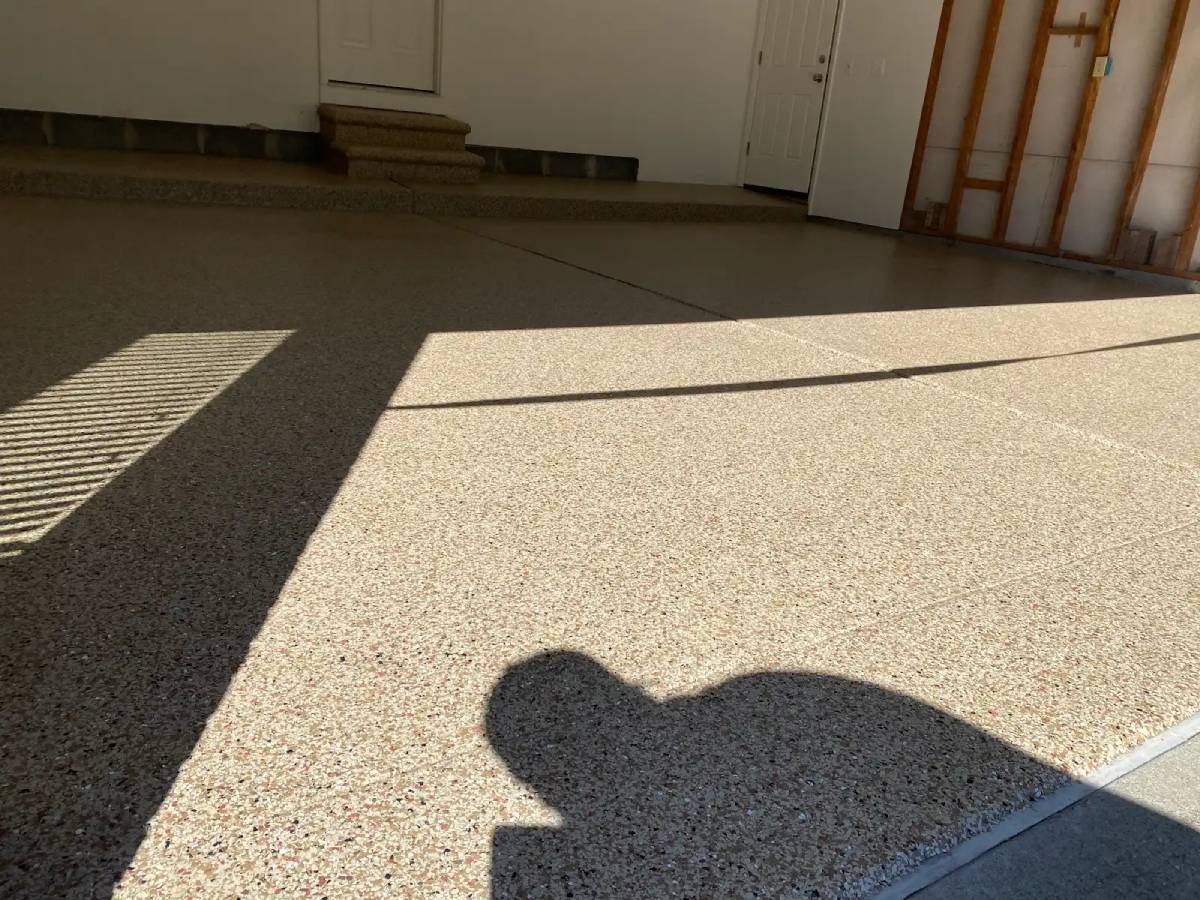


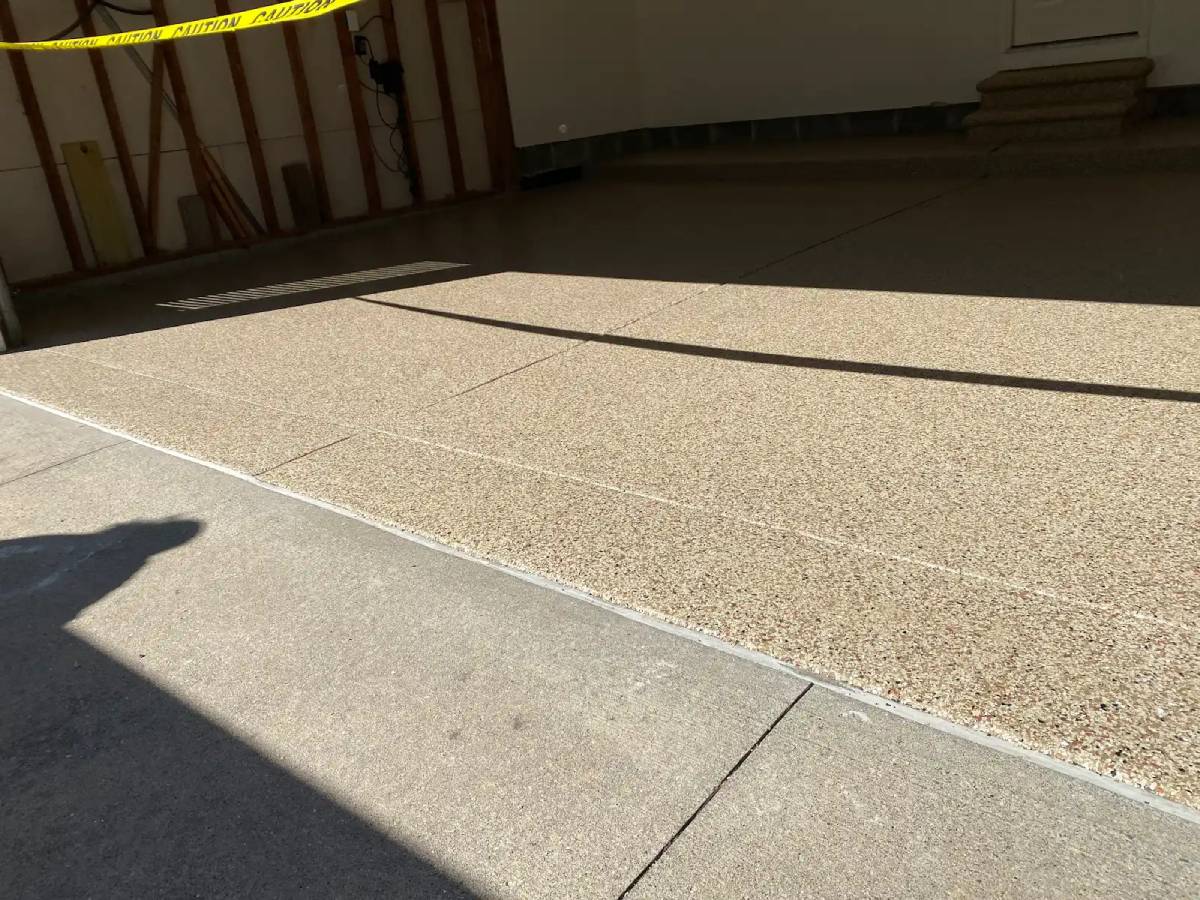
Pecan runs wall to wall across all 462.89 square feet. The tan base with its speckled flake pattern transformed the space. The steps now match perfectly.
The edge at the driveway threshold shows precise work.
The cracking and pitting are sealed. Mr. Tack paid by check on completion.
Testimonials - What other clients say
Taylor Malzahn
Micaela Boomer
Garage Floor Coating
on Juniper Ct.
Juniper Ct, Farmington Hills, MI
Lead Tech: G. Cain, Truck #5
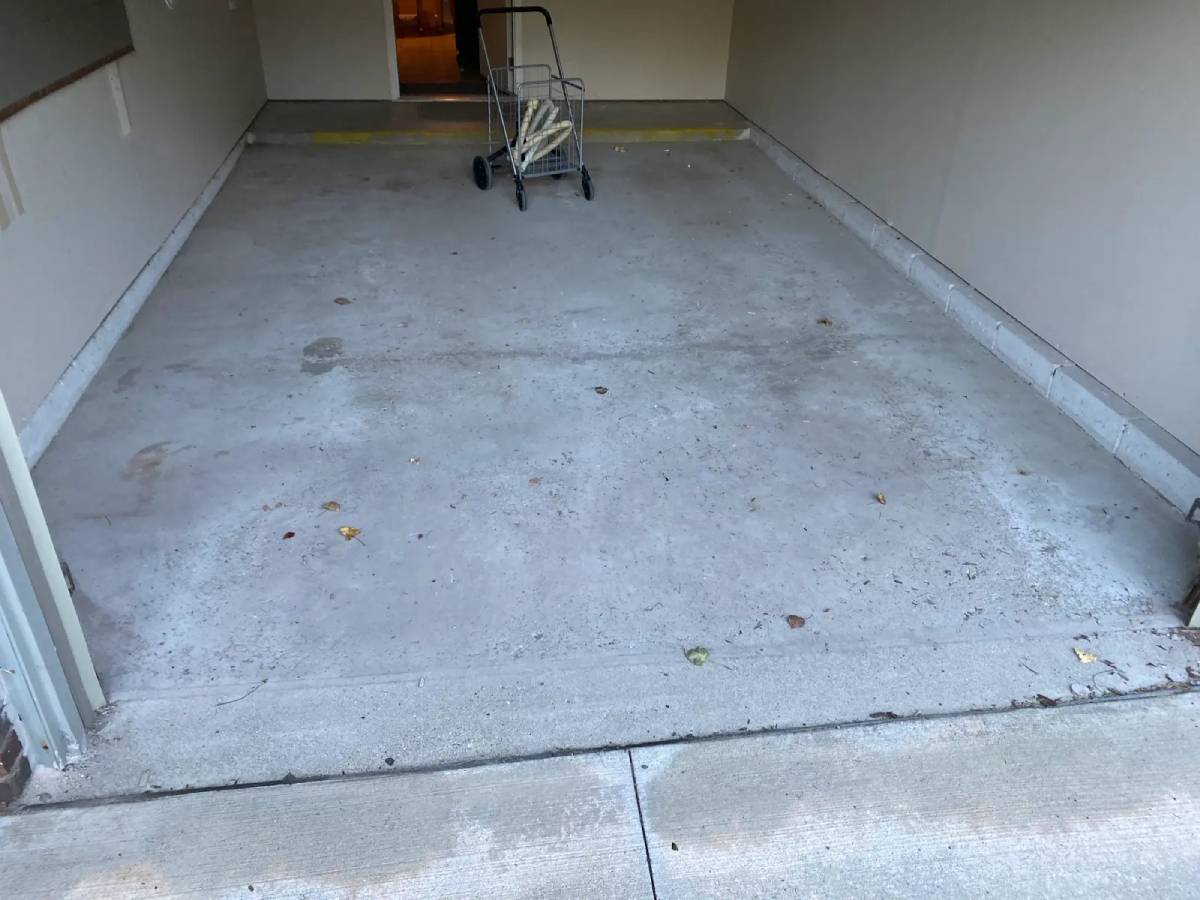
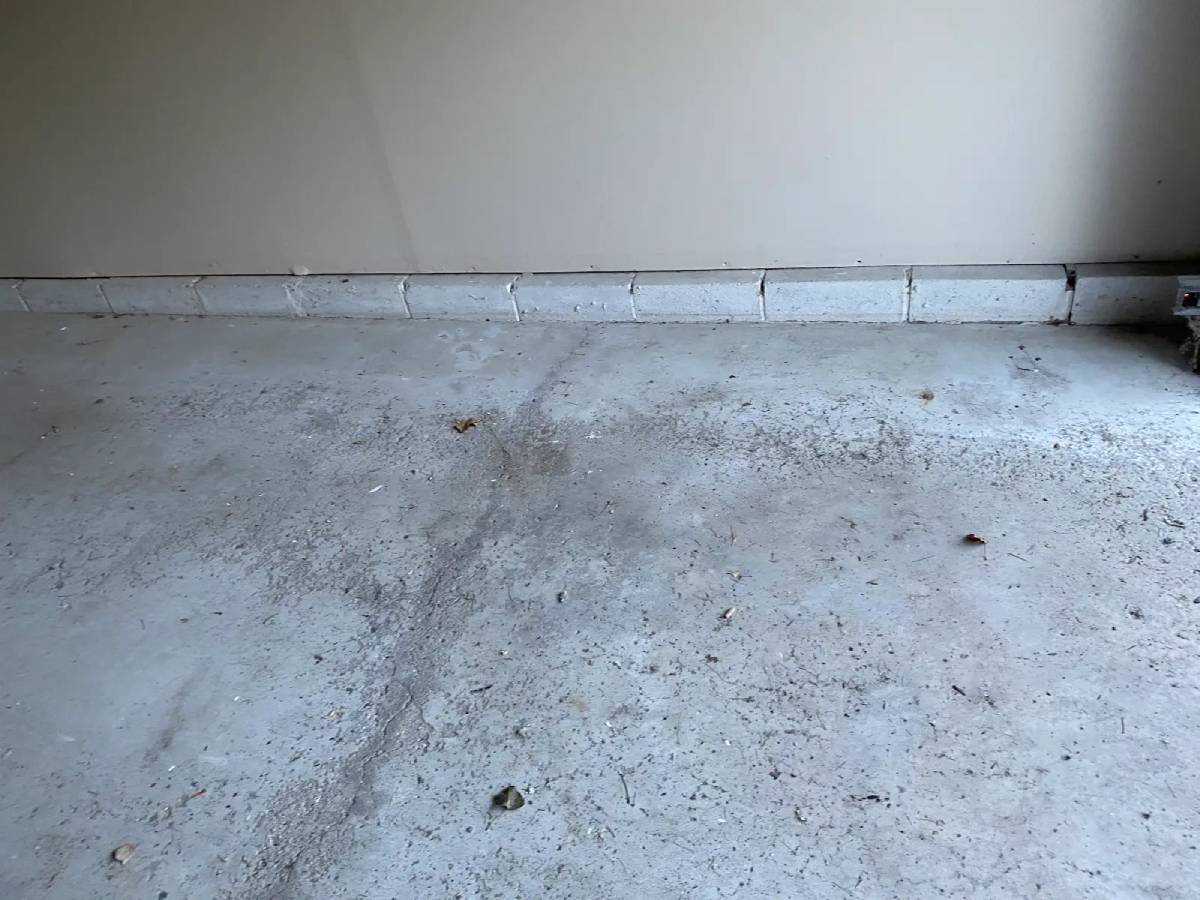
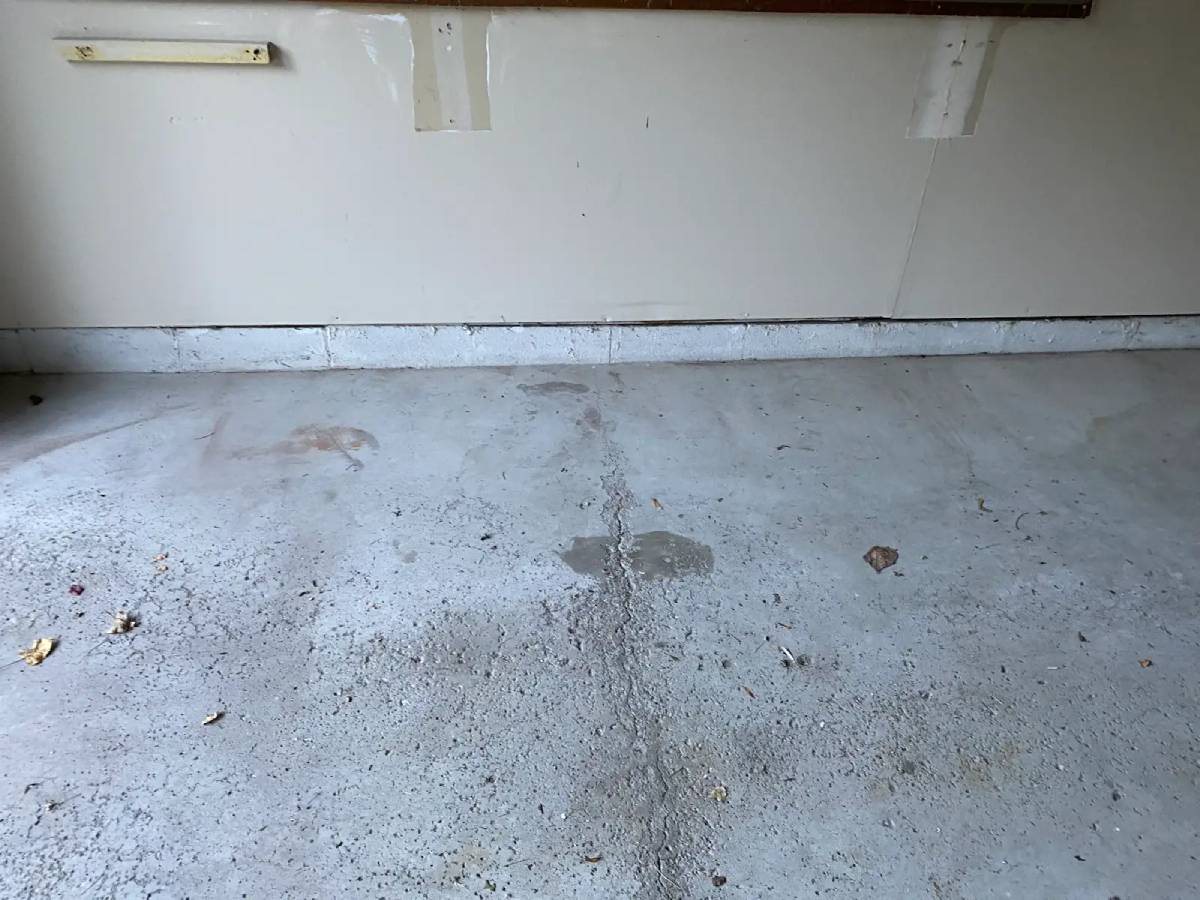
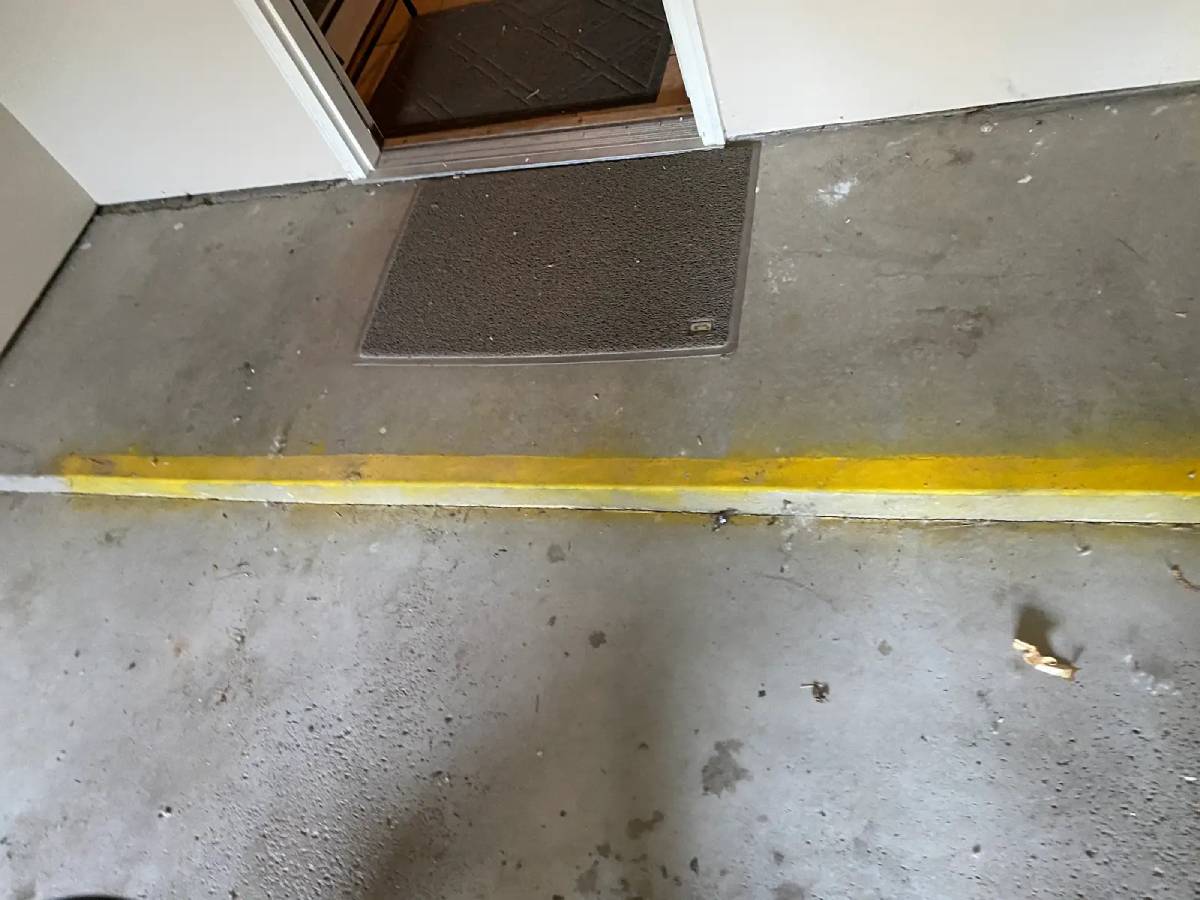
G. Cain arrived at Mr. Dybus’s condo garage on Juniper Court for 244 square feet of work. Mr. Dybus, an elderly client with a disability, had one priority above all others: traction.
The concrete showed pitting throughout and general cracking. One deep crack ran through the middle of the floor. Moisture content read at 3.8%.
No existing coating required removal. The front right lip had a chunk missing that needed rebuilding.
The Traction Solution
After hearing Mr. Dybus’s concerns, G. Cain made the call. Our crew used aggressive 24-grit preparation plus hand-thrown shark grip in the topcoat. This was not the usual approach. It was the approach Mr. Dybus’s safety required.
The Build Process
With 52 linear feet of walls and lip to coat, our crew moved efficiently through preparation. The MR-50 foundation used 3 liters each of Part A and Part B. Our crew added 3 cups of sand for structural fill. Our crew applied a complete flood coat to seal and prepare the damaged surface.
The Pebble Beach base coat used 3 liters of Part A and 1.5 liters of Part B. Pebble Beach carries a salt-and-pepper blend mimicking beach stones. Our crew broadcast 1.5 boxes of flake and recovered 1 box for reuse, a 67% recovery rate.
The heavy traction clear coat used 4.5 liters each of Part A and Part B. Our crew hand-threw 8 full ounces of 24-grit shark grip across the wet topcoat. This doubled the normal traction for added safety.
The Vertical Challenge
Our crew rebuilt the missing chunk on the front right lip with mender compound. They coated it seamlessly with the rest of the verticals. The 52 linear feet of black wall coating came out clean, with strong adhesion. It carries sharp contrast against the Pebble Beach floor.
Application Detail
244 Square Feet of Security


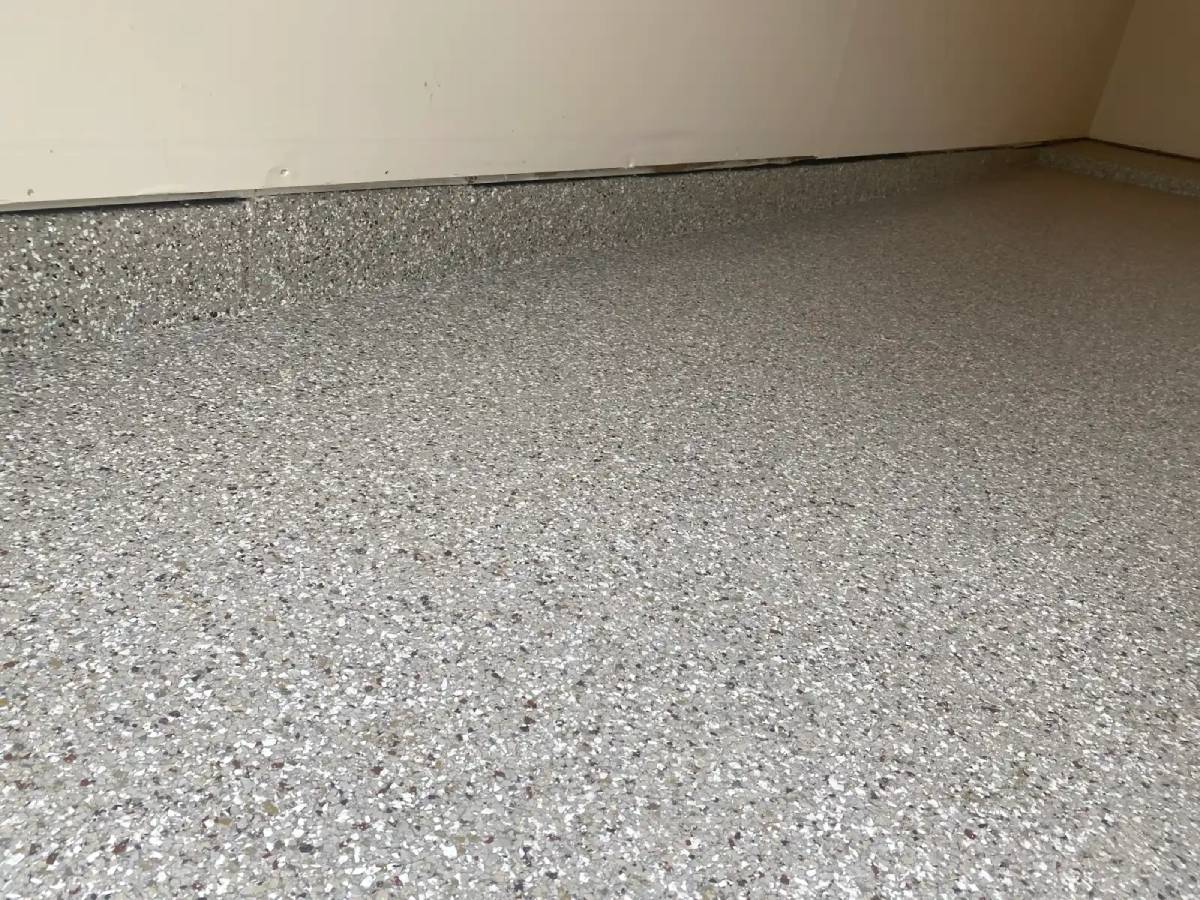
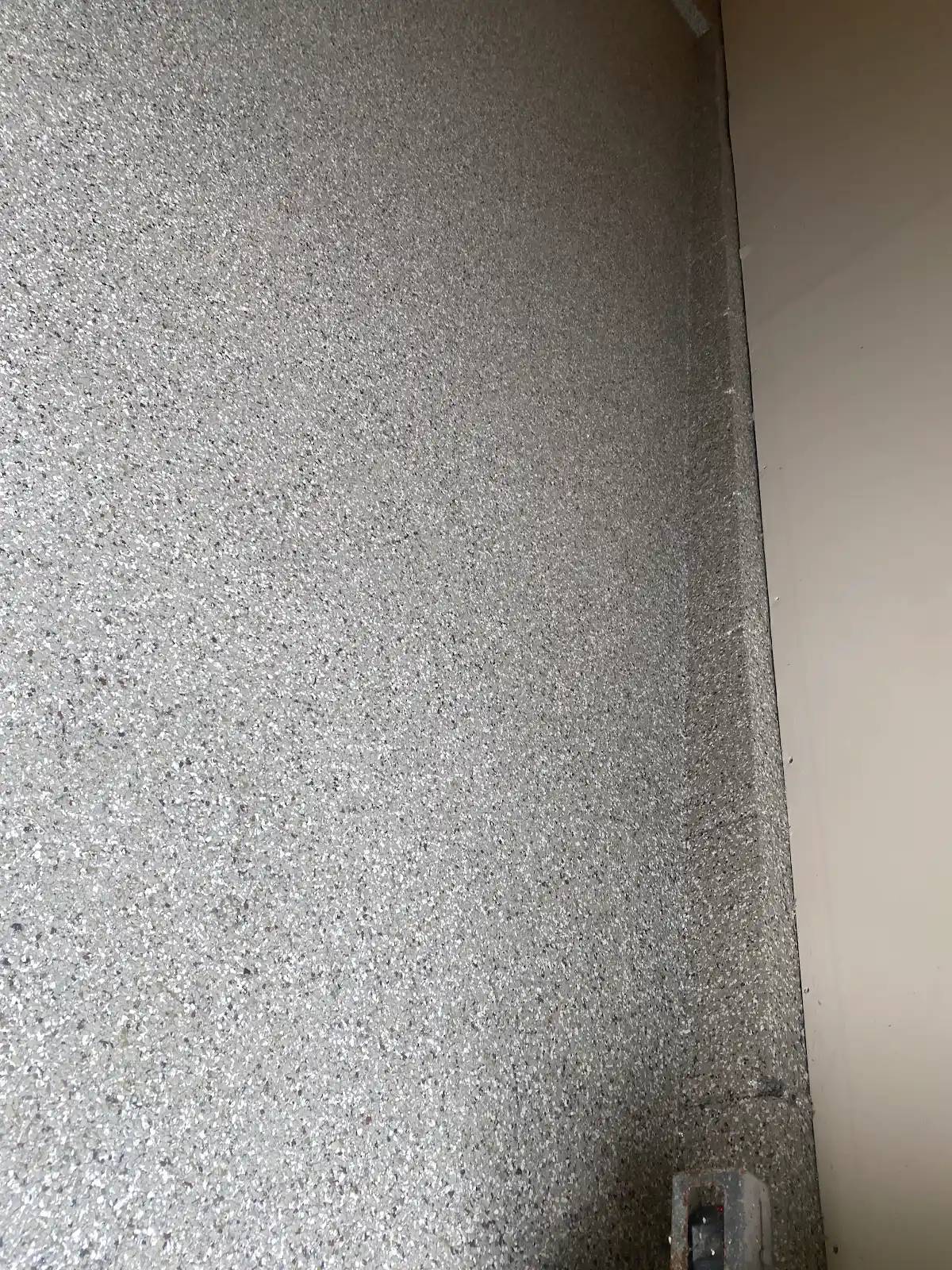
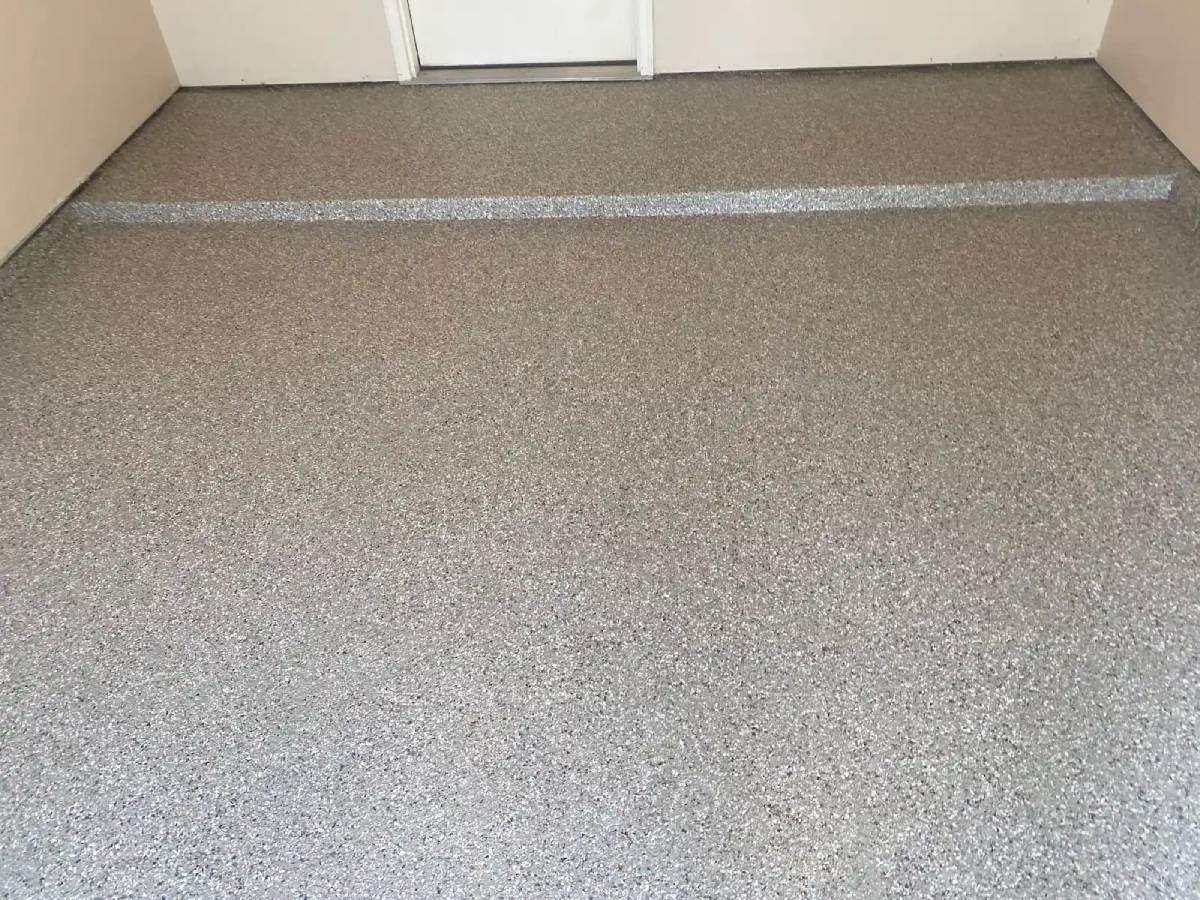
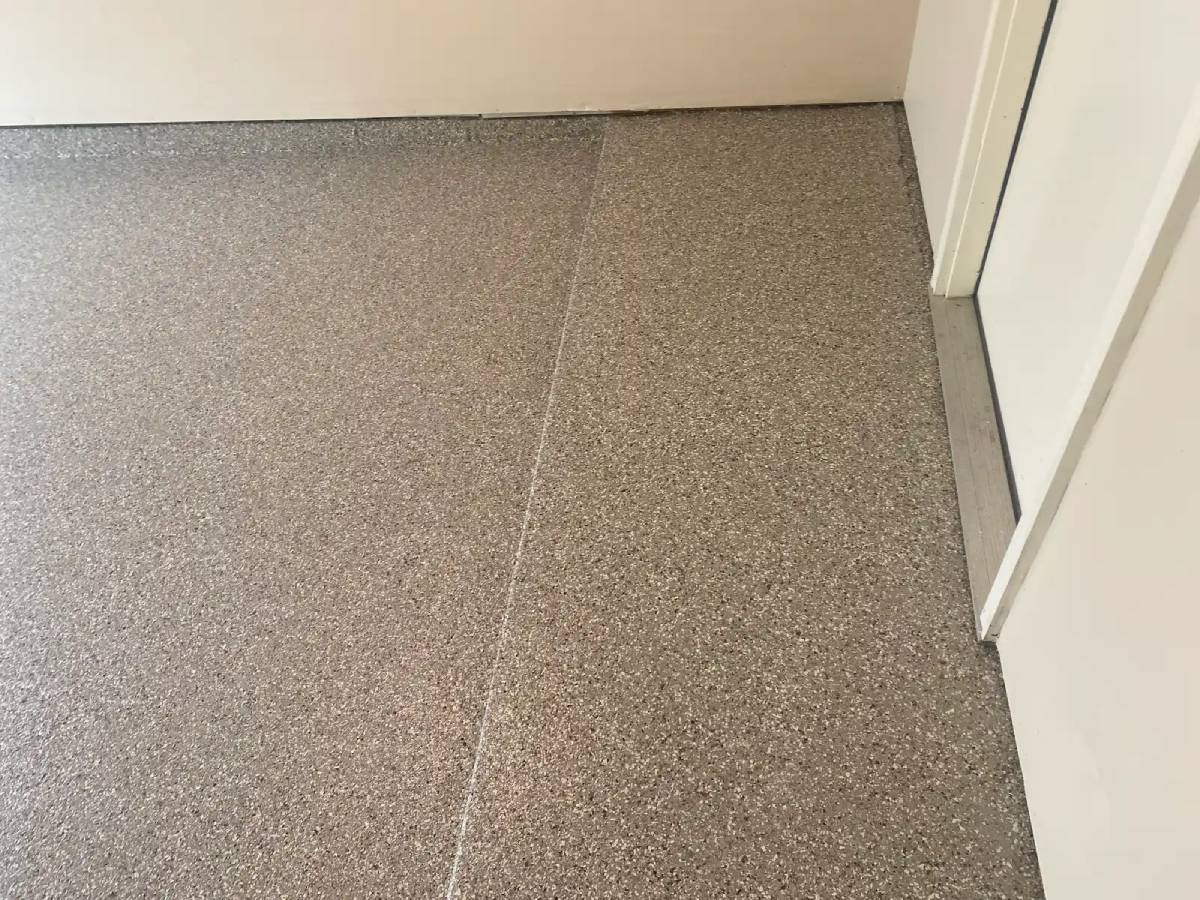
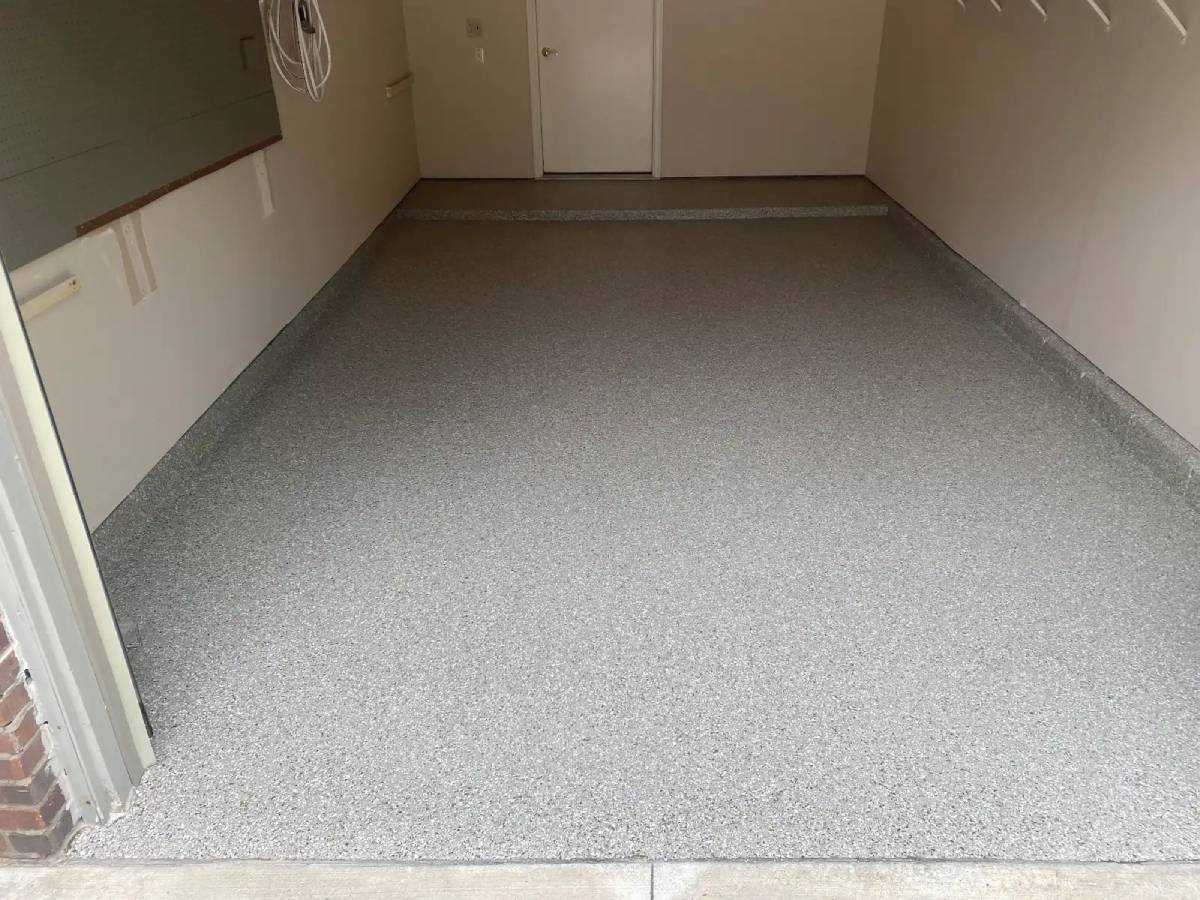
Pebble Beach covers what was cracked, pitted, stained concrete with industrial-grade traction underfoot. The color reads light greys, tans, and whites scattered like stones on a shoreline. The heavy 24-grit provides serious grip without sacrificing the finished look.
Mr. Dybus now has a floor he can walk on with confidence.
Testimonials - Voices of Our Clients
Eugene Pyatenko
Miller Landscape
Garage Floor Coating
on Amber Dr.
Amber Dr, Farmington Hills, MI
Arrival: 8:00 AM
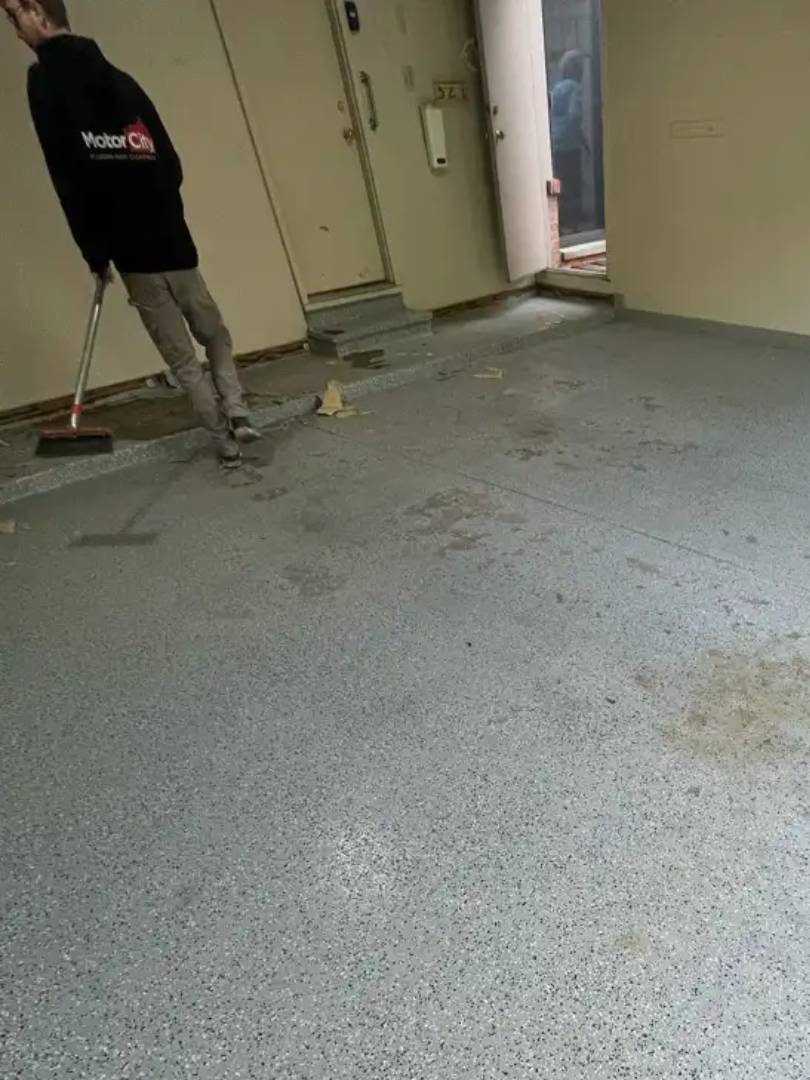
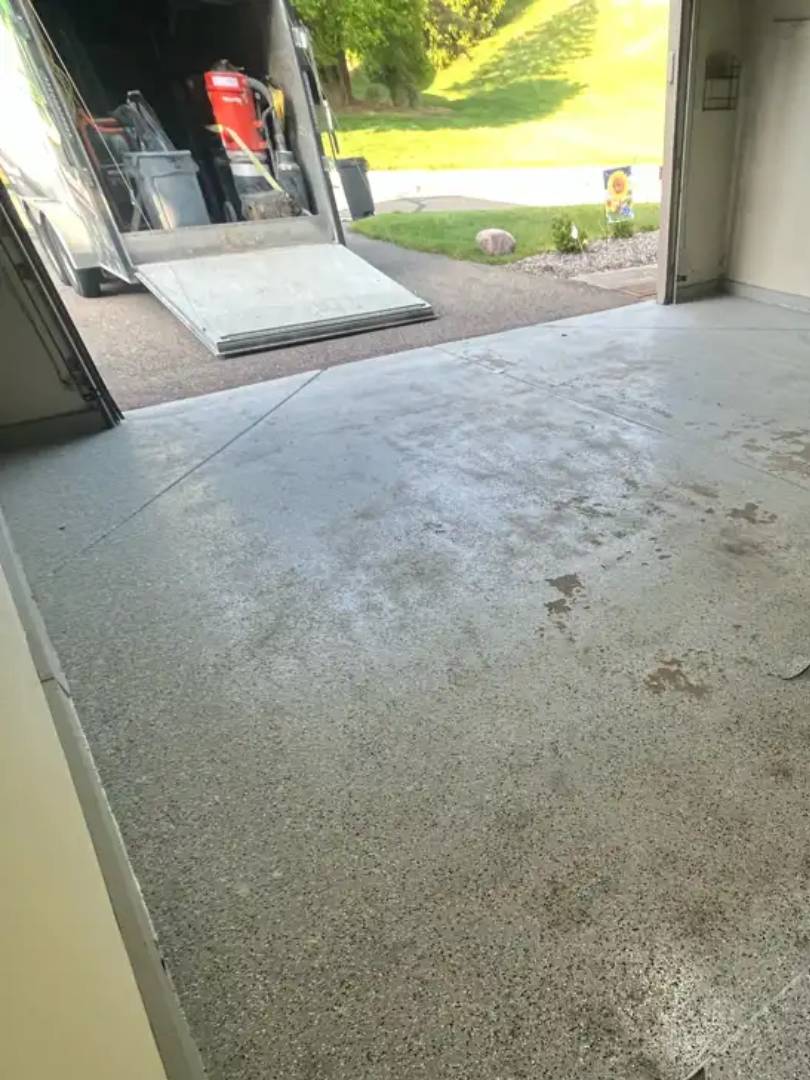


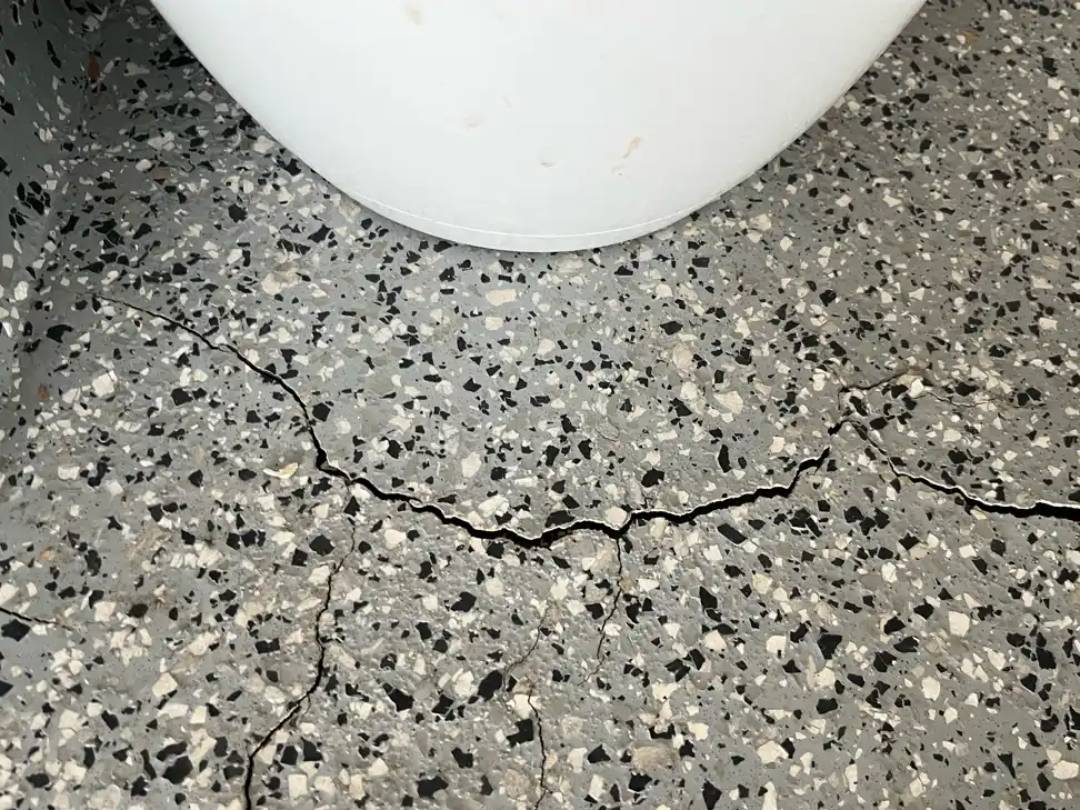

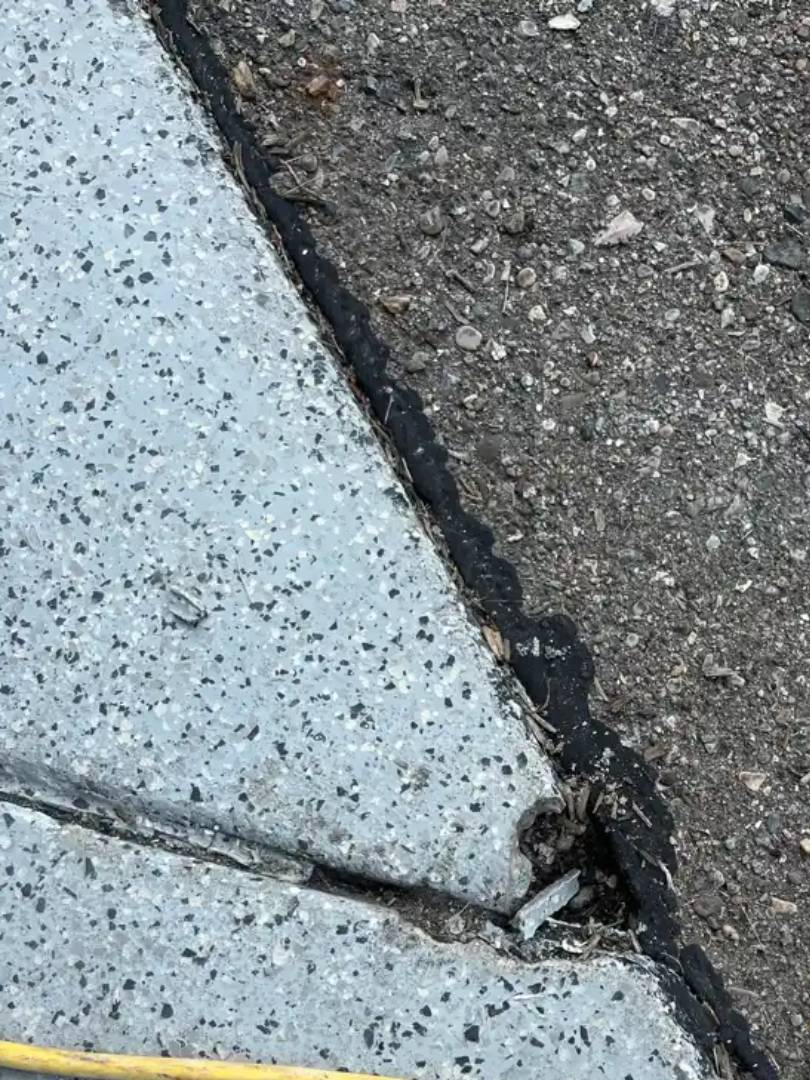
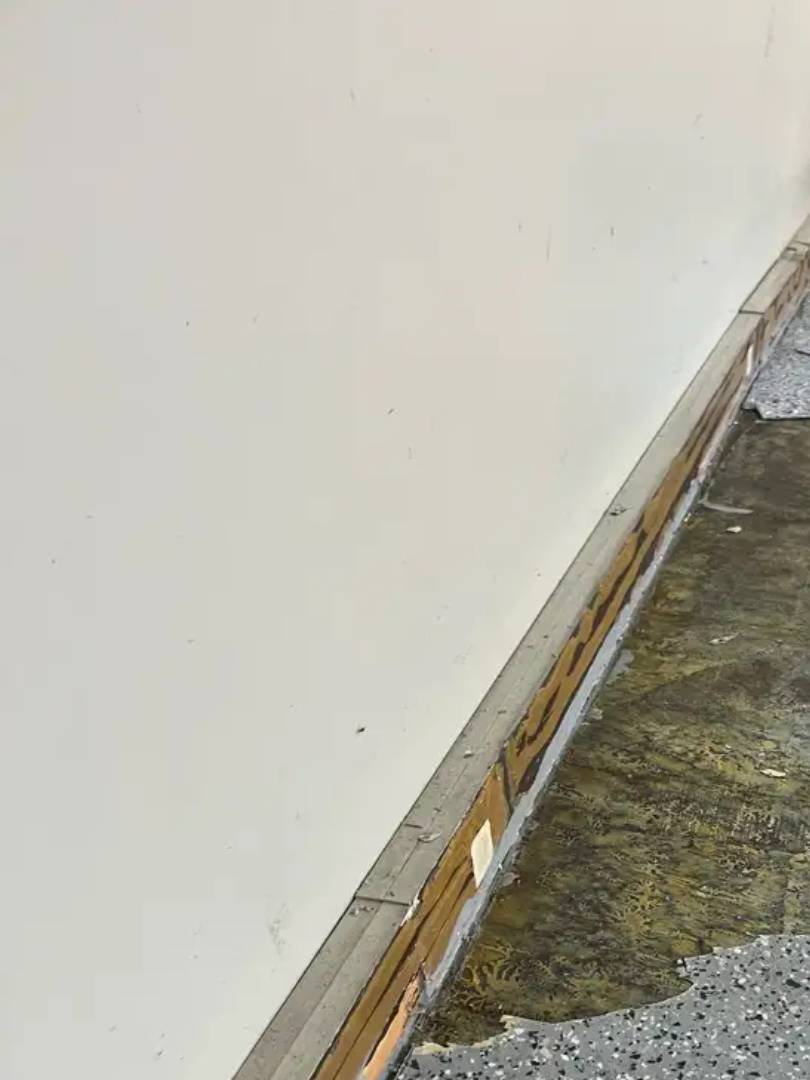

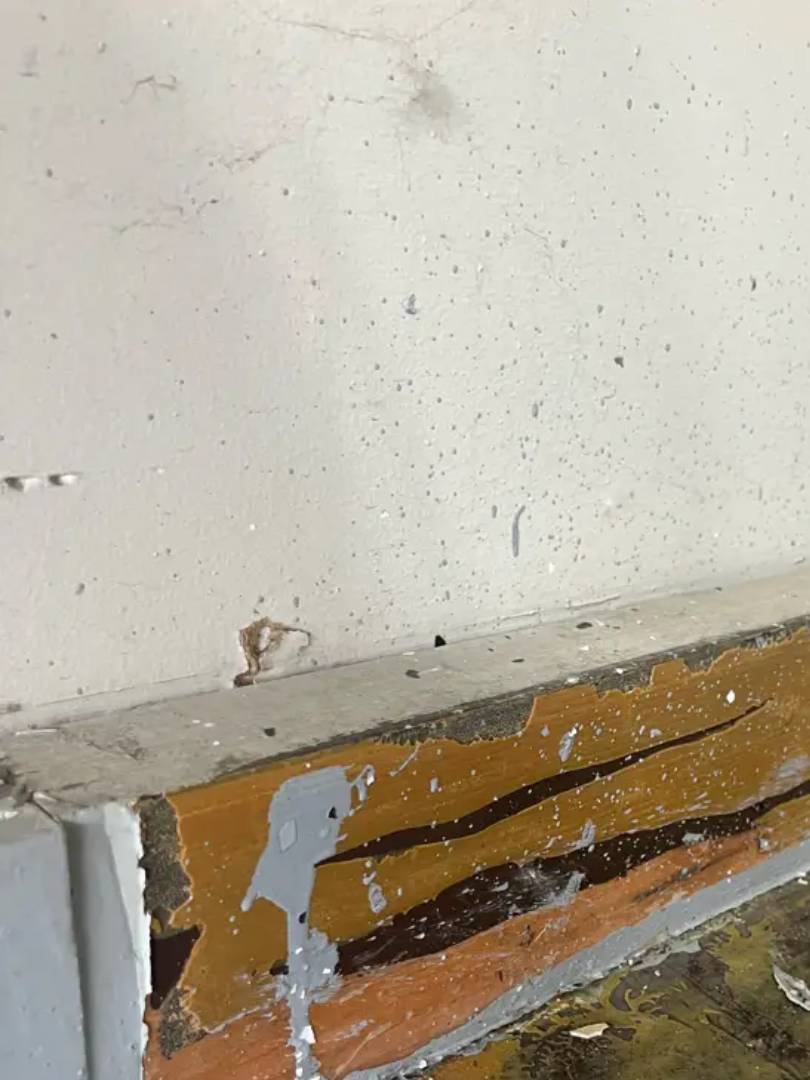
Our crew arrived at this Amber Drive property to find 453 square feet of epoxy disaster. Work from a previous contractor had failed completely. Paint had splattered onto the trim.
Decorative flakes were embedded in the baseboards. Coating had spilled onto the driveway.
The floor itself showed a roadmap of failure. Spiderweb cracks radiated from stress points, and pitting covered the surface throughout. Sections of the old epoxy were peeling away. The front lip was broken and crumbling — a hazard for any foot or tire.
Removal and Repair
Our crew removed the old caulk and the failed epoxy completely. We ground through 29 linear feet of contaminated vertical surfaces. Moisture content read at 3.8%. Our crew prepared and repaired the damaged concrete, including the broken front lip.
The Heat Problem
Hot conditions caused materials to set fast — too fast for standard application. Paint dried within five minutes of mixing. Our crew had to mix half batches to keep pace with the cure time.
The five-minute window left no margin for standard application. Our crew shifted to a square-by-square approach instead. They mixed small, applied fast, and moved to the next square.
Square-by-Square Topcoat
The clear topcoat required the same precision. Flashing or uneven cure would have marred the glass-like finish. Our crew clear-coated square by square, maintaining wet edges throughout. The process was slow and meticulous, but it held the quality standard the conditions threatened.
Pebble Beach — Floor, Lip, and Verticals
Our crew applied 36-grit traction preparation across the full slab for serious grip. We applied the Pebble Beach base coat in calculated sections to manage the fast cure. Our crew broadcast decorative flakes to create the natural stone appearance.
Our crew rebuilt and reinforced the broken front lip. We coated one wood step to match the main floor. Our crew cleaned and coated the 29 linear feet of verticals. This addressed the baseboard contamination from the previous job throughout.
453 Square Feet, Crime Scene to Showcase

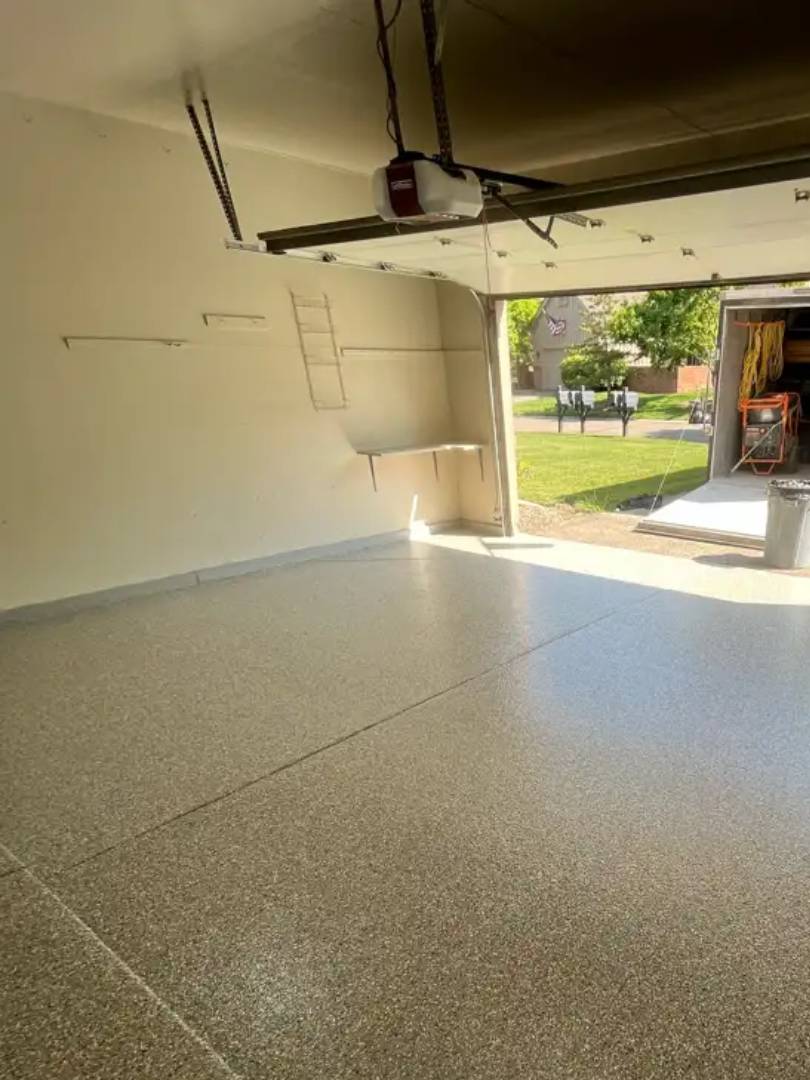

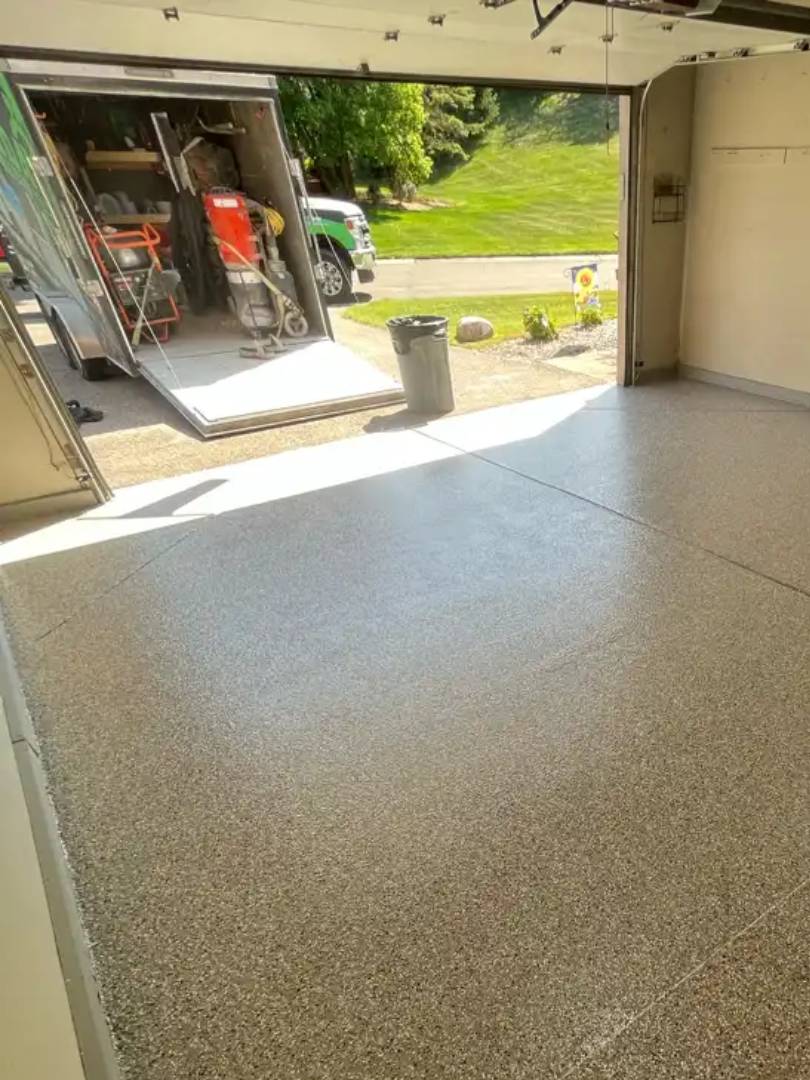
Pebble Beach carries a blend of greys, tans, and whites throughout. The 36-grit traction provides serious grip without sacrificing the finished look. The front lip that was broken and dangerous is now rebuilt and coated seamlessly.
The baseboards that carried the previous job’s mess are clean. The driveway spill is gone. The square-by-square topcoat shows no flashing anywhere across the slab.
Testimonials - Voices of Our Clients
Mike Shields
Mike Gramza
Garage Floor Coating
on Rocky Crest Street
Rocky Crest Street, Farmington Hills, MI
Lead Tech: Jesus M., Truck #7


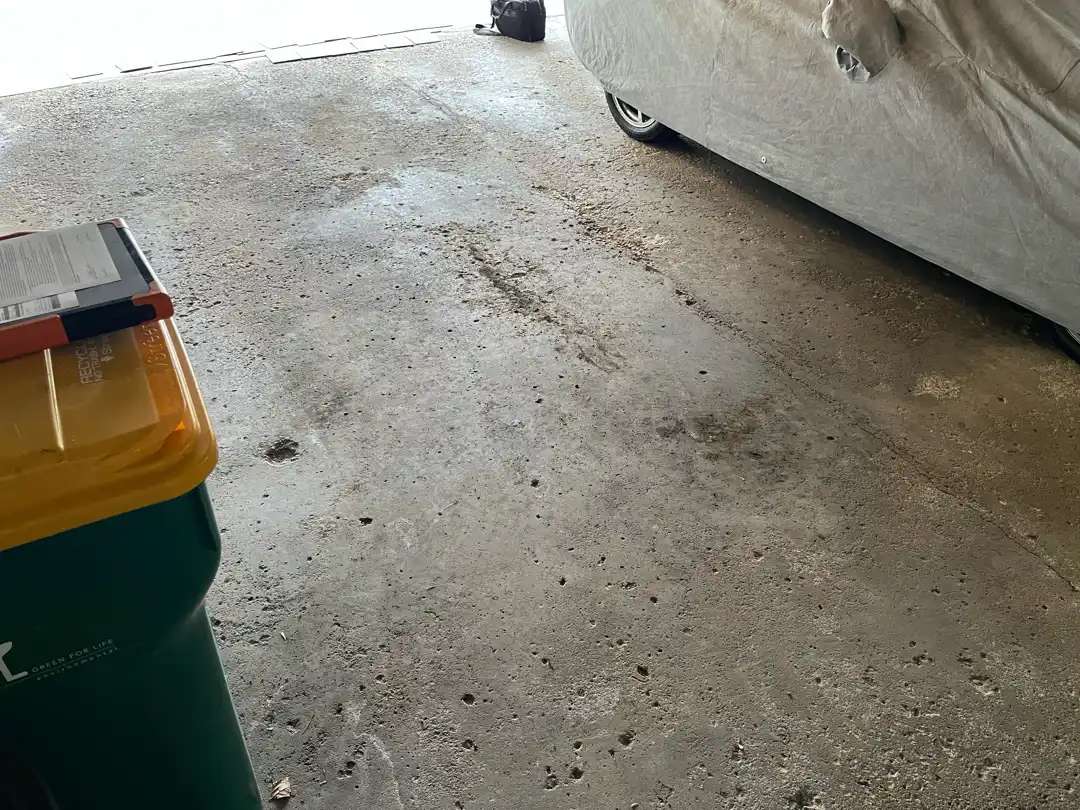

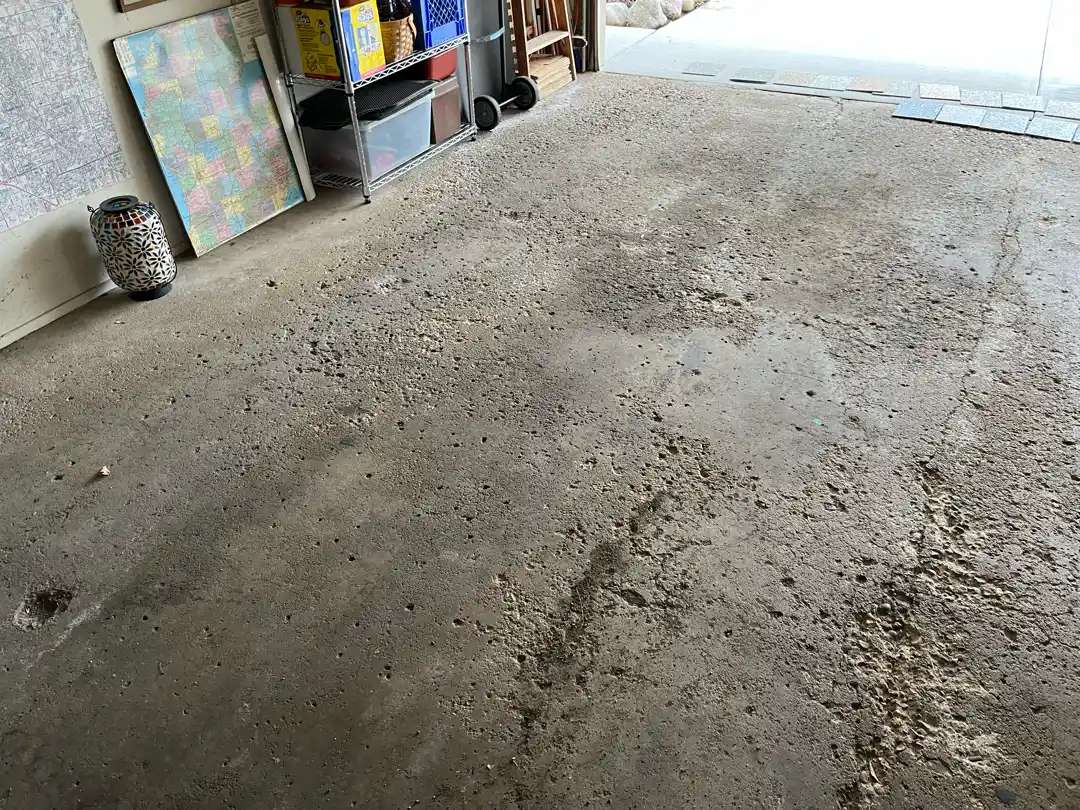
Jesus M. and his crew arrived at Rocky Crest Street at 3:00 AM on May 1, 2023. Concrete temperature read 41°F. Michigan’s unpredictable spring weather meant working with the temperature rather than against it.
The 420.5-square-foot garage floor had served hard duty. Oil stains had penetrated deep into the porous concrete. Tire tracks had worn permanent paths across the surface. Years of road salt and freeze-thaw cycles had left the concrete pitted and deteriorating.
The Cold Concrete Challenge
The 41°F concrete created a narrow technical window. Too cold, and coatings fail to cure properly. Too warm, and they flash too fast.
Jesus M. and his team worked in that precise margin. Careful timing mattered more than speed.
Moisture testing came back clean — no barrier needed, no oil extraction required. The temperature alone demanded careful material management, adjusted mix ratios, and constant cure-time monitoring.
Surface Preparation
The Safari Build
Starting at 3:00 AM, our crew built the Safari system through the temperature challenges. The MR-50 foundation primer used 1.5 liters each of Part A and Part B. Our crew mixed in 12 cups of sand for grip and structural fill.
Our crew mixed 18 caps of shark grip throughout the system for substantial traction and durability. The Safari tan base coat used 4.0 liters of Part A and 2.0 liters of Part B.
Our crew broadcast 3.5 boxes of flake across the wet base coat. Our team recovered 2.0 boxes for reuse, a 57% recovery rate. The heavy clear topcoat used 8.0 liters each of Part A and Part B for maximum protection.
The Marathon Day
From 3:00 AM to 3:08 PM, our crew worked the site for over 12 hours. This wasn’t a quick spray-and-go job. It accounted for temperature, cure times, and complete coverage at every stage.
Our crew worked through their materials systematically. They used 24 five-quart cups for precise mixing and 5 chip brushes for edge work. Our crew also used 2 each of rollers and trowels, and 8 pairs of gloves throughout the day.
420.5 Square Feet, 3 AM Start to Showroom Finish


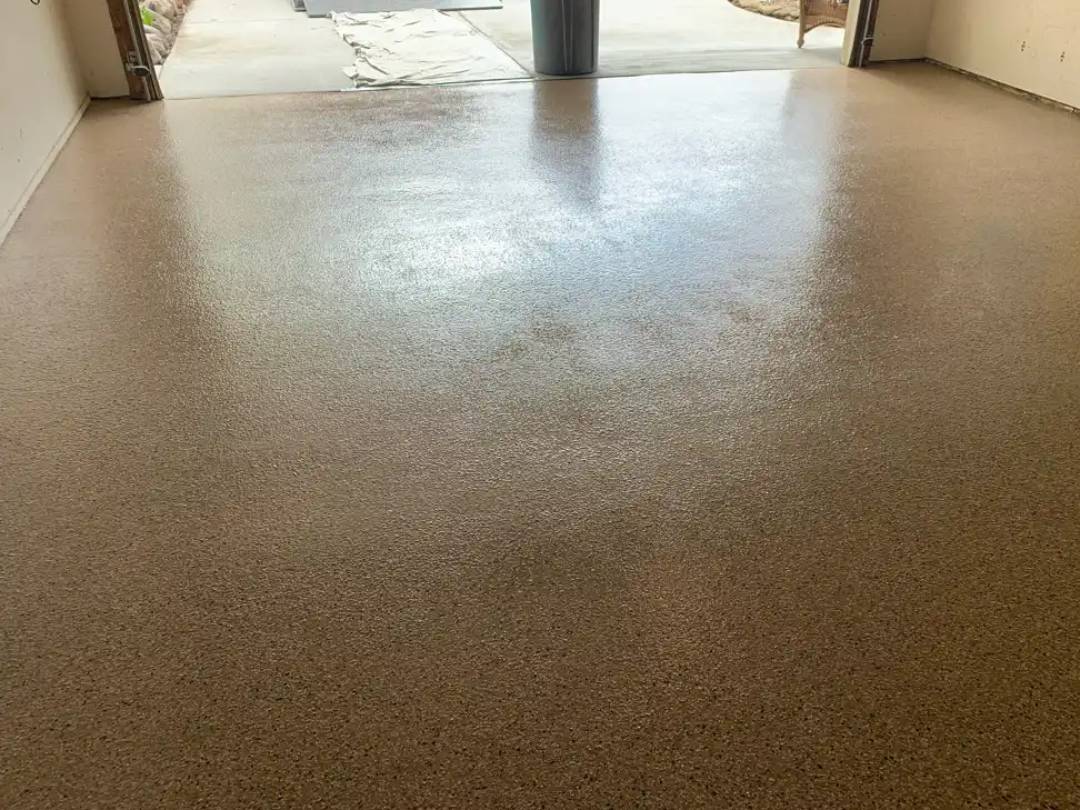

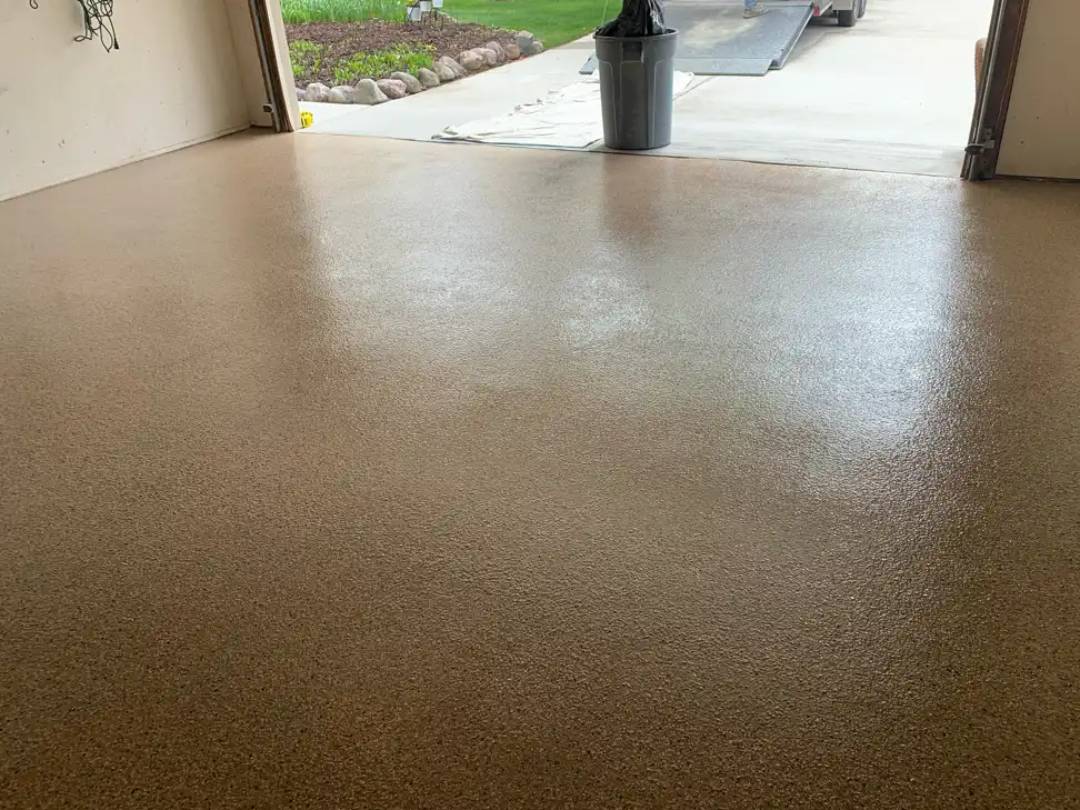

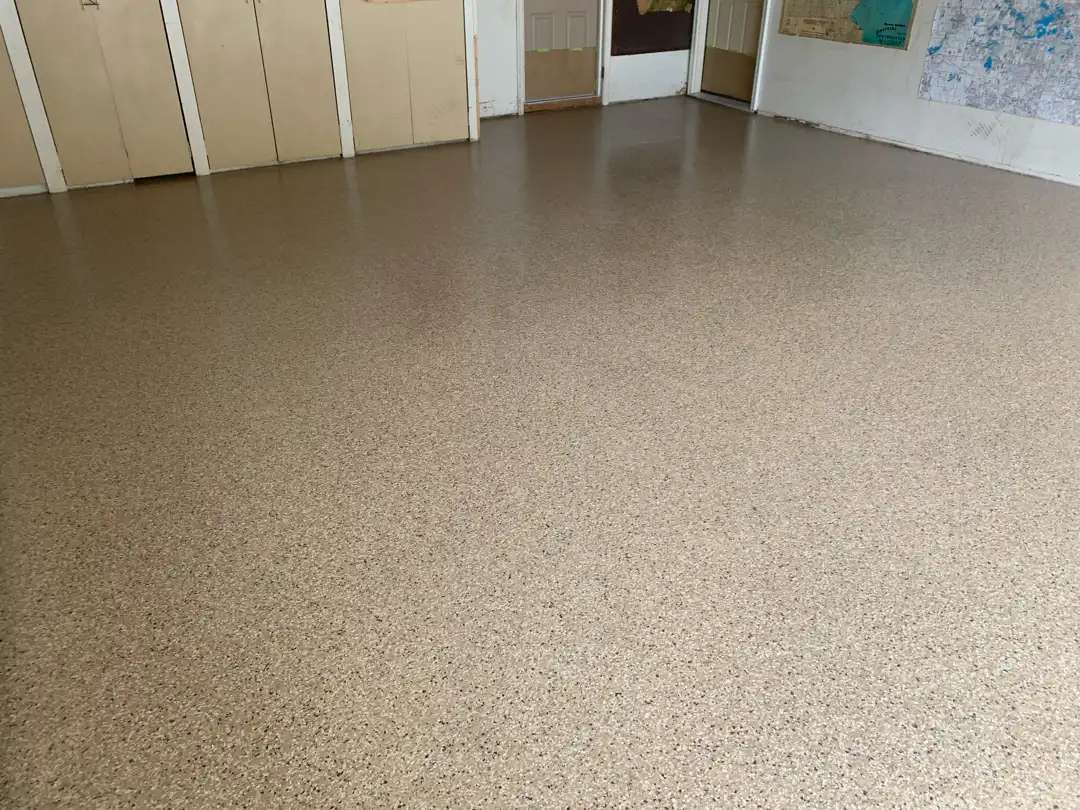
The Safari tan creates an inviting space across all 420.5 square feet. The decorative flakes add visual texture throughout. The heavy shark grip ensures safety underfoot even with moisture present.
The oil stains are gone. The tire tracks are gone. The sealed surface repels oil and resists wear through Michigan’s harsh weather cycles.
Testimonials - Voices of Our Clients
Zsuzsanna Toros
Tori
Garage Floor Coating
on Cheswick Street
Cheswick Street, Farmington Hills, MI
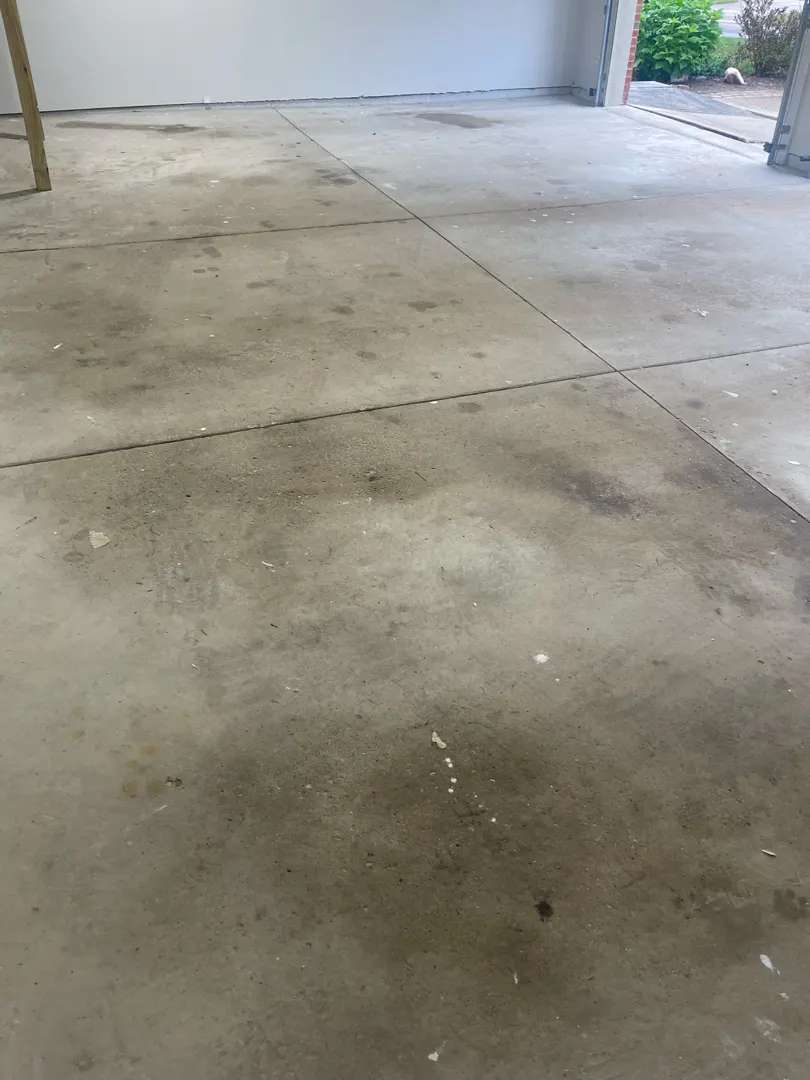
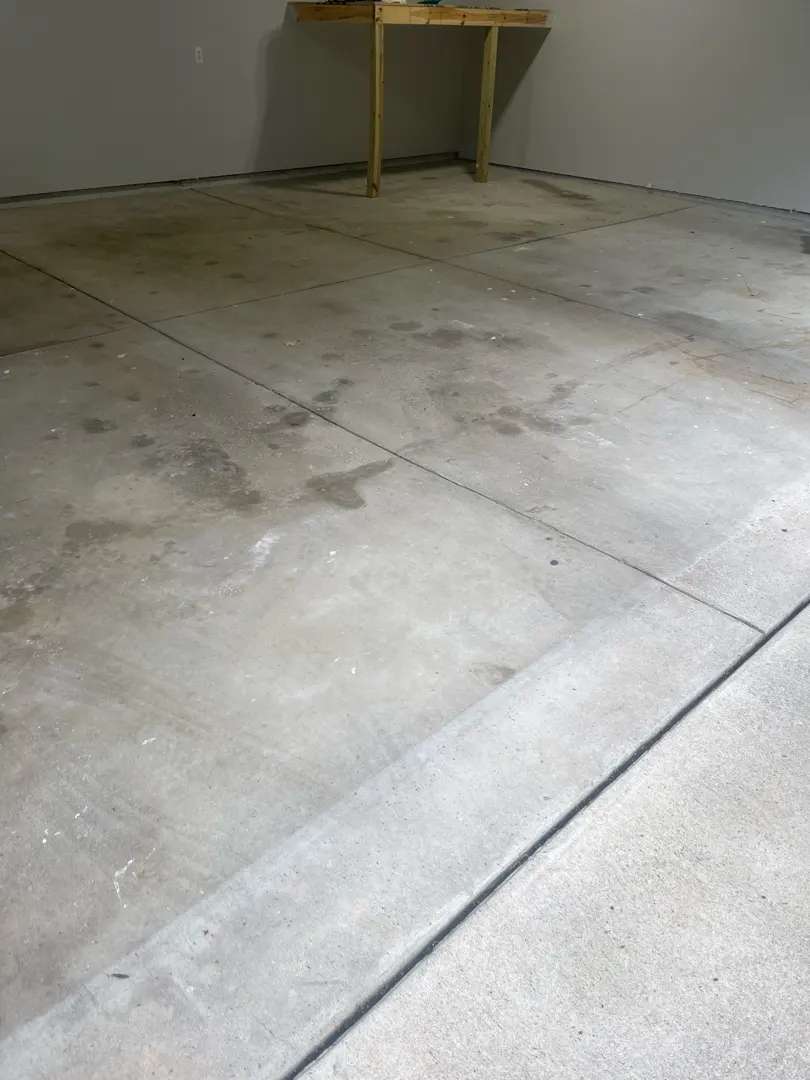
Our crew arrived at this Cheswick Street property to find 668 square feet of hard-used concrete. Oil stains had penetrated deep into the porous surface. Pitting pockmarked the slab throughout. Cracks ran through multiple sections of the floor.
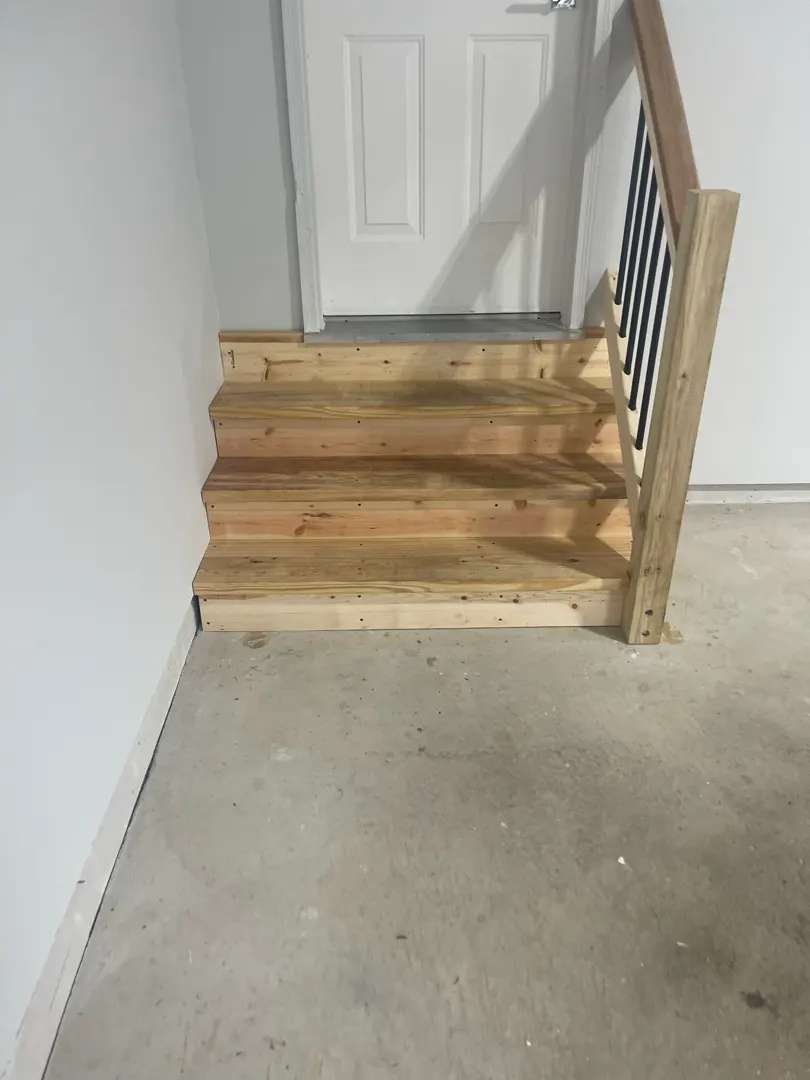
The threshold area near the garage door showed severe damage. Years of water infiltration and road salt had deteriorated that section well past surface wear. Moisture content read at 3.8% — no barrier required. Wooden stairs led to the interior door and were included in the scope.



MR-50 Structural Repair

Before any coating could go down, the structural issues required direct attention. On this job, MR-50 primer became more than a base coat — it became a repair material.
Our crew applied MR-50 broadly across the damaged areas. We spread MR-50 into pits, across cracks, and across the deteriorated threshold. MR-50 penetrates into damaged concrete rather than sitting on top of the surface. It bonds with the concrete beneath and creates a substrate stronger than the original slab.
Our crew worked systematically across all 668 square feet, addressing every pit, crack, and compromised section. We skipped nothing. Our team allowed full cure before the coating phase began.
Surface Preparation
Slatestone — Floor and Stairs
Our crew applied the Slatestone base coat across all 668 prepared square feet. We broadcast vinyl chips across the wet base coat to create the natural stone appearance.
Slatestone carries a grey tone with light and dark chips throughout. Our crew applied the heavy polyaspartic topcoat with 24-grit traction additive throughout.
Our crew applied the same system to the wooden stairs. We coated each tread and riser to match. The stairs now integrate seamlessly with the finished floor and carry the same protective surface.
668 Square Feet, Structurally Sound and Sealed
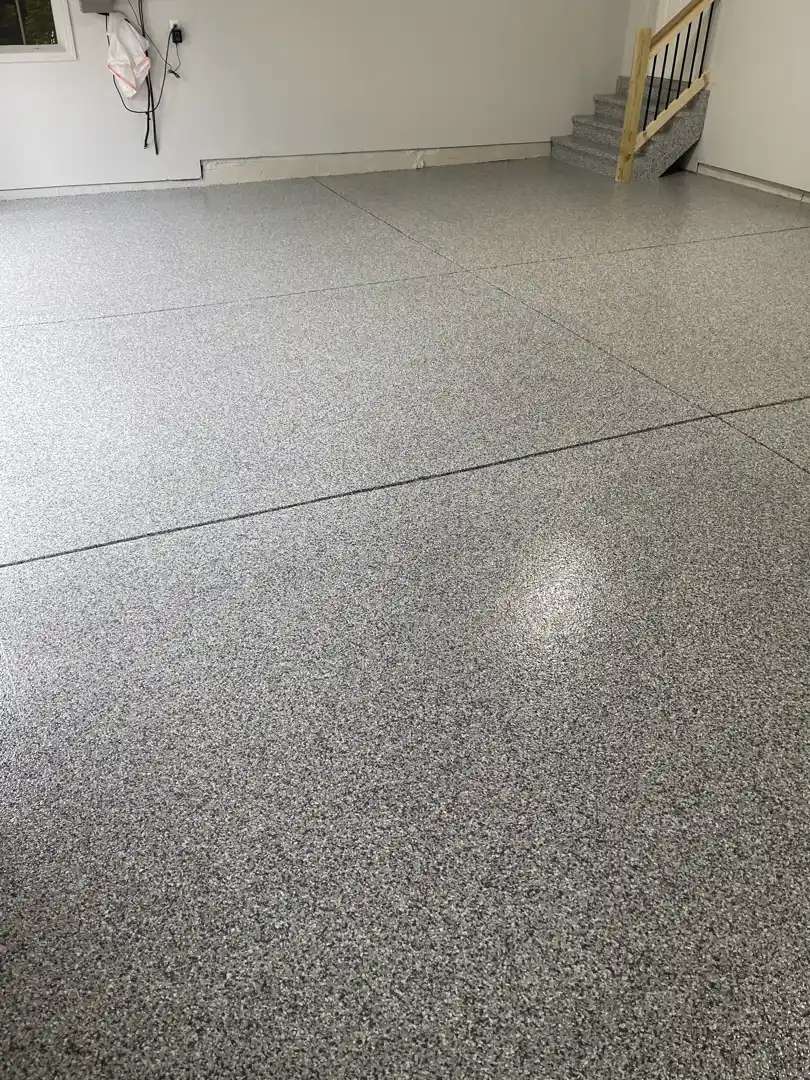

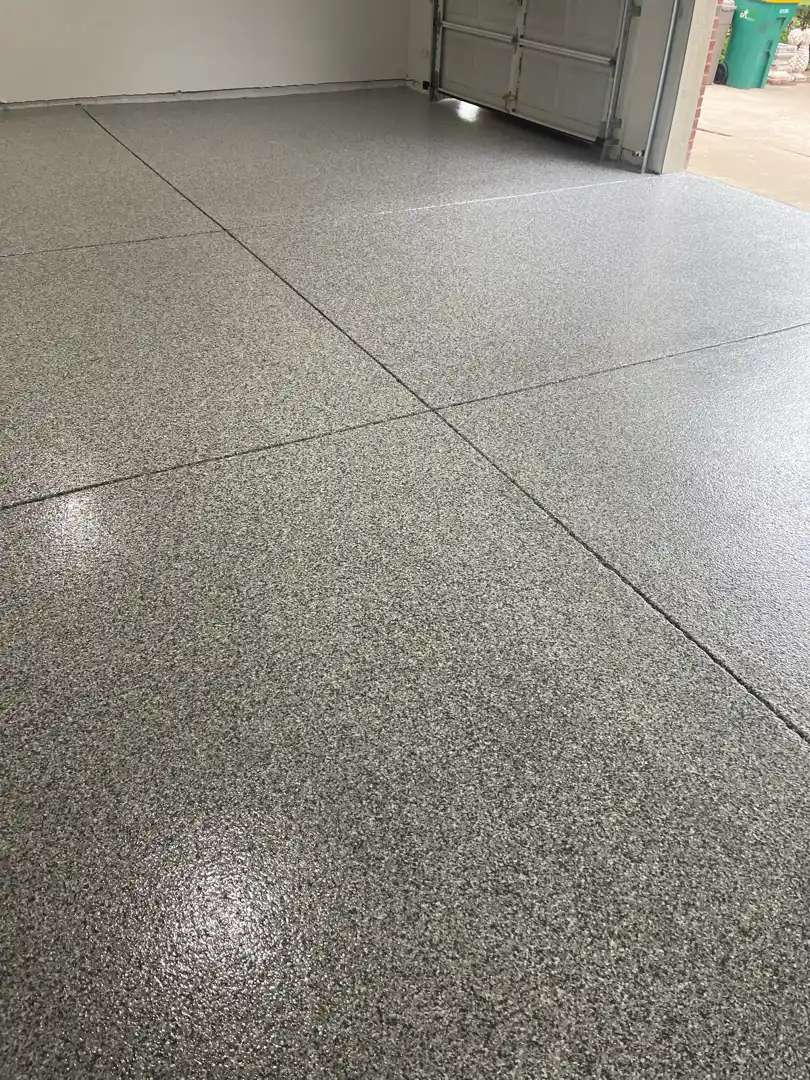
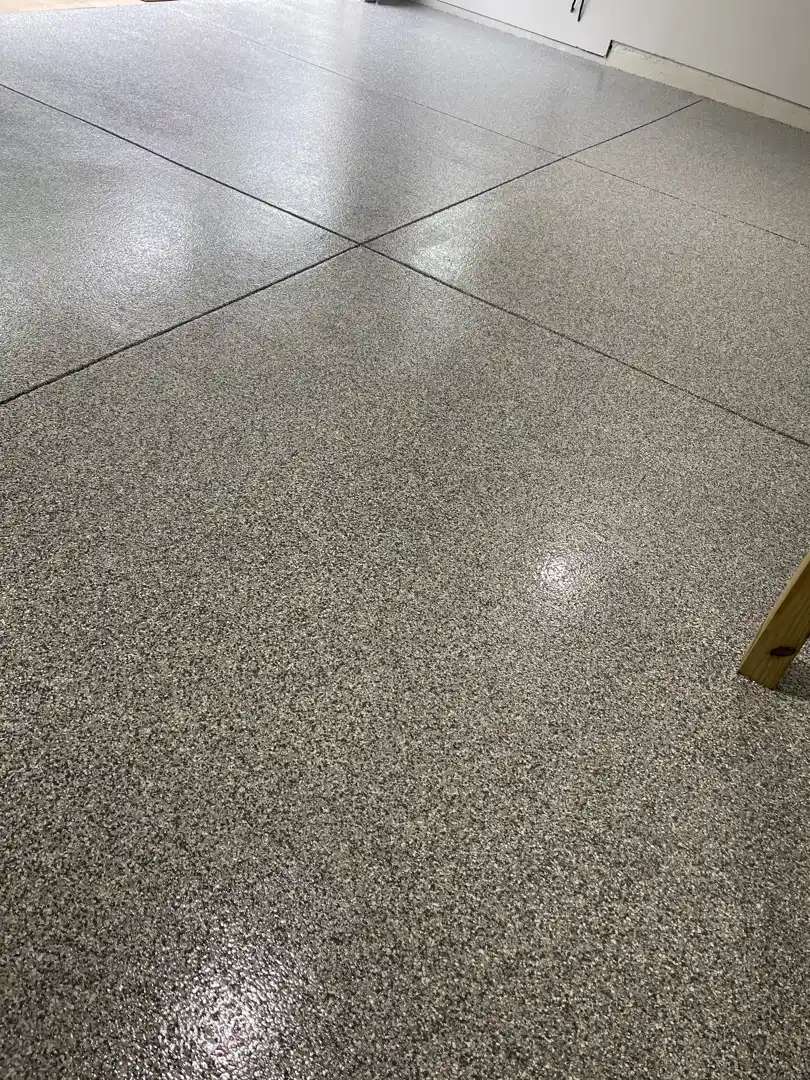
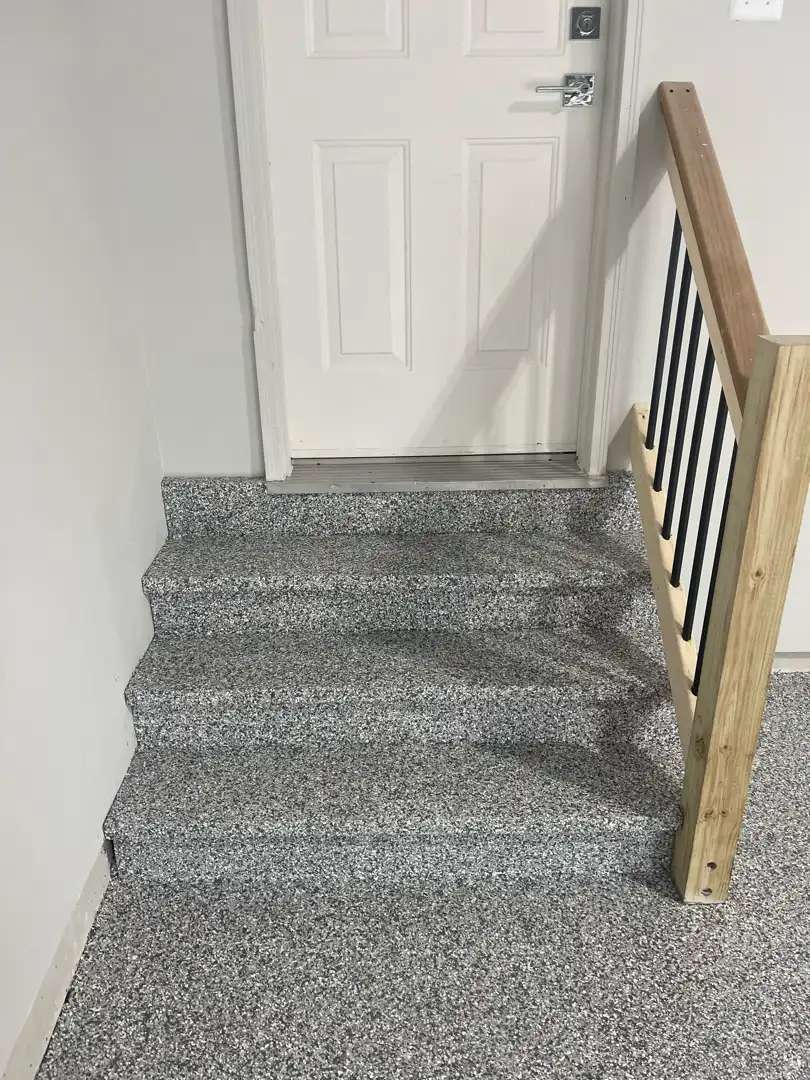
Slatestone runs wall to wall across all 668 square feet. The grey tone with decorative chips creates a sophisticated finish that reads cleanly in any light. The stairs carry the same flake and finish as the main floor.
The oil stains are gone. The pitting is sealed. The threshold that was actively deteriorating is now structurally restored.
The repairs went deeper than surface work. The floor is in better structural condition than when first poured.
Testimonials - Voices of Our Clients
Duane Smith
Ramone B
Garage Floor Coating
on Middlebelt Road
Middlebelt Road, Farmington Hills, MI
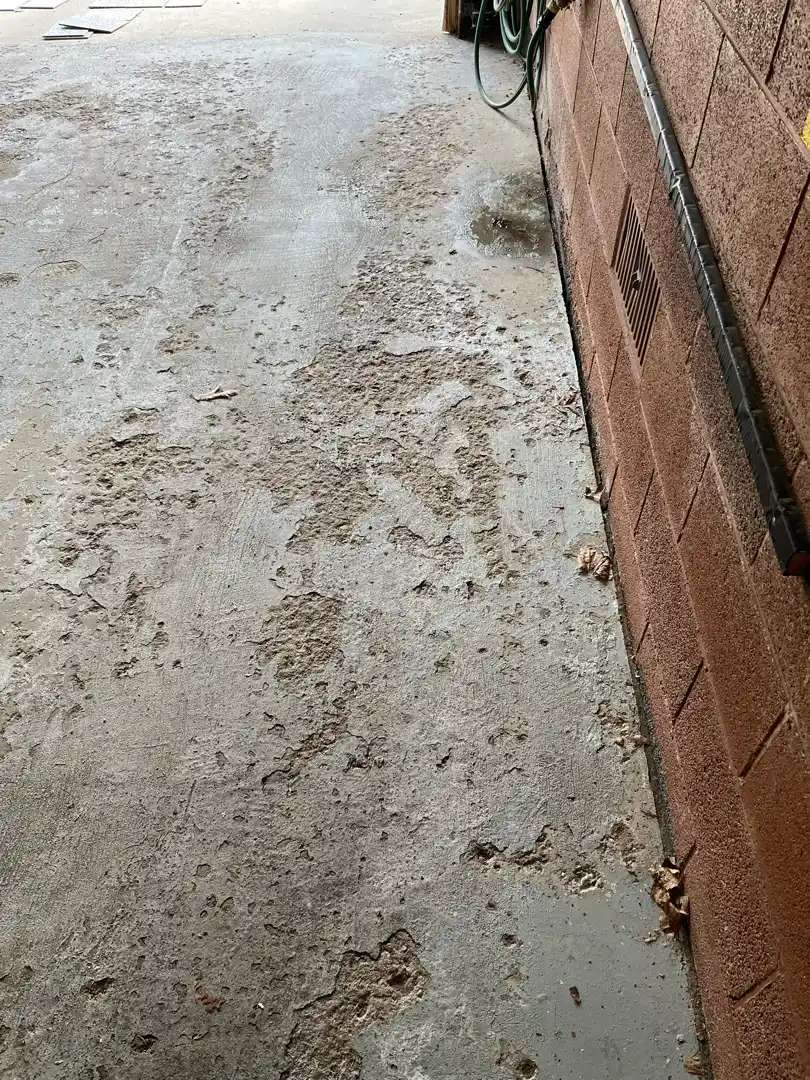

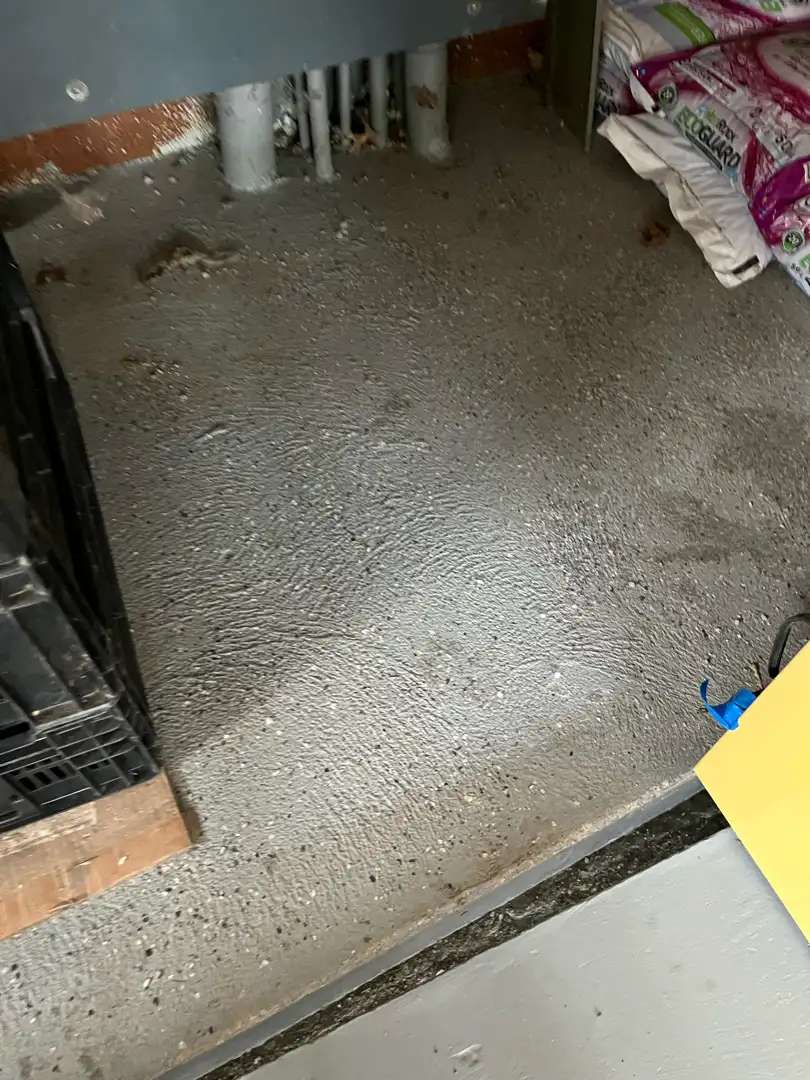


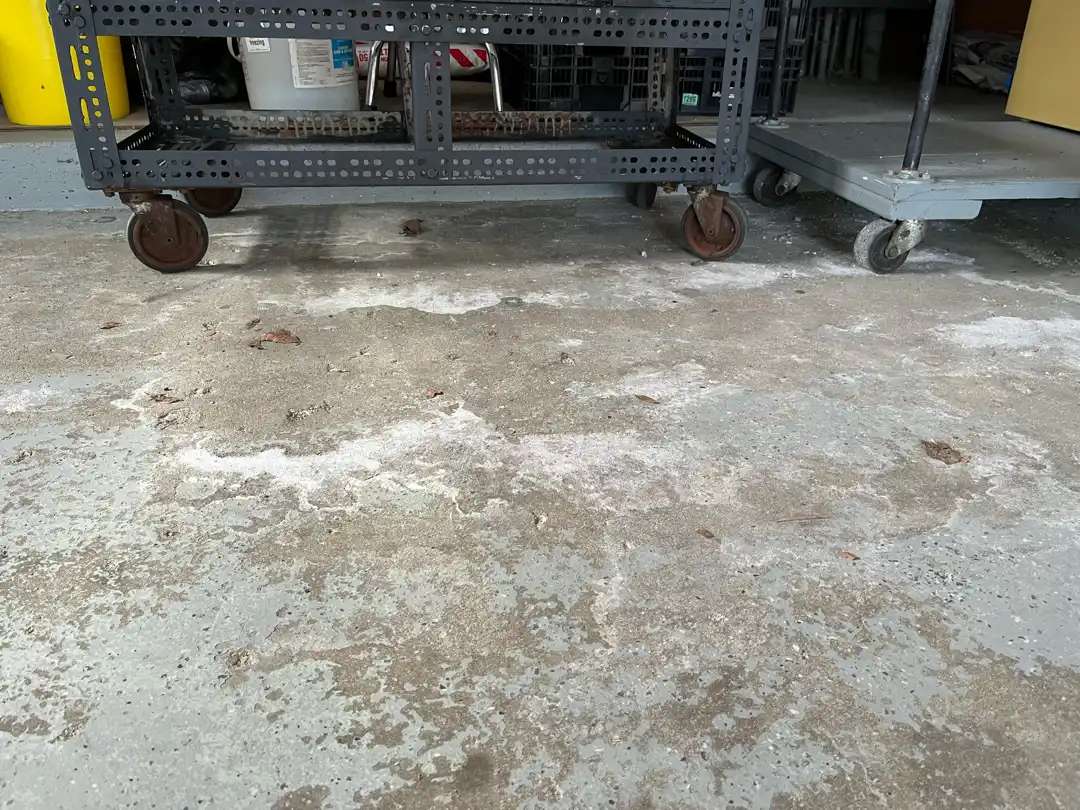

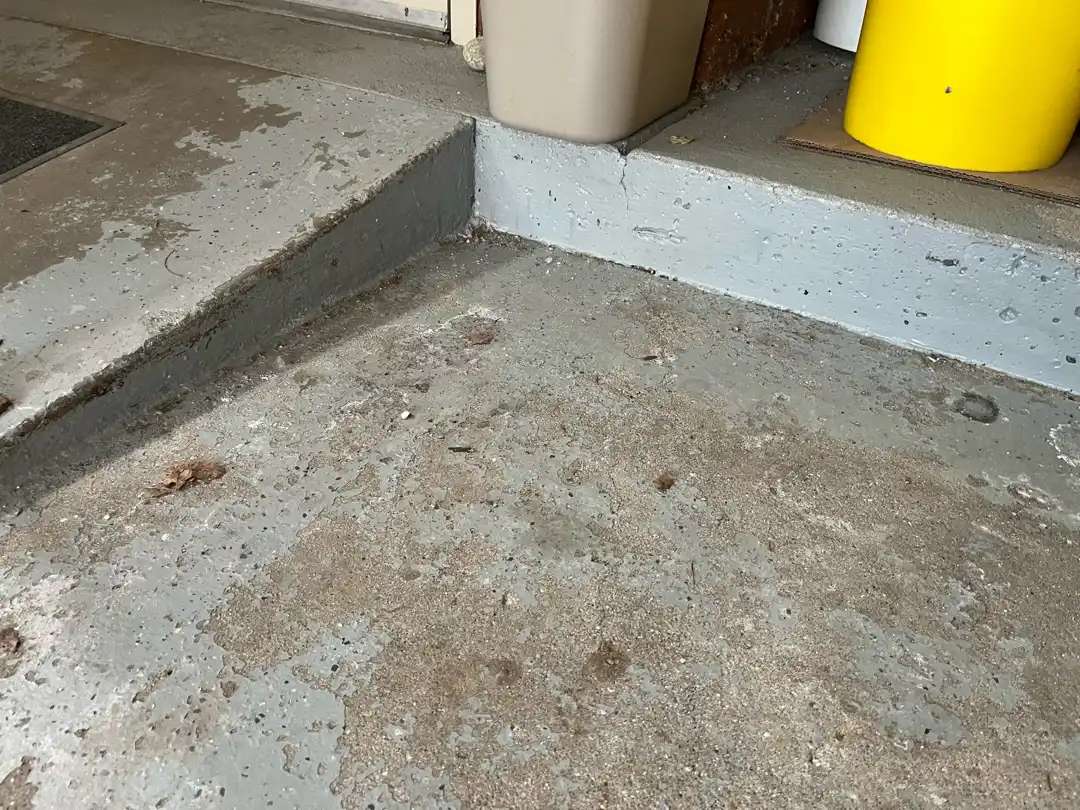
Our crew arrived at the monastery on Middlebelt Road to find 523 square feet of work. Heavy pitting covered nearly the entire surface. Some craters ran deep enough to collect water. Others left rough edges across the slab.
Oil stains had worked deep into the porous concrete. An old paint coating covered sections of the floor. A previous attempt at protection had failed and now needed complete removal.
Yellow parking lines still marked the surface. The concrete told the story of years of sustained use and accumulated neglect. No steps were in scope. The vertical lip ran 13 linear feet.
Paint Removal and Pitting Repair
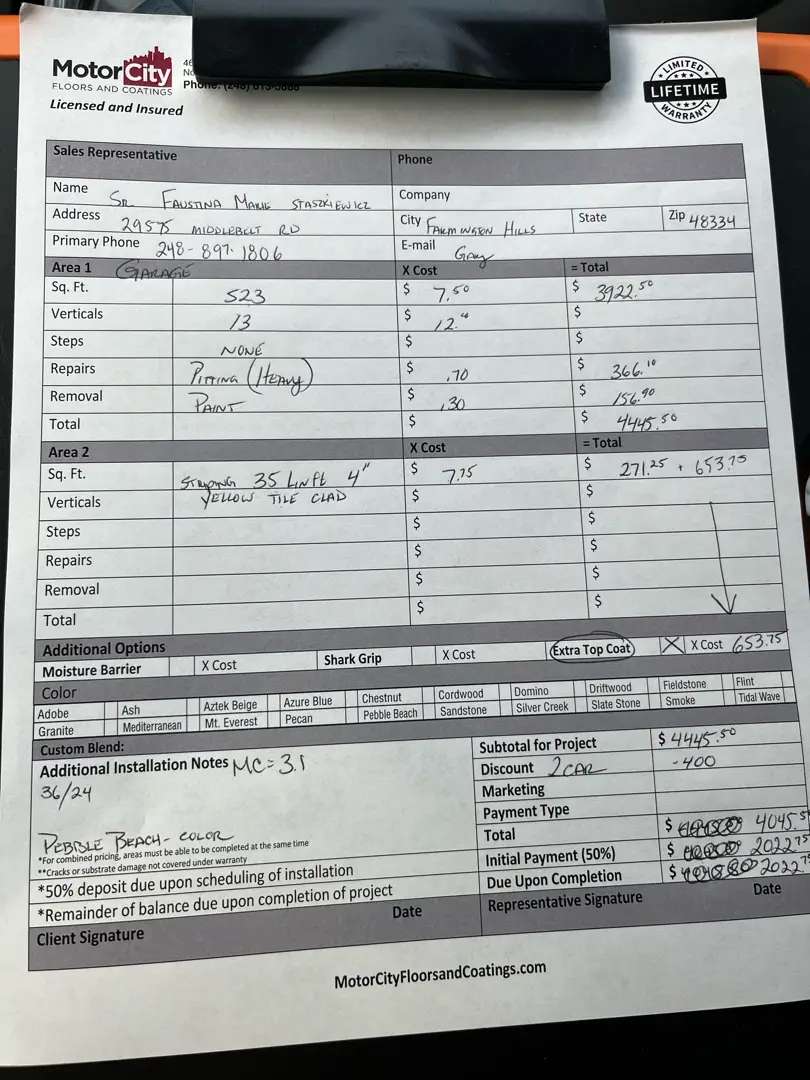
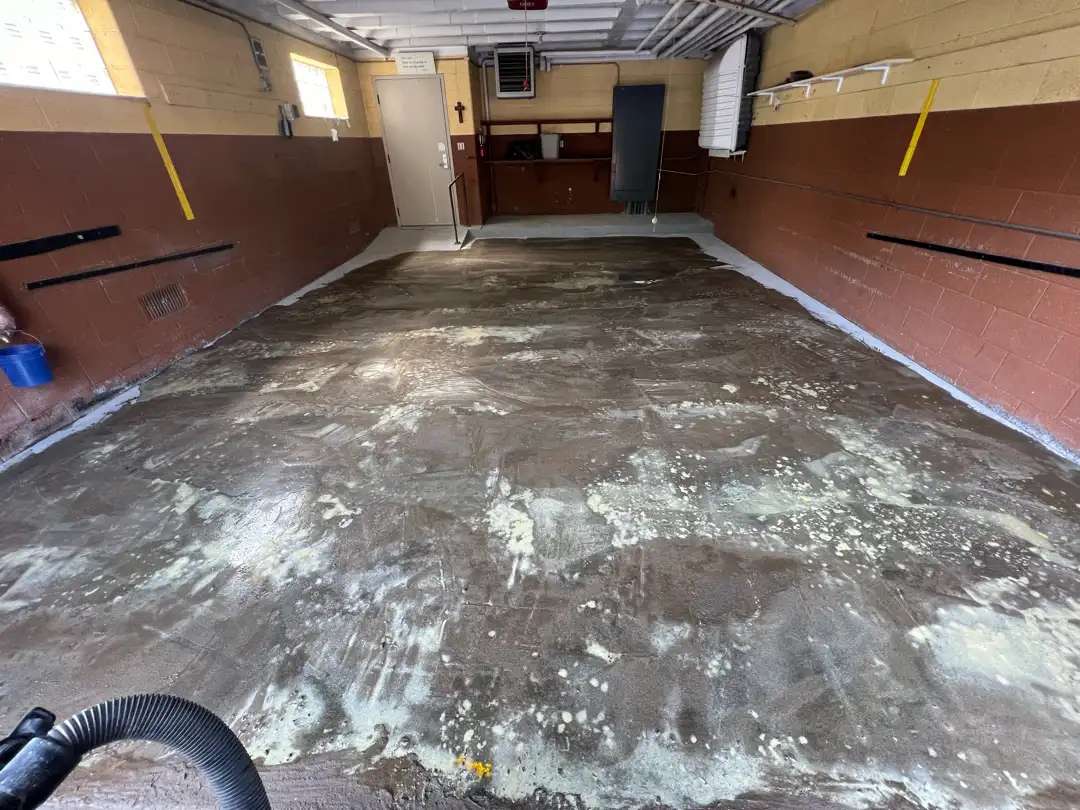
Our crew diamond-ground the full 523 square feet to remove the failed paint coating. We worked the machines methodically across the slab. The HEPA vacuums captured the dust and kept the air clean throughout. Old paint doesn’t release easily — our crew made pass after pass until the concrete was clear.
With the paint gone, the full extent of the pitting became visible. Our crew applied MR-50 mender broadly across the pitted areas. We filled each crater and rebuilt the compromised surface. The photos document the process: mender pooling into low spots and leveling the voids across the floor.
Surface Preparation
Our crew ground the repaired surface a second time with 24-grit preparation. This pass brought the mended areas flush with the surrounding concrete. It produced a consistent adhesion profile from edge to edge. Our crew vacuumed thoroughly before the coating phase began.
Pebble Beach — Floor and Lip
Our crew applied the polyurea base coat across all 523 prepared square feet. We broadcast Pebble Beach flake across the wet base coat throughout. Pebble Beach carries a grey and tan blend with decorative chips throughout.
Our crew applied the UV-stable polyaspartic clear coat with 24-grit traction throughout. Our crew coated the 13 linear feet of vertical lip to match the main floor.
The Storm
As our crew packed their equipment, a storm rolled in. The timing was close. Our crew lowered the garage door nearly to the floor. This left just enough clearance for airflow while blocking rain.
The monastery garage had two natural advantages: a large overhang and a steep slope from floor to driveway. No water reached the fresh coating. The storm hit in full force as our crew drove back to the shop. The floor cured undisturbed.
523 Square Feet, Pitting Sealed, Storm Cleared
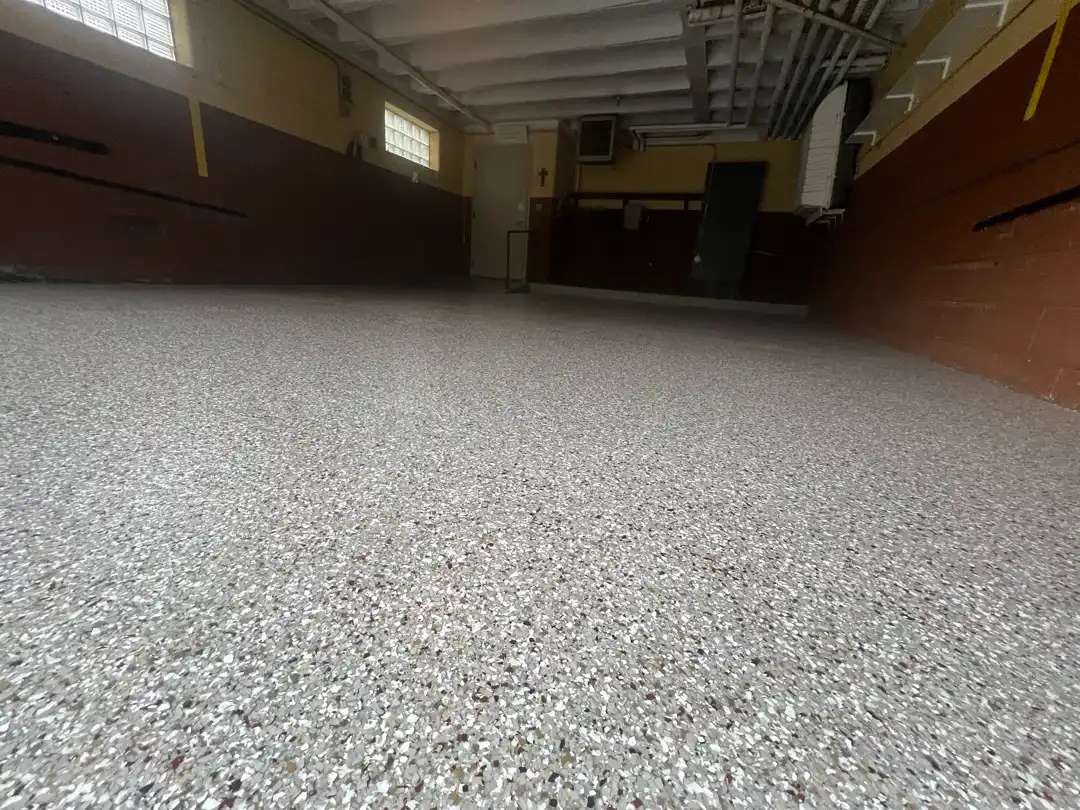
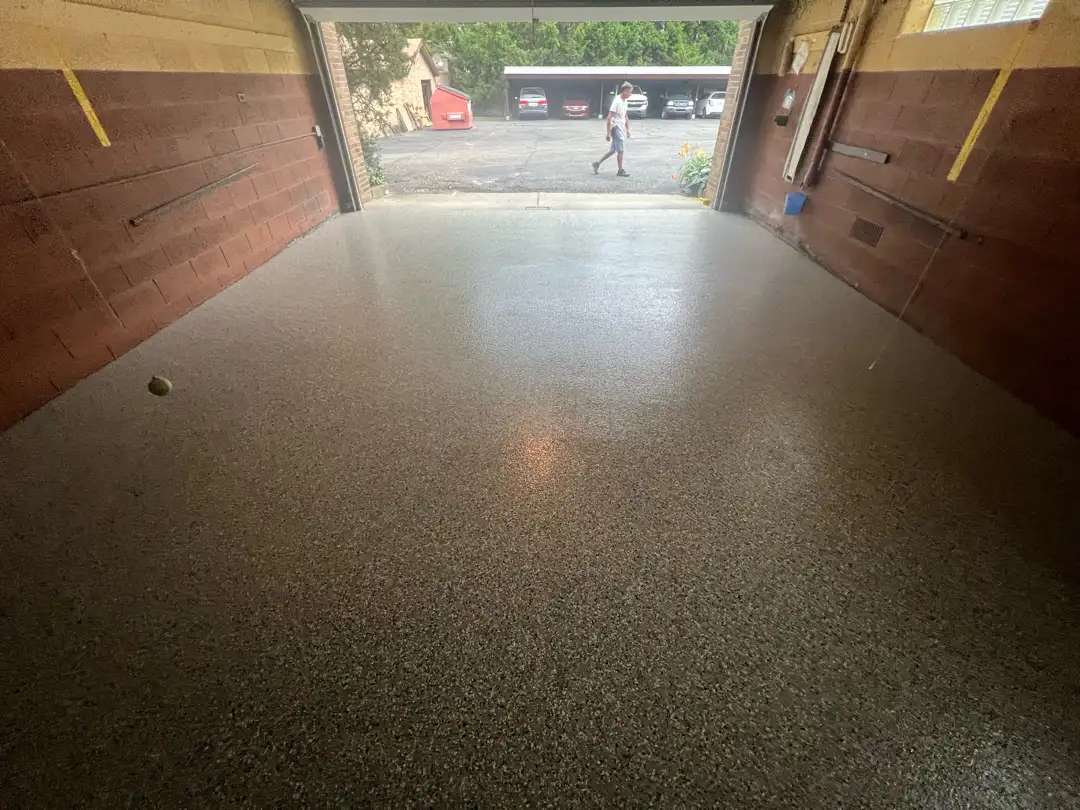
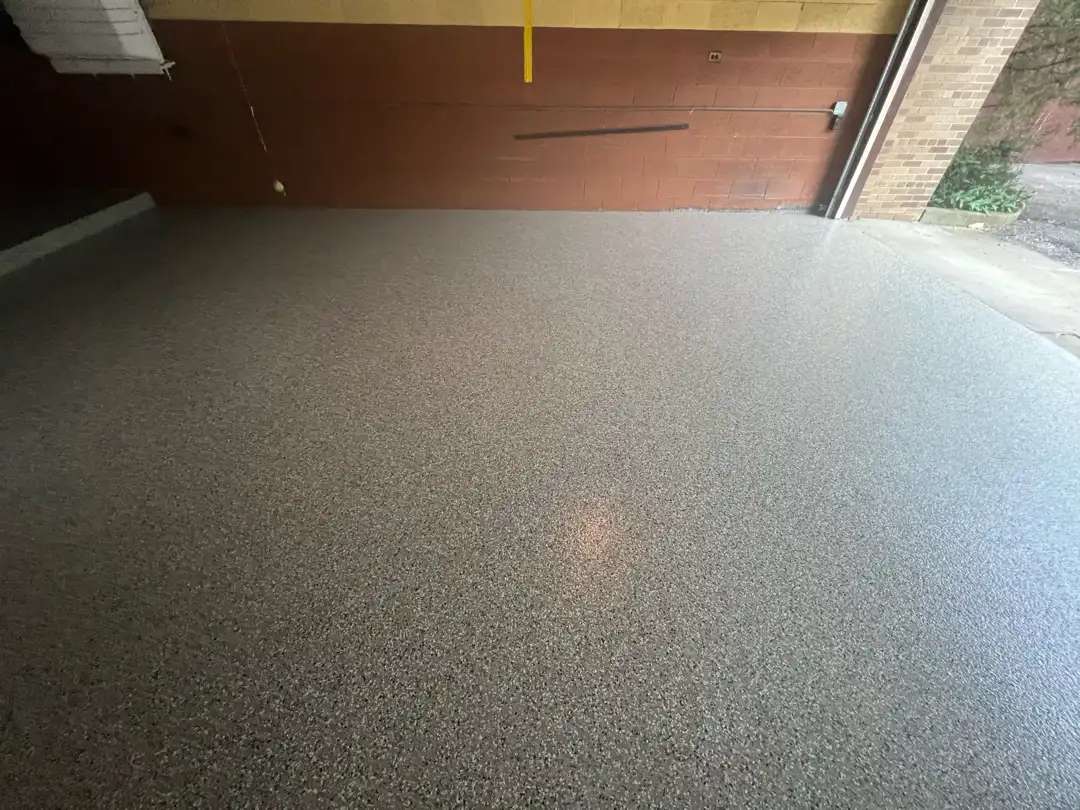
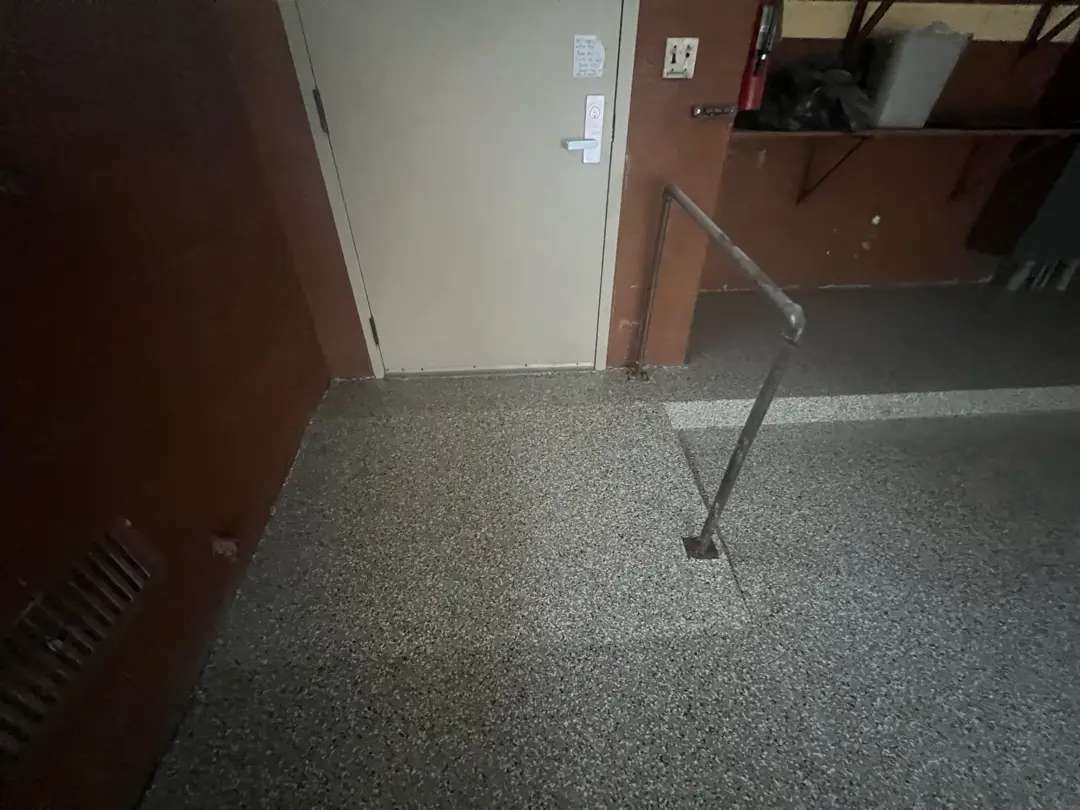

Pebble Beach runs wall to wall across all 523 square feet. The grey and tan palette with decorative chips looks more like natural stone terrazzo than garage floor. The vertical lip carries the same finish as the main floor.
The paint is gone. The pitting is sealed. The floor is structurally sound and ready for continued community use.
Testimonials - Voices of Our Clients
Lisa Schot
Criag Forton
Garage Floor Coating
on Hazelwood Court
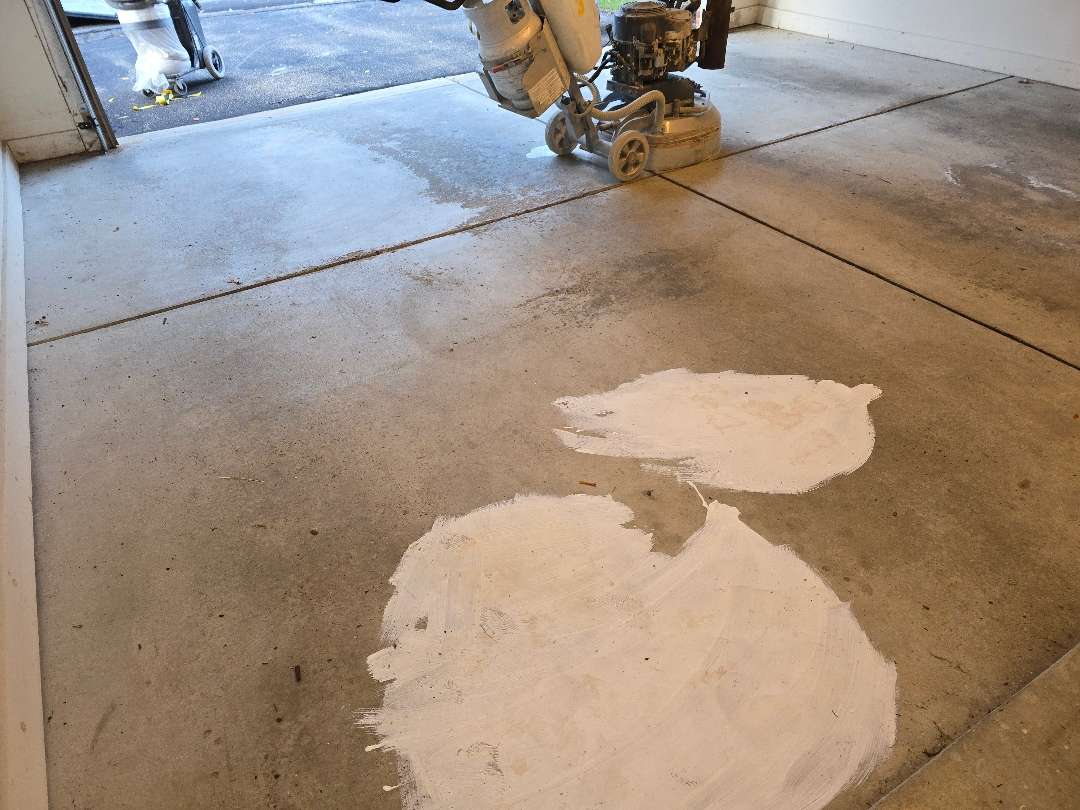
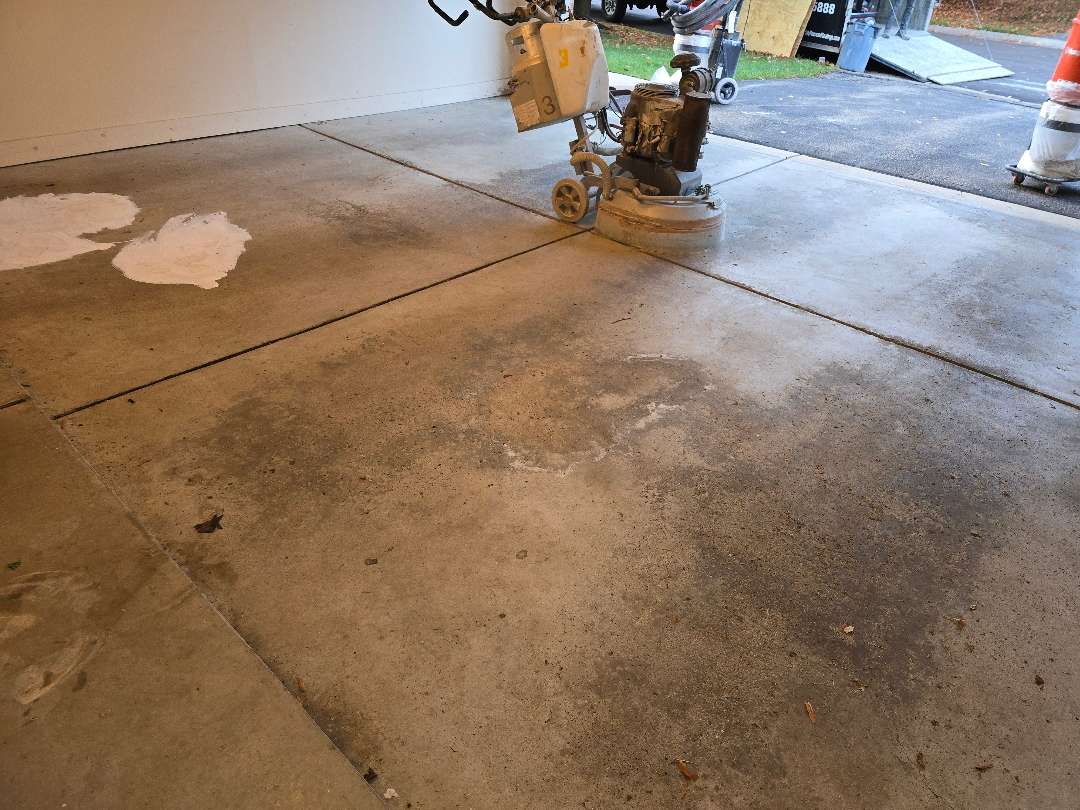

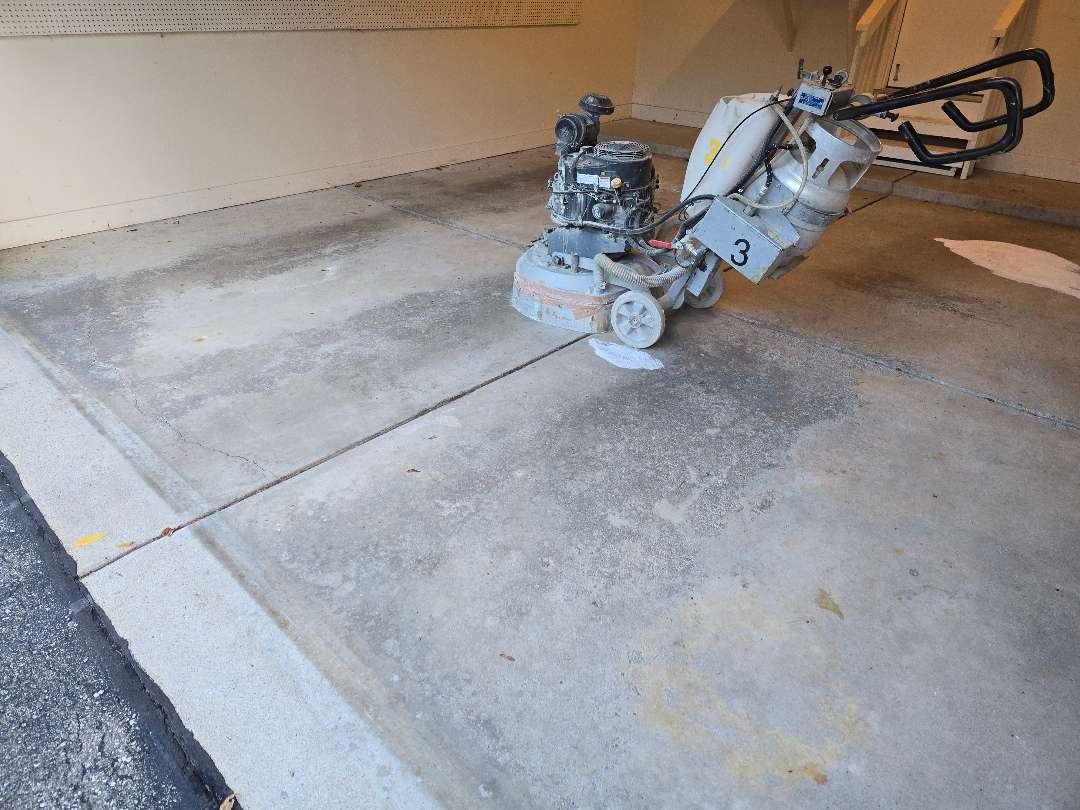
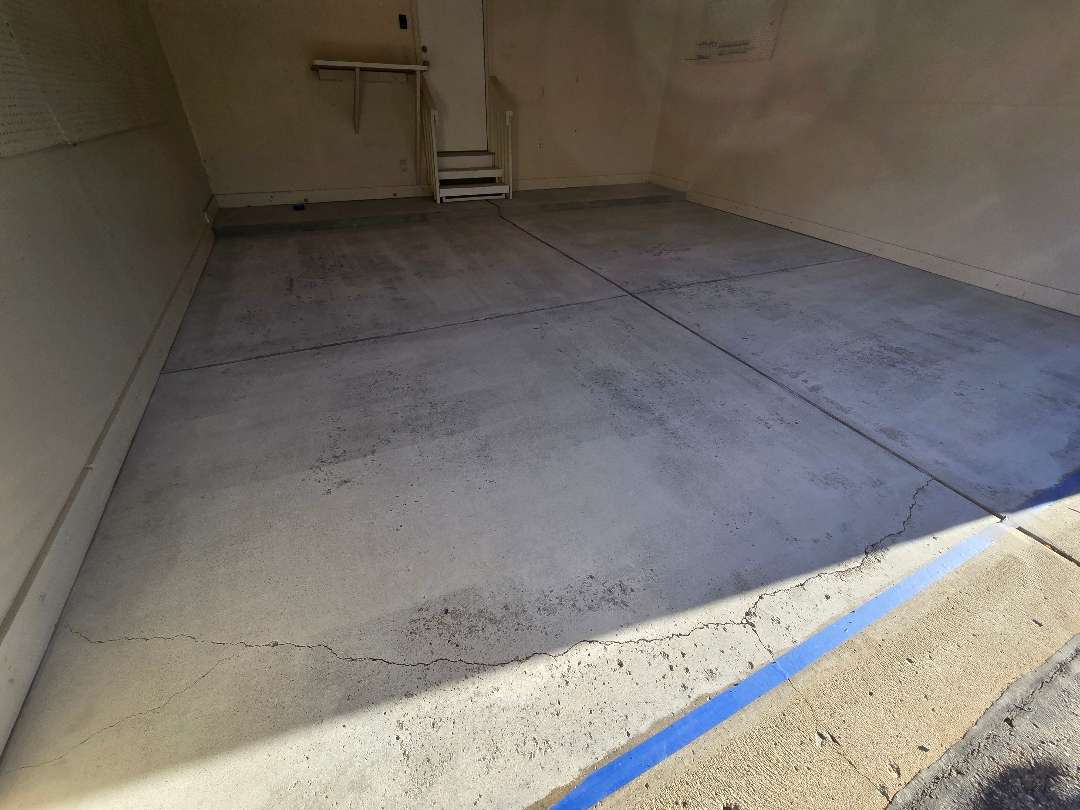
Our crew arrived at this Hazelwood Court property to find 392 square feet of neglected concrete. Scattered pitting and cracking covered the surface. A large oil stain occupied the center of the floor. This was not surface residue — contamination had soaked deep into the concrete pores.
Coating over oil is not an option. The chemistry does not allow proper adhesion.
Two-Phase Oil Extraction
This project required two visits. On October 3rd, our crew applied a specialized oil extraction compound across the contaminated area. The compound draws oil upward out of the concrete pores over time.
That process cannot be rushed. Our team left the material to work and returned once the extraction was complete.
First Grind
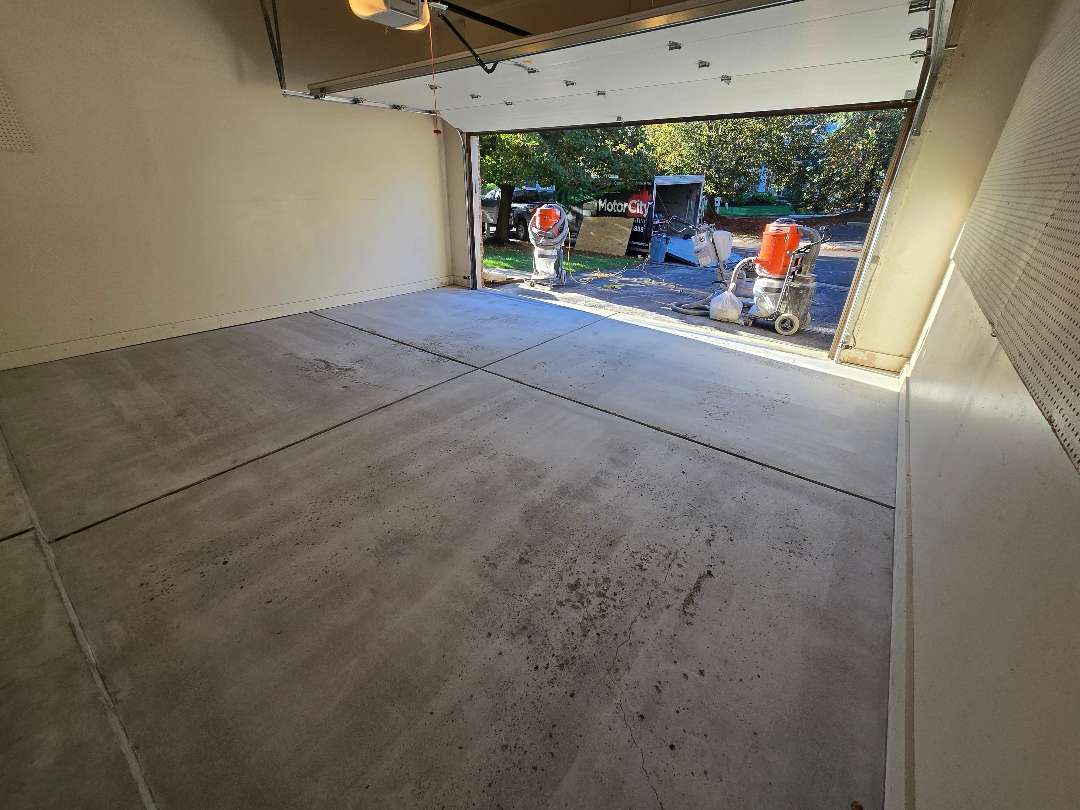
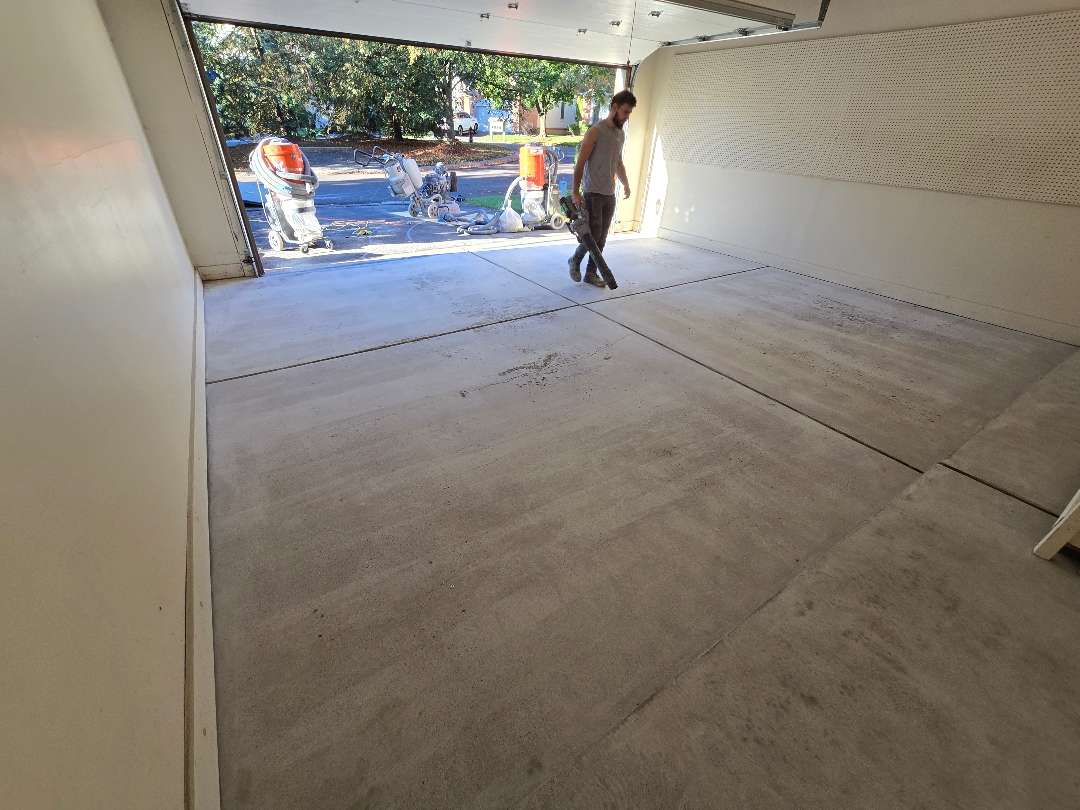
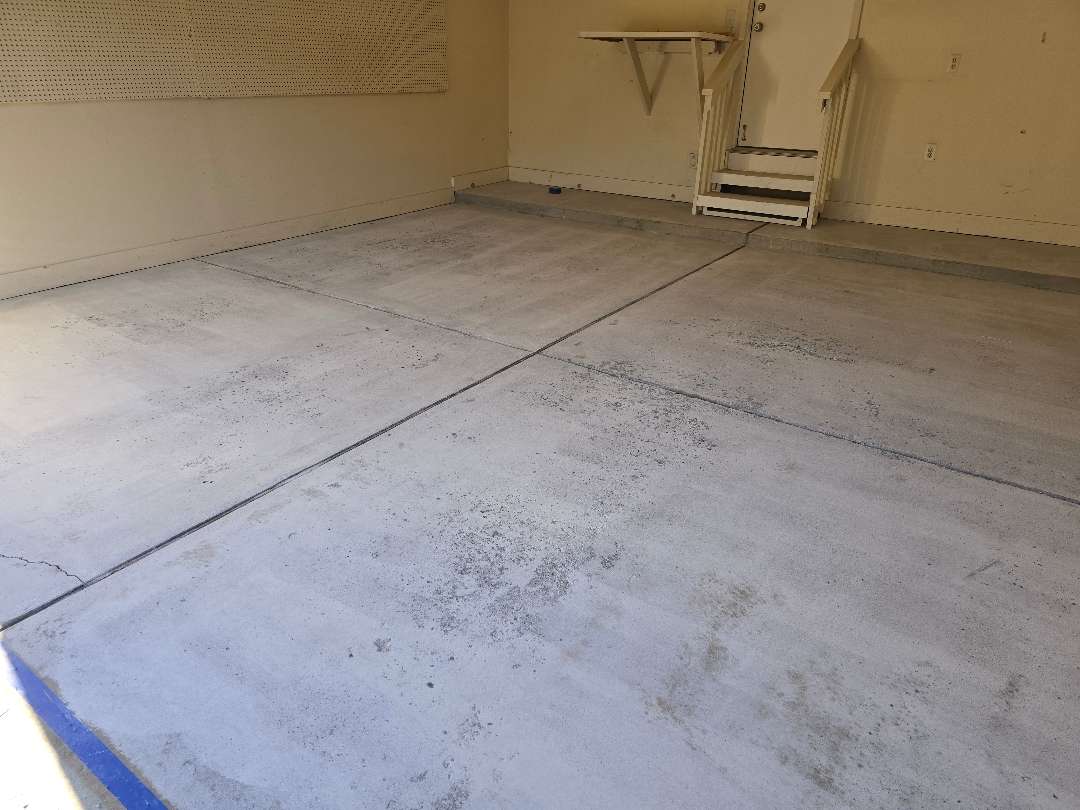
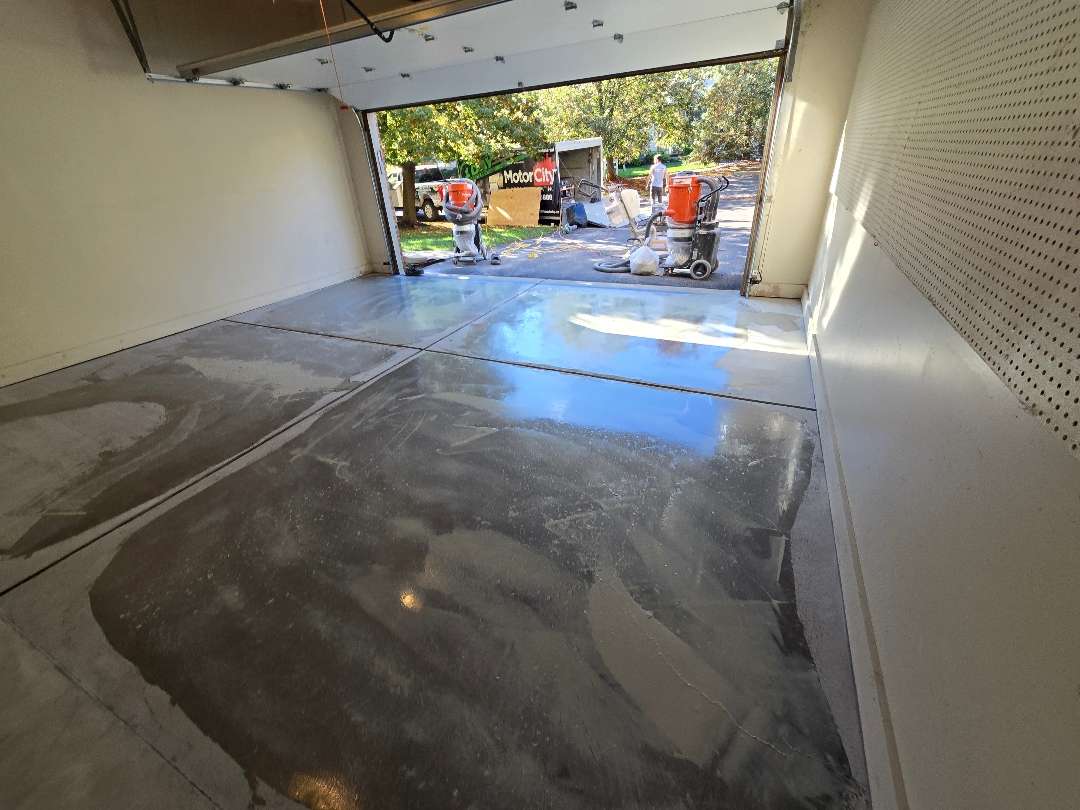
With the oil addressed, our crew began mechanical preparation. The first grind opened the surface of the concrete and removed the laitance layer. Our team vacuumed thoroughly after each pass.
Patch, Flood Coat, and Second Grind

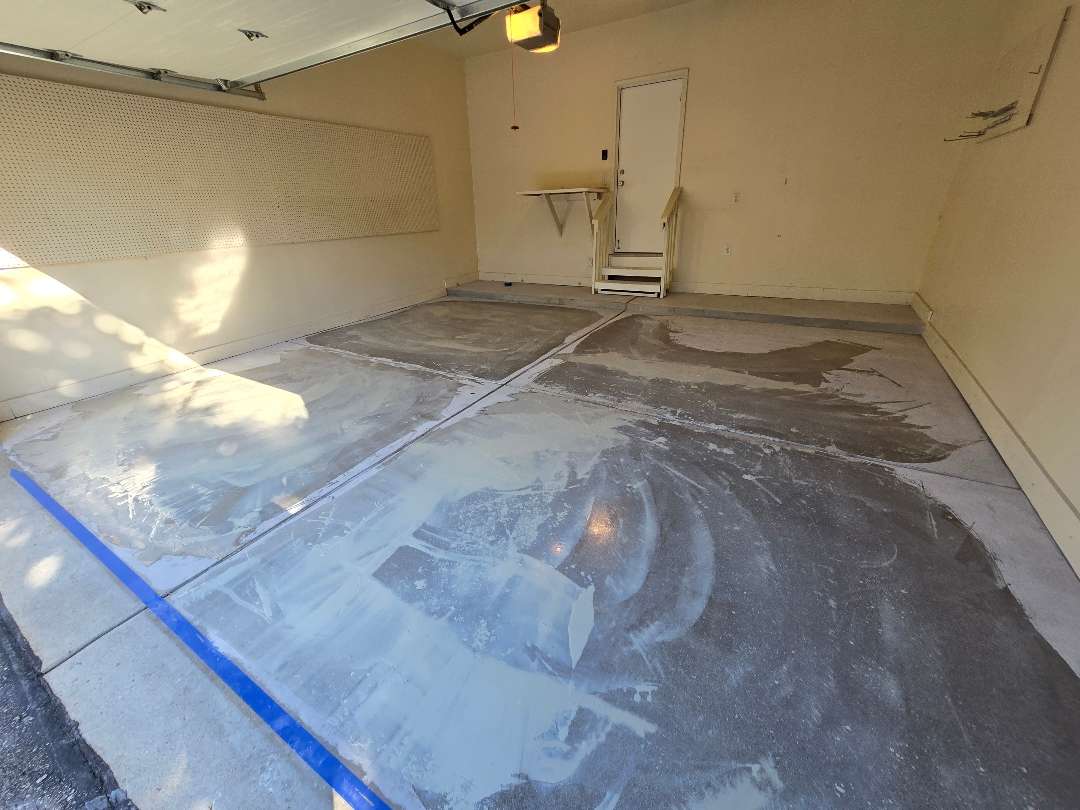
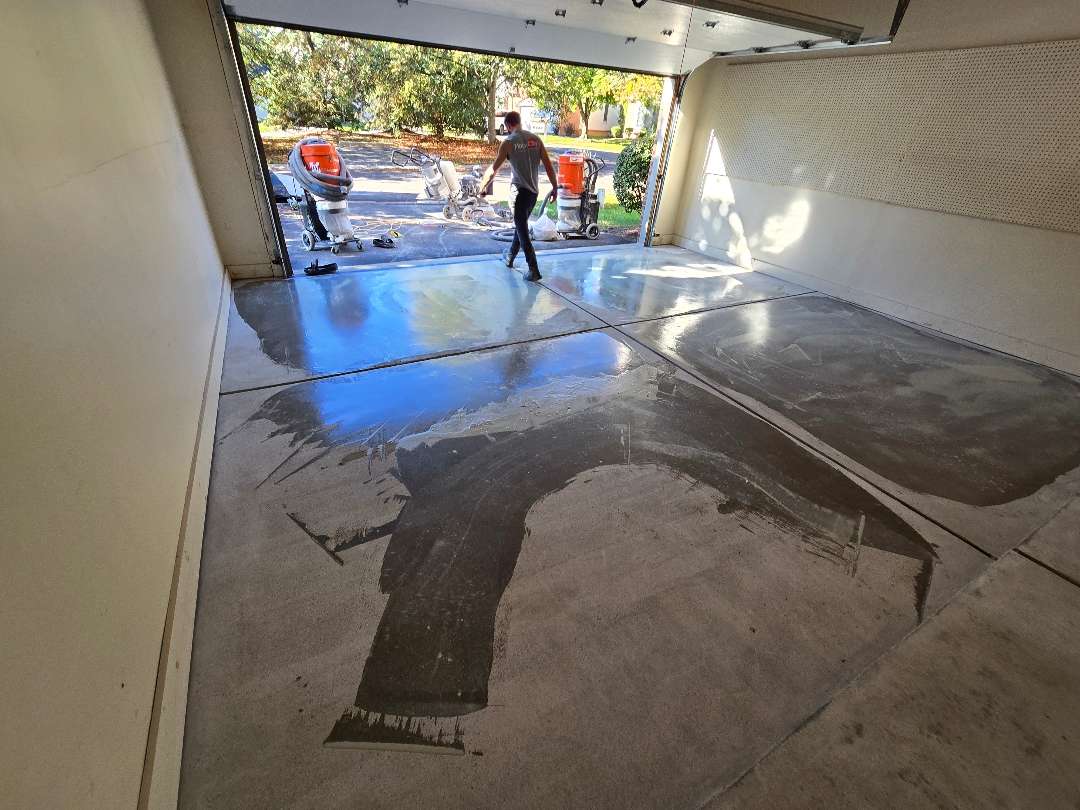
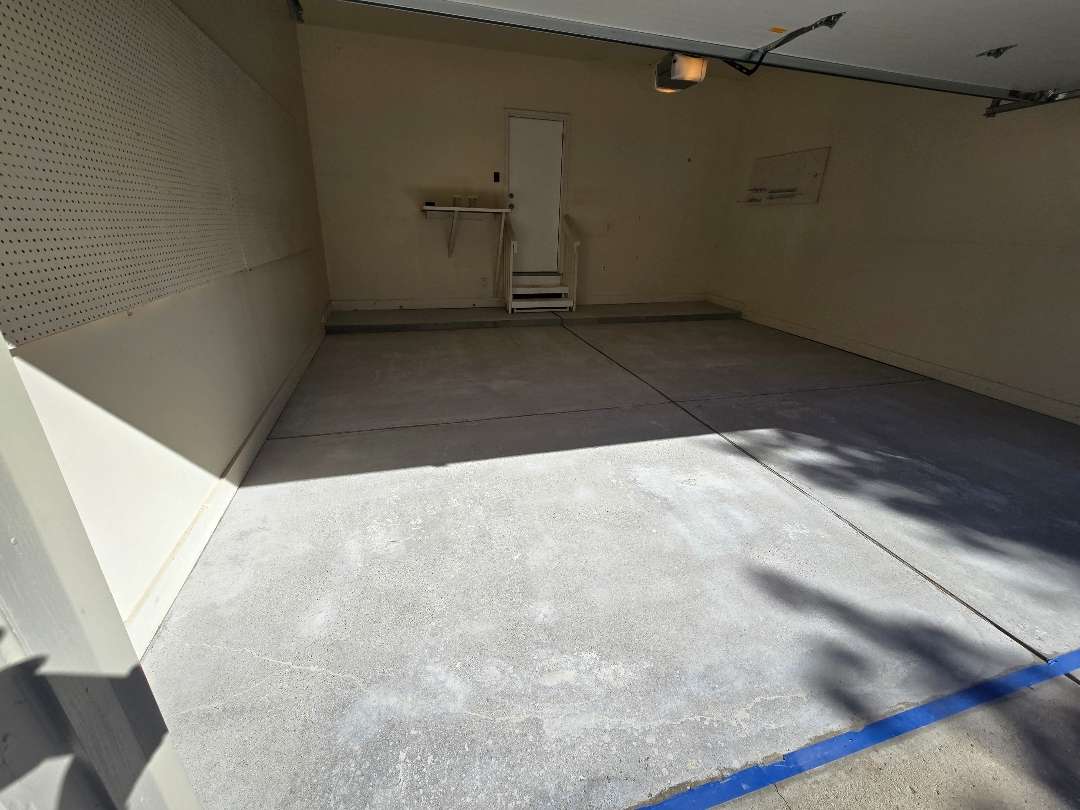
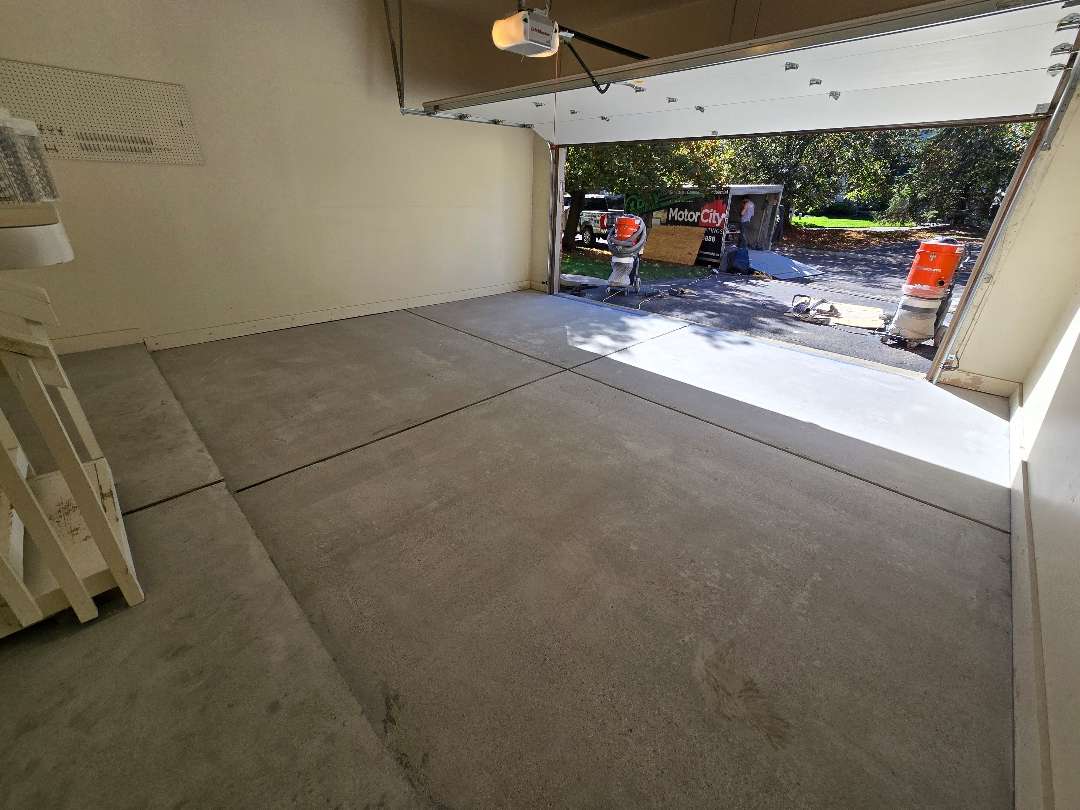
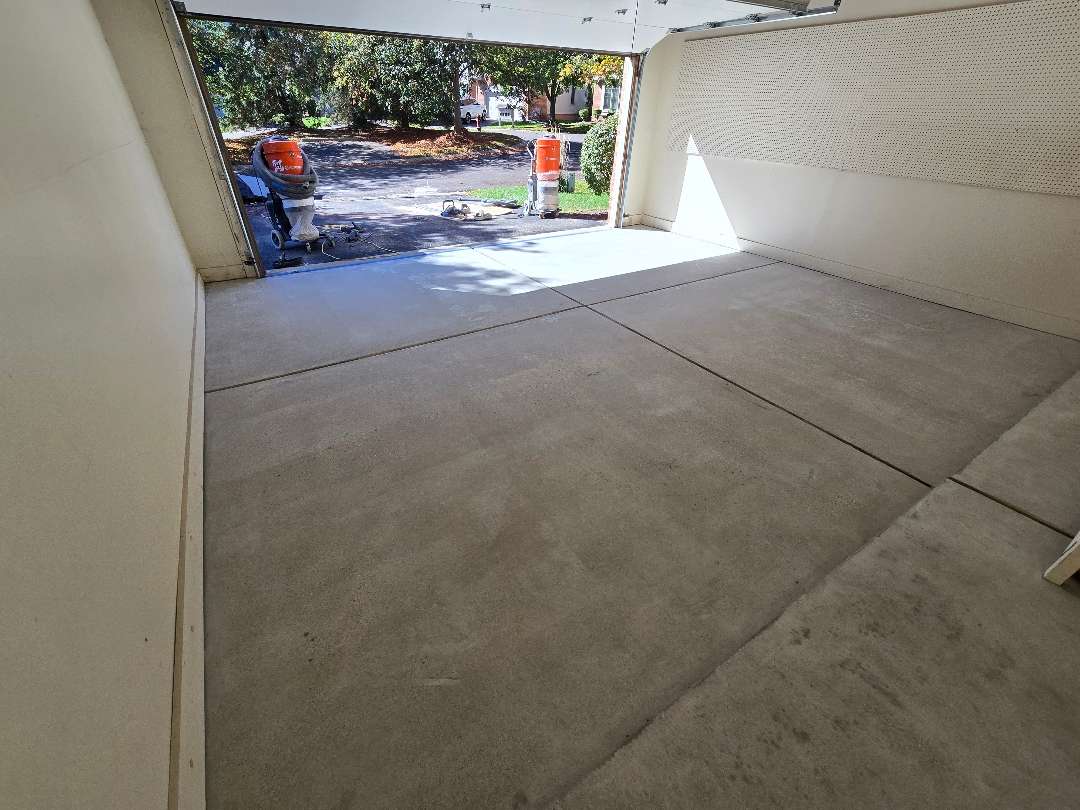

Our crew addressed the pitting and cracking directly. They applied mender compound to each damaged area, filling voids and rebuilding the surface. Our crew pulled a flood coat across the full slab to seal the repaired areas. This unified the patches with the surrounding concrete.
Our crew ran a second grind after the flood coat cured. This pass brought the repaired surface flush with the surrounding concrete. It produced a consistent profile across all 392 square feet.
Moisture Barrier
Testing confirmed moisture required a barrier before coating. Our crew applied a moisture barrier coat across the full slab. This step protects the coating system above from moisture vapor pushing up through the concrete. Skipping it risks adhesion failure over time.
Pecan — Floor, Lip, and Step
Our crew applied the MC4.6 polyurea-polyaspartic coating system with 36-grit traction throughout. We broadcast Pecan flake across the wet base coat. Pecan carries a blend of tans, browns, and creams with a warm overall tone.
Our crew applied the heavy clear topcoat to lock in the flakes and seal the surface. The scope included 19 linear feet of vertical lip and one concrete step. Our crew coated both to match the main floor.
392 Square Feet, Oil Extracted, Done Right

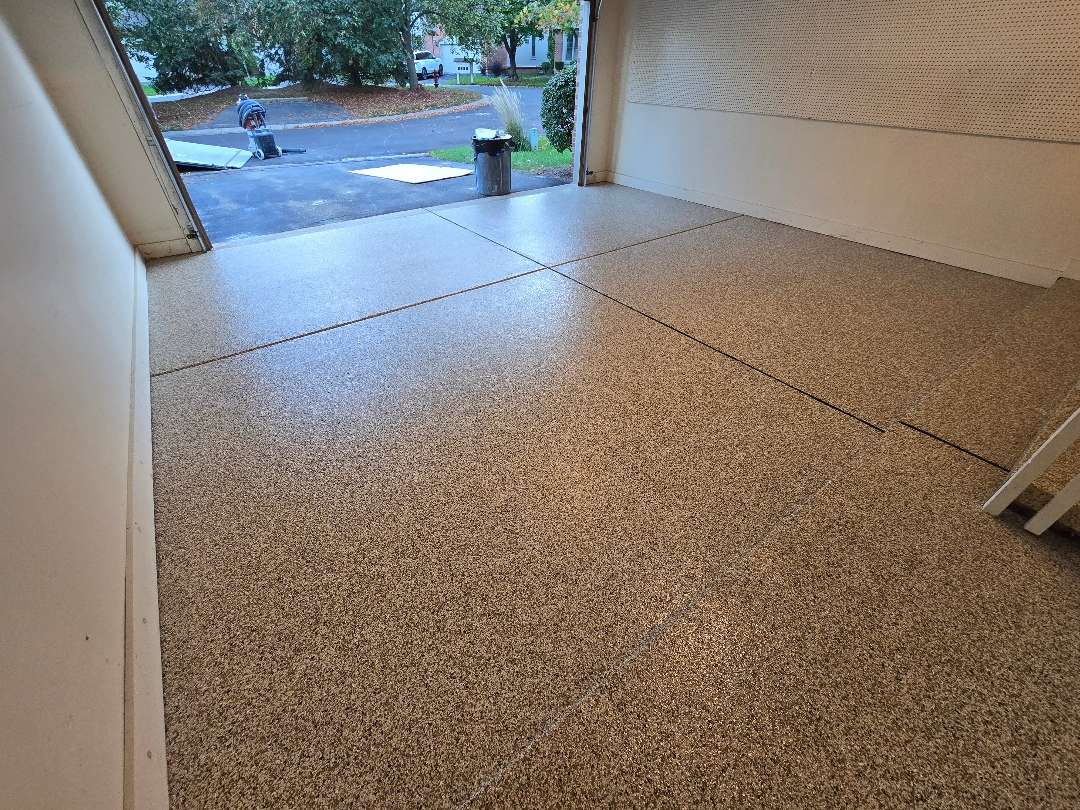


Pecan runs wall to wall across all 392 square feet. The warm tone of tans, browns, and creams gives the space depth and character. The vertical lip and step carry the same finish as the main floor.
The oil stain is gone. The pitting is sealed. The two-phase process was the only way to do this job correctly.
Our crew did not cut corners. The result reflects that.
Testimonials - Voices of Our Clients
Dave Rembiesa
Daniel Aleman
Garage Floor Coating
on Forest Hill Drive
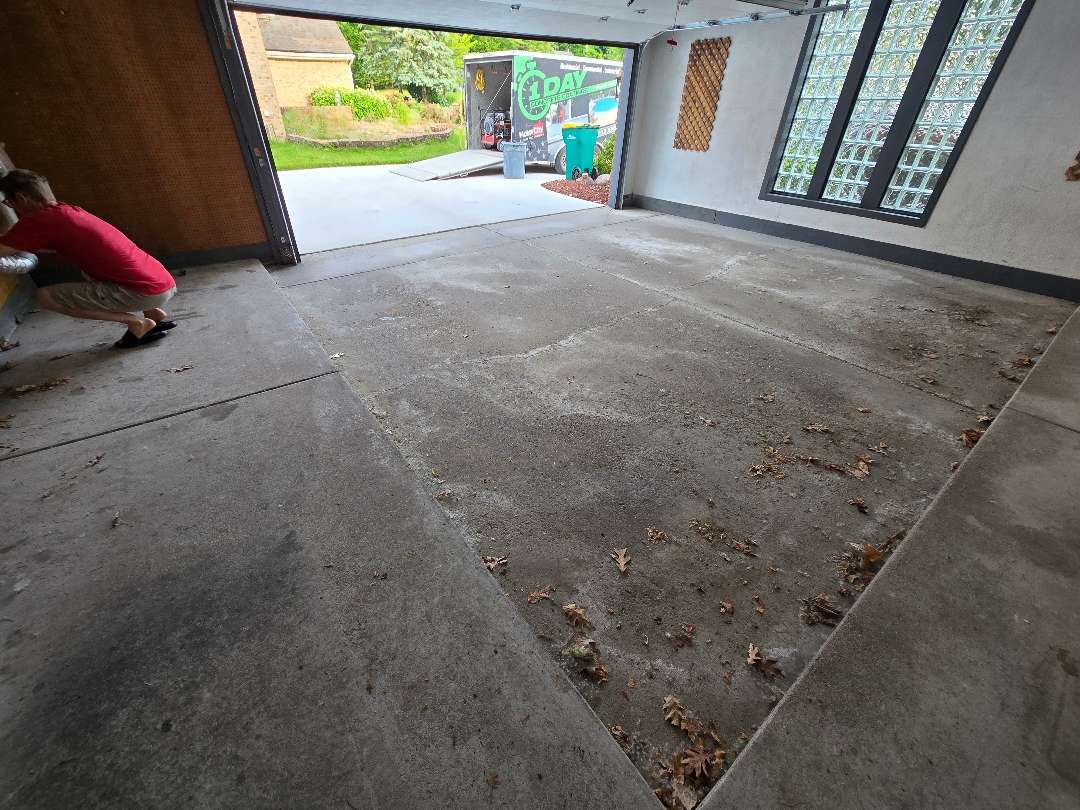
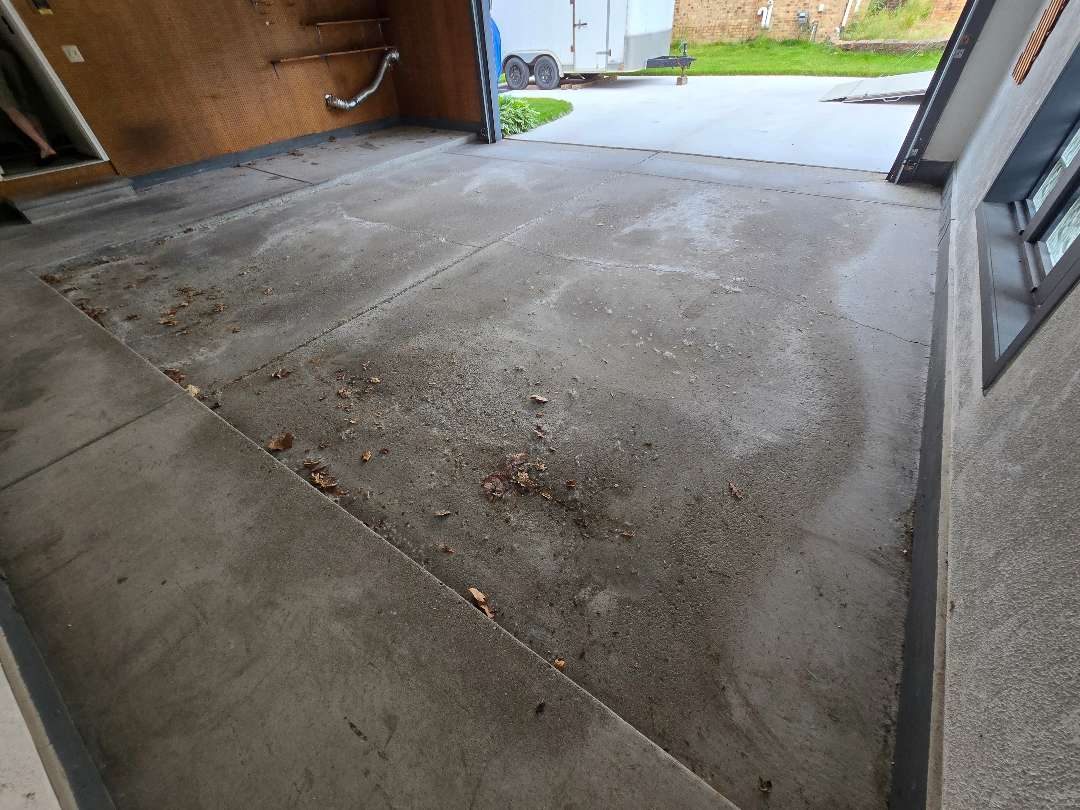

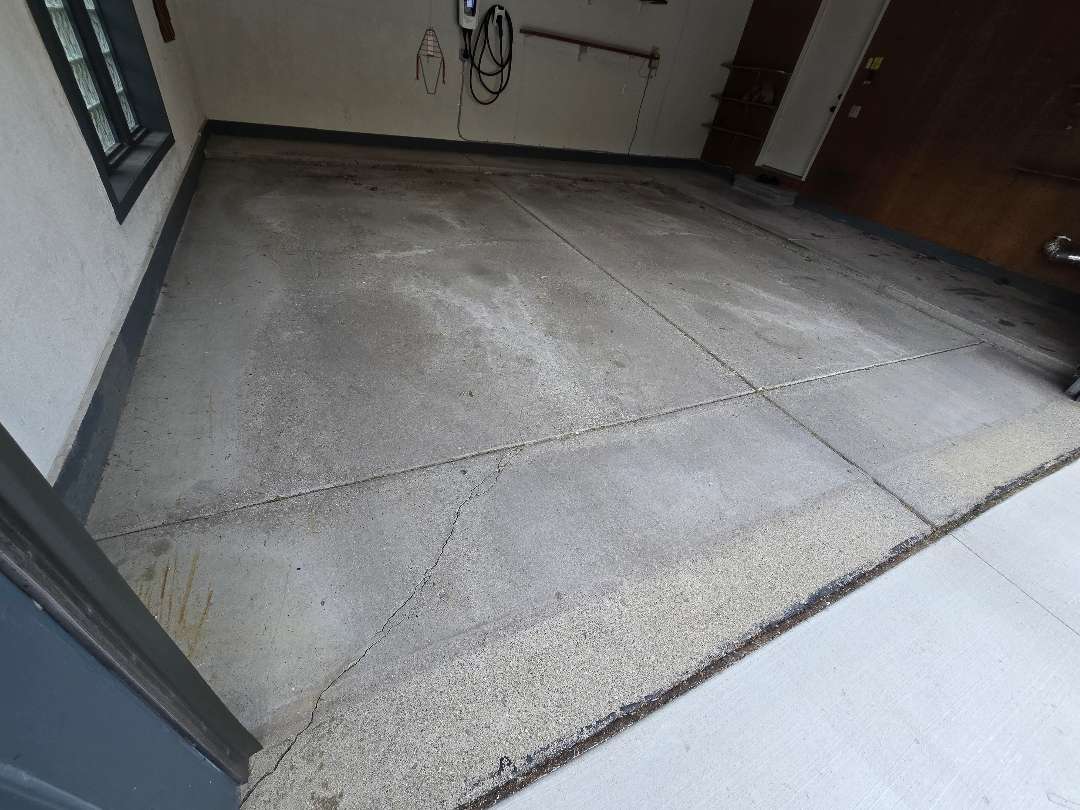
Our crew arrived at this Forest Hill Drive property to find a large two-car garage. The concrete looked intact from a distance. Up close, the story changed. Cracks ran through multiple slab sections.
Dark staining had worked deep into the pores of the concrete. Years of vehicle traffic had left their mark well below the surface.
What the Grind Revealed
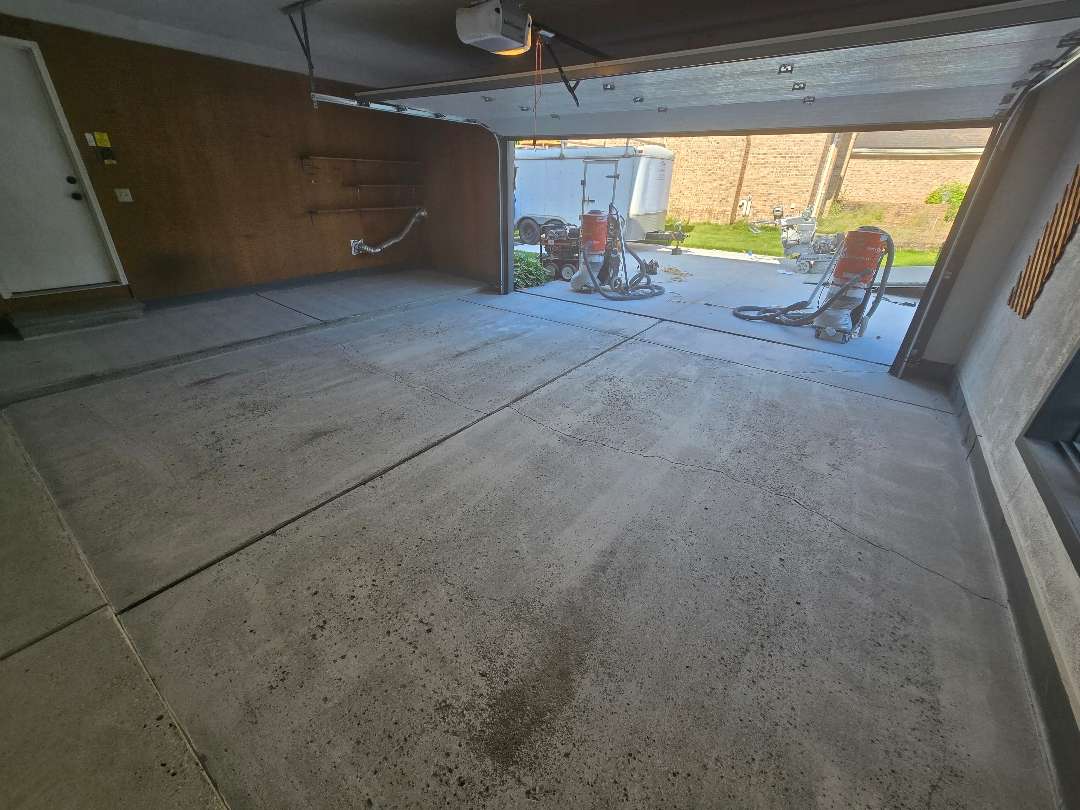
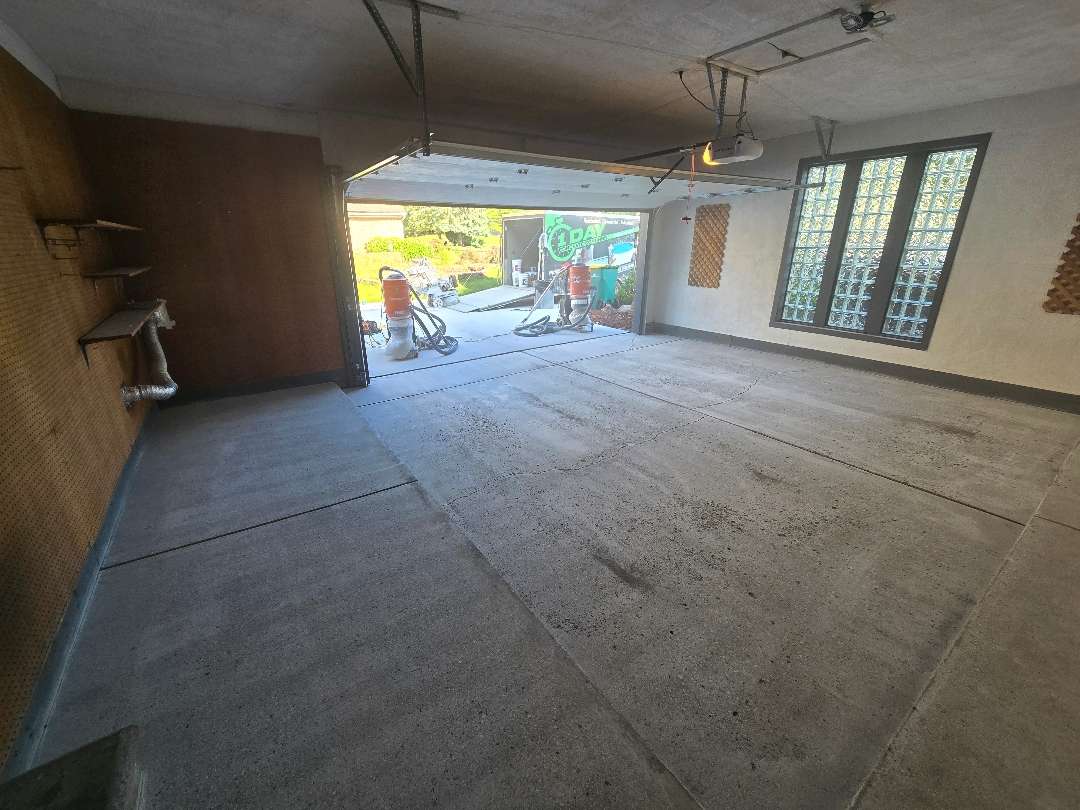
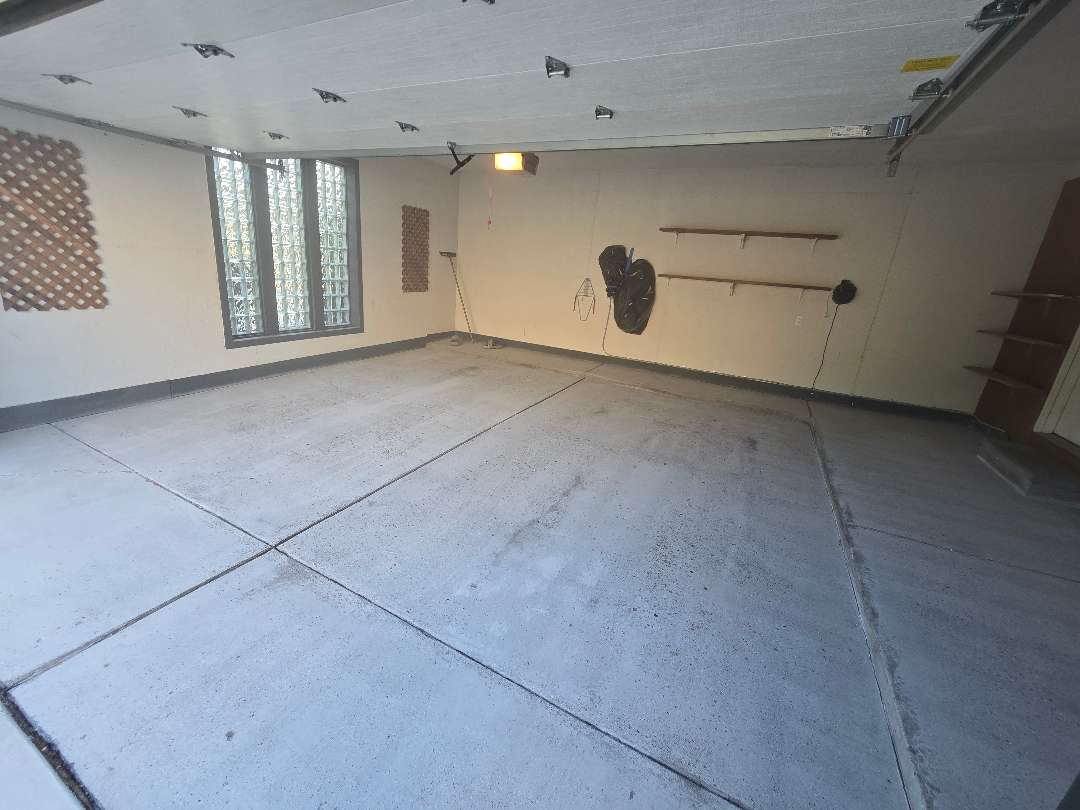

Our crew began mechanical preparation with diamond grinding equipment. Contaminated material lifted off in sheets as our crew worked across the slab. The concrete had absorbed far more than surface grime.
Our crew made full passes across the floor, removing contamination with each pass. This opened the concrete pores for the coating system.
Patch, Flood Coat, and Flood Grind
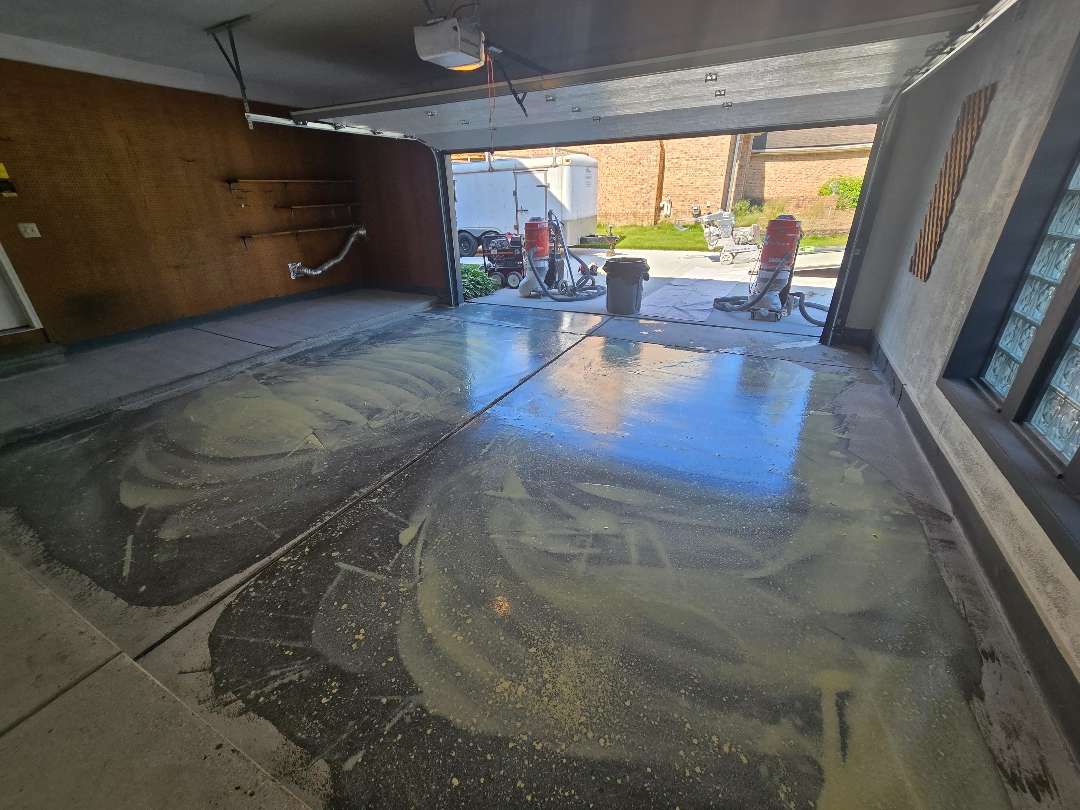
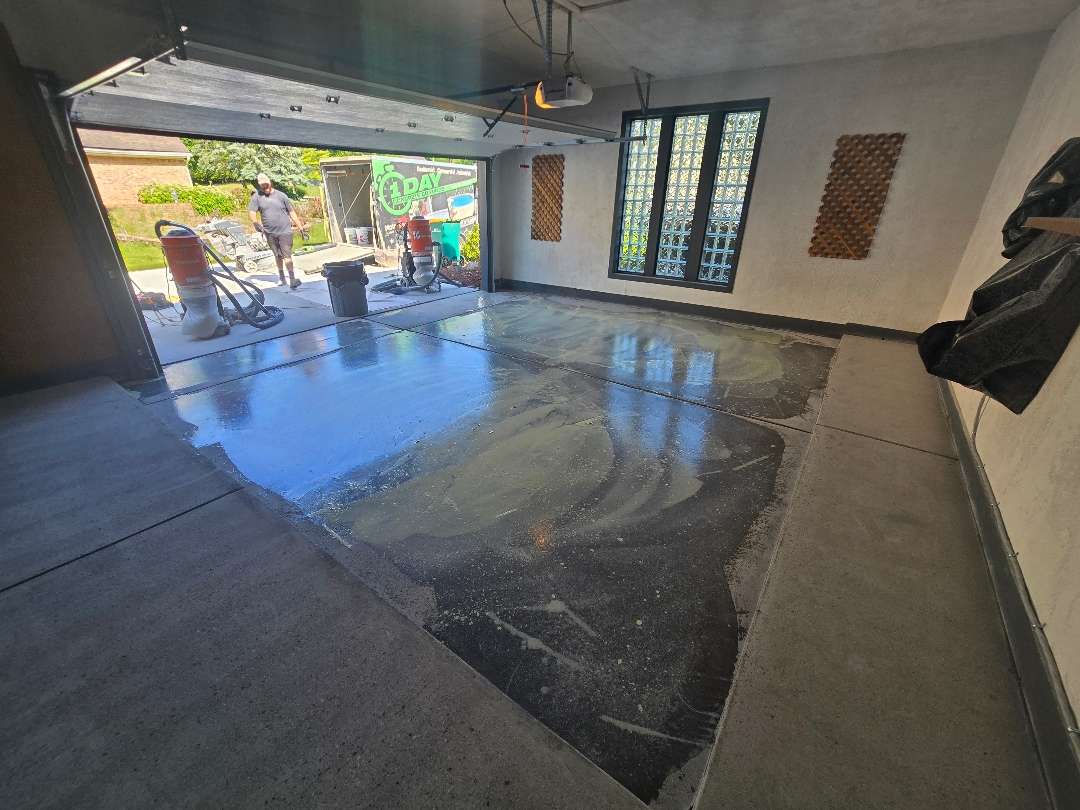
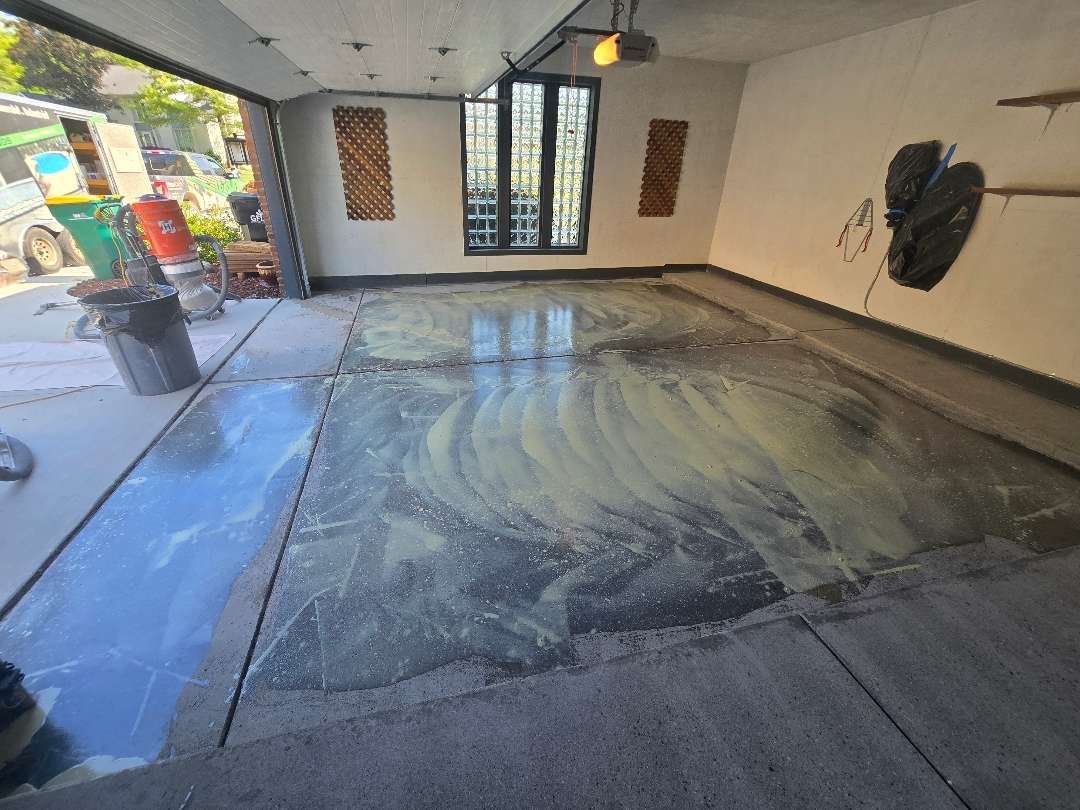


Our crew applied mender compound to each crack and compromised section across the slab. They worked the material into every void and leveled it flush with the surrounding concrete.
Our crew applied a flood coat over the repaired surface. This unified the patched areas with the surrounding concrete. Our crew then ran a flood grind over the cured flood coat. This pass produced a consistent surface profile ready for coating.
Final Cleanup


Smoke — Full Garage
Our clients selected Smoke for the full garage. Our crew applied the polyurea-polyaspartic coating system with 36-grit traction throughout. We broadcast Smoke flake across the wet base coat. Smoke carries a deep charcoal tone with dark and light chips throughout.
Our crew applied the heavy clear topcoat to lock in the chips and seal the surface.
Deep Charcoal, Glass Block Light, Full Garage Finished
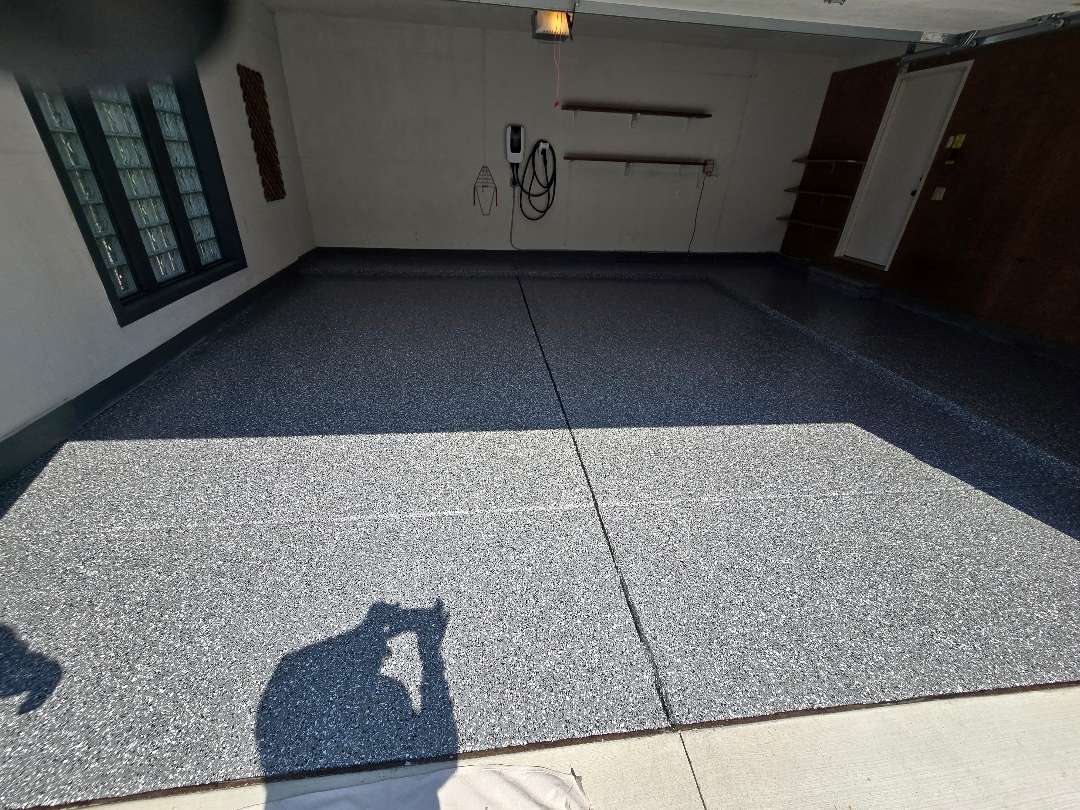
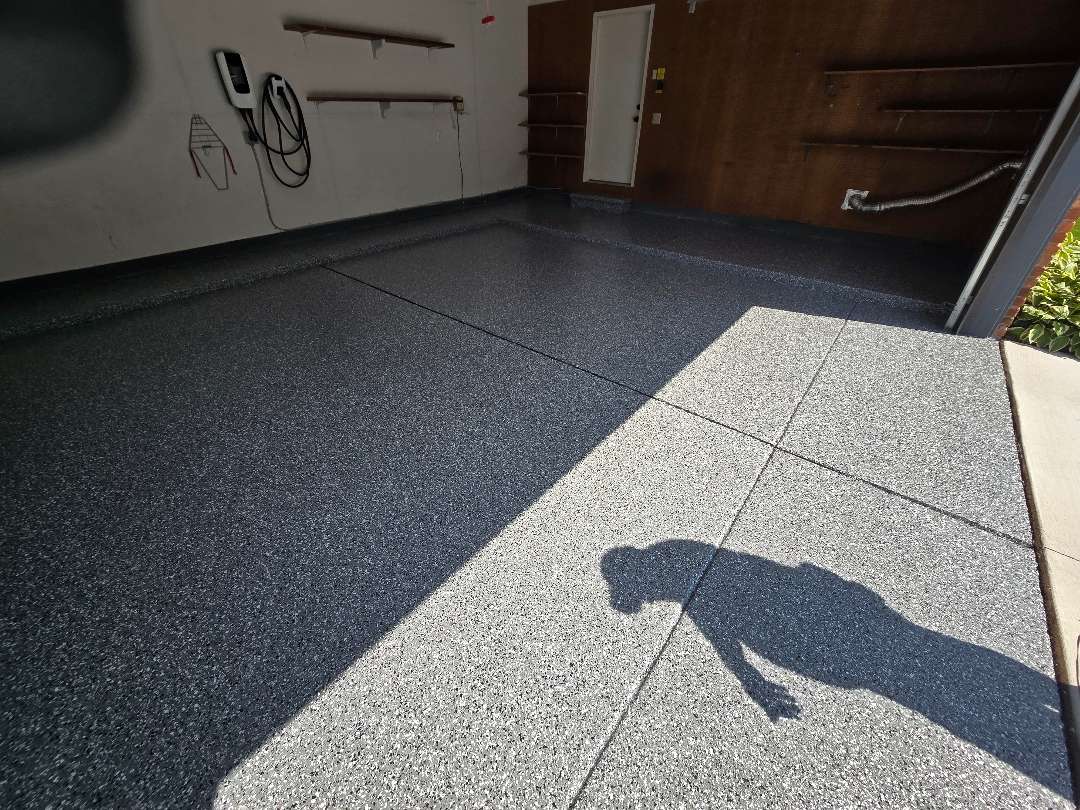
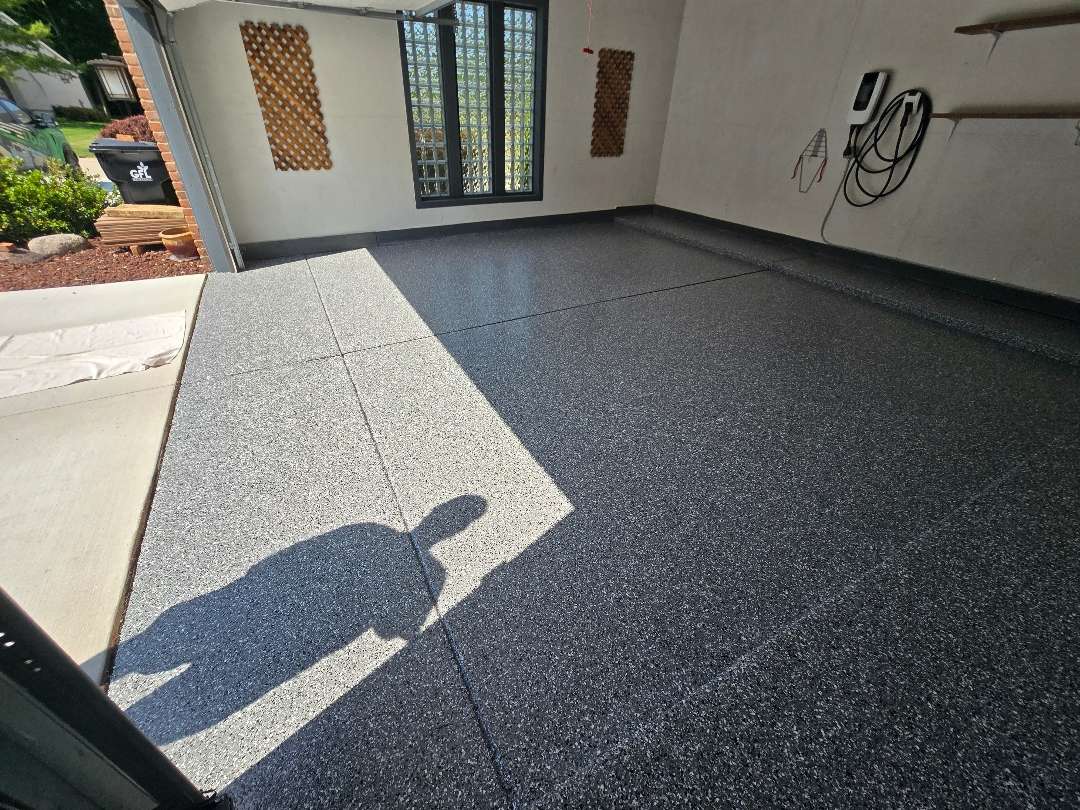

Smoke covers the full two-car garage wall to wall. Glass block windows bring natural light into the space. That light plays off the deep charcoal flake finish throughout the day. The floor is sealed, protected, and ready for years of use.
The cracks are sealed. The dark staining is gone. The contamination that had worked below the surface is gone.
Testimonials - Voices of Our Clients
George Roberts
DawnDayMorning
Garage Floor Coating
on Sheffield Drive
Sheffield Drive, Farmington Hills, MI
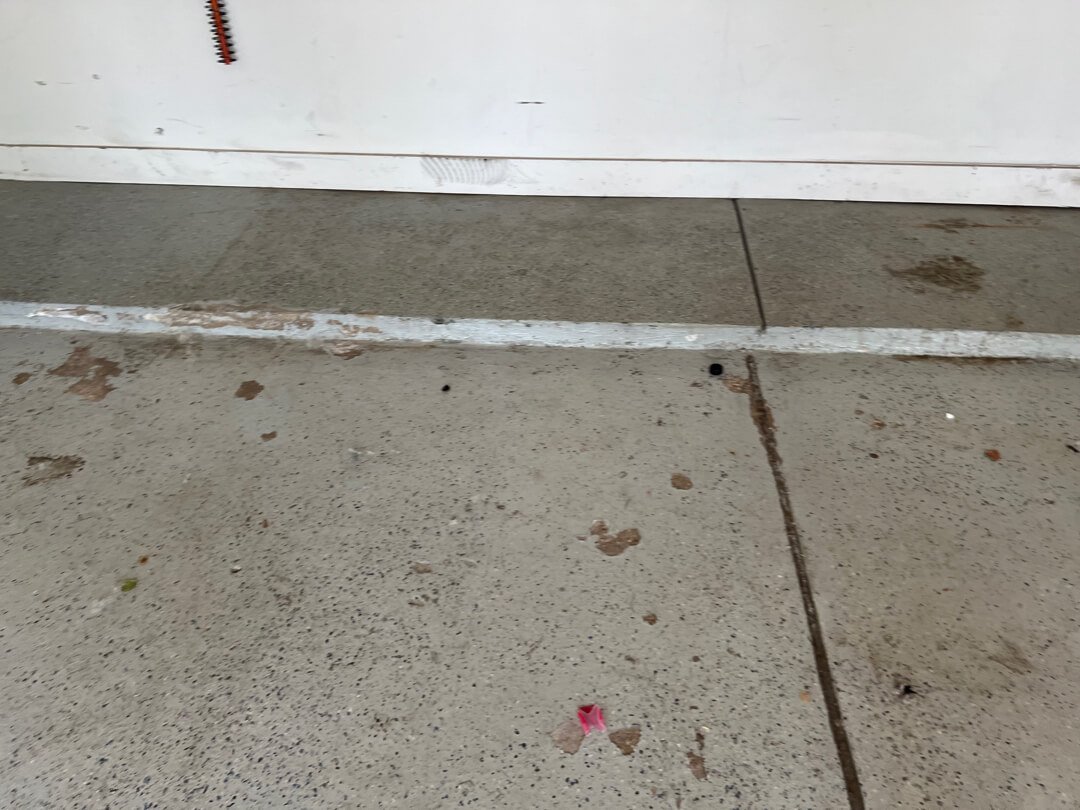
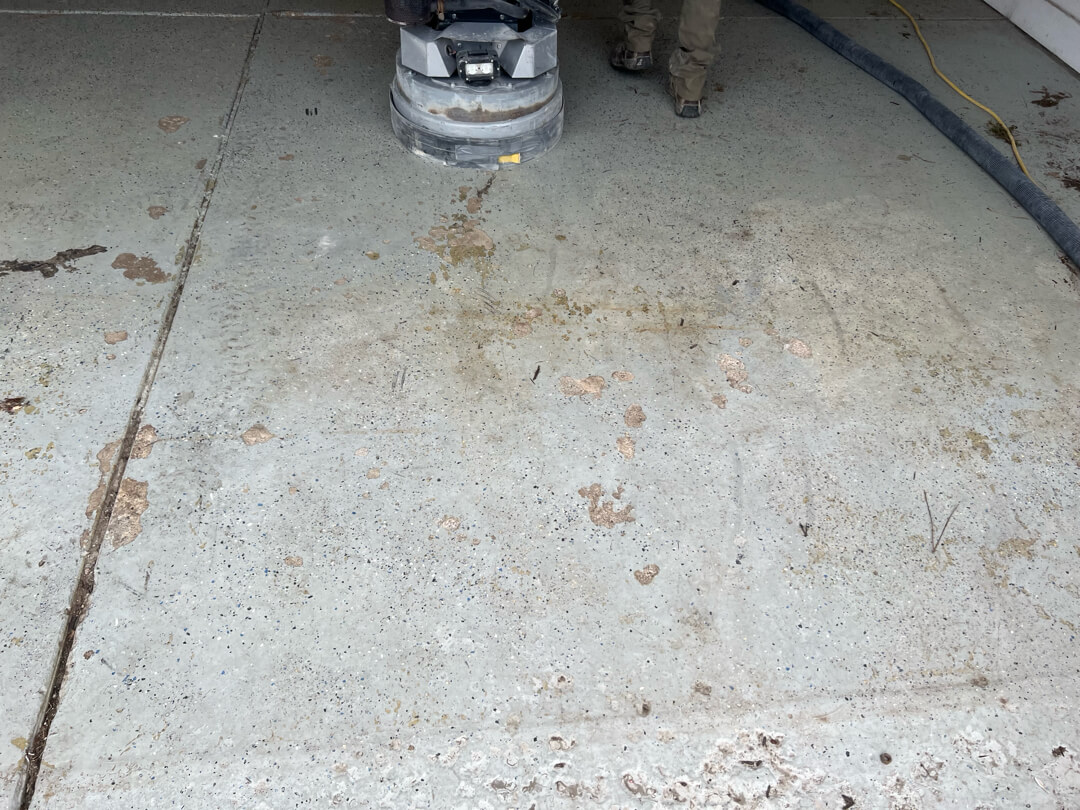

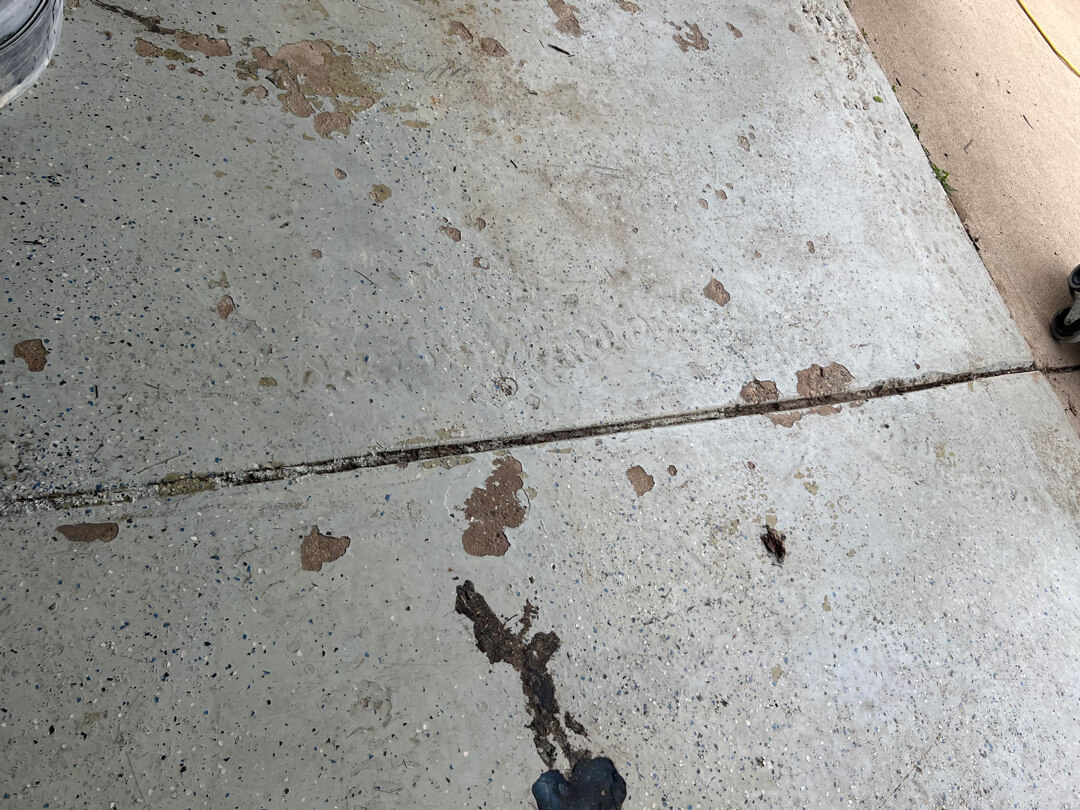
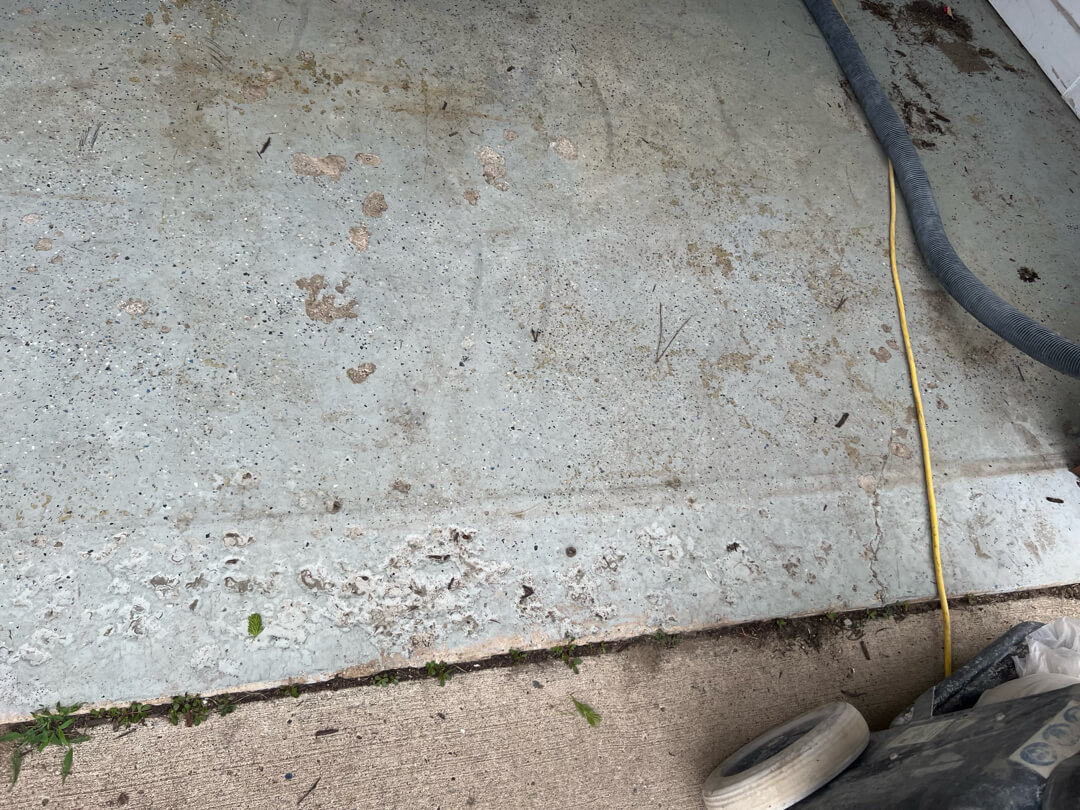
Our crew arrived at this Sheffield Drive property to find moderate floor damage. Brown drip marks and grime covered the slab. Pitting was present throughout — narrow voids bladed into the concrete.
Many of those pits had been filled previously with epoxy. The fills had held.
Even with intact prior fills, the concrete still required proper preparation before coating. Moisture testing also confirmed a barrier was needed before any material went down. One concrete step was included in the scope.
Mender Application


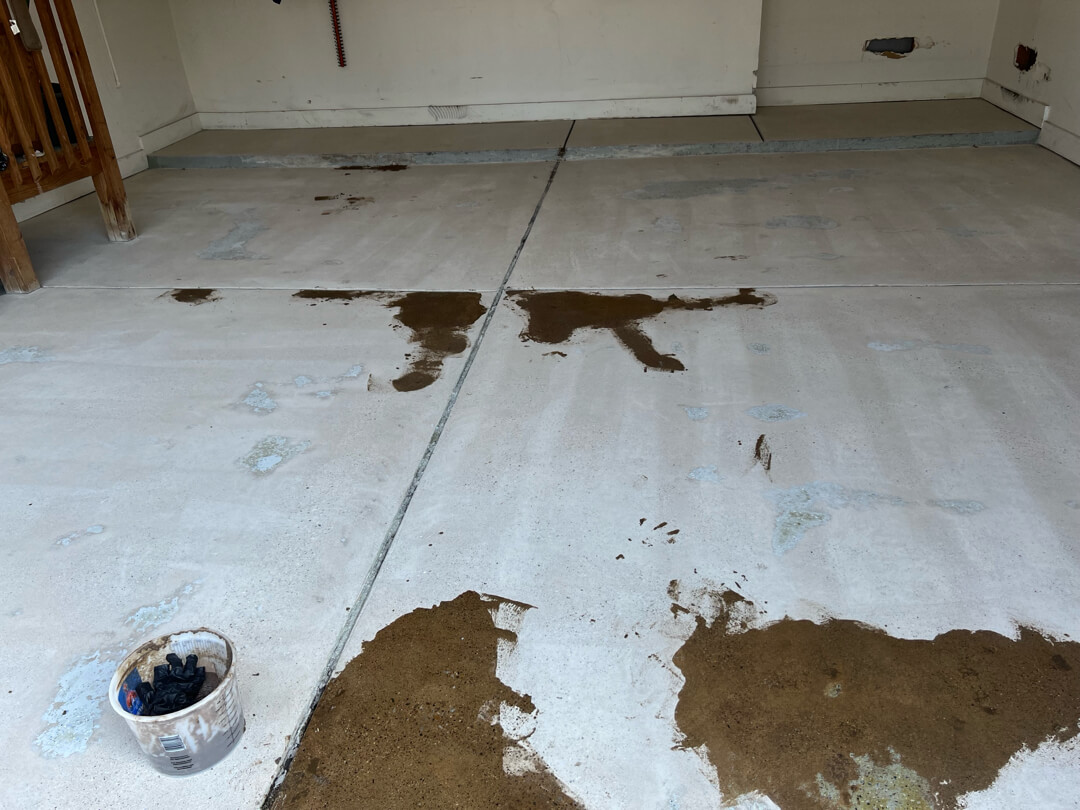
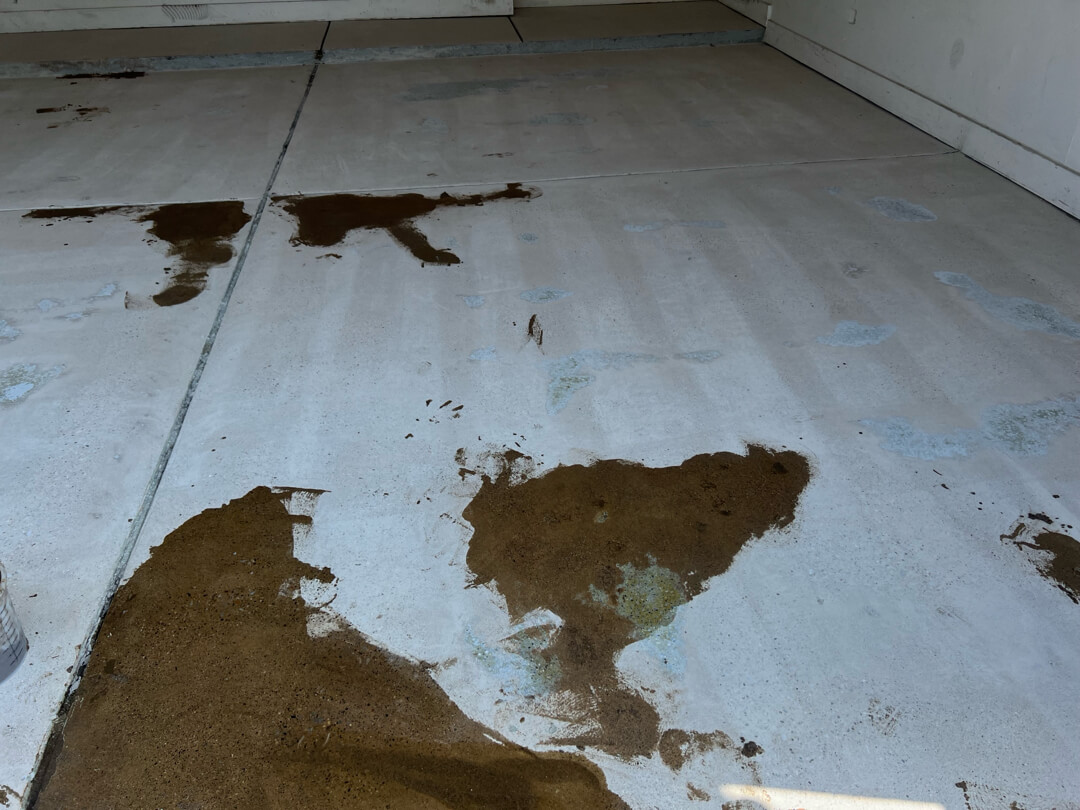
Our crew assessed each pit across the full slab. Some prior fills were intact. Others had partially failed.
Our crew applied mender compound to the pitted sections throughout. They worked the material into each void and leveled it with the surrounding surface.
Surface Preparation and Moisture Barrier
Our crew ground the full slab to open the pores of the concrete. The grinding removed the laitance layer and surface contamination. It also brought the repaired areas to the same surface profile as the surrounding concrete.
Testing confirmed moisture required a barrier before coating. Our crew applied a moisture barrier coat across the full slab. This step protects the system above from moisture vapor pushing up through the concrete. Skipping it risks adhesion failure over time.
Blue-Grey Flake — Floor and Step
Our crew applied the polyurea-polyaspartic coating system over the prepared slab. We broadcast the blue-grey flake blend across the wet base coat. The blue-grey flake blend carries silver and white chips throughout. Our crew applied the heavy clear topcoat to lock in the chips and seal the surface.
Our crew applied the same system to the concrete step. We brought the coating up and over the riser and tread. The step integrates cleanly with the finished floor.
Bladed Pitting Gone, Blue-Grey Down, Job Complete


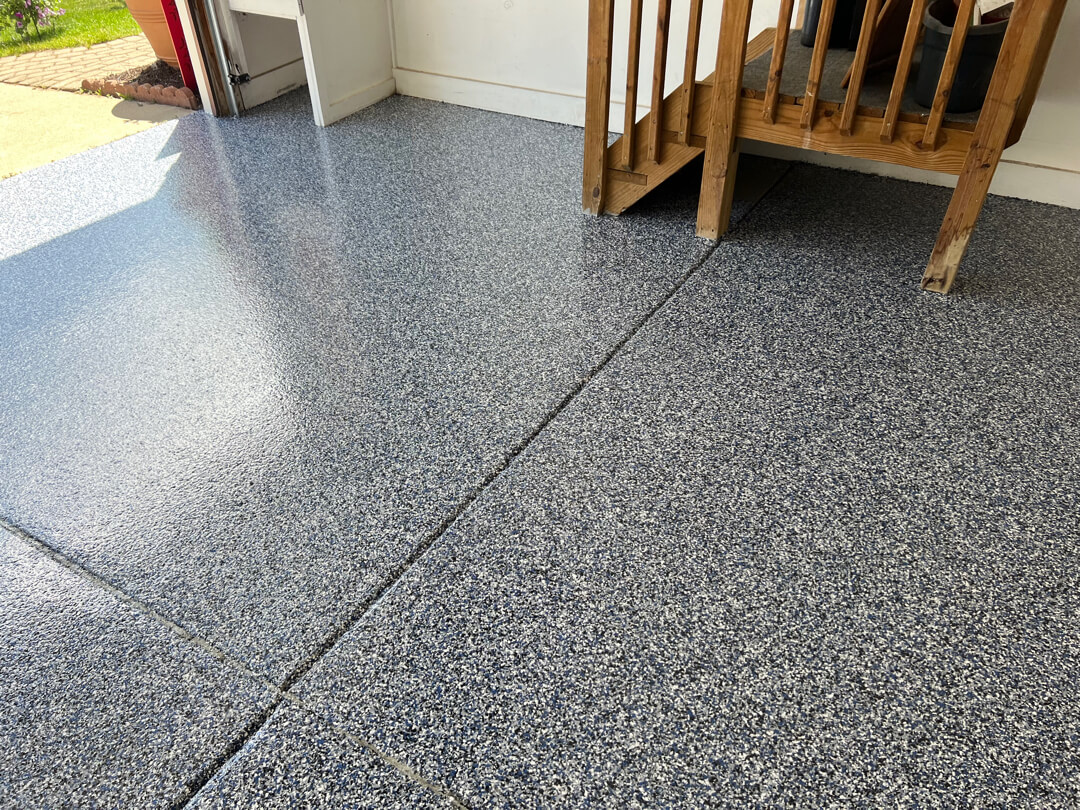
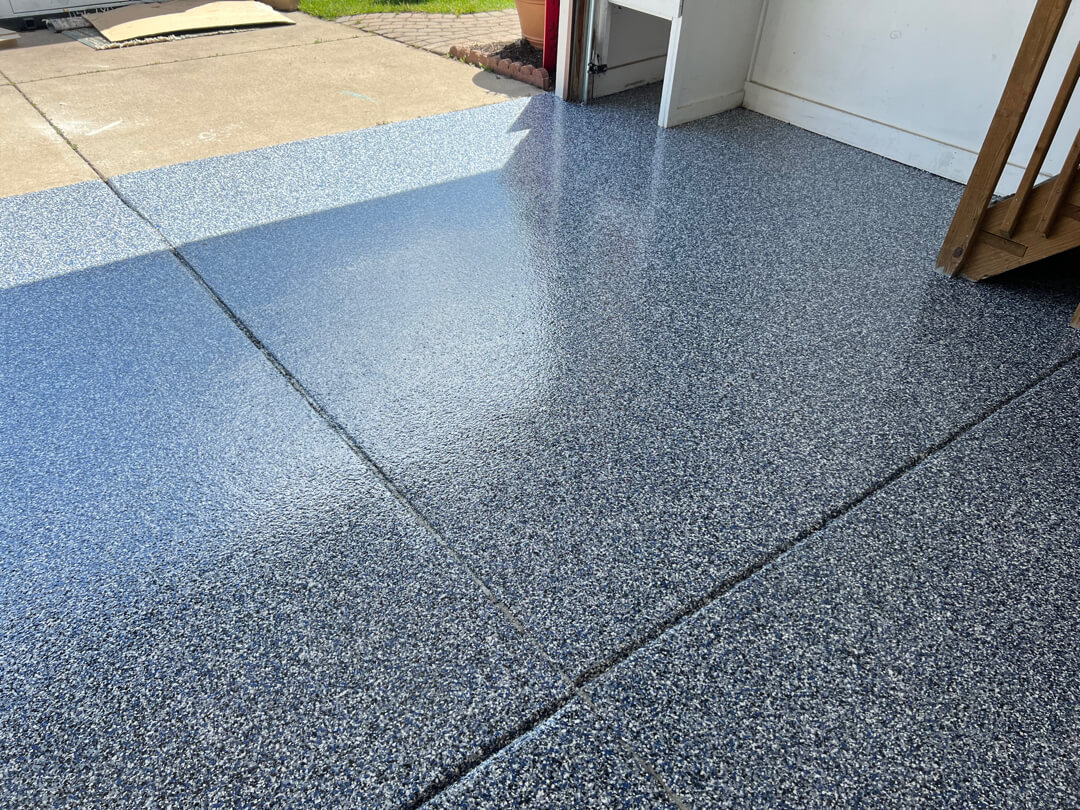


The blue-grey flake covers the full slab. The cool tone gives the space a sharp character. The step carries the same finish as the main floor.
The scattered staining is gone. The bladed pits are gone. The sealed surface repels stains and handles daily use.
Testimonials - Voices of Our Clients
K Zeb
Andra Adams-Webb
What These Farmington Hills Slabs Actually Needed: Polyurea-Polyaspartic vs. Epoxy
The 10 Farmington Hills projects on this page cover a wide range of starting conditions — pitting with partially failed prior epoxy fills at Sheffield Drive, moisture requiring a barrier coat, and new concrete needing laitance removal. In every case, proper diamond-ground preparation made the difference between a coating that bonds and one that eventually fails.
This is the practical difference between epoxy and polyurea-polyaspartic systems: epoxy is more prone to peeling, yellowing, and adhesion failure over time, especially in Michigan’s freeze-thaw climate, while polyurea-polyaspartic systems cure faster, flex with the slab, and resist UV fading. We cover this in more depth in our own posts on why polyurea outperforms epoxy, common reasons epoxy floors fail, and the main benefits of polyurea over epoxy.
Serving Farmington Hills & Oakland County
Beyond Farmington Hills, we regularly install polyurea-polyaspartic garage floor coatings for homeowners in West Bloomfield, Novi, and Southfield. If you’re nearby and considering a garage floor upgrade, reach out for a free quote.
FAQ
Find answers to your technical questions about polyurea-polyaspartic garage floor coatings.