 Skip to content
Polyurea-Polyaspartic Garage Floor Coating in West Bloomfield Township, MI
QUESTIONS? NEED A QUOTE?
Welcome to MotorCity Flooring and Coatings’ showcase of garage floor coating projects in West Bloomfield Township, MI. On this page, you’ll find detailed project stories from locations throughout West Bloomfield Township. These are real installations that demonstrate our commitment to quality, durability, and professional craftsmanship.
Our specialist teams serve every neighborhood in West Bloomfield Township with comprehensive garage floor coating services. Each project begins with thorough concrete preparation: diamond grinding to remove old coatings and contaminants, repairing cracks and pitting, and addressing moisture concerns. We then apply our advanced polyurea-polyaspartic garage floor coating system. This hybrid technology combines the incredible durability of polyurea with the UV stability and fast cure times of polyaspartic coatings.
This dual-component system creates floors that withstand the harsh weather cycles of Michigan—from sub-zero winters to humid summers—without cracking, peeling, or yellowing. The chemical-resistant surface repels oil, salt, and automotive fluids while standing up to constant pressure from vehicle tires and foot traffic.
Every installation includes decorative flakes for professional appearance and customizable traction levels for safety. The result? A garage floor coating with exceptional UV resistance, reduced hot tire pickup, greater flexibility, good chemical resistance suitable for residential and light commercial applications, superior abrasion resistance, wide temperature application range, and better temperature cycling than epoxy. Our system cures in hours rather than days and comes with our industry-leading warranty.
For ultimate convenience, we complete installations in just one day. Explore our West Bloomfield Township projects below to see our process, results, and the difference a professional polyurea-polyaspartic garage floor coating makes.
The Shadydale Lane
Garage Floor Transformation
The Challenge
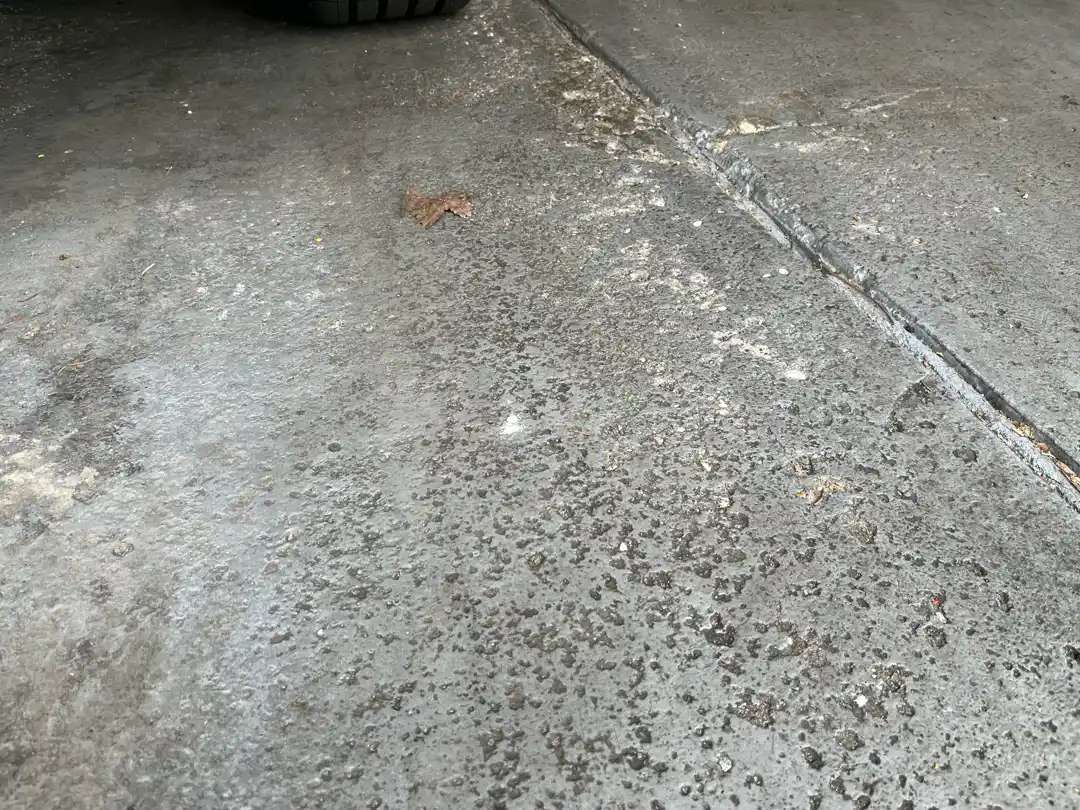
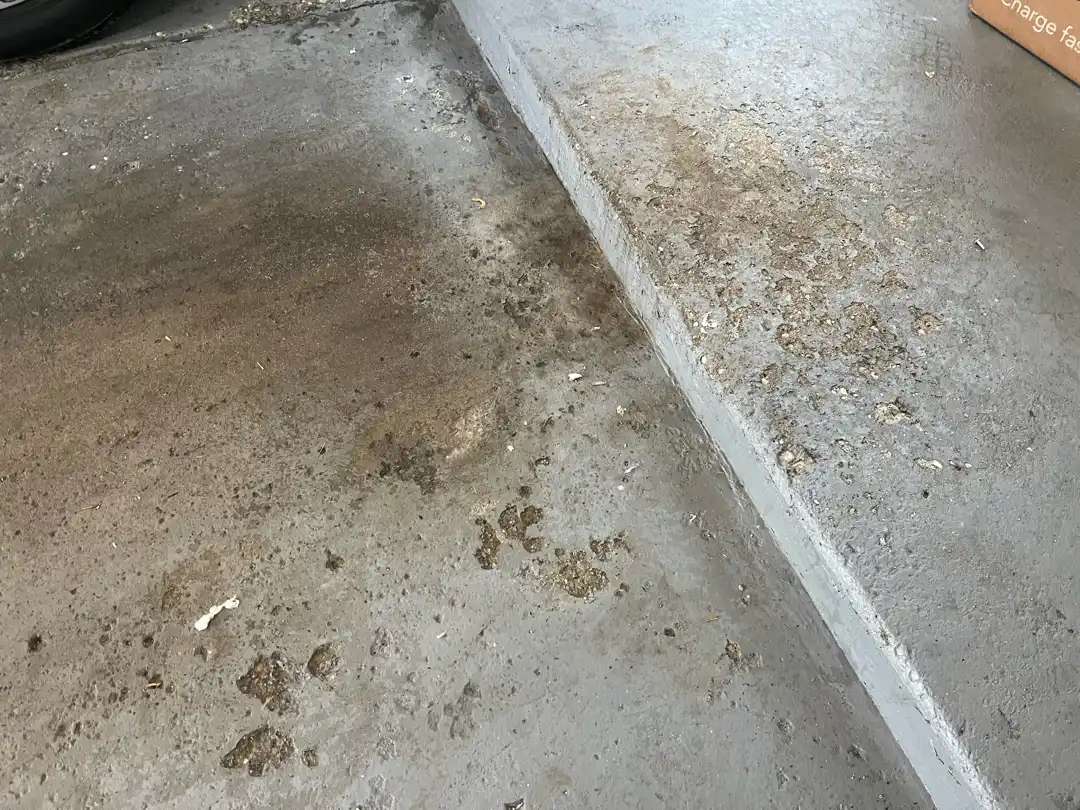
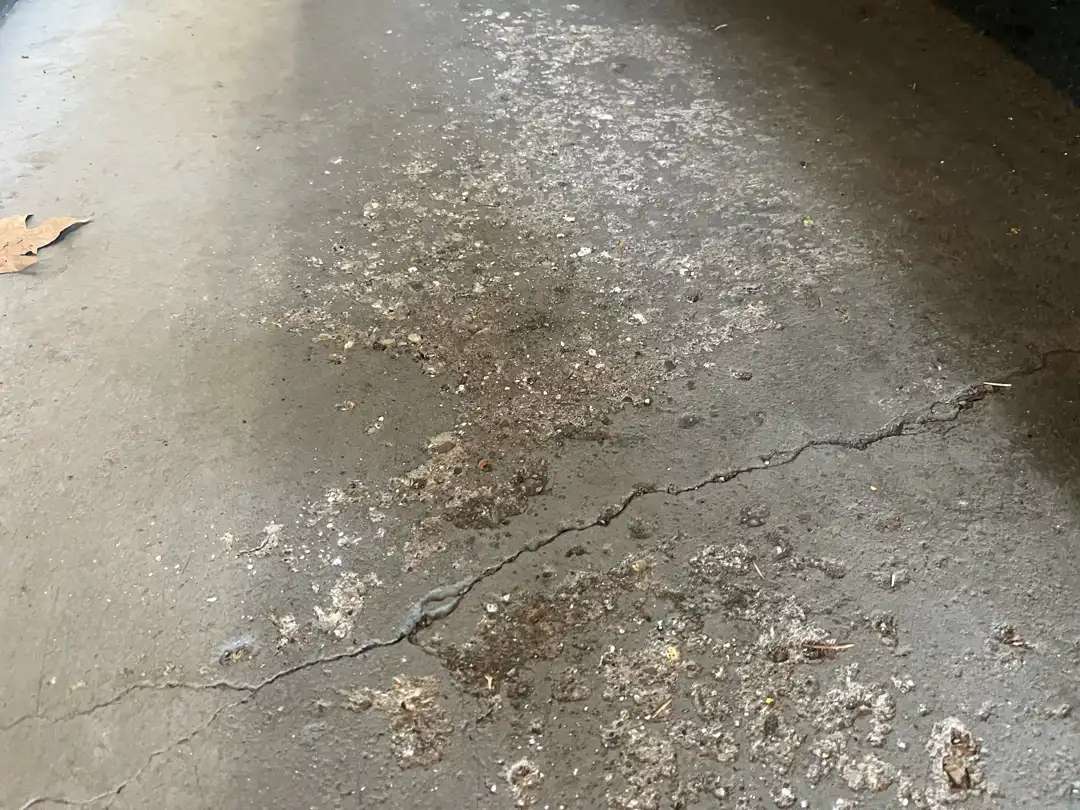
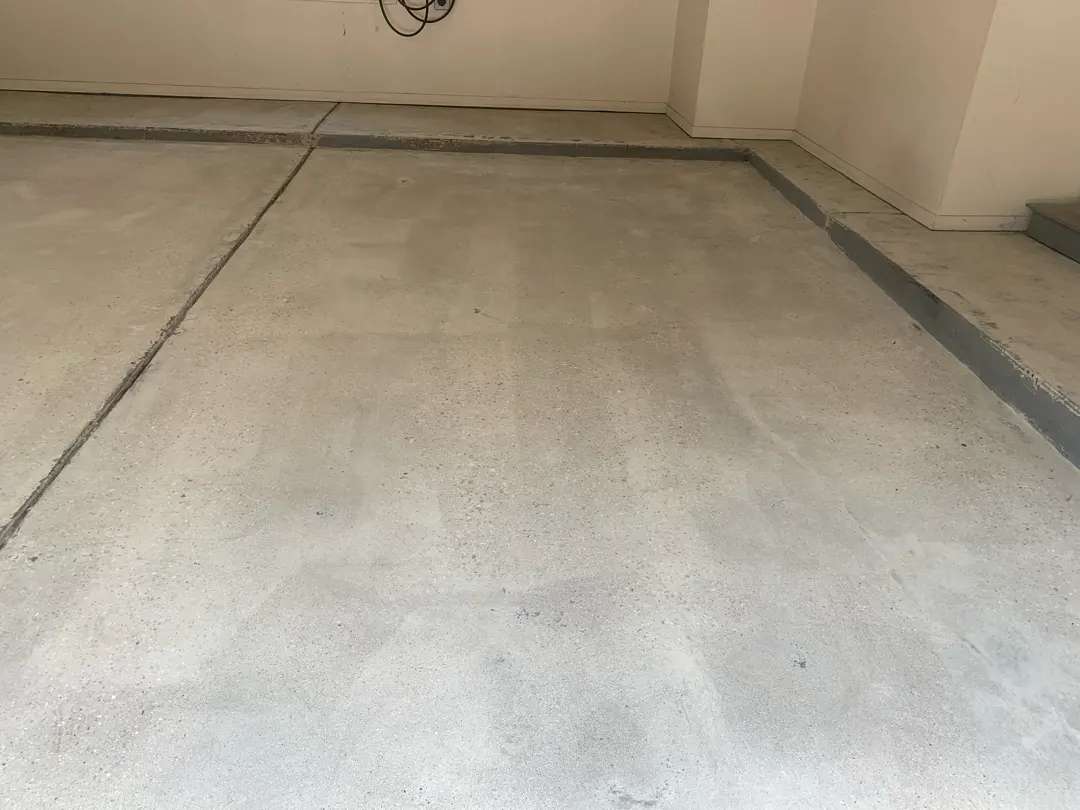
The before photos tell the story: decades of Michigan winters had left their mark. Significant pitting covered the surface, particularly near the garage door where freeze-thaw cycles and road salt had eroded the concrete down to exposed aggregate. Cracks traced stress lines across the slab, old paint clung in patches, and the relief joints had accumulated years of debris. One wooden step needed incorporation into the finished system.
The Work
With concrete temperature at 65°F, the crew started at 8:00 AM with aggressive surface preparation using 16-grit diamonds in an MC4 configuration—necessary to grind through the pitting and failed coatings to reach sound concrete. The 41 linear feet of vertical cove base received careful hand-grinding attention.
Once profiled, the system went down in layers:
Moisture Primer: 5 liters total of MR 50 (2.5L each of Part A and B) penetrated the concrete to create a vapor barrier and bonding surface.
Base Coat: 9 liters of pigmented polyurea (6L Part A, 3L Part B) in grey established the foundation color.
Flake Broadcast: 4.5 boxes of Silver Creek blend were thrown into the wet base coat, with 4.0 boxes recovered—leaving that distinctive granite-like pattern of grey, black, and white chips embedded in the surface.
Clear Top Coat: 18 liters of polyaspartic clear (9L each part), enhanced with 12 cups of sand and 18 caps of Shark Grip for slip resistance, sealed everything with a high-gloss finish.
The Result
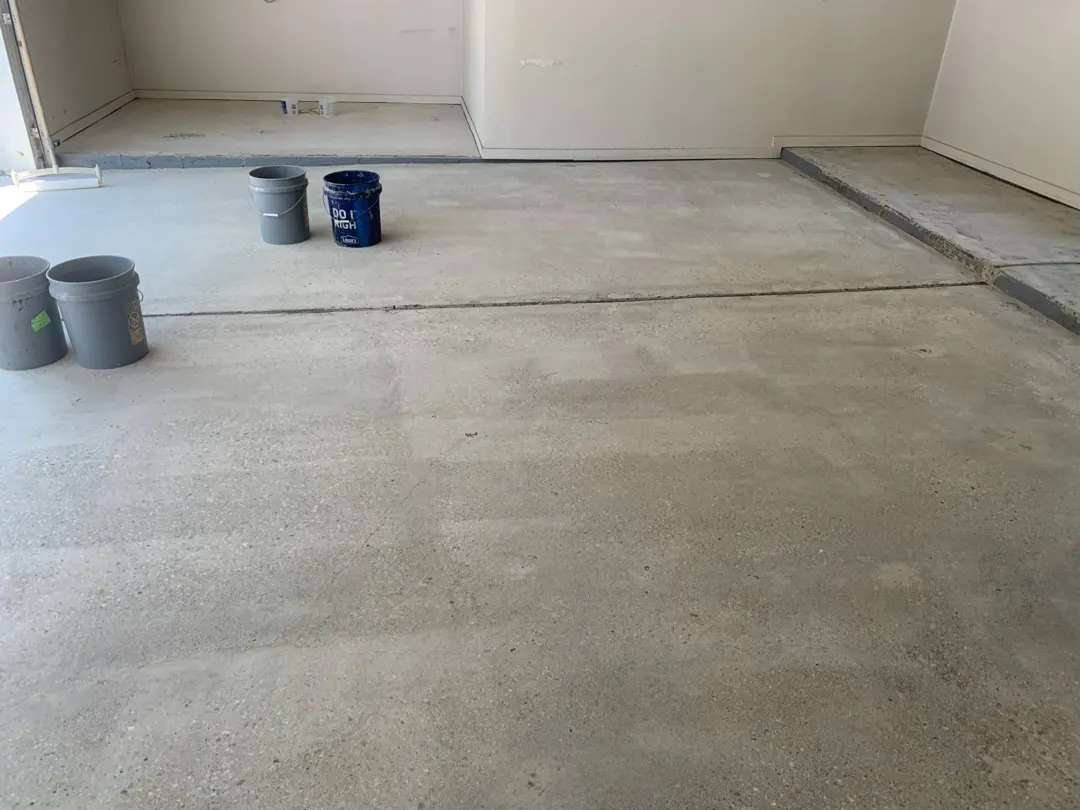
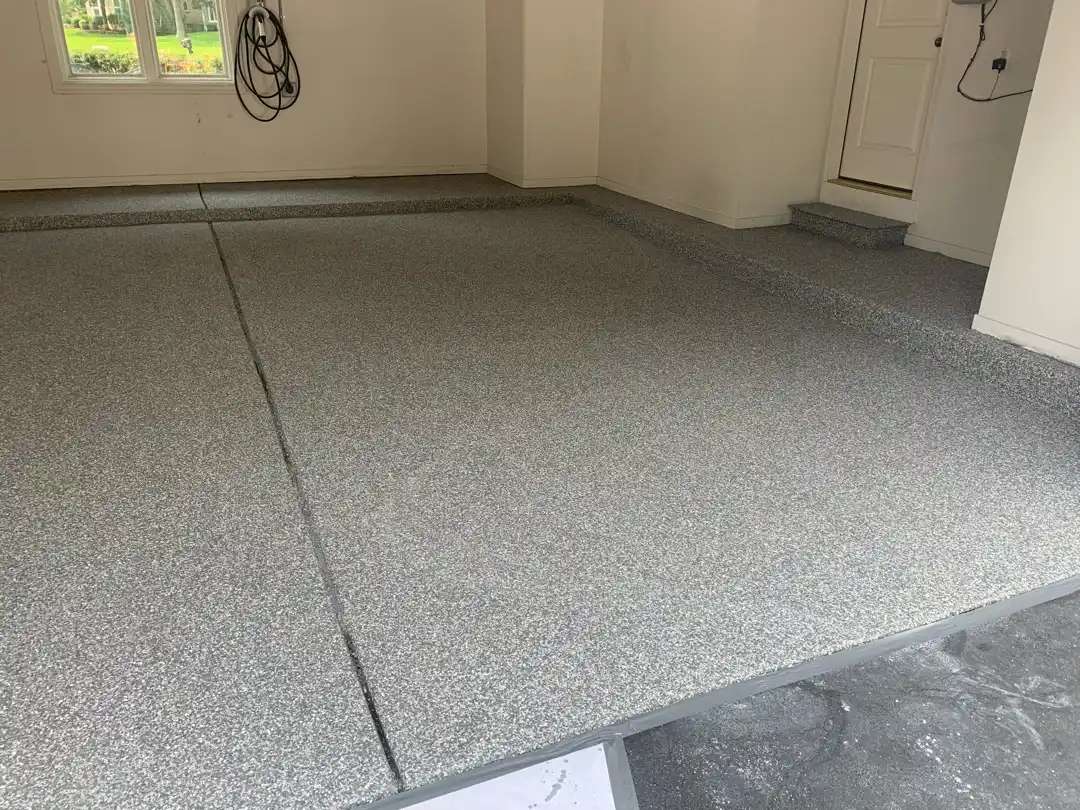
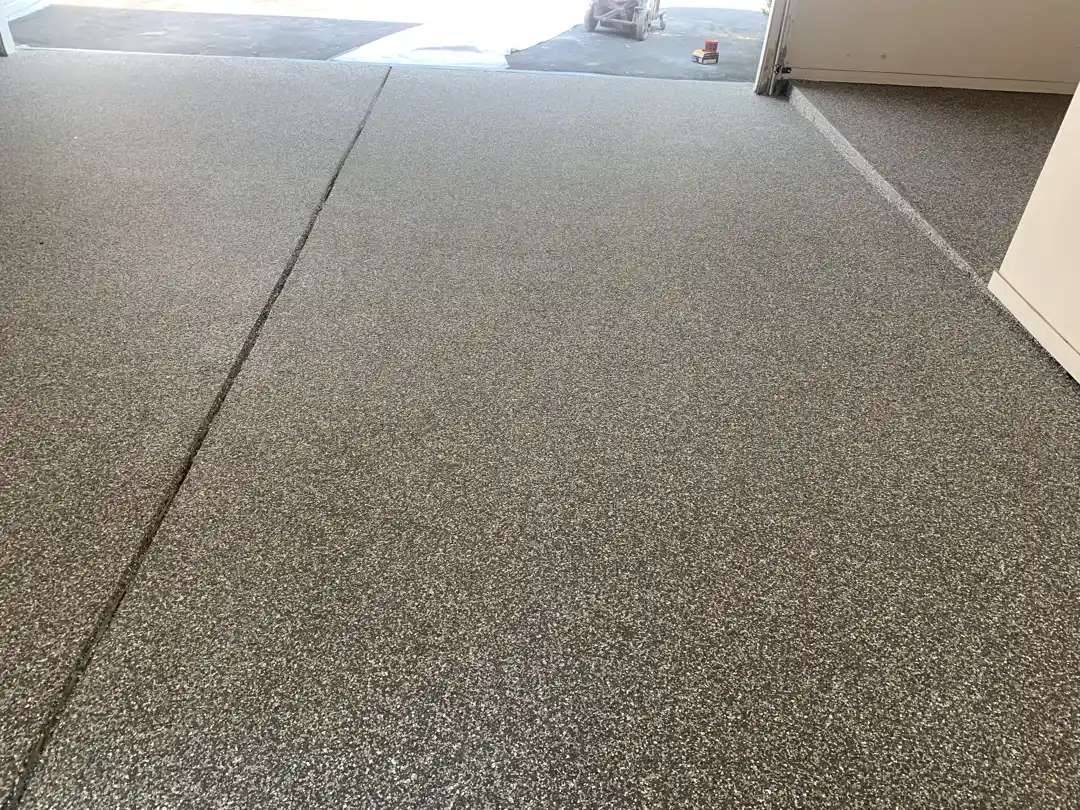
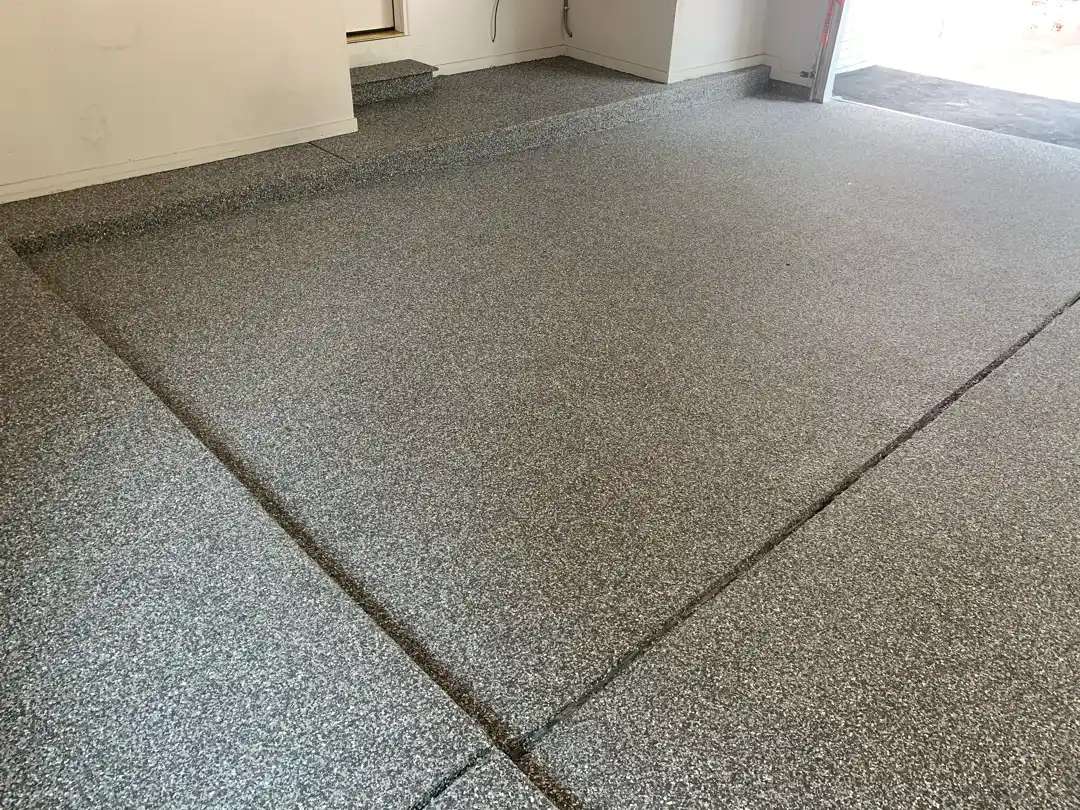
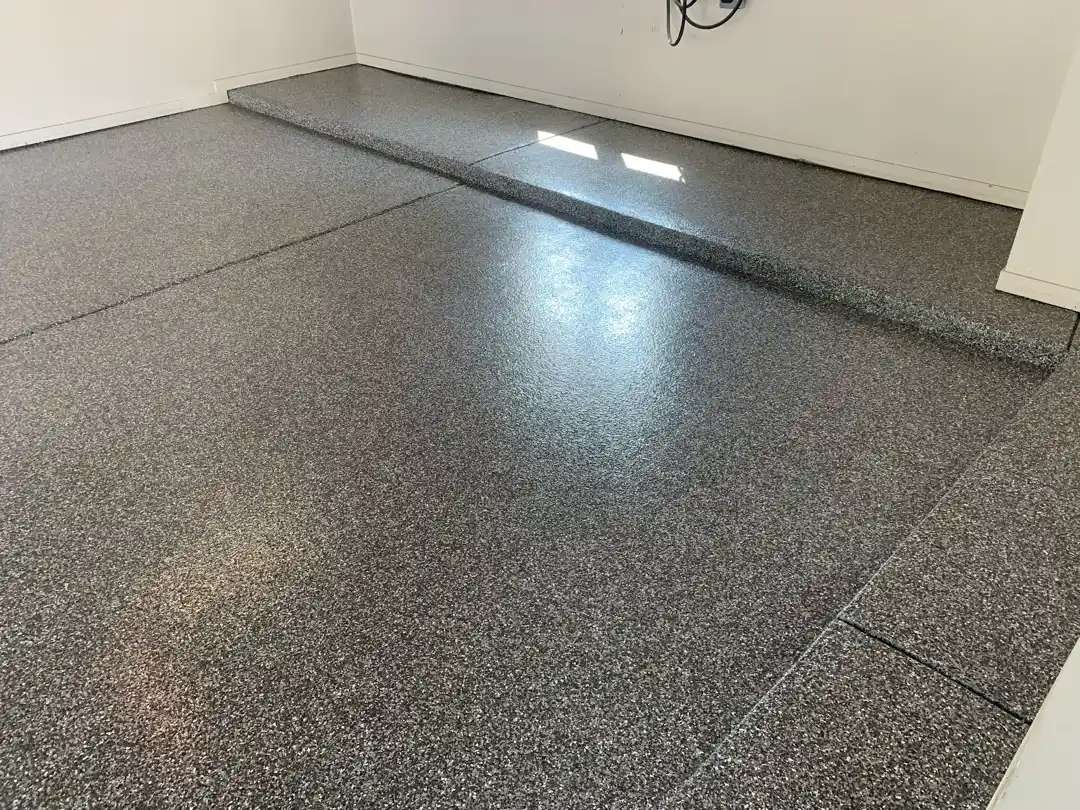
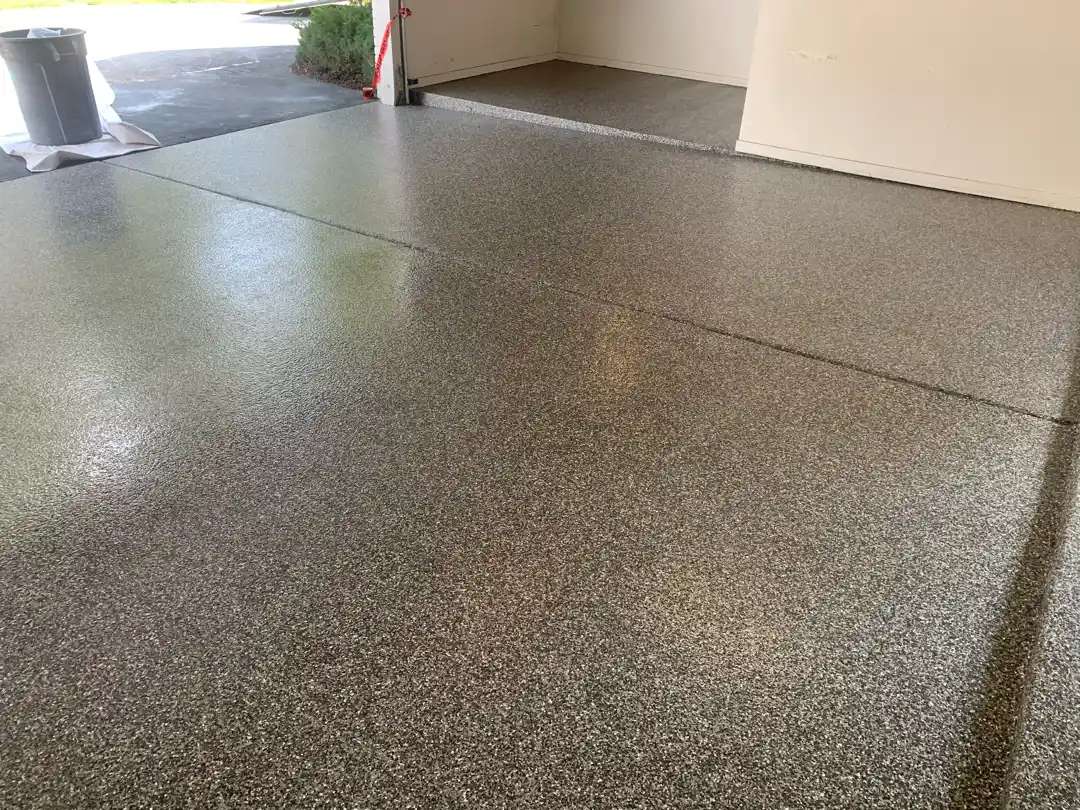
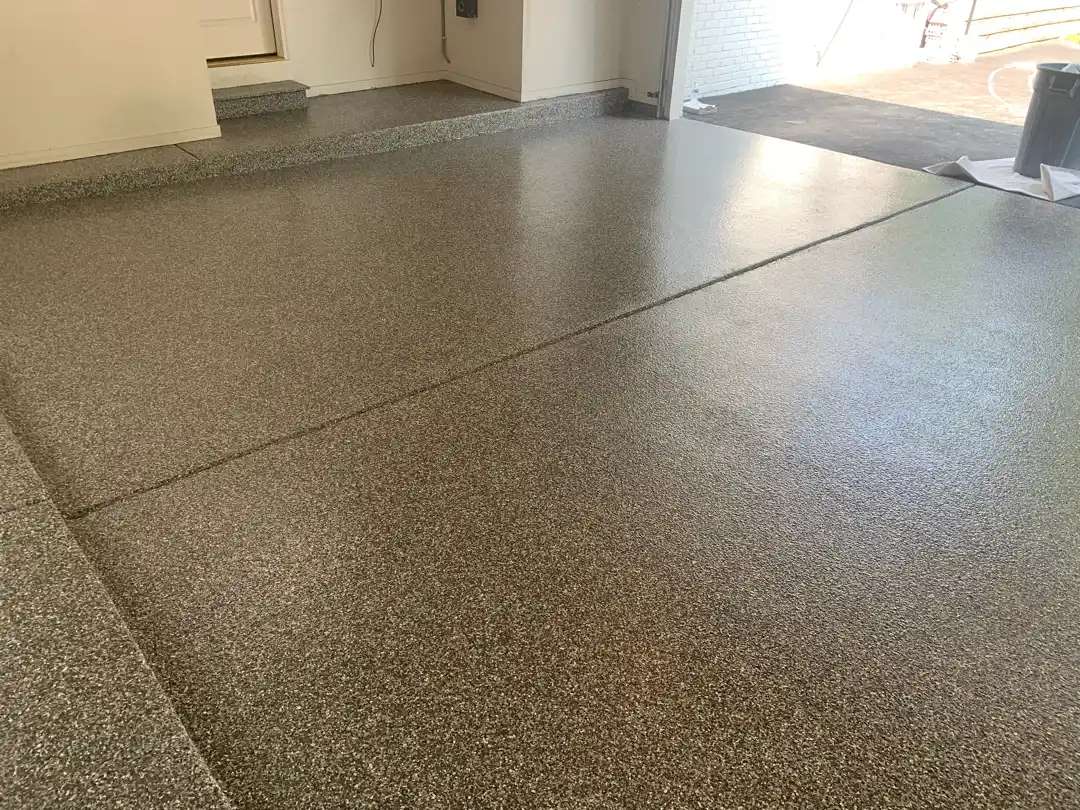
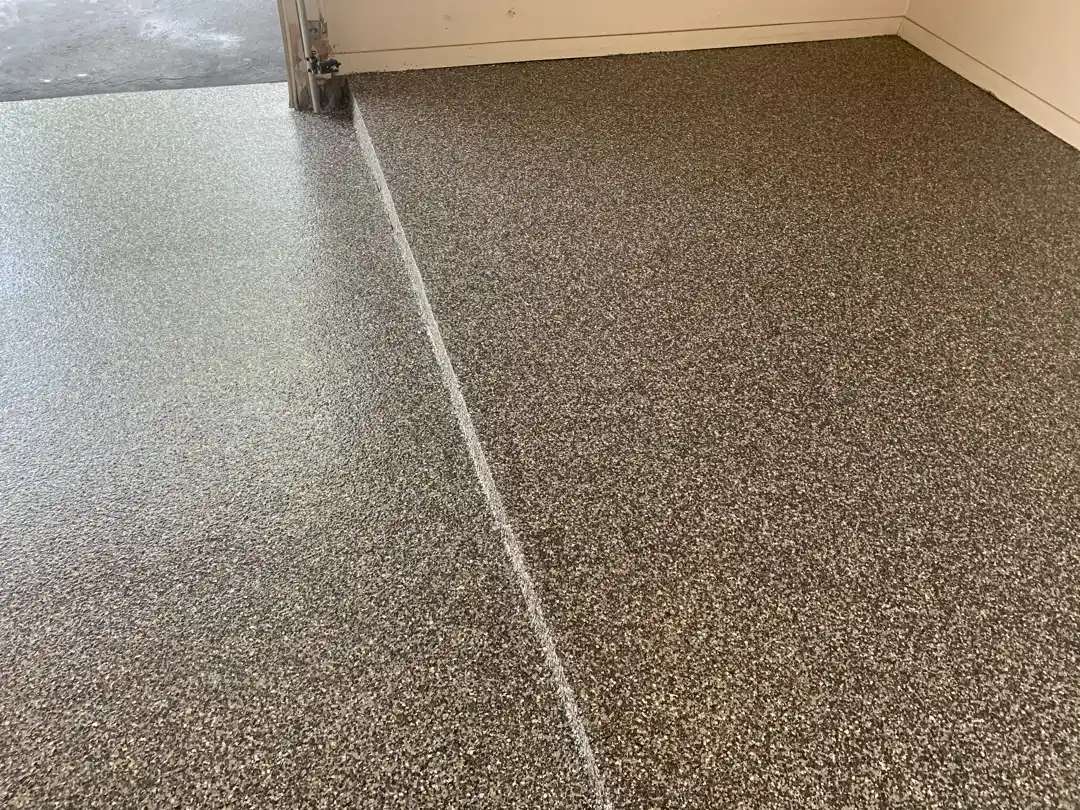
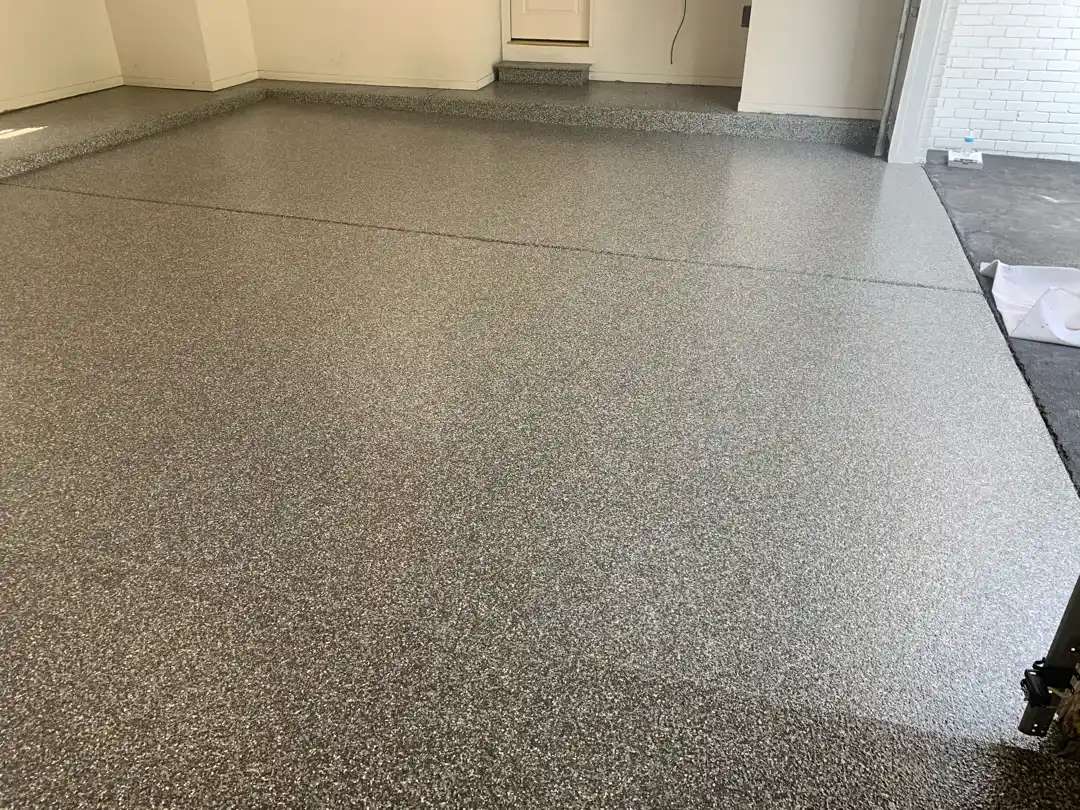
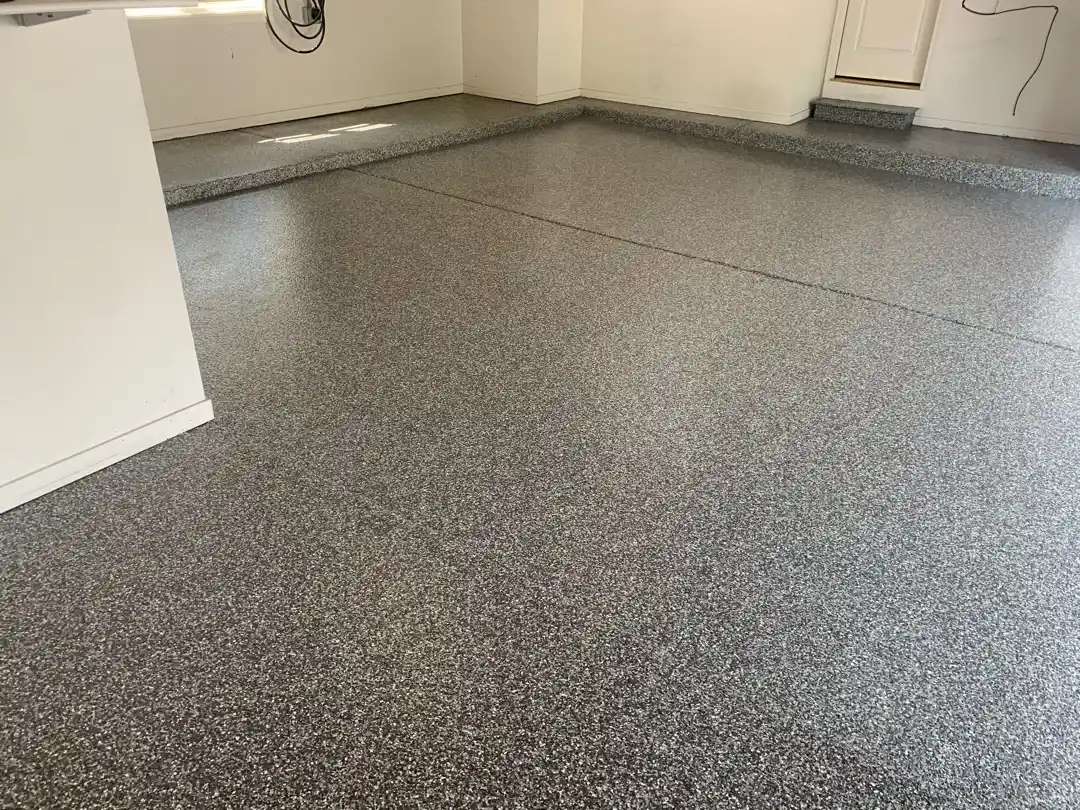
By 5:30 PM, the coating process was complete. The after photos show a seamless, glossy surface that completely conceals every pit, crack, and repair. The Silver Creek flake pattern unifies the entire space—main floor, step, and cove base—while the clear coat reflects light throughout the garage.
The control joints remain as clean geometric lines rather than debris-catching grooves. What was once a deteriorating liability became a showpiece floor in under ten hours.
The Bottom Line
This job demonstrates some of the core benefits of the polyurea-polyaspartic system: single-day installation with vehicle traffic possible within 24-48 hours, chemical and abrasion resistance for durability, and UV stability.
More importantly, it shows why aggressive surface preparation matters. That 16-grit grinding removed every trace of the original problems—you’d never know from the finished floor that the concrete beneath was severely compromised. The homeowners went from a garage floor they probably avoided looking at… to one worth showing off.


Click on the photos to enlarge them
The Champlain Circle
Garage Floor Transformation
On September 18, 2023, Billy and his crew from Truck #3 arrived at a residence on Champlain Circle in West Bloomfield Township, MI. The 561-square-foot garage awaited its transformation.
The Challenge
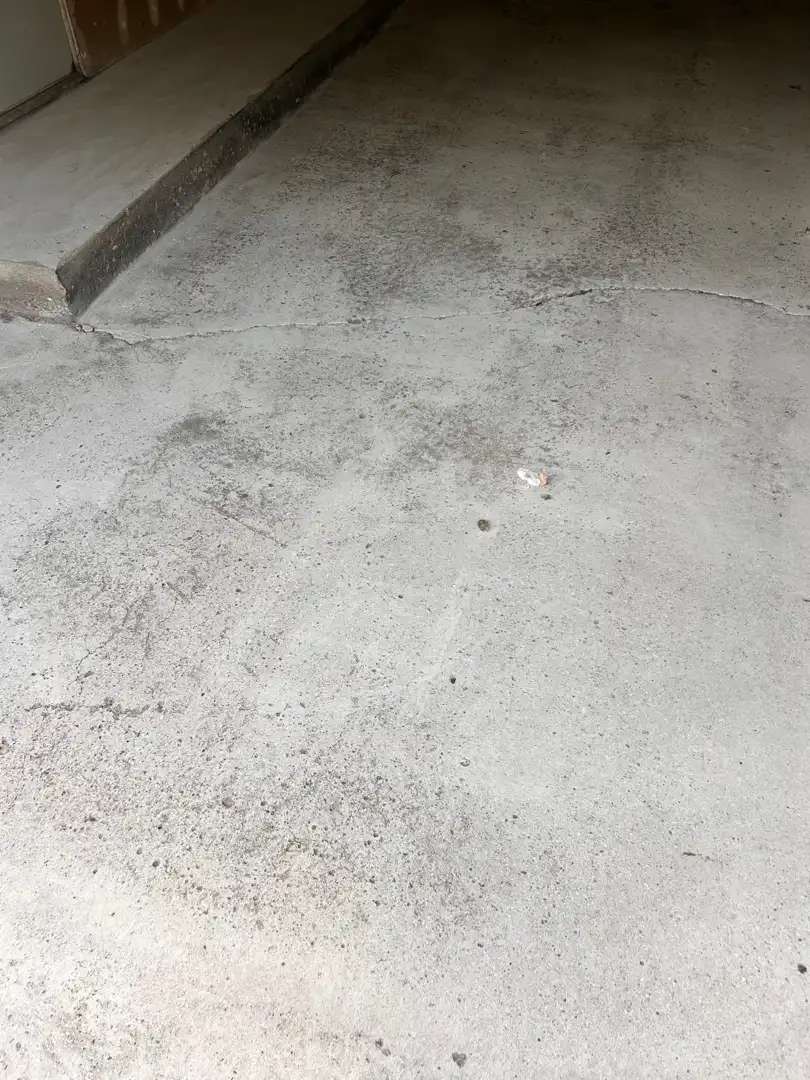
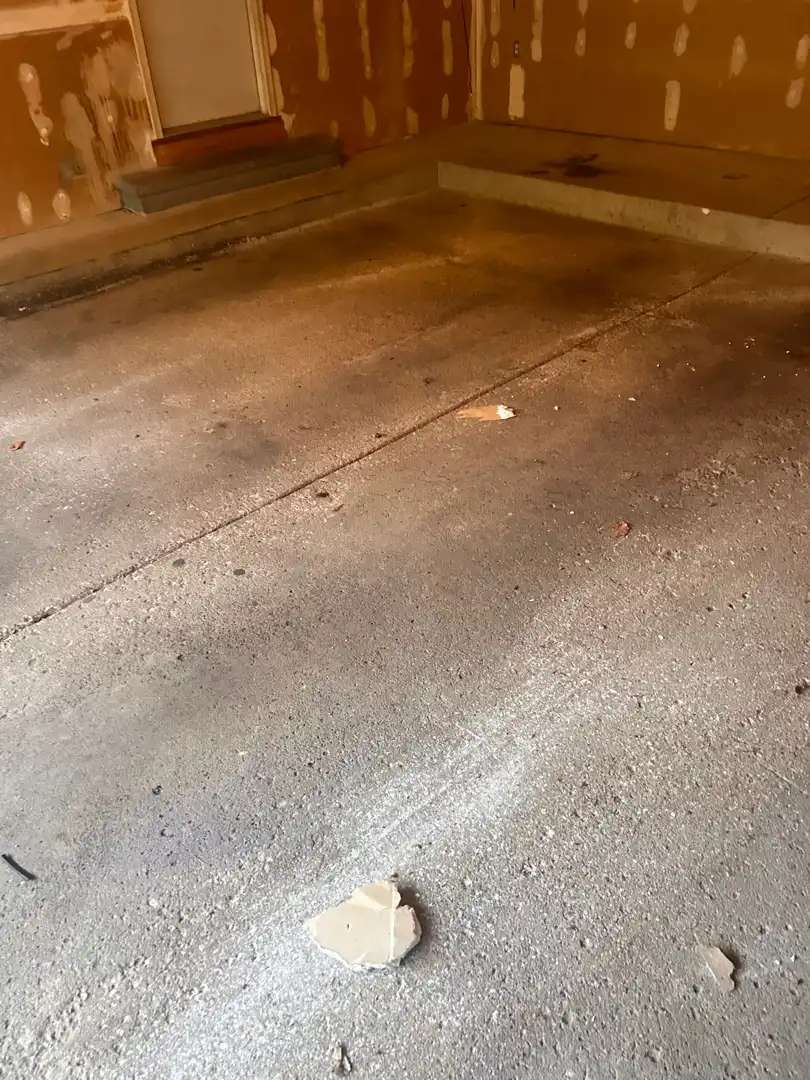
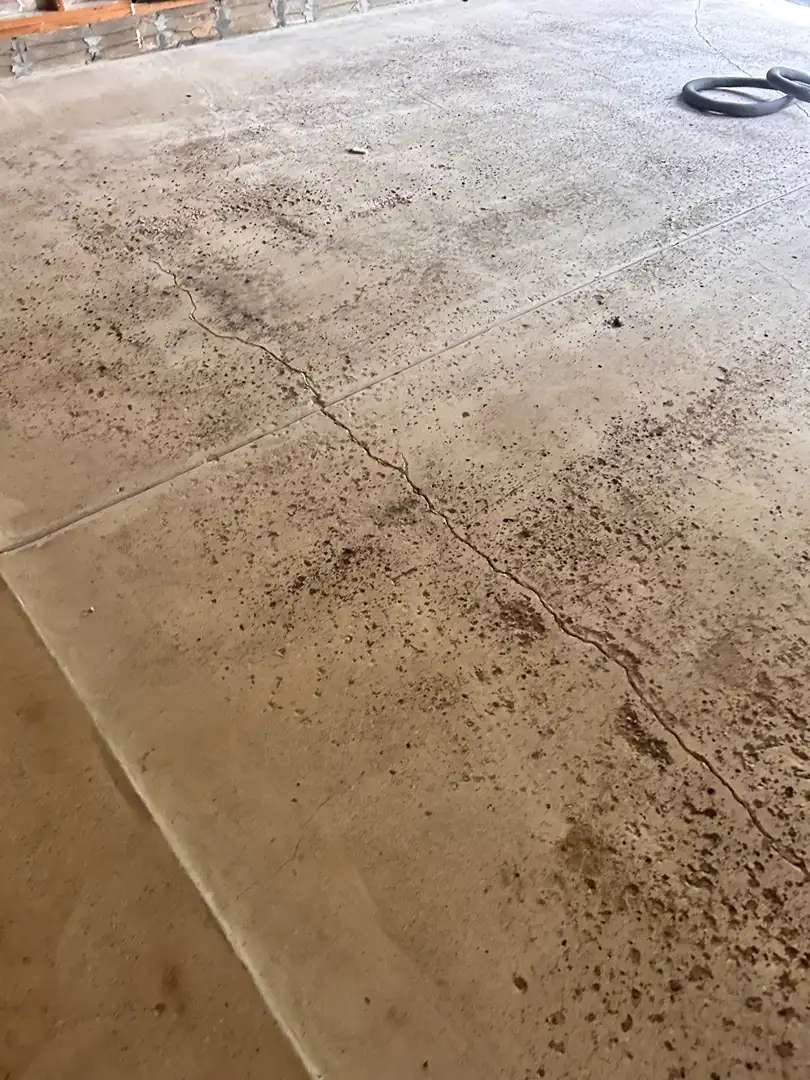
The before photos reveal a floor showing its age: a prominent crack snaking across the slab, light pitting scattered throughout, and the general staining that accumulates over years of vehicle traffic. One concrete step leading to the house needed incorporation into the finished system, along with 35 linear feet of vertical step-up around the perimeter. The crew noted the floor would need a light flood coat to address the pitting—extra material to fill the surface imperfections before the decorative layer.
The Work
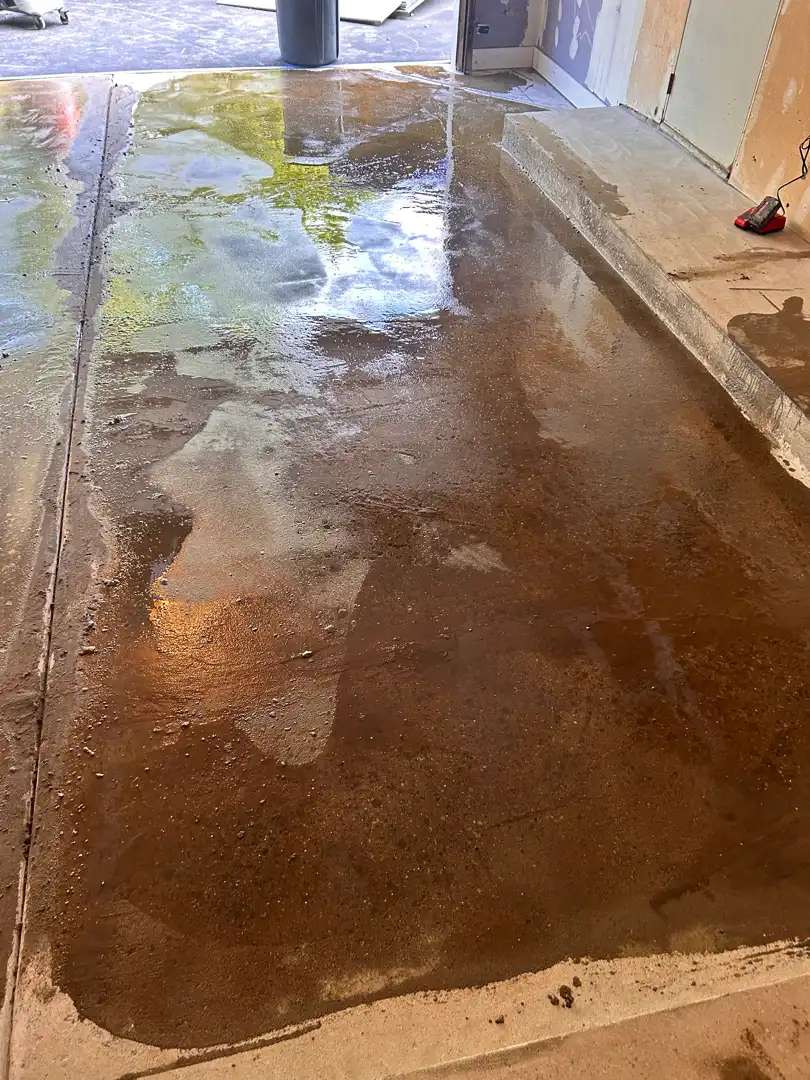
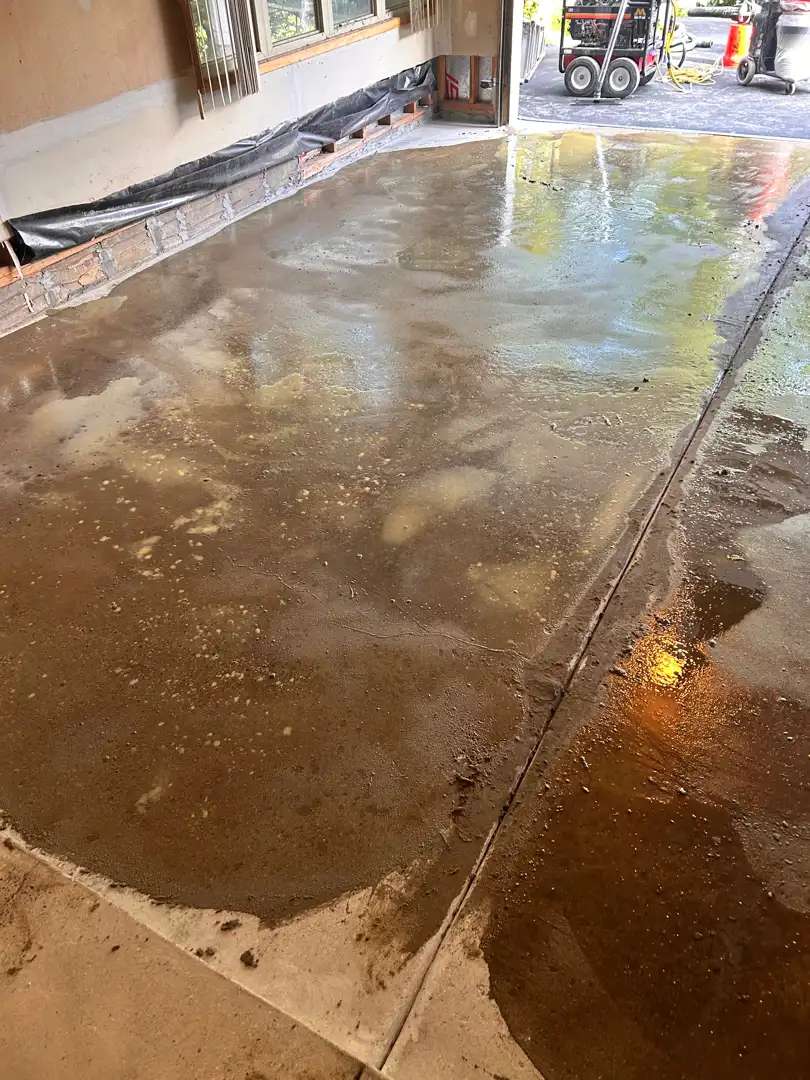
Starting at 8:00 AM, surface preparation began with diamond grinding using an M-4 configuration and 16-grit diamonds. The “mended” photos capture the floor after grinding—wet from cleaning, with the crack repaired and the surface profiled to accept the coating system.
The system went down in layers:
Moisture Primer: A generous 18 liters total of MR 50 (9L each of Part A and B)—notably more than typical for this square footage, addressing the light flood requirement to fill surface pitting.
Base Coat: 7.5 liters of pigmented polyurea (5L Part A, 2.5L Part B) in grey established the foundation.
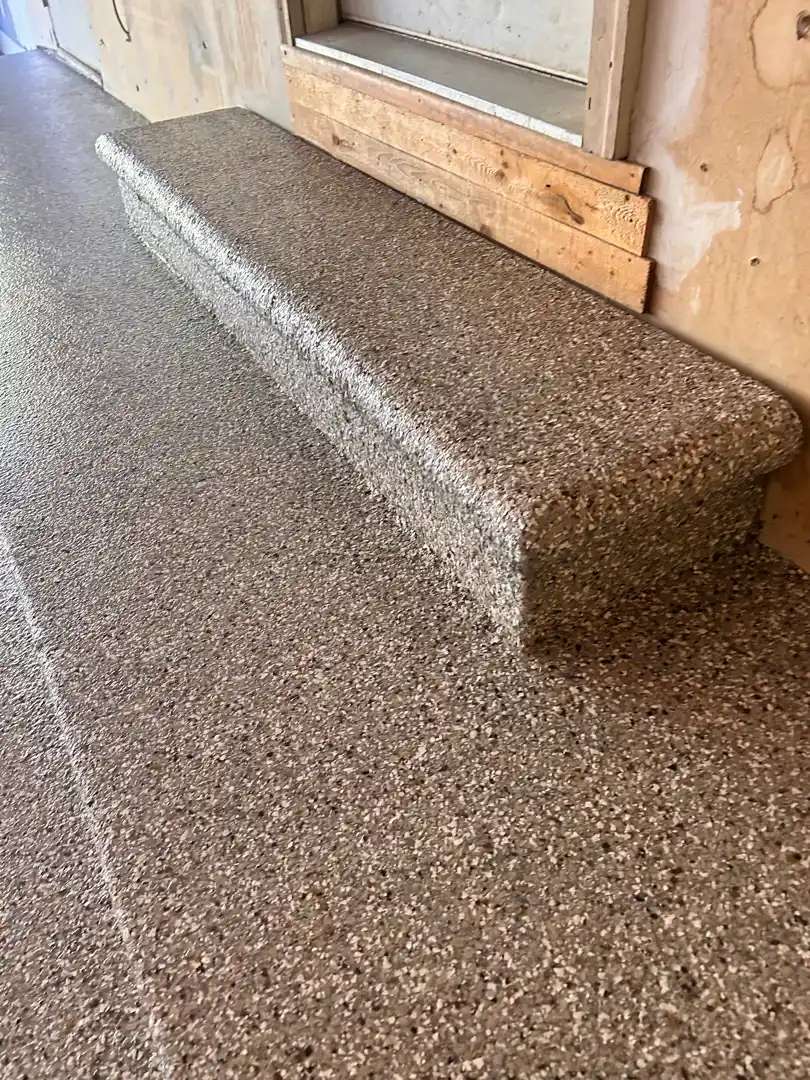
Flake Broadcast: 4 boxes of Pebble Beach blend were thrown into the wet base, with 2.5 boxes recovered. That 1.5-box retention rate created substantial coverage—the warm tan and brown tones of Pebble Beach giving this floor a distinctly different character than the cooler Silver Creek blend.
Clear Top Coat: 14 liters of polyaspartic clear (7L each part), enhanced with 16 cups of sand and 14 caps of Shark Grip for slip resistance.
The Result
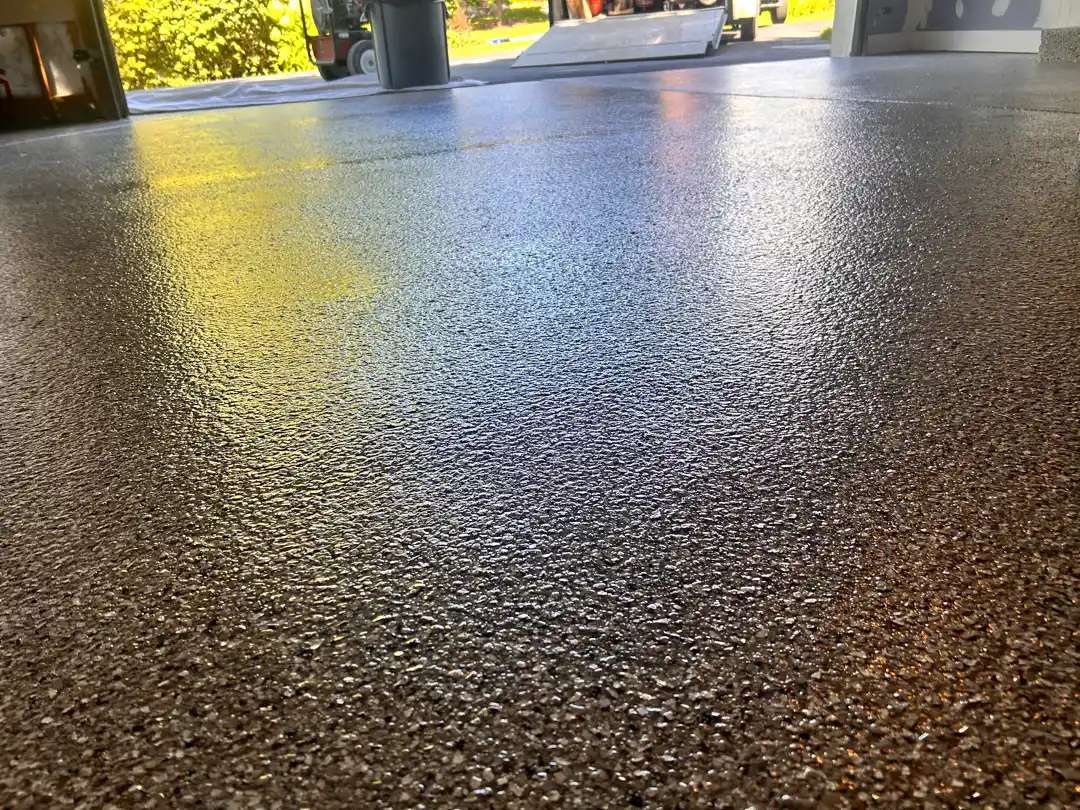
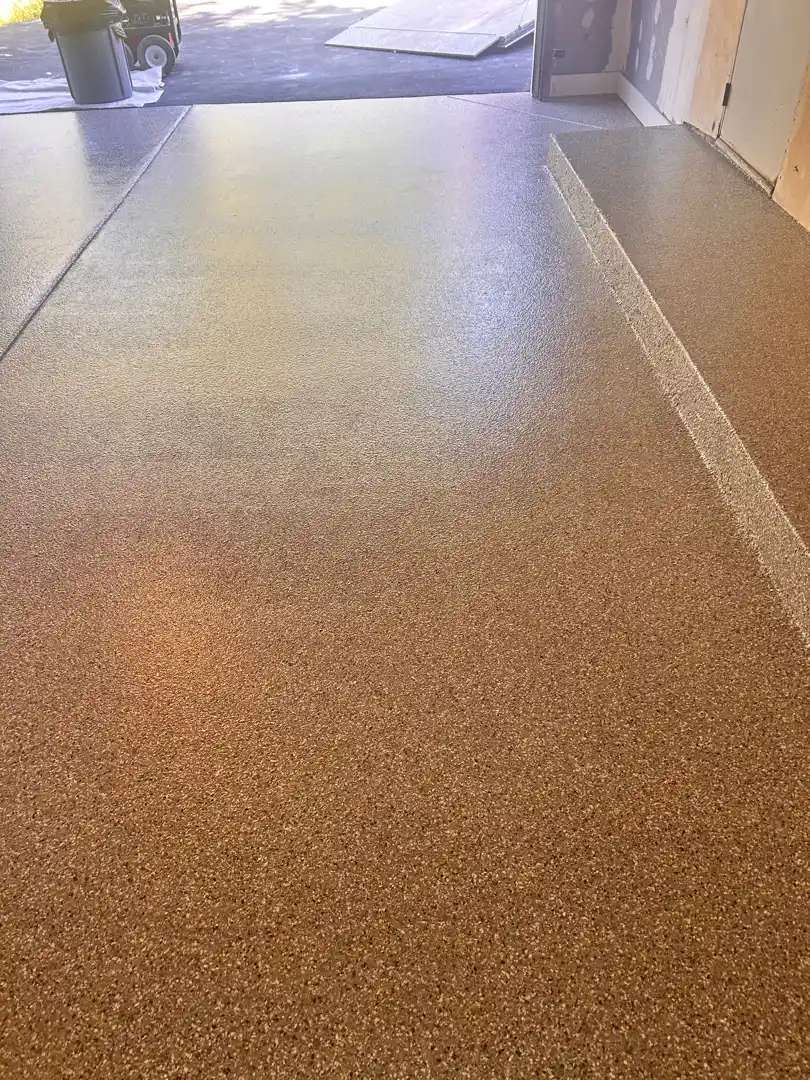
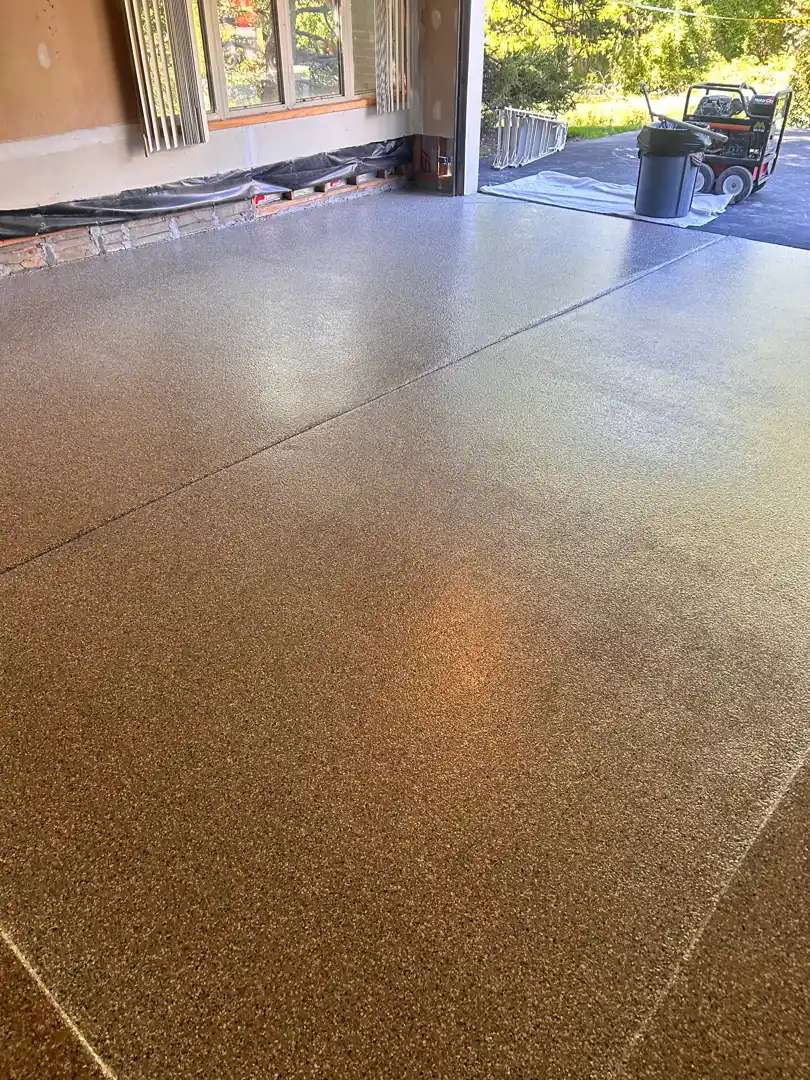
By 3:00 PM—just seven hours after starting—the transformation was complete. The after photos showcase that distinctive Pebble Beach aesthetic: warm earth tones that complement the home’s wood trim visible through the garage windows. The glossy clear coat catches afternoon light, creating an almost wet-look sheen across the entire surface.
The concrete step received full treatment, its bullnose edge now protected and visually integrated with the main floor. The crack that once traced across the slab has vanished beneath the flake pattern. Control joints remain as clean geometric lines rather than the debris-catching grooves they once were.
The Bottom Line
This Champlain Circle job demonstrates efficient execution on a straightforward installation. The concrete was in relatively good condition—light pitting and one crack versus severe deterioration—allowing the crew to complete the work in seven hours rather than a full day. The light flood coat addressed the pitting without requiring extensive repair work.
Benjamin Bershad’s garage went from tired concrete to a warm, inviting space that looks more like finished living area than utility space. The Pebble Beach color choice gives it a natural stone appearance that will hide dirt and tire marks while providing the durability to handle Michigan’s salt-laden winters.


Click on the photos to enlarge them
The Lakeshore Street
Garage Floor Transformation
This West Bloomfield Township job came with some welcome context: a repeat customer. When someone who sees flooring professionally every day chooses you twice, that’s validation. Our crew arrived at the Lakeshore Street property to find an 802-square-foot garage—significantly larger than typical residential jobs—and a brand-new paver driveway that needed careful protection.
The Challenge
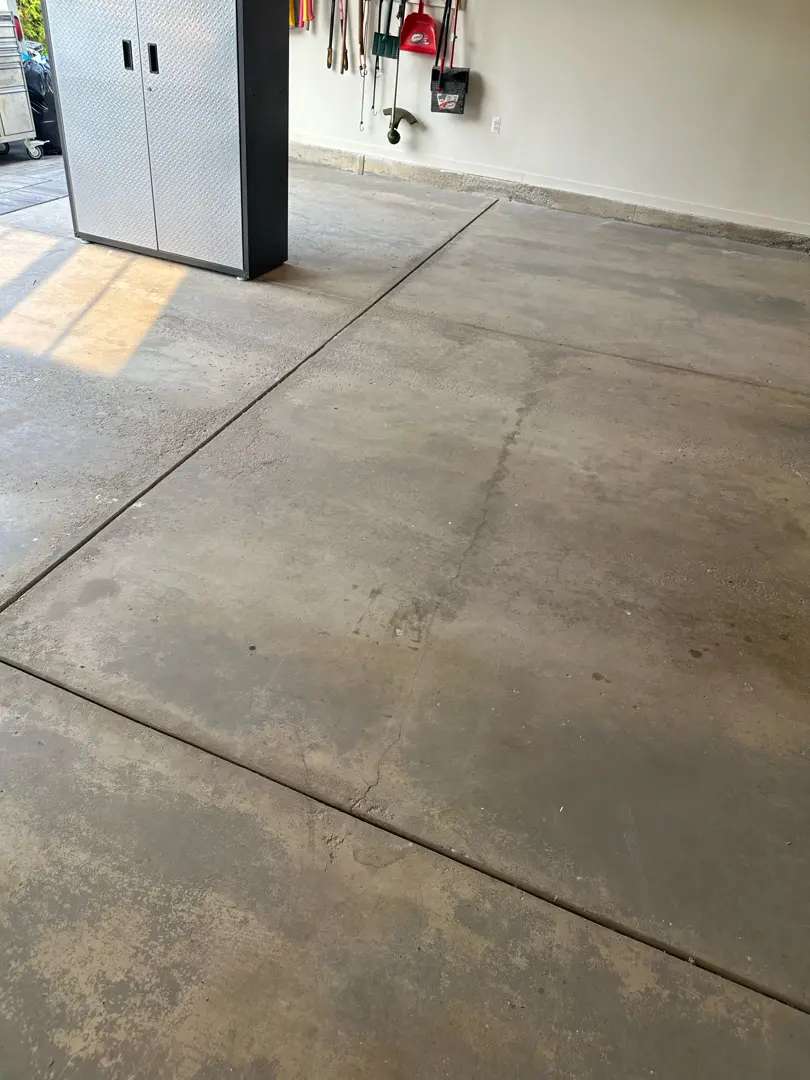
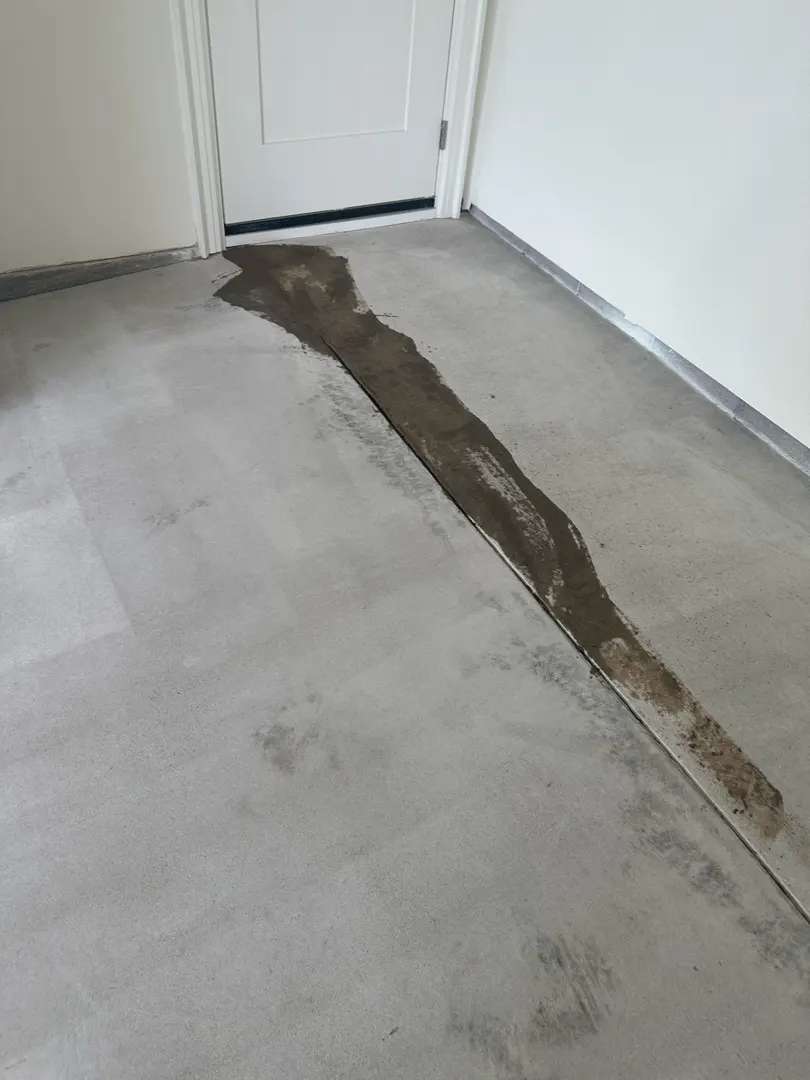
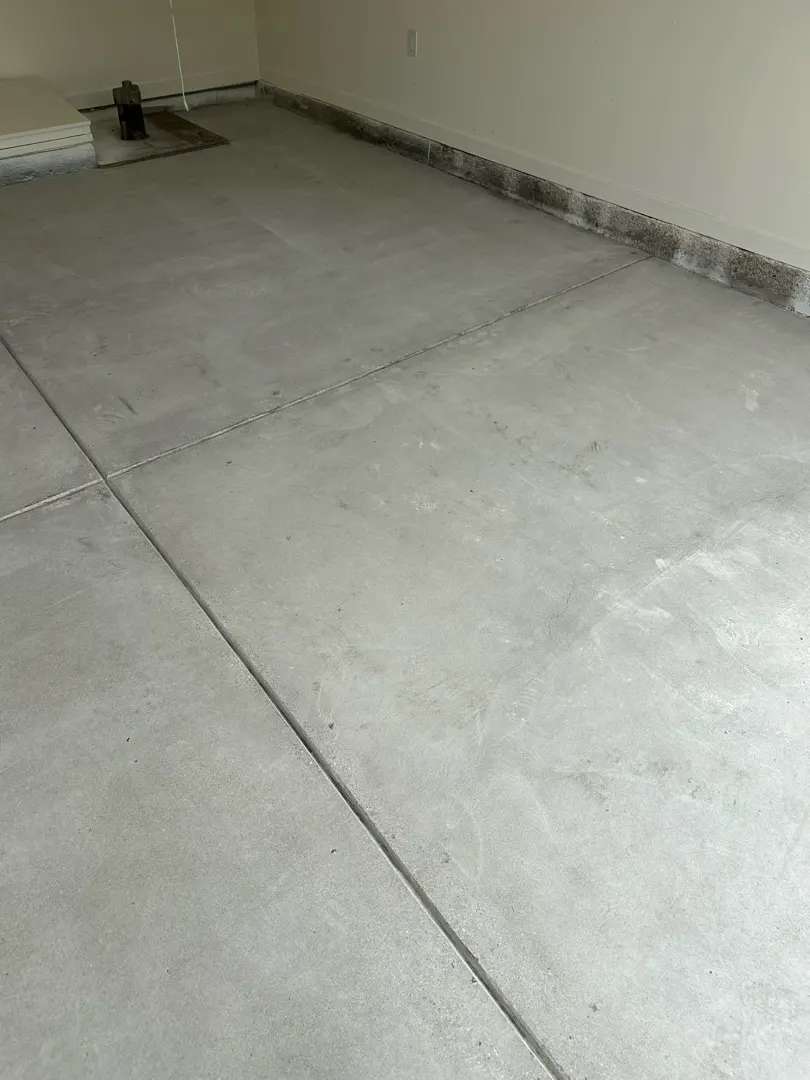
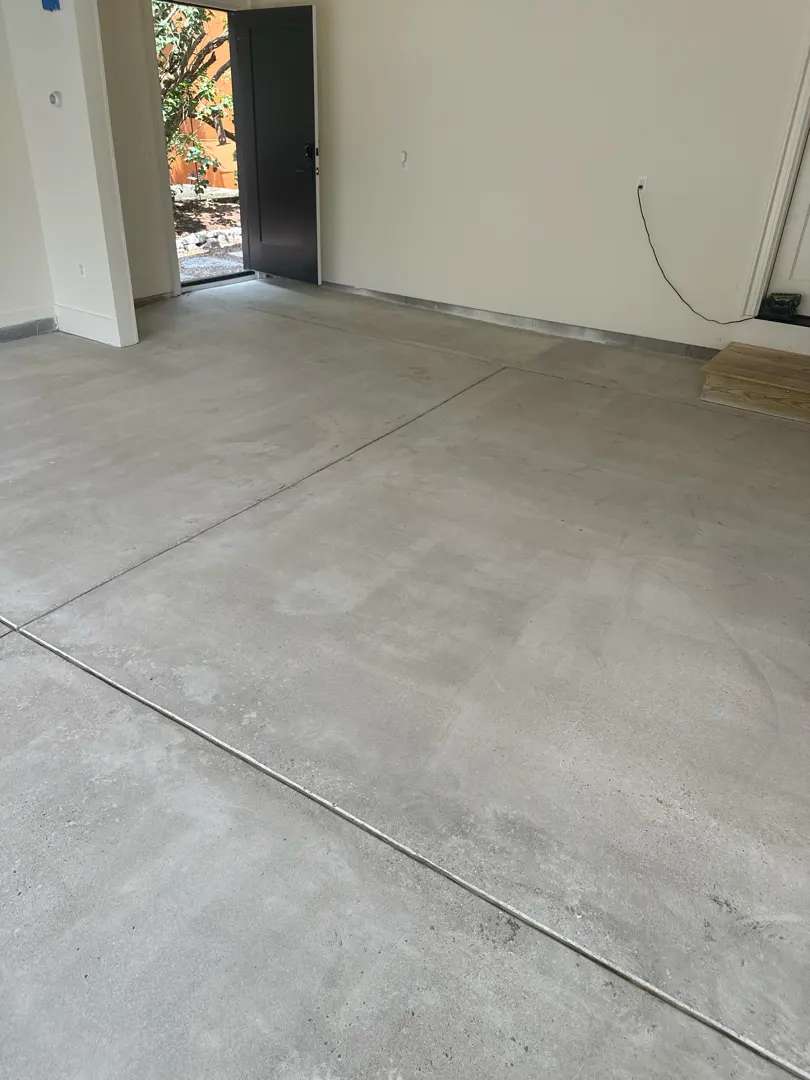
The before photos reveal a well-maintained garage showing its age in predictable ways: light pitting concentrated in the parking zones where vehicles sit, general surface staining throughout, and a crack requiring repair near the house entry. The space featured built-in shelving with HVAC ducting—obstacles requiring careful detail work. With 89 linear feet of verticals covering all sides plus the existing step, this job demanded substantial cove base attention.
The steep driveway meant parking equipment at the bottom and hauling materials up—a logistical consideration that adds time without adding square footage to the job.
The Work
Surface preparation used an M-4 configuration with 16-grit diamonds, profiling the entire 802 square feet to create proper mechanical bond. The “mended” photos capture the floor wet from cleaning after grinding, with crack repairs curing and the pitting addressed.
Based on the square footage (roughly 1.4x larger than typical 560 sq ft jobs), the system required proportionally more material:
Moisture Primer: Approximately 7-8 liters of MR 50 to seal the concrete matrix.
Base Coat: Around 13 liters of pigmented polyurea in grey foundation.
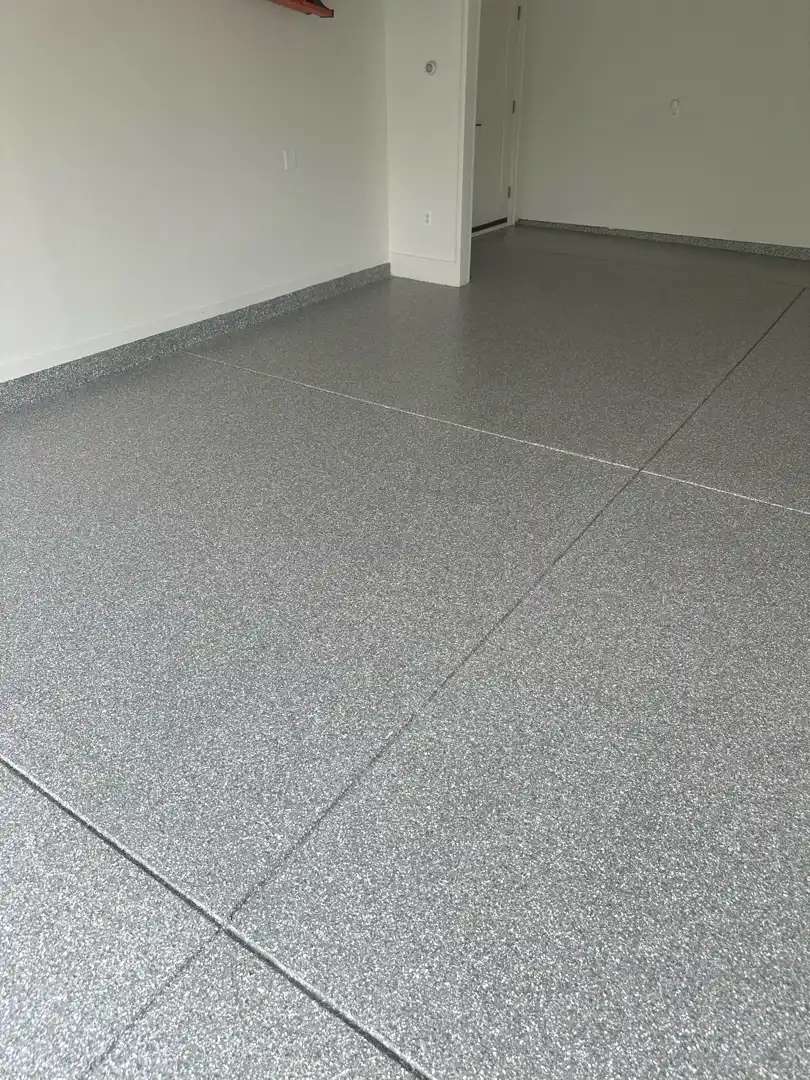
Flake Broadcast: Roughly 6-7 boxes of Stoney Creek blend thrown, with approximately 4-5 boxes recovered. The grey-toned Stoney Creek creates that granite-like appearance similar to Silver Creek but with subtle color variation.
Clear Top Coat: Approximately 26 liters of polyaspartic clear, enhanced with roughly 17 cups of sand and 26 caps of Shark Grip for slip resistance appropriate to a garage this size.
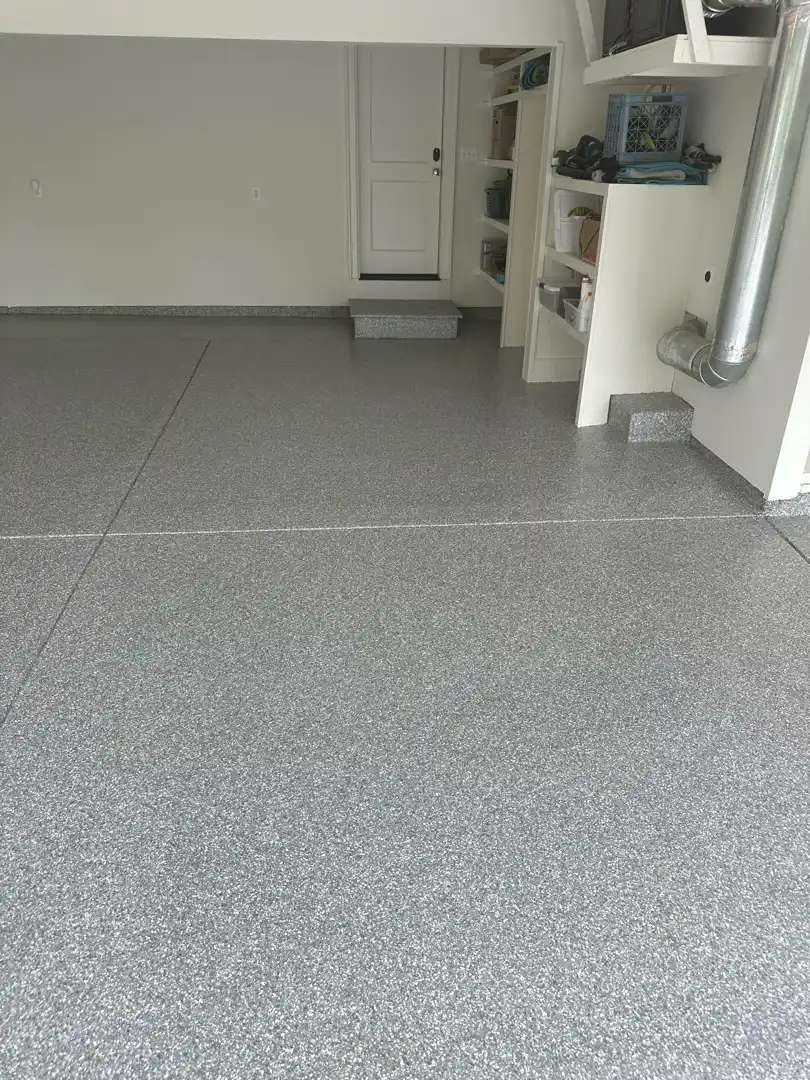
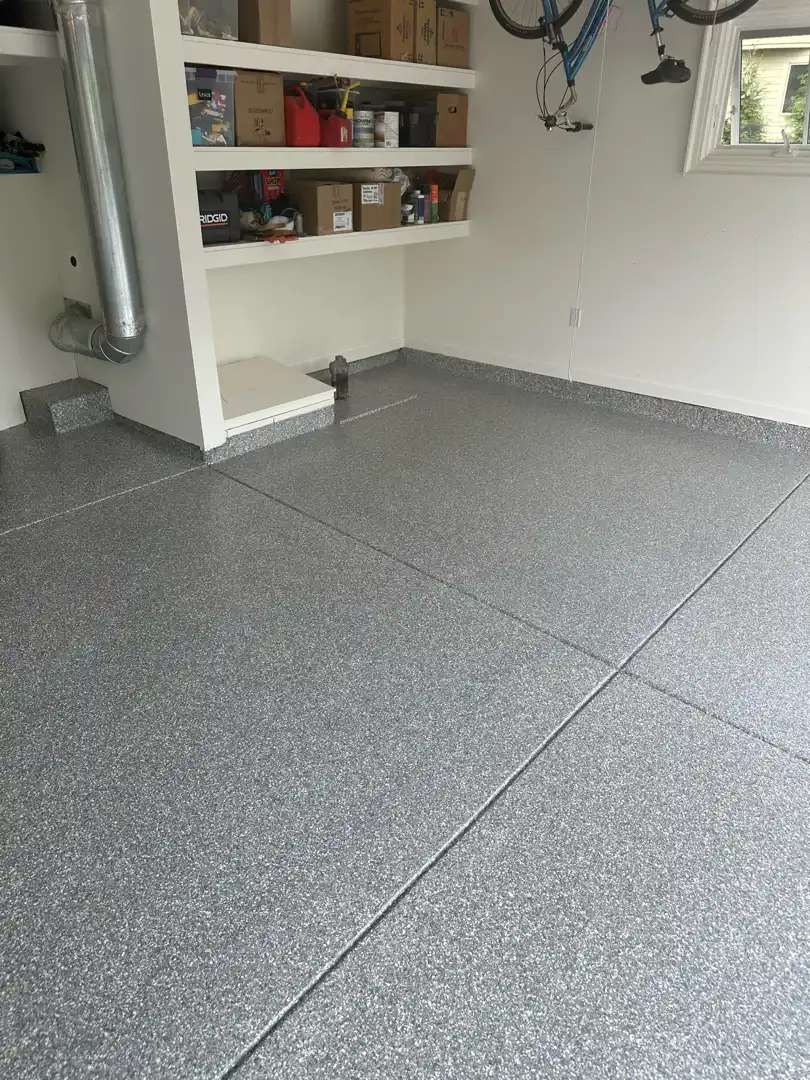
The 89 feet of vertical cove base—more than double some jobs—required meticulous hand work, especially navigating around the shelving unit and HVAC components visible in the finished photos.
The Result
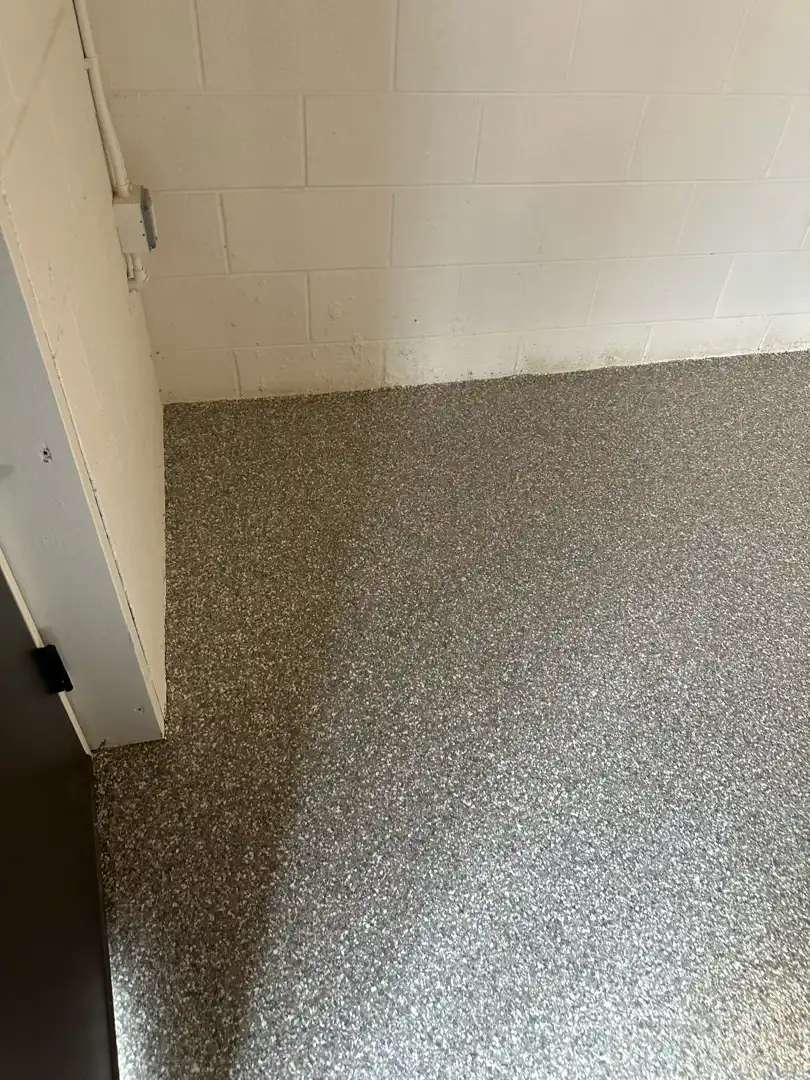
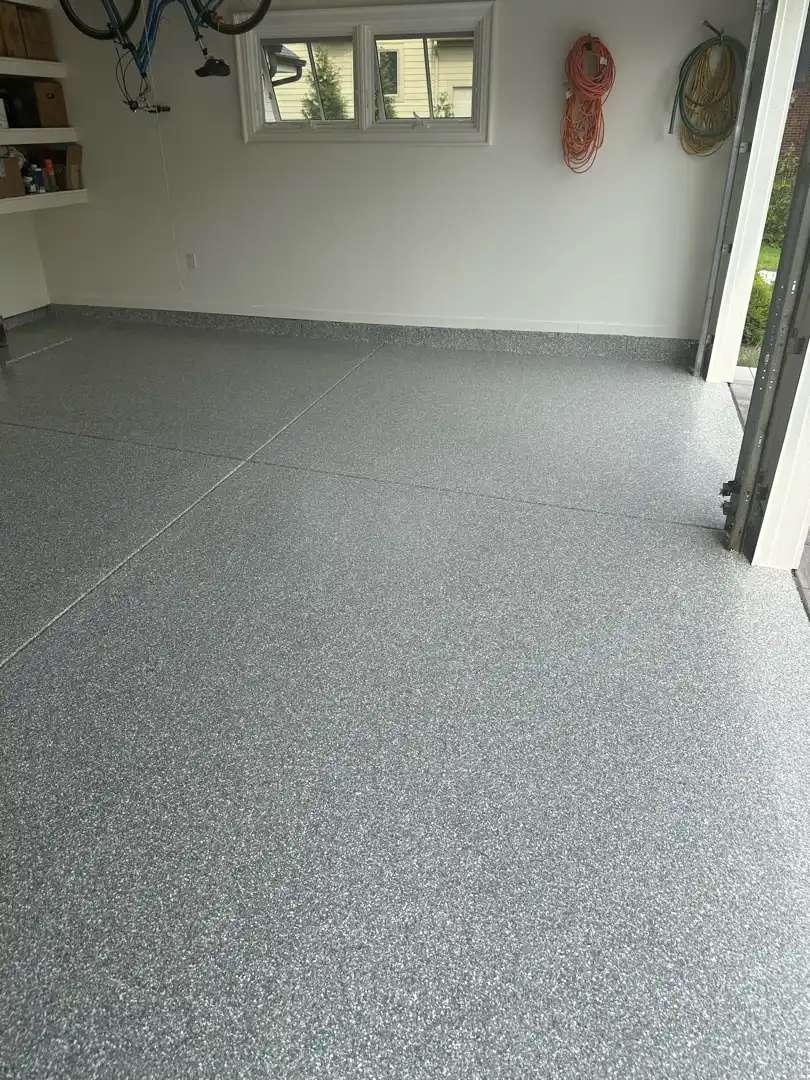
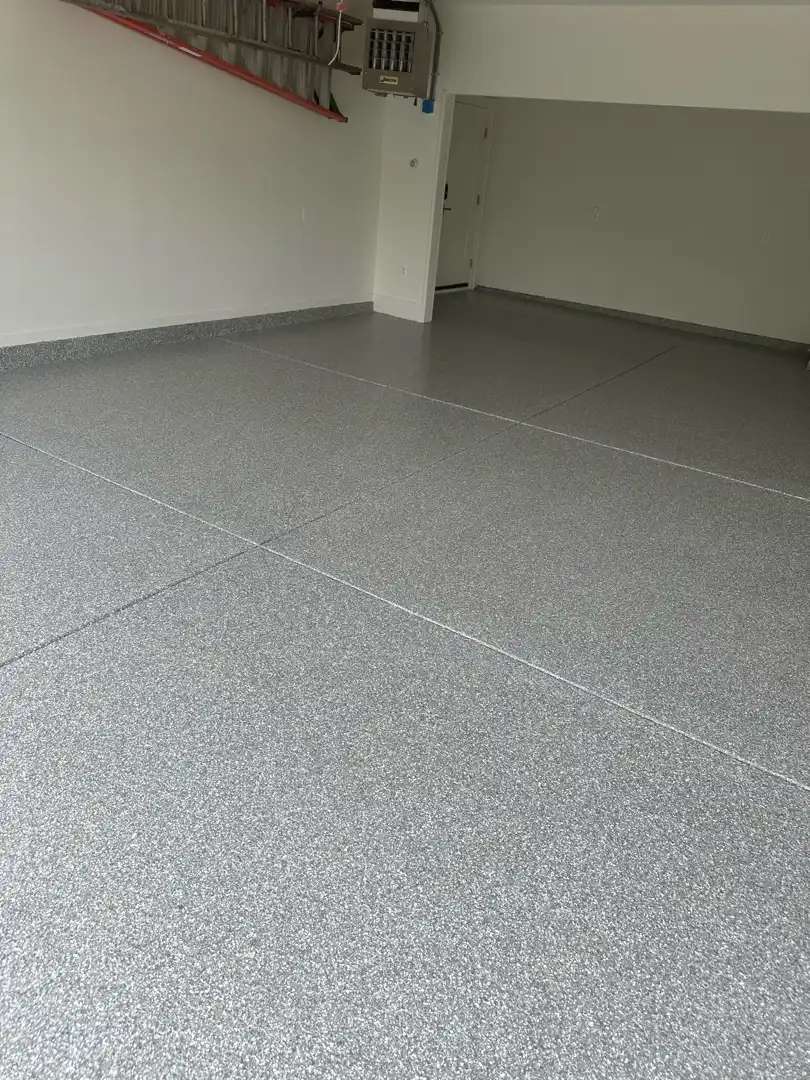
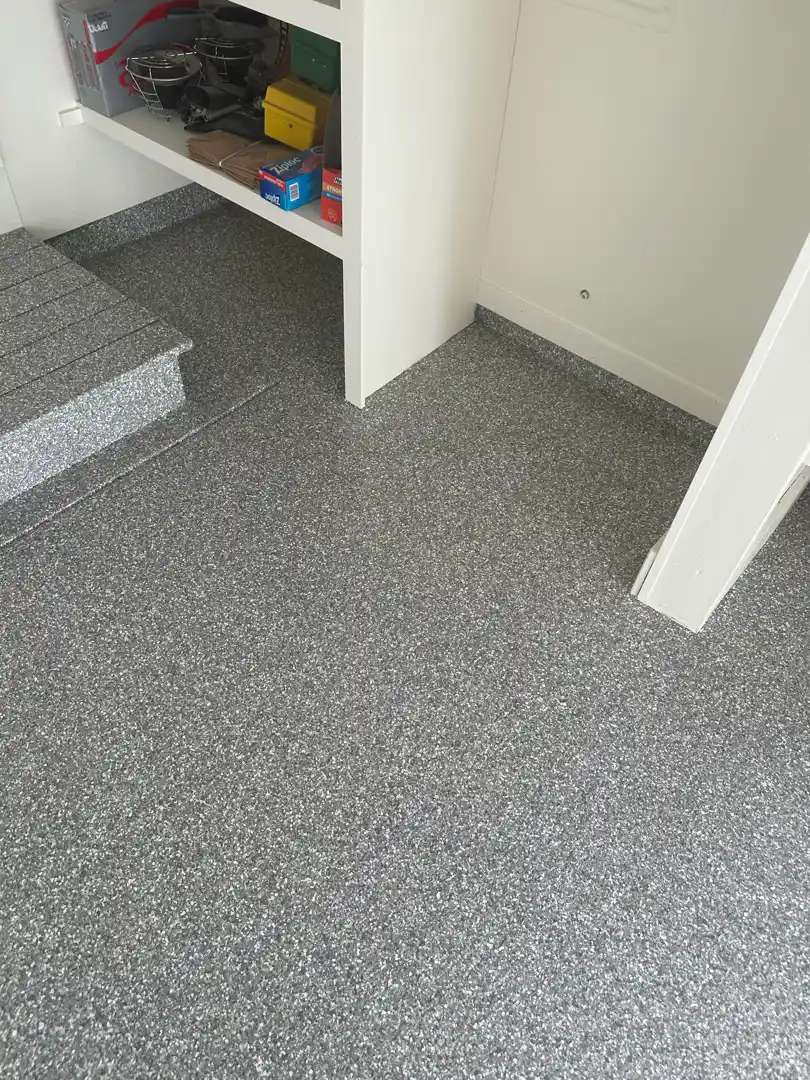
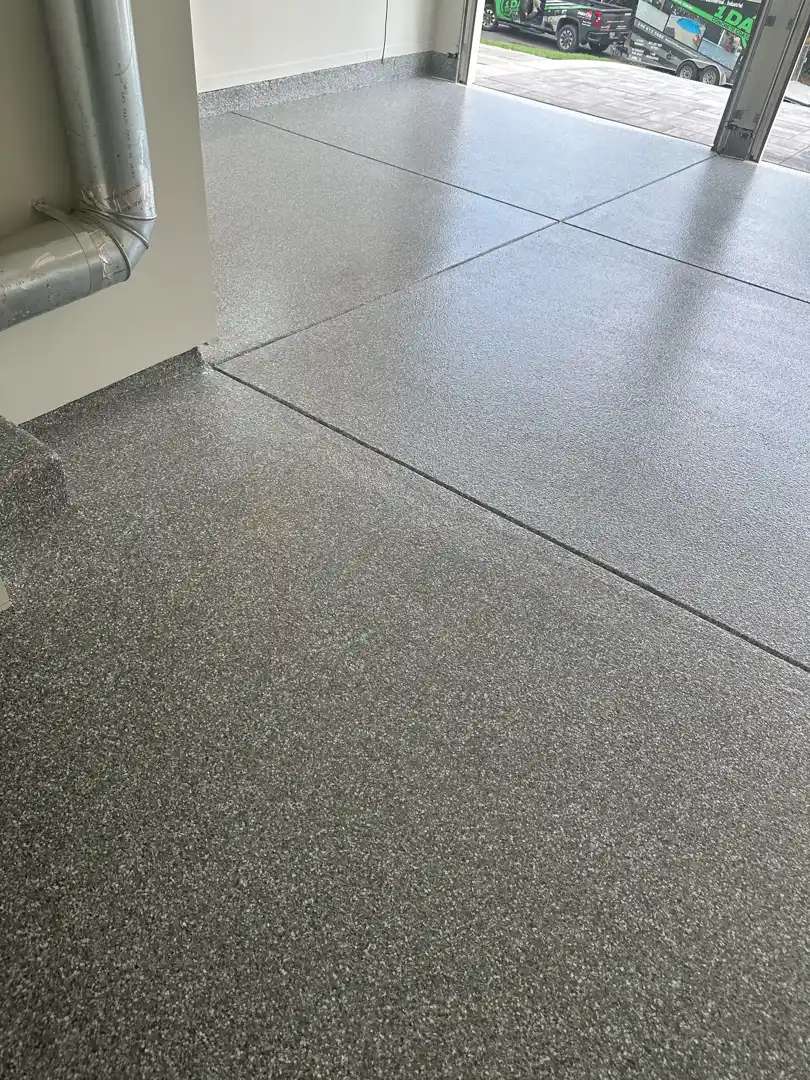
The after photos showcase exactly why this customer came back. The Stoney Creek flake blend creates a seamless, unified surface across the entire 802 square feet. The built-in shelving now sits atop a professionally finished floor rather than bare concrete. Light pours through the windows and reflects off the glossy surface, transforming what was functional space into something approaching showroom quality.
The crack that once traced across the slab has vanished. The pitting in the parking zones is invisible. The cove base creates clean transitions at every wall, and the step integrates seamlessly into the overall design.
The Bottom Line
When a dealership owner—someone who walks on coated concrete floors daily—chooses the same contractor twice, the work speaks for itself. This Lakeshore Street garage demonstrates the scalability of our floor coating system: same process, same quality, applied to a larger footprint with more complex obstacles. The new paver driveway remained pristine, the steep grade was managed, and 802 square feet of tired concrete became a surface that improves the appearance of the property.
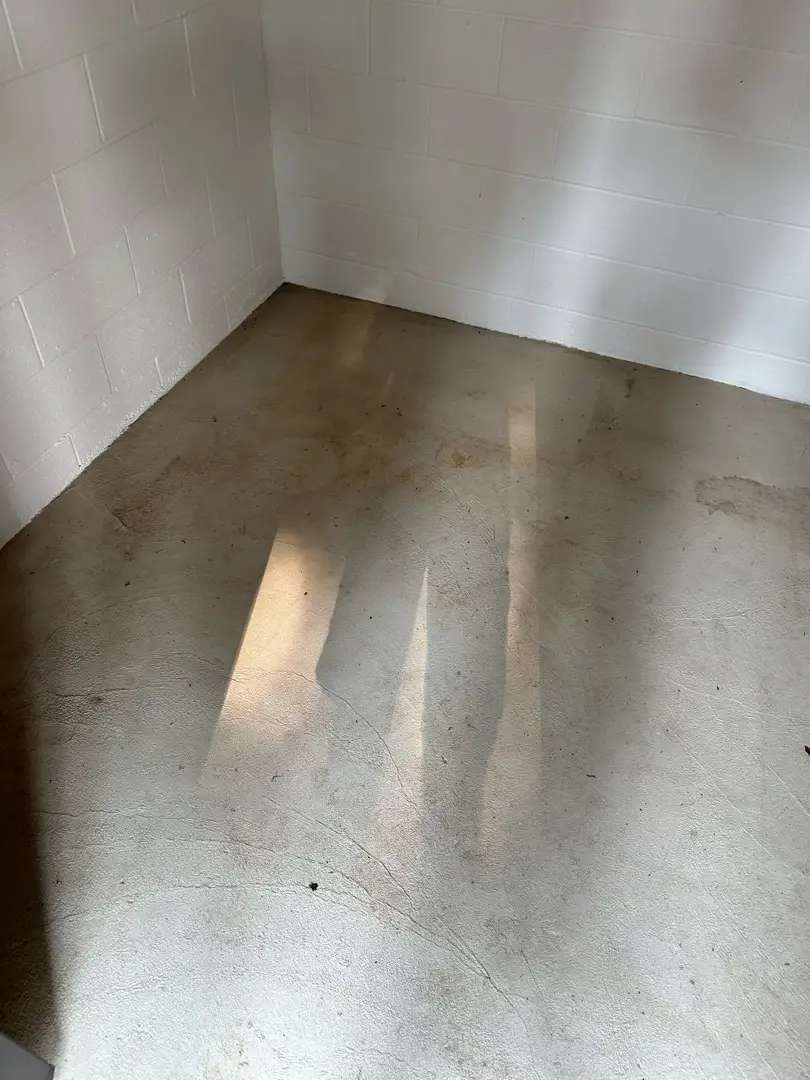
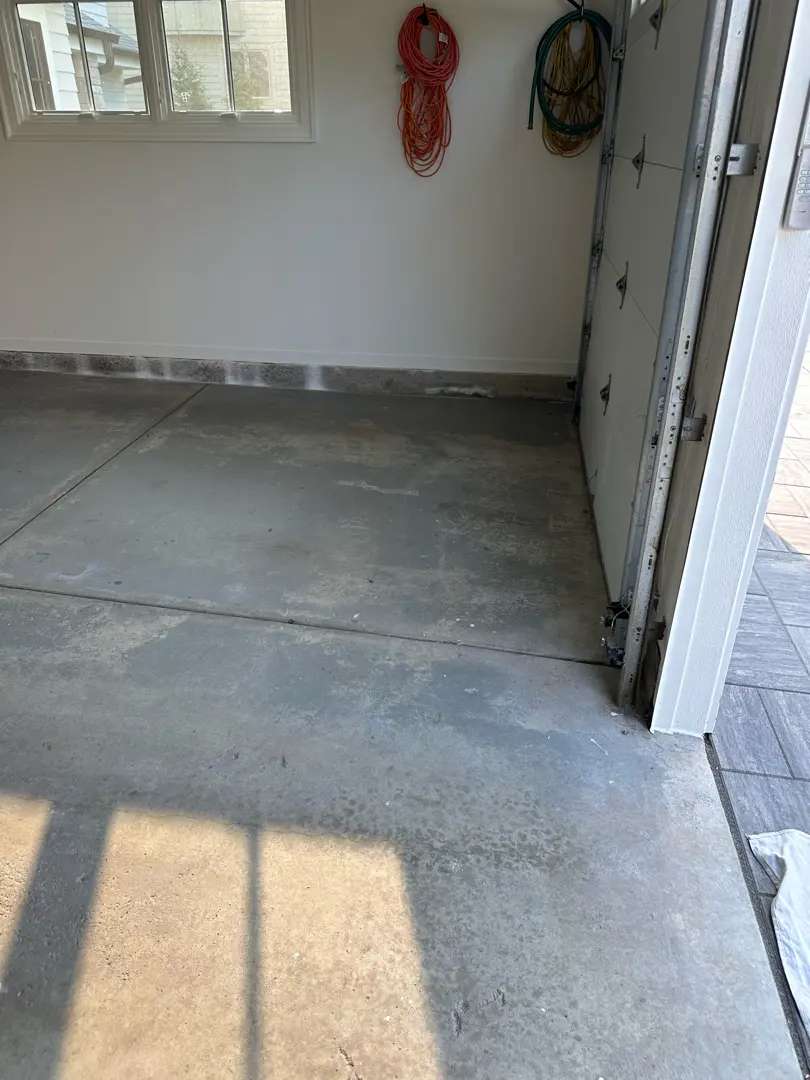
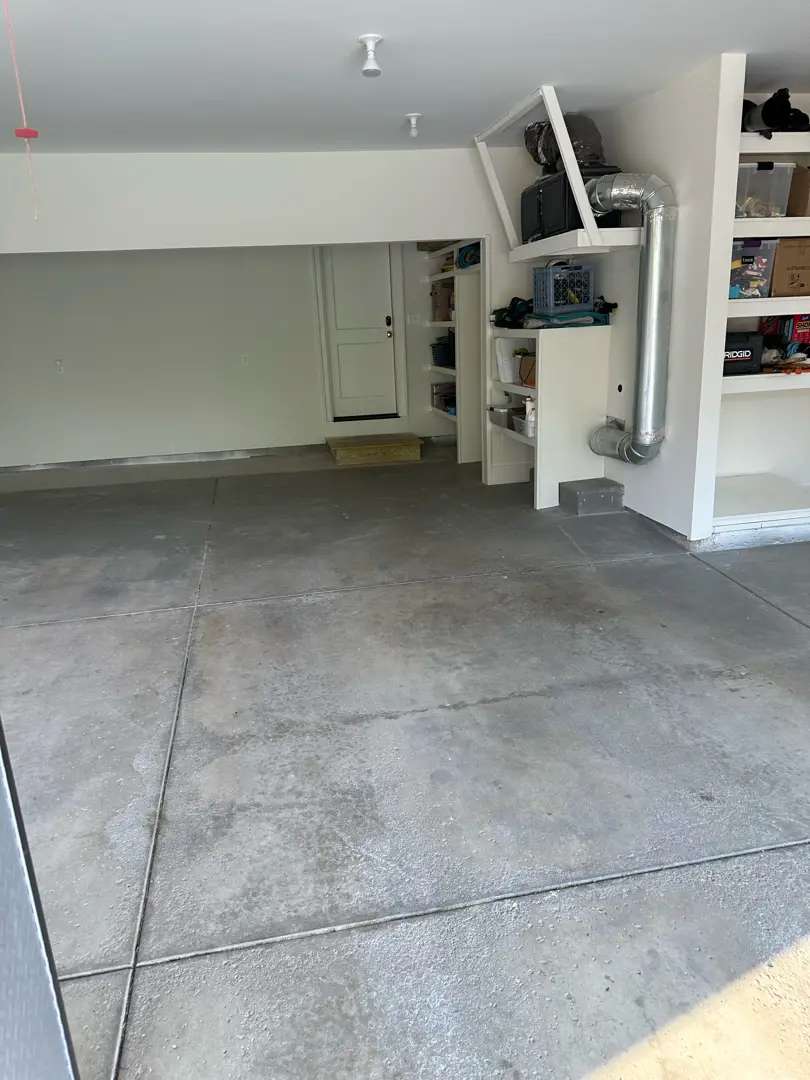
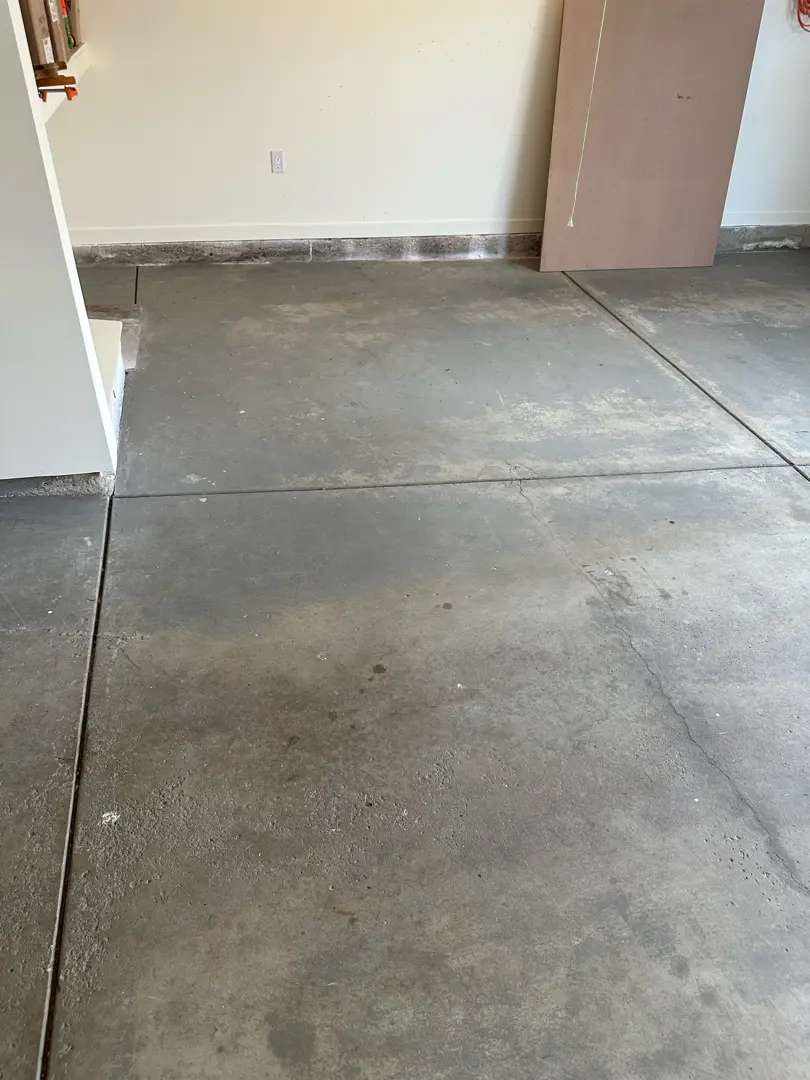
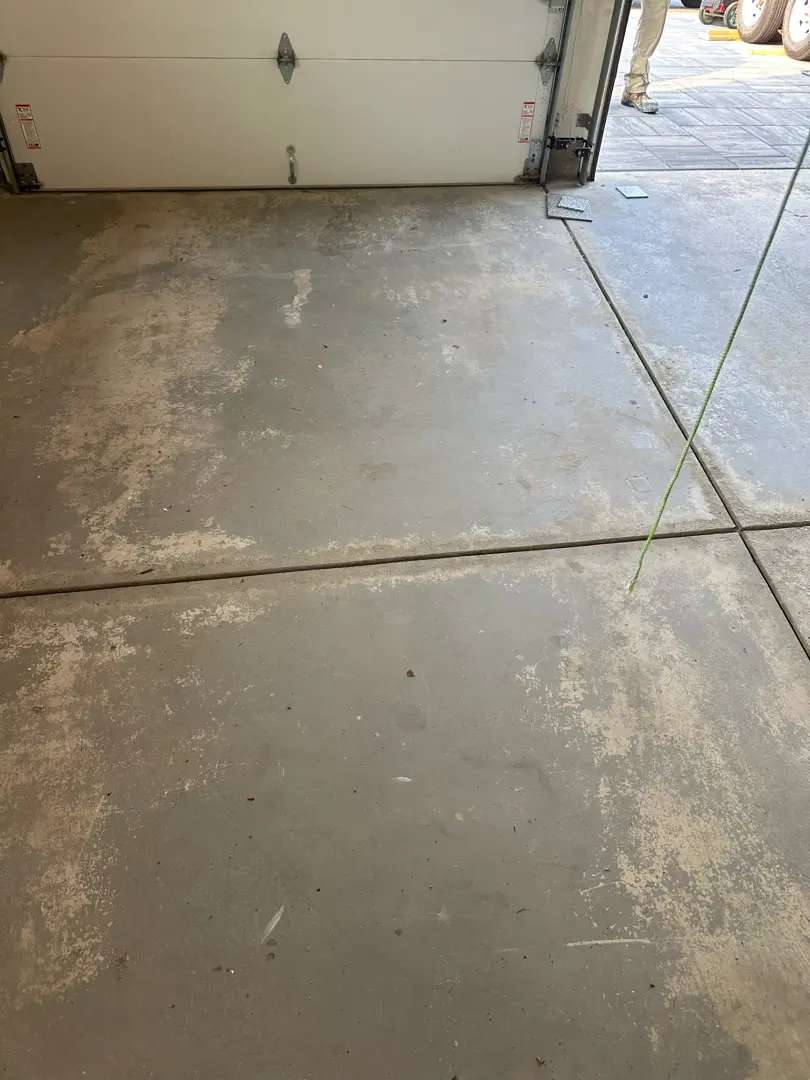
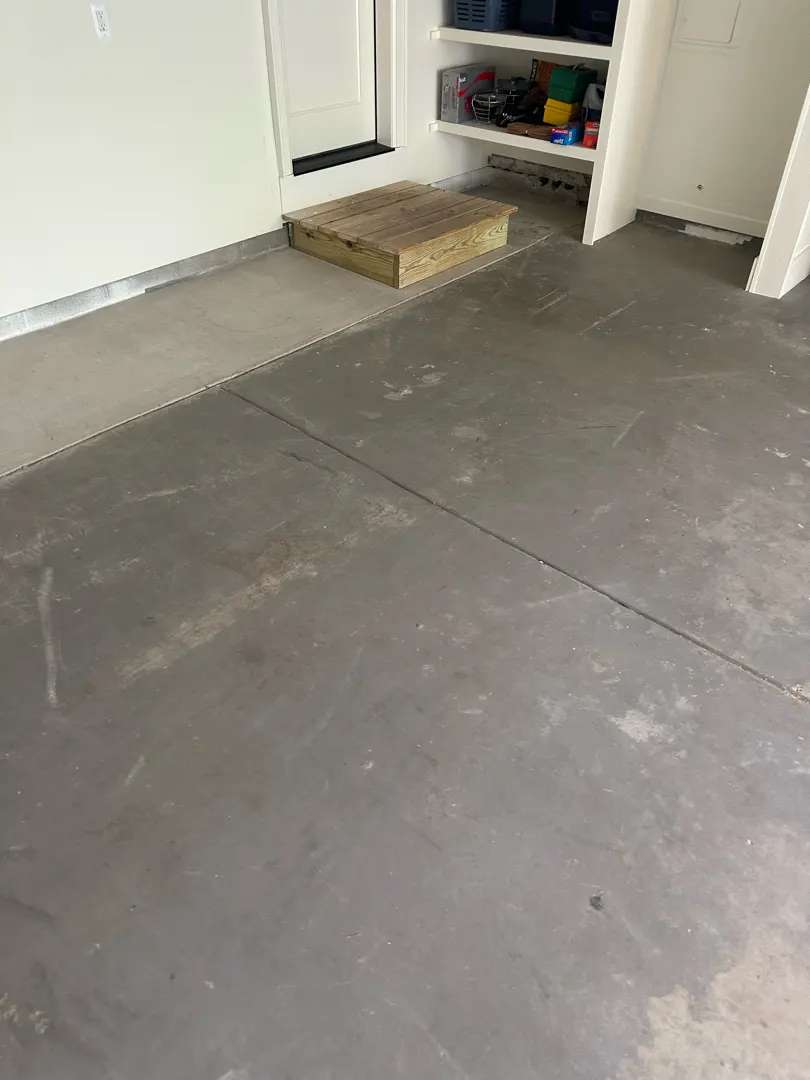
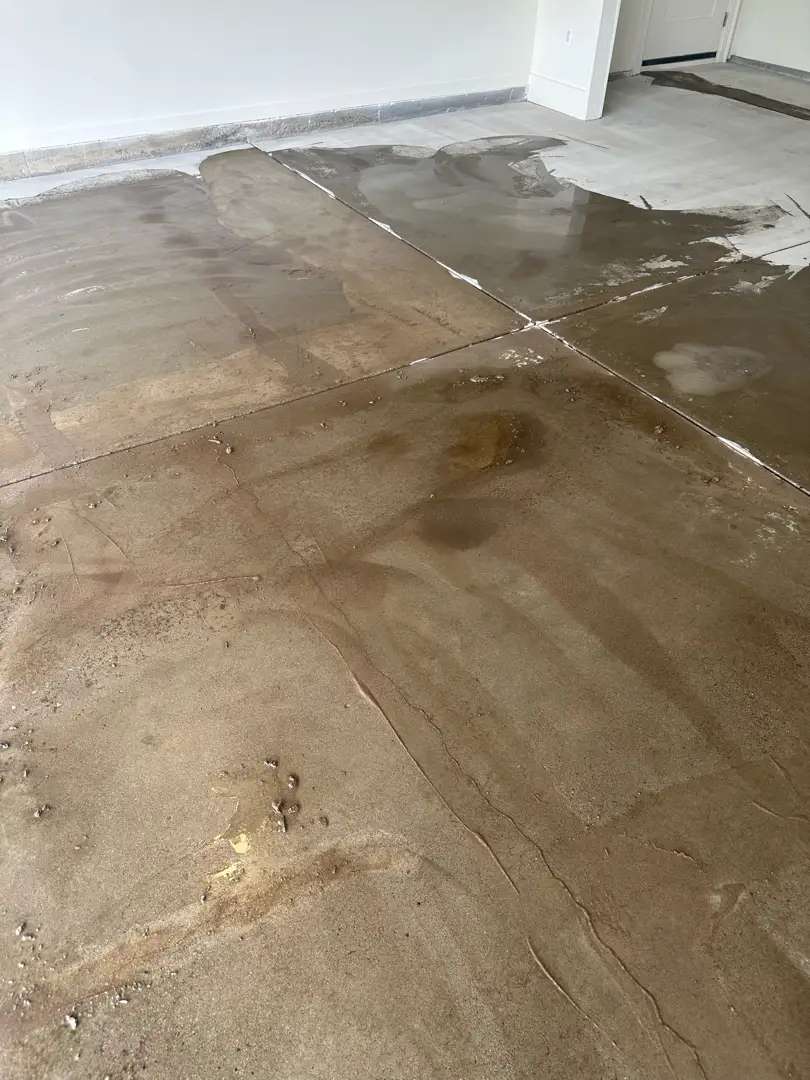
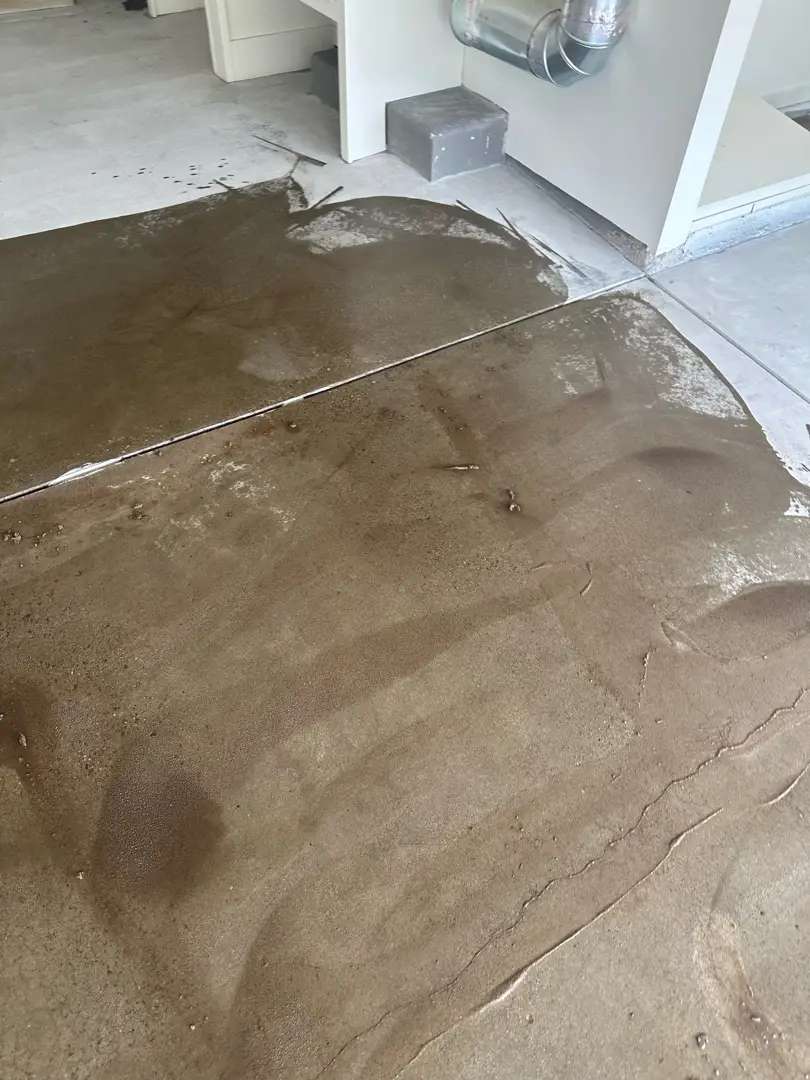

Click on the photos to enlarge them
The Danbury Drive
Garage Floor Transformation
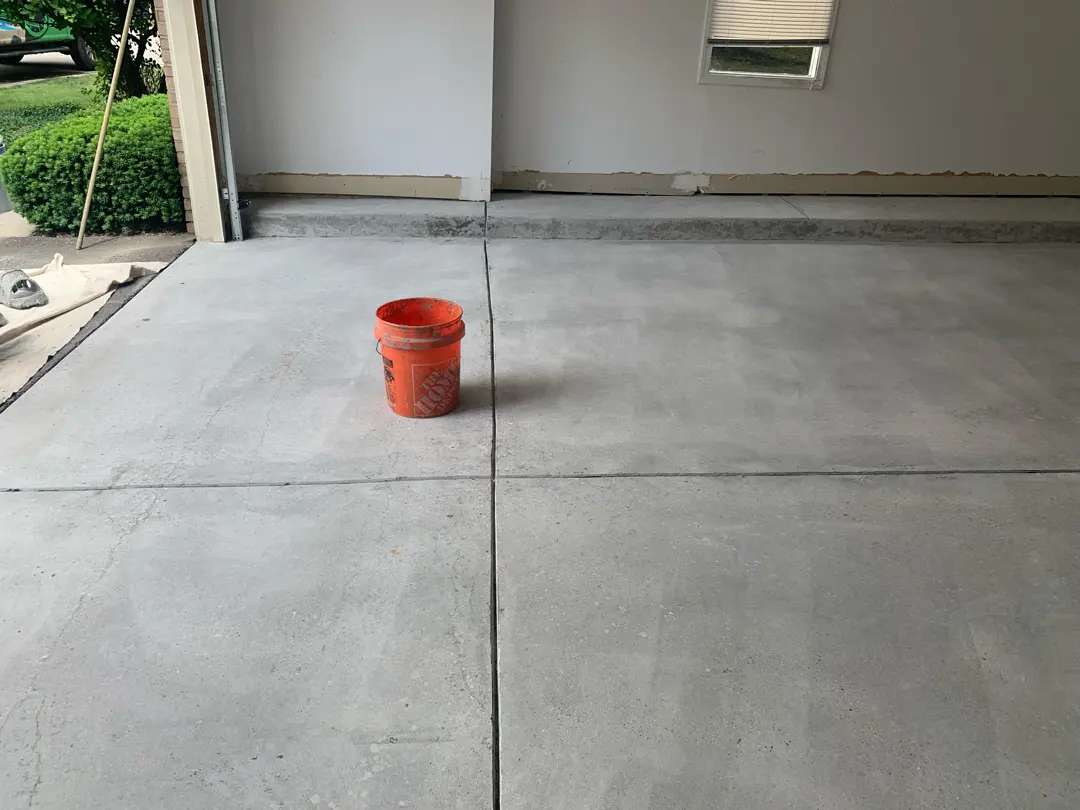
In the early days of the summer of 2023, our team leader Jesus and his crew arrived at our customers’ home on Danbury Drive in West Bloomfield Township. The 449-square-foot garage awaited transformation, with concrete temperature reading a cool 51°F—workable but requiring attention to curing times.
The Challenge
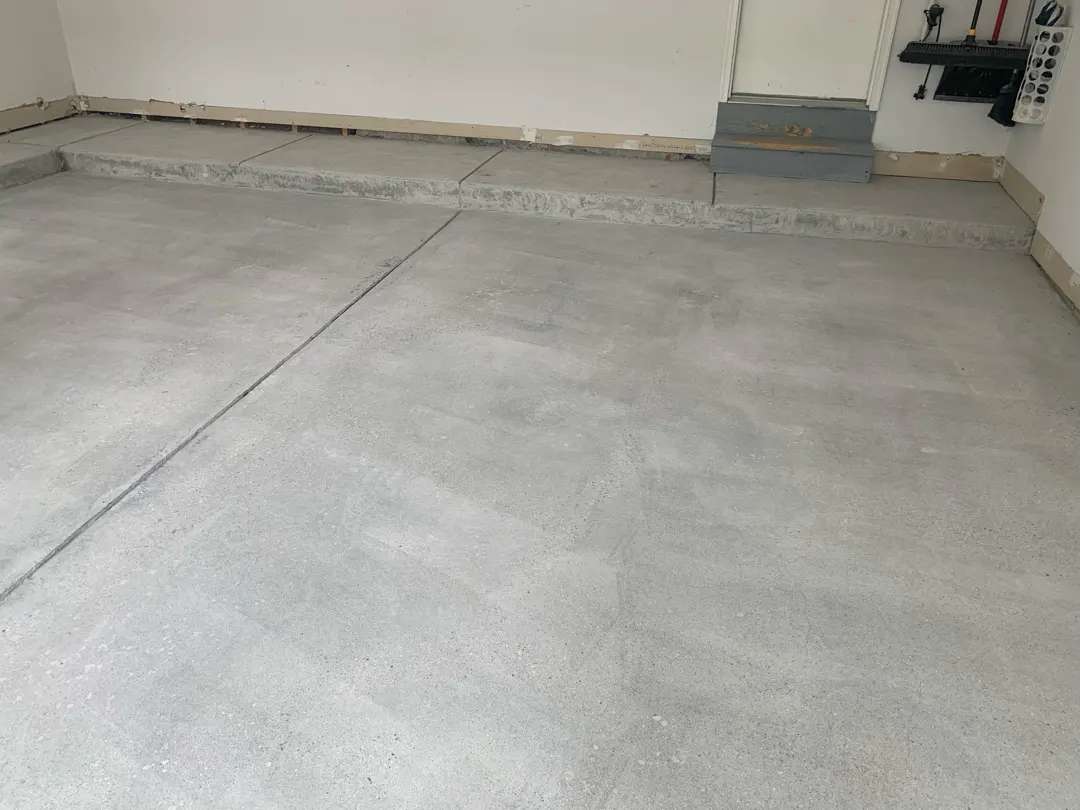
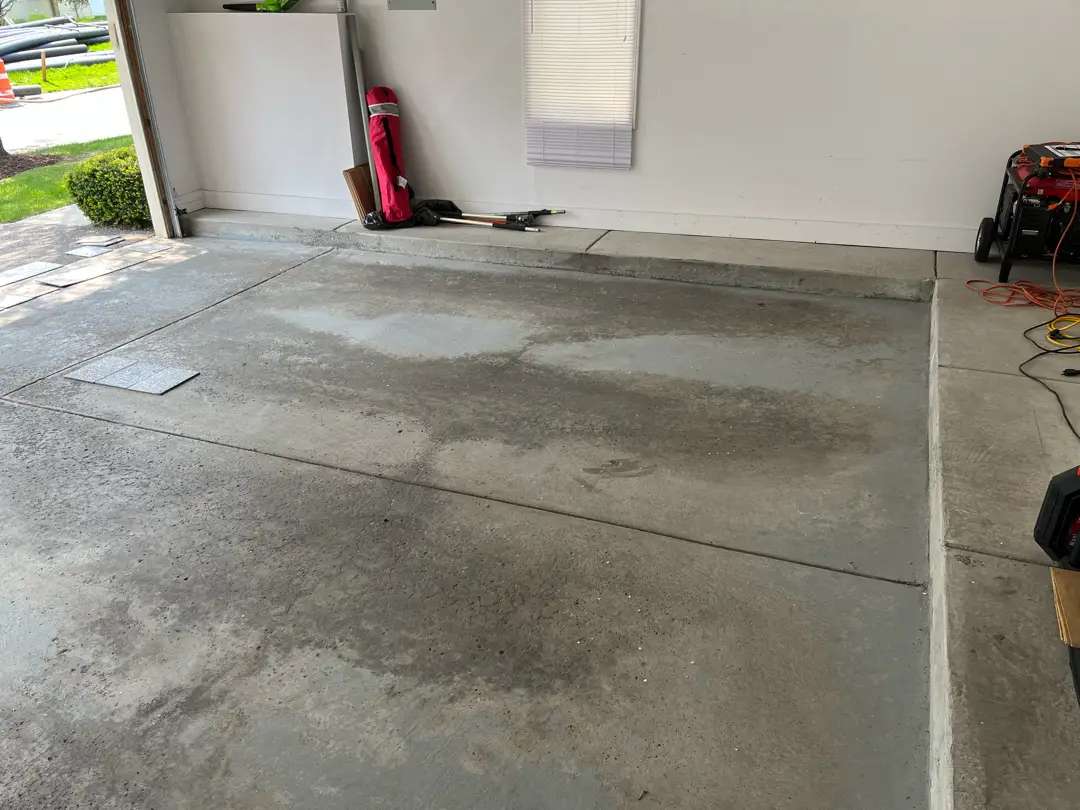
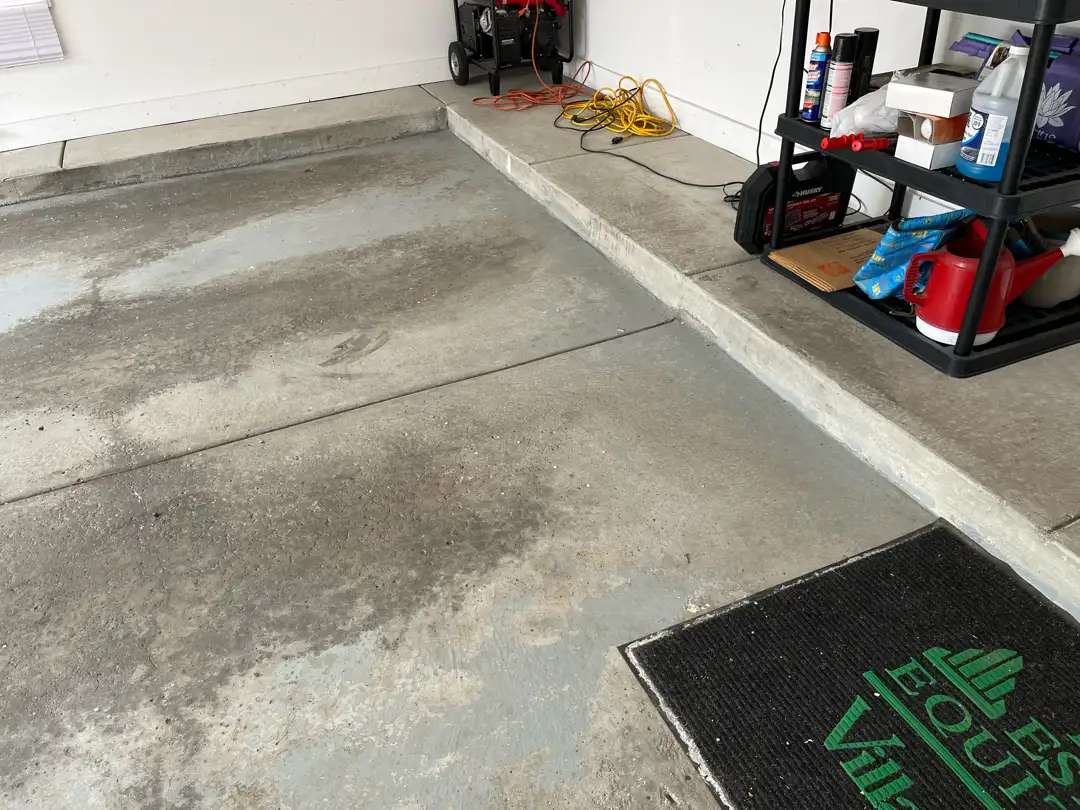
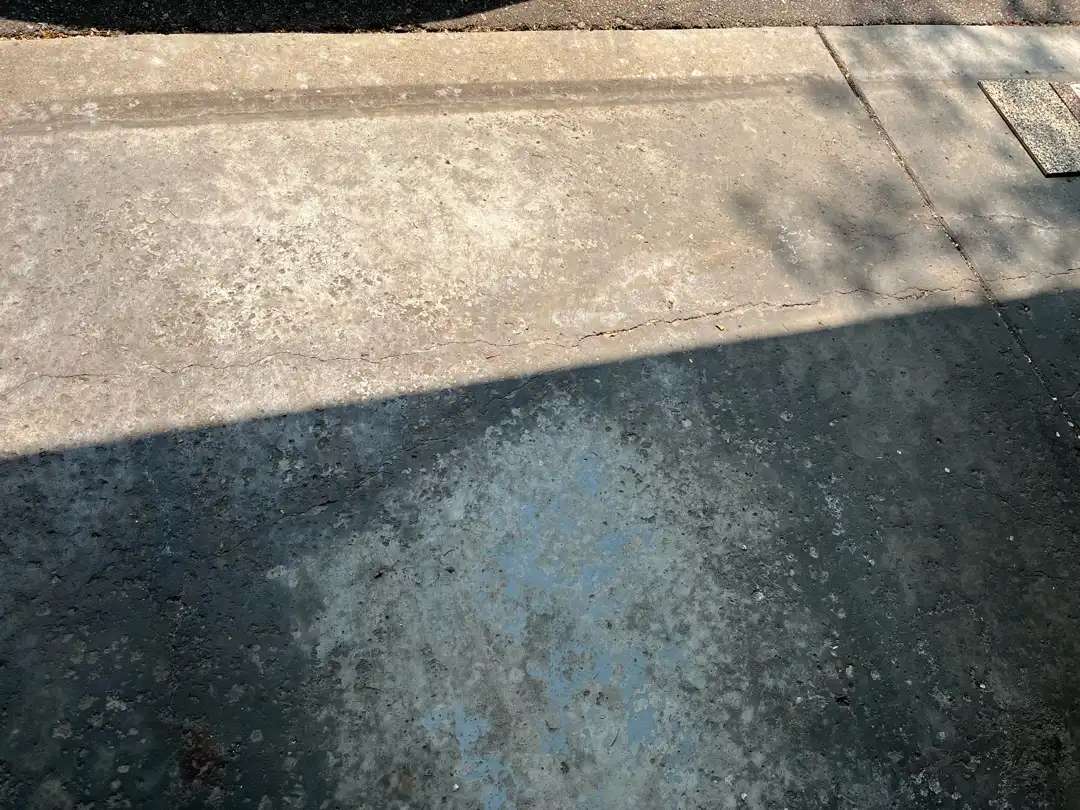
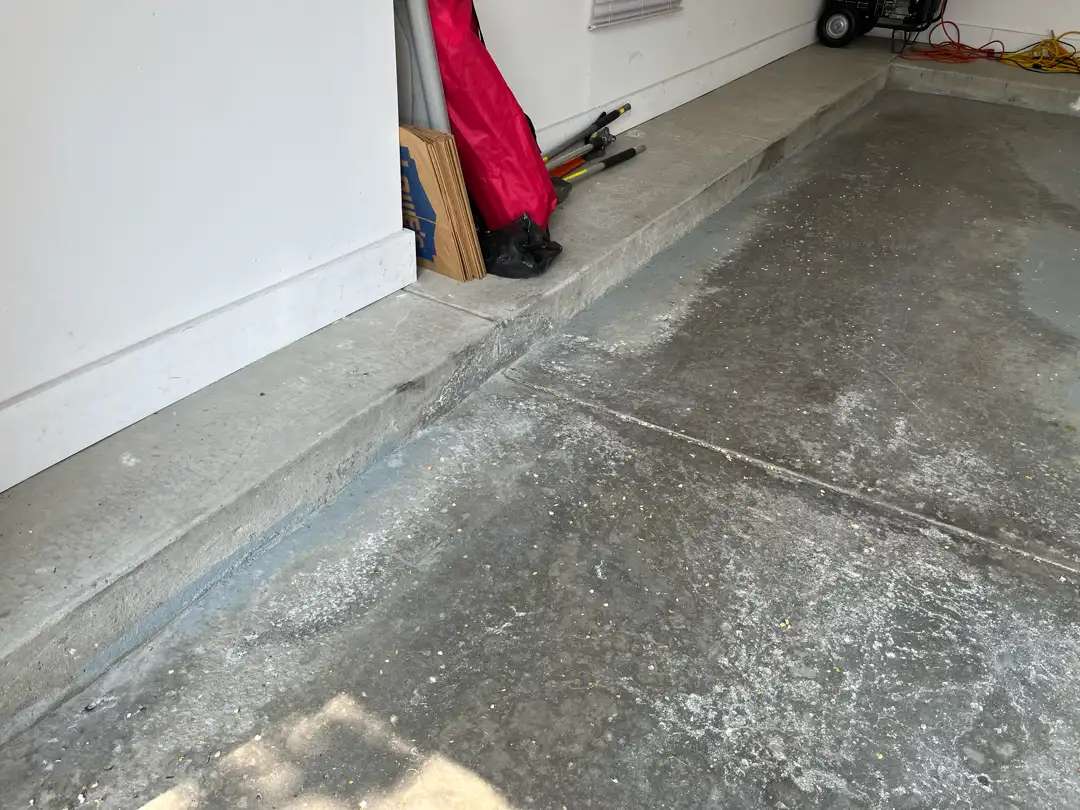
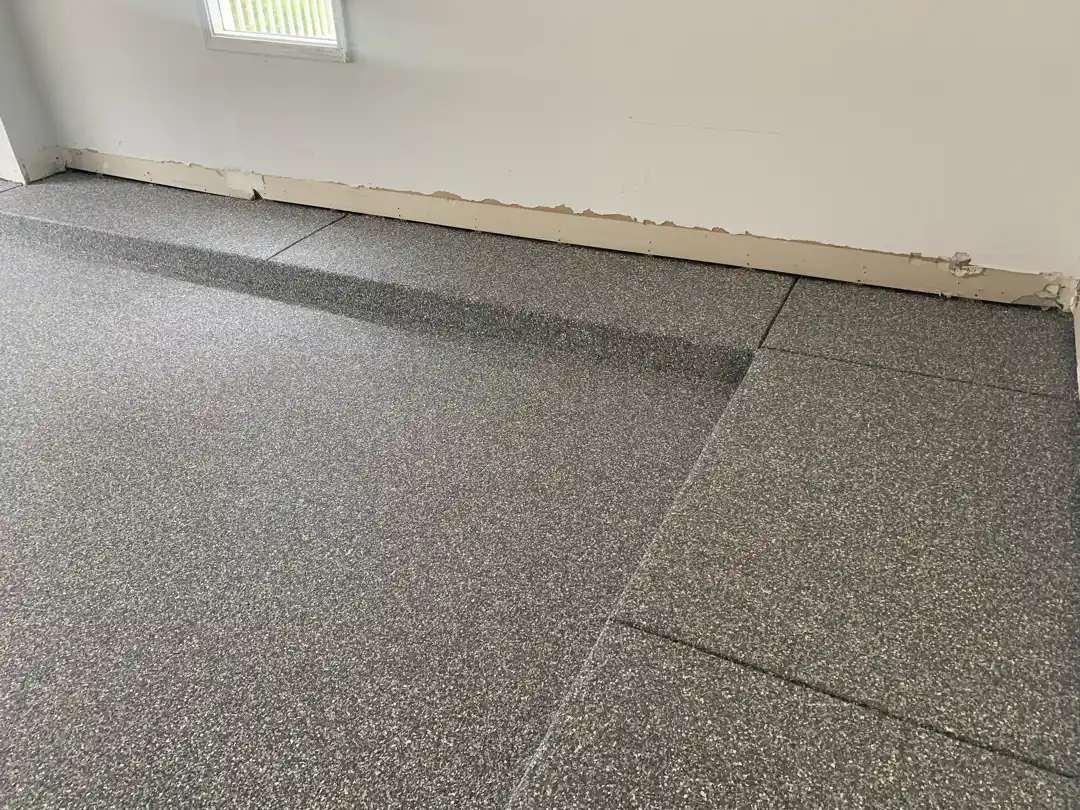
The before photos reveal a floor in moderate condition by Michigan standards. Light pitting concentrated near the garage door where vehicles park, some surface staining throughout, and minor cracking requiring attention. Very little paint remained—previous coatings had largely failed and worn away, which actually simplified prep work. The raised step area along one wall and 36 linear feet of vertical lip would need careful detail work.
The Work
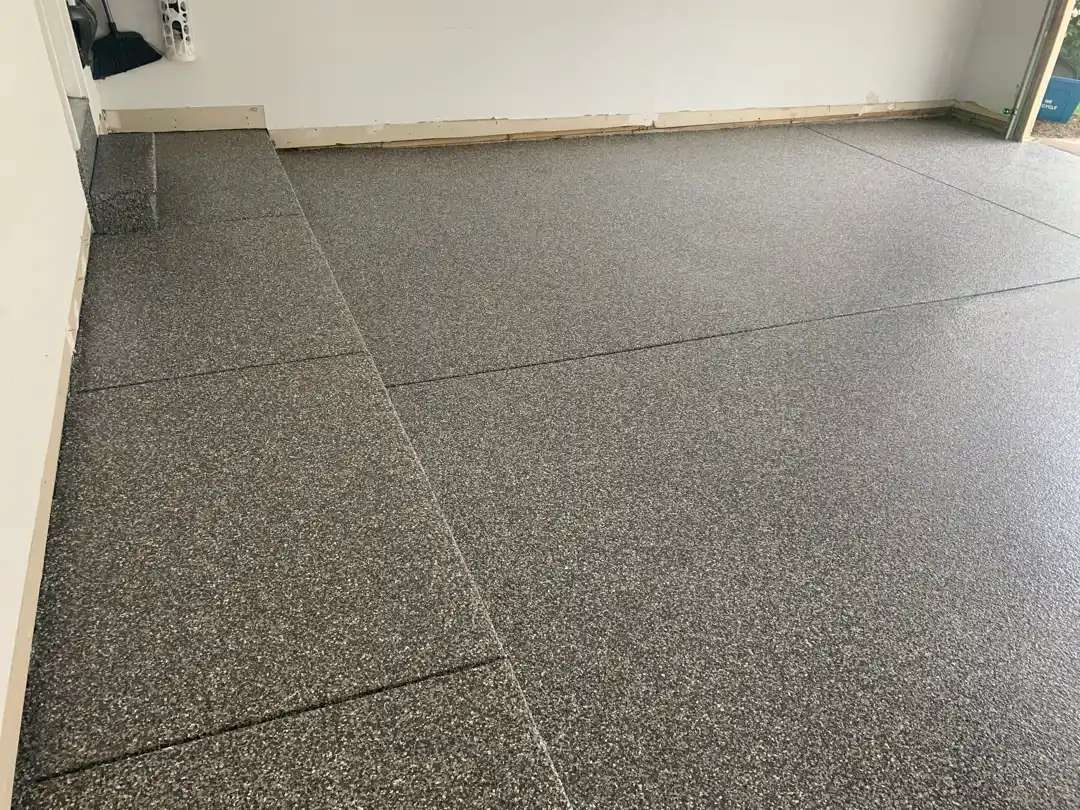
Starting at 8:00 AM, surface preparation began with an MC3.8 configuration using 36-grit diamonds—a less aggressive setup appropriate for the relatively good condition of this garage floor compared to severely deteriorated slabs. The “mended” photo captures the floor after grinding: wet from cleaning, control joints freshly filled with polyurea joint filler creating those characteristic white lines that would later blend beneath the flake pattern.
The system went down in layers:
Moisture Primer: 7 liters total of MR 50 (3.5L each of Part A and B) penetrated the concrete to create a vapor barrier and bonding surface.
Base Coat: 9 liters of pigmented polyurea (6L Part A, 3L Part B) in grey established the foundation for the Silver Creek flake blend.
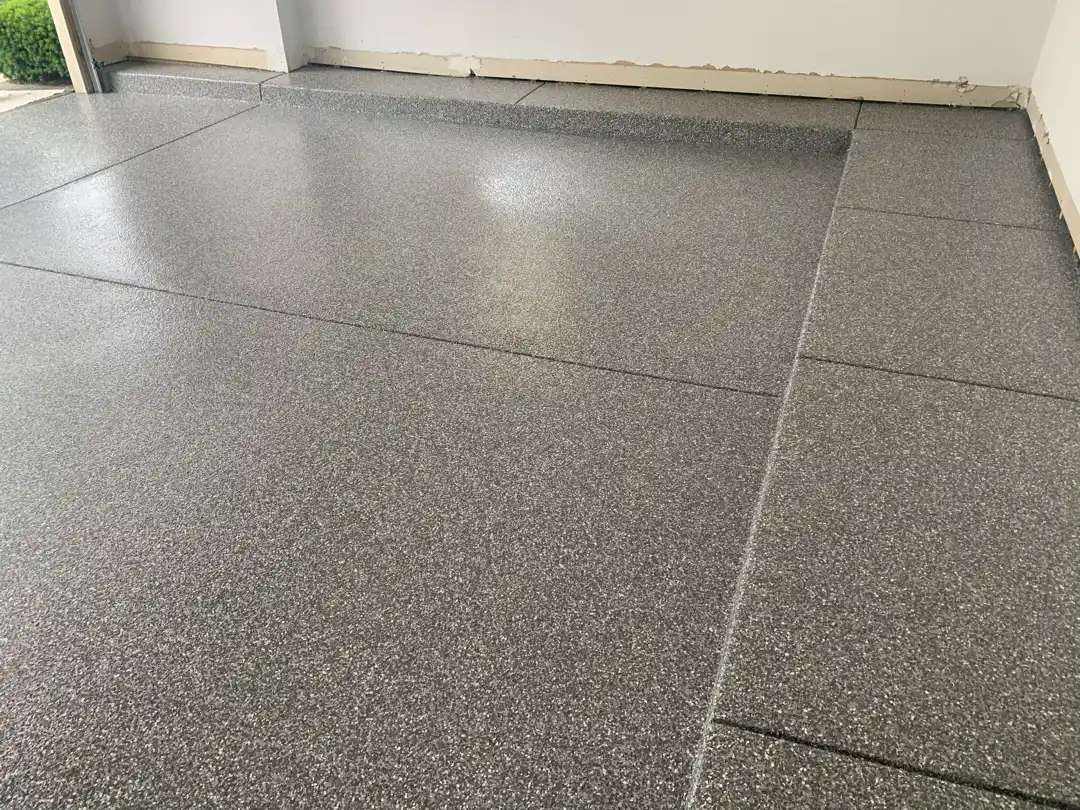
Flake Broadcast: 4 boxes of Silver Creek thrown into the wet base, with 3 boxes recovered. That 1-box retention rate created solid coverage—the grey, black, and white chips establishing that granite-like appearance.
Clear Top Coat: 12 liters of polyaspartic clear (6L each part), enhanced with 10 cups of sand and 36 caps of Shark Grip broadcast for slip resistance.
The Result
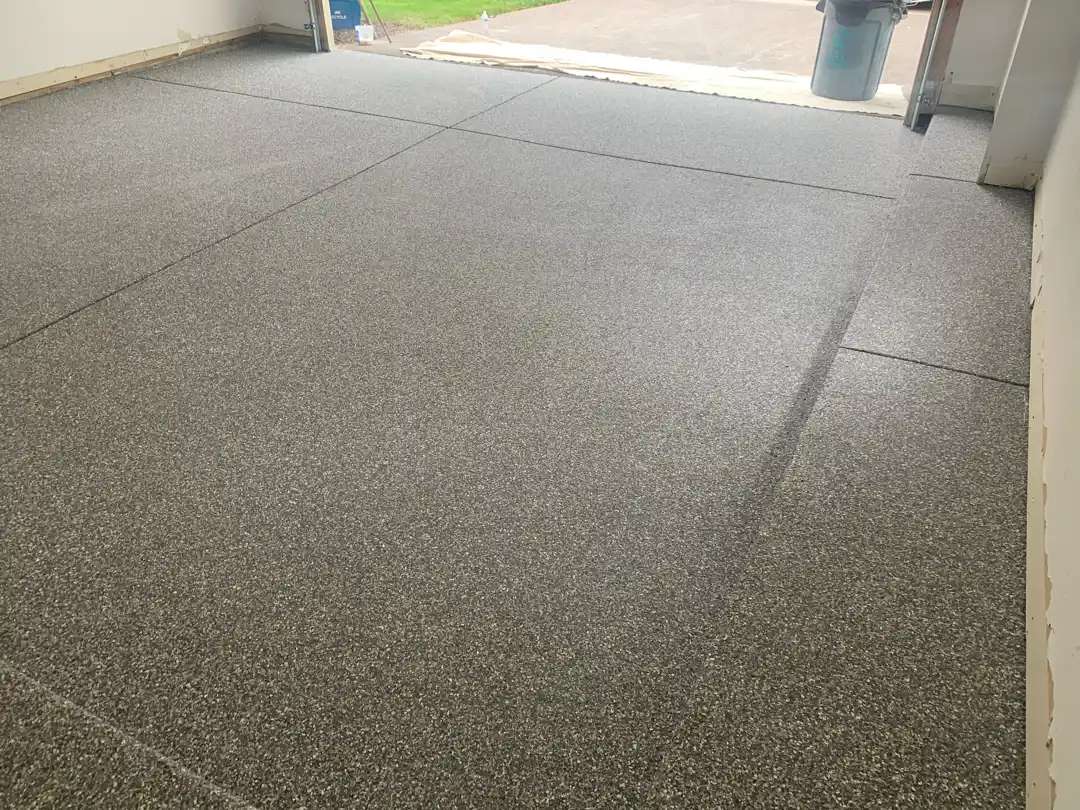
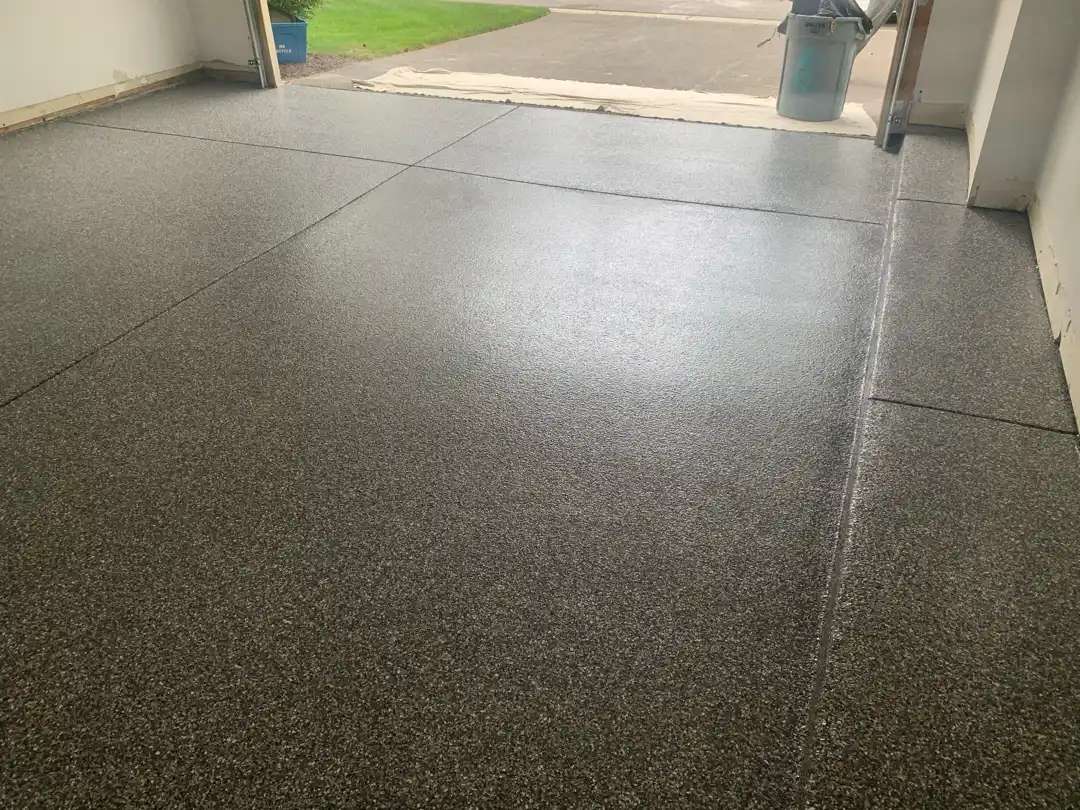
By 3:00 PM—just seven hours after starting—the garage floor coating was complete. The after photos showcase classic Silver Creek aesthetics: cool grey tones with the distinctive speckled pattern catching light across the entire surface. The step area received full treatment, its edge now protected and visually integrated. Control joints remain as clean geometric lines rather than the debris-filled grooves they once were.
The relatively quick timeline reflects the starting condition of the floor. Minimal paint removal, light pitting, and straightforward crack repair meant our crew could move efficiently through each phase without extensive remediation work slowing them down.
The Bottom Line
This Danbury Drive job represents the ideal scenario: a moderately worn floor that hasn’t deteriorated to the point of requiring aggressive intervention. The 36-grit diamonds and MC3.8 configuration provided adequate profile without excessive material removal. The result is indistinguishable from jobs requiring twice the prep work—which is precisely the point. The homeowners’ garage went from tired concrete to showroom-quality flooring in a single workday, ready for light foot traffic that evening and full vehicle use within 24-48 hours.






Click on the photos to enlarge them
The Oak Grove
Garage Floor Transformation
The Challenge
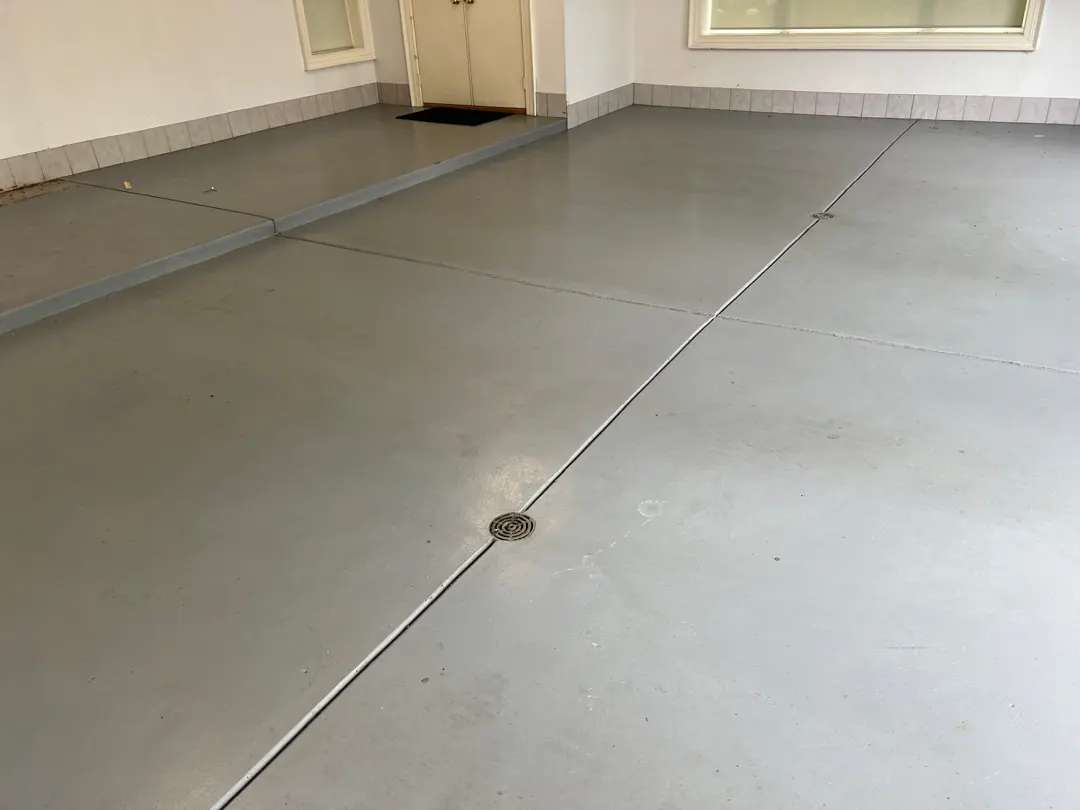
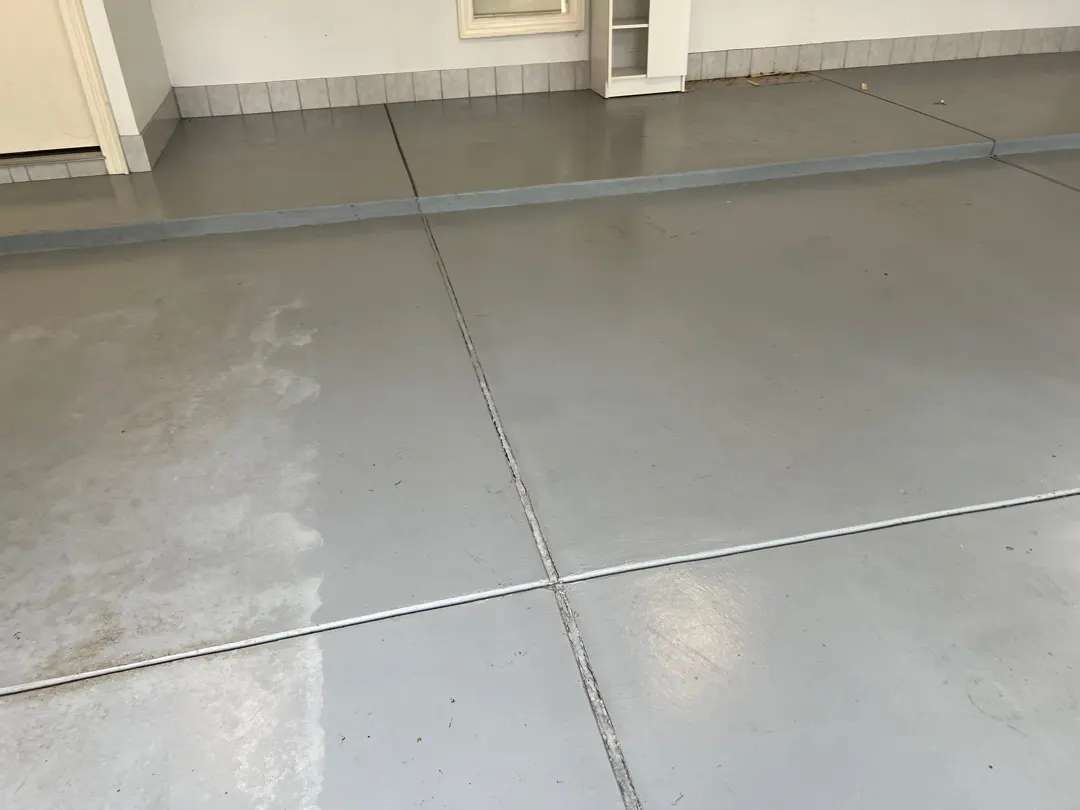
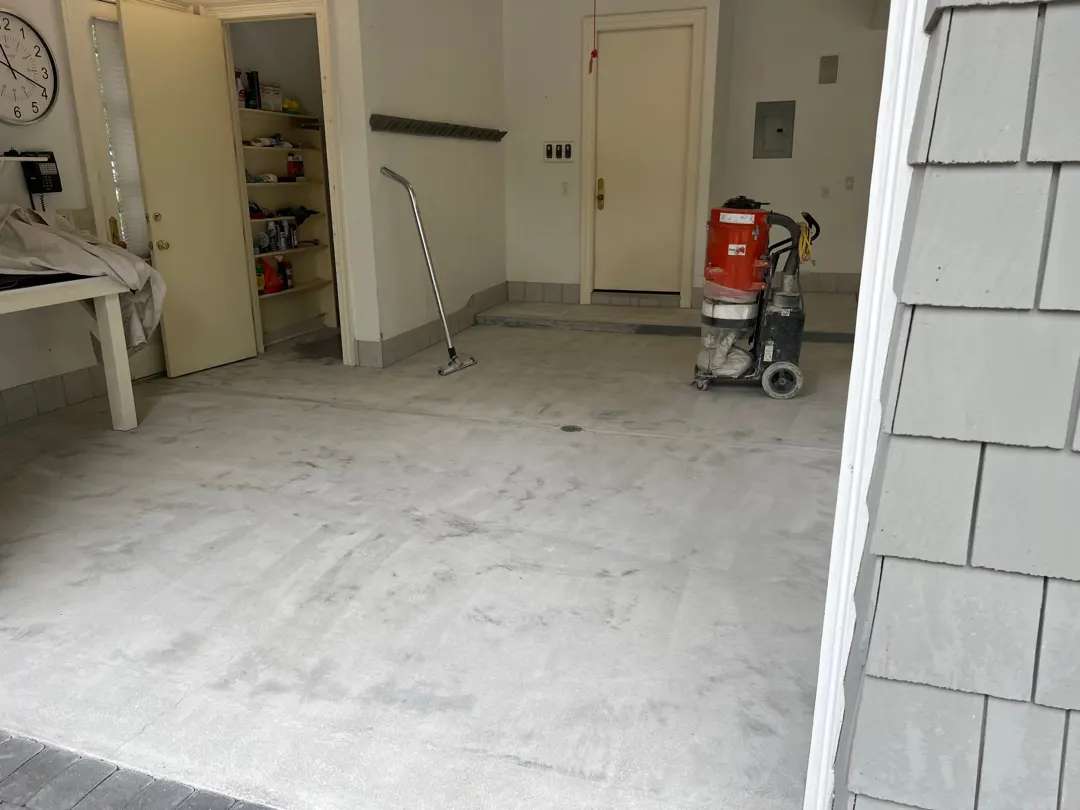
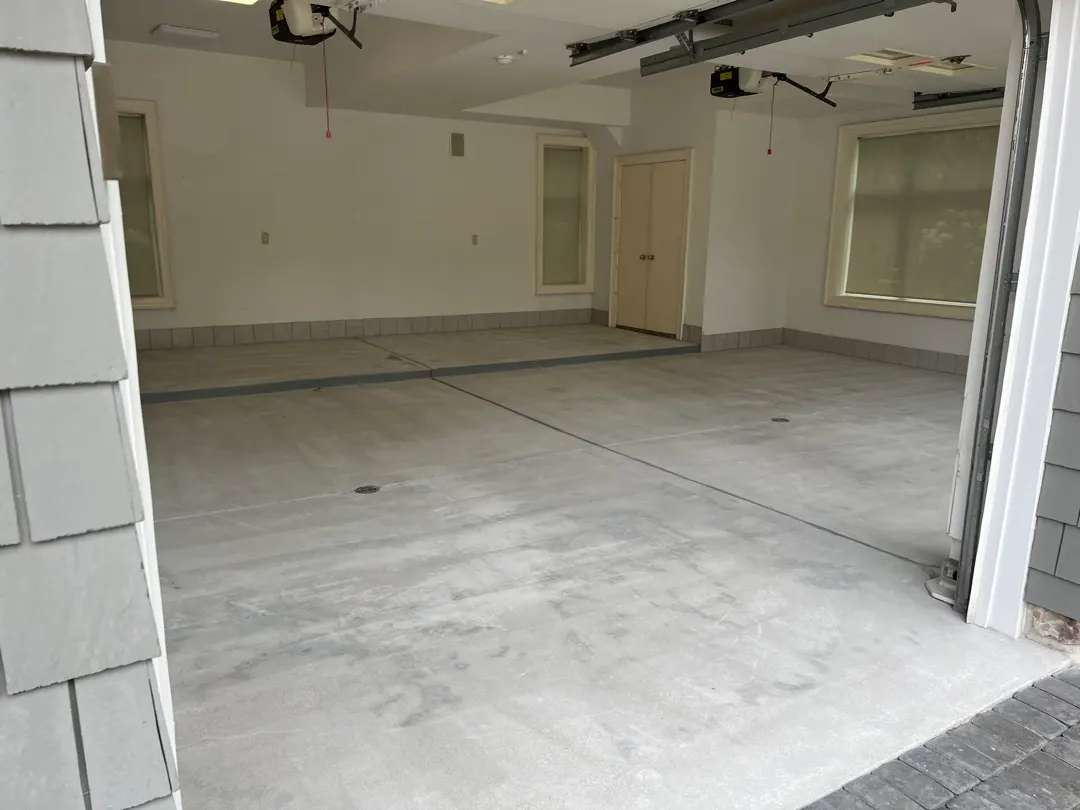
The before photos reveal that characteristic grey epoxy look—uniform color that photographs well initially but tells a different story up close. The coating had begun to wear and wouldn’t provide a suitable substrate for a professional system. A few small pits near the apron needed attention, but the real work was coating removal.
This upscale property featured tile wainscoting around the perimeter, multiple entry doors, large windows, a floor drain, and a beautiful paver driveway outside—all requiring careful protection and detail work during the aggressive grinding phase.
The Work
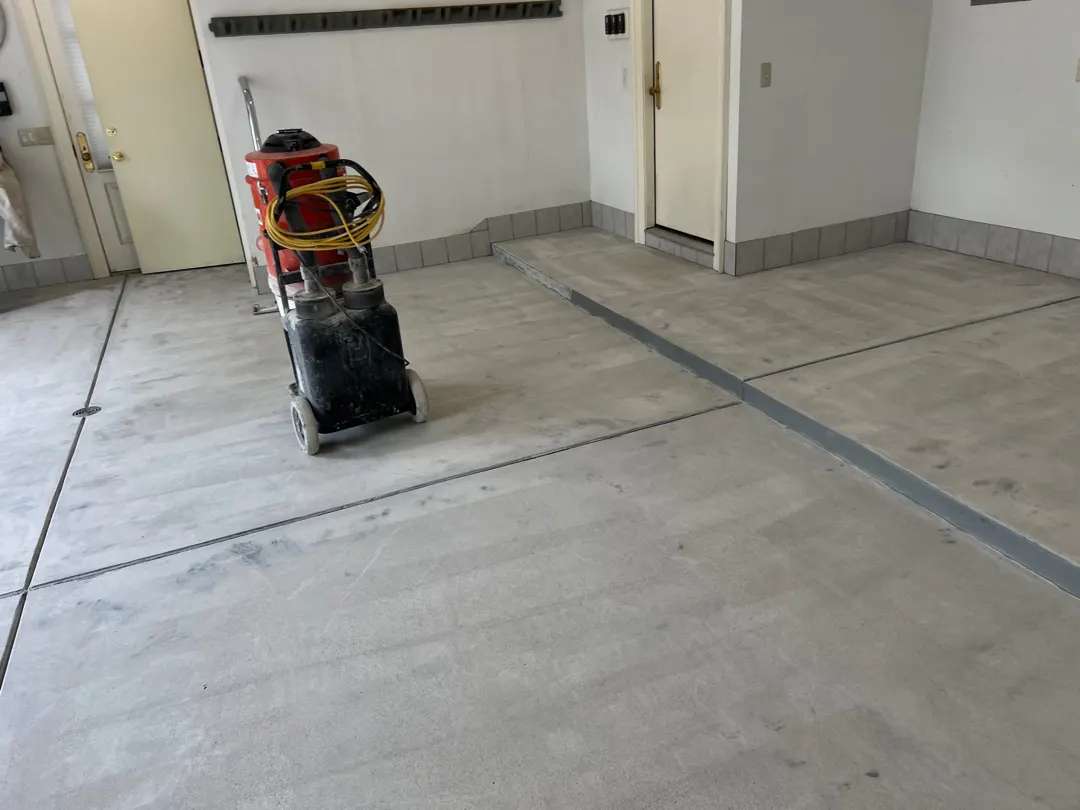
Surface preparation required an M-3 diamond configuration specifically selected to grind through the existing coating layers. Unlike jobs on bare concrete where the tehnician profiles the surface, here our crew needed to remove two layers of epoxy while simultaneously creating proper mechanical bond for the new system. The 16-grit diamonds cut through the paint while exposing fresh concrete beneath.
The “first grind” photos capture this transition: the red industrial vacuum running, grinding equipment in position, and the surface showing the characteristic dusty appearance of freshly profiled concrete with old coating residue being removed.
The 33 linear feet of vertical area—relatively modest for a garage this size—received careful attention where it met the tile wainscoting, requiring precise edge work.
Based on the 951-square-foot footprint (roughly 1.7x typical jobs), the system required proportionally scaled materials:
Moisture Primer: Approximately 8-9 liters of MR 50 to seal the freshly exposed concrete.
Base Coat: Around 15 liters of pigmented polyurea in grey foundation.
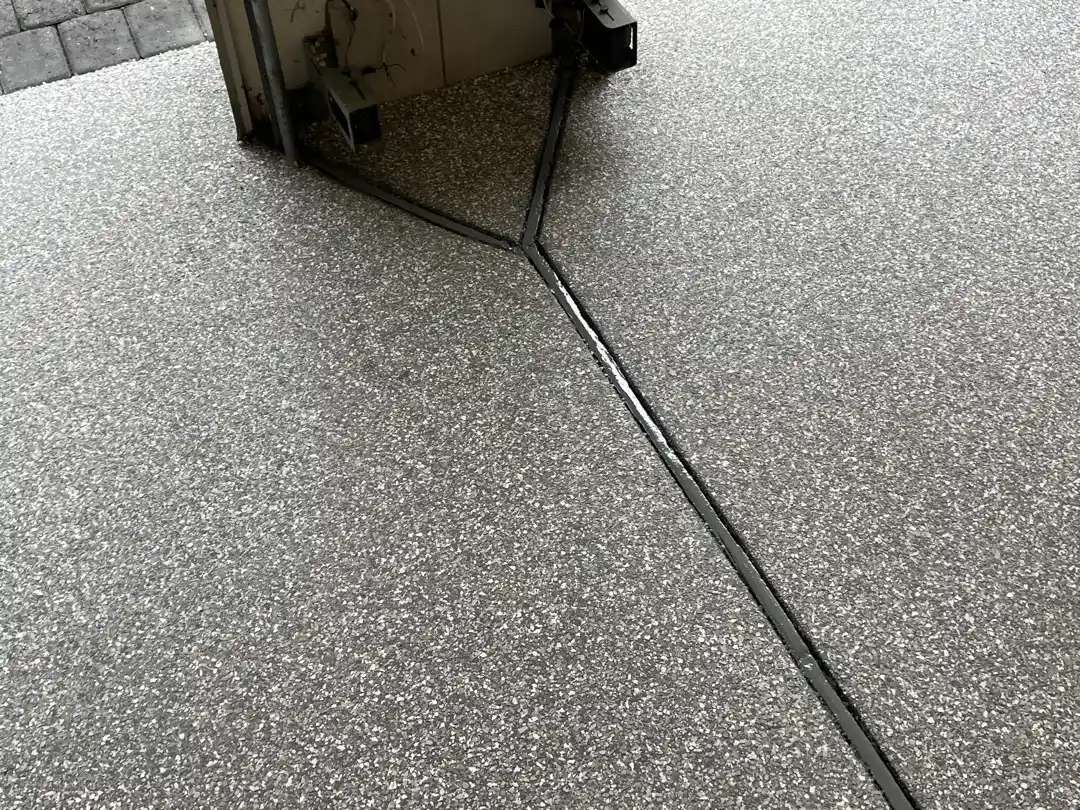
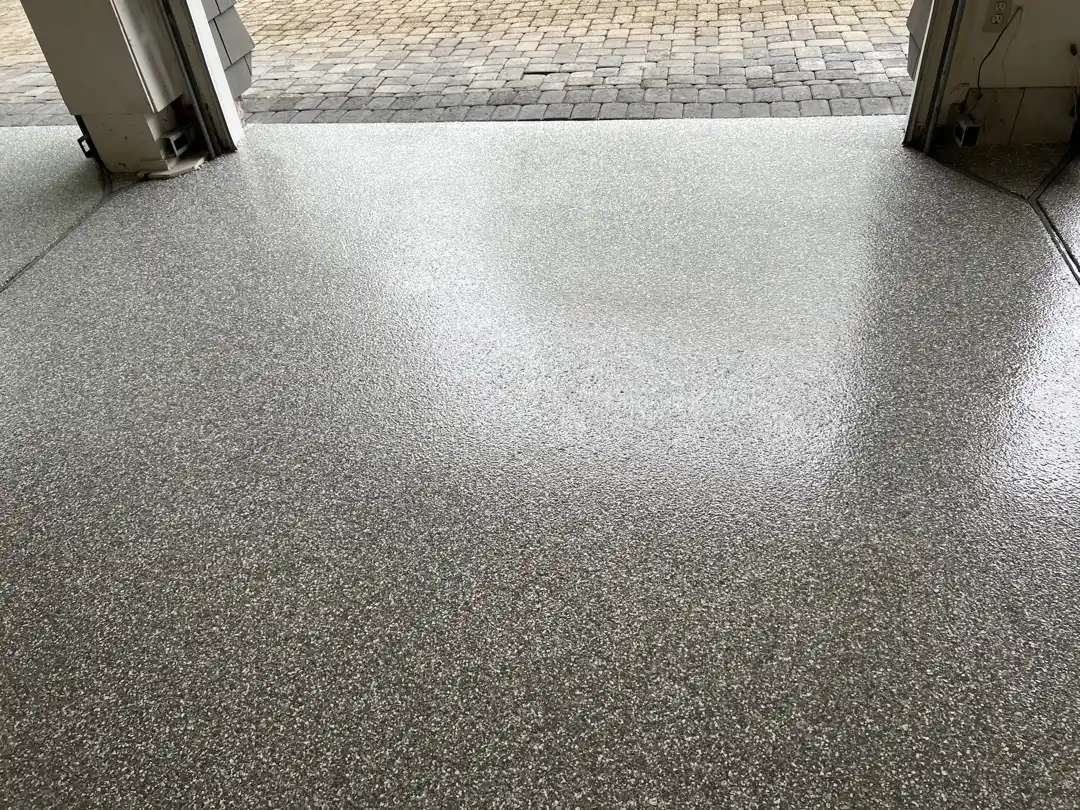
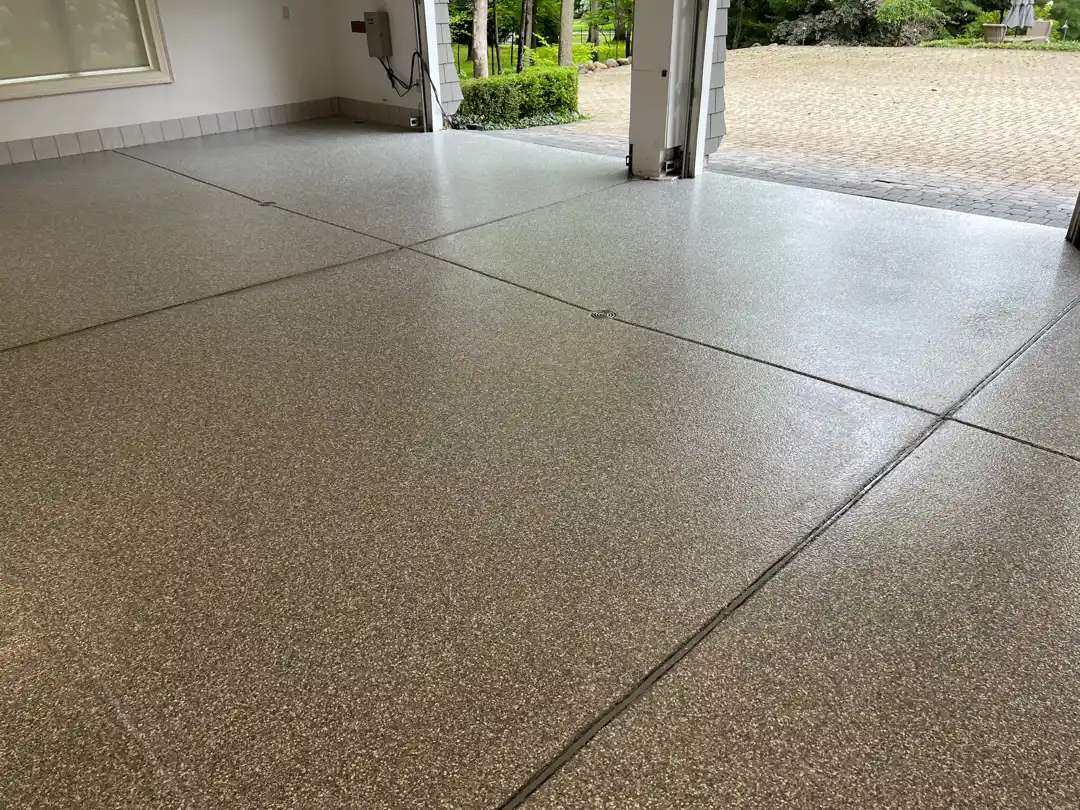
Flake Broadcast: Roughly 7-8 boxes of Stoney Creek thrown, with approximately 5 boxes recovered. The warm tan and brown tones of Stoney Creek complement the earth-toned paver driveway visible through the open garage doors.
Clear Top Coat: Approximately 30 liters of polyaspartic clear with proportionally scaled sand and Shark Grip for slip resistance.
The Result
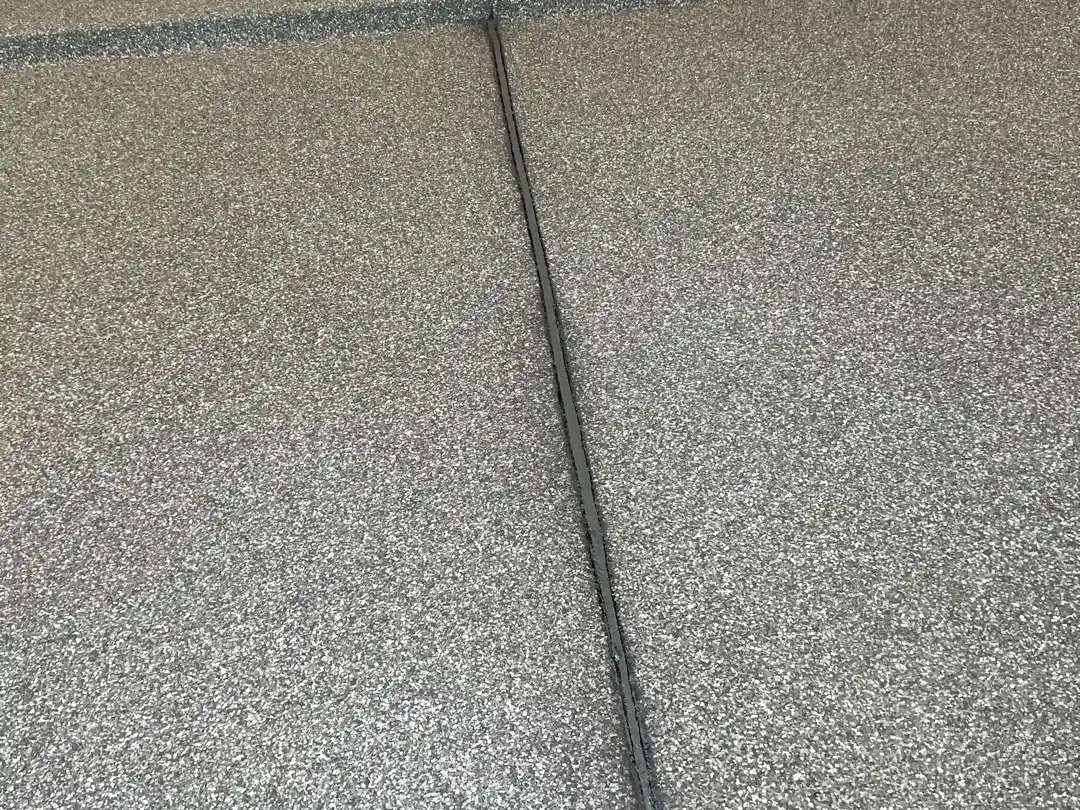
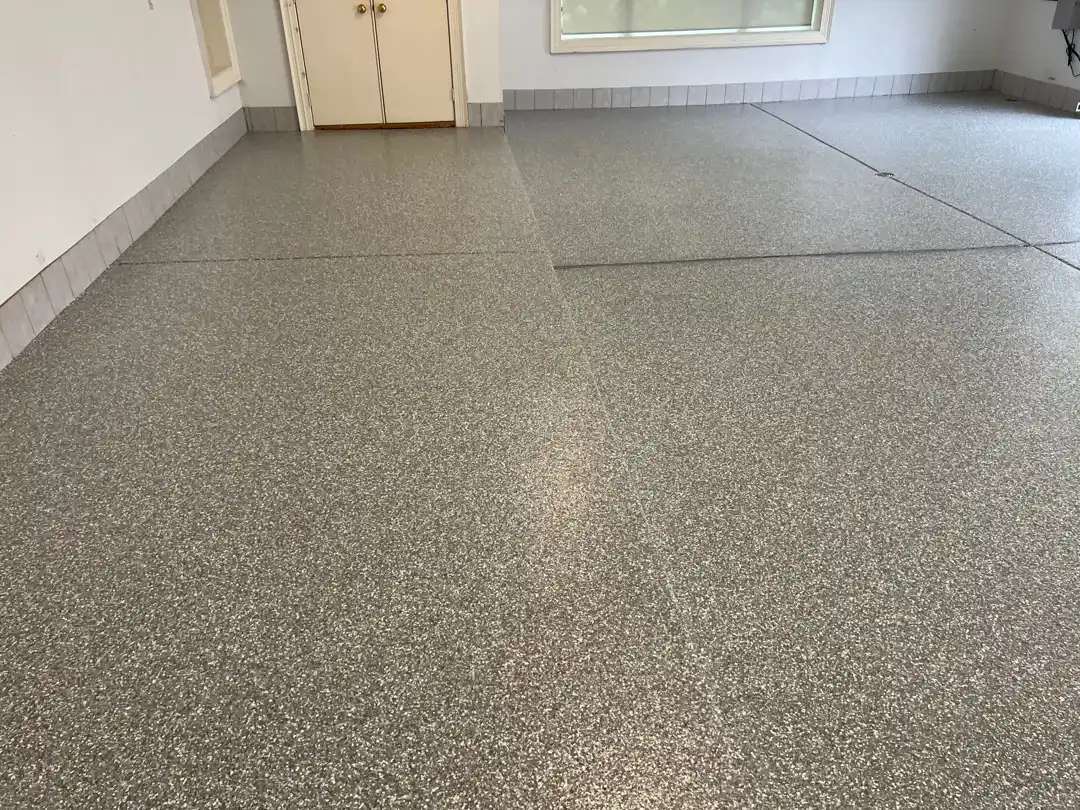
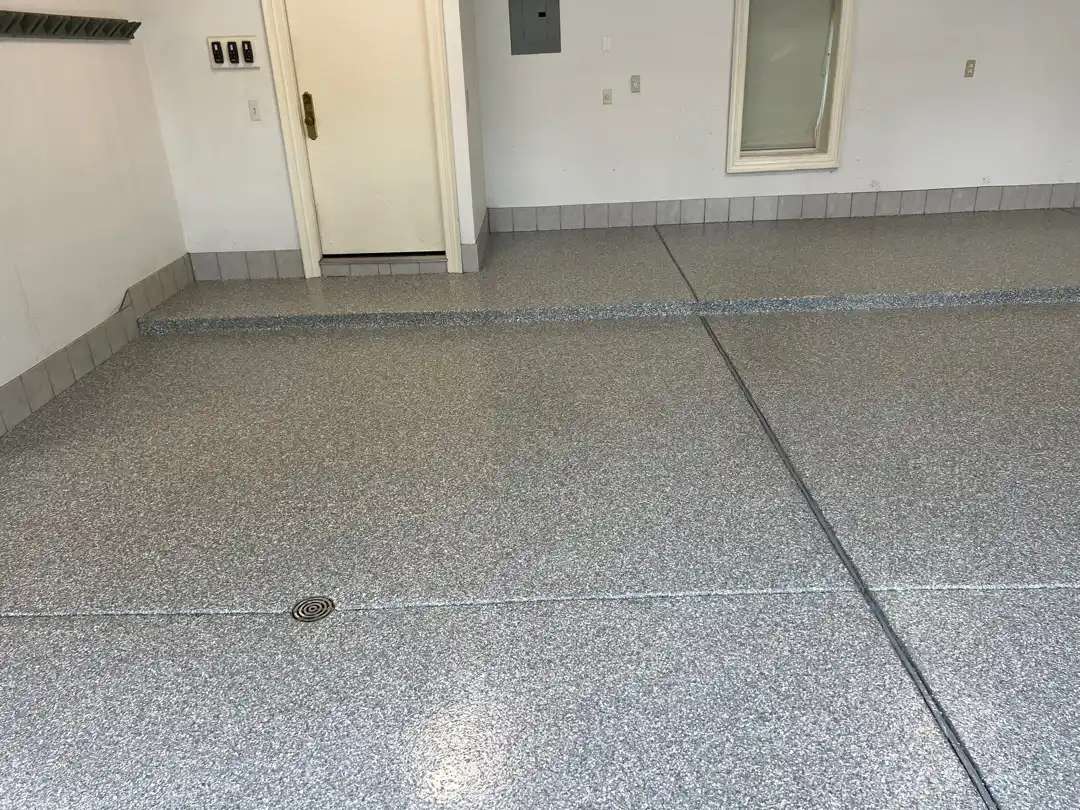
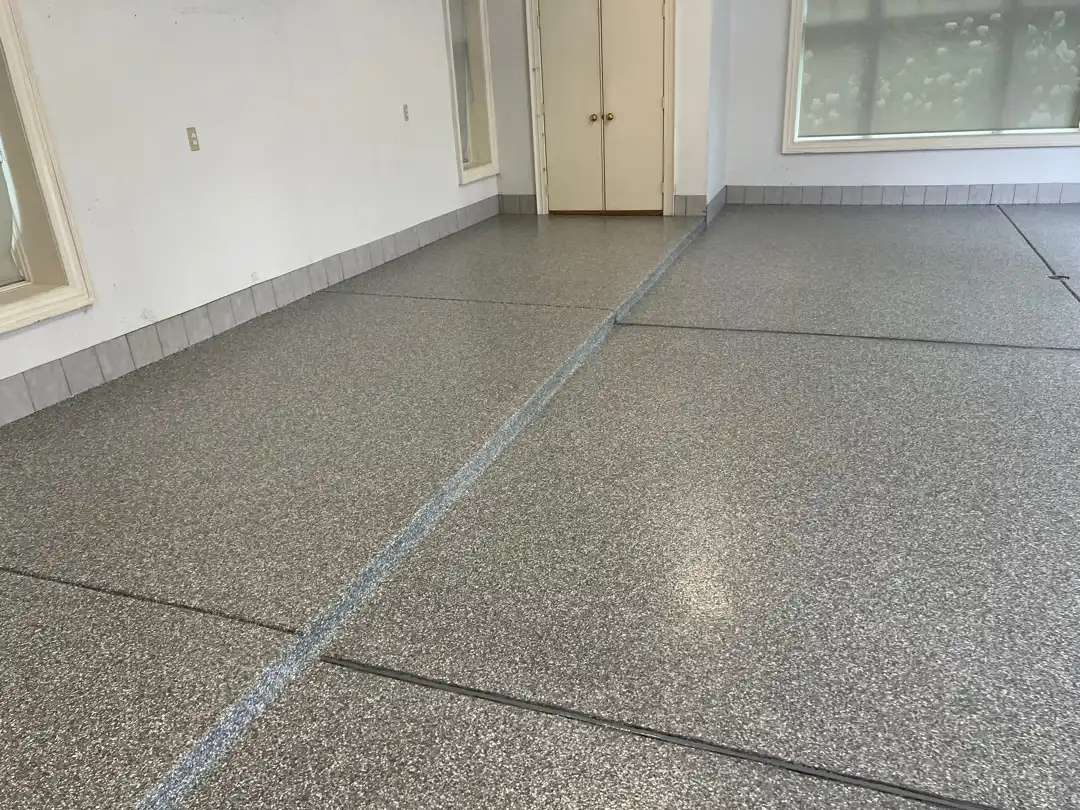
The after photos showcase nearly 1,000 square feet of seamless, high-gloss Stoney Creek blend. The floor drain integrates cleanly into the finished surface. Control joints remain as subtle geometric lines. The tile wainscoting now sits above a floor that matches its level of finish rather than competing with cheap epoxy paint.
The transformation is particularly striking viewed from outside: the glossy Stoney Creek surface catching light, framed by the paver driveway. THis creates a cohesive aesthetic that the thin epoxy layer never achieved.
The Bottom Line
This job illustrates why professional coating systems differ fundamentally from paint-store epoxy. The original coating required complete removal before proper work could begin—essentially paying twice for the floor. Our polyurea/polyaspartic garage floor coating system now protecting this concrete will outlast multiple epoxy applications while providing superior chemical resistance, UV stability, and aesthetic durability.





Click on the photos to enlarge them
Garage Floor Coating on
Radcliff Court in West Bloomfield Township
The Challenge
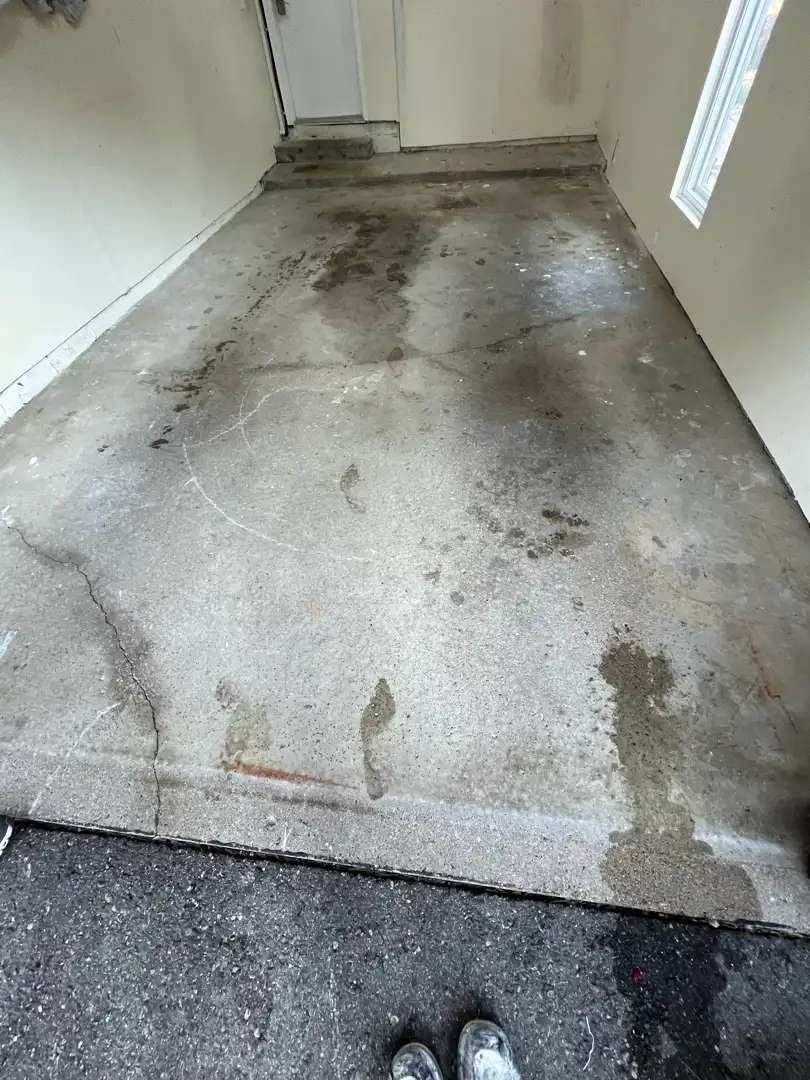
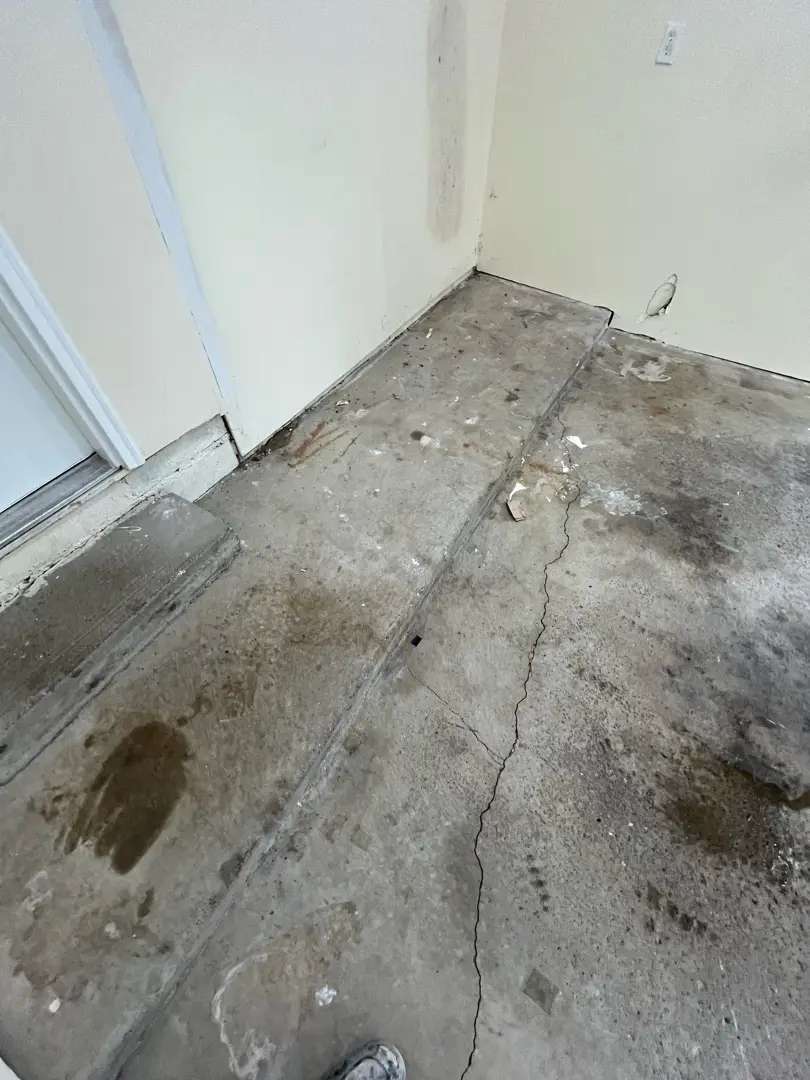
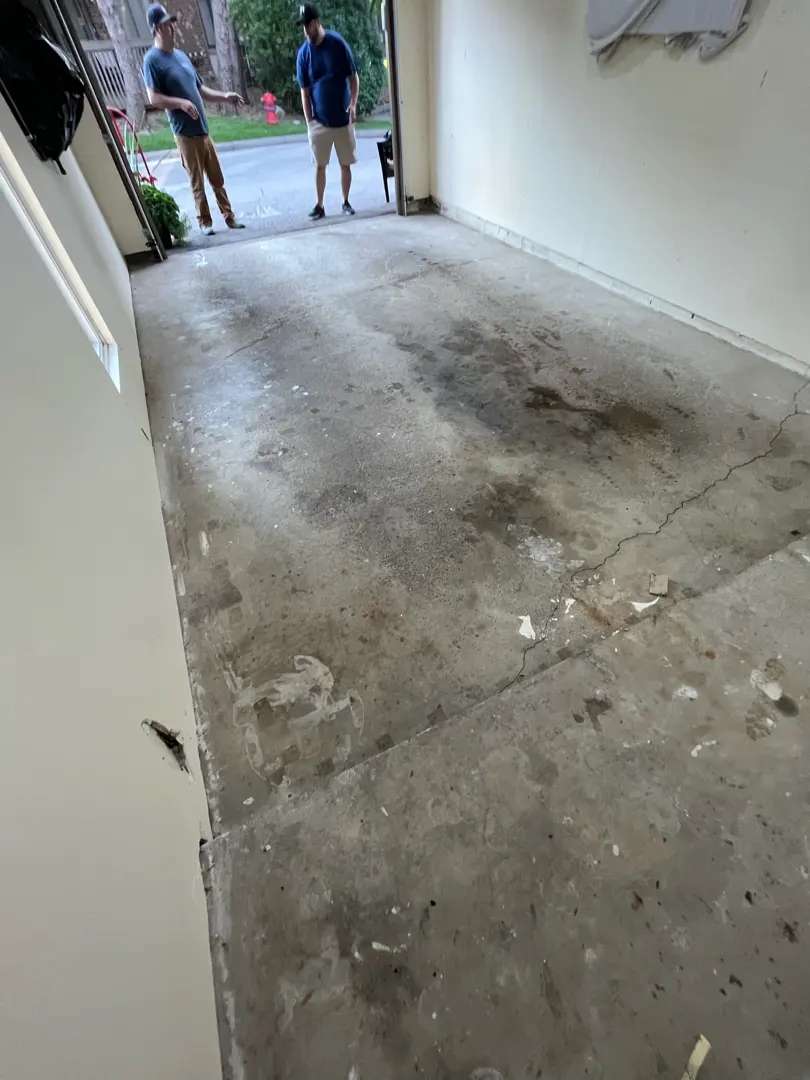
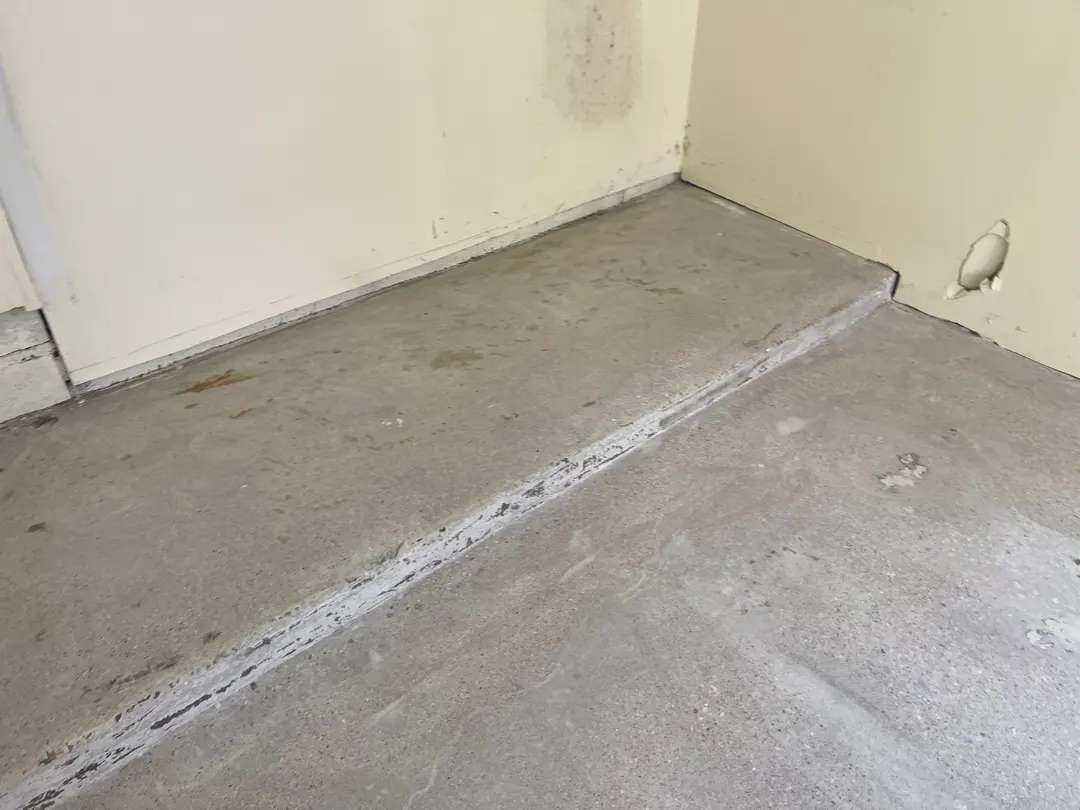
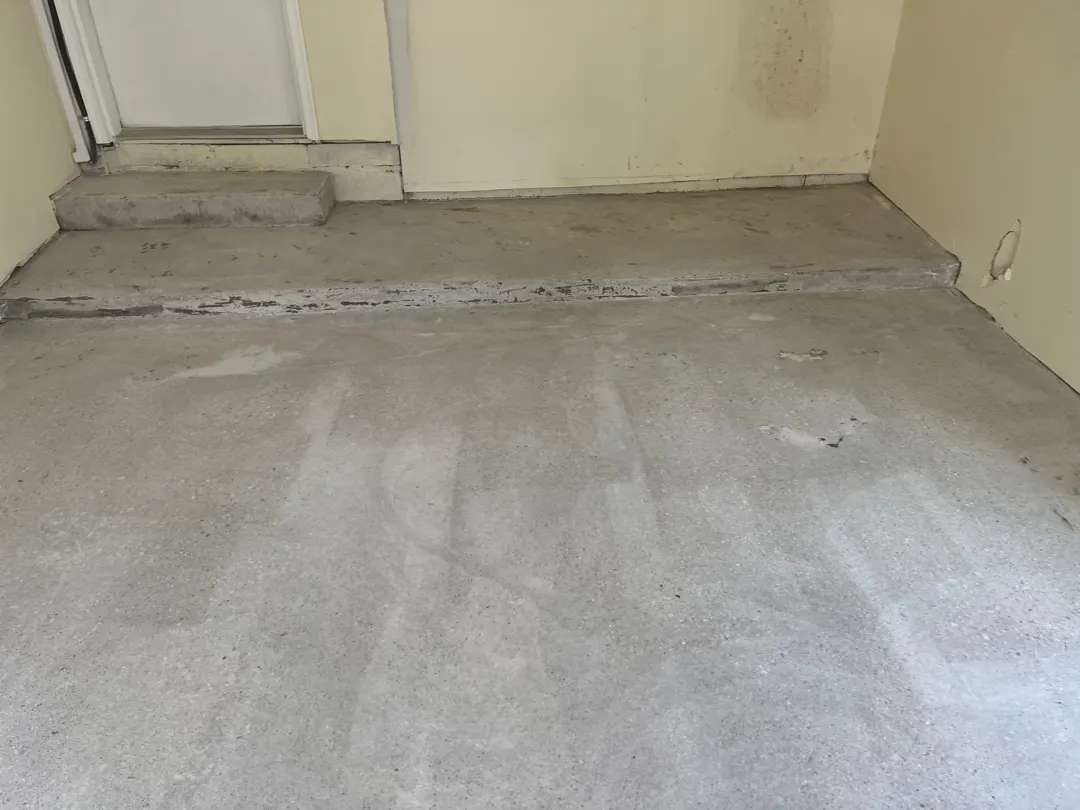
The before photos reveal the typical story of an aging Michigan garage floor: a prominent crack snaking across the slab, scattered pitting throughout the surface, and dark staining from years of vehicle traffic and fluid exposure. The step-up area along the back wall showed similar wear, and the concrete step needed integration into any professional coating system.
The Work
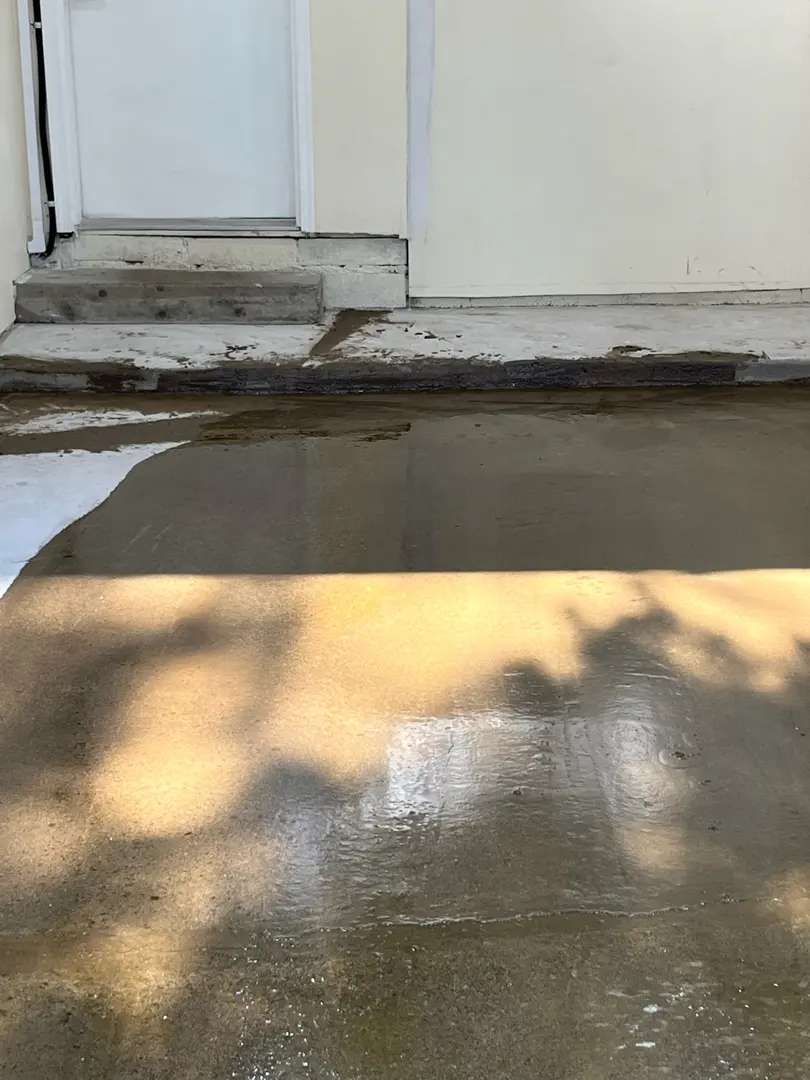
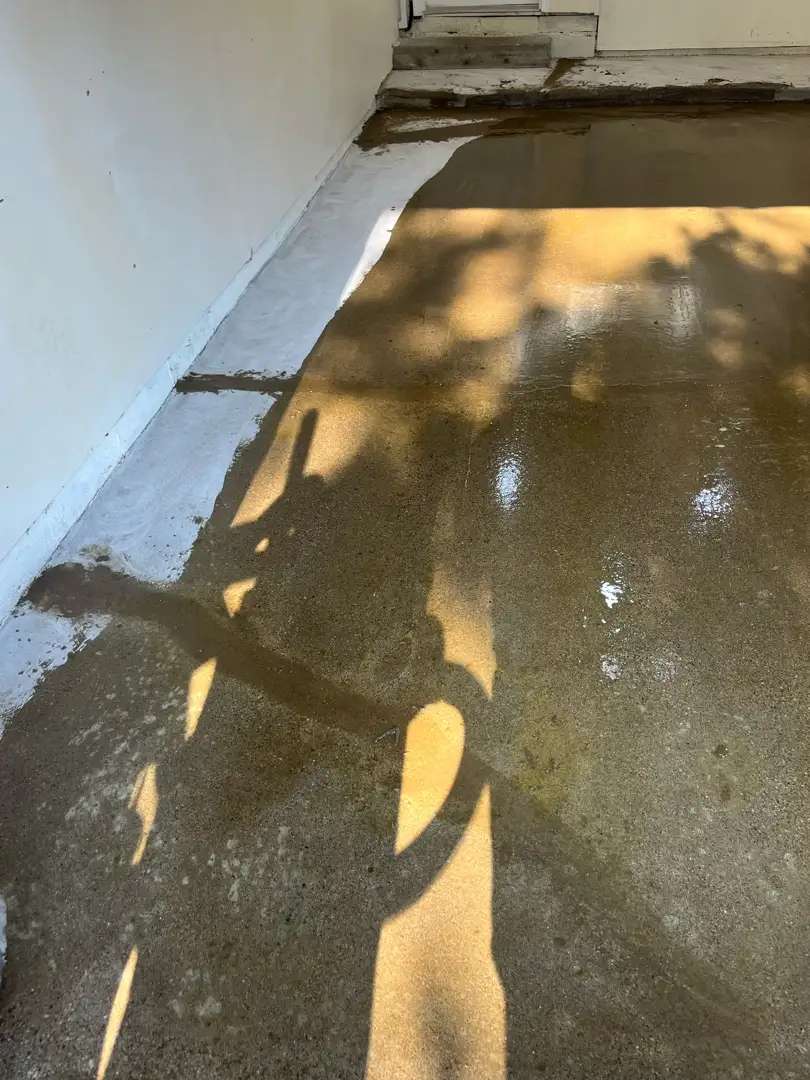
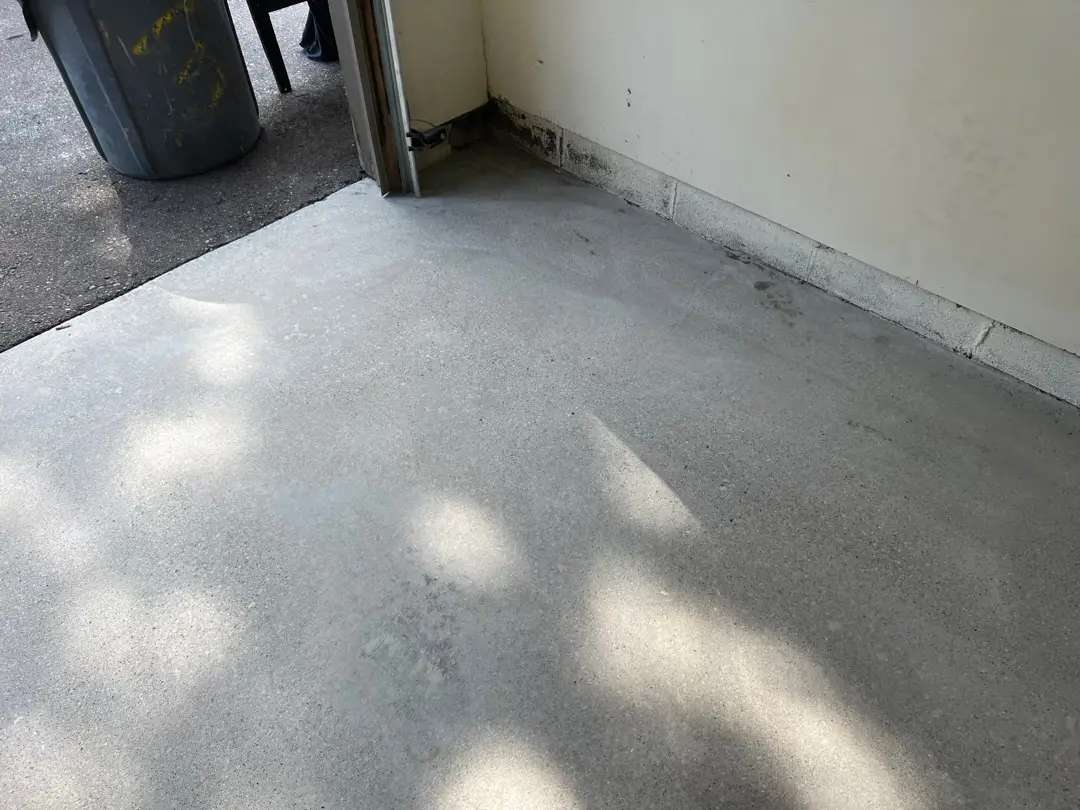
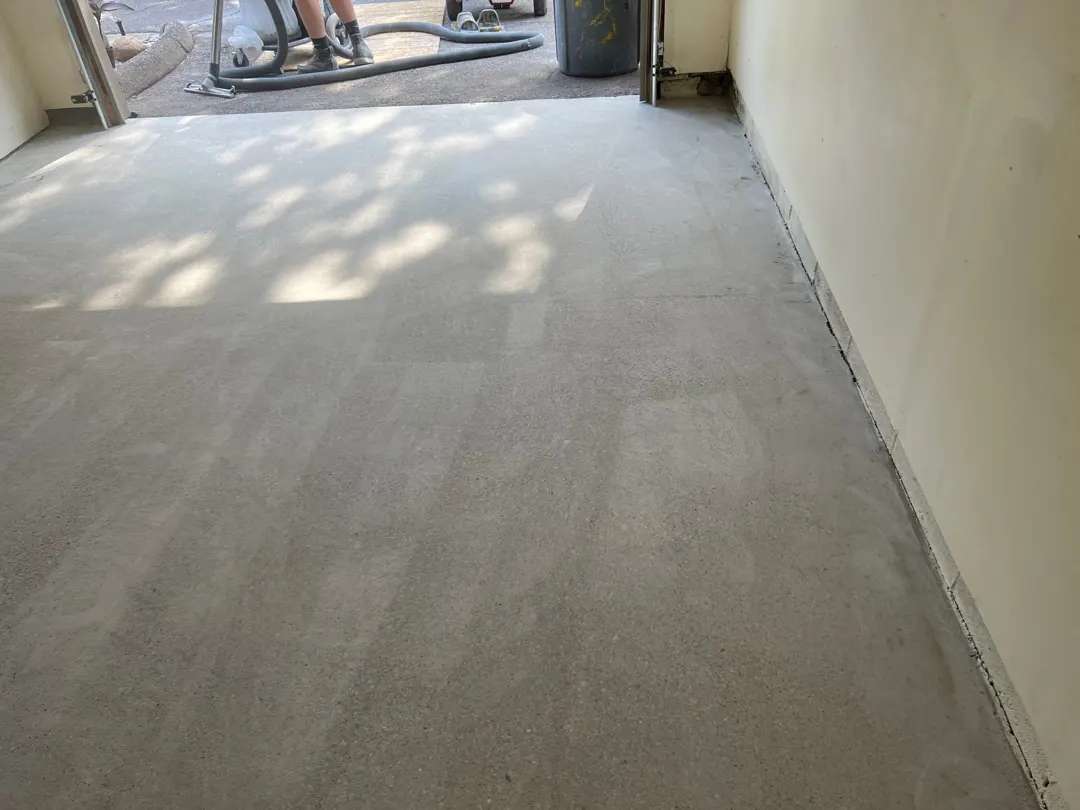
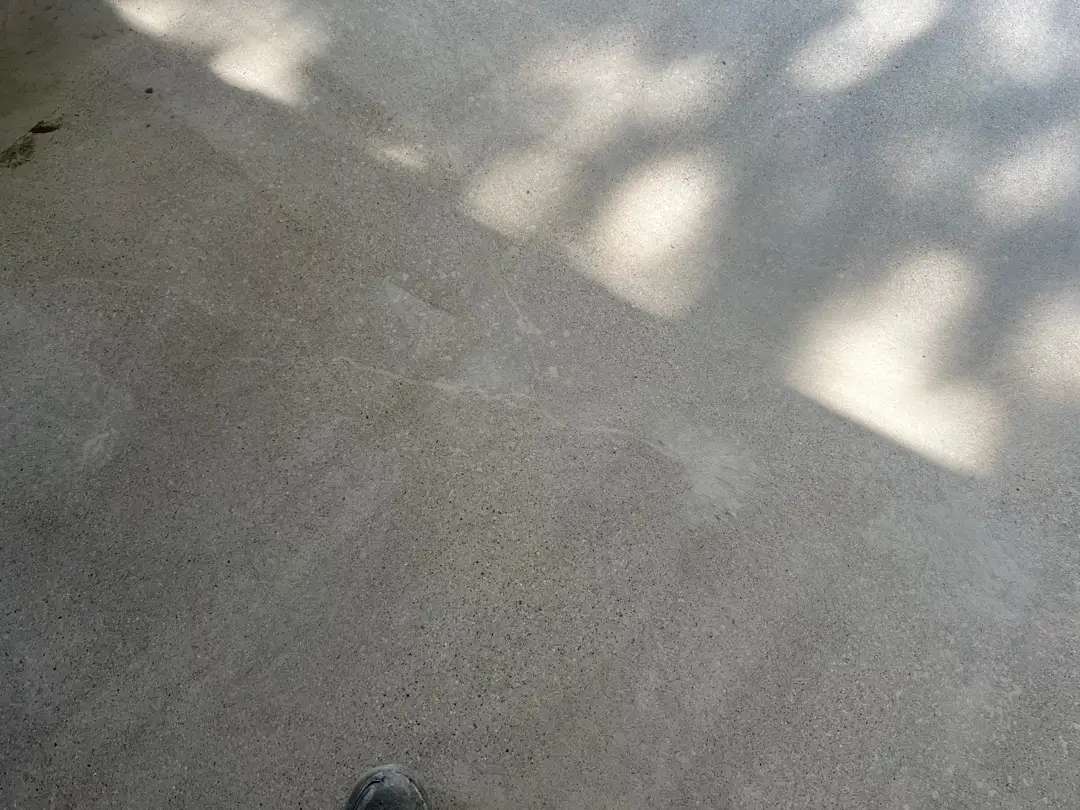
Starting at 8:00 AM, our crew began surface preparation using 16-grit diamonds to profile the concrete and create proper mechanical bond. The “mended and ground” photos capture the floor mid-process—joint filler creating those characteristic white lines where the crack was addressed, the surface uniformly profiled and ready for coating.
The compact footprint required proportionally scaled materials:
Moisture Primer: 7 liters total of MR 50 (3.5L each of Part A and B) sealed the concrete matrix.
Base Coat: 4.5 liters of pigmented polyurea (3L Part A, 1.5L Part B) in grey established the foundation.
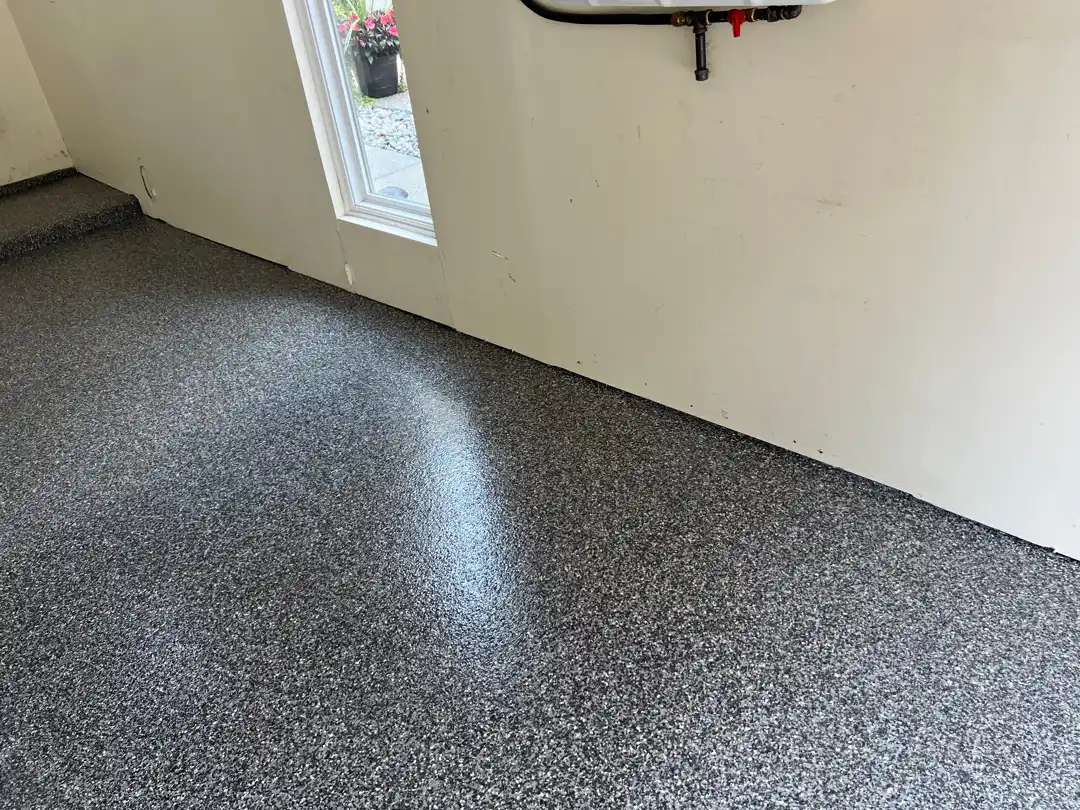
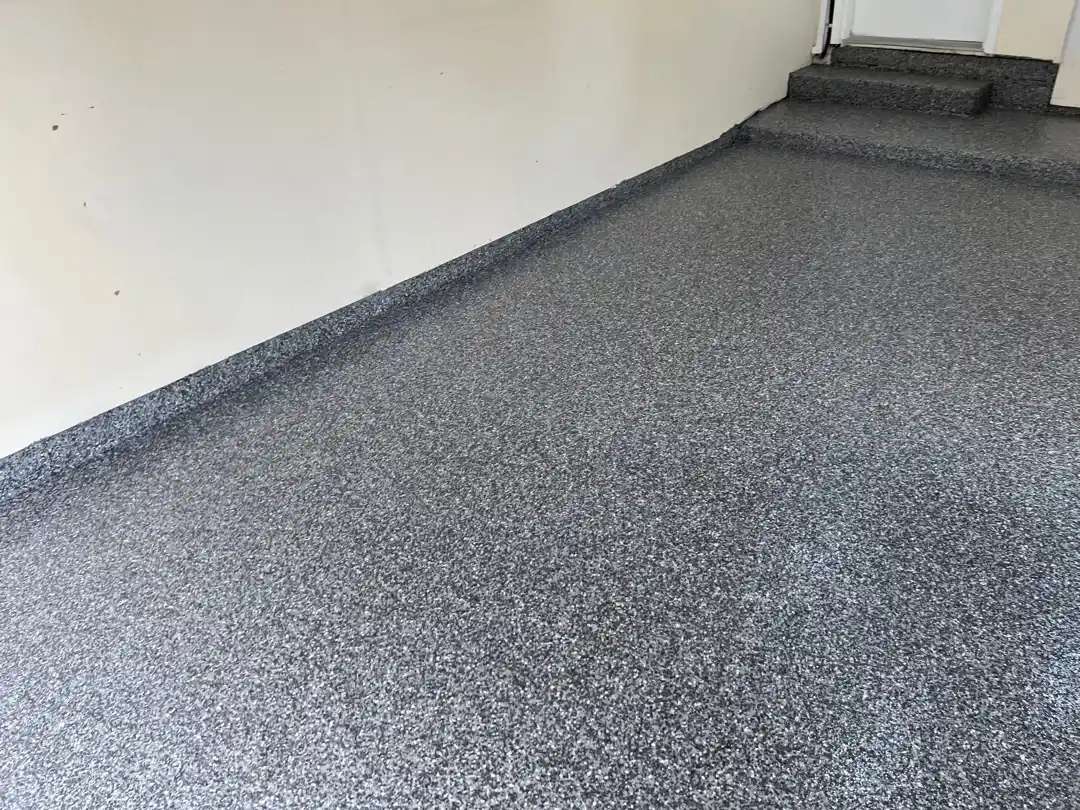
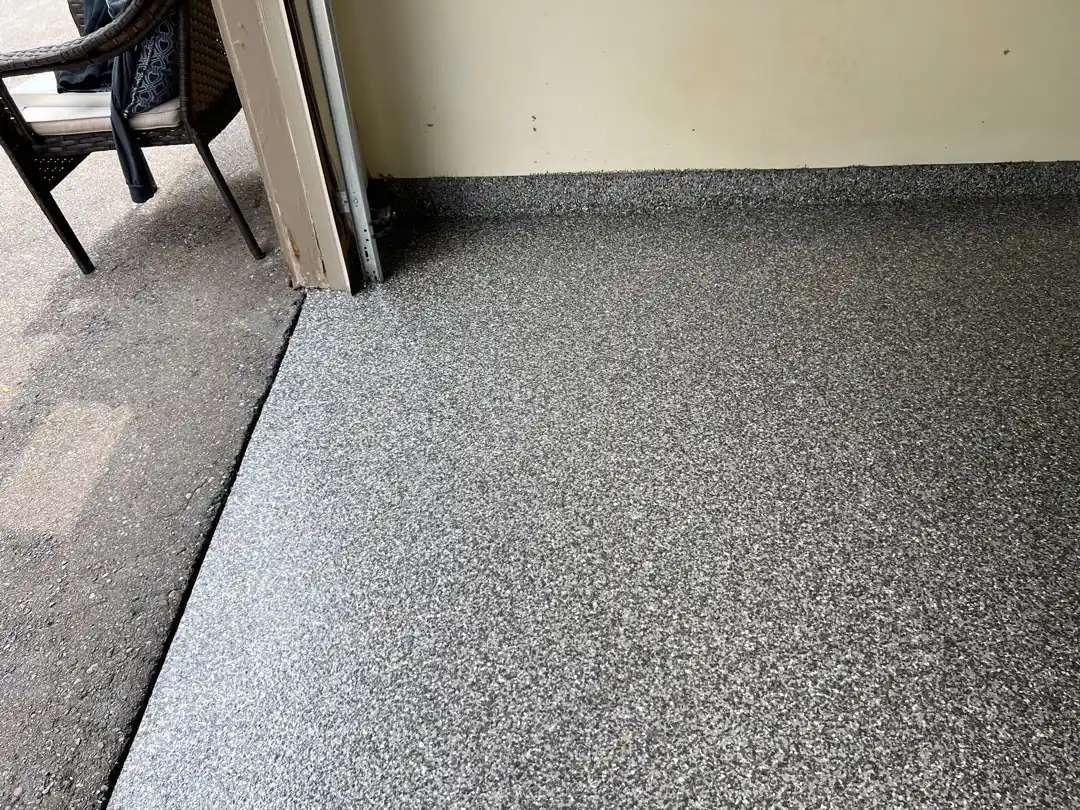
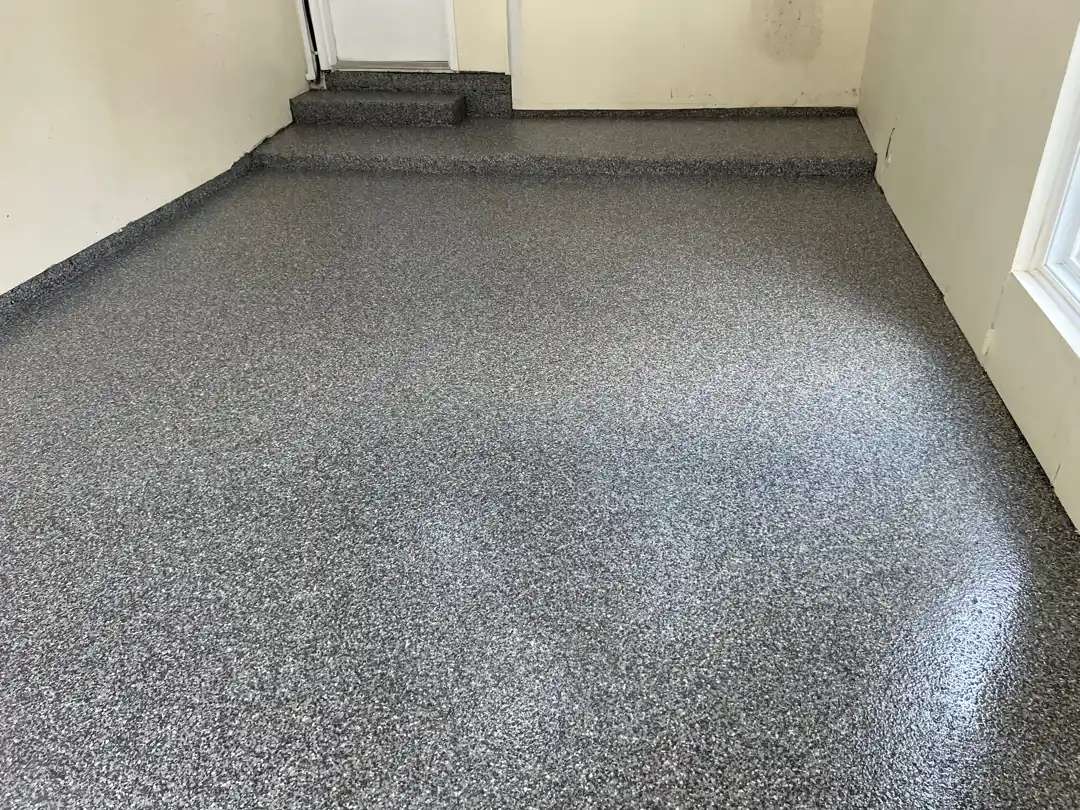
Flake Broadcast: 1.25 boxes of Silver Creek blend were thrown into the wet base, with 0.75 boxes recovered. That half-box retention rate provided solid coverage across the smaller surface area—the grey, black, and white chips creating that distinctive granite-like appearance.
Clear Top Coat: 8 liters of polyaspartic clear (4L each part), enhanced with 5 cups of sand and 7 caps of Shark Grip for slip resistance appropriate to a garage environment.
The Result
By 1:40 PM—under six hours from start to finish—the garage floor coating job was complete. The after photos showcase exactly what a professional polyurea-polyaspartic system delivers: a seamless, high-gloss Silver Creek finish that unifies the main floor, step-up area, and concrete step into one cohesive surface. The crack that once traced across the slab has vanished beneath the flake pattern. Light from the windows reflects off the glossy finish, making the compact space feel larger and cleaner.
The Bottom Line
This Radcliff Court garage floor coating job demonstrates that smaller garages will receive the same professional treatment as their larger counterparts. The efficient 5-hour-40-minute timeline reflects both the reduced square footage and the straightforward nature of the concrete repairs required. What was once a stained, cracked floor became a showroom-quality surface that will protect the concrete from salt, chemicals, and hot tire pickup through countless more Michigan winters.
Click on the photos to enlarge them
Garage Floor Coating on
Park Forest Dr. in West Bloomfield Township
The Challenge
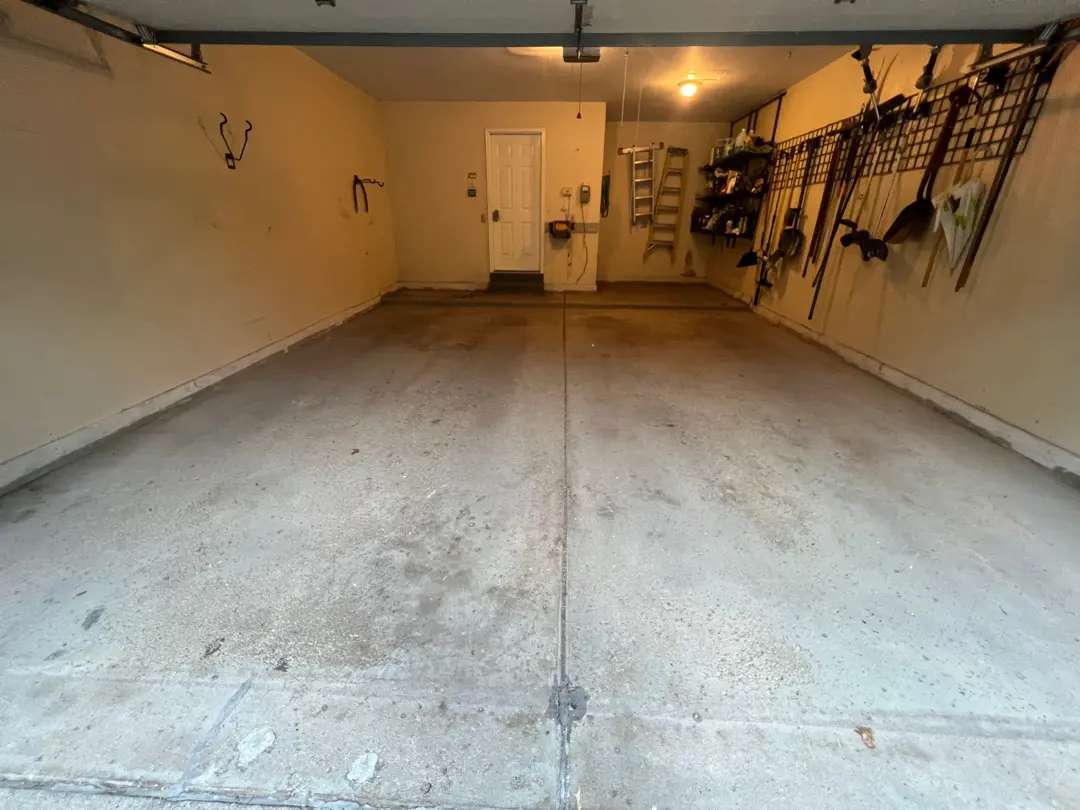
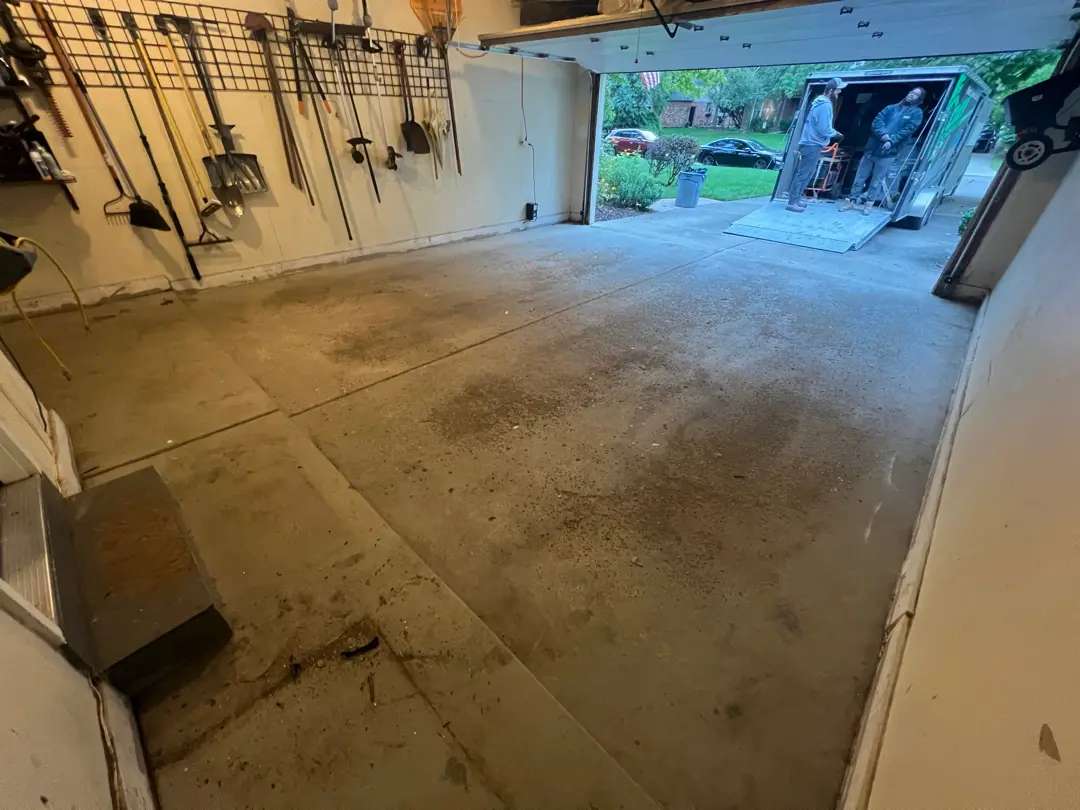
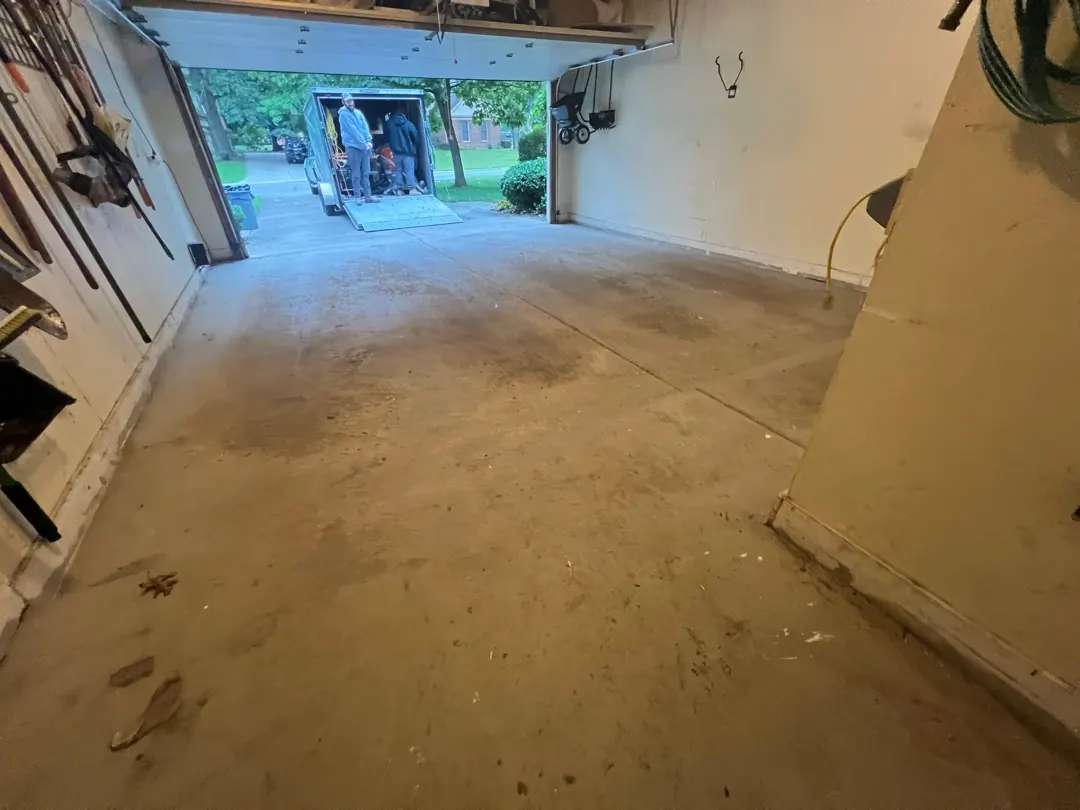
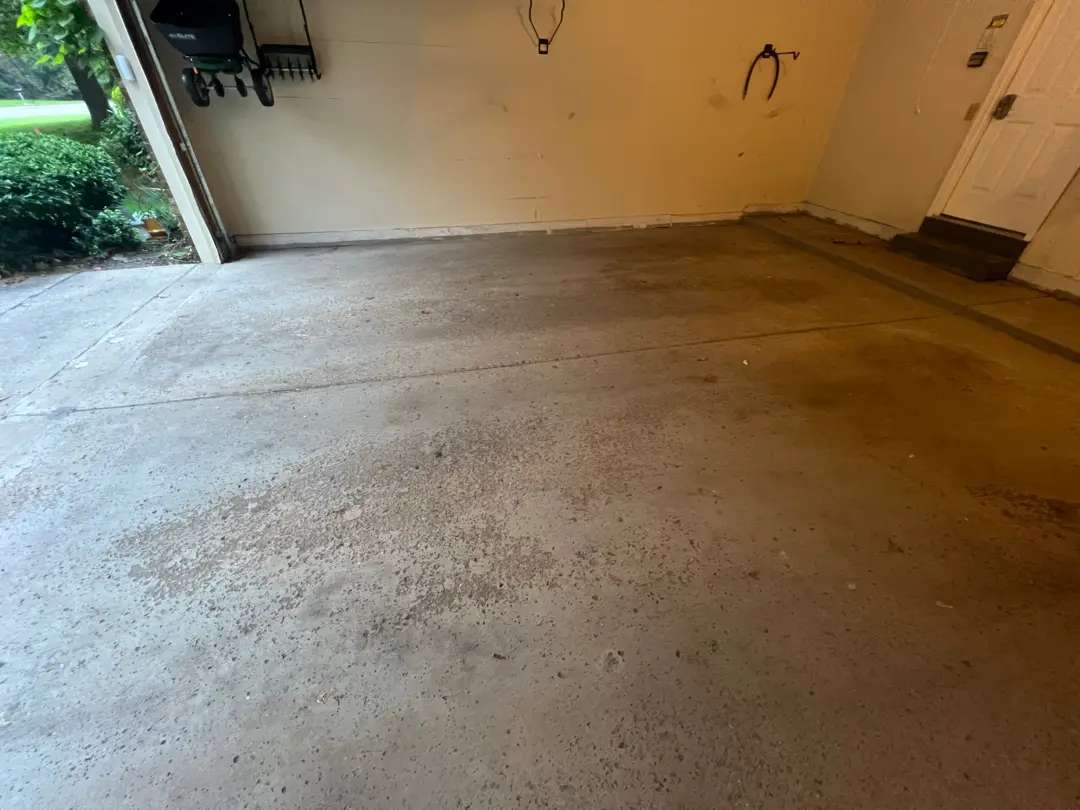
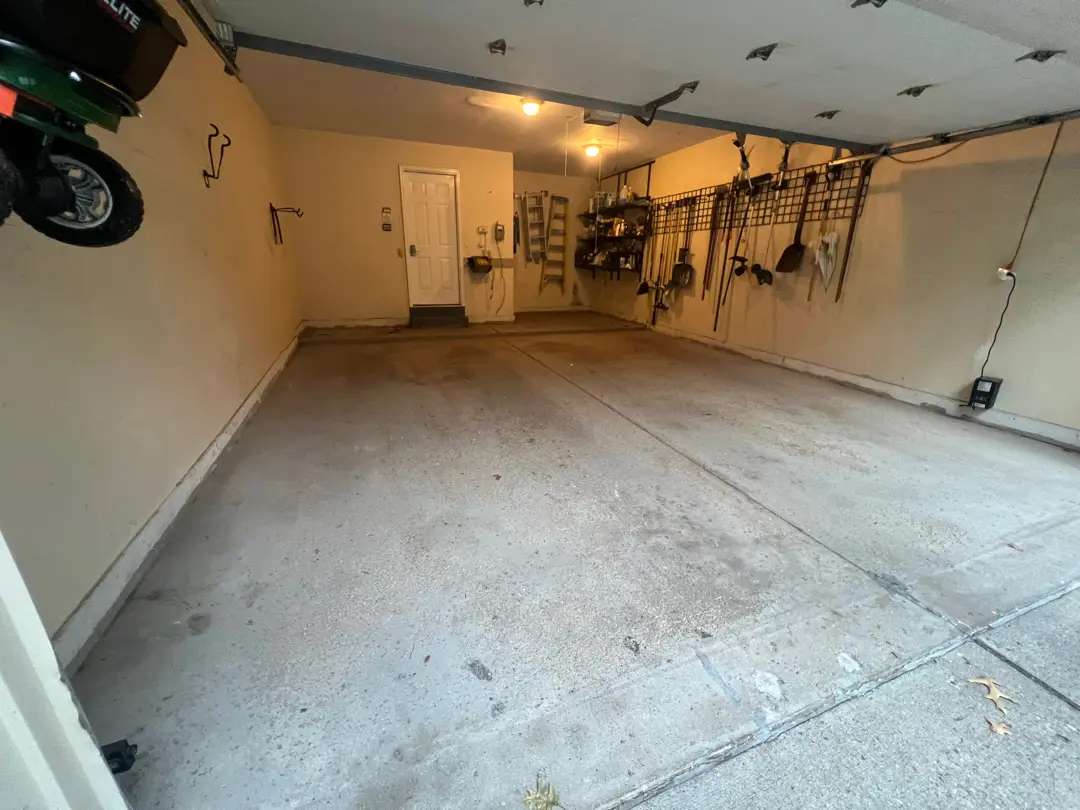
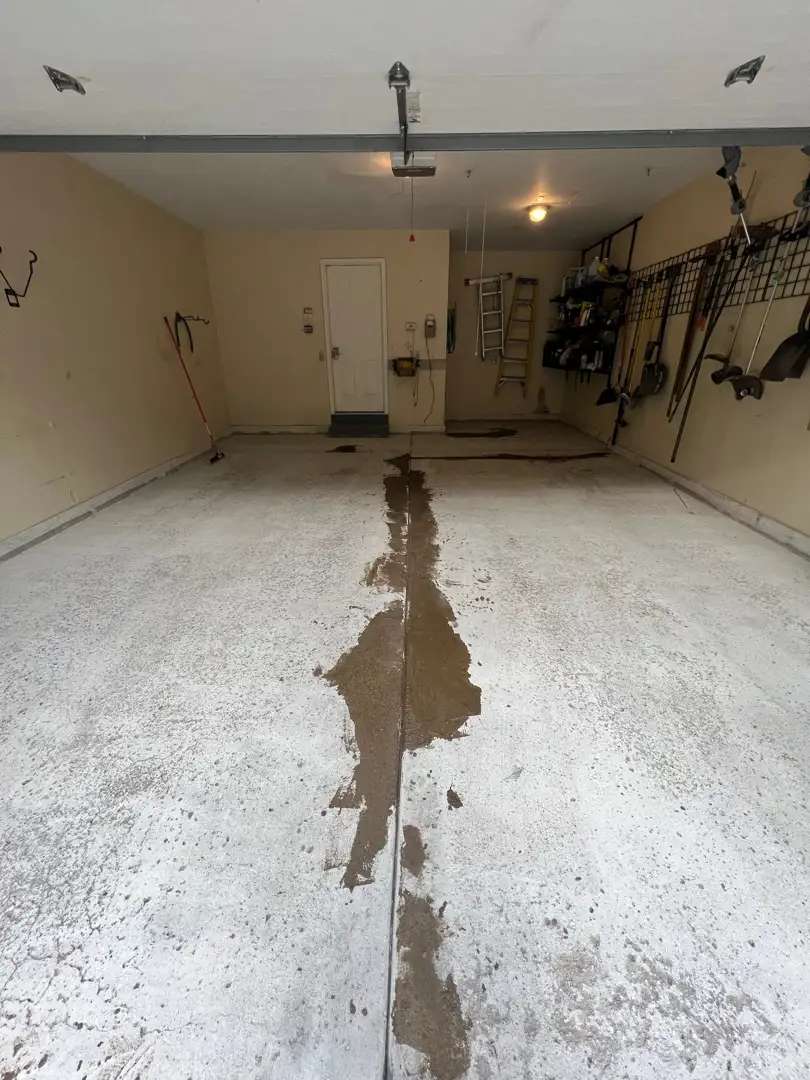
The before photos reveal a floor showing decades of Michigan garage life: surface staining throughout, scattered pitting, and a prominent control joint running the full length of the slab that had begun to deteriorate. The concrete near the apron showed typical wear from road salt and moisture intrusion. Though structurally sound, this floor needed comprehensive repair before any coating system could succeed.
The Work
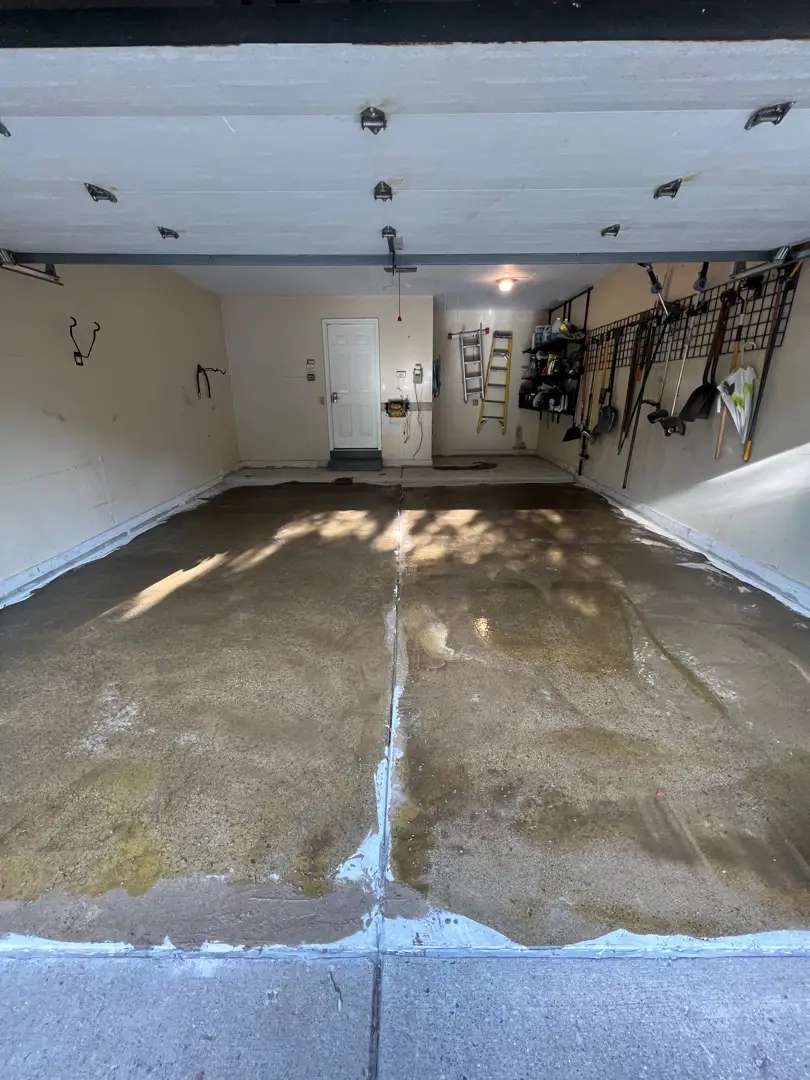
Surface preparation began with diamond grinding using an MC3.8 configuration—appropriate for bare concrete without existing coatings to remove. The “mender” photos capture the critical repair phase: brown repair material filling the entire length of the center control joint, white polyurea joint filler sealing the apron edges, and the floor wet from cleaning after profiling. The 21 linear feet of vertical lip received careful hand-grinding attention.
The system went down in layers:
Moisture Primer: MR 50 penetrated the freshly ground concrete to create a vapor barrier and bonding surface.
Base Coat: Pigmented polyurea in grey established the foundation for the Cabin Fever flake blend.
Flake Broadcast: Cabin Fever—a rich blend of dark greys, blacks, and white chips—was thrown into the wet base coat. This deeper color palette creates a dramatic, sophisticated appearance that hides dirt and tire marks while adding visual depth.
Clear Top Coat: Polyaspartic clear with 16-grit traction additive sealed everything, providing slip resistance appropriate to a working garage environment.
The Result
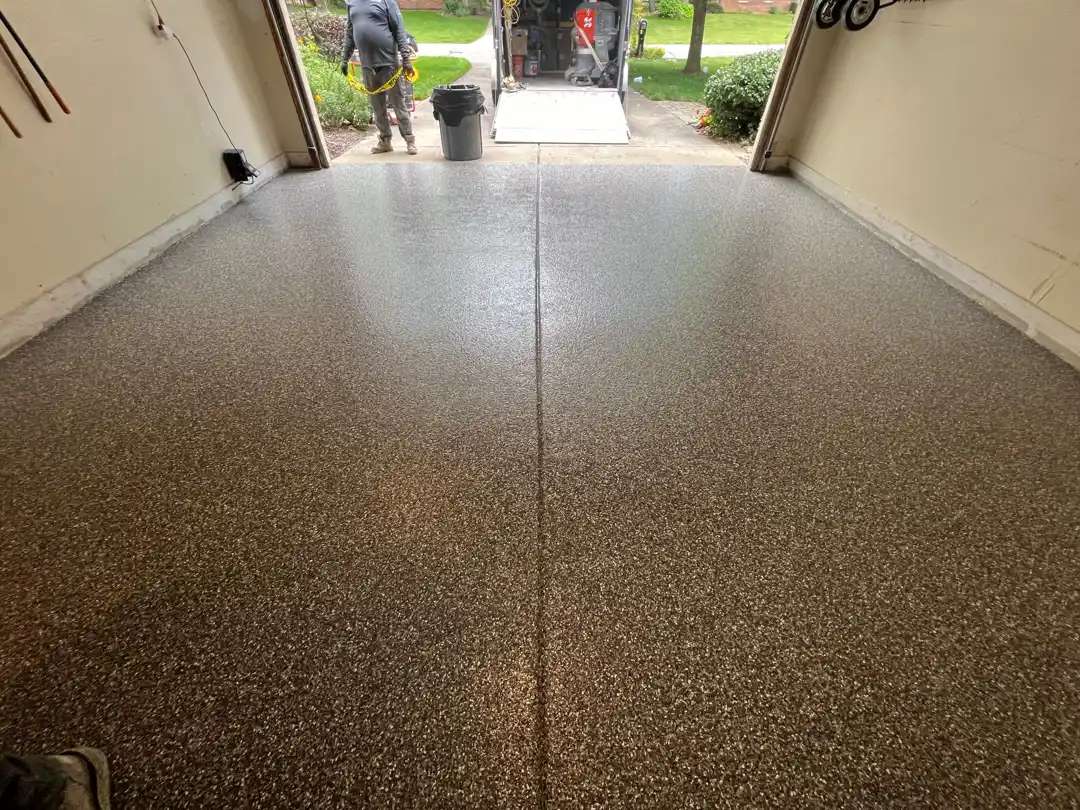
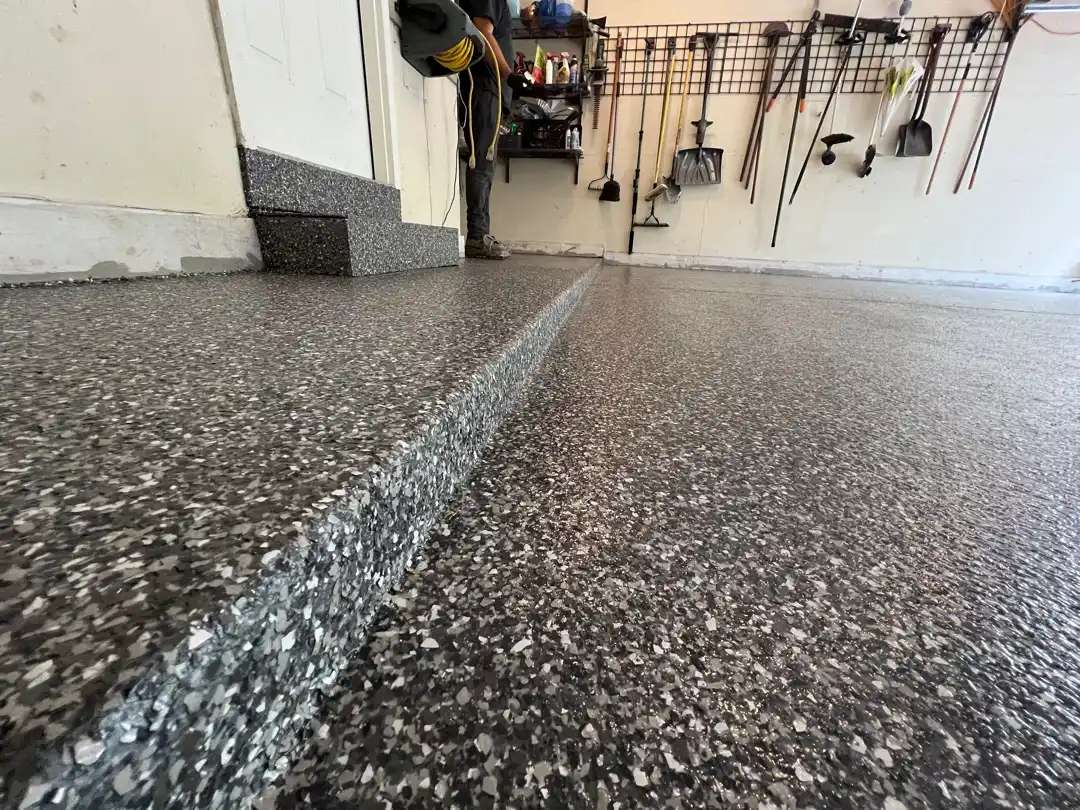
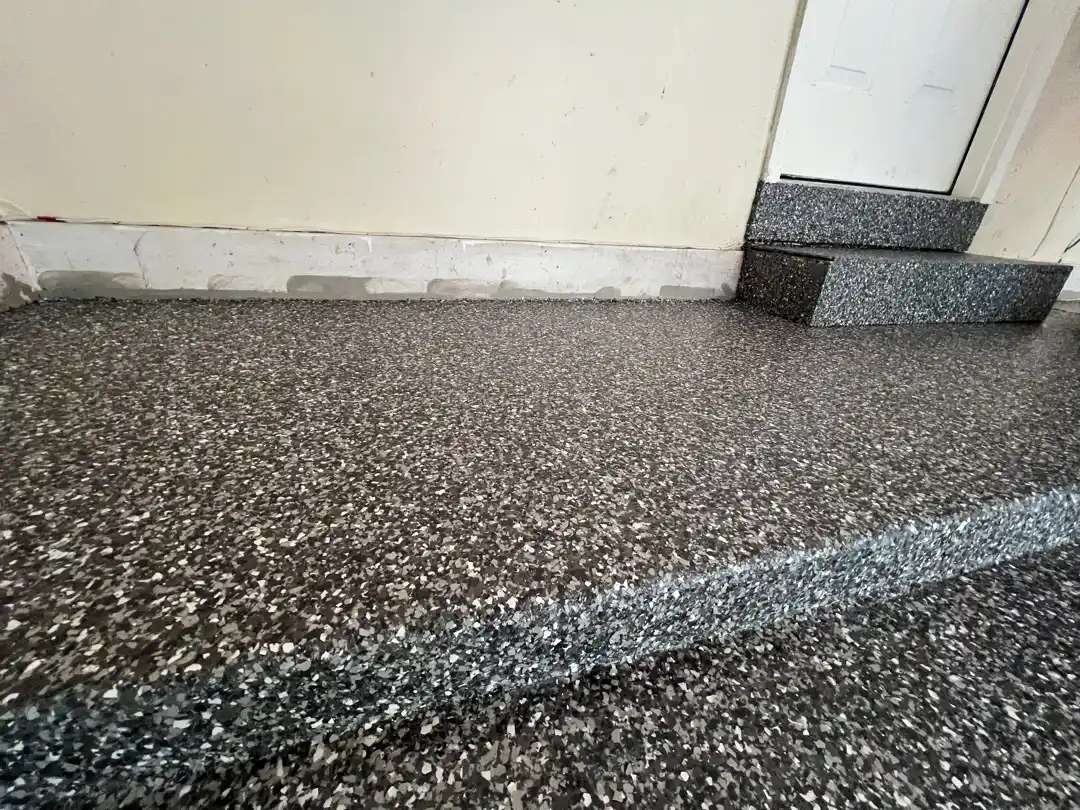
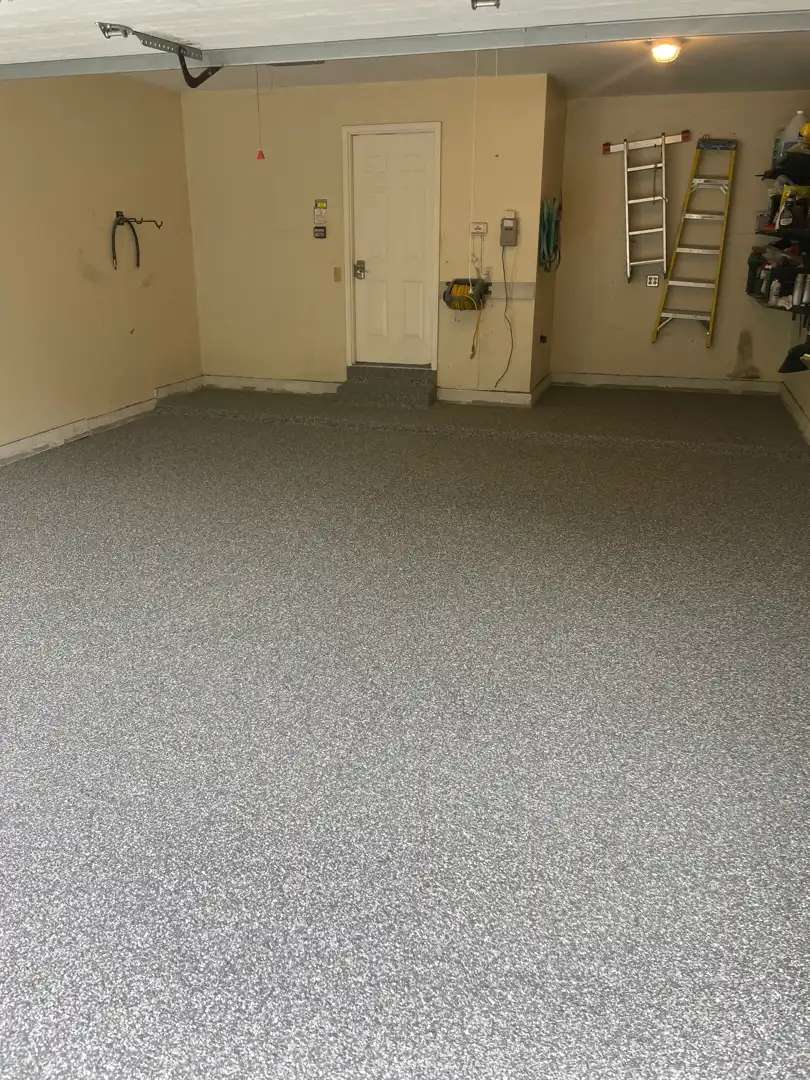
The after photos showcase the dramatic transformation. The Cabin Fever finish creates a darker, more dramatic aesthetic than lighter blends—the interplay of black, grey, and white flakes catches light differently depending on the angle, creating visual interest across the entire surface. The control joint that once traced a deteriorating line down the center now appears as a clean geometric feature. The step-up area at the back integrates seamlessly with the main floor.
The caution tape across the garage entrance in the finished photos marks the curing period—a brief wait before this floor handles vehicle traffic for decades to come.
The Bottom Line
This Park Forest Drive job demonstrates the impact of color choice on a finished garage. The Cabin Fever blend transforms this functional space into something with genuine visual presence—the rich, dark tones complementing the homeowners’ organized tool walls and storage solutions. What was once a stained, cracked floor became a surface worth showcasing, protected against salt, chemicals, and hot tire pickup through countless more Michigan seasons.





Click on the photos to enlarge them
Garage Floor Coating on
Bay Dr. in West Bloomfield Township
The Challenge
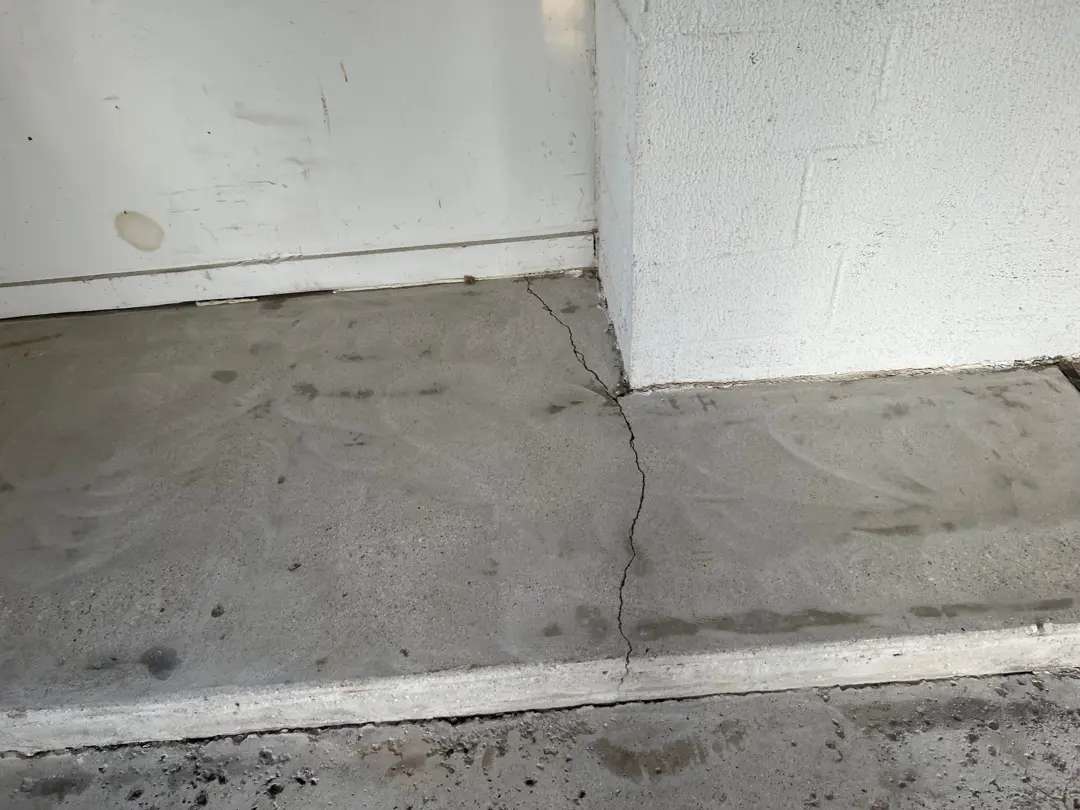
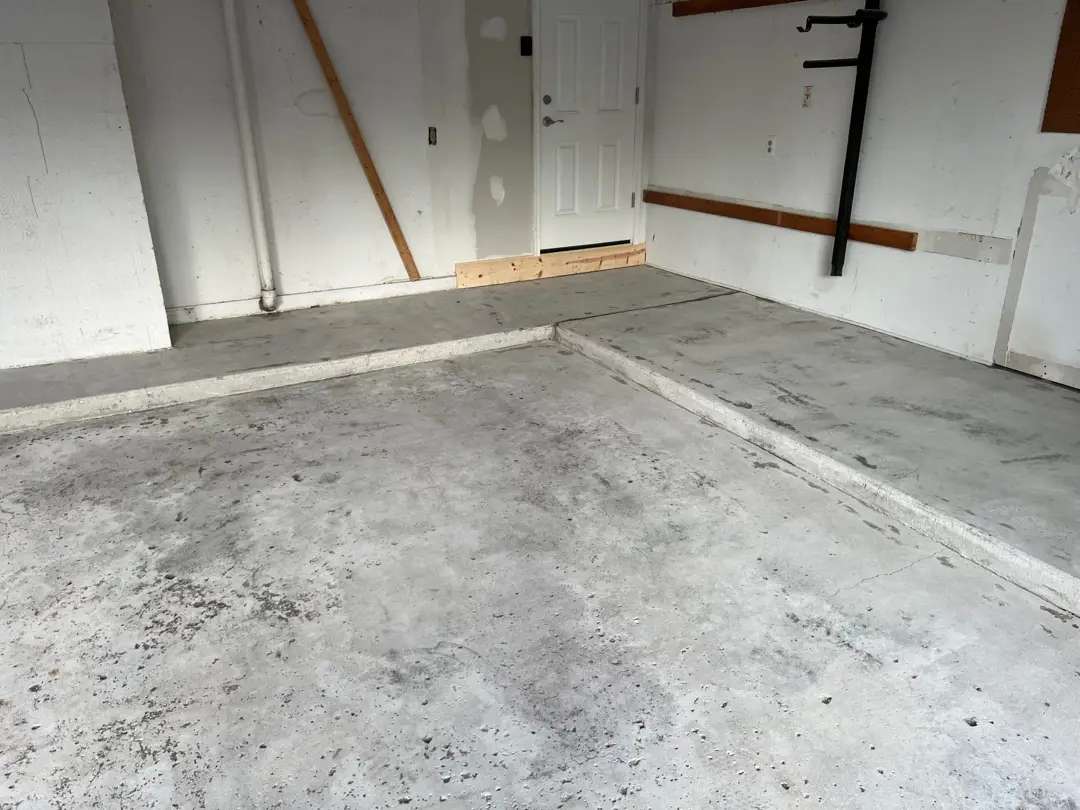
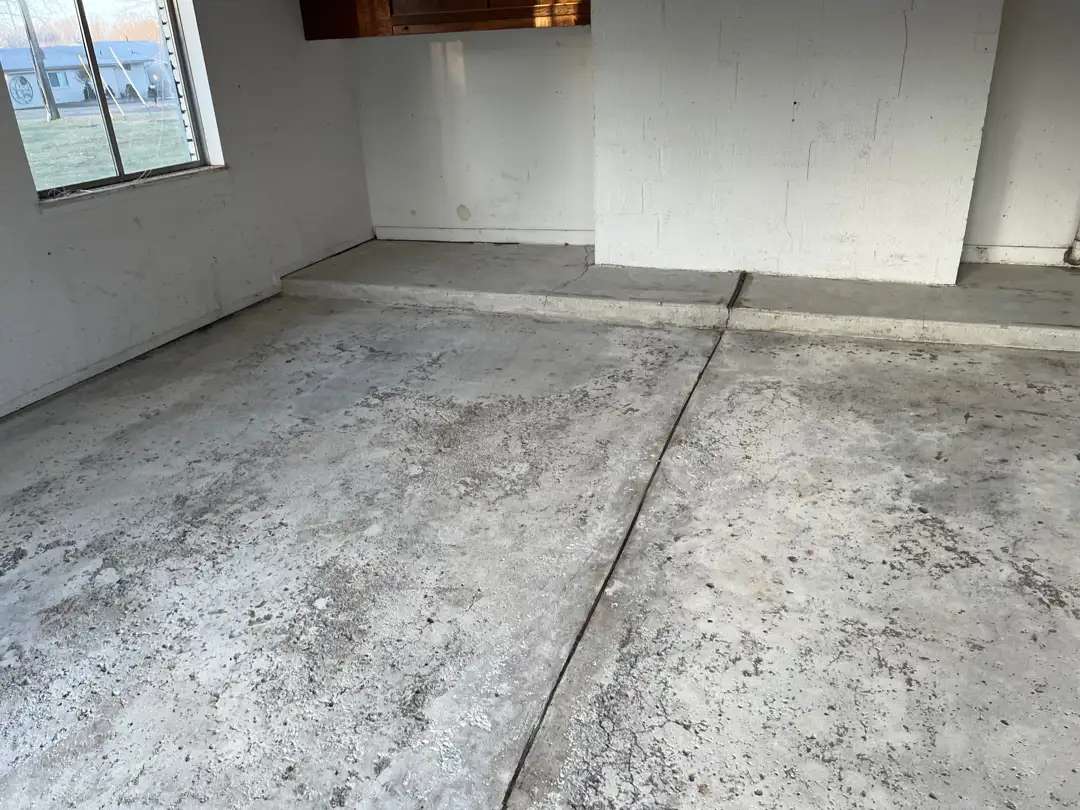
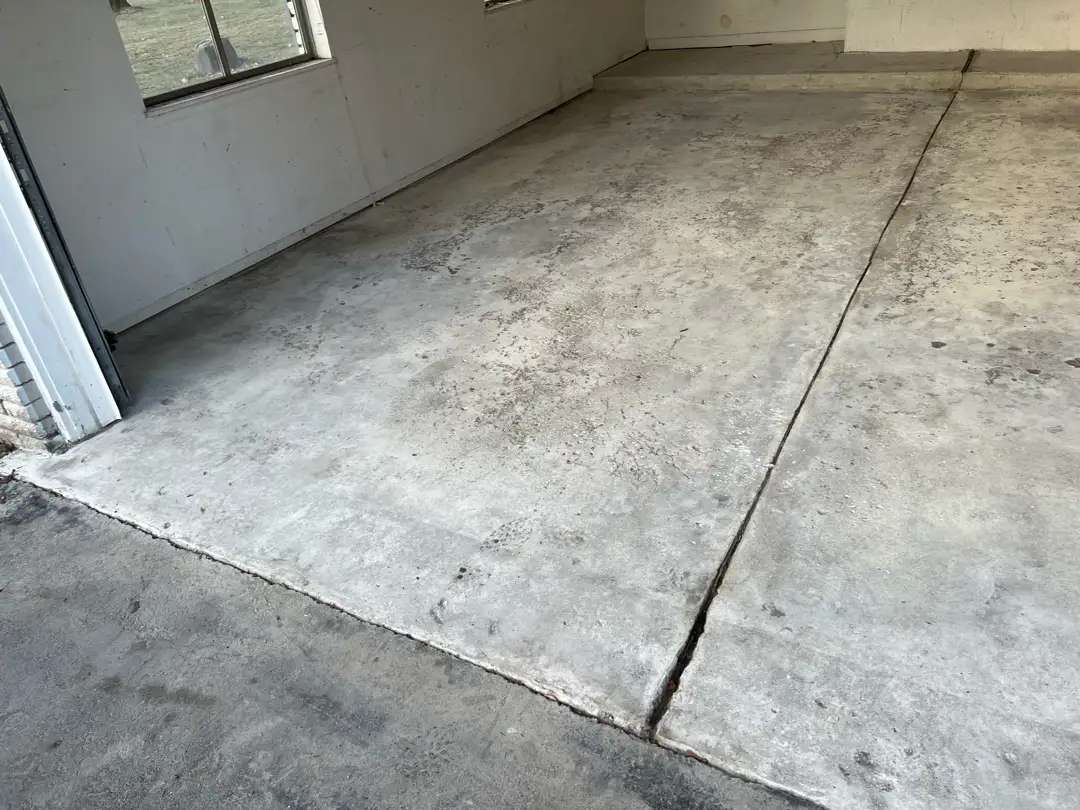
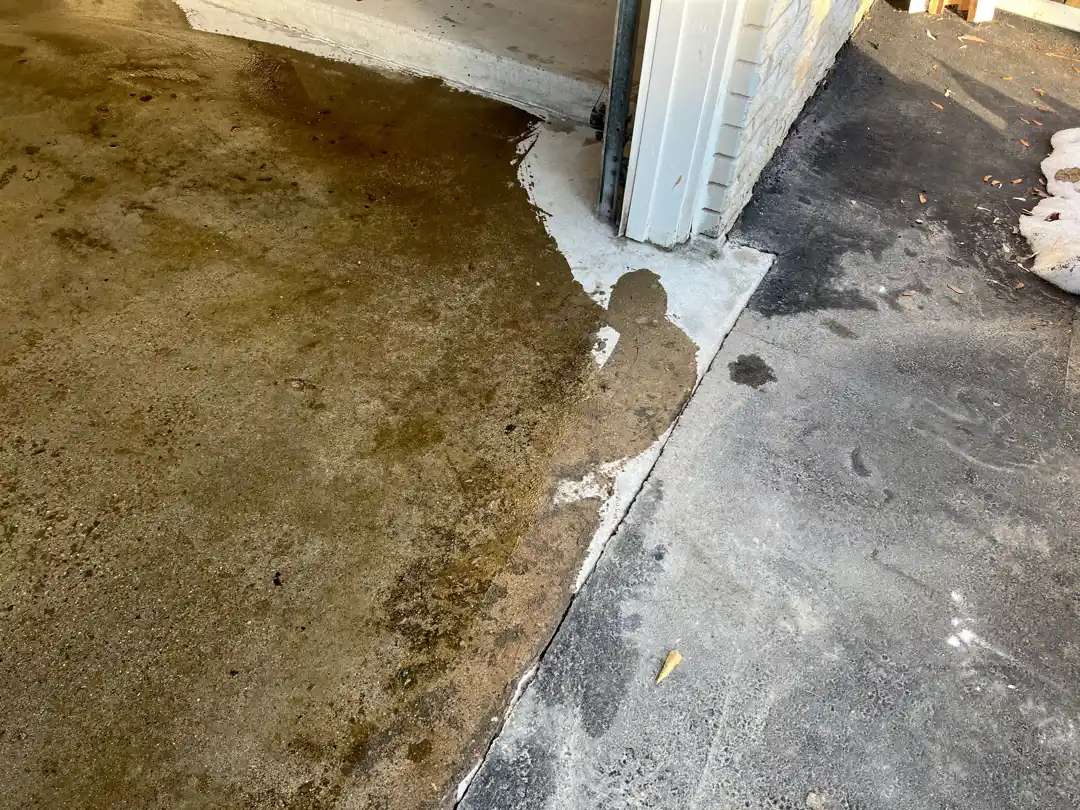
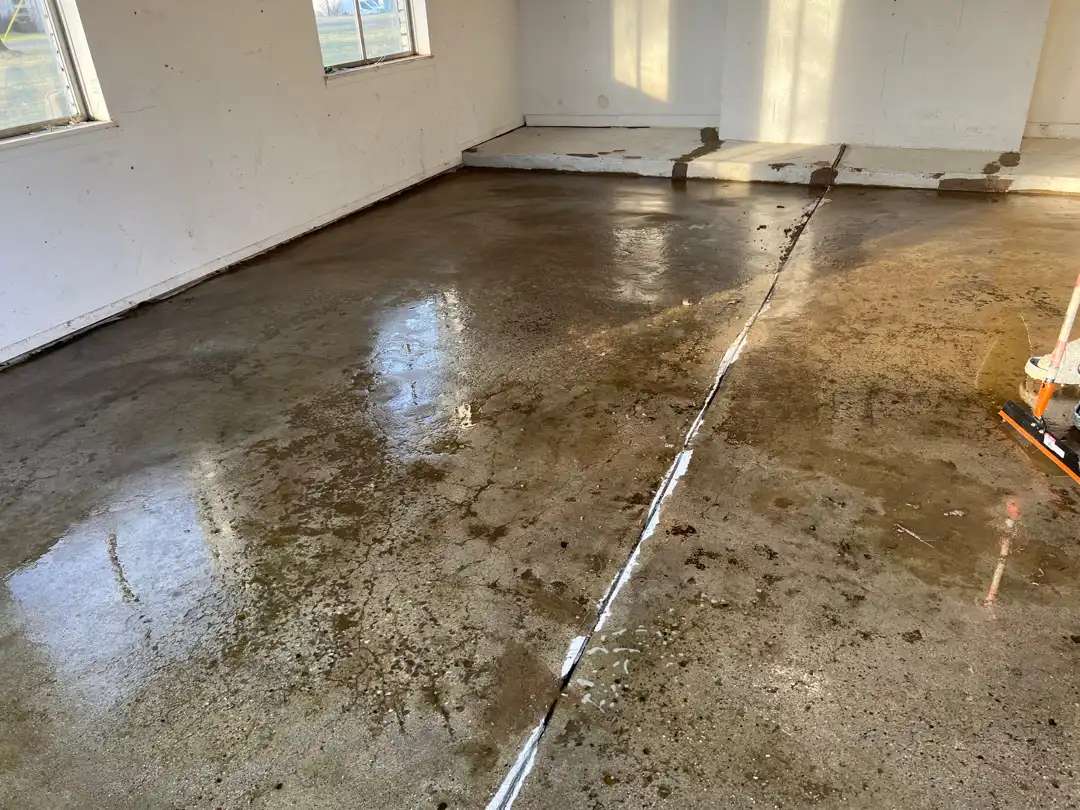
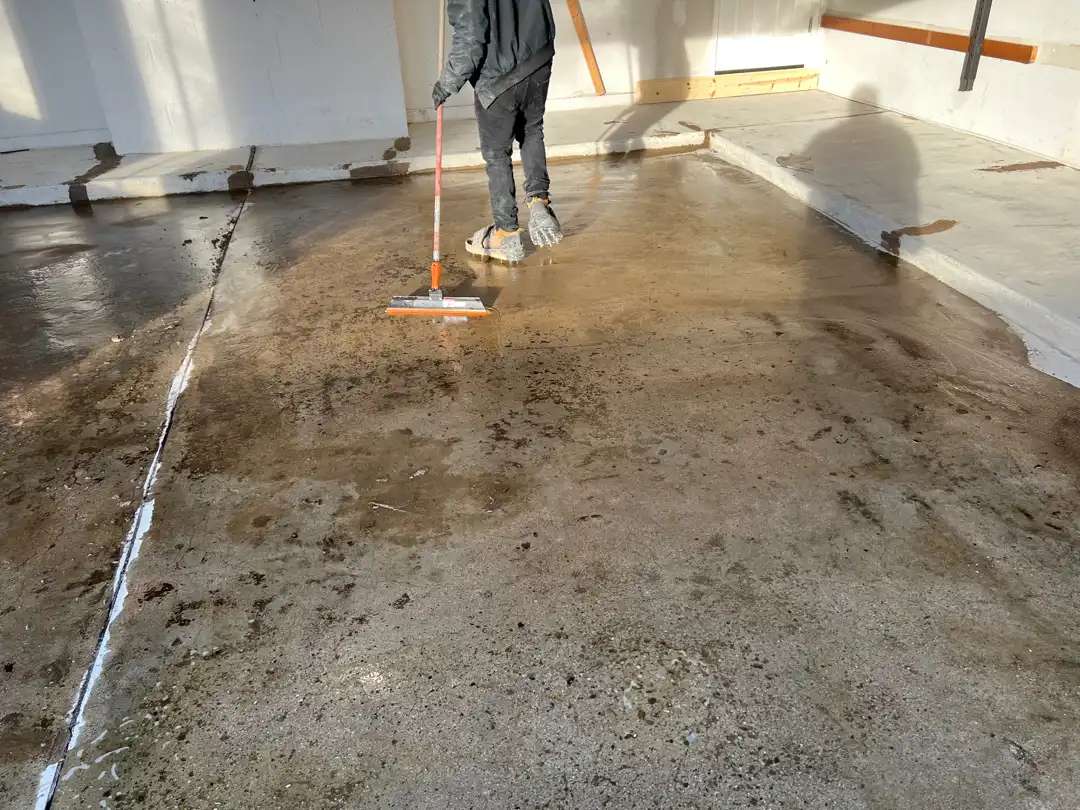
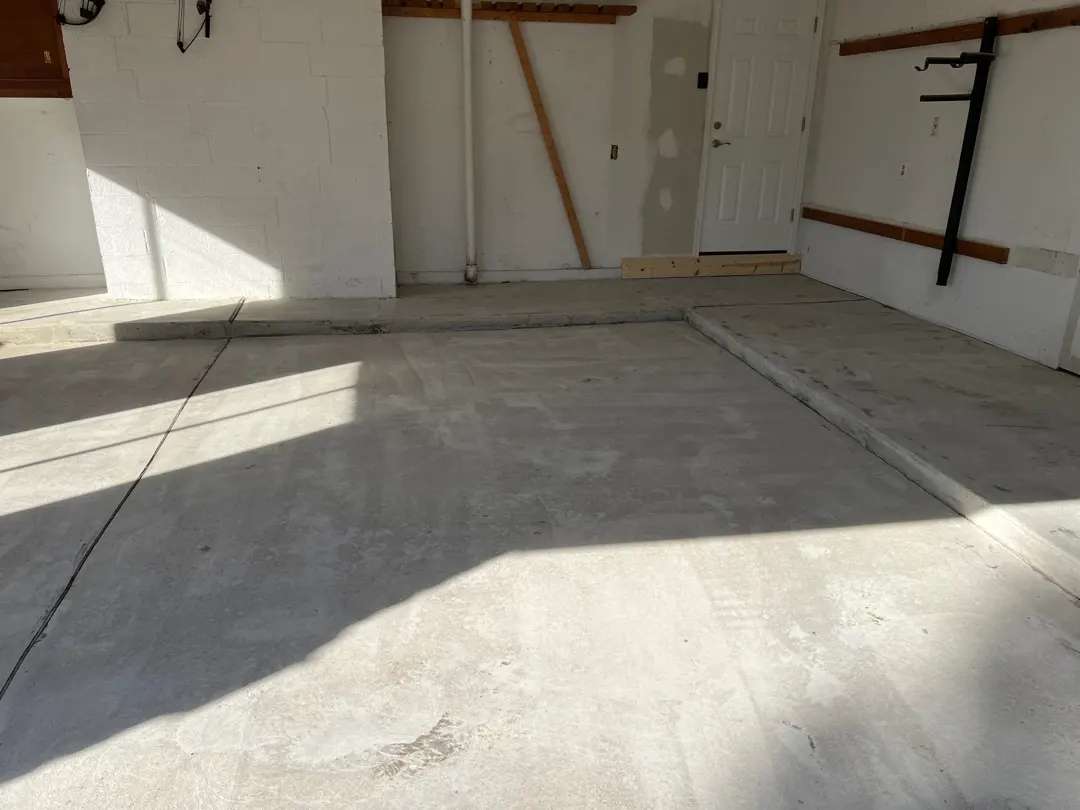
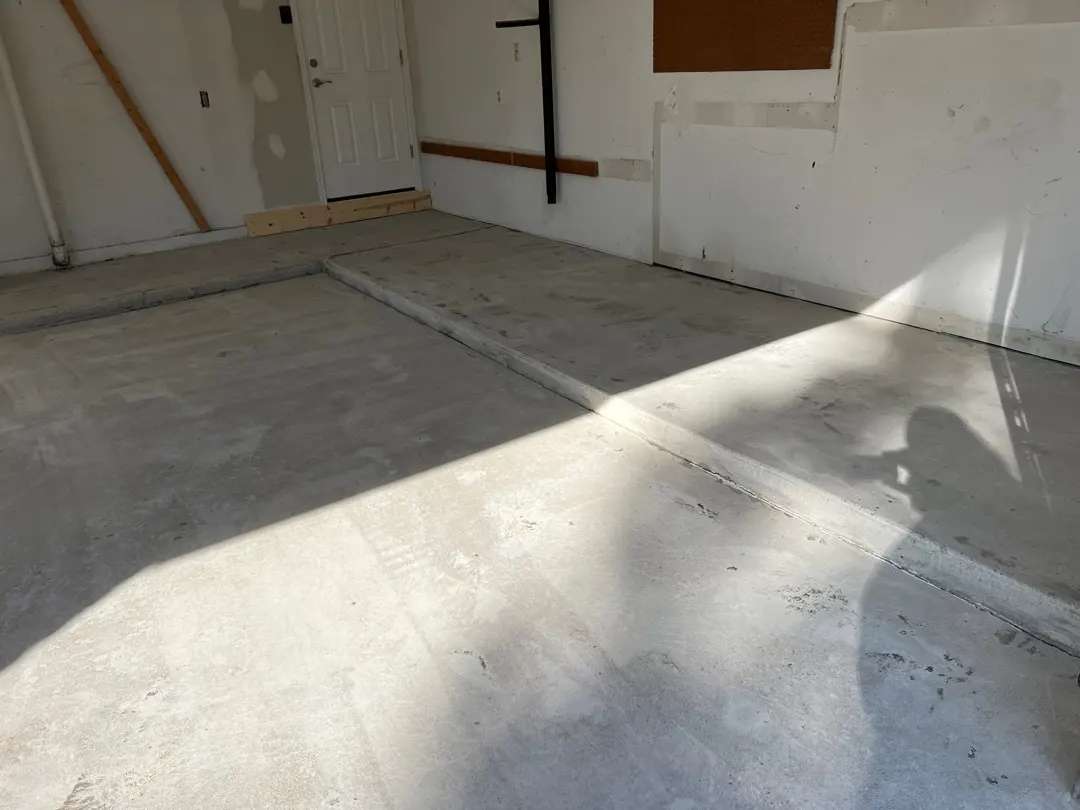
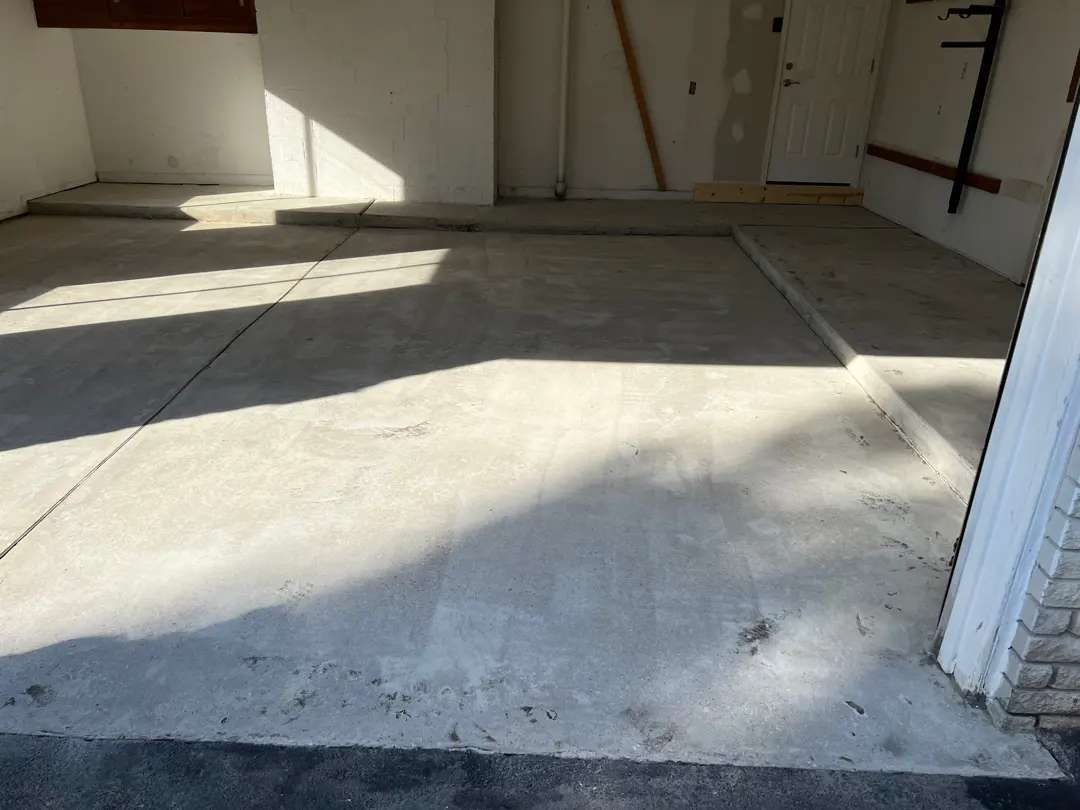
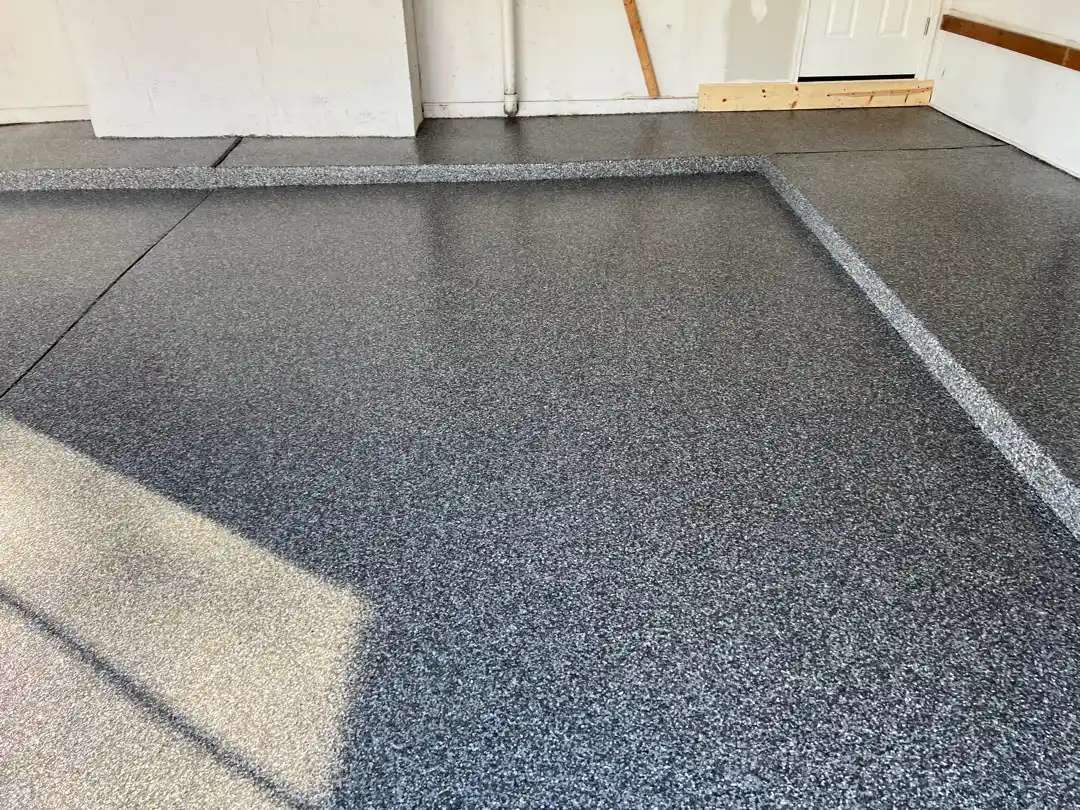
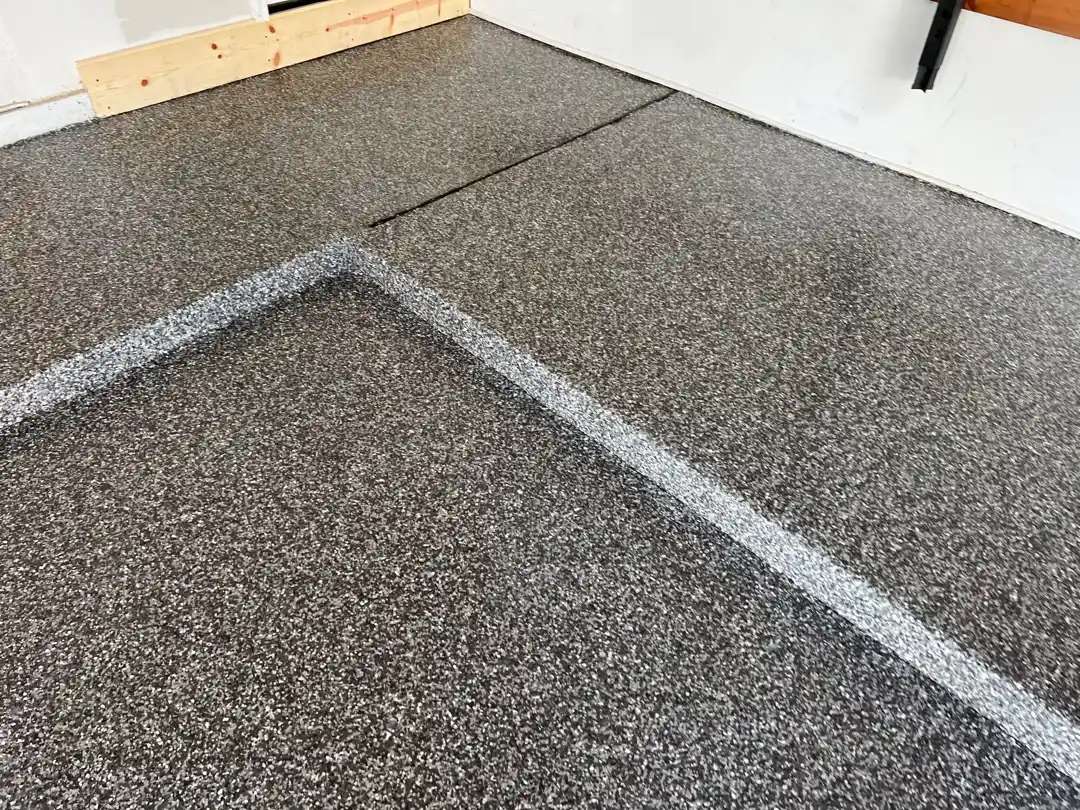
Years of freeze-thaw cycles and moisture intrusion had left the concrete surface pockmarked with pitting across the entire slab. The damage was particularly concentrated in the parking zones where vehicles sat, but extended throughout the garage floor. With 36 linear feet of verticals around the perimeter, the scope of work was substantial. The absence of steps simplified one aspect of the job, but the concrete condition more than compensated in complexity.
The Work
Surface preparation began with diamond grinding using an M-4 configuration to profile the concrete and open the pores for coating adhesion. The aggressive setup was necessary to address the compromised surface throughout the garage.
Given the heavy pitting, this job required significantly more material than a typical 500-square-foot installation:
Moisture Primer: A generous application of MR 50 served as both vapor barrier and flood coat, filling the countless surface voids throughout the garage. The substantial primer quantity addressed the pitting by building up material in the low spots, creating a more level substrate for the decorative layers.
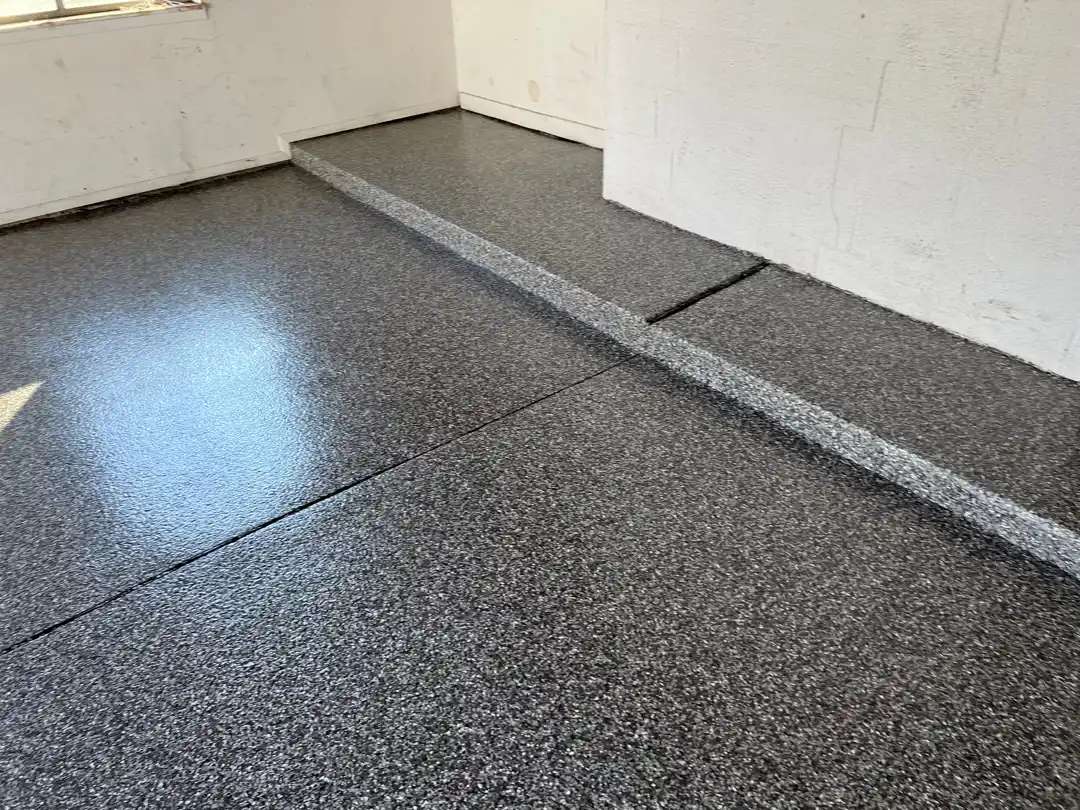
Base Coat: Pigmented polyurea in grey established the foundation for the Silver Creek flake blend, with extra material needed to achieve proper coverage over the flood-coated surface.
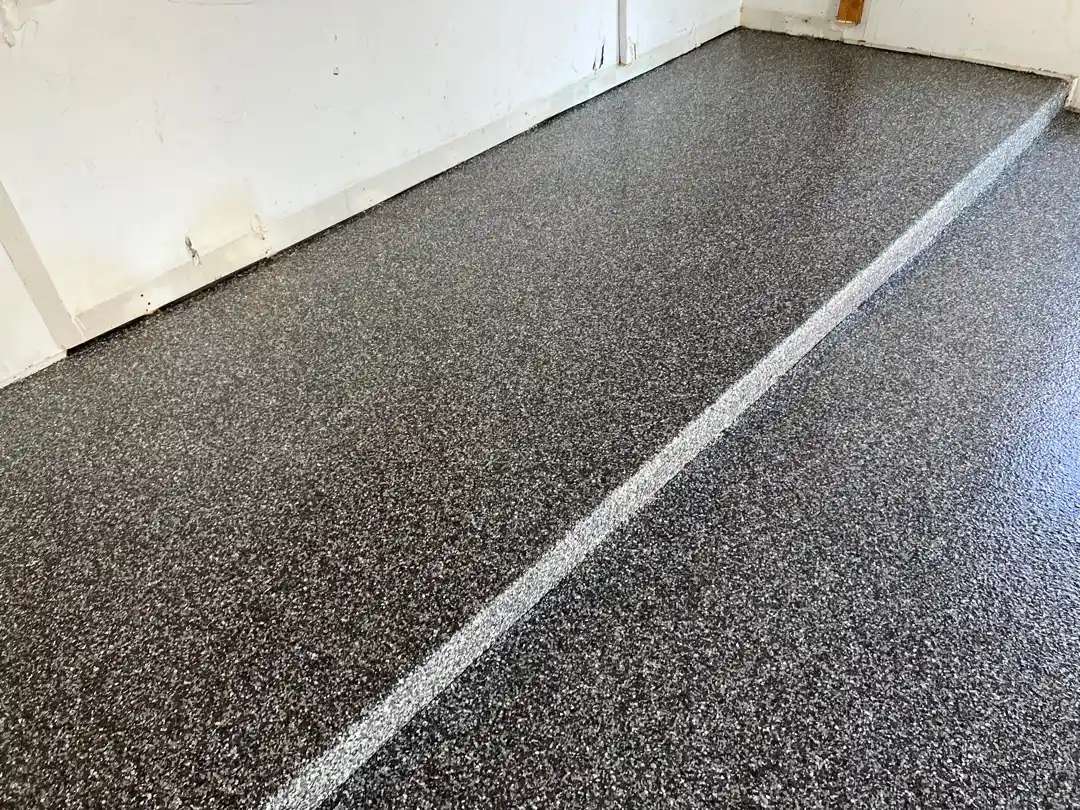
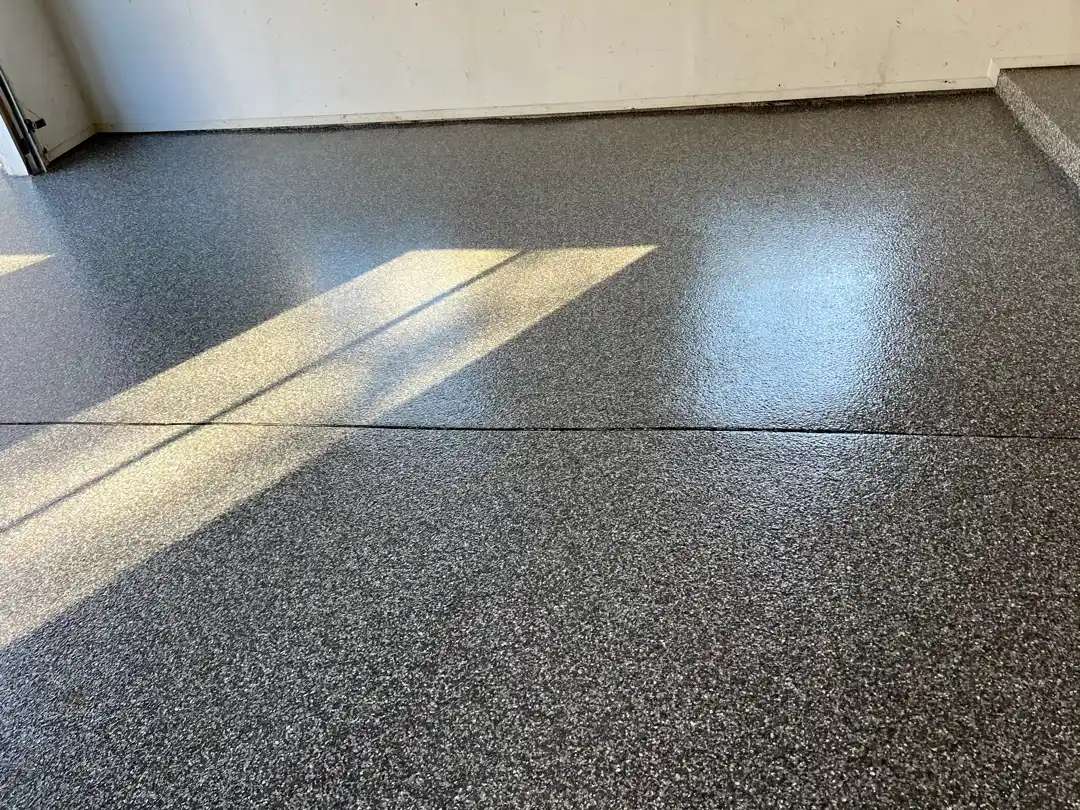
Flake Broadcast: Silver Creek blend—that distinctive combination of grey, black, and white chips—was broadcast into the wet base coat. The multi-tonal pattern creates visual depth while effectively disguising minor imperfections and future dirt accumulation.
Clear Top Coat: Polyaspartic clear with 16-grit traction additive encapsulated the flakes and created the final sealed surface. The generous clear coat application ensured complete coverage over the heavy flake broadcast.
The Result
The Bottom Line






Click on the photos to enlarge them