 Skip to content
Garage Floor Coating in Grosse Pointe and the Pointes, MI
QUESTIONS? NEED A QUOTE?
Upgrading Garage Floor Coating in Grosse Pointe with Polyurea-Polyaspartic Coatings
On this page, we document garage floor coating projects across the Grosse Pointe communities of Wayne County, Michigan. Our dual-coating systems have converted worn concrete slabs into durable, attractive garage floors. Grosse Pointe is a Wayne County community on the western shore of Lake St. Clair — one of the five Grosse Pointe communities defined by their established residential character, mature tree-lined streets, and well-maintained properties. Garages in Grosse Pointe reflect the age of the housing stock: many are attached to homes built across the mid-twentieth century, with concrete slabs that have absorbed decades of Michigan winters, vehicle fluids, and seasonal freeze-thaw stress.
Many of the properties where we apply our polyurea-polyaspartic floor coating systems had accumulated the wear and tear of the harsh Michigan climate. As you will see in these case studies, our garage floor coating specialists work with concrete slabs in a wide variety of conditions: some needed only standard surface preparation. Others required multi-stage remediation — oil extraction, crack repair, full-slab flood coating, and double grinding passes — before the polyurea and polyaspartic coats could go down. We describe the process and results, and include the before-and-after photos for each job.
Grosse Pointe Garage Floor Coating Case Studies
Quality Garage Floor Coatings
Winter road salt, freeze-thaw cycles, automotive fluids, and daily vehicle traffic degrade unprotected garage concrete over time. The damage typically appears as oil staining, cracking, surface pitting, and efflorescence deposits where moisture has been migrating upward through the slab.
Several of our jobs of garage floor coating in Grosse Pointe involved slabs carrying more than one overlapping condition at the same time. At the Blairmoor Court property, our crew found a prominent X-shaped crack network, broad oil saturation across both parking bays, distributed pitting, and white efflorescence deposits — all on the same 450-square-foot slab. Each condition required its own treatment step before any coating could begin. Polyurea-polyaspartic systems, installed correctly over fully prepared concrete, provide reliable long-term protection against these conditions and deliver a finished appearance that bare concrete or epoxy products cannot match.
NEW Garage Floor Coating
on Dodge Place
Dodge Place, Grosse Pointe, MI
The Starting Point
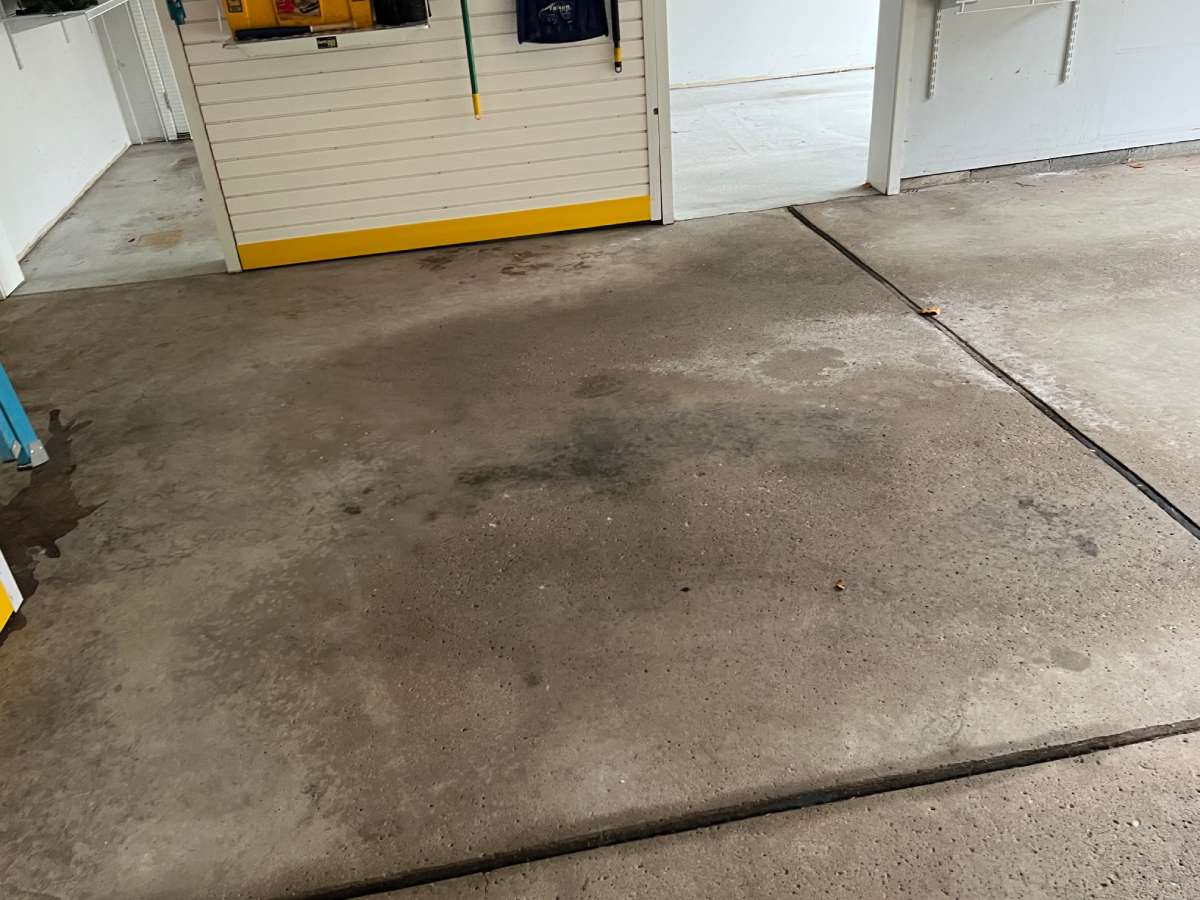
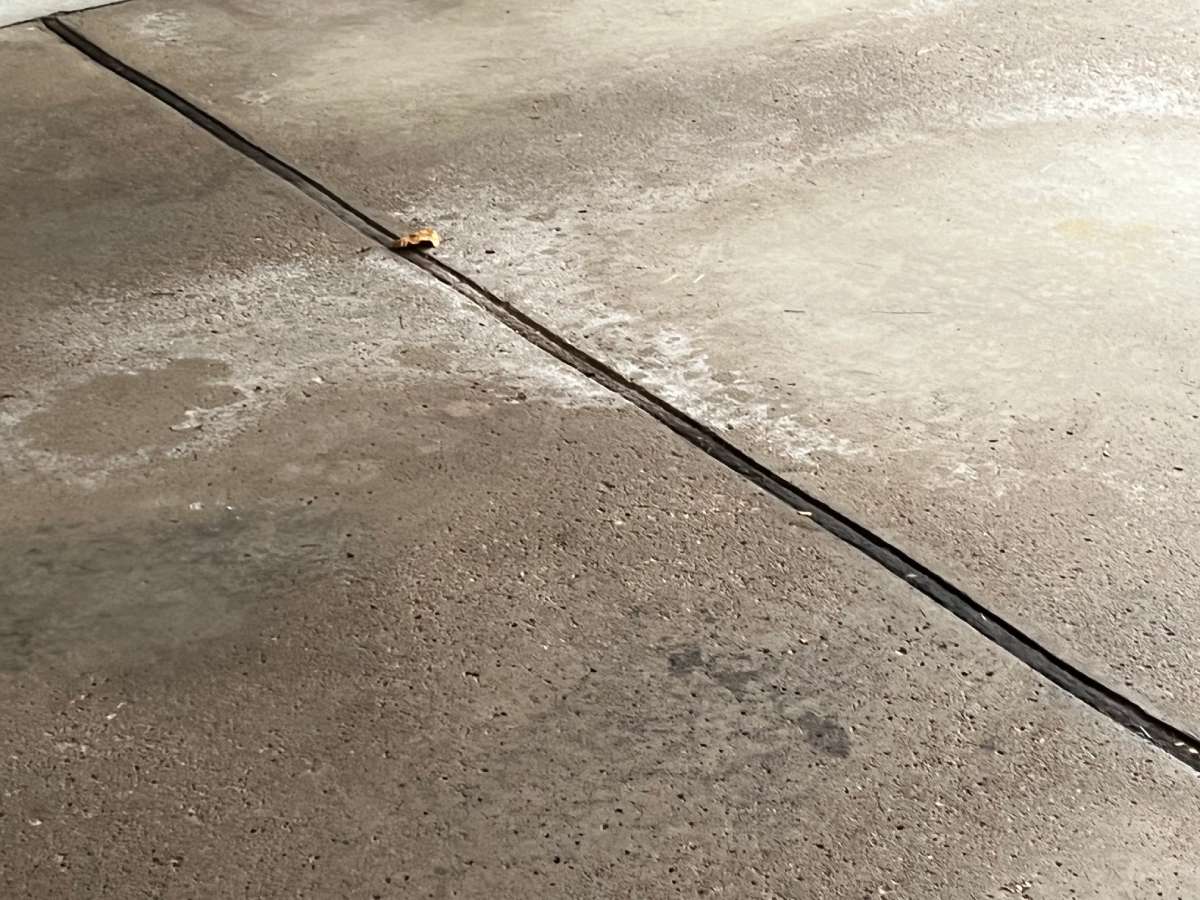
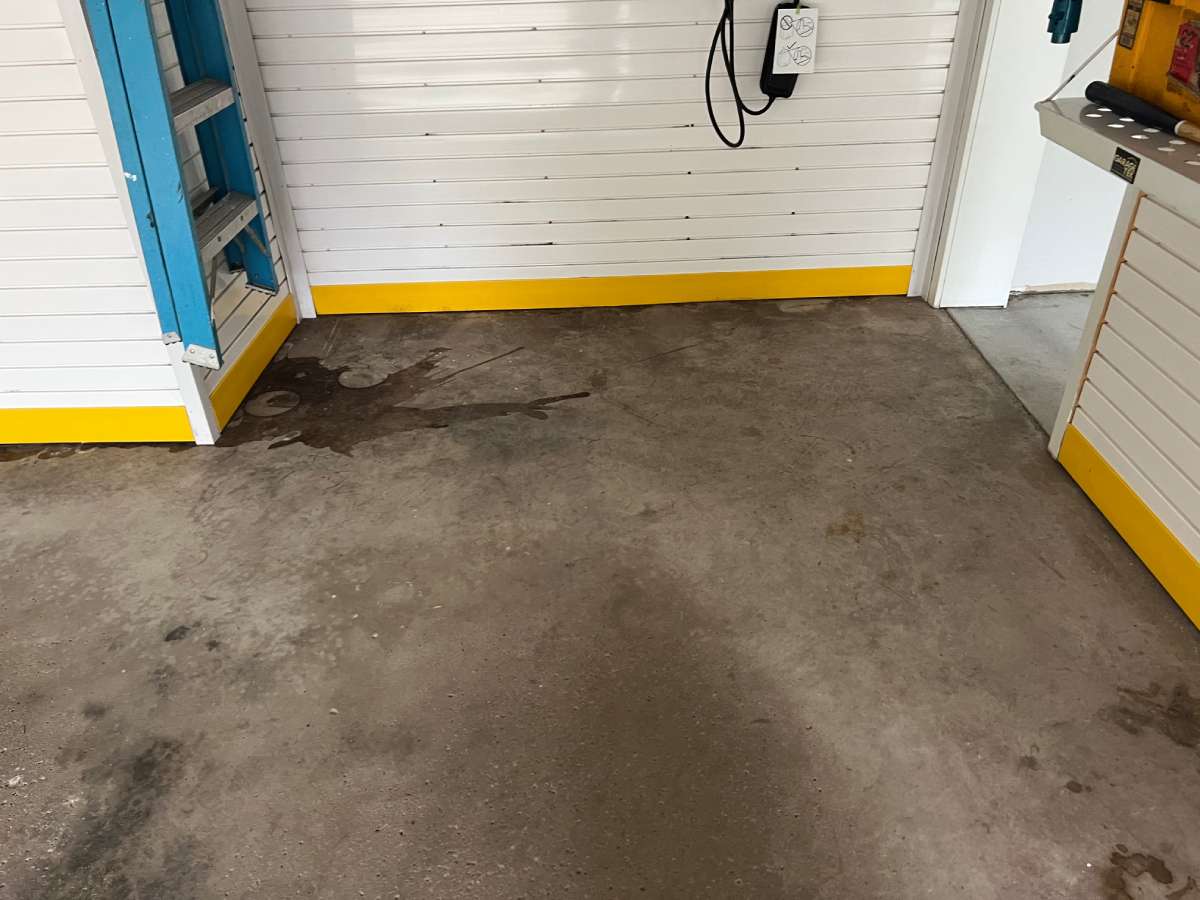
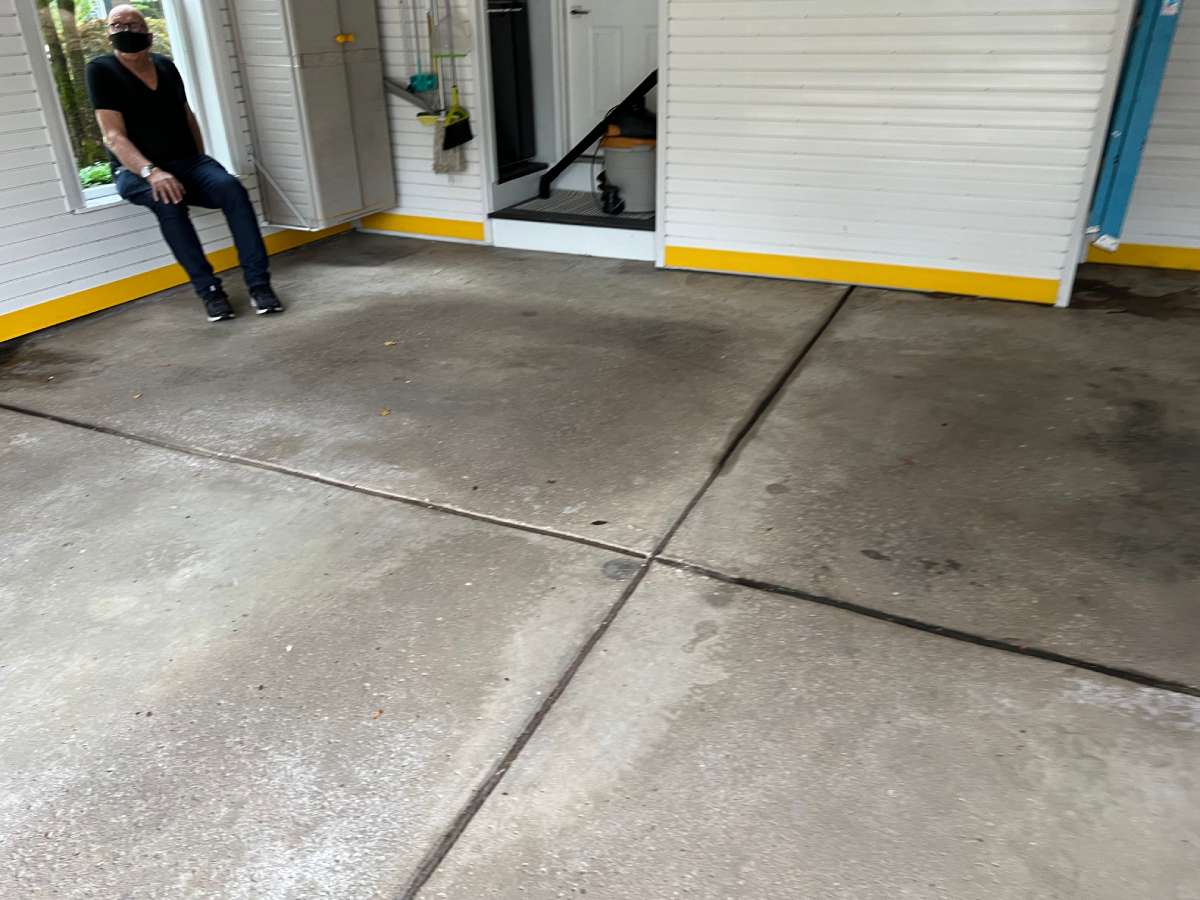
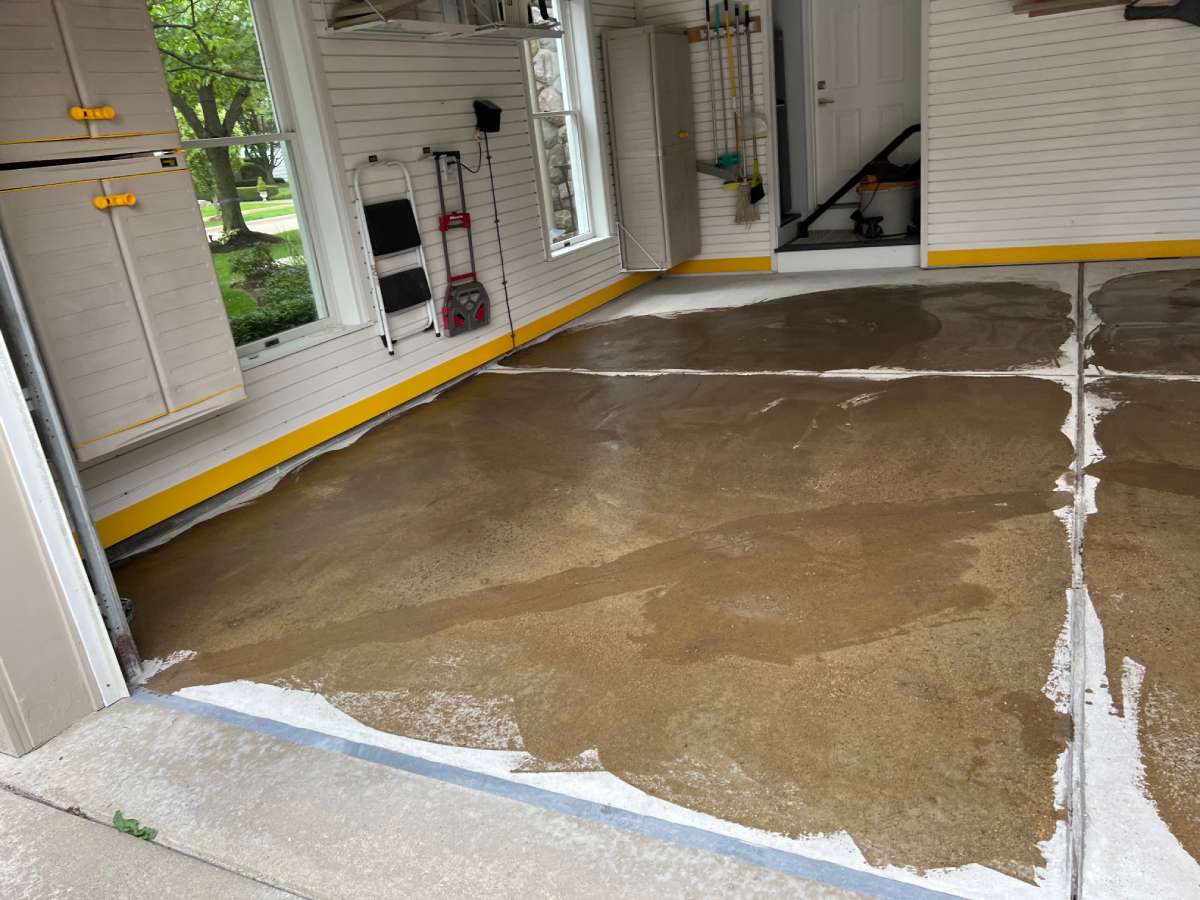
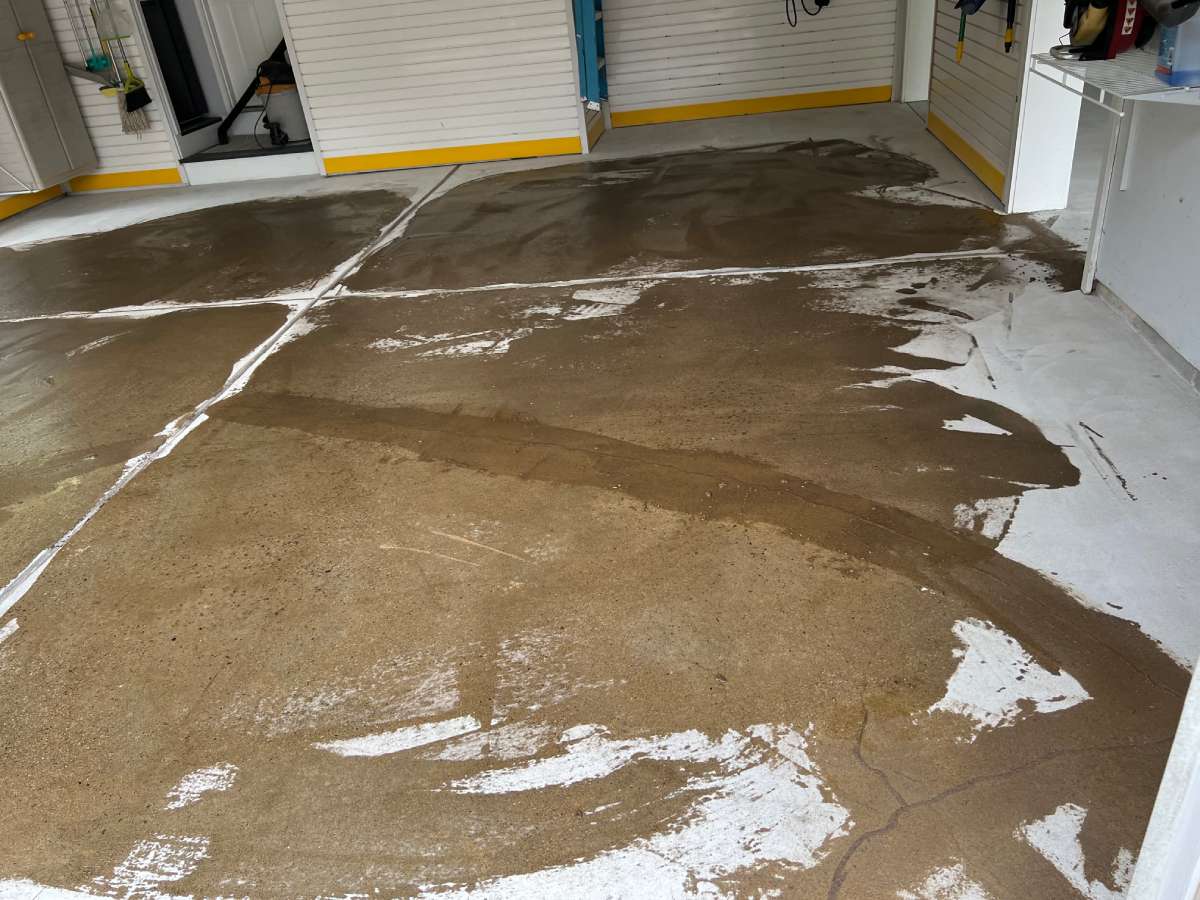
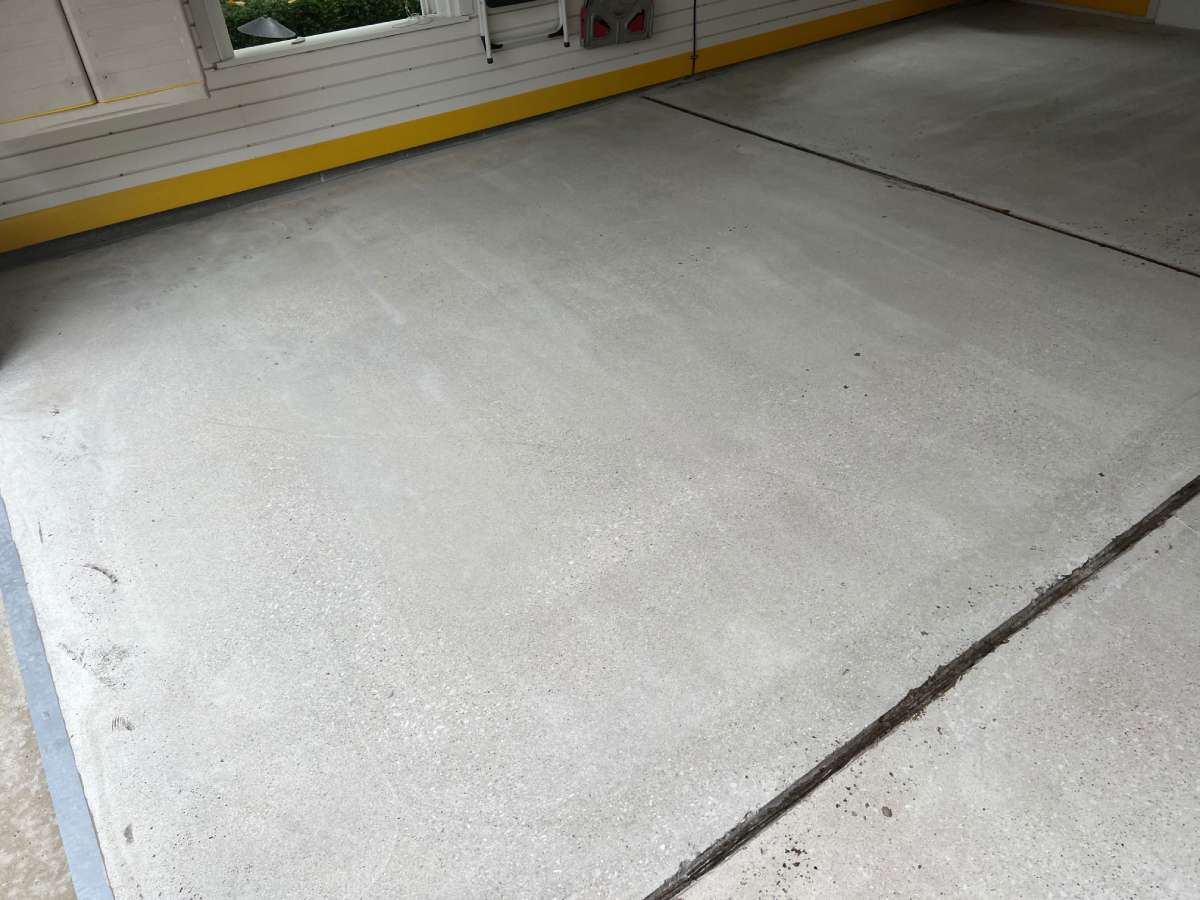
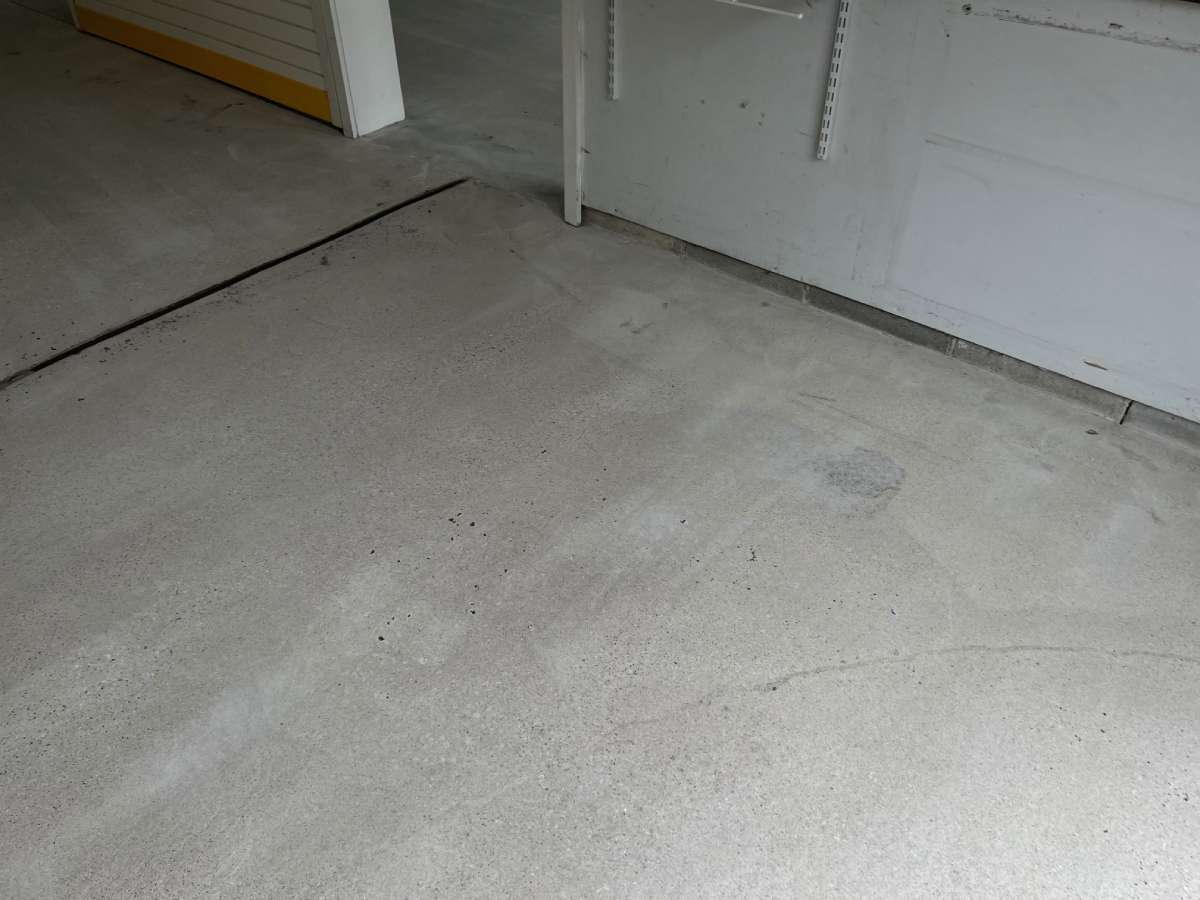
The garage at this Dodge Place property covered 655 square feet divided across two bays. The two bays told different stories. The older parking area showed accumulated wear: oil staining had settled into the concrete in dark, spreading clusters across the main parking zone. A crack ran diagonally across the slab at a control joint intersection. Light pitting was distributed across the surface throughout the older section. The second bay was newer concrete — no oil saturation, no cracking, and minimal surface wear. Both sections would receive the same system. No steps were included in the scope. A 1–2 inch vertical area along the exterior wall under the molding was included.
Surface Preparation
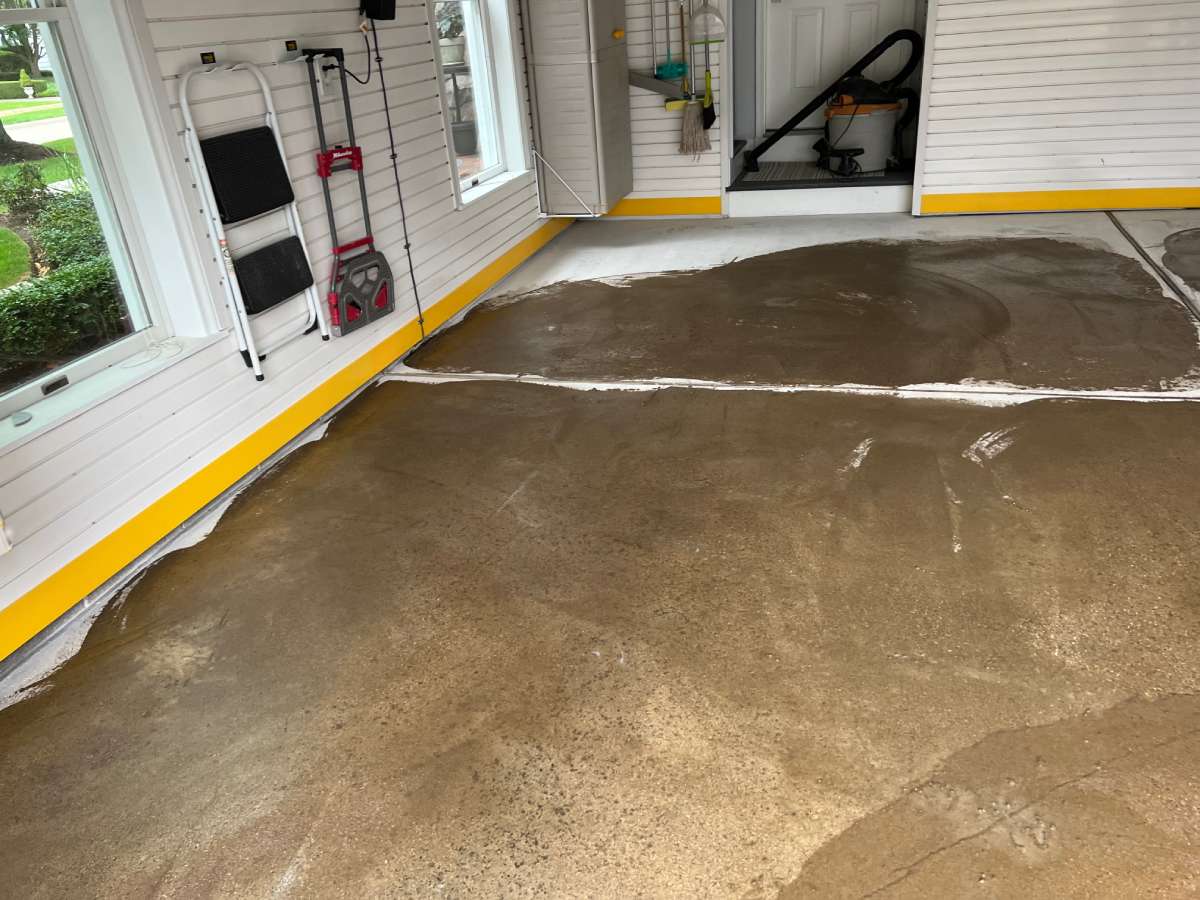
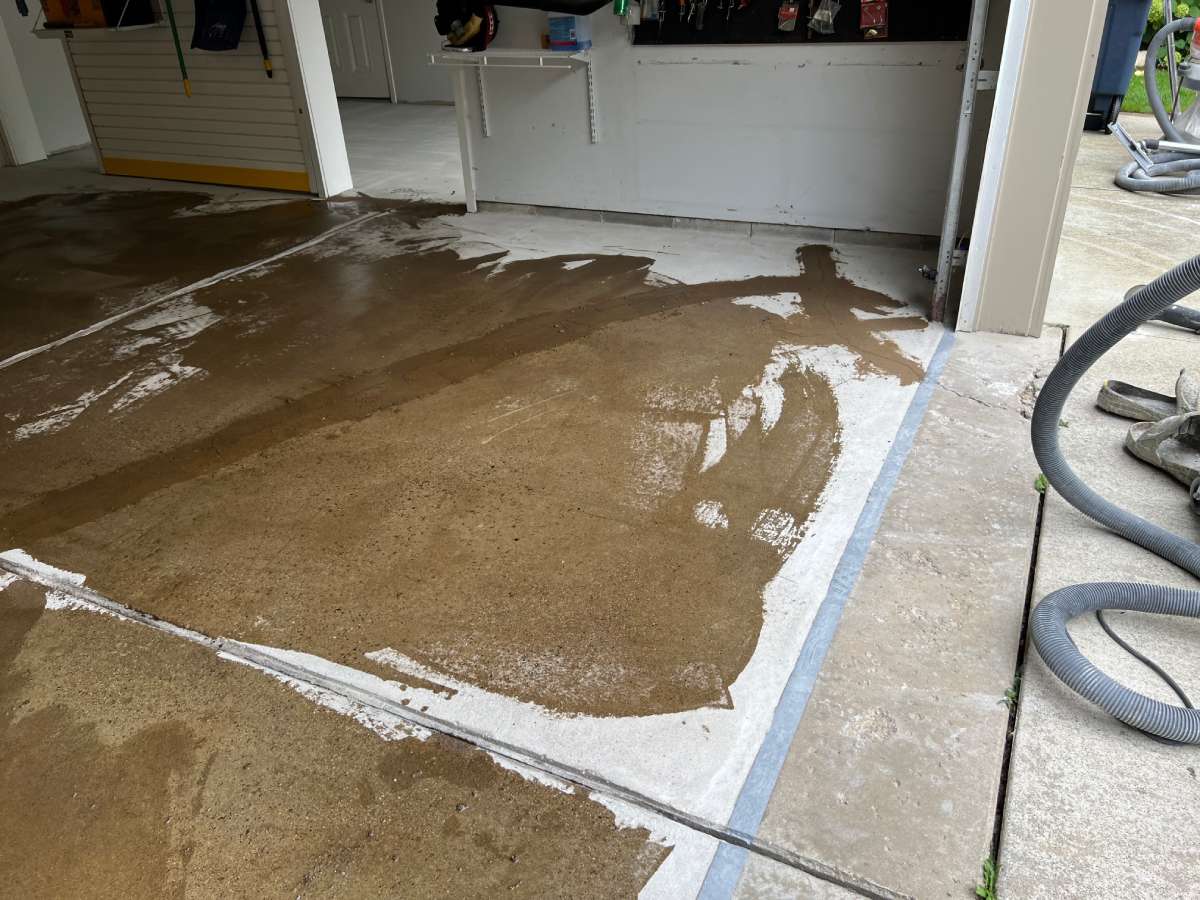
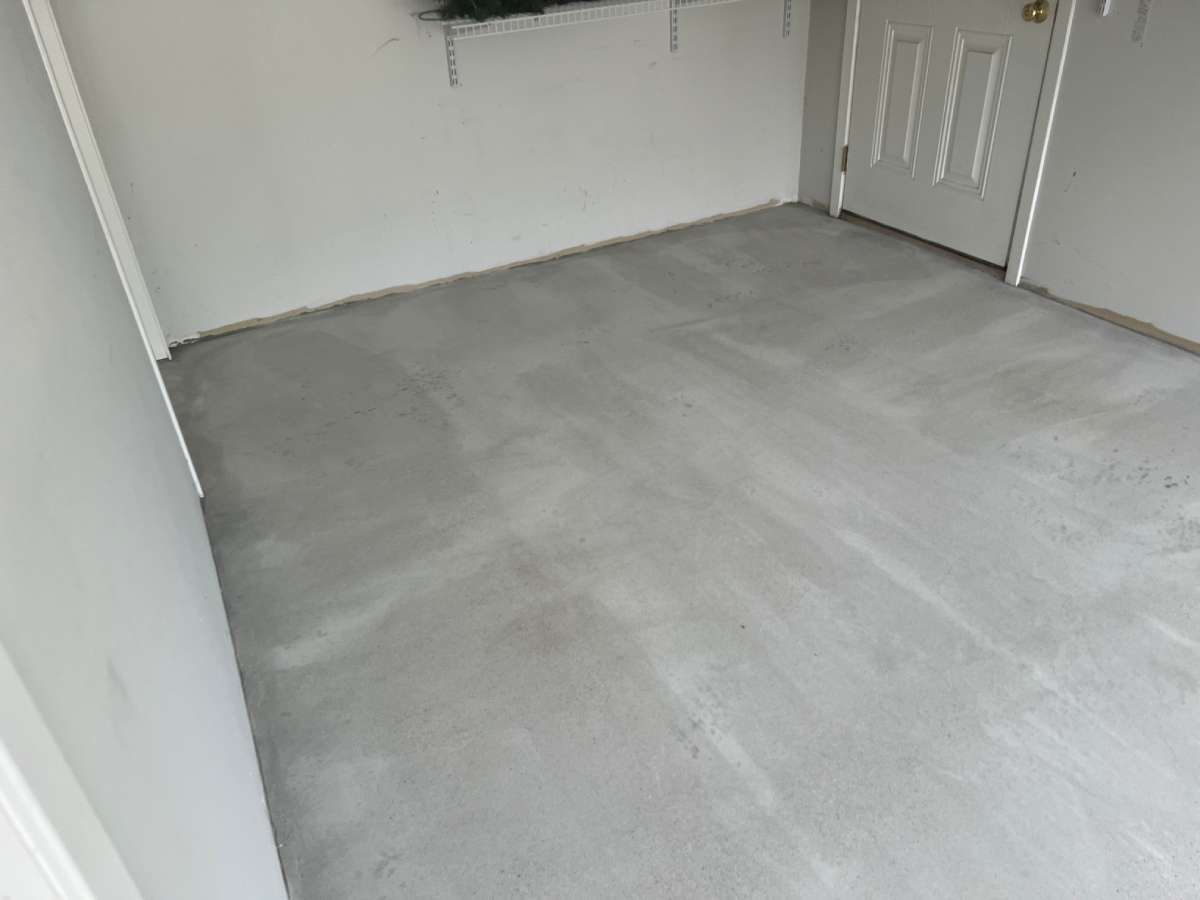
Our crew diamond-ground the full 655 square feet. The grind removed the laitance layer across both bays and opened the surface of the concrete throughout. The oil-stained zones in the older parking area required full passes to clear the contamination and expose clean concrete below. The crack at the control joint was profiled during the grind. The newer bay required the same mechanical profiling — fresh concrete does not accept coating without an open surface profile. Our team vacuumed the full floor before moving to repair.
Crack Repair and Full-Slab Flood Coat
Grinding the Repairs Flush
Coating Application
Finished Floor
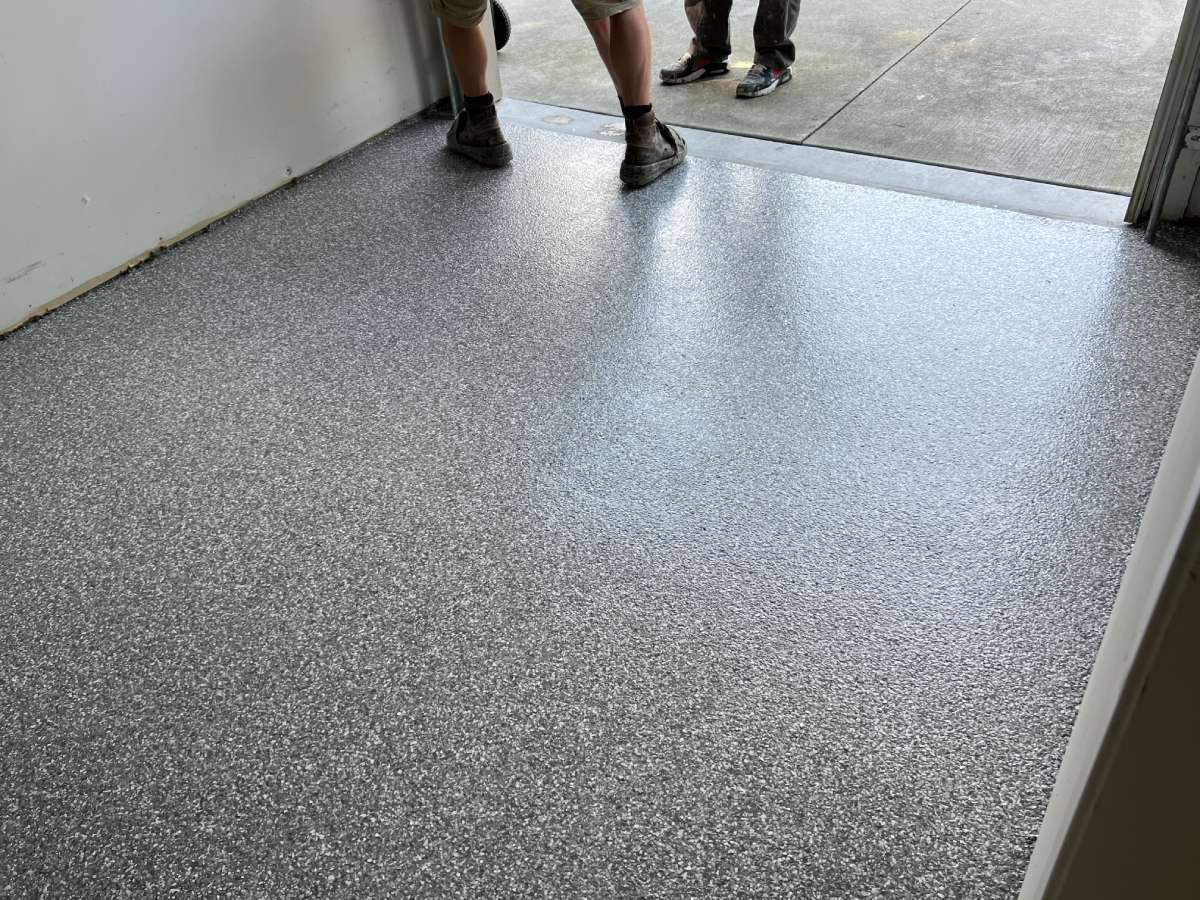
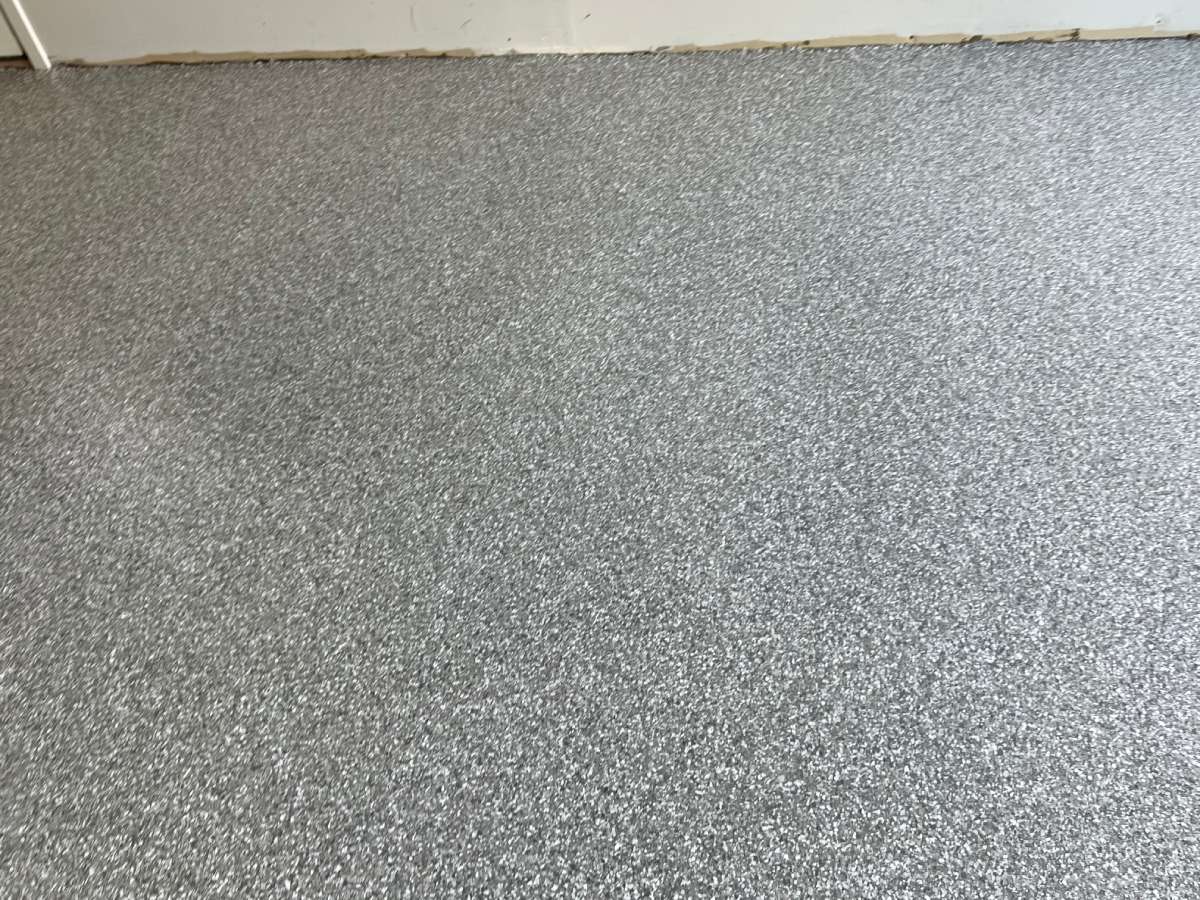
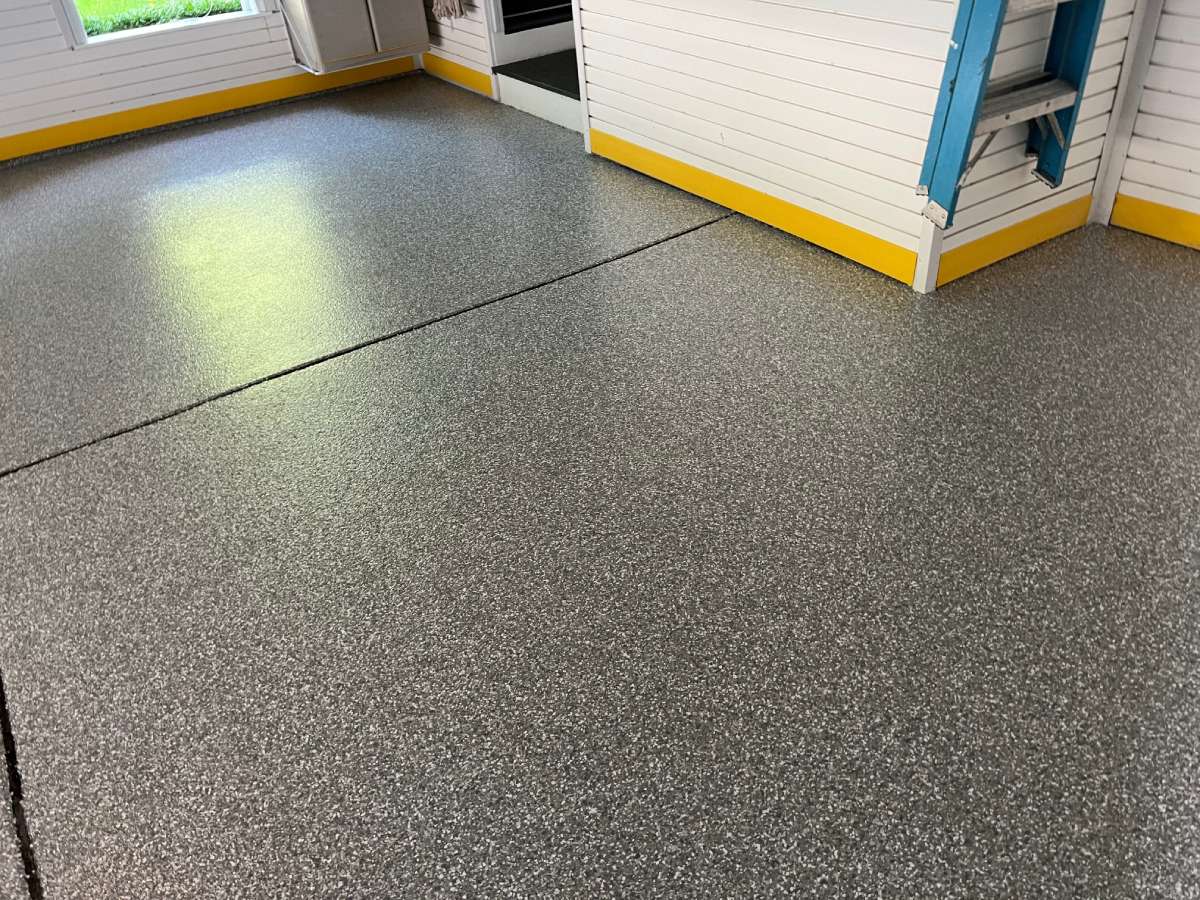
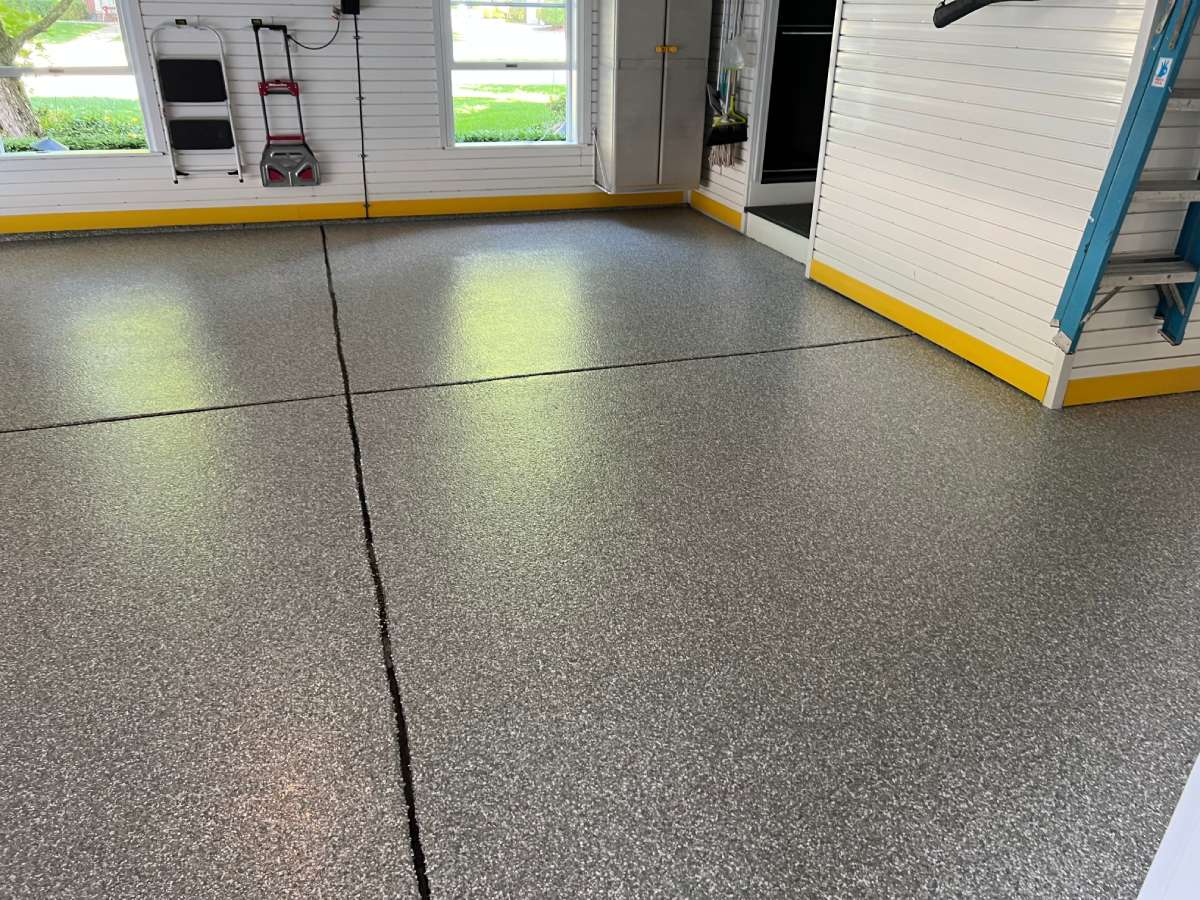
Stoney Creek covers all 655 square feet. The dark charcoal and grey blend reads consistently across both bays under both natural light through the windows and the cooler interior light. The control joints pass cleanly through the finished surface — their lines remain sharp beneath the topcoat.
The 1–2 inch vertical edge along the exterior wall sits within the same Stoney Creek finish. The floor meets the wall base with a clean, coated edge throughout. The oil staining, the diagonal crack, and the pitting are sealed beneath the mender repairs and the MC-4 system. The 16-grit traction provides reliable grip across the full floor.
Testimonials
Frederick Cohen
Paul Mortiere
NEW Garage Floor Coating
on Bishop
Bishop, Grosse Pointe, MI
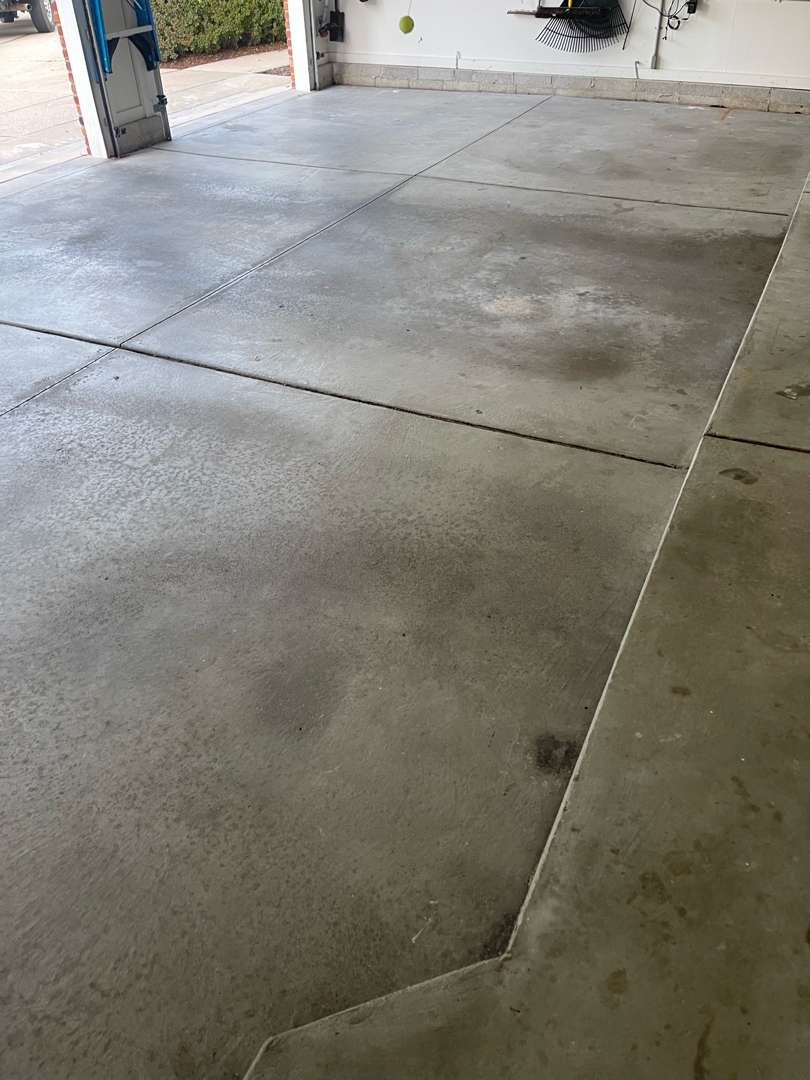
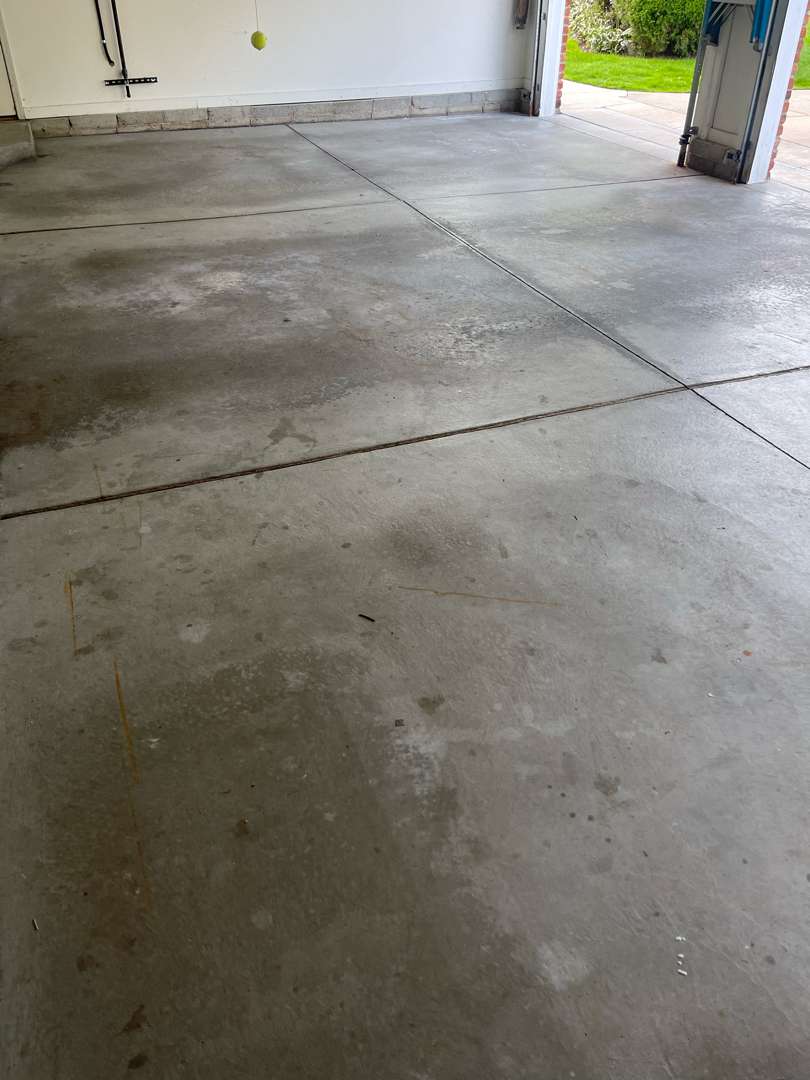
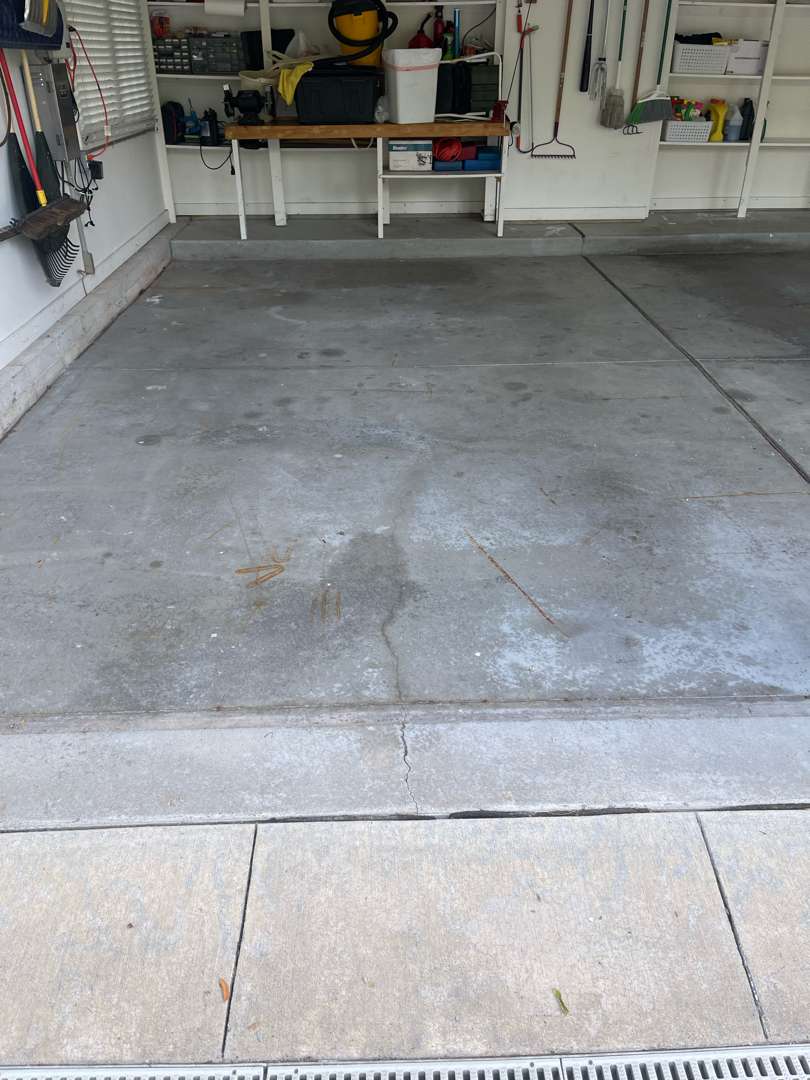
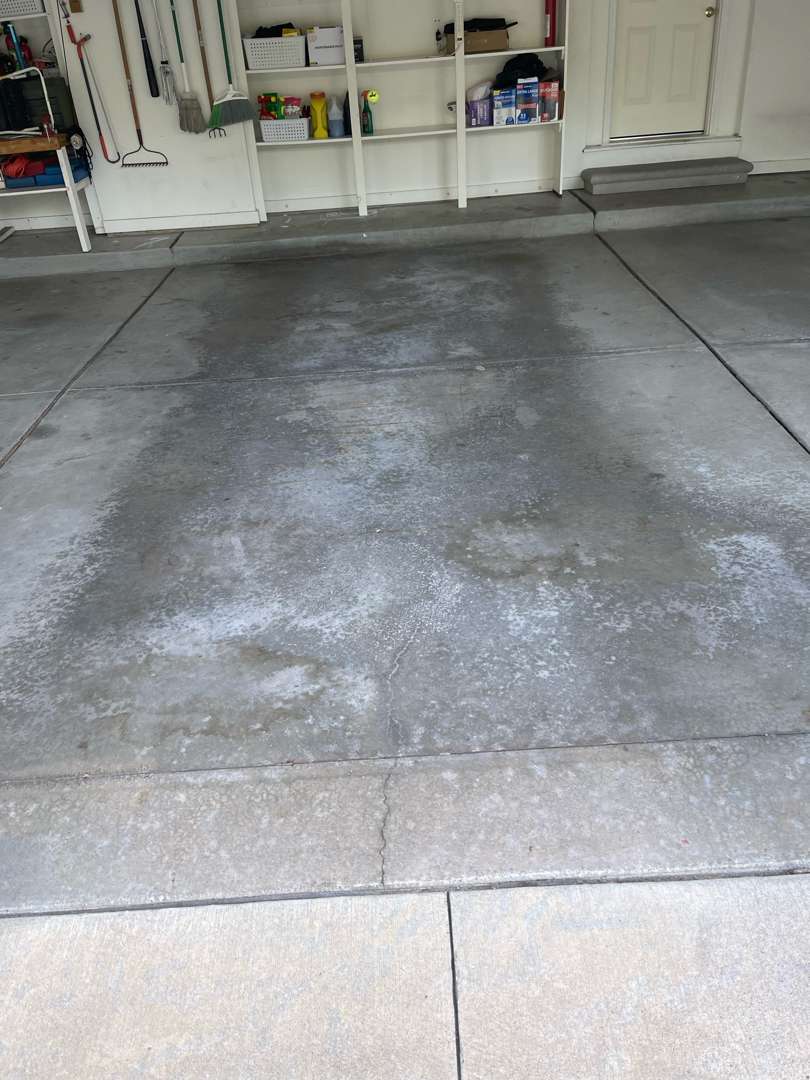
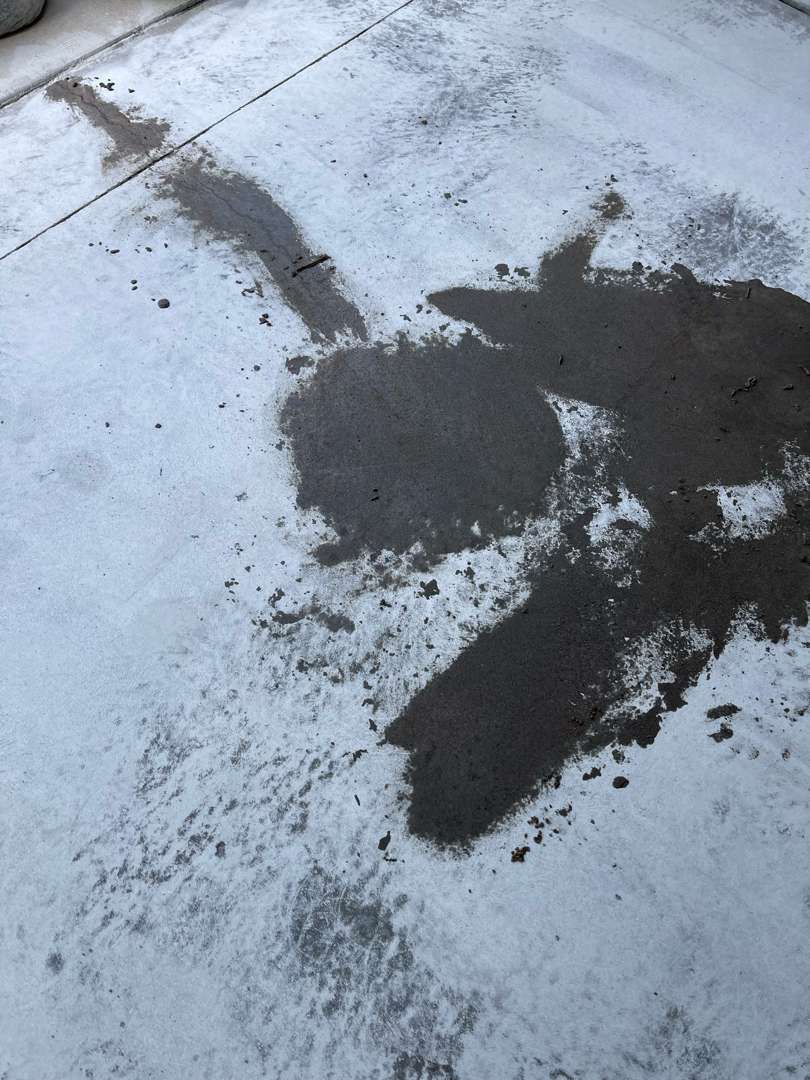
The Starting Point
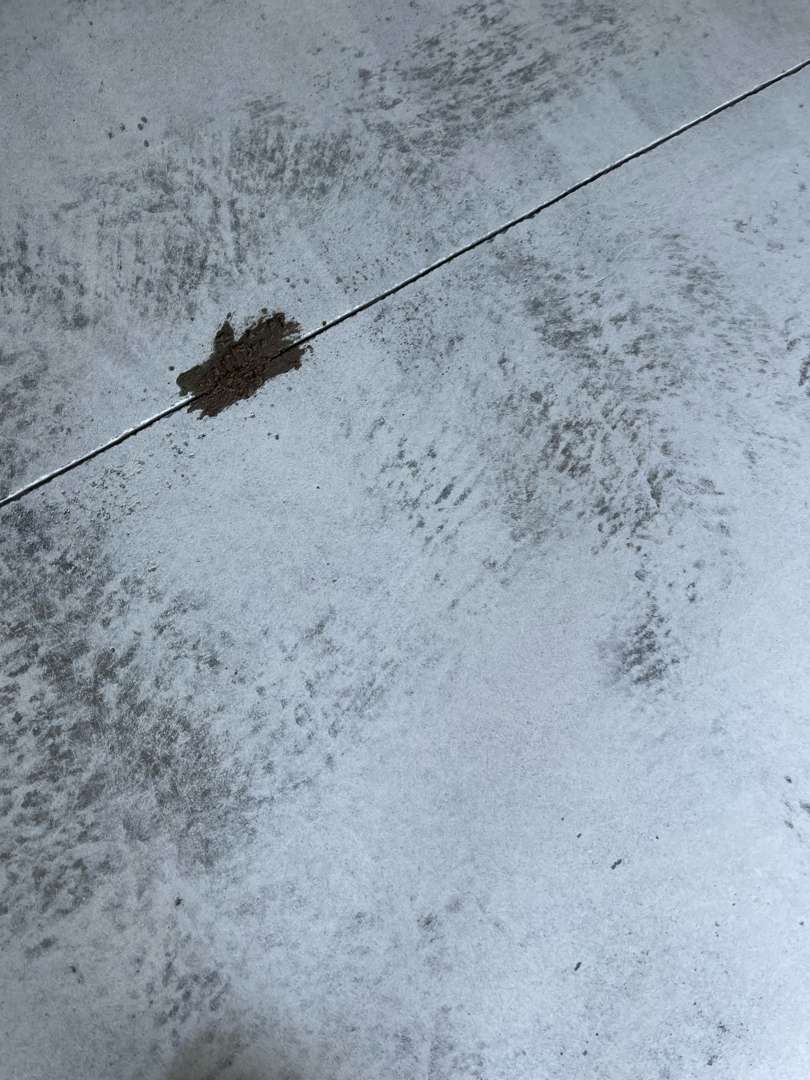
Surface Preparation
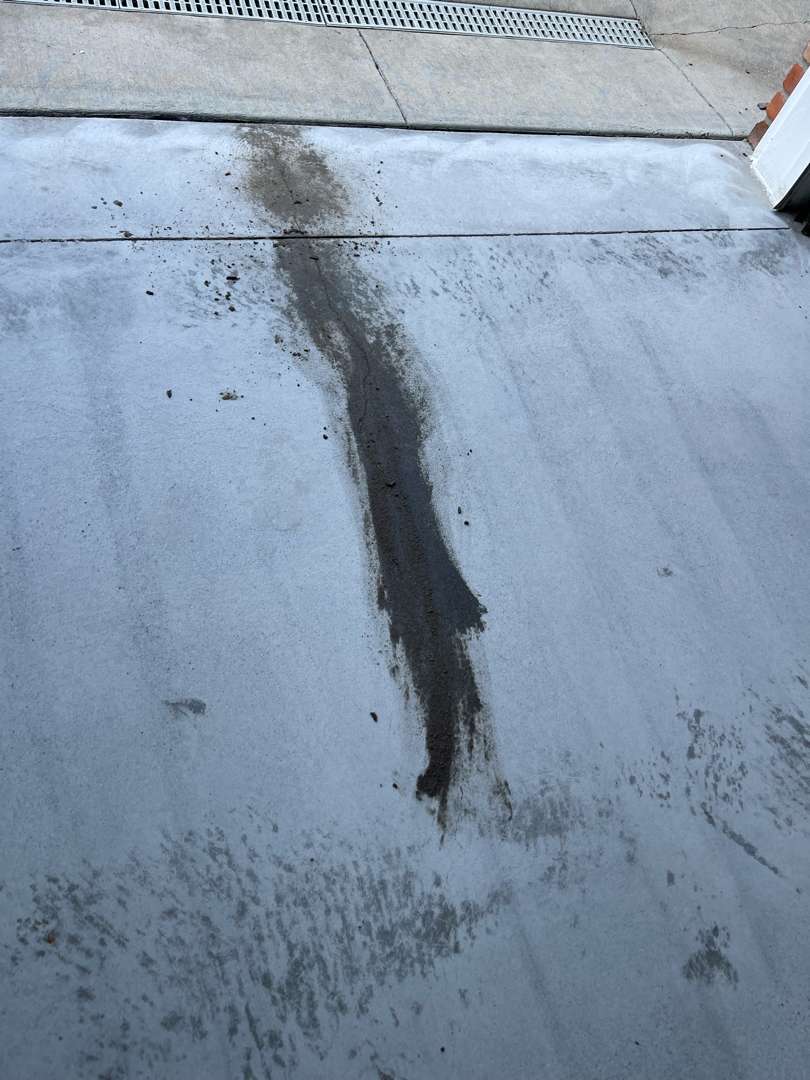
Coating Application
Finished Floor
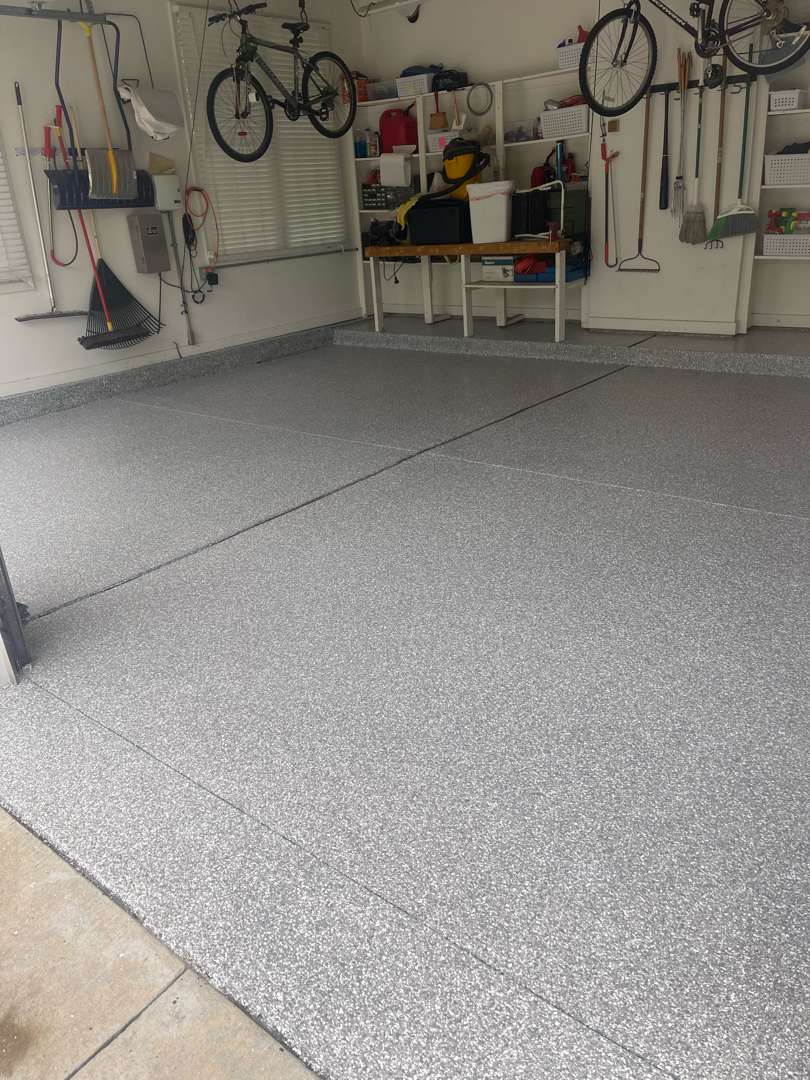
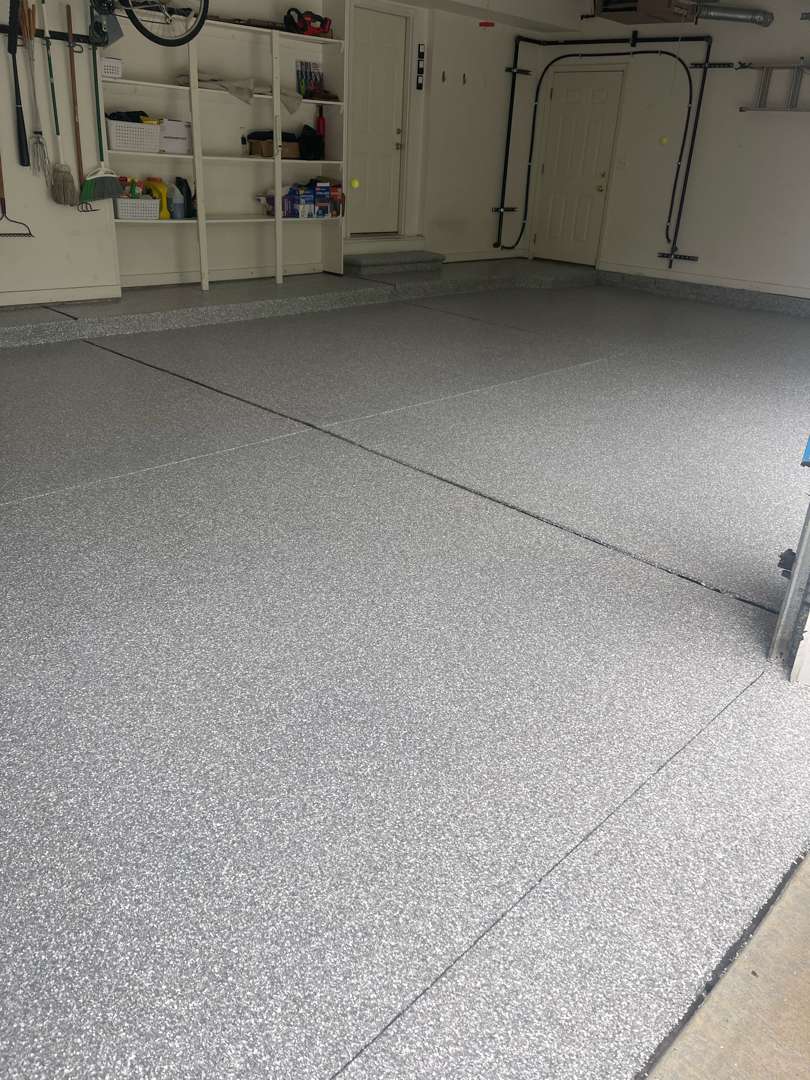
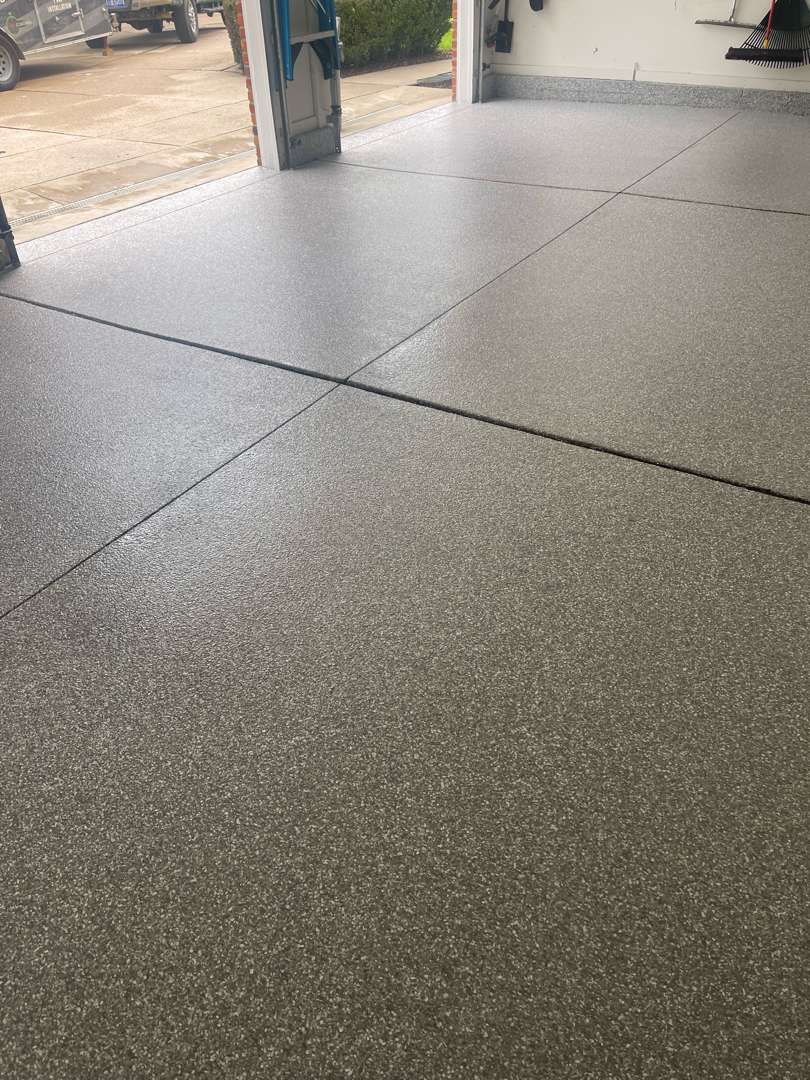
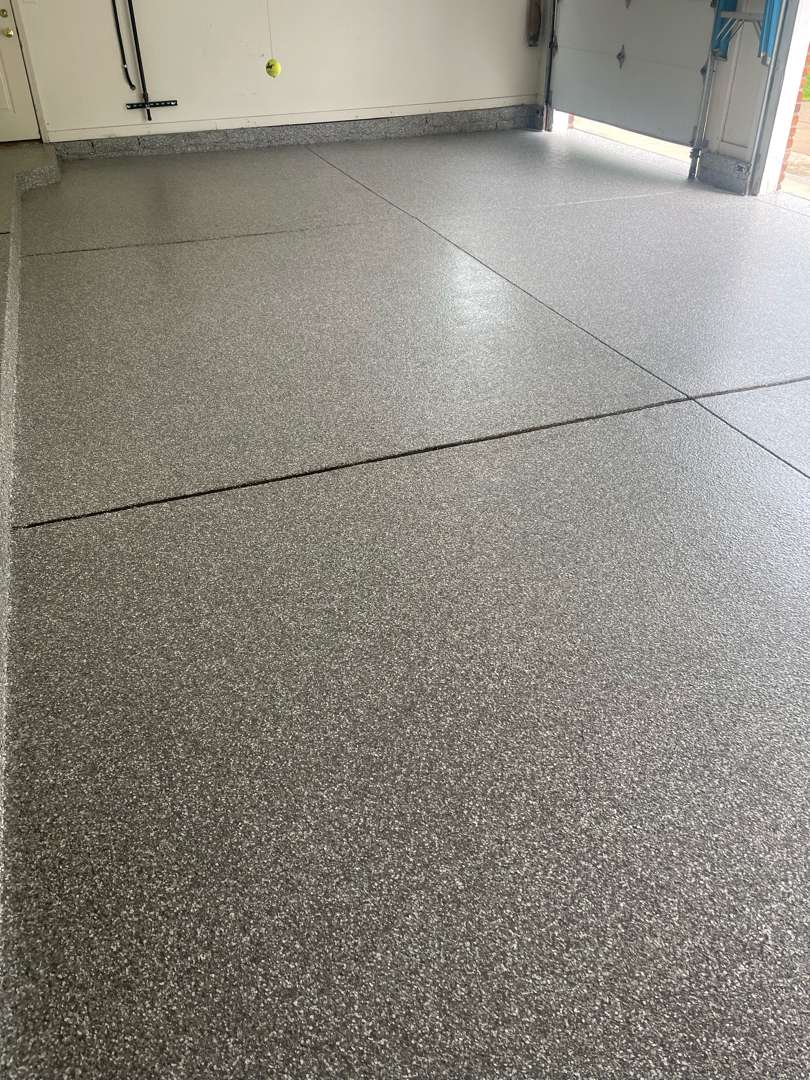
Stoney Creek runs across all 623 square feet. The medium grey reads evenly across the full slab in both the interior light and the natural daylight at the garage door opening. The control joints cut through the finished surface cleanly on every panel.
The 66 linear feet of verticals carry the Stoney Creek finish continuously along the foundation ledge — the coated base ties floor to wall without a gap at the boundary. The step sits within the same finish. Tread and riser match the floor exactly.
The efflorescence, the oil staining, and the crack at the control joint are gone. The MR-50 sealed the crack at the concrete layer. The MC-4 system covers the full floor, verticals, and step in one consistent finish. The 16-grit traction provides reliable grip across the entire surface.
Testimonials
Michael Foster
The installation crew was very professional. Extreme attention to detail.
Highly recommend them.
Glenn Clabo
NEW Garage Floor Coating
on Hidden Lane
Hidden Lane, Grosse Pointe, MI
The Starting Point
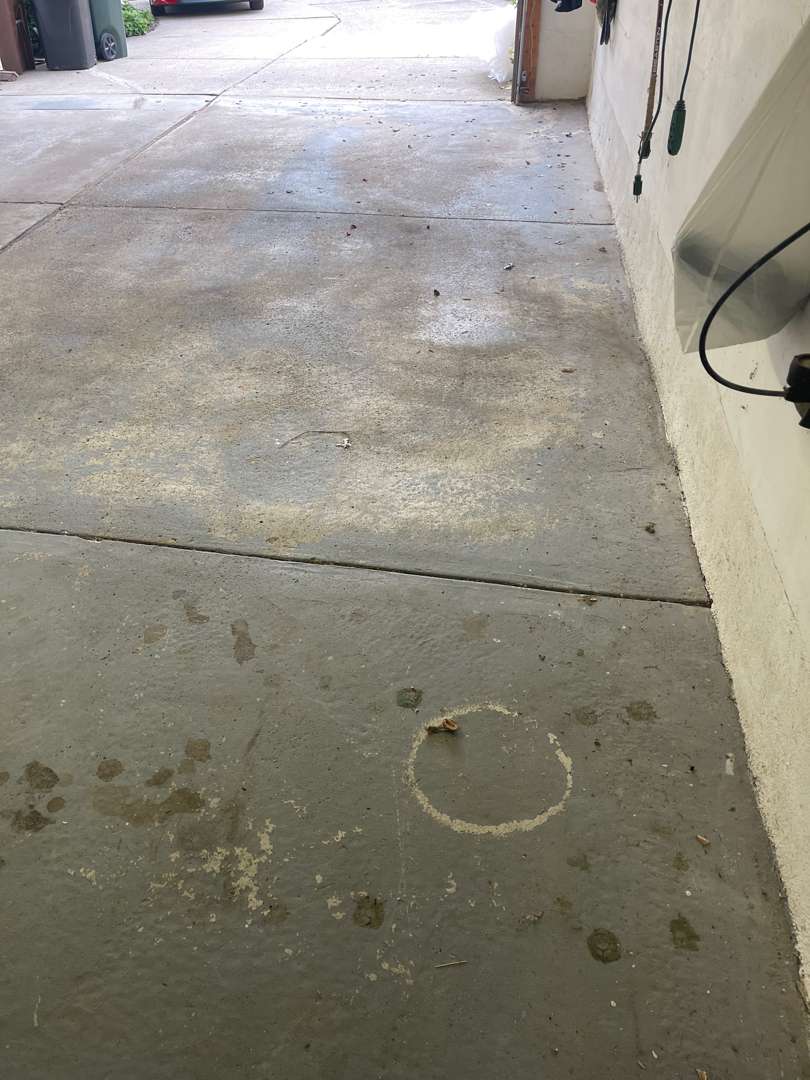
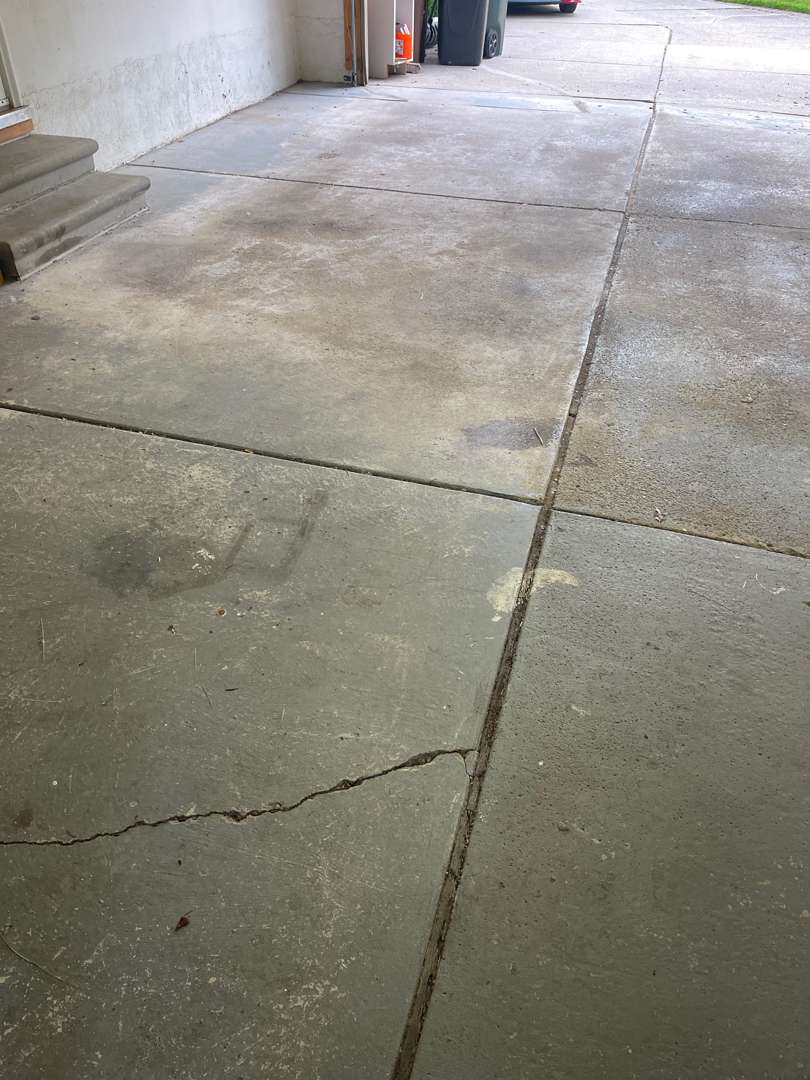
Surface Preparation and Repairs
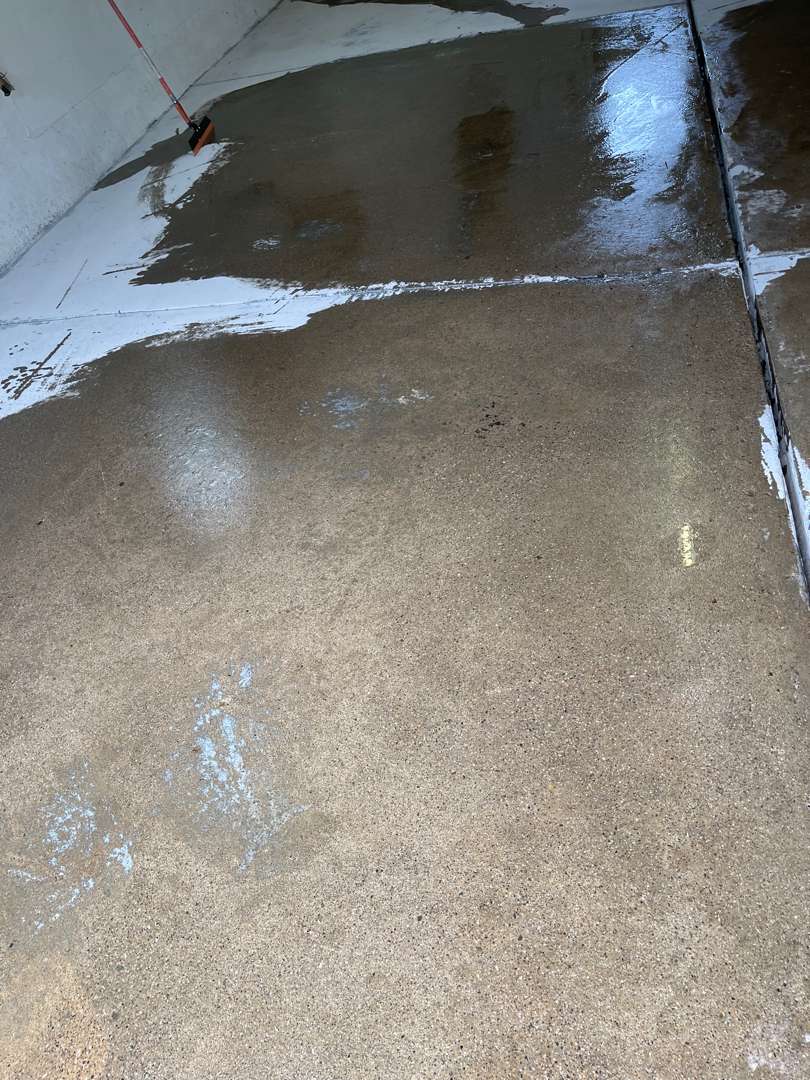
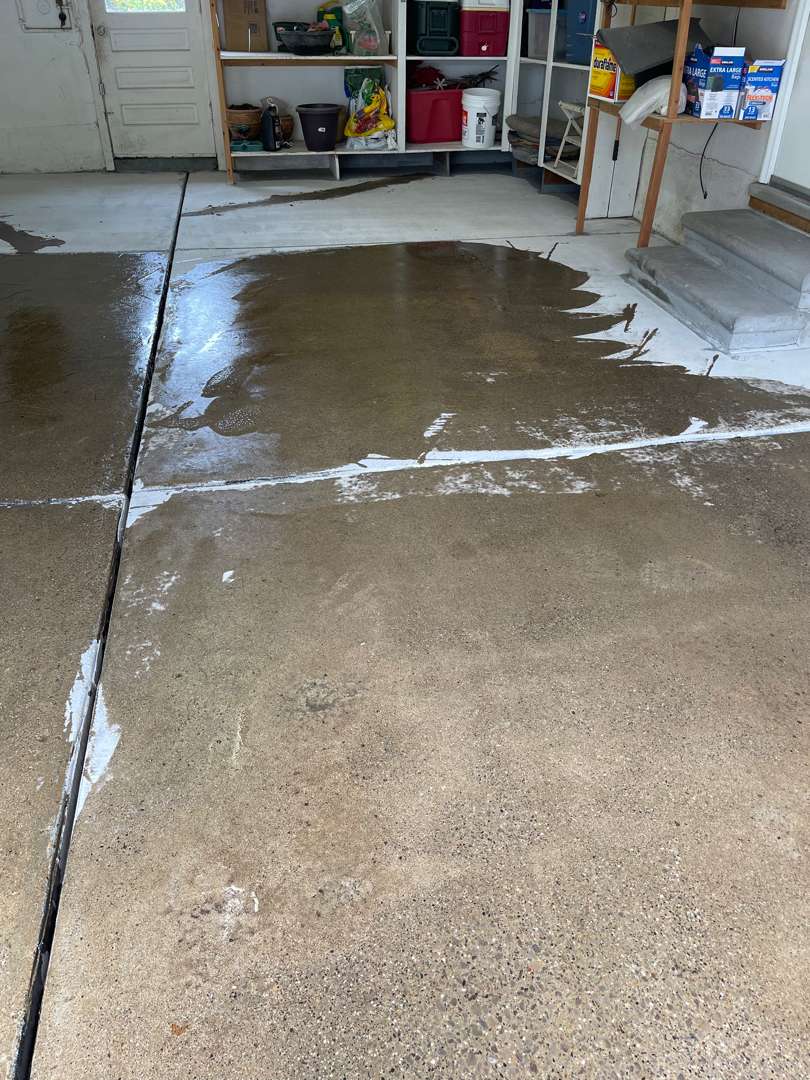
Coating Application
Finished Floor
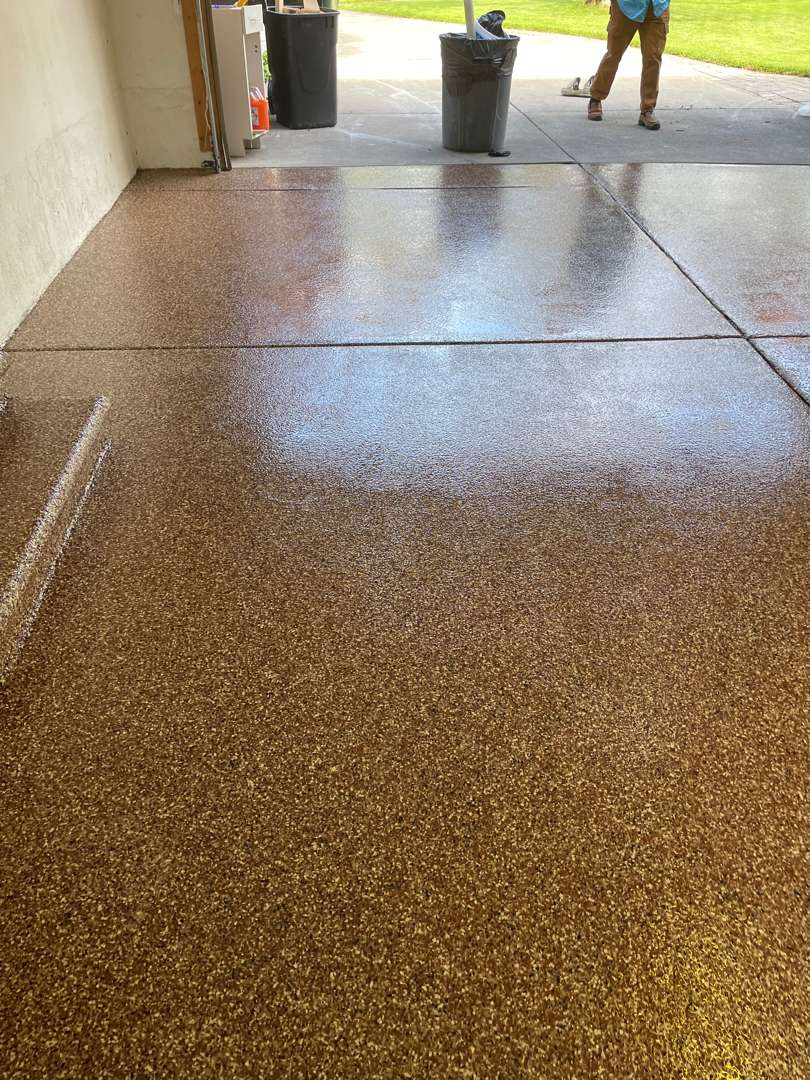
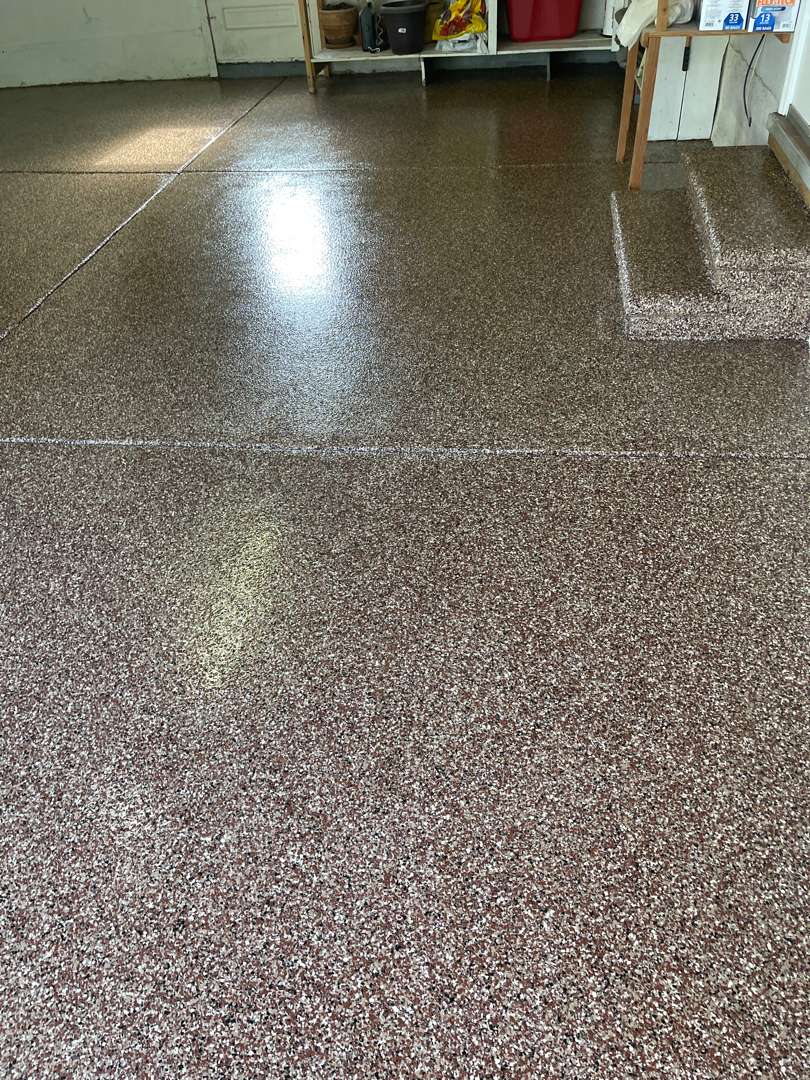
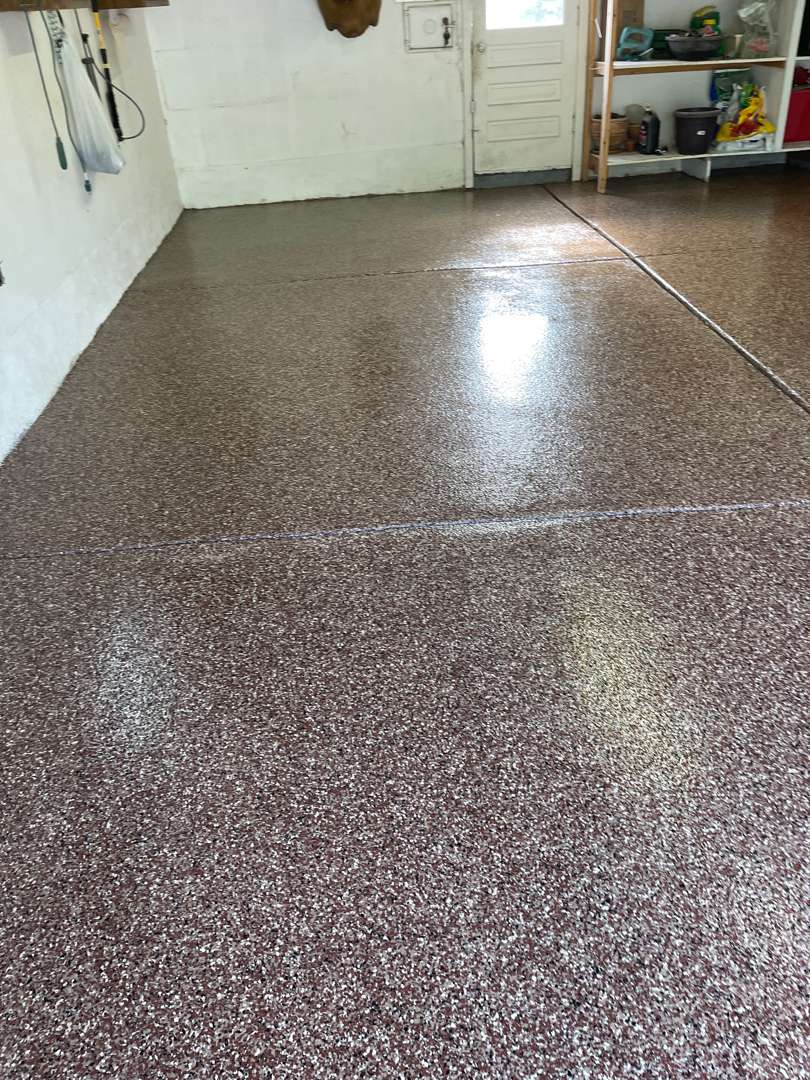
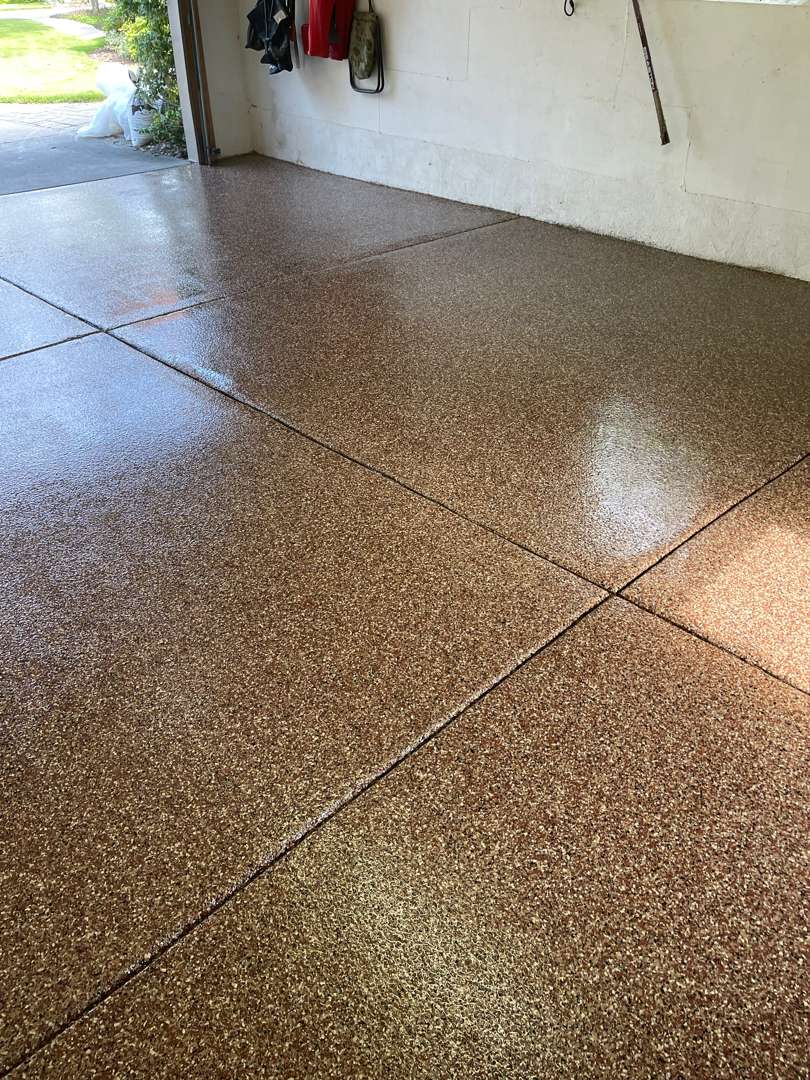
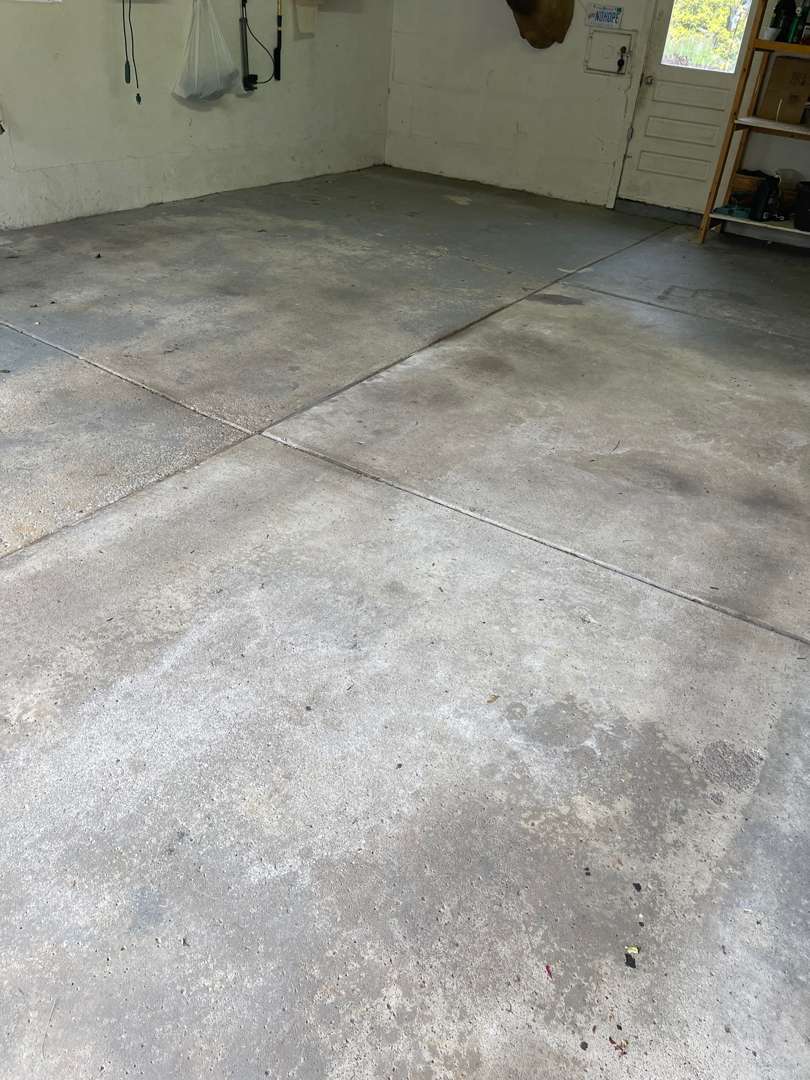
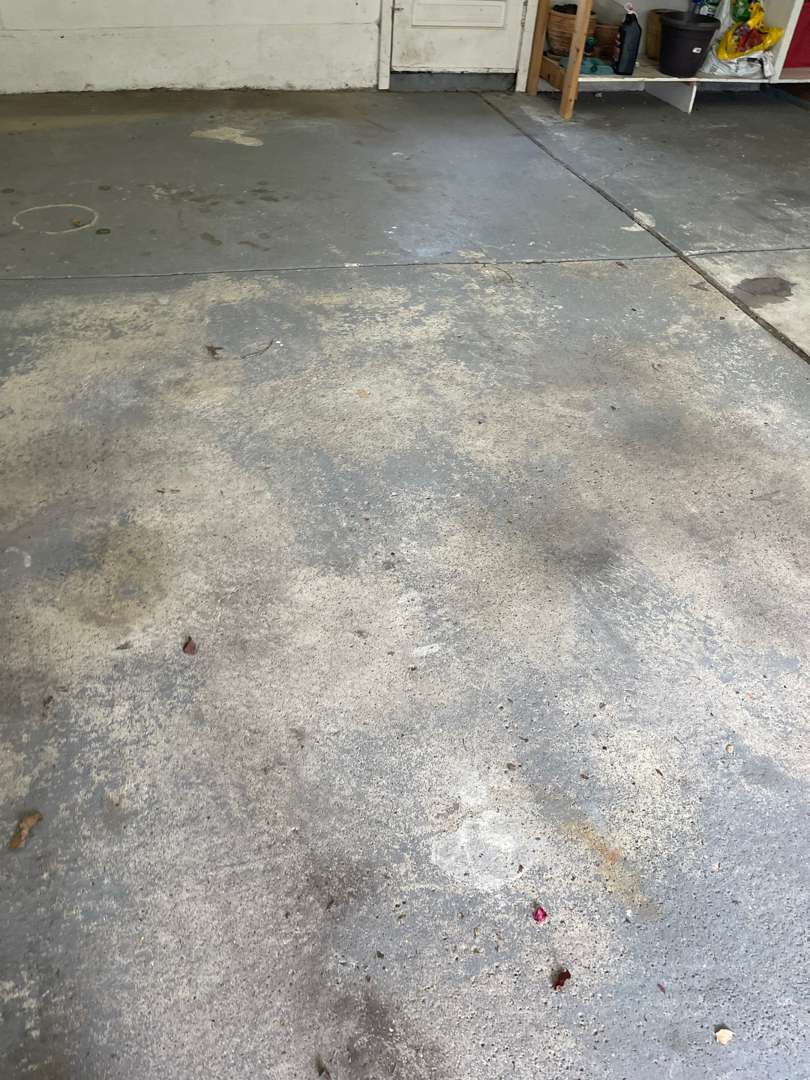
Chestnut covers all 531 square feet. The warm reddish-brown and tan blend works well against the light block walls of this garage — the color brings warmth to an interior that bare concrete could not. The control joints pass cleanly through the finished surface on every panel, their lines sharp and uninterrupted under the topcoat.
Both steps sit within the same Chestnut finish. Tread and riser on each step match the floor without a break in color or texture. The efflorescence, the crack, the pitting, and the paint residue are all gone — addressed at the concrete layer before the first drop of coating went down. The 36-grit traction provides firm grip across the full floor and both steps.
Testimonials
Denise Lokuta
Lee Livermore
NEW Garage Floor Coating
on Grayton St
Grayton St, Grosse Pointe, MI
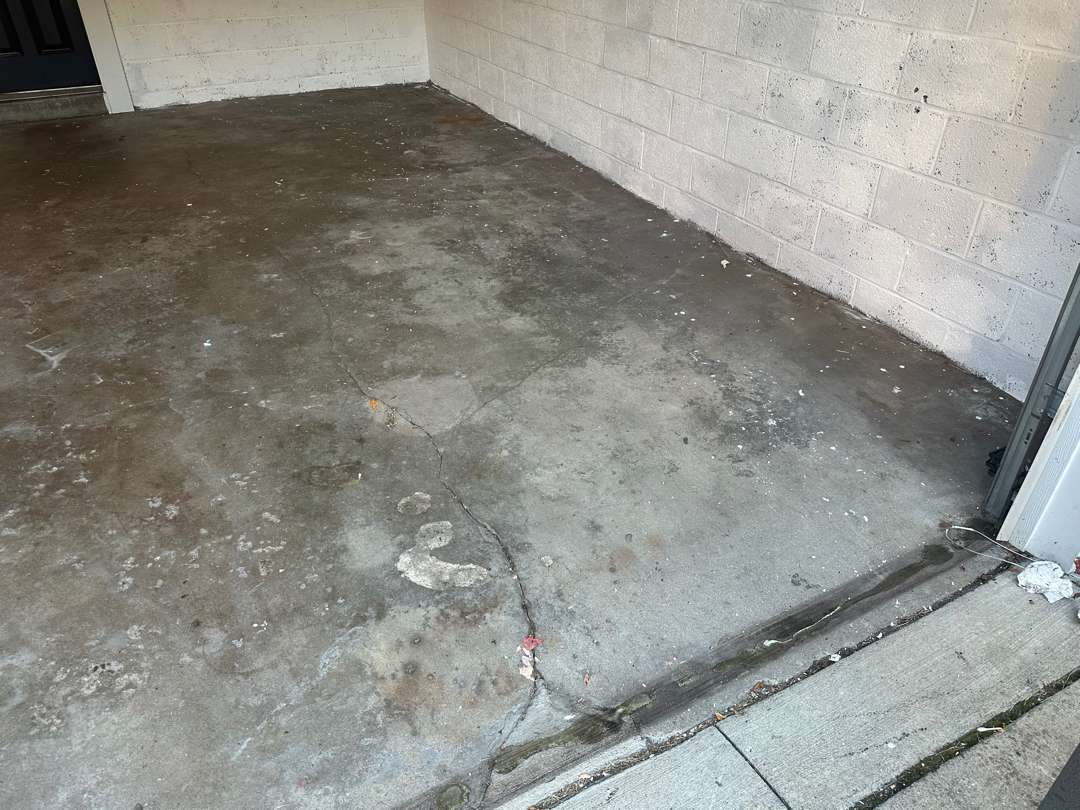
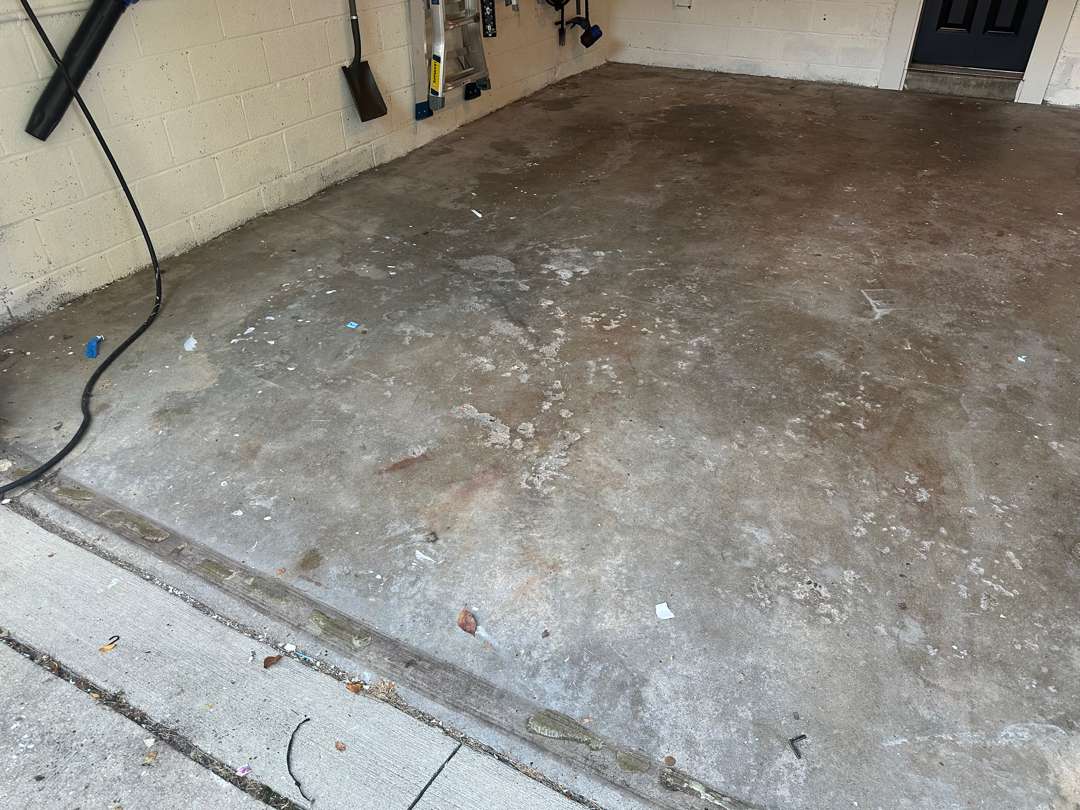
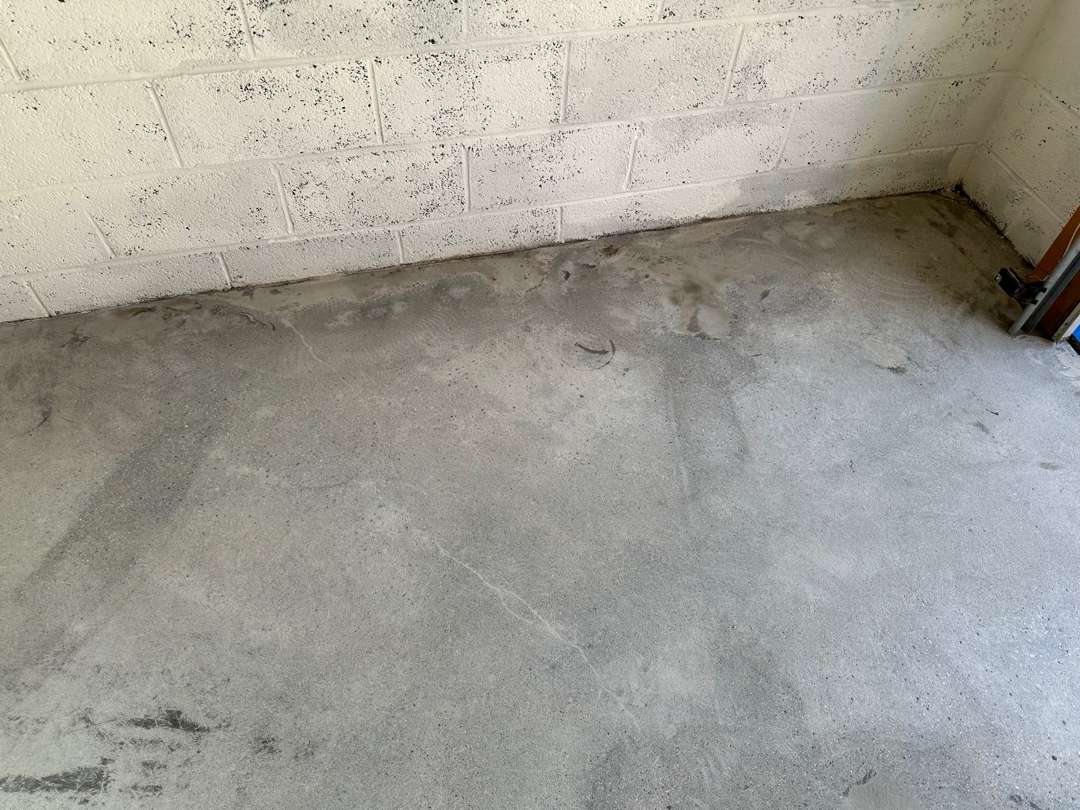
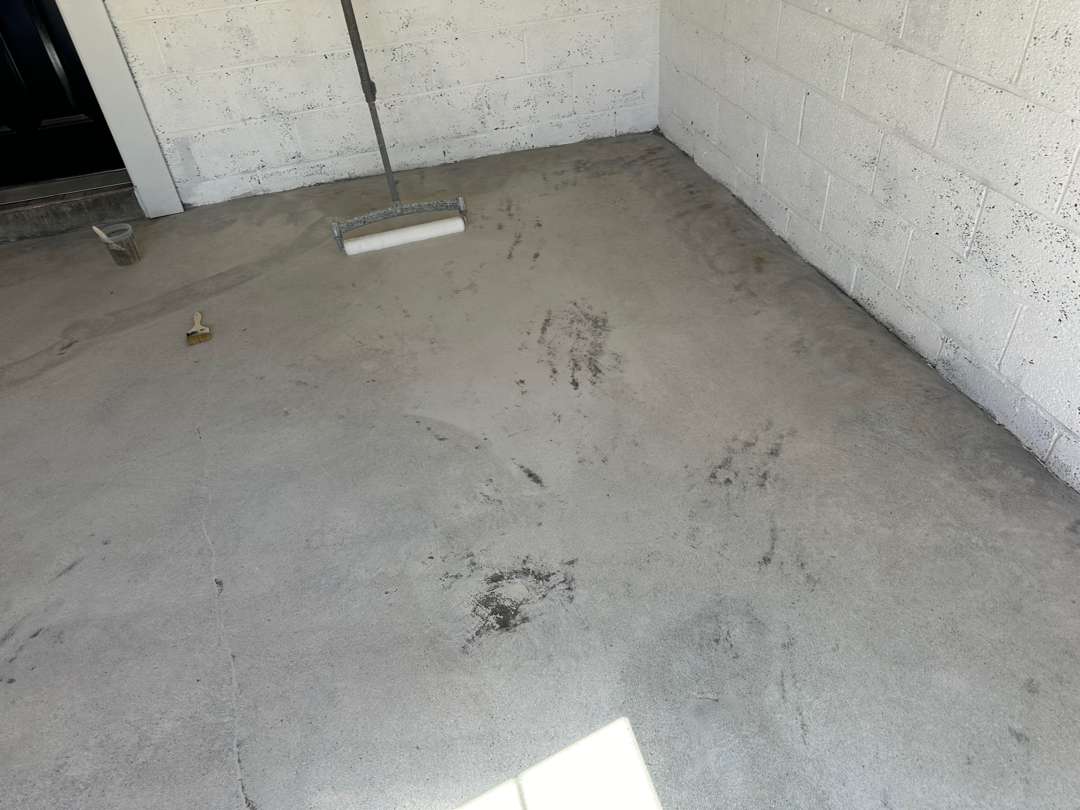
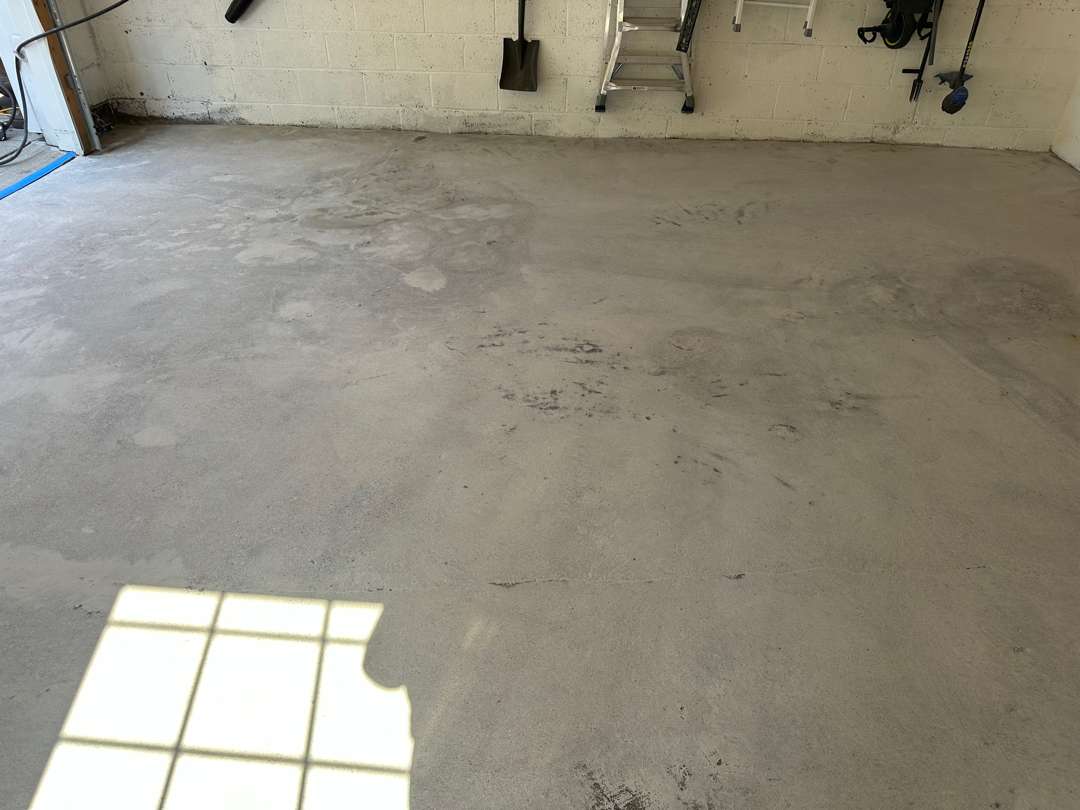
The Starting Point
Diamond Grinding
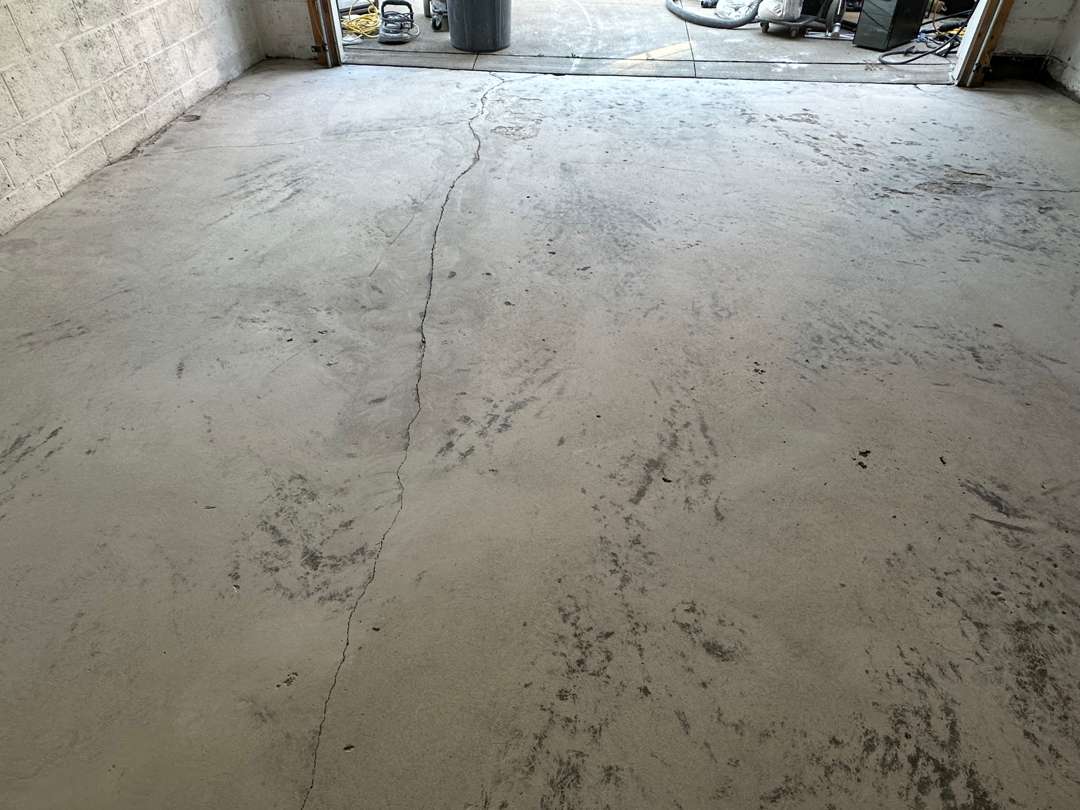
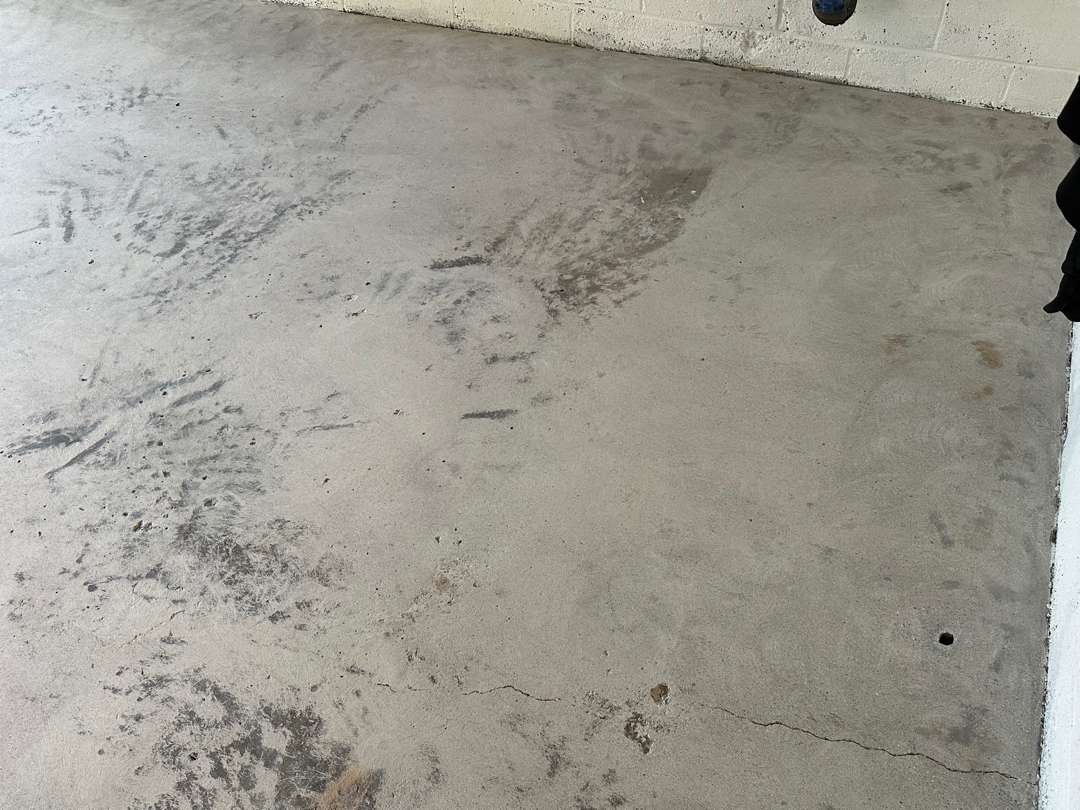
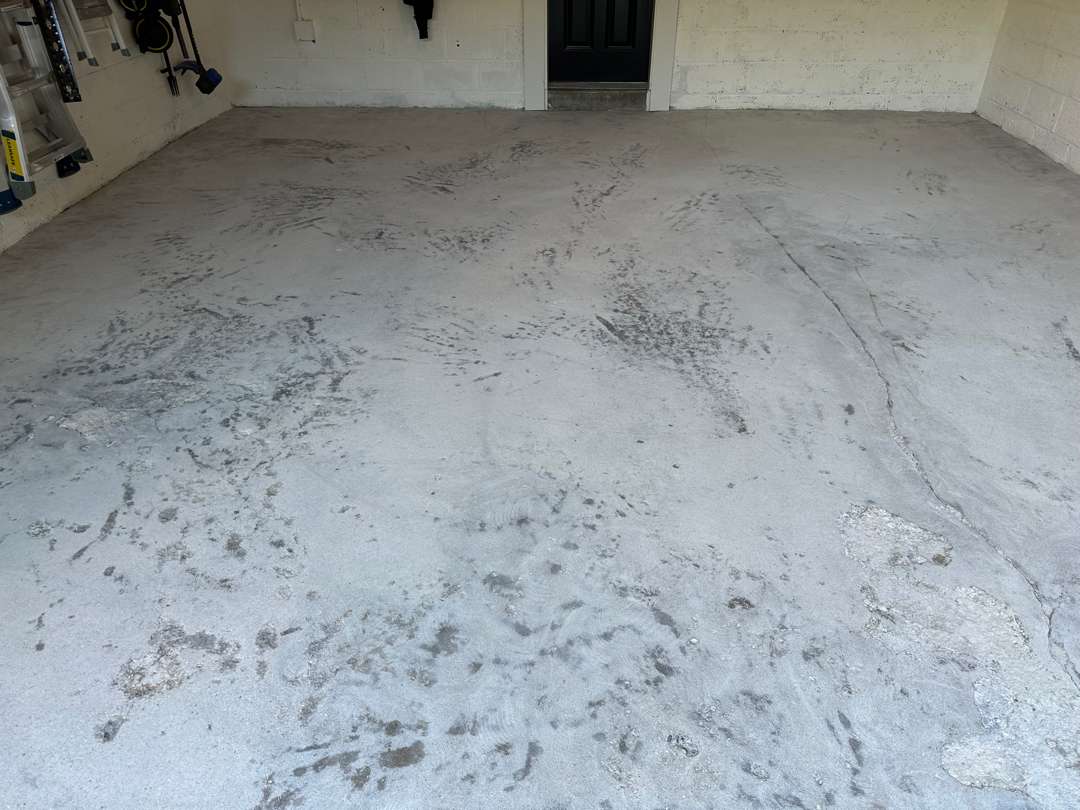
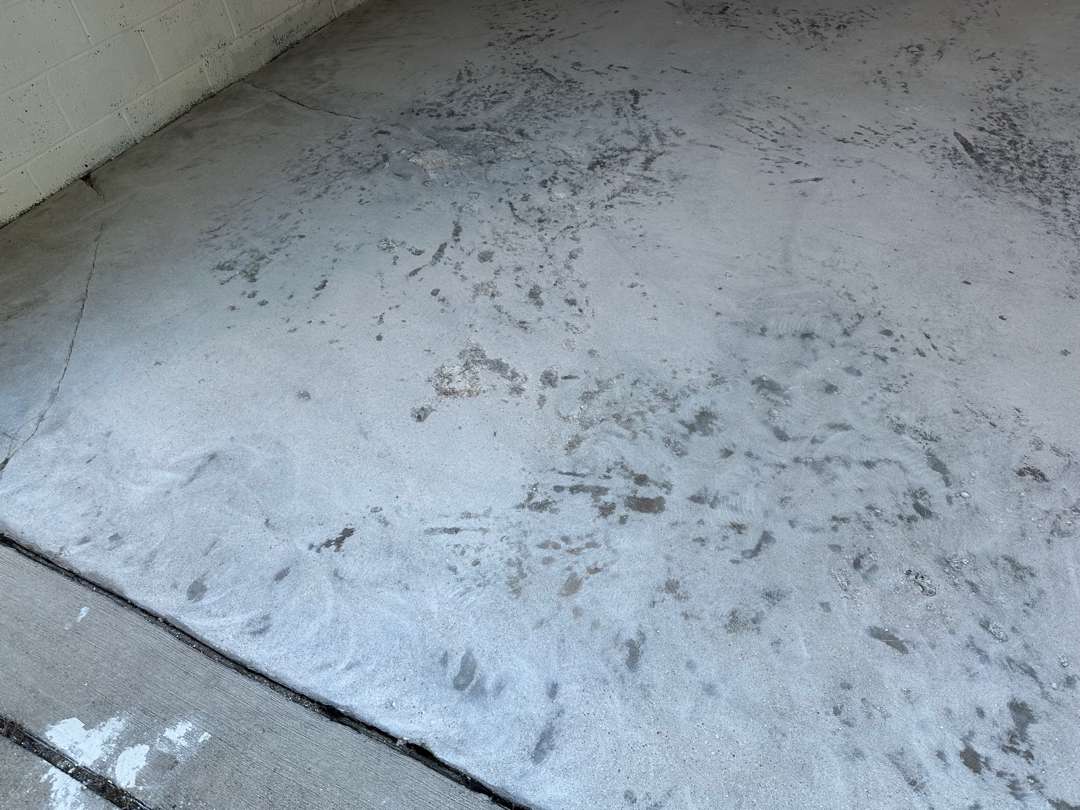
Crack and Pitting Repair
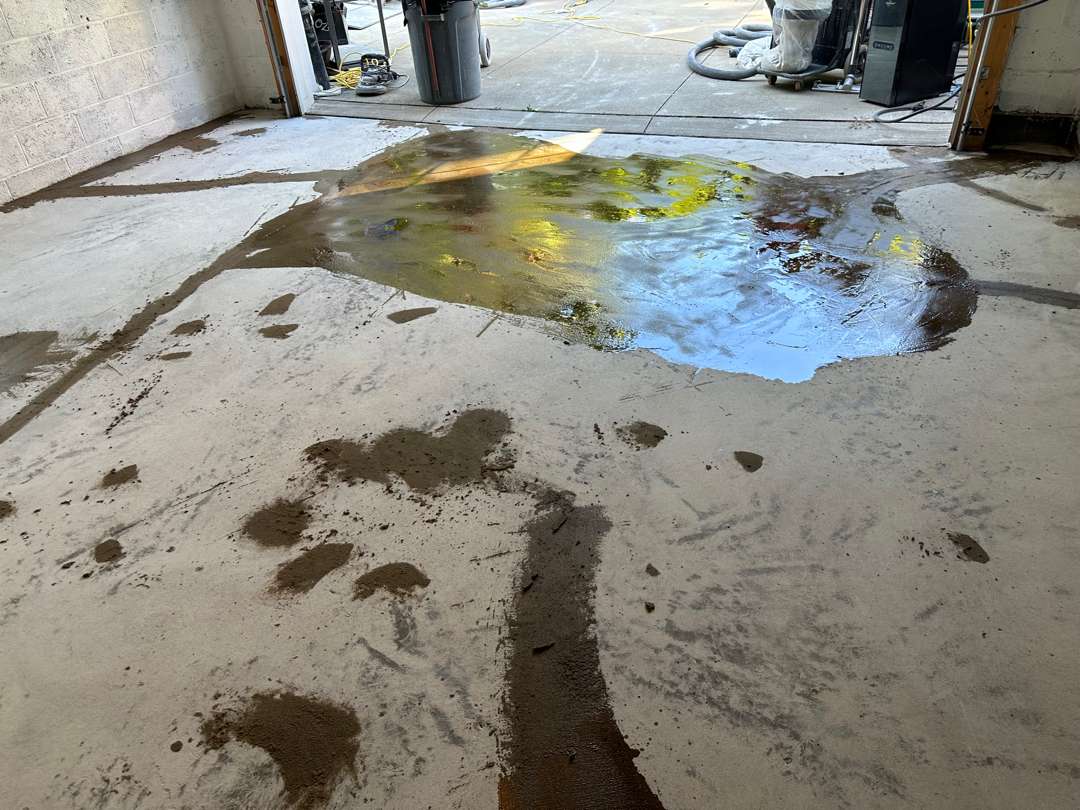
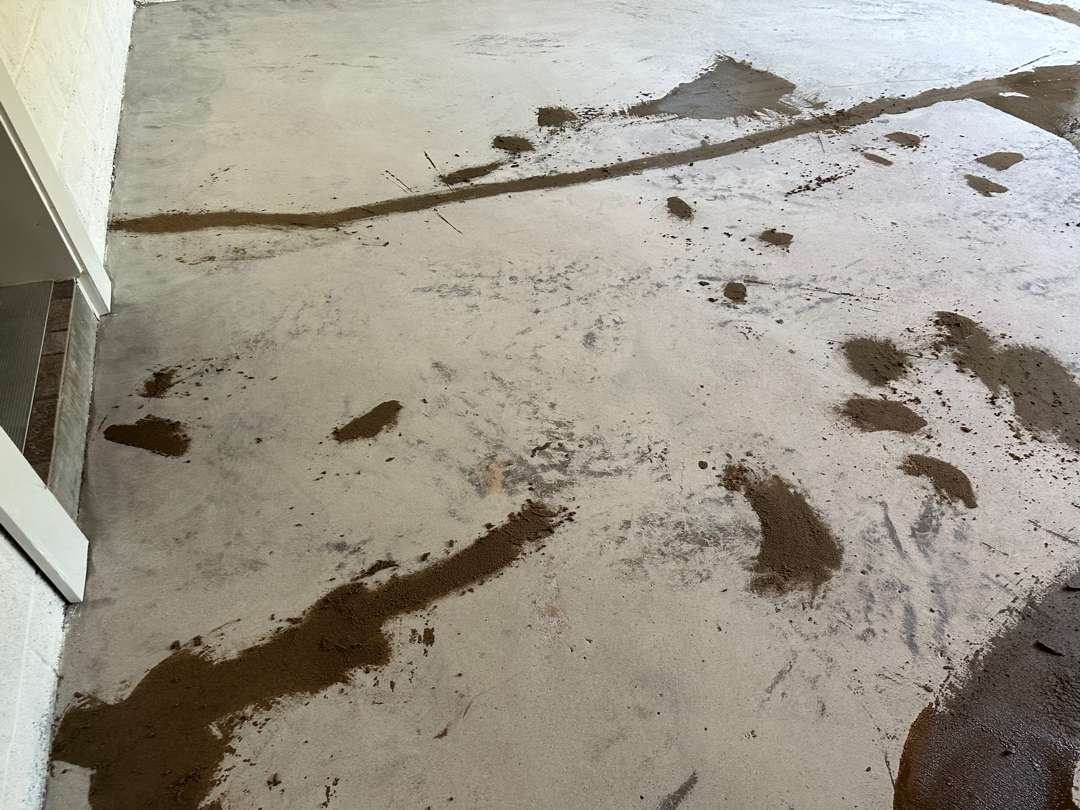
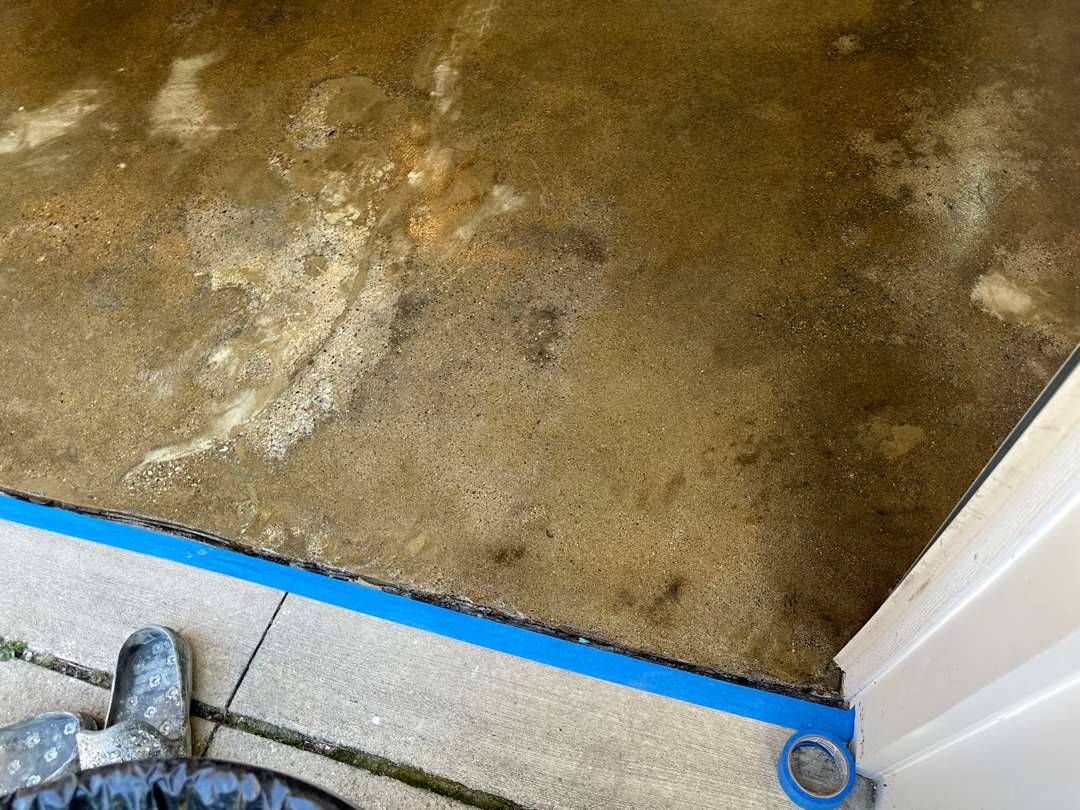
Moisture Barrier Application
Coating Application
Finished Floor
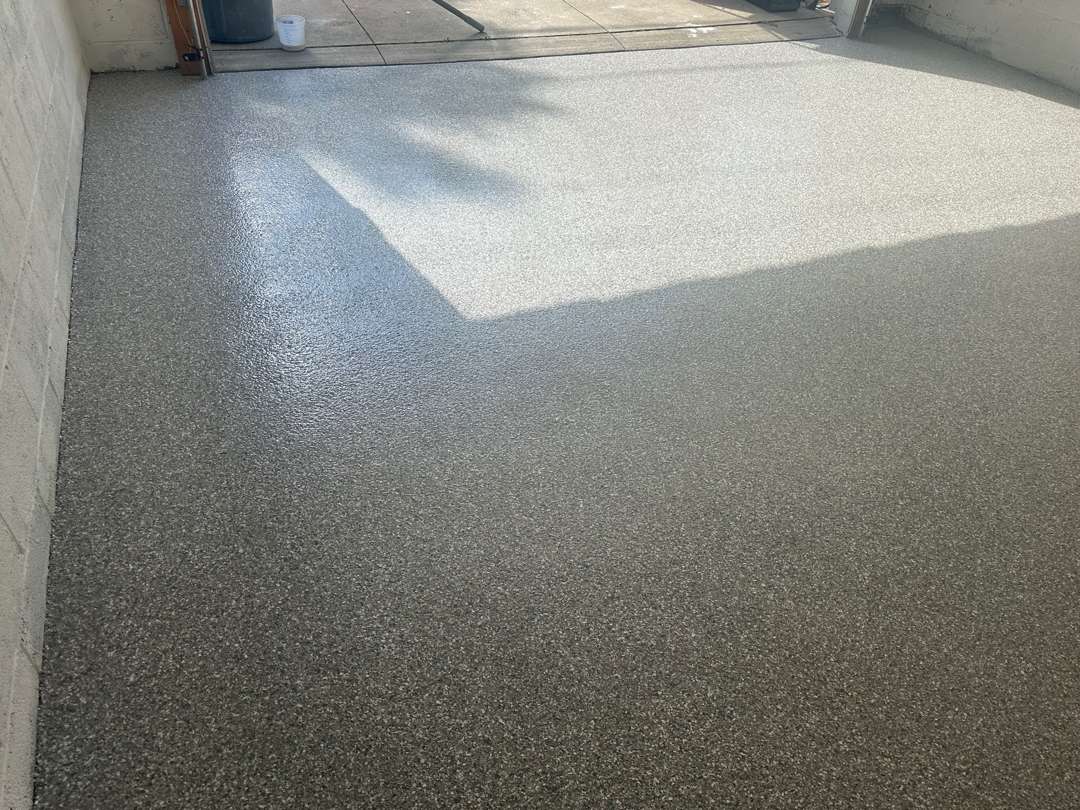
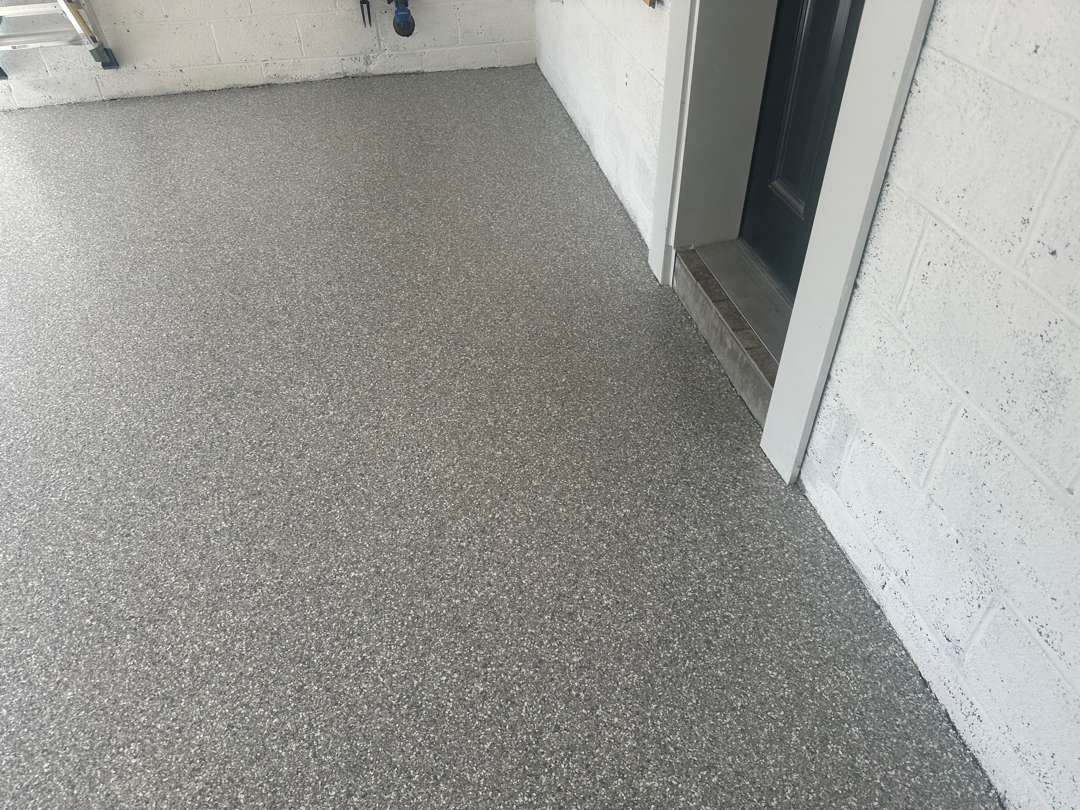
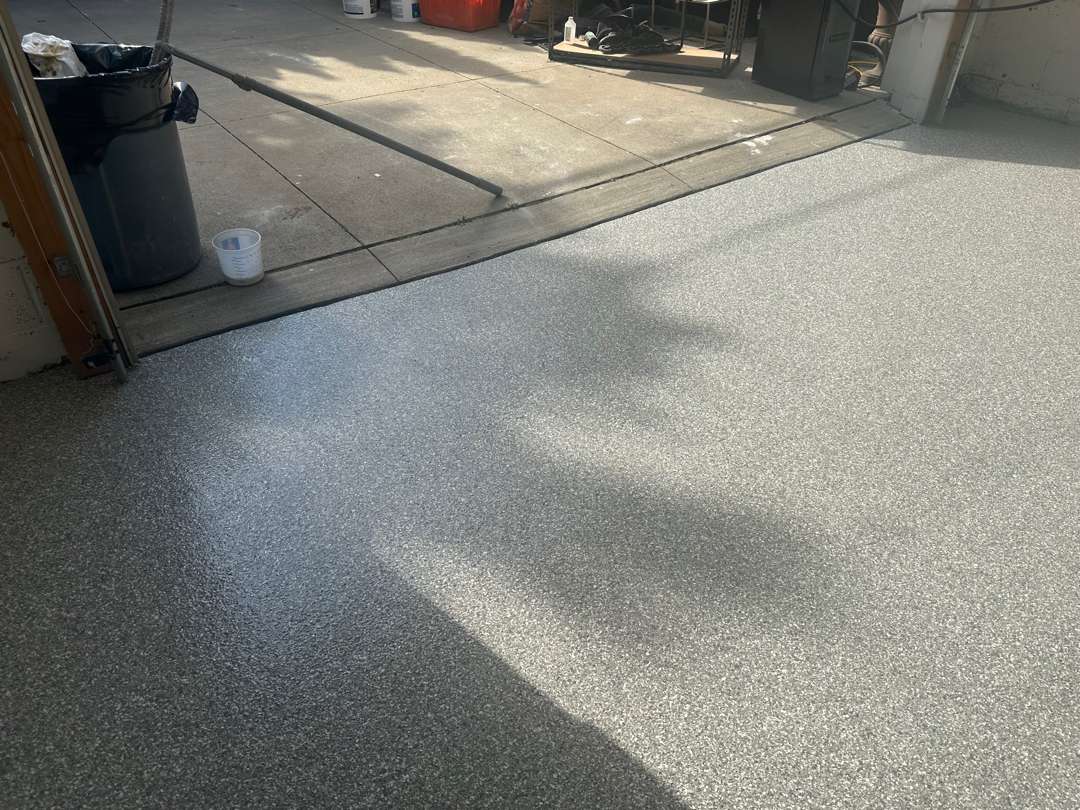
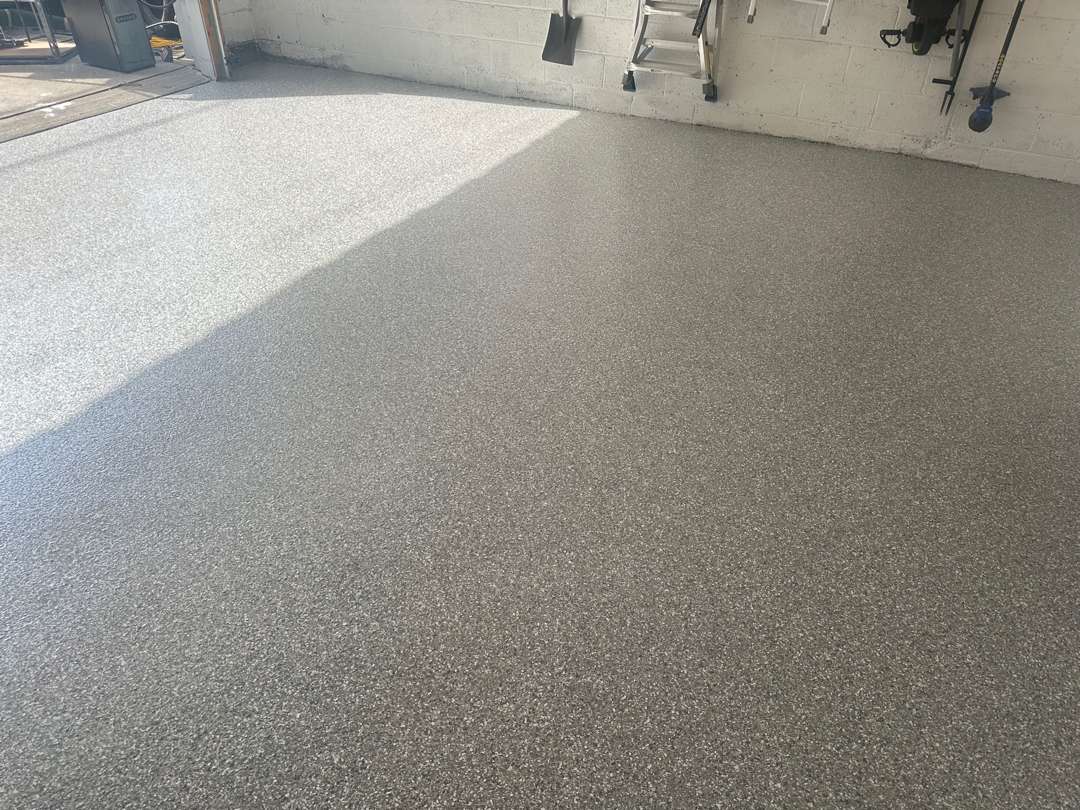
Stoney Creek covers all 317 square feet. The medium grey reads consistently across the full slab under both the natural light from the garage door opening and the cooler light inside. The control joints pass cleanly through the finished surface, their lines uninterrupted beneath the topcoat.
The block wall perimeter sits directly above a clean coating edge — no verticals, no steps, no transitions to manage. The floor runs wall to wall within the defined scope. The crack, the pitting, and the moisture migration pathway are all sealed beneath the repair layer and the MC-4.7 system. The 36-grit traction provides firm, reliable grip across the full surface.
Testimonials
Craig Pietrangelo
Francine Stephens
Serving Grosse Pointe & the Pointes
The MotorCity Advantage
MotorCity Floors and Coatings specializes in professional-grade polyurea-polyaspartic systems. These dual-coating systems are replacing epoxy products constrained by older chemistry. Our systems deliver strong chemical resistance, superior durability, greater flexibility, shorter cure times, and proven UV stability that maintains color for decades. We back every installation with an industry-leading warranty.
Each project includes thorough diamond grinding preparation, flexible polyurea crack repair, and careful application to ensure consistent coverage across the full slab. When oil contamination is present — as our crew found at the Blairmoor Court property in Grosse Pointe — we apply a petroleum drawing compound before grinding to draw petroleum from within the pore structure of the concrete before the grind begins. When cracking and pitting are extensive, we apply a full-slab flood coat after repairs and grind twice. Every condition is addressed completely before the first coat goes down.