 Skip to content
Garage Floor Coating in Detroit, MI
QUESTIONS? NEED A QUOTE?
Why Detroit Homeowners Choose MotorCity
★ 4.9 rating · 488 Google reviews
- ✓ Lifetime warranty
- ✓ One-day installation
- ✓ BBB accredited (since 2020)
- ✓ Licensed & insured
Upgrading Garage Floor Coating in Detroit with Polyurea-Polyaspartic Coatings
Last updated: July 31, 2026
On this page, we document garage floor coating projects in Detroit, MI. Our dual-coating systems have converted worn concrete slabs into durable, attractive garage floors. Detroit is a Wayne County city with one of the most varied garage environments in Michigan — from residential garages in established neighborhoods to enclosed condo parking bays in multi-unit buildings. The concrete in those garages reflects the full range of age, use, and maintenance histories that a city of Detroit’s size and character produces. See more projects on our Michigan case studies hub.
Many of the properties where we apply our polyurea-polyaspartic floor coating systems had accumulated the wear and tear of the harsh Michigan climate. As you will see in these case studies, our garage floor coating specialists work with concrete slabs in a wide variety of conditions: some needed only standard surface preparation. Others required crack treatment, moisture primer application, and careful work within tight, enclosed bays before the polyurea and polyaspartic coats could go down. We describe the process and results, and include the before-and-after photos for each job.
Detroit Garage Floor Coating Case Studies
Quality Garage Floor Coatings
Winter road salt, freeze-thaw cycles, automotive fluids, and daily vehicle traffic degrade unprotected garage concrete over time. The damage typically appears as cracking, surface pitting, general staining, and surface laitance that prevents coatings from bonding correctly.
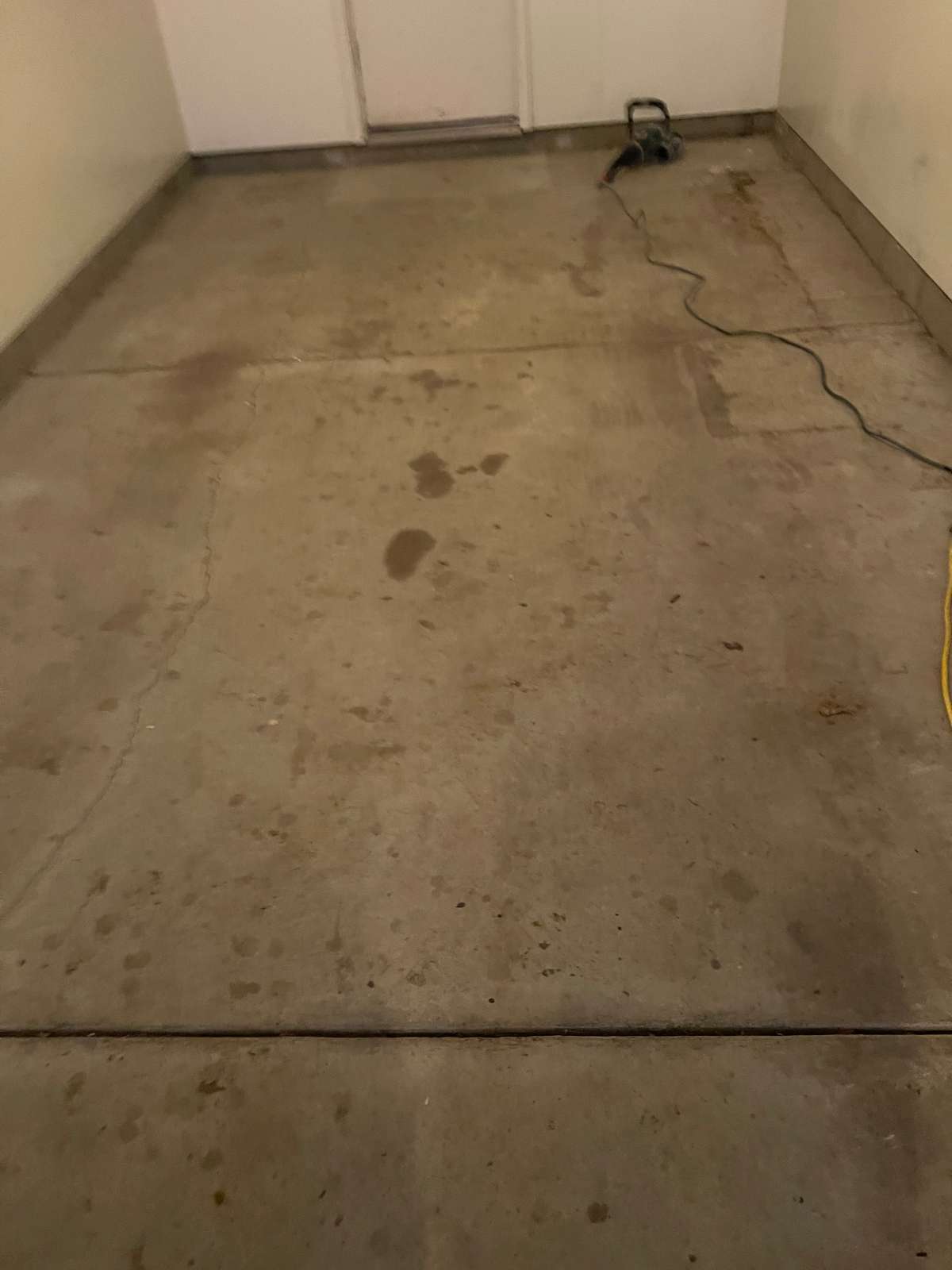
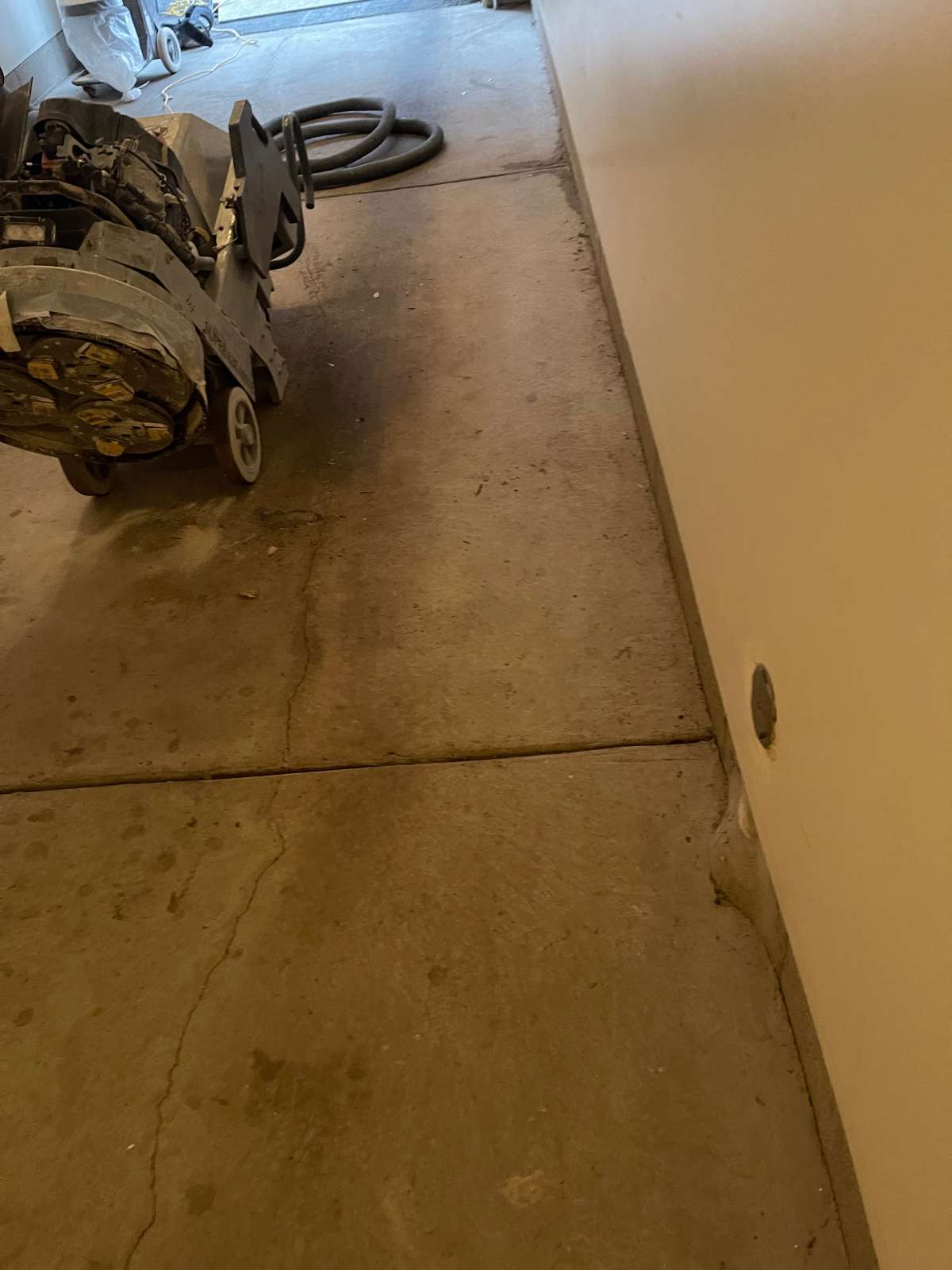
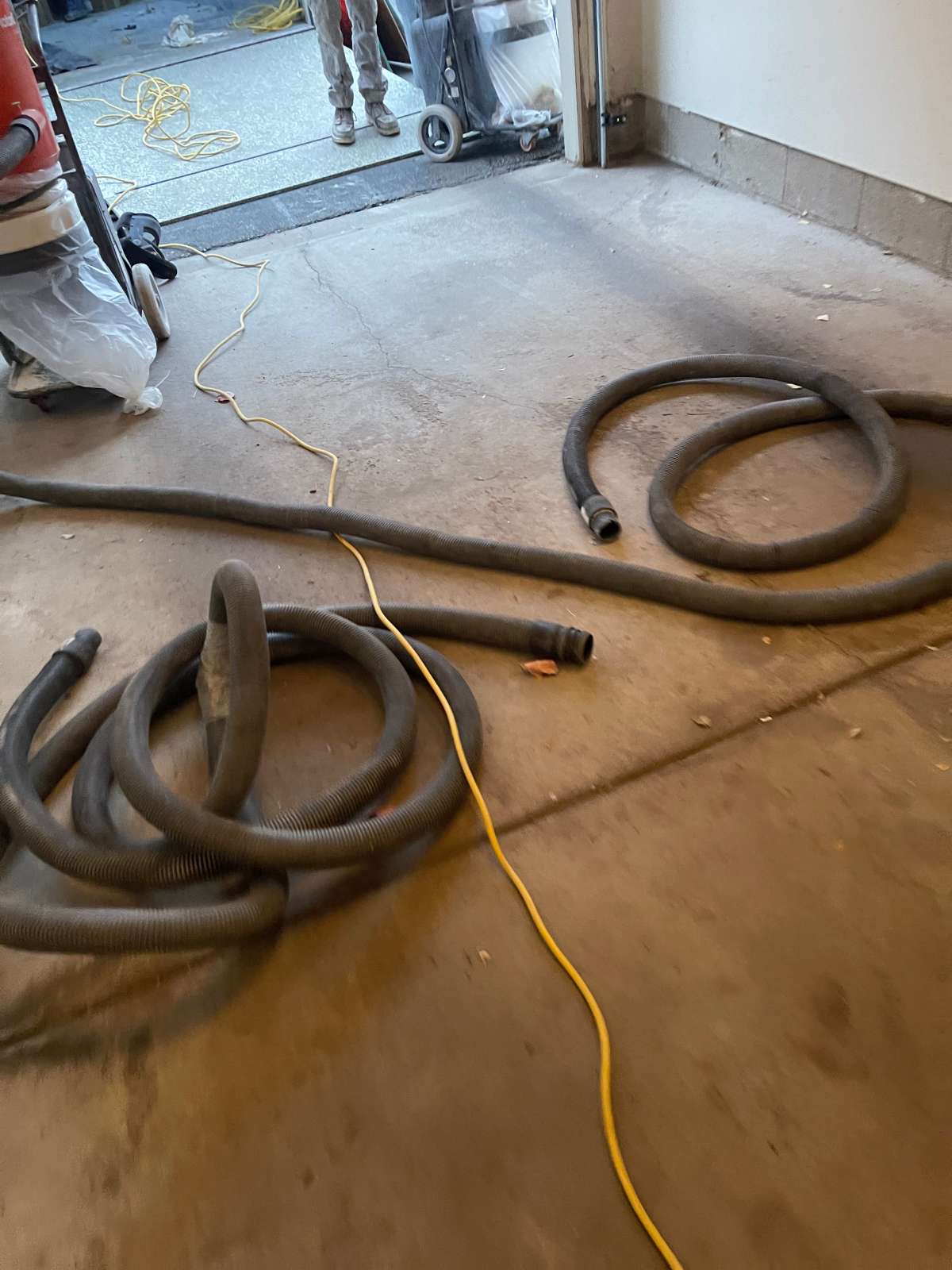
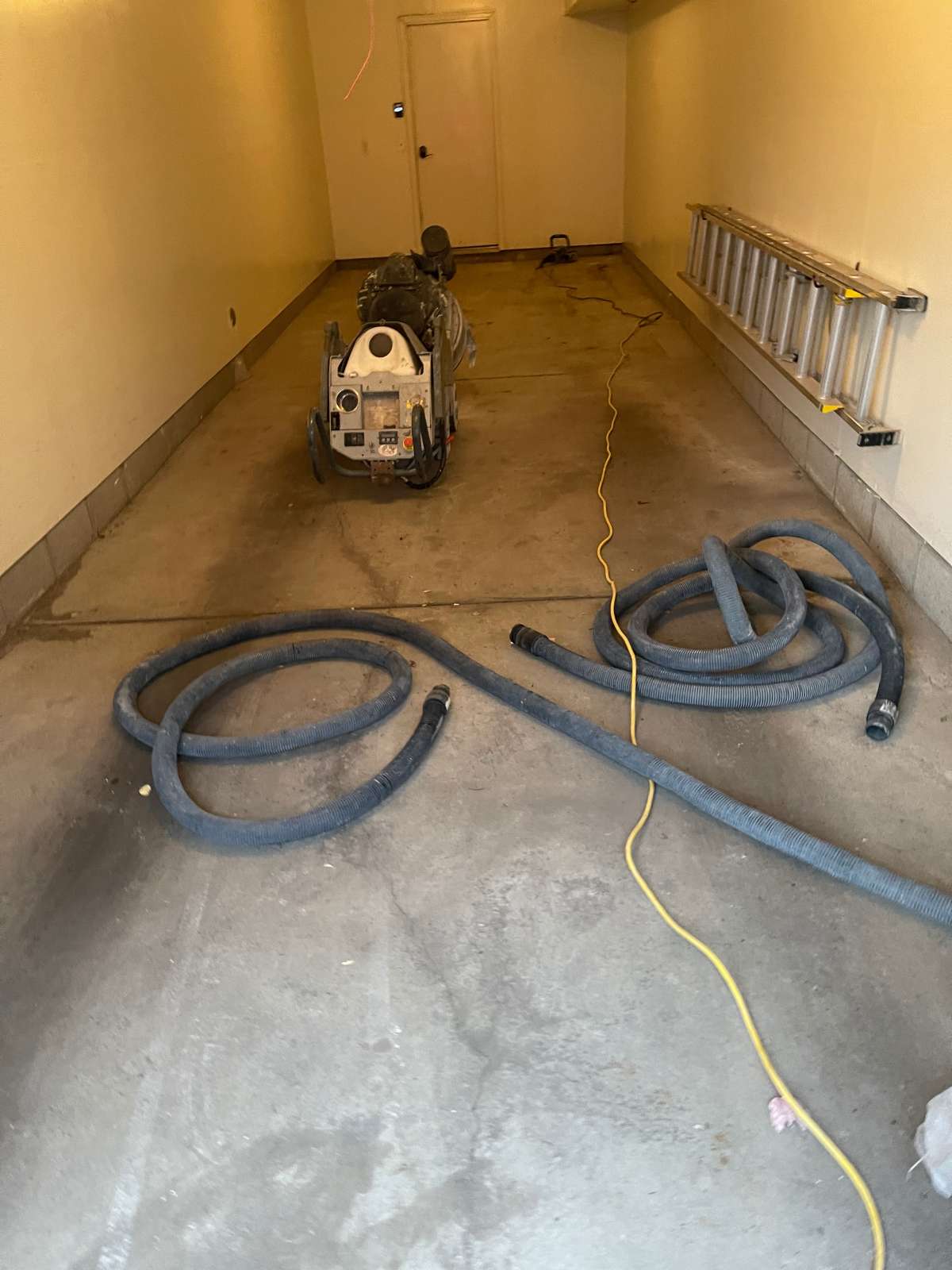
Detroit garage floors present a particular range of preparation challenges. Enclosed condo and multi-unit building garages — like the one on Woodward Avenue — have drywall walls on all sides with no wide opening, requiring careful equipment management during grinding and coating application. The concrete itself still requires the same mechanical preparation as any other slab: full diamond grinding, crack repair, and surface profiling before any coating system can go down. Polyurea-polyaspartic systems provide reliable long-term protection against these conditions and deliver a finished appearance that bare concrete or epoxy products cannot match.
Garage Floor Coating
on Woodward Avenue
Woodward Avenue, Detroit, MI
The Starting Point
Surface Preparation
Crack and Pitting Repair
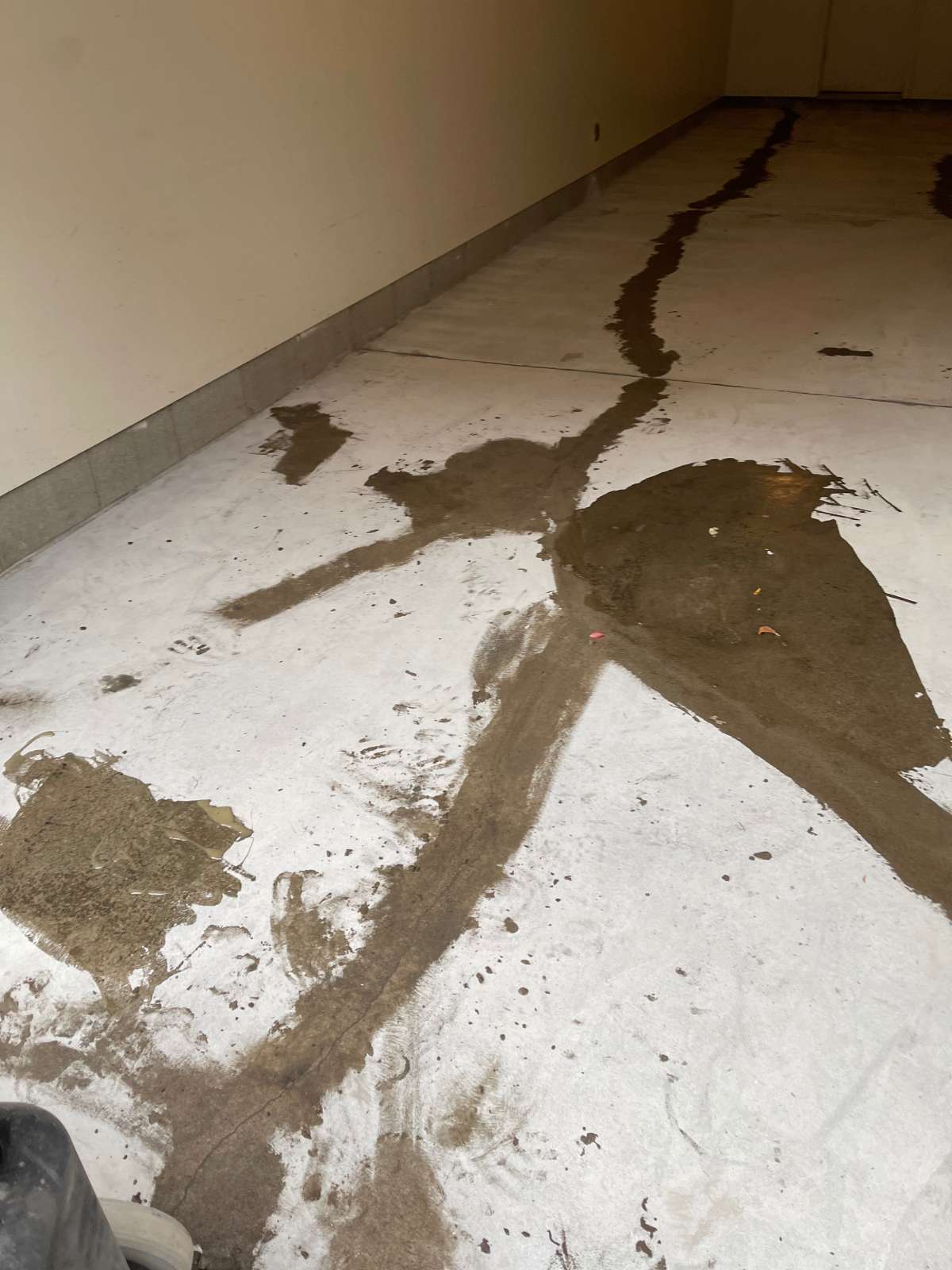
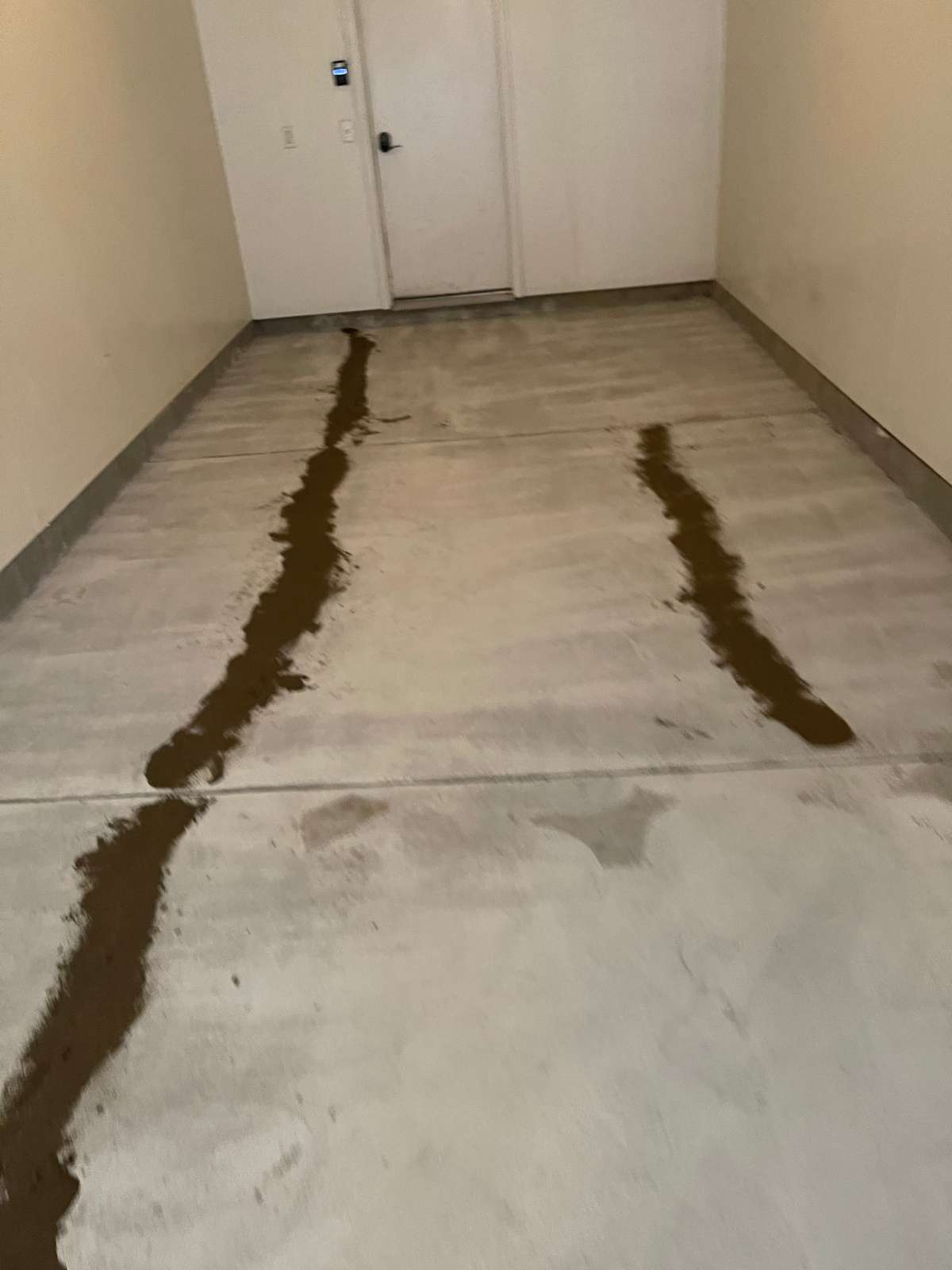
Coating Application
Finished Floor
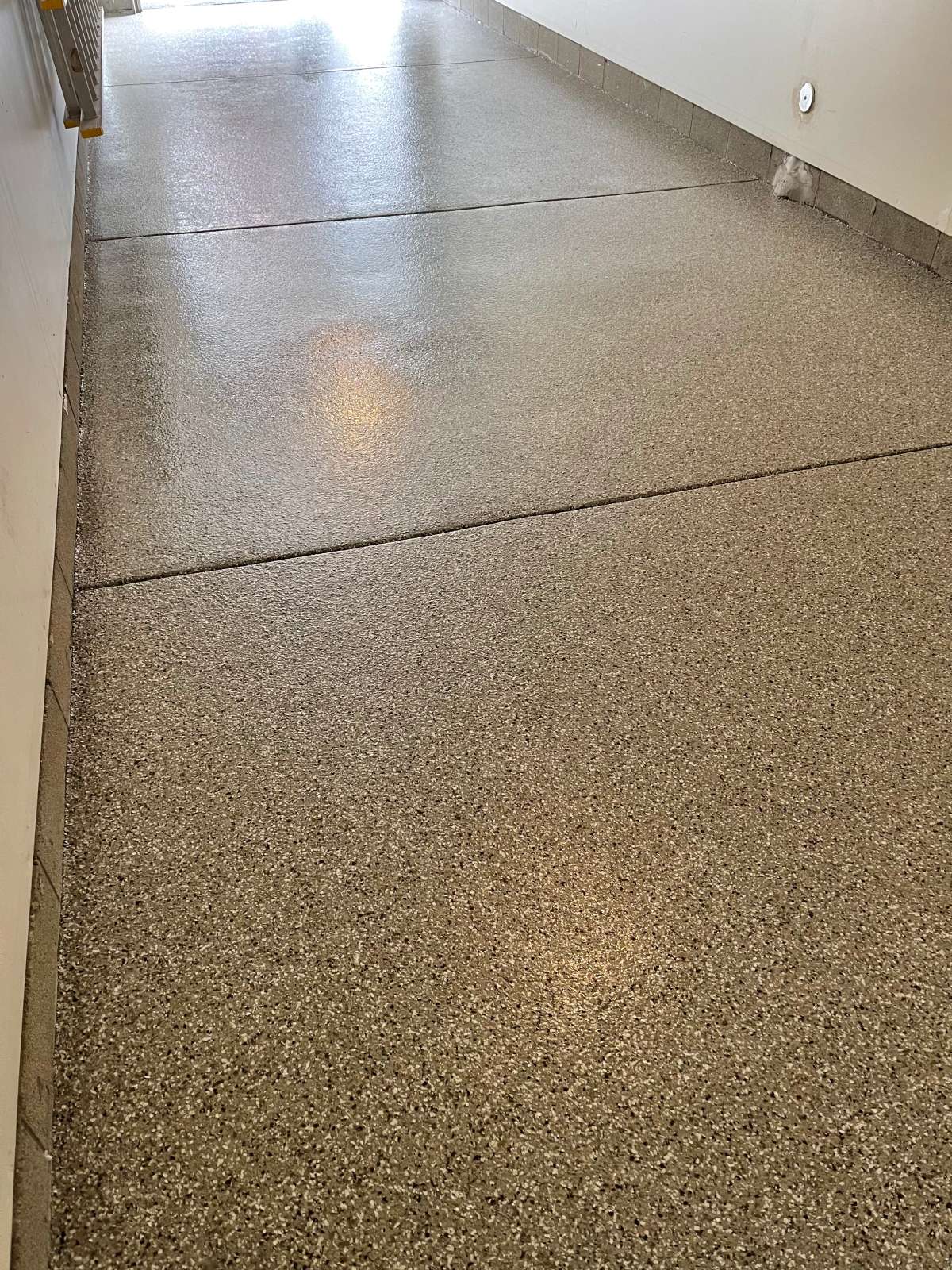
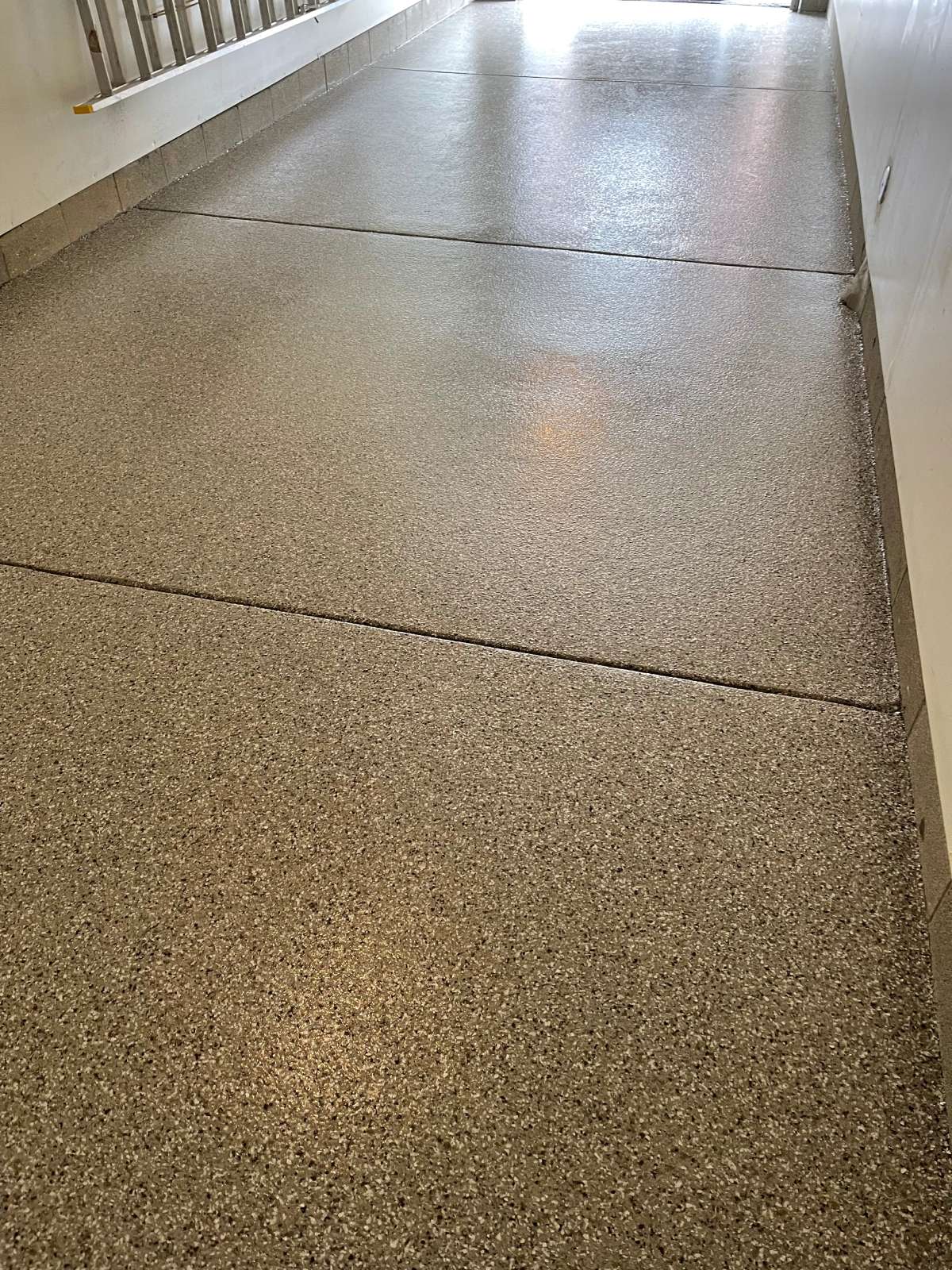
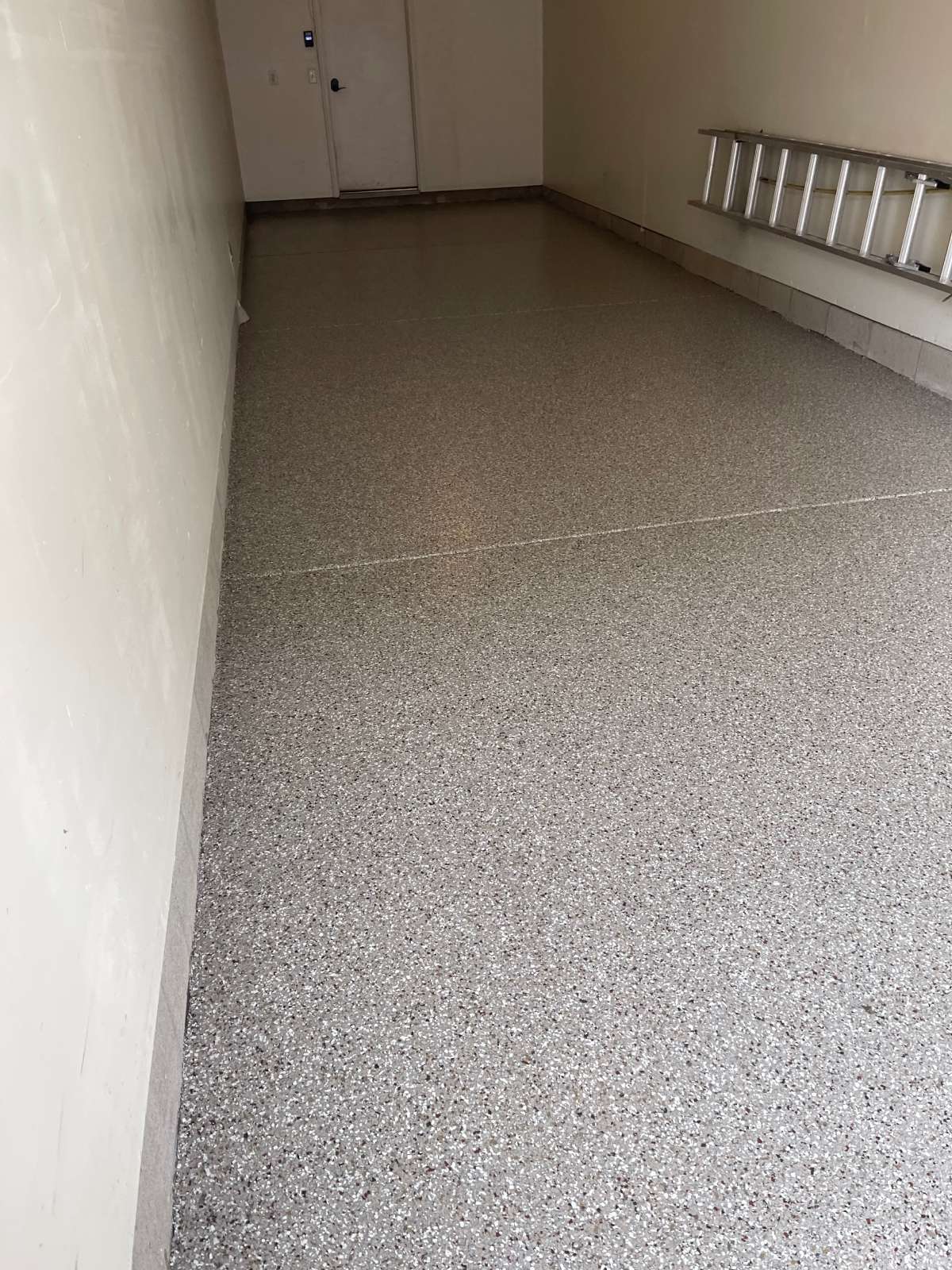
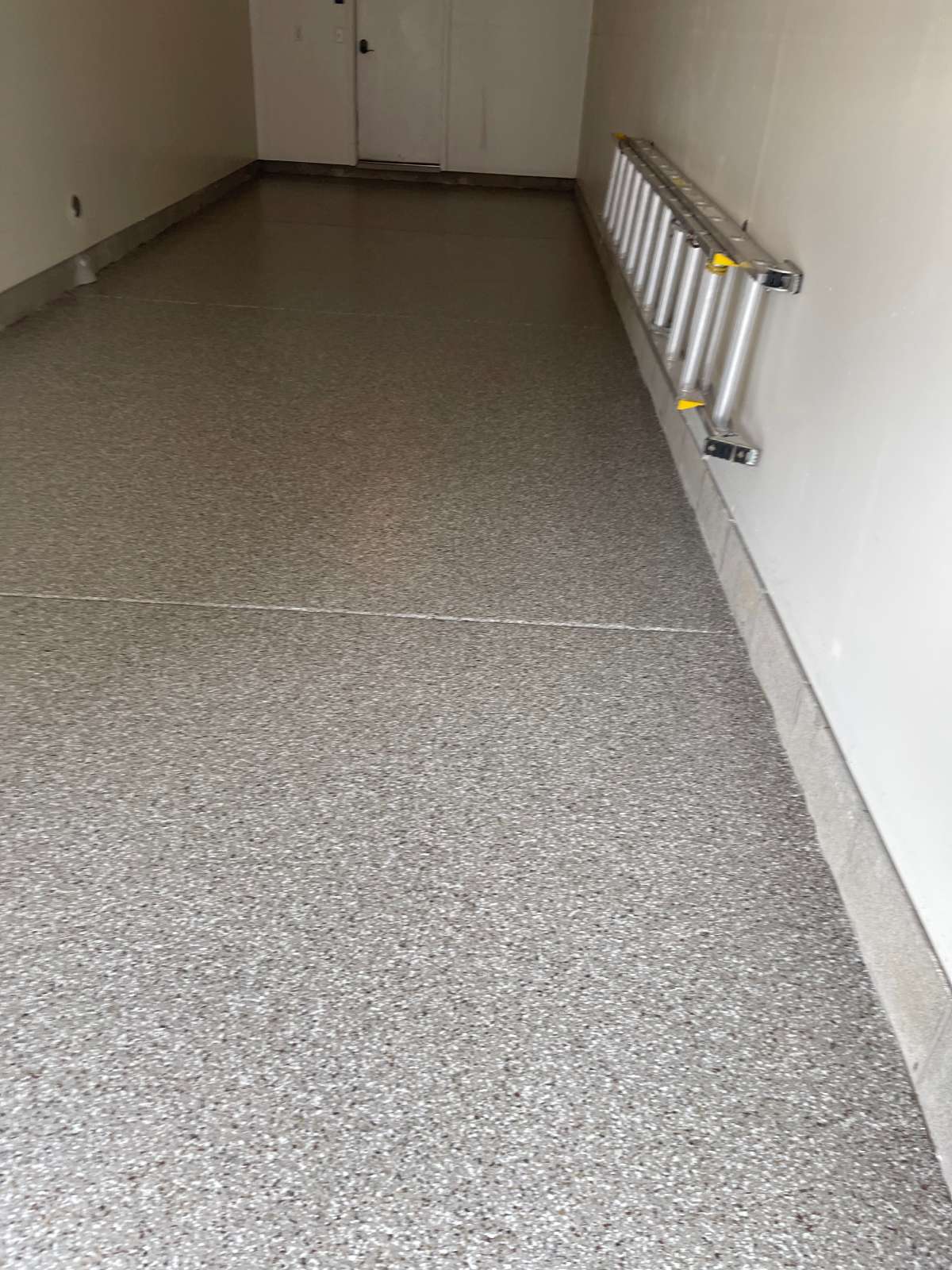
Pebble Beach runs the full length of all 371 square feet. The cool grey-tan blend reads consistently from the back wall to the garage door opening in both the enclosed interior light and the natural light at the entrance. The two crack lines that crossed this slab are sealed beneath the MR-50 repairs and the MC-3.9 system above.
The control joints pass cleanly through the finished surface — their lines remain sharp beneath the topcoat. The coating runs edge to edge within the full defined scope. The 16-grit traction provides reliable grip along the full length of the floor.
Testimonials
Bianca Sitto
Vinson Licari (Vince)
Garage Floor Coating
on Edmund Place
Edmund Place, Detroit, MI
The Starting Point
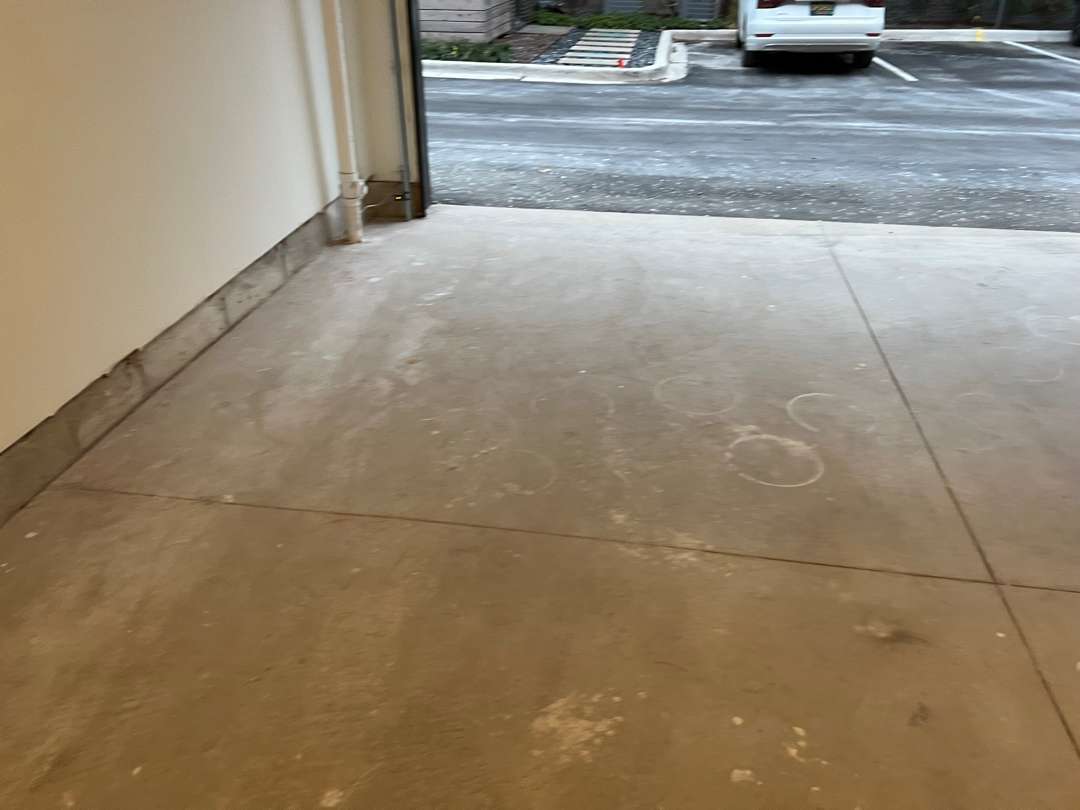
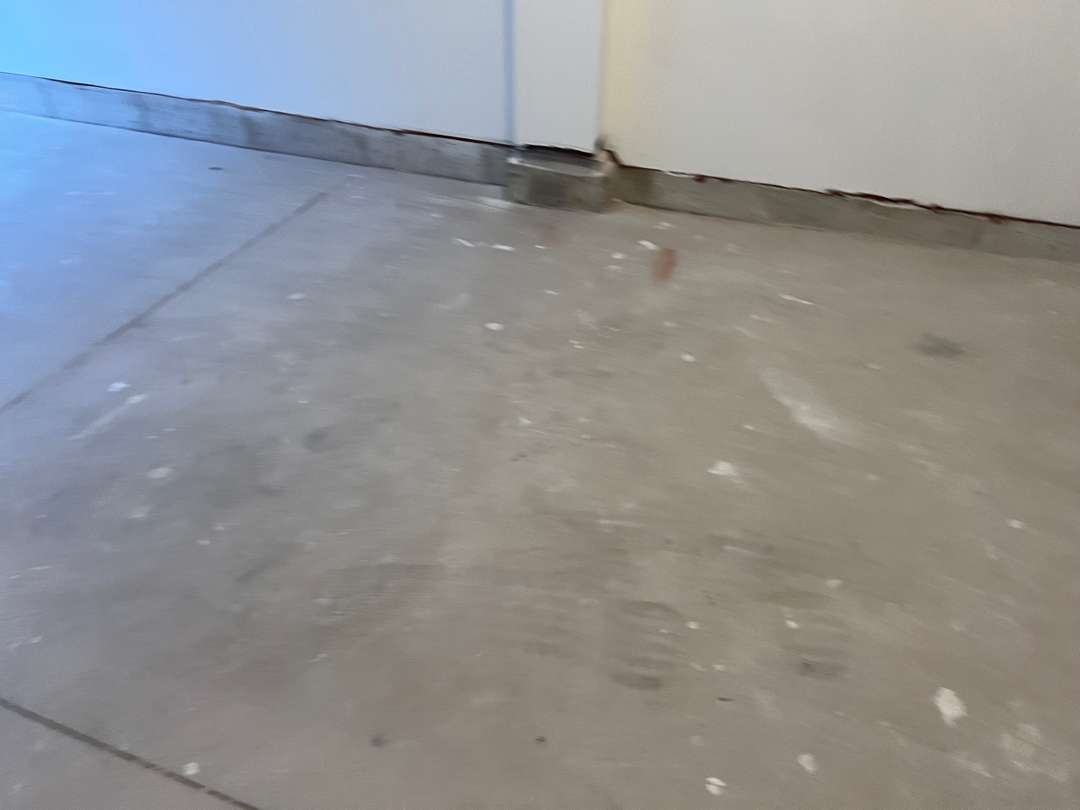
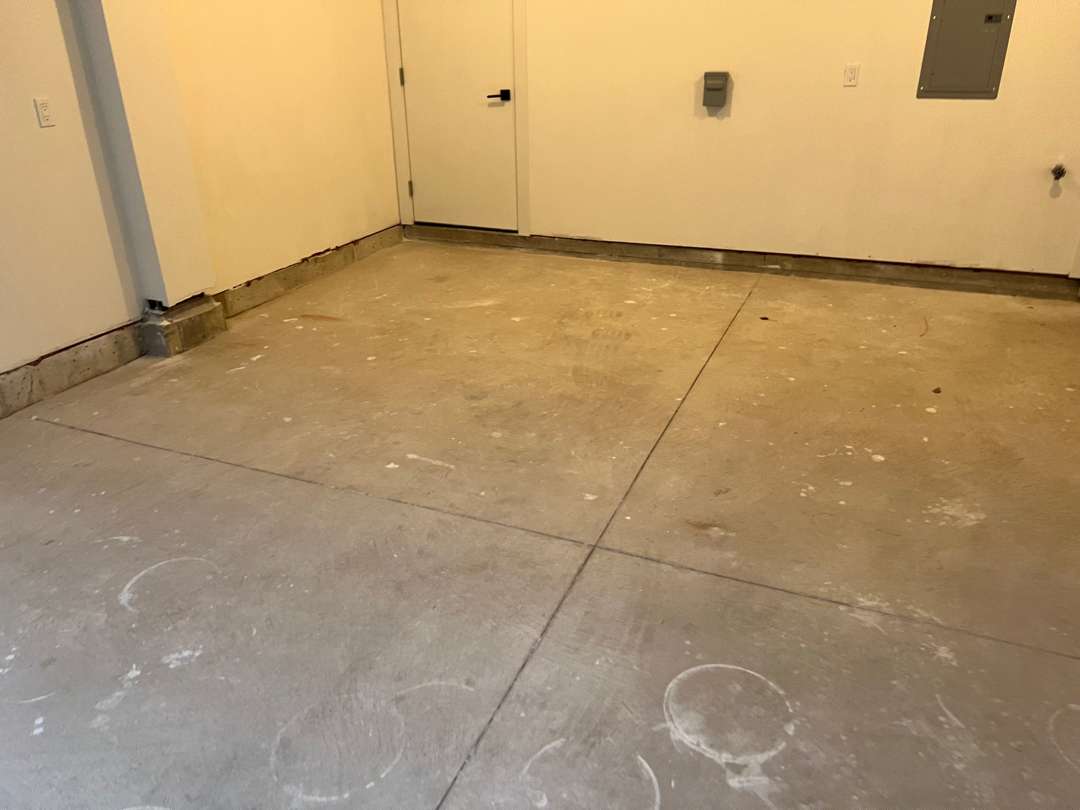
Surface Preparation
Coating Application
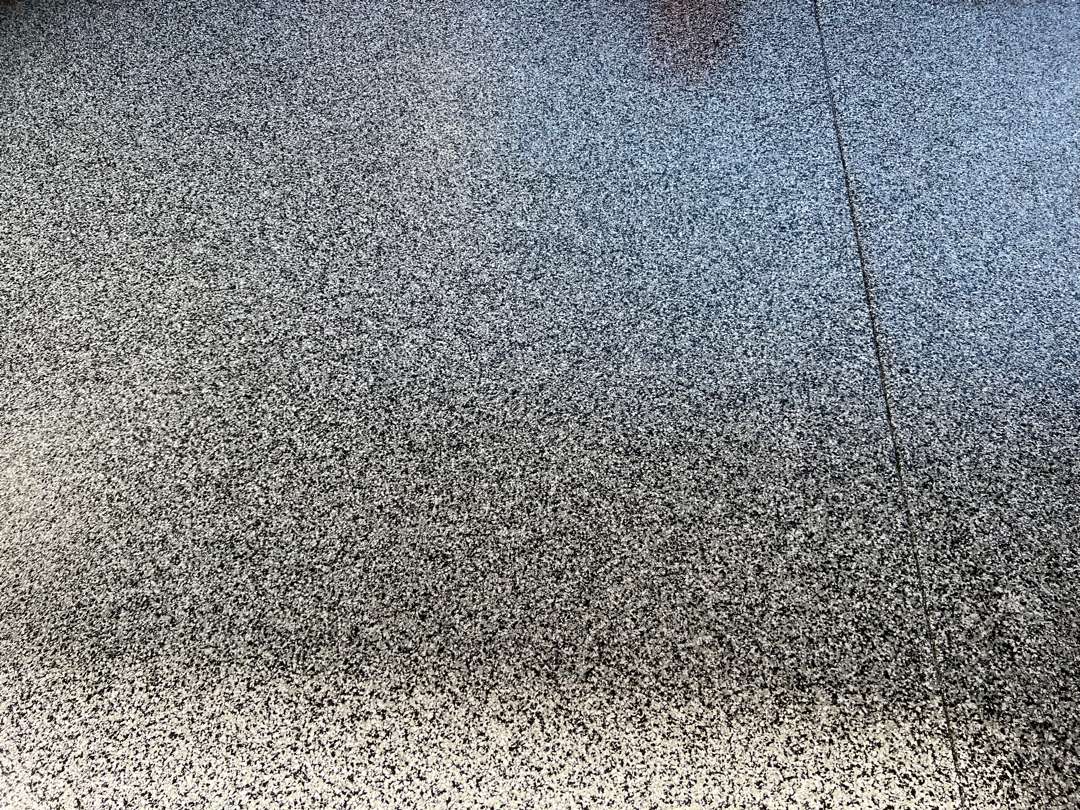
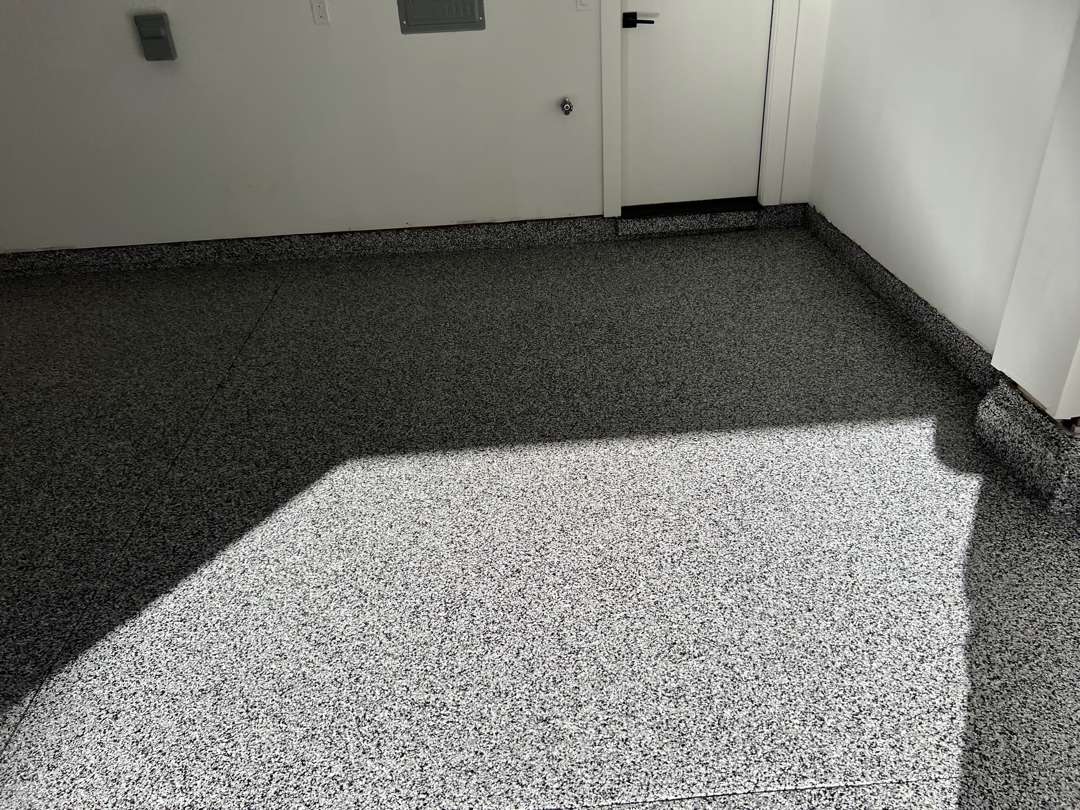
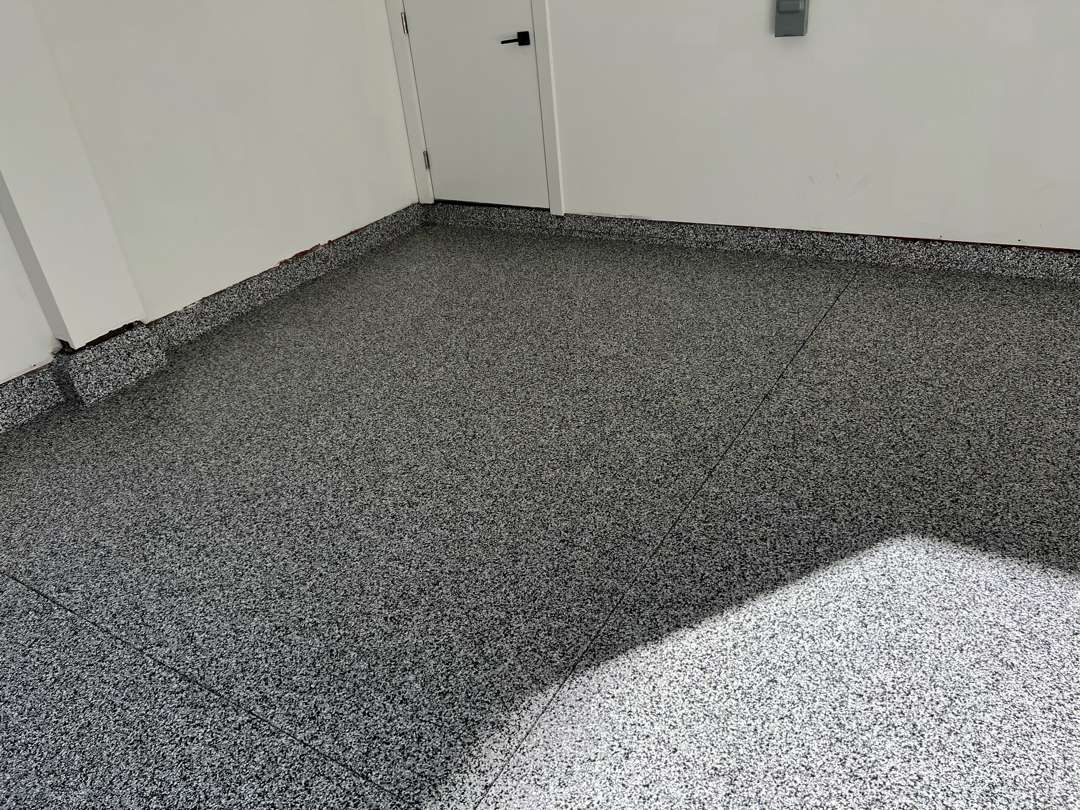
Finished Floor
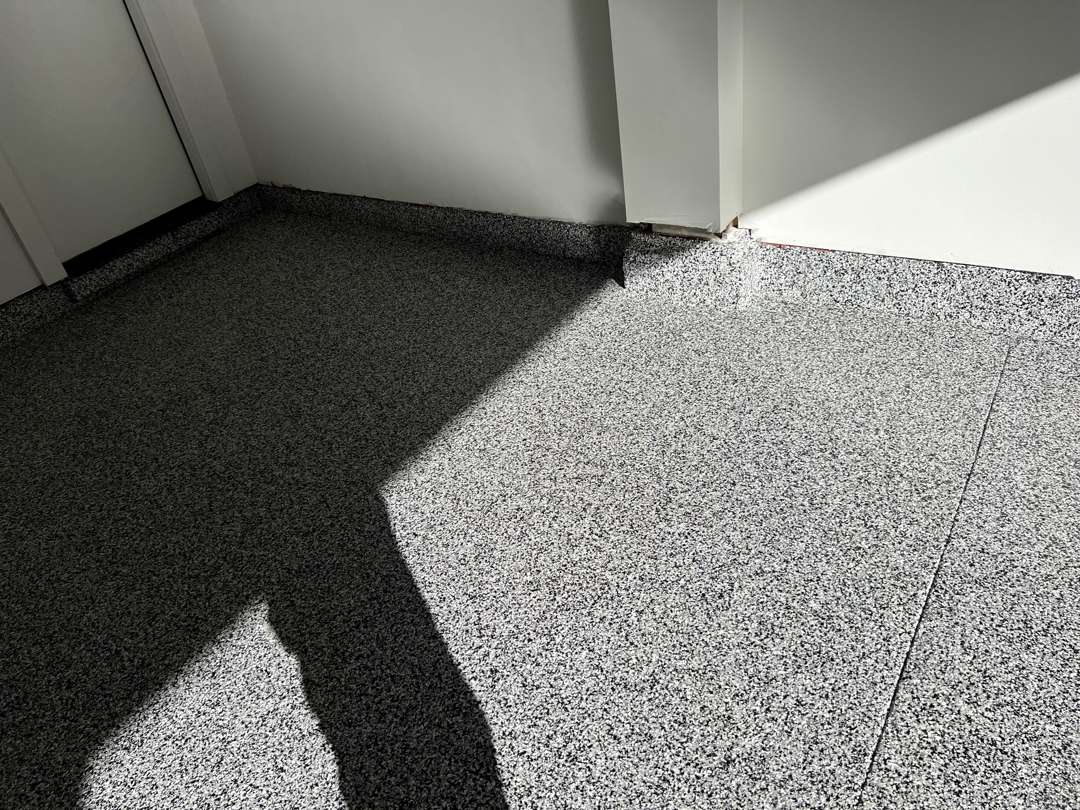
Testimonials
Dennis Reedy
Marianne Braziunas
Garage Floor Coating
on Avery Street
Avery Street, Detroit, MI
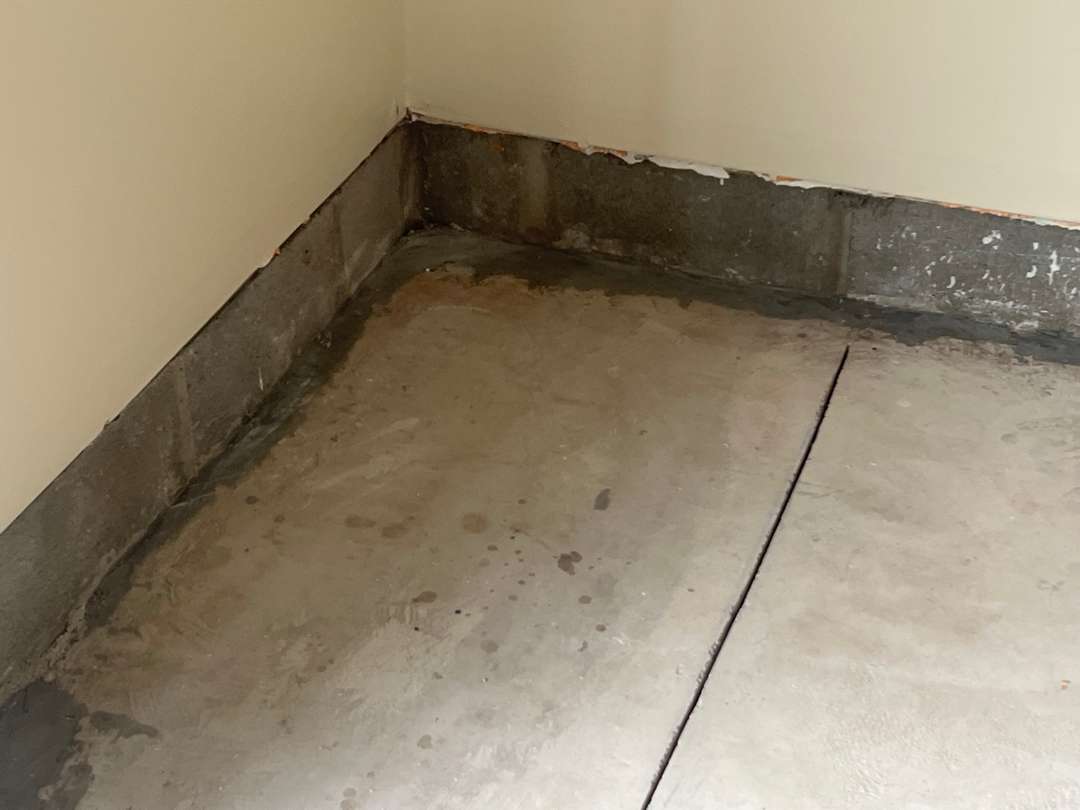
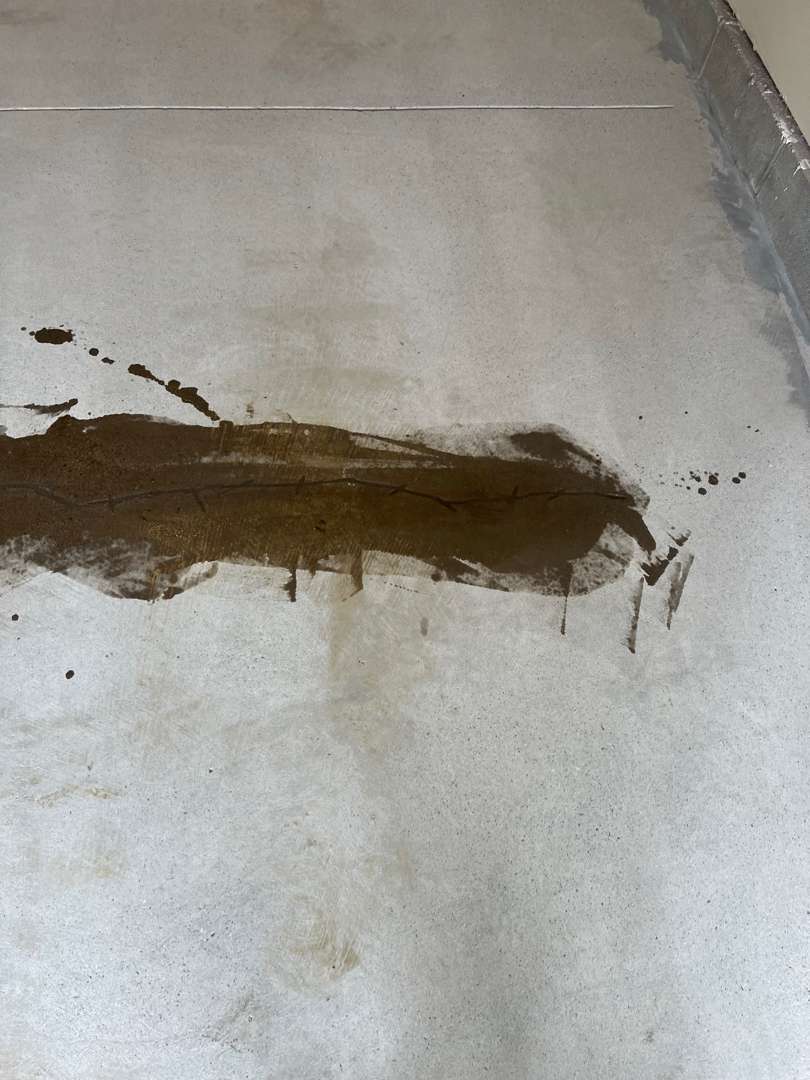
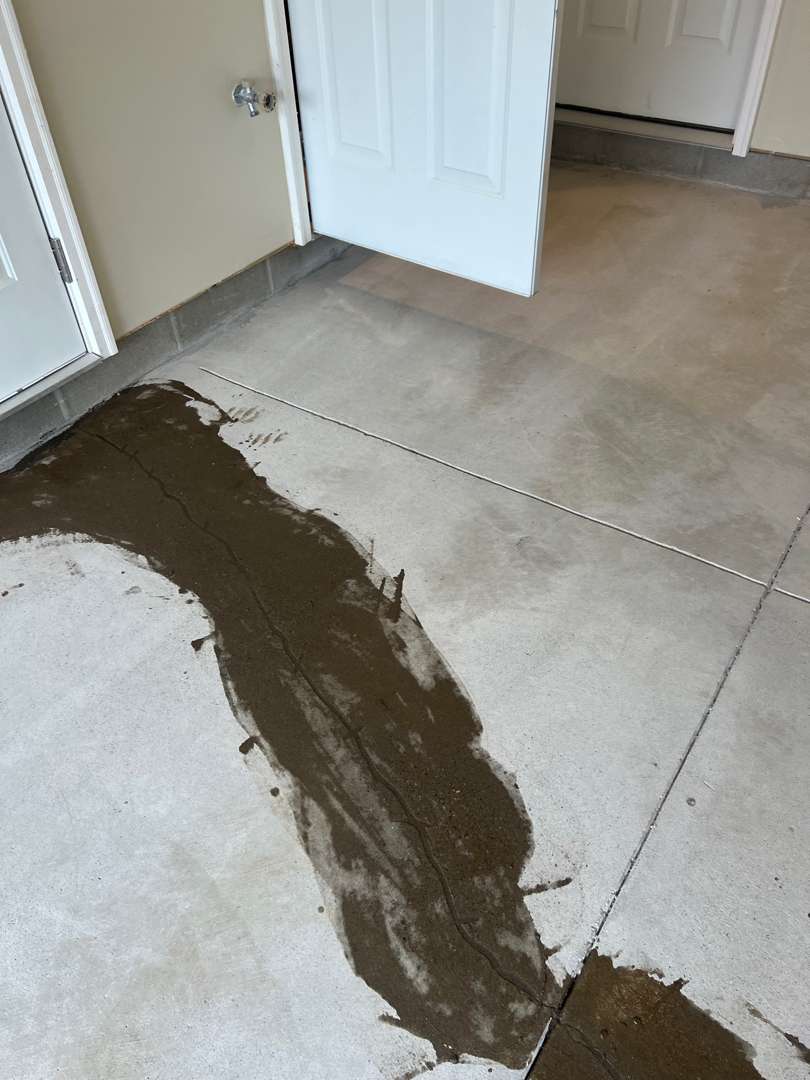
The Starting Point
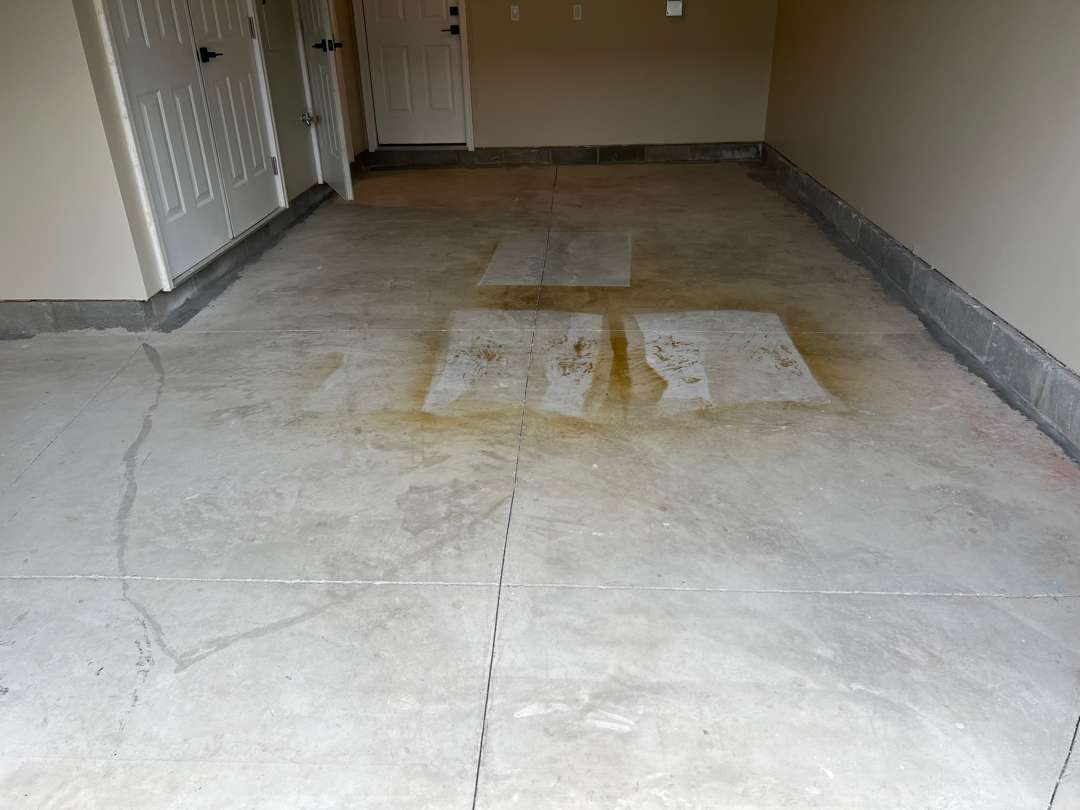
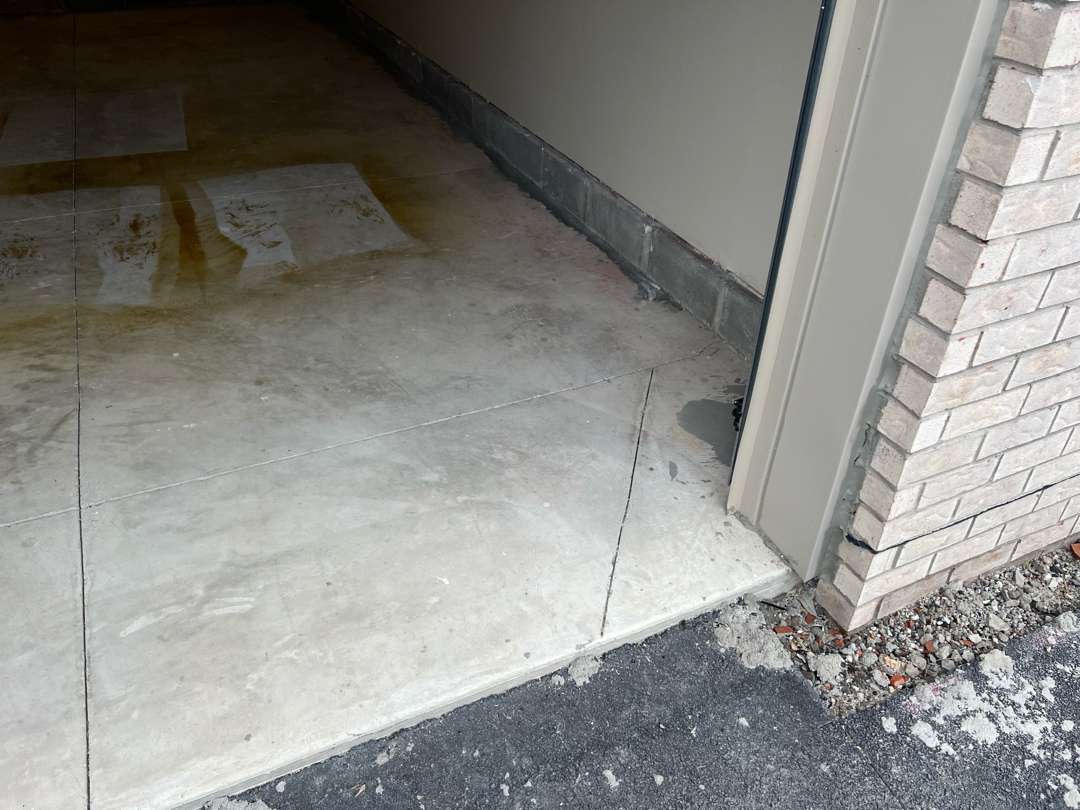
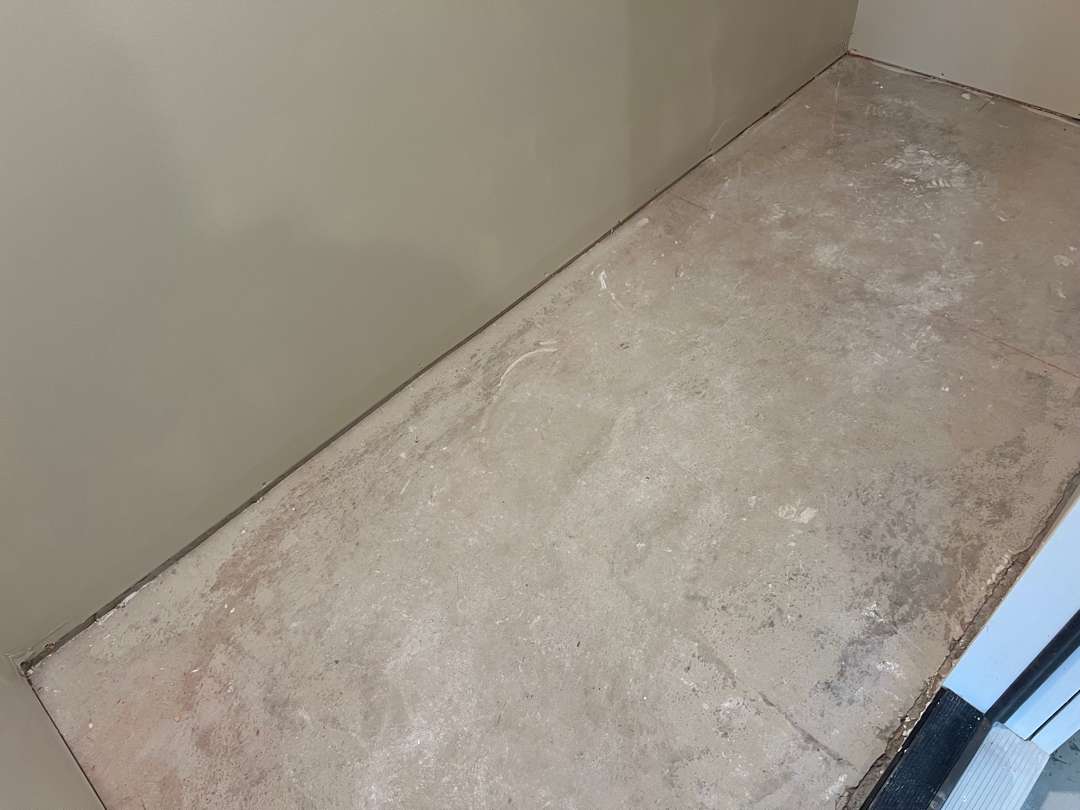
Surface Preparation
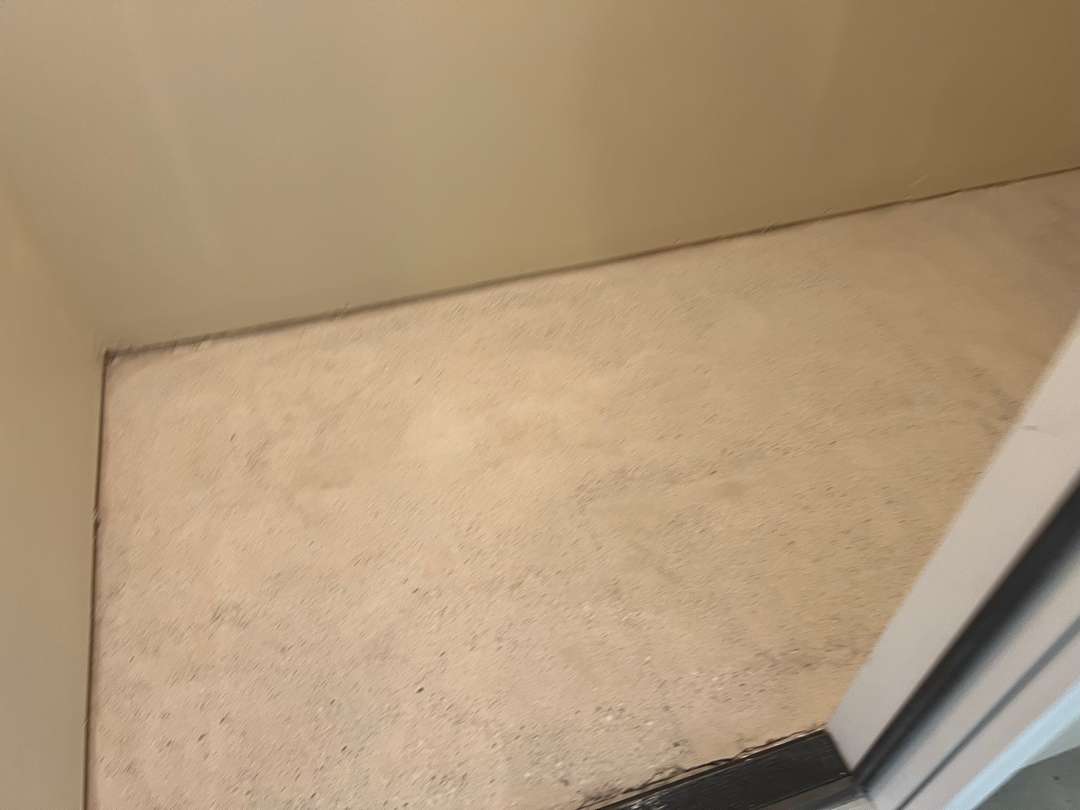
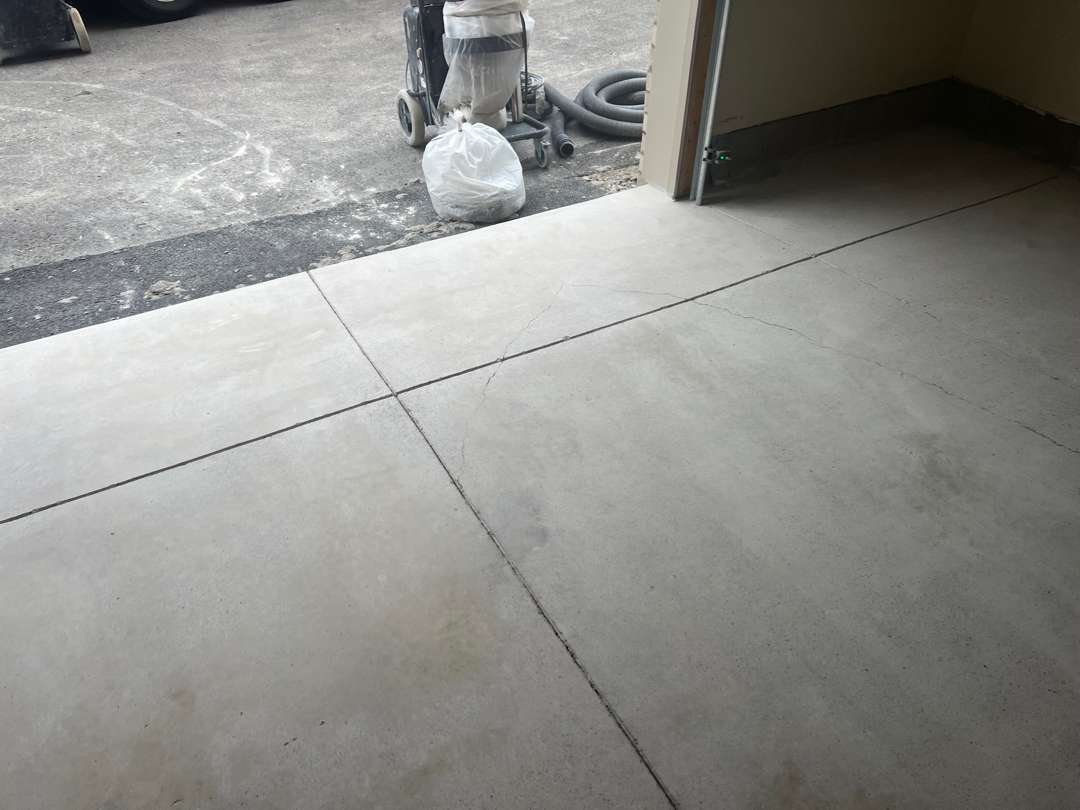
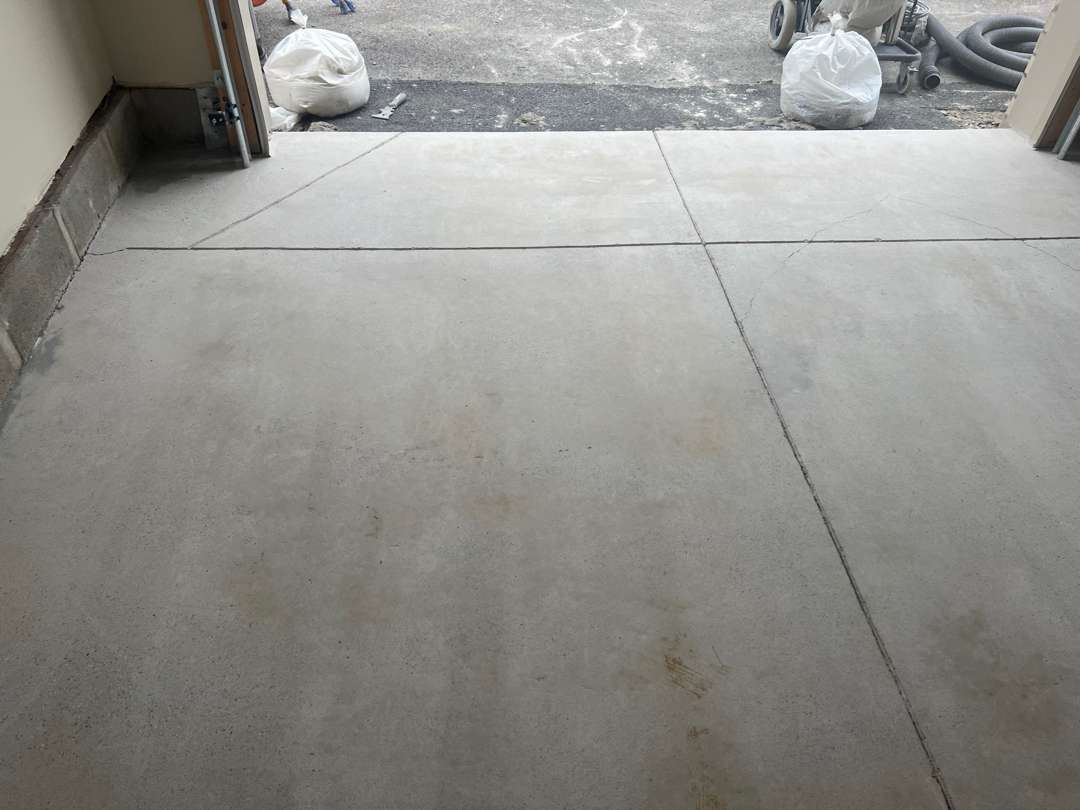
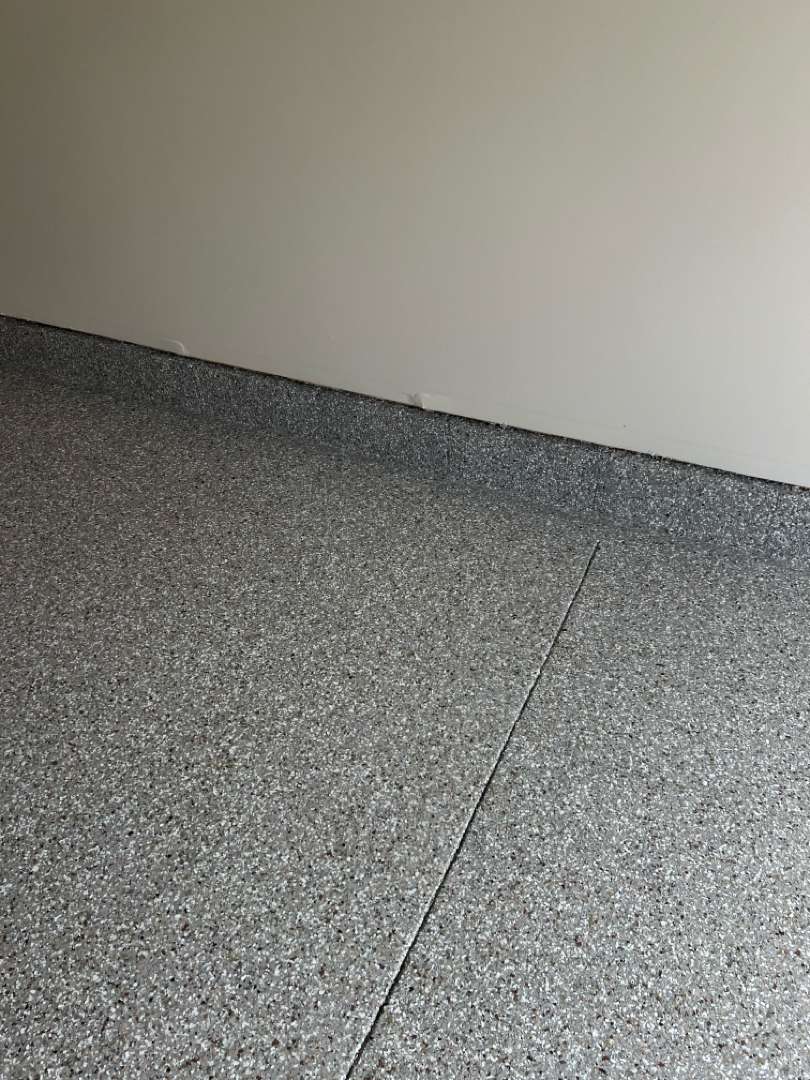
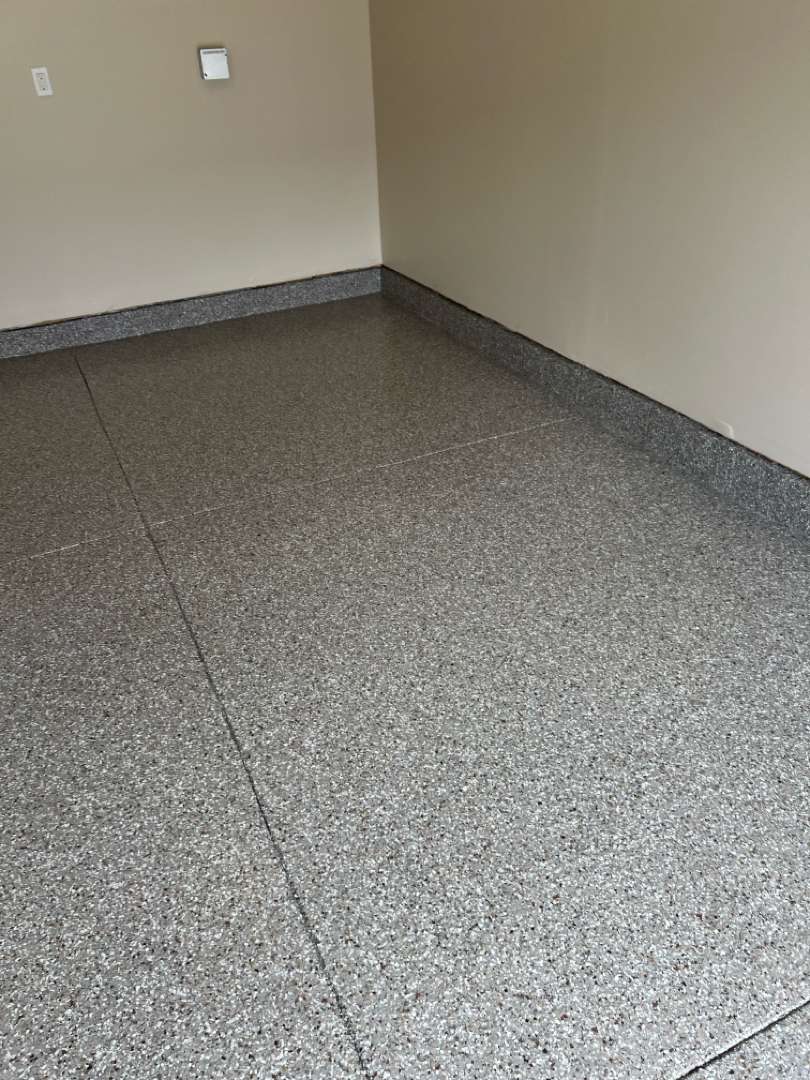
Crack and Pitting Repair
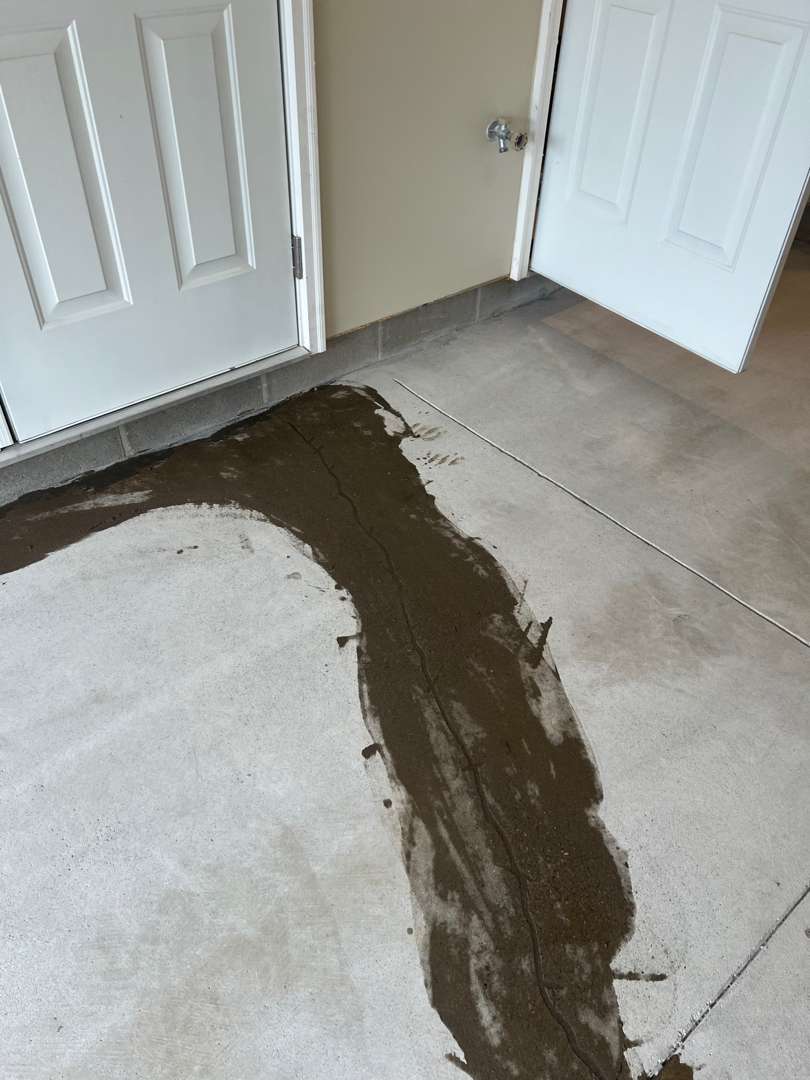
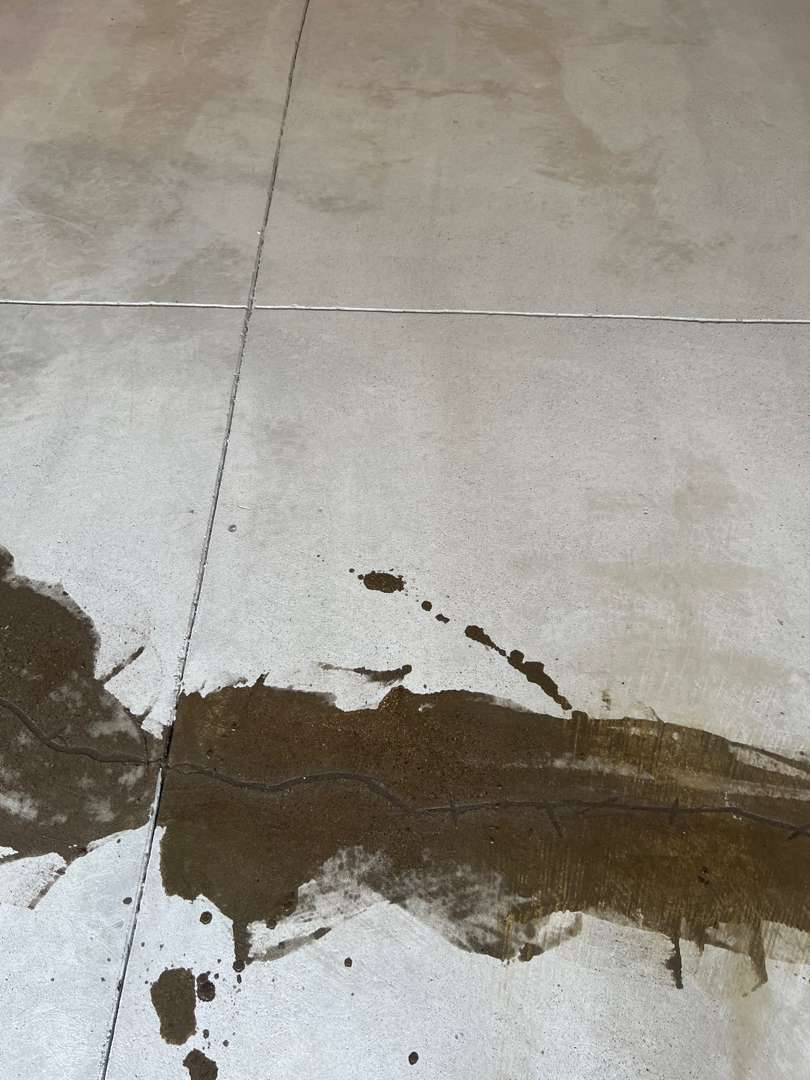
Coating Application
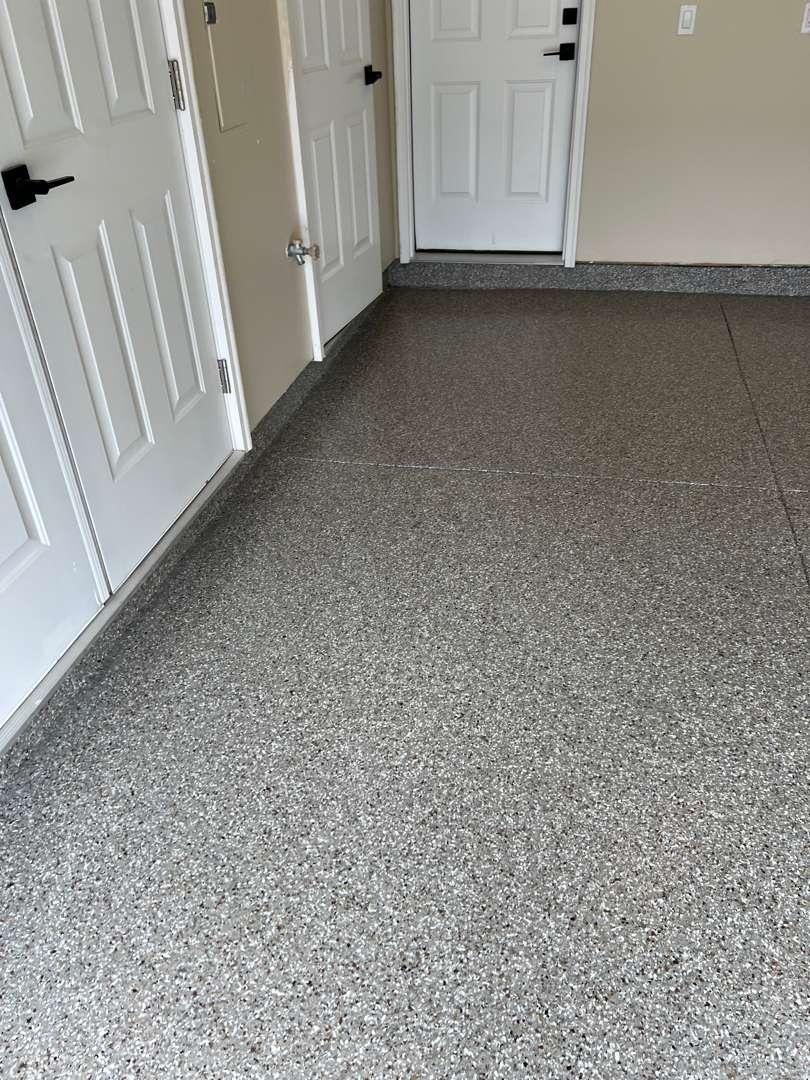
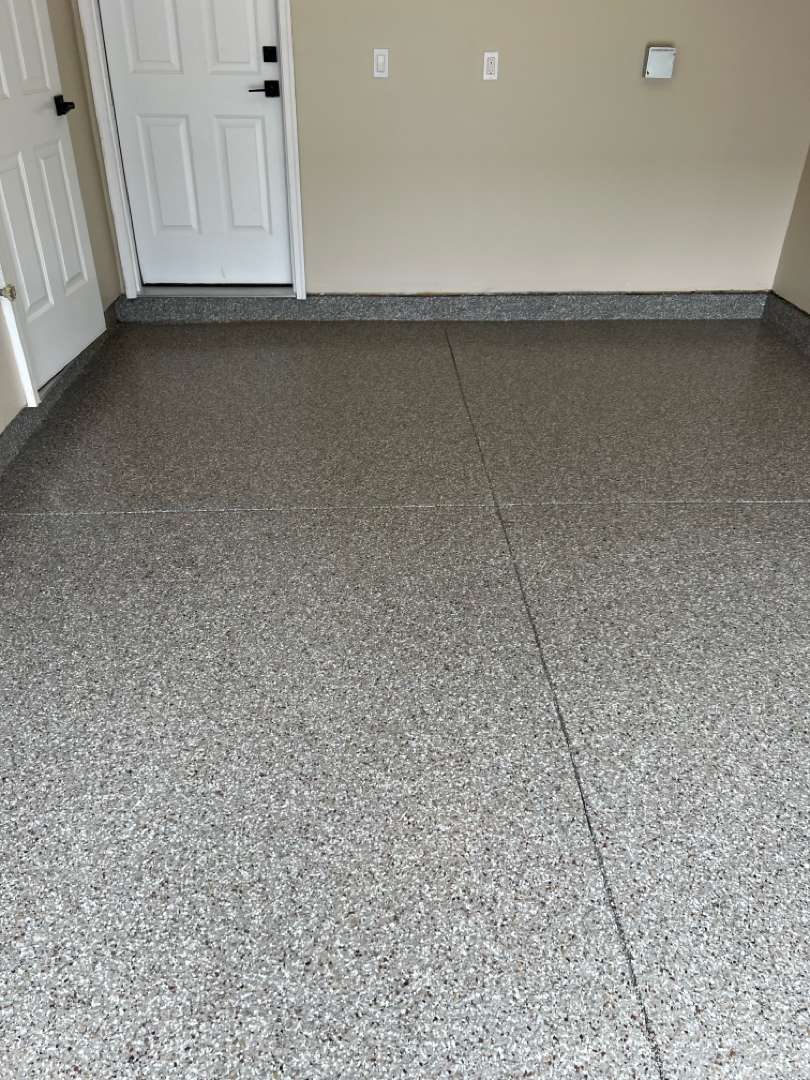
Finished Floor
Testimonials
Cheryl C
Thomas Scott
Garage Floor Coating
on Lincoln Street
Lincoln Street, Detroit, MI
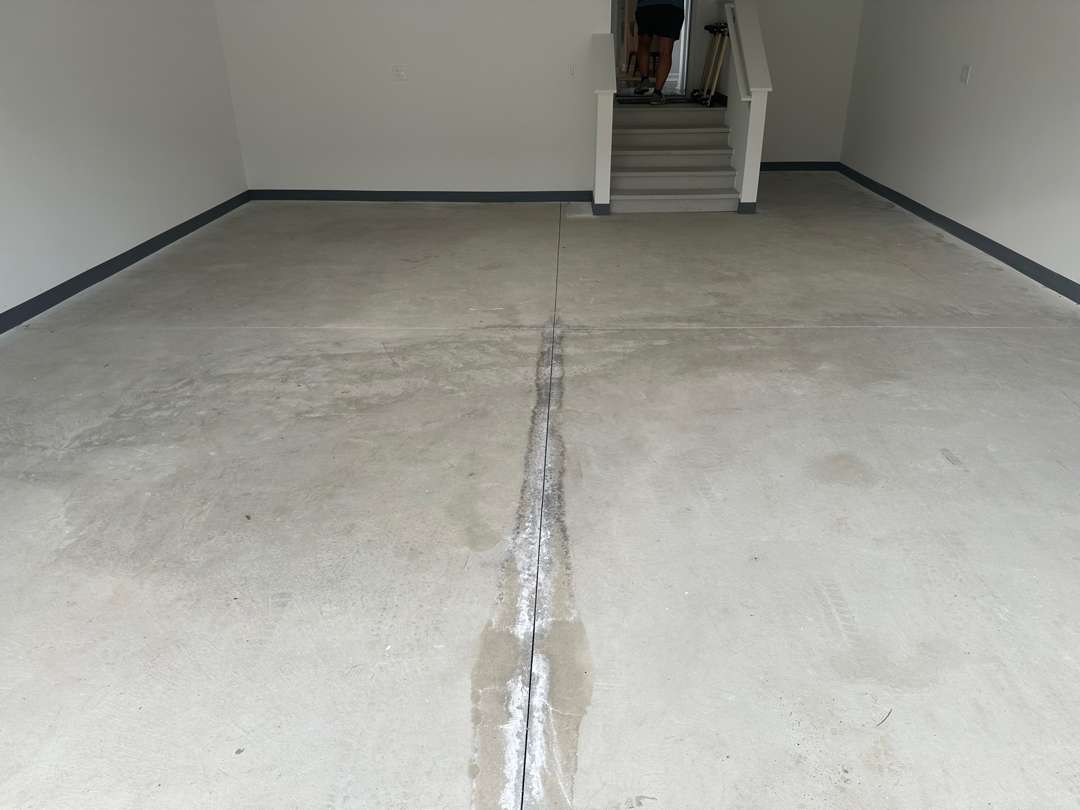
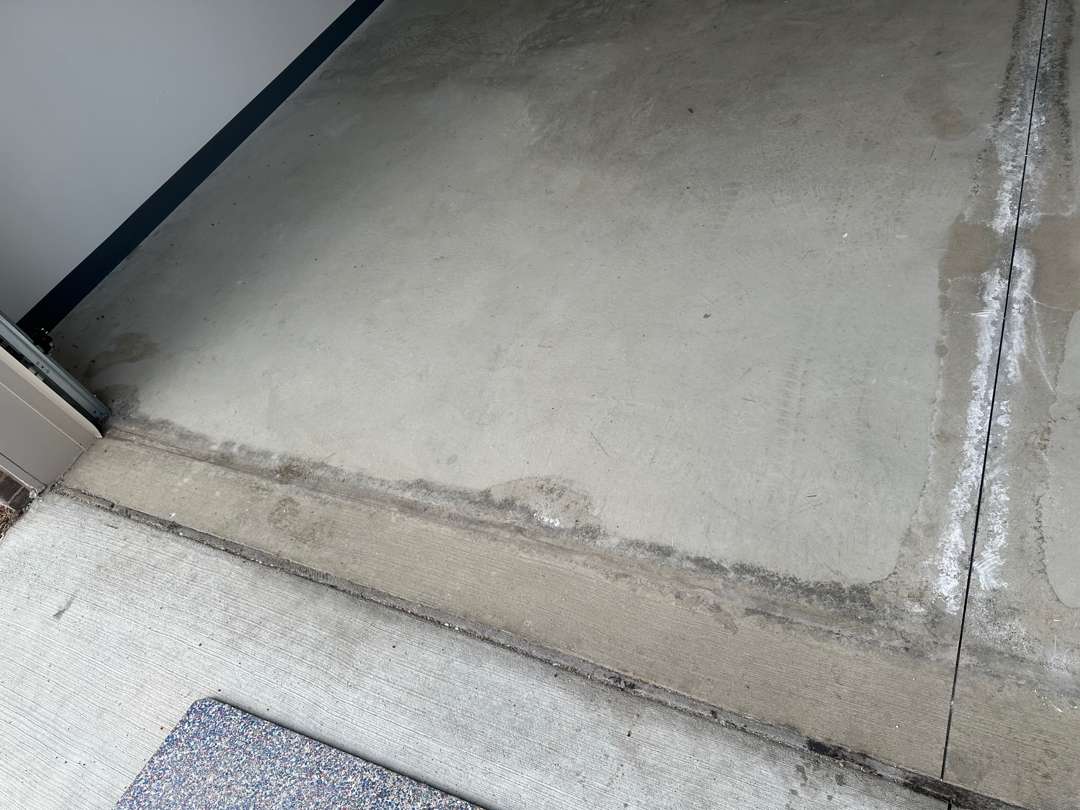
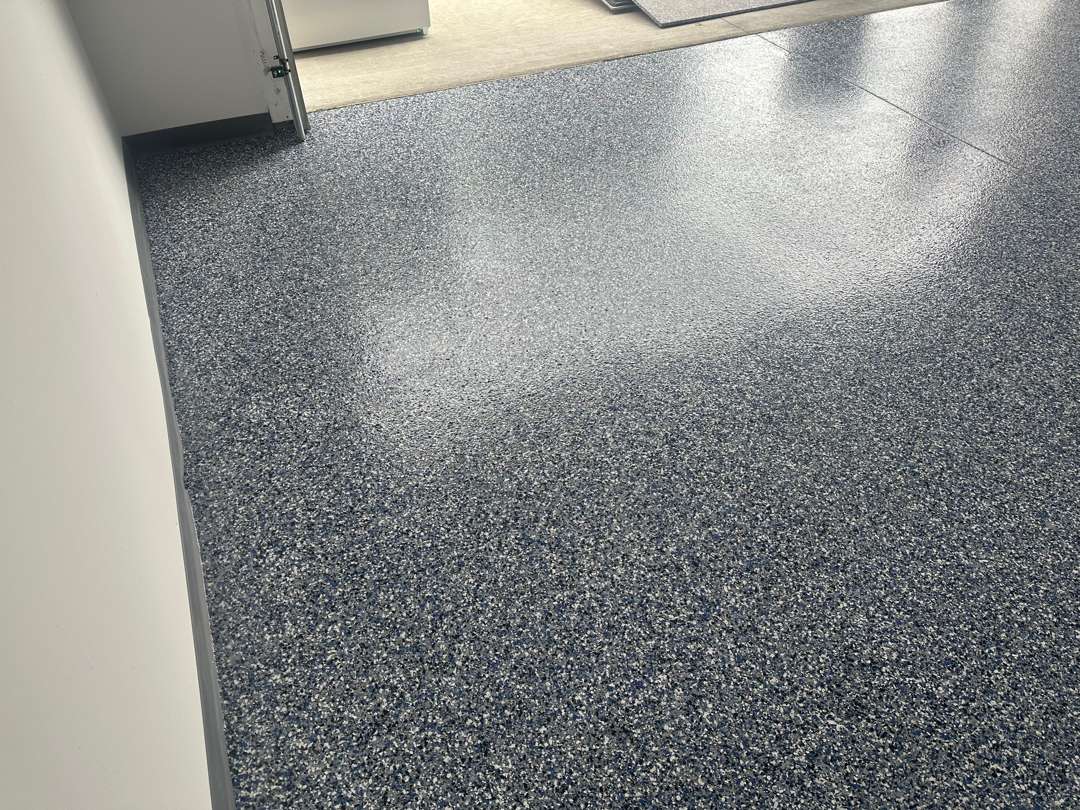
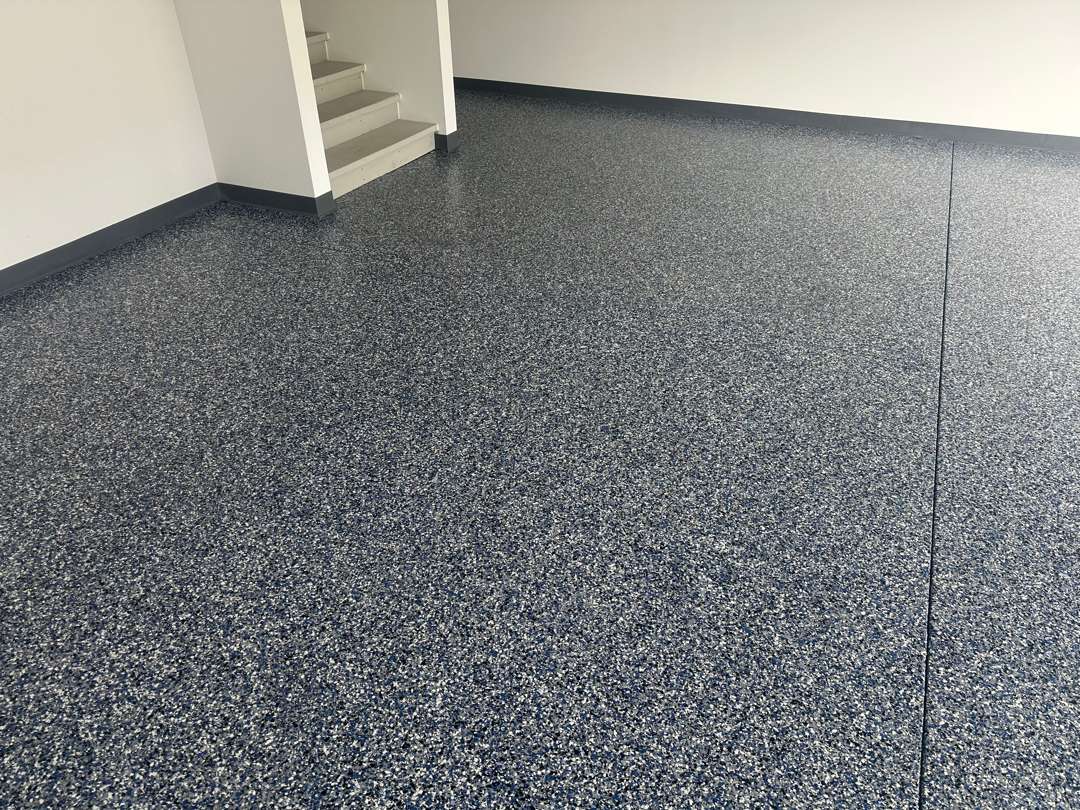
The Starting Point
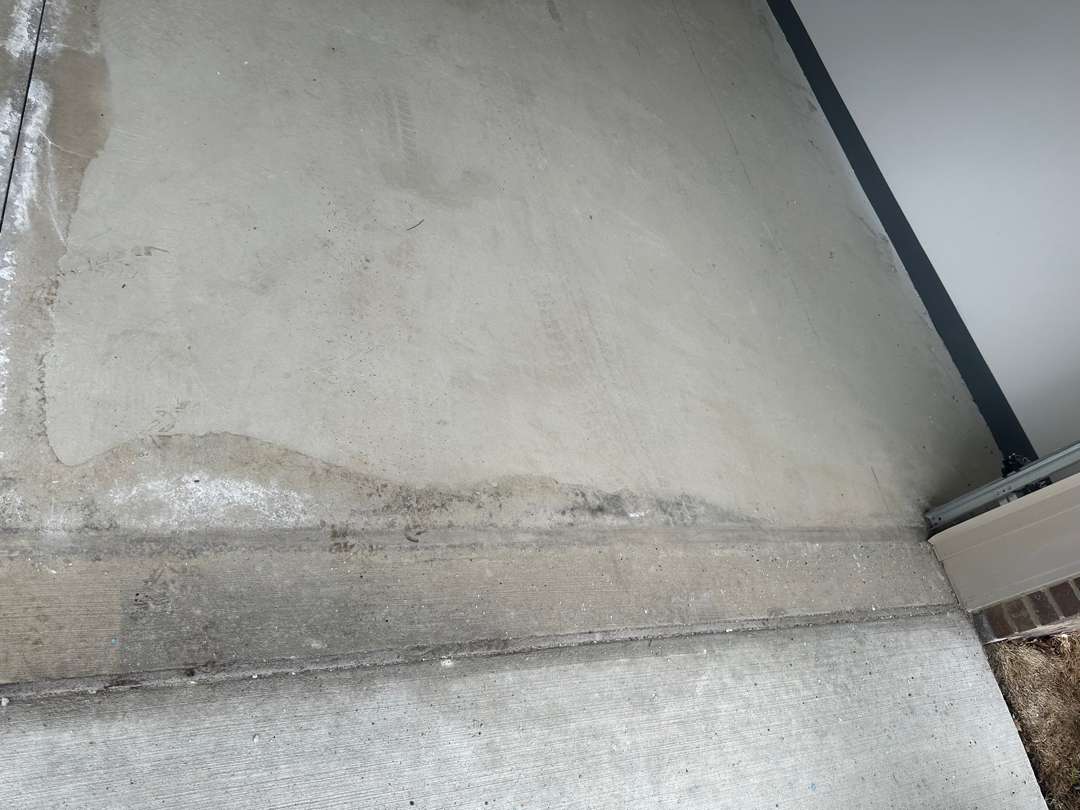
Surface Preparation
Crack Repair
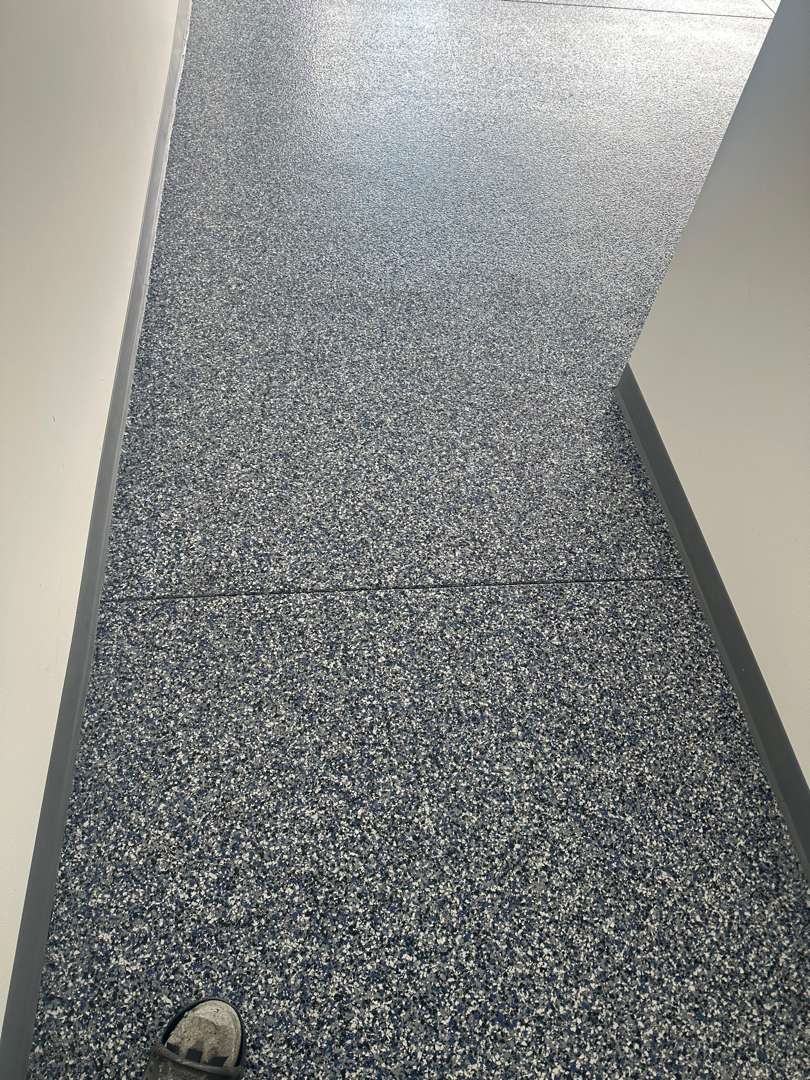
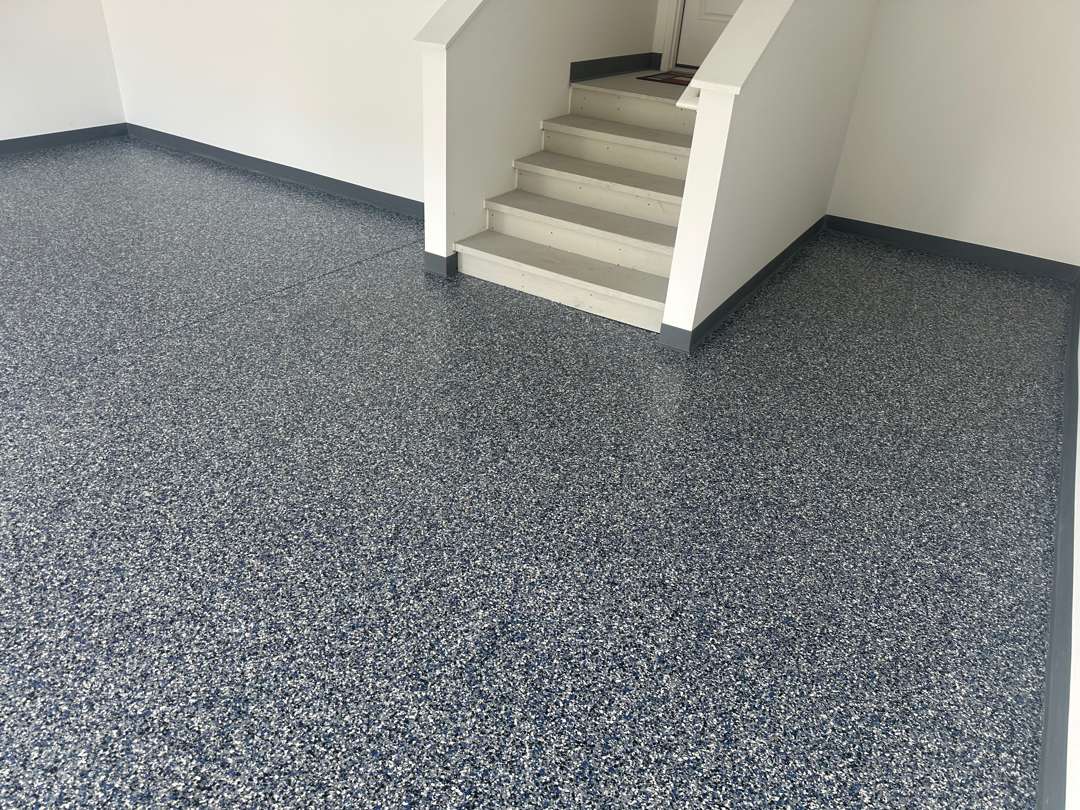
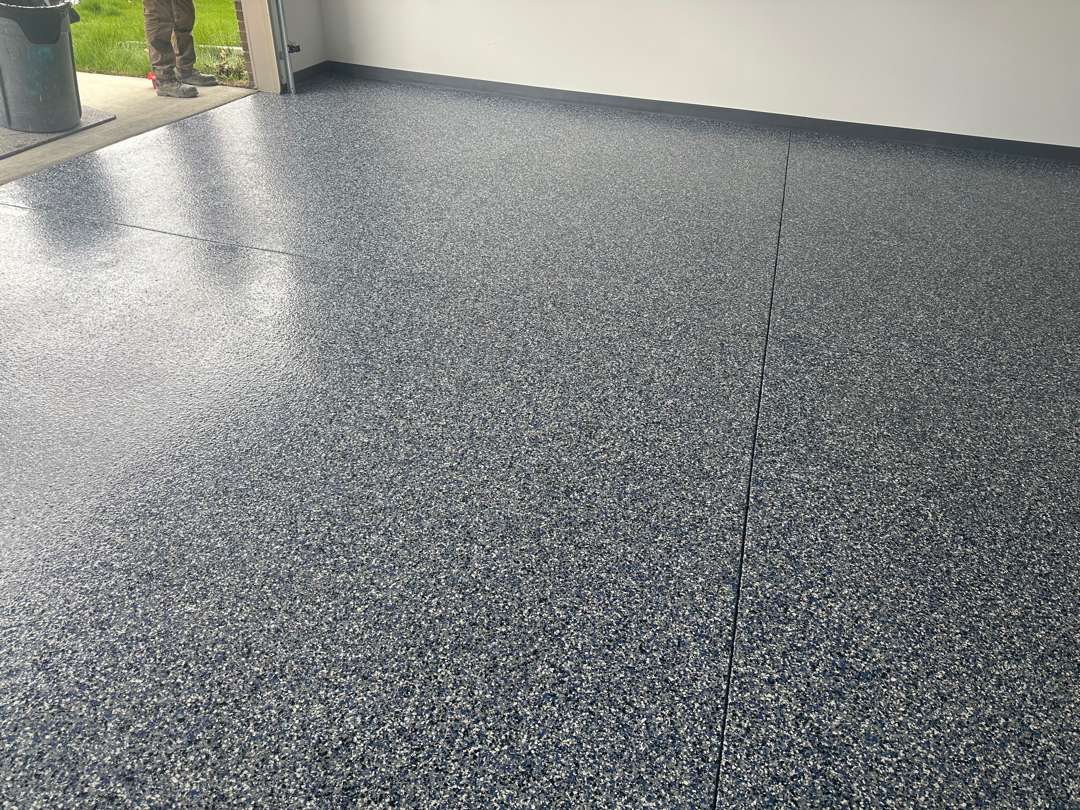
The Coating System
Finished Floor
Testimonials
Dave Bradt
L Mueller
Garage Floor Coating
on Brush Street
Brush Street, Detroit, MI
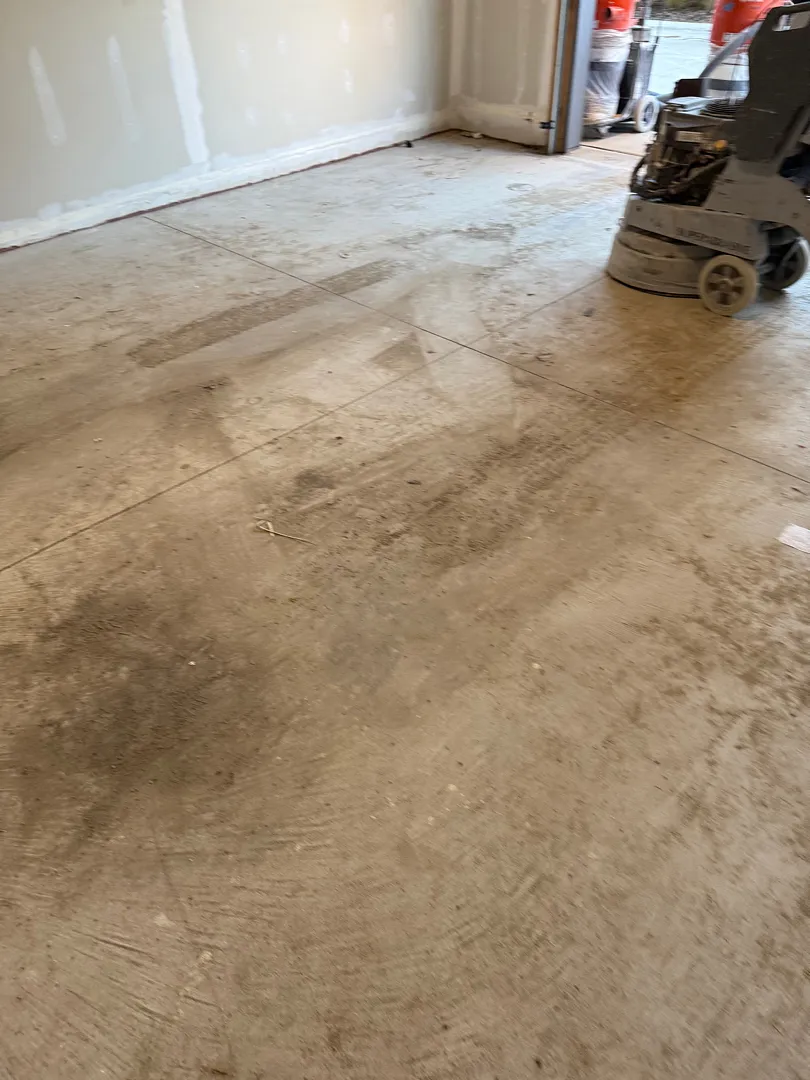
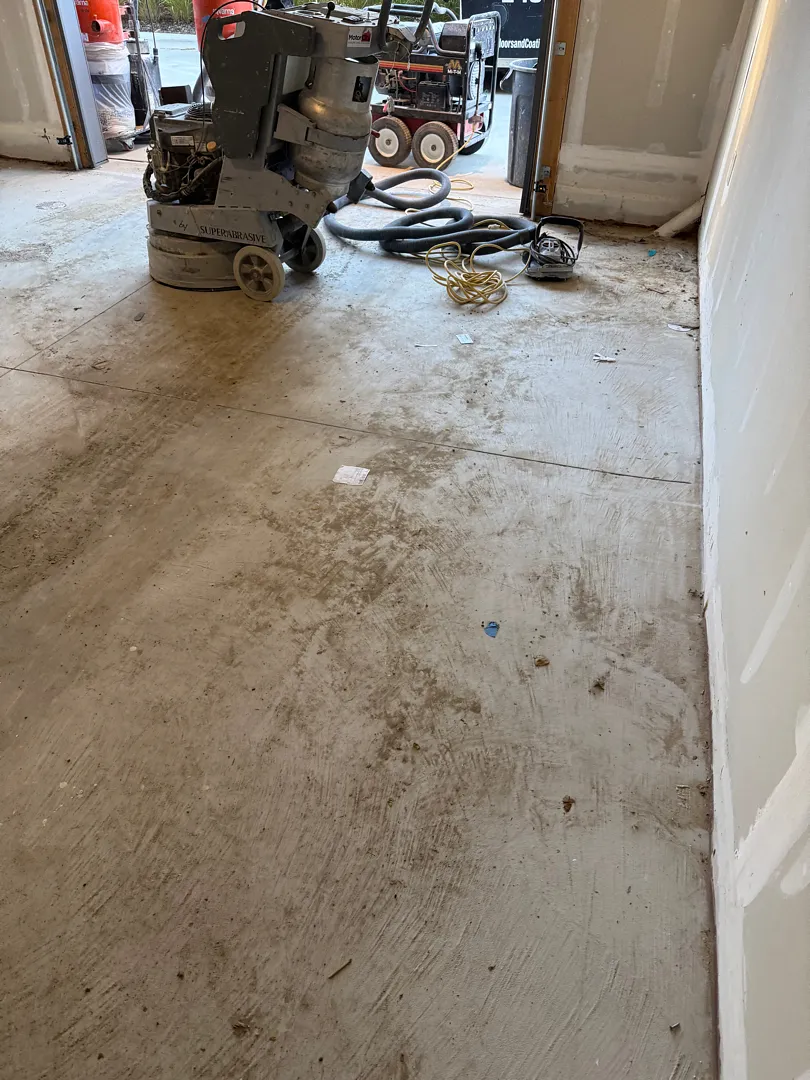
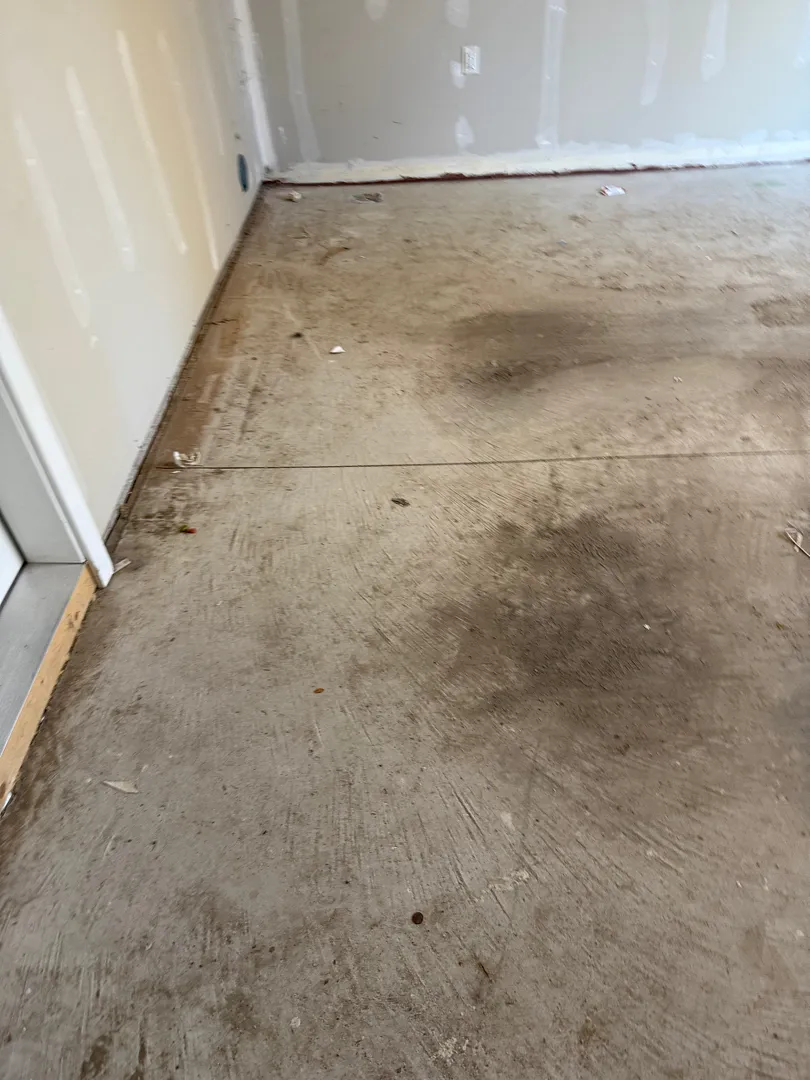
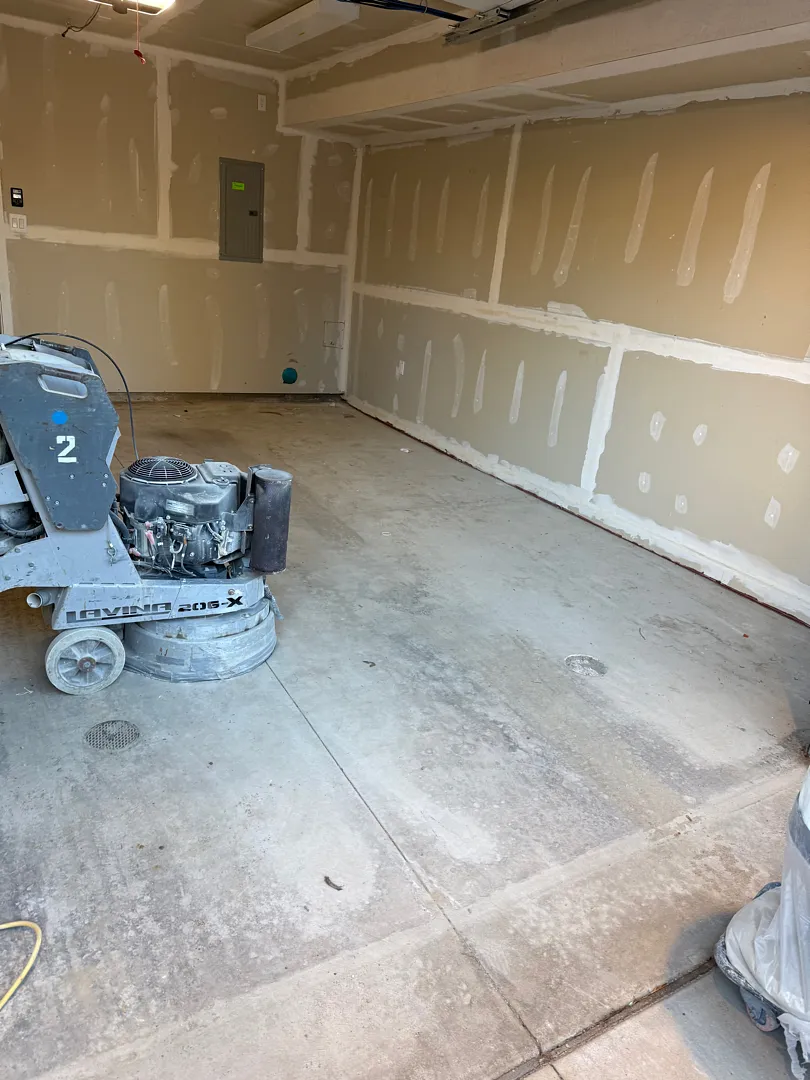
Most garage floors get coated after the space is complete. Brush Street was different. The walls were mid-renovation — drywall installed, taped, mudded, but not yet painted. The floor was going down first. 300 square feet, bare concrete, a floor drain in the slab, no steps, no vertical surfaces in scope. Our clients selected Orbit at H-4 density with 16-grit traction under the MC-3.8 system.
The concrete needed grinding. That was the only prep this slab required.
Grinding a Construction Floor
Bare concrete in an active renovation carries construction debris, surface grime, and contamination from trades working above it. Oil spotting appeared across the center panel — not from vehicles, but from construction activity.
Our crew diamond-ground the full 300 square feet with the Superabrasive and Lavina 206-X grinders across both zones of the space. The grind removed laitance, cleared the oil zones, and opened the concrete surface throughout. Our team worked around the floor drain and vacuumed the slab before any coating went down.
No cracking. No pitting. No repair material needed. The concrete was structurally sound across every panel.
The Floor Drain
by hand during the base coat application. The drain received a clean coat edge and remained fully functional after the system cured.
A drain in a coated floor is not a complication — it is a condition to work around carefully. Our team did.
Orbit on a Construction Site
Our crew applied the MC-3.8 polyurea base coat across the prepared slab. Our team broadcast Orbit flakes at H-4 density into the wet base coat in full coverage across all panels.
Orbit is a dark, cool blend — deep charcoal, navy, and white chips that shift in tone depending on the light source and the angle. Our clients described what they wanted as something that reads like smoke. Orbit delivers that in natural light from the door opening. Under overhead light, the blue undertone in the chips becomes more pronounced.
H-4 density gives the surface consistent coverage without closing it completely. The chip pattern breathes across the panel seams.
Our crew applied the clear polyaspartic top coat with 16-grit traction additive throughout. Our team cut the top coat edge cleanly at the garage door threshold and around the drain collar.
Before the Walls Were Painted
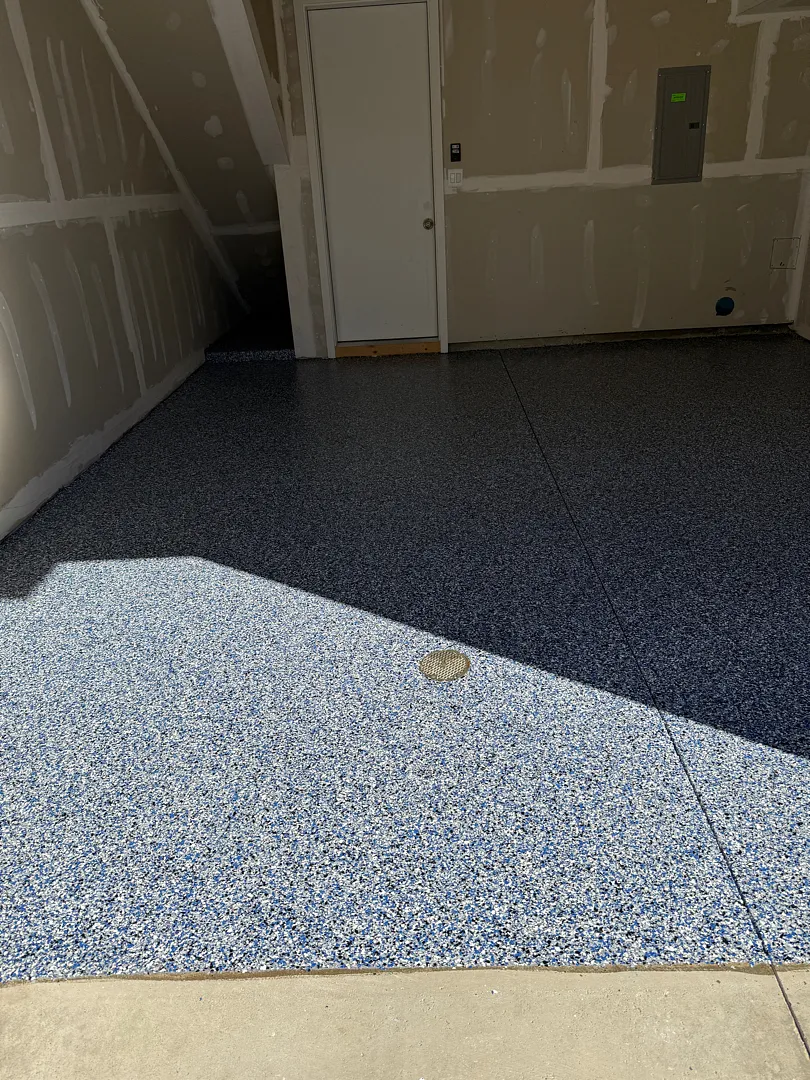
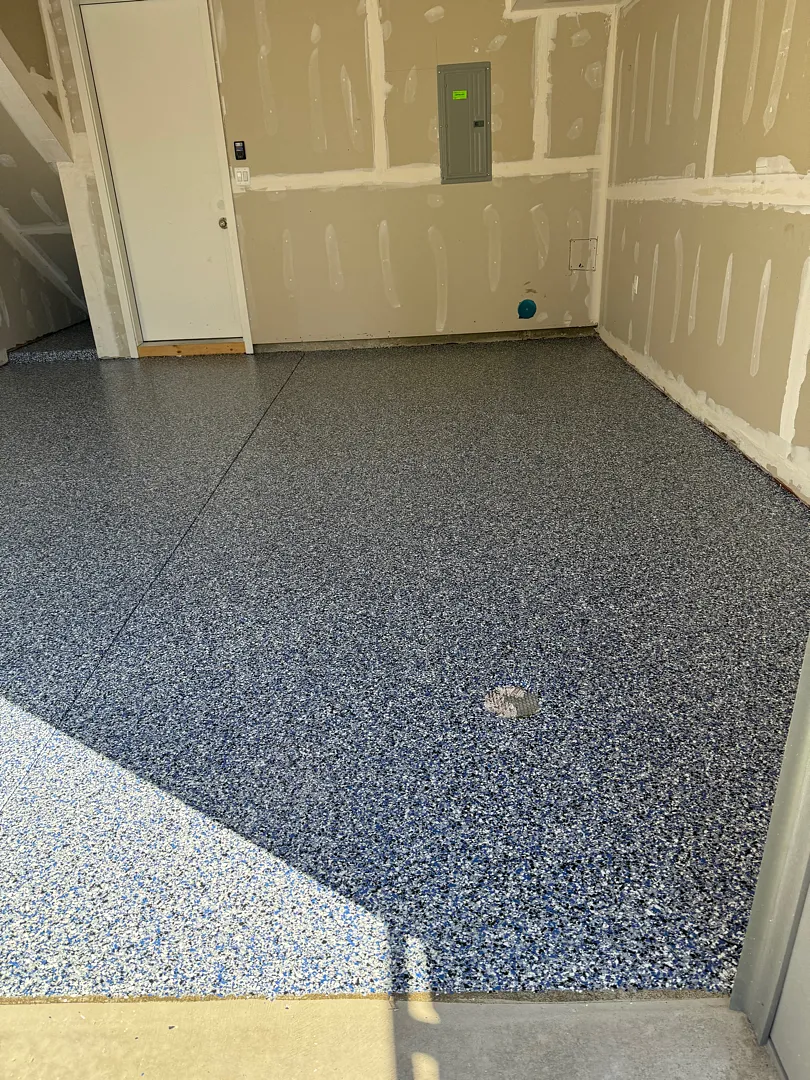
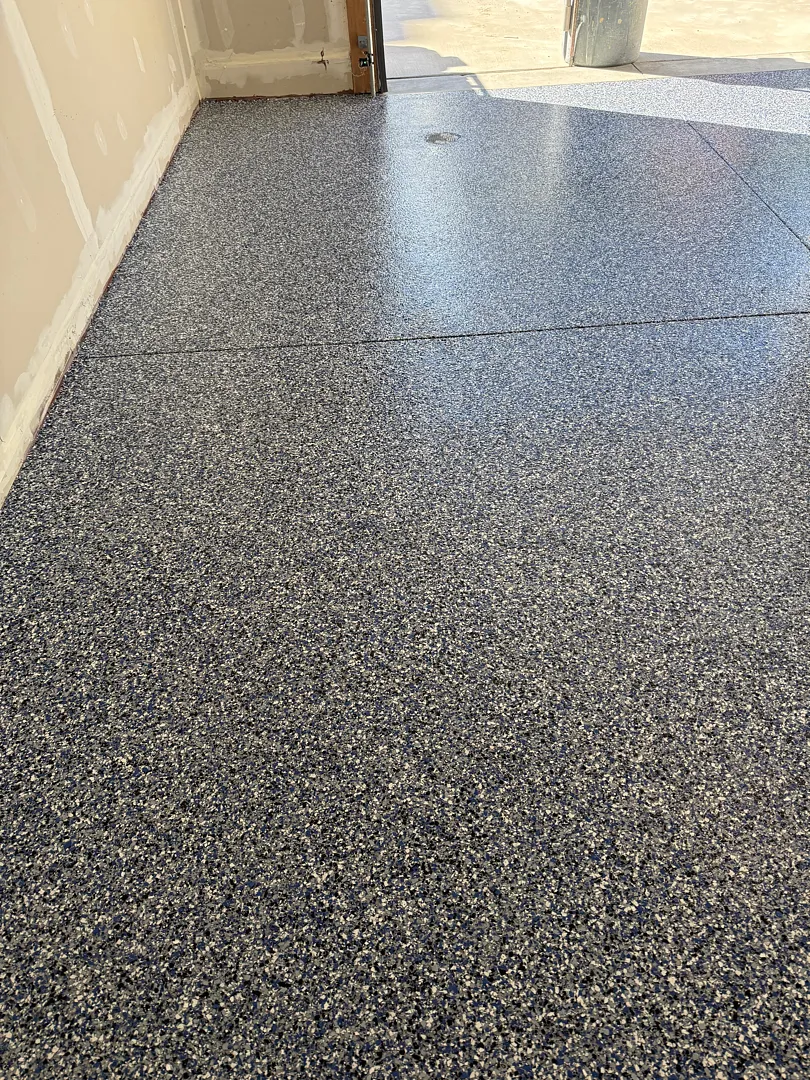
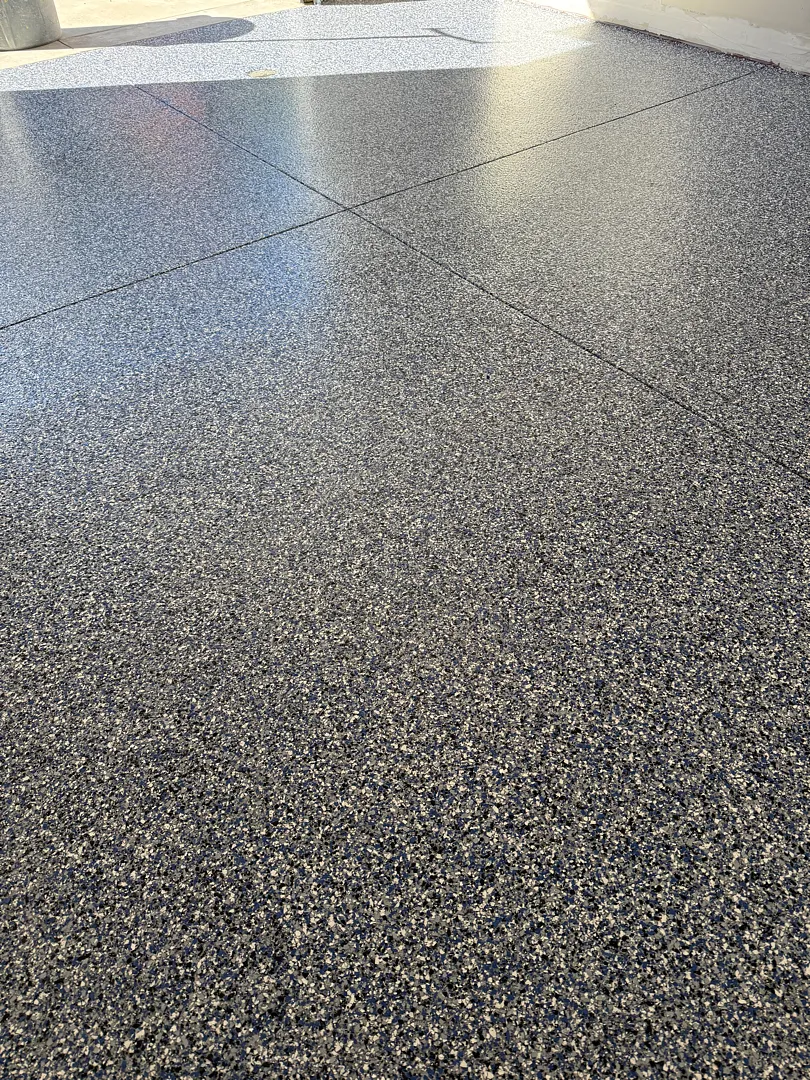
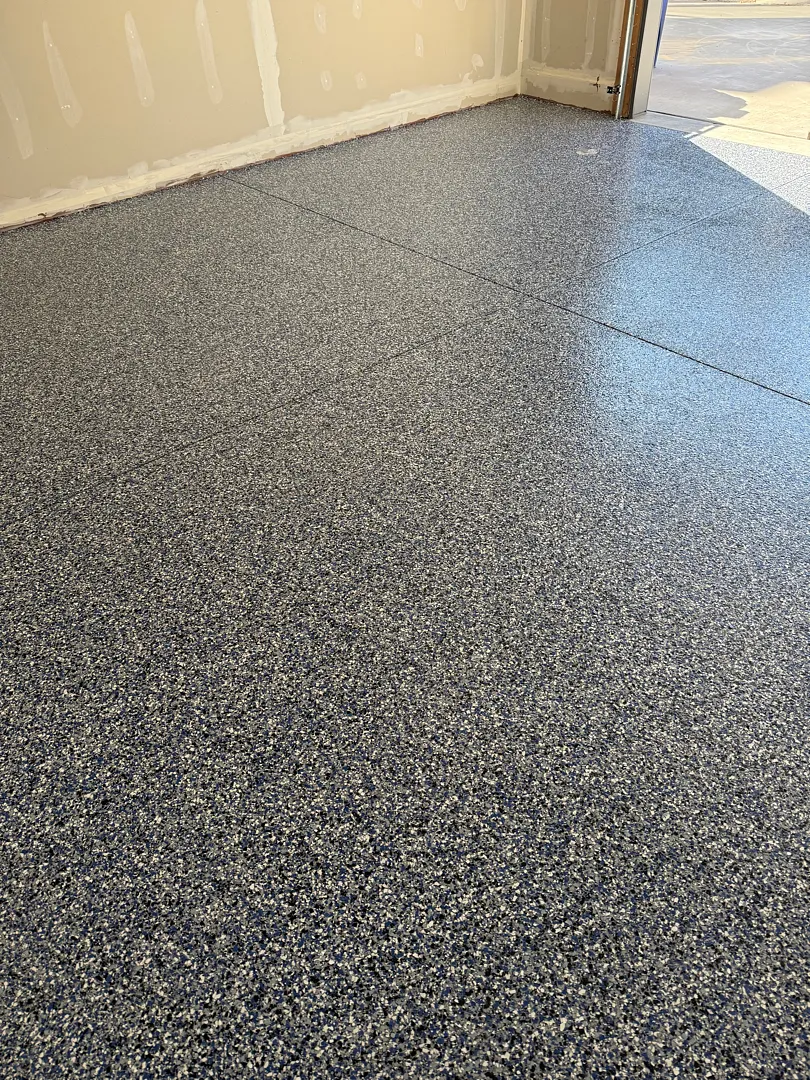
The finished floor sits in a space that is still becoming something. Drywall lines the walls — unprimed, uncoated. The floor is done. When the renovation finishes around it, Orbit will already be there.
300 square feet of MC-3.8 polyurea-polyaspartic, sealed and ready. A construction floor that needed only grinding became a finished surface in a single day.
Testimonials
Dale Butterworth
Nick and the team at Motor City Floors and Coatings were amazing, very easy to communicate with and most of all do an incredible job
Thanks guys
Brittney Ramin
Garage Floor Coating
on Alfred Street
Alfred Street, Detroit, MI
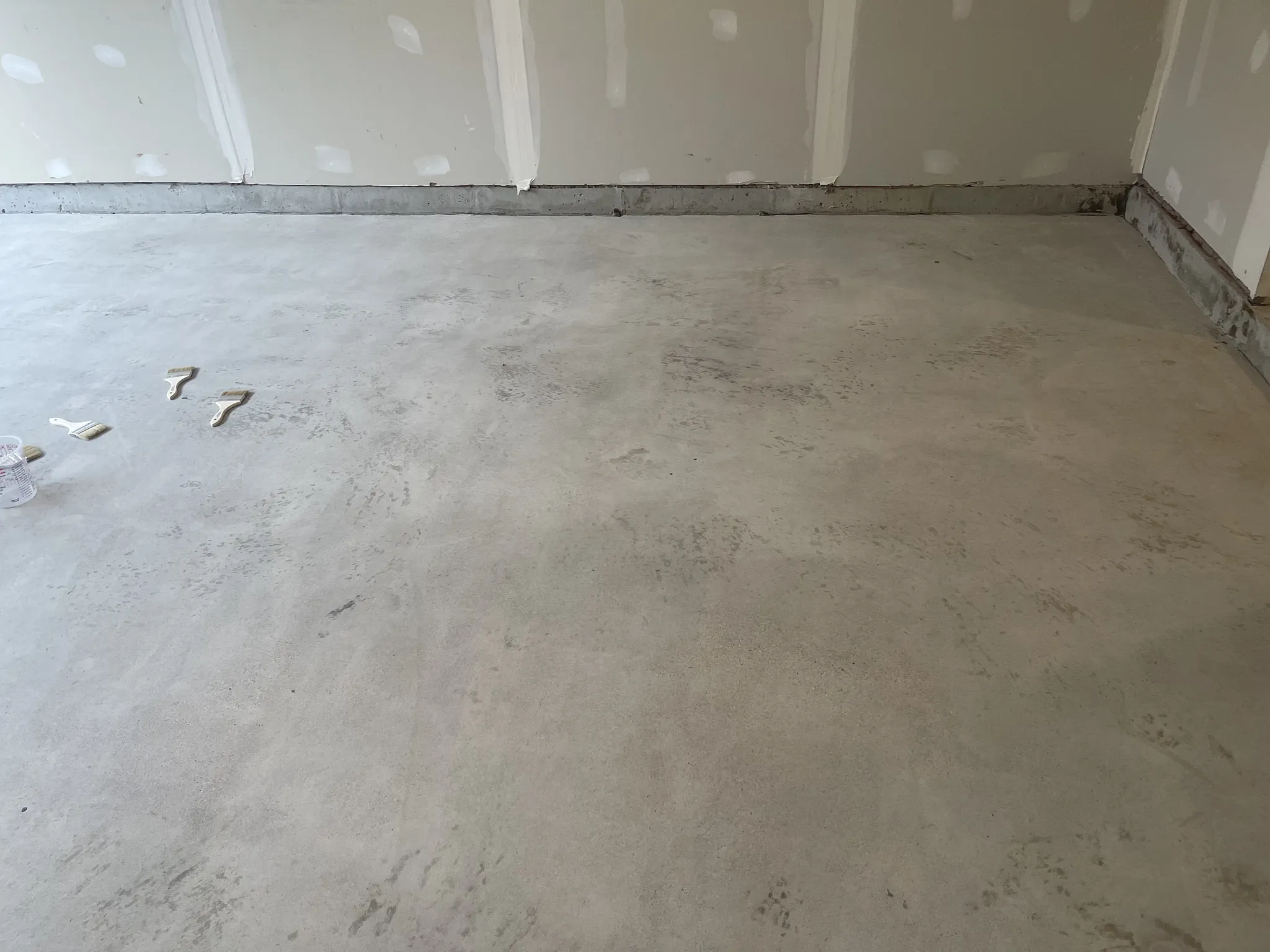
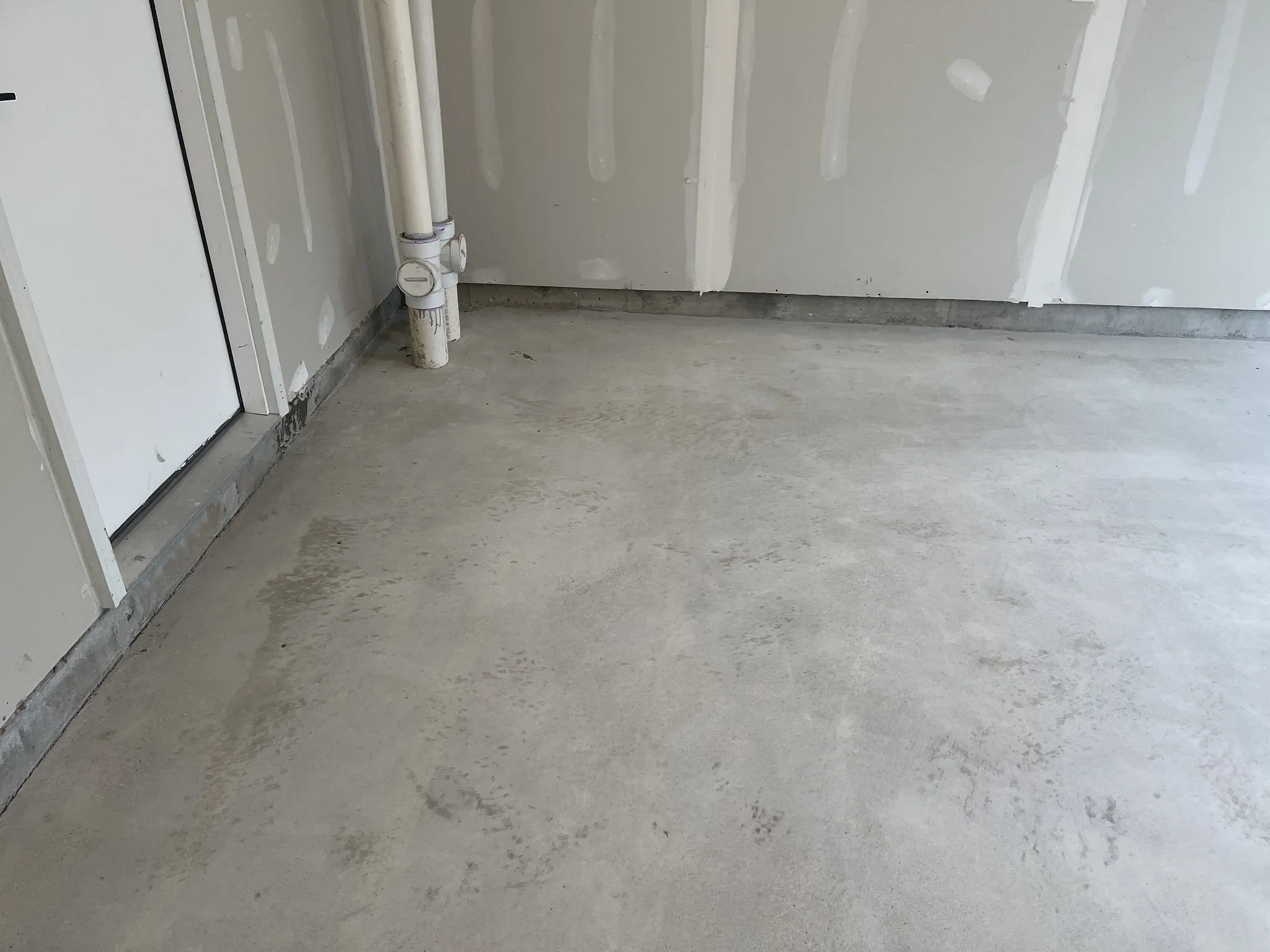
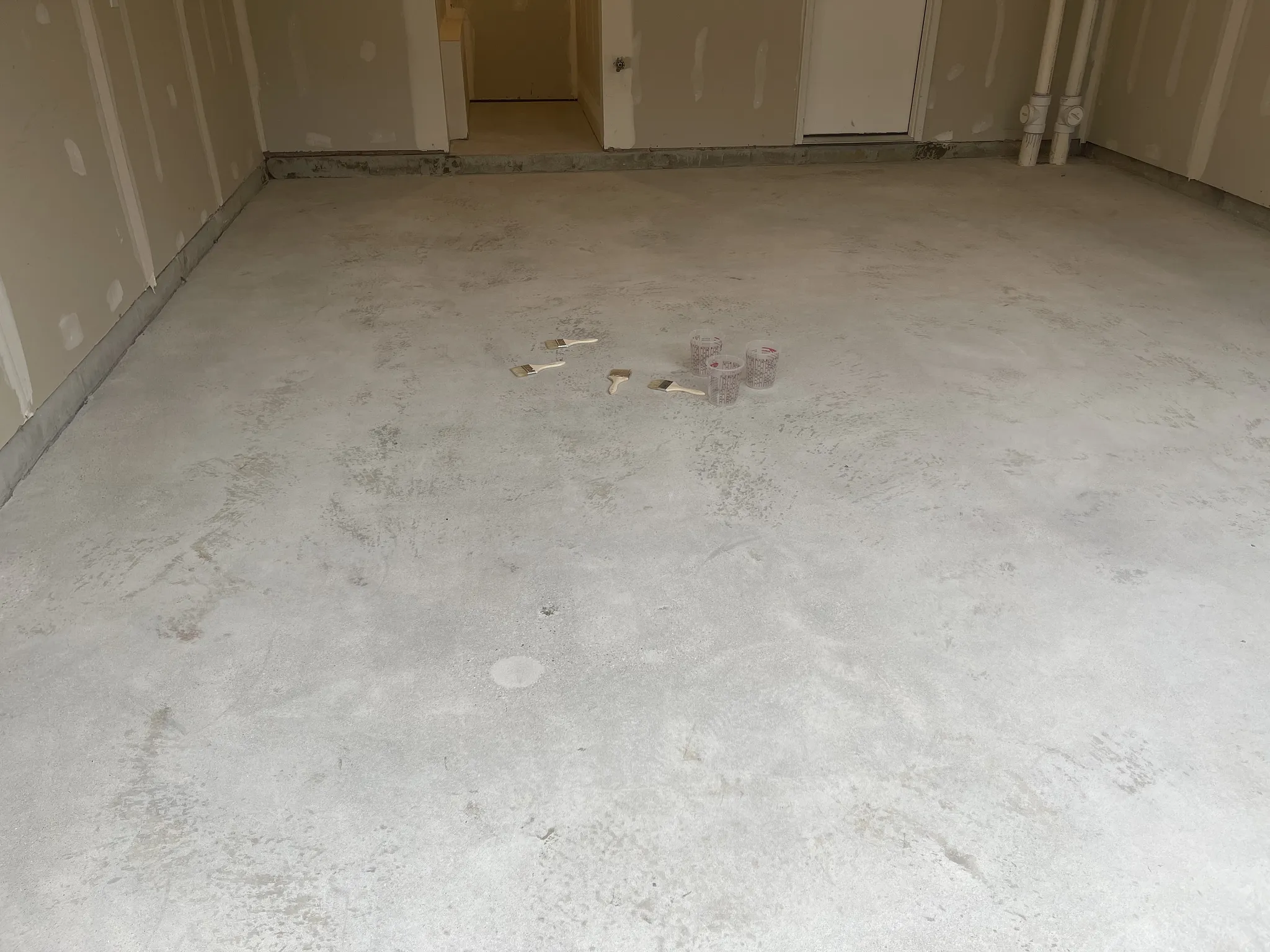
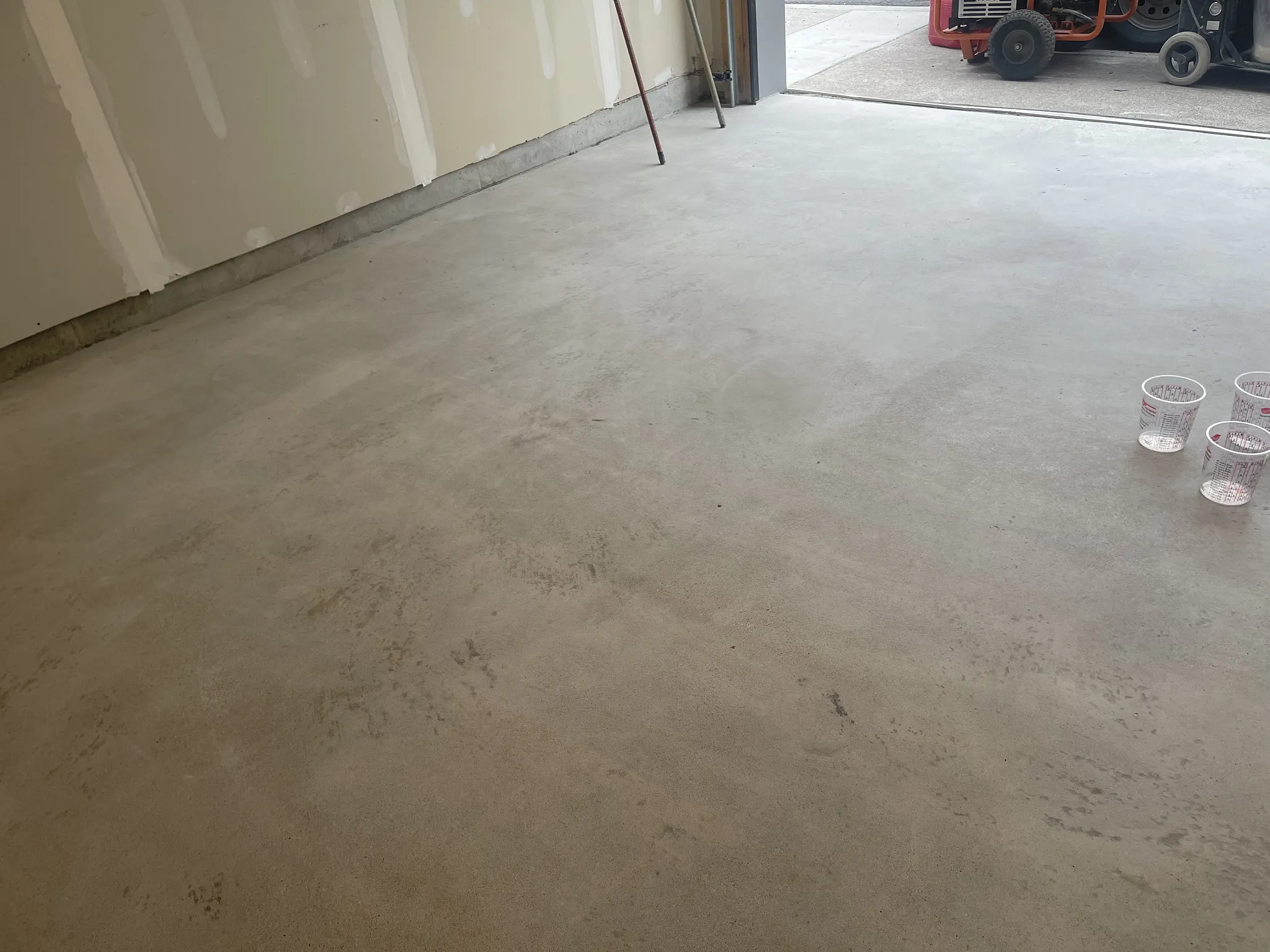
358 square feet of floor. 56 linear feet of wall verticals. That ratio defines this job. For most residential garages the vertical scope is a footnote — a lip, a step riser, a short perimeter wall. At Alfred Street the verticals ran the full perimeter of a garage still mid-construction. Drywall installed throughout, taped and mudded, but not yet painted. Plumbing roughed in at the rear corner. Two doorways opening to the interior at the back wall.
Our clients selected Slatestone under the MC-3.7 system. No steps in scope.
What the Slab Carried
The concrete showed surface contamination from active construction — debris, dust, and construction fluid tracked across the panels. Water and mud had pooled along the rear wall base and at the threshold between the two rear doorways.
One low spot at the threshold required repair before the coating sequence could begin. Our crew troweled cementitious patch material into the void and brought it flush with the surrounding slab. That repair cured before any base coat went down.
Grinding and Threshold Repair
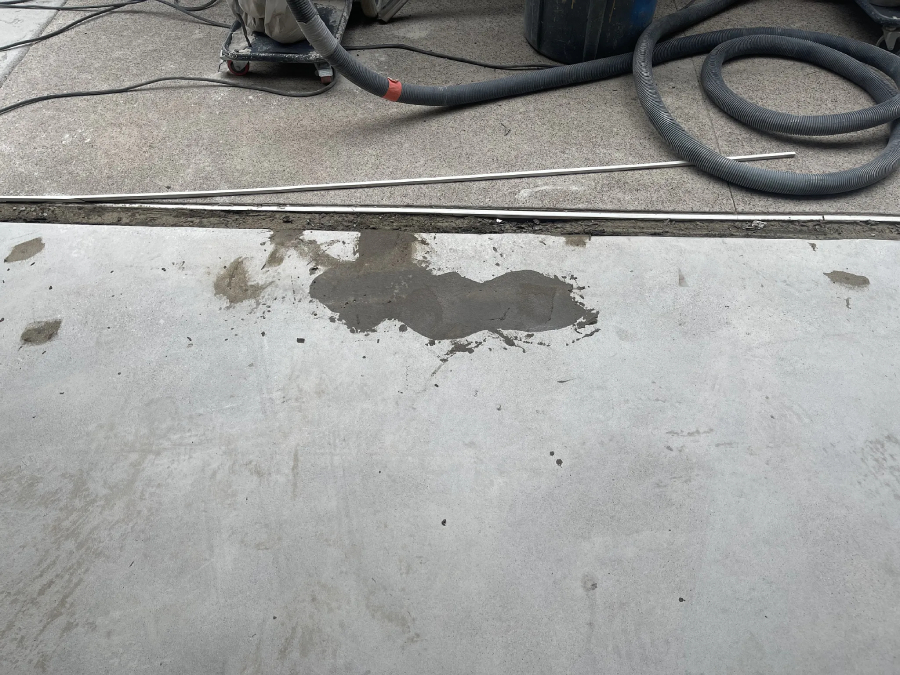
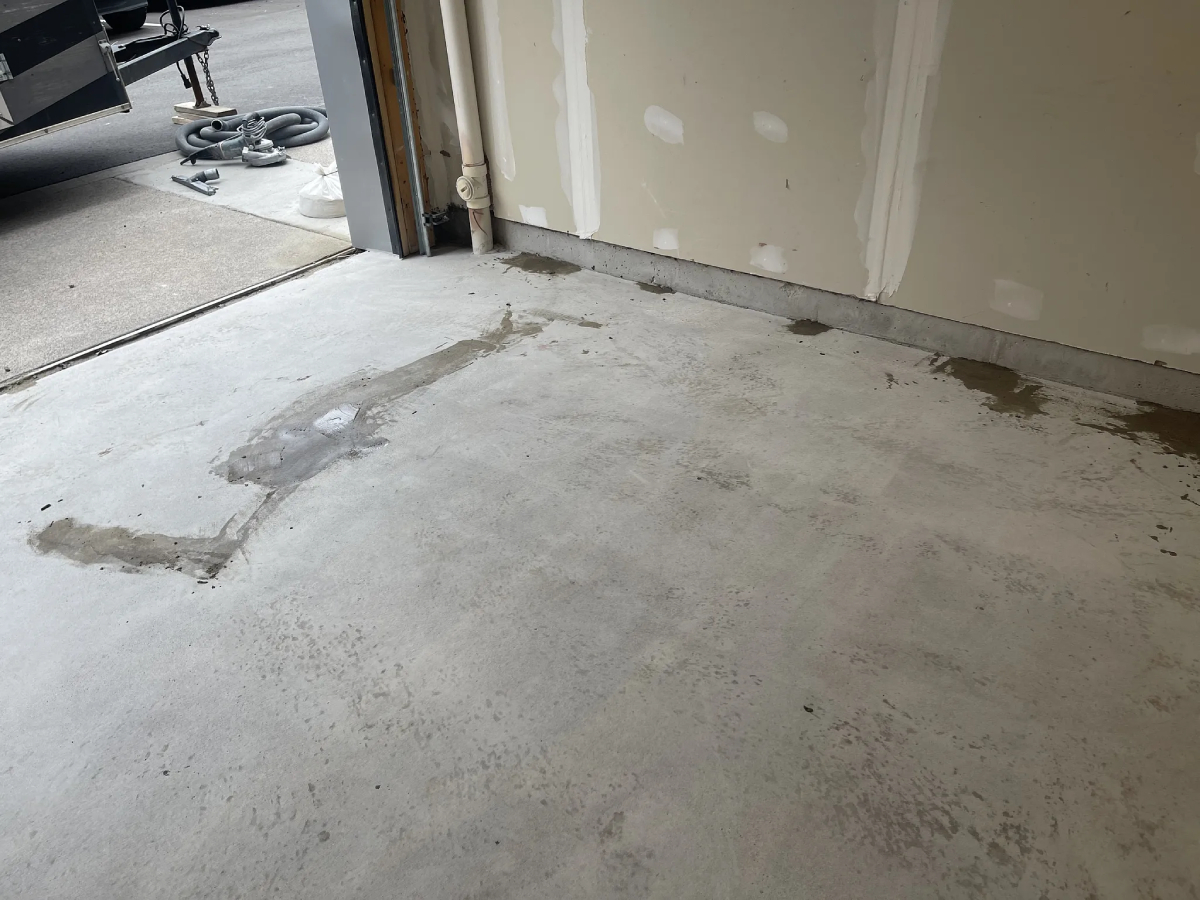
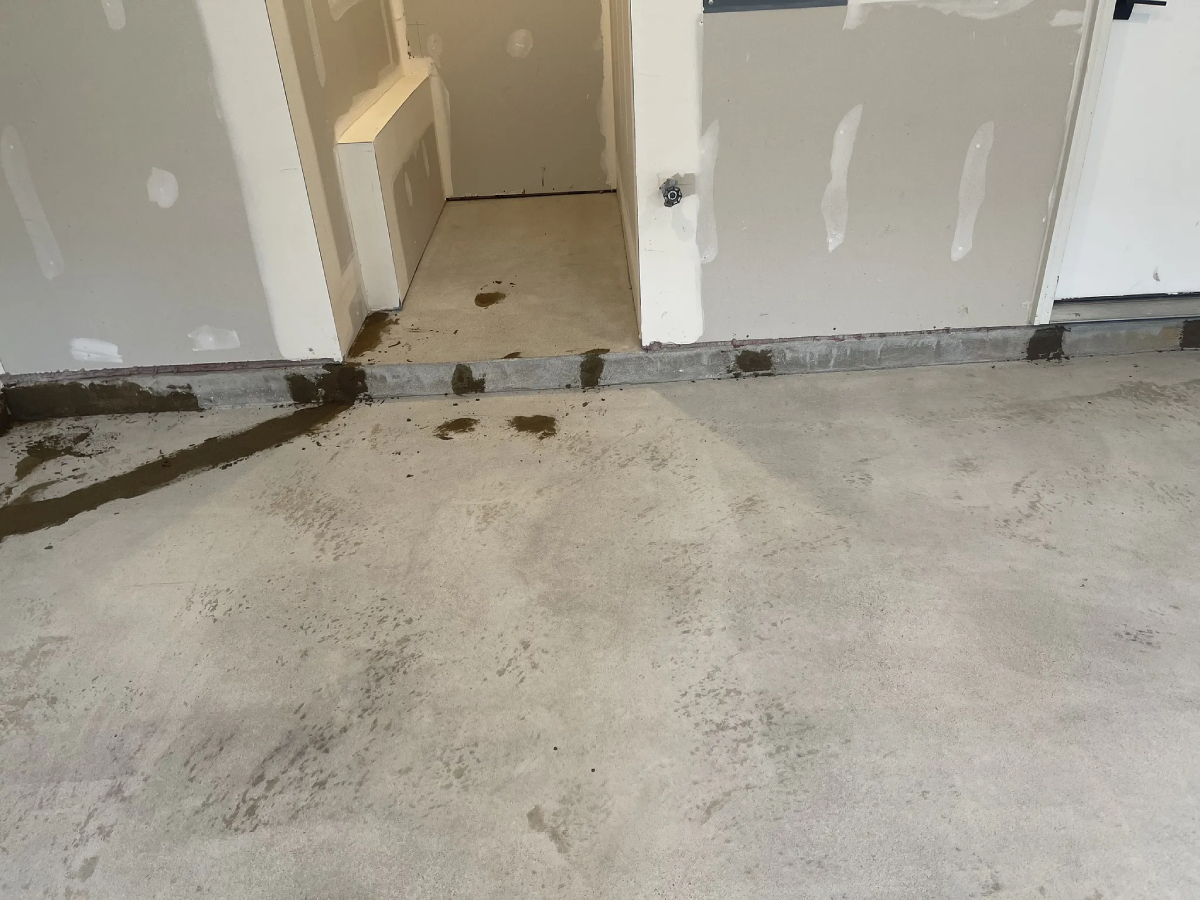
Our crew diamond-ground the full 358 square feet to remove laitance and open the concrete surface. The grind cleared the construction contamination across all panels and prepared the surface for adhesion.
Our team addressed the threshold void with patch material before the grind was complete. The repair was troweled flush and allowed to cure. Our crew confirmed the surface was flat and clean throughout before any coating material went down.
56 Linear Feet of Verticals
The wall verticals at Alfred Street required more time than the floor. 56 linear feet is a full perimeter run — every wall surface received the same MC-3.7 base coat and Slatestone broadcast as the floor below it.
Our crew hand-ground each vertical surface before coating. The grind opened the drywall-adjacent concrete for mechanical adhesion along the base. Our team cut in the base coat at the wall-floor junction by hand and rolled the vertical field in overlapping passes.
The plumbing pipe in the rear corner required careful cut-in work around the stack base. Our crew worked the coating edge cleanly around the pipe without leaving gaps.
Slatestone on an Unfinished Interior
Our crew applied the MC-3.7 polyurea base coat across the 358-square-foot slab and up the 56 linear feet of vertical surfaces. Our team broadcast Slatestone flakes into the wet base coat in full coverage throughout.
Slatestone is a cool mid-grey blend with charcoal and white chips that reads consistently under both artificial and natural light. Against unpainted drywall — the only wall finish present at the time of installation — the colour holds its character without competing with the surrounding material.
When the walls are eventually painted, Slatestone will still read correctly. The floor was designed for the finished space, not just the construction phase.
Our crew applied the clear polyaspartic top coat across the full horizontal field and the full vertical run.
Floor and Walls, Done
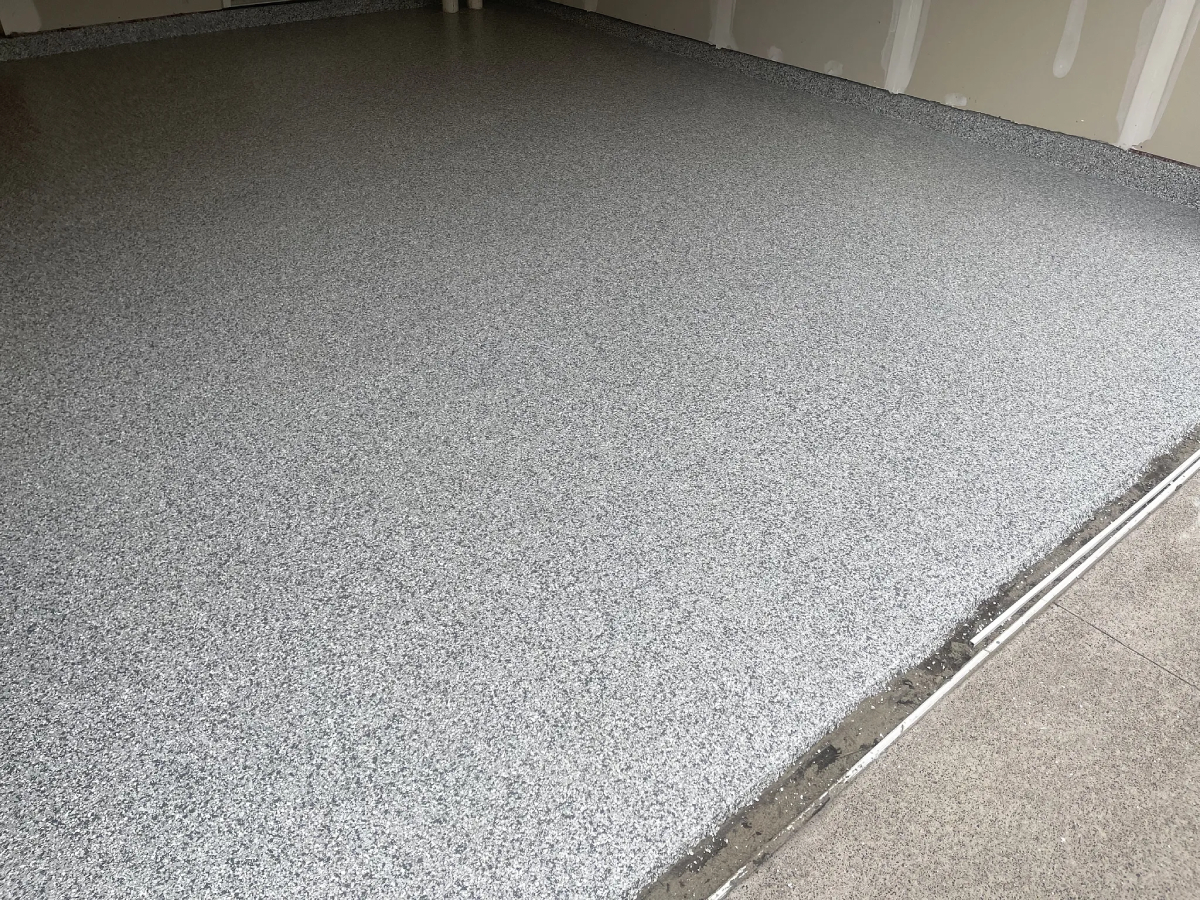
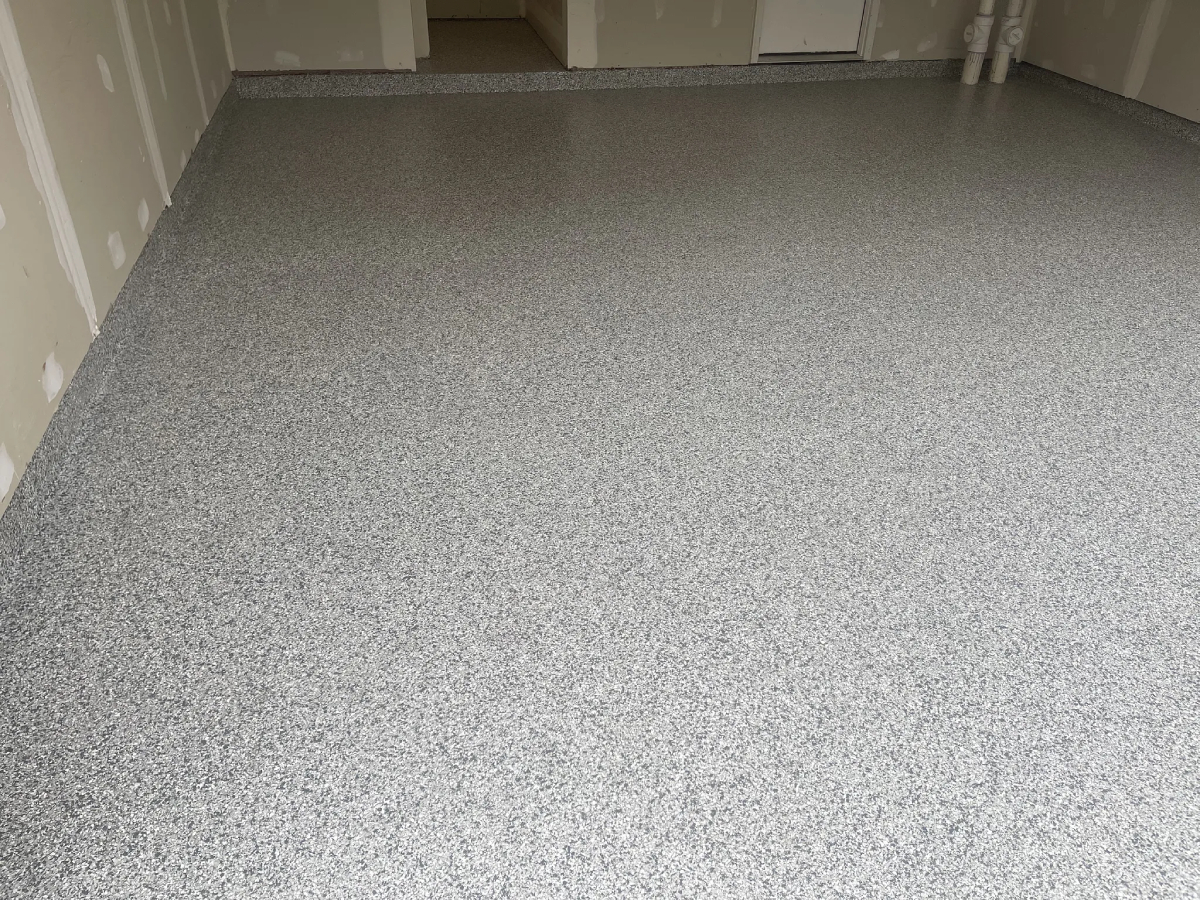
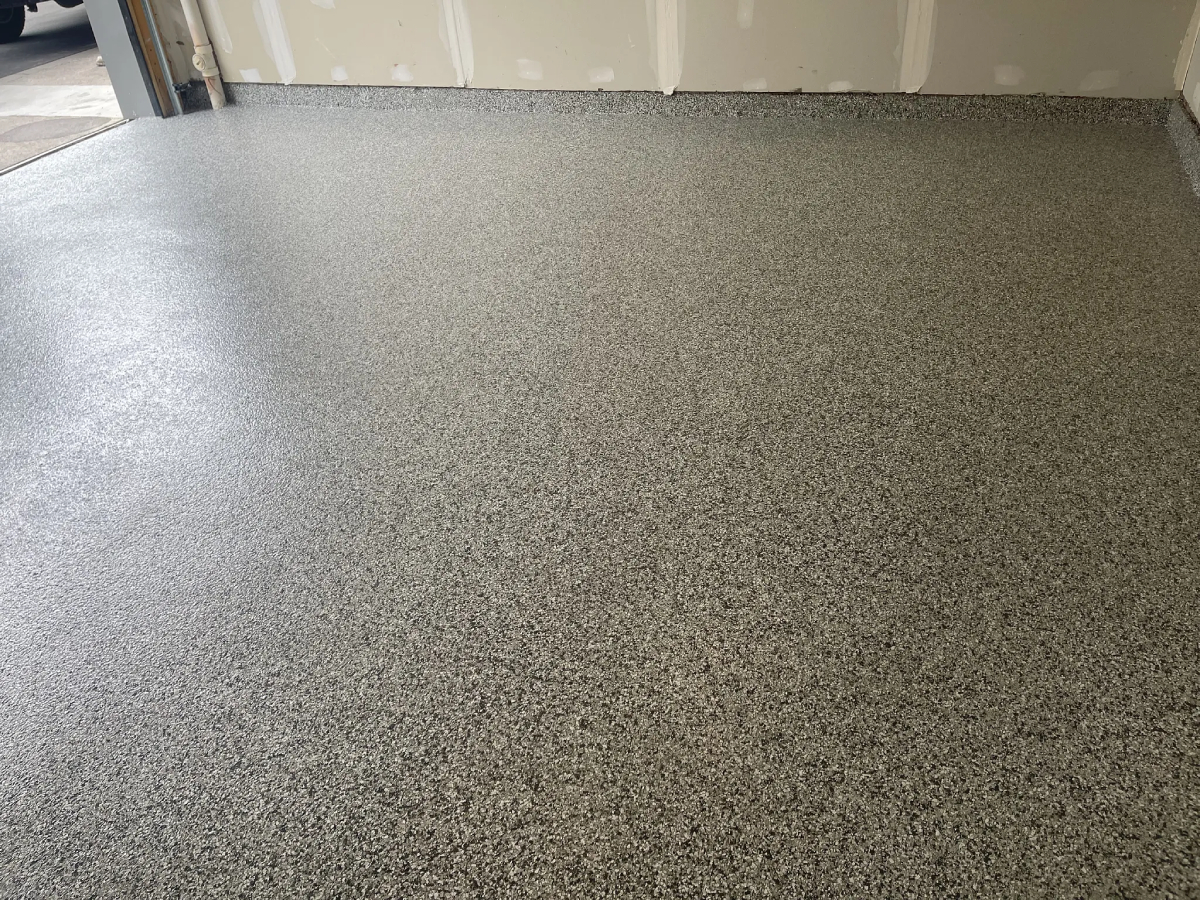
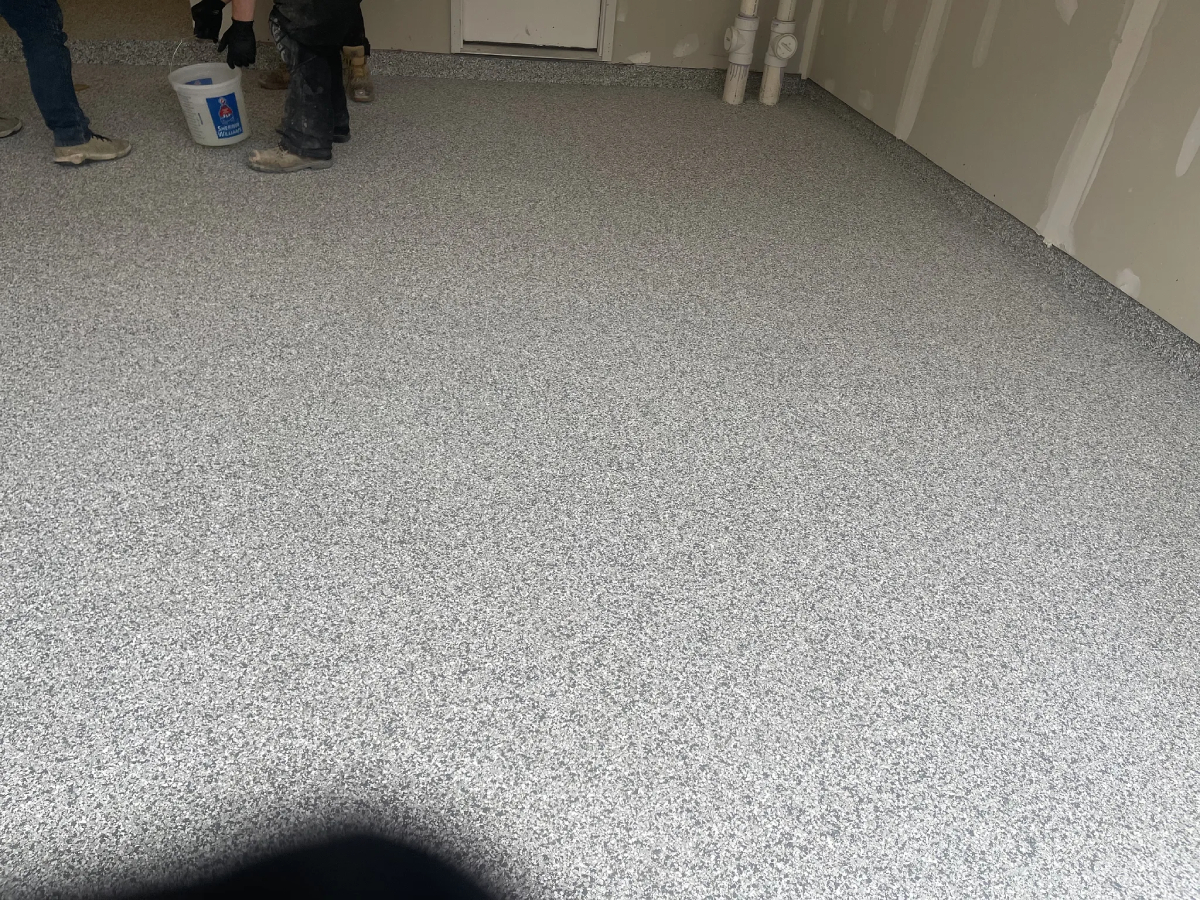
The 56 linear feet of verticals tie into the floor at every wall without gaps or breaks. The threshold repair is sealed beneath the coating. The plumbing corner has a clean coat edge around the pipe stack.
358 square feet of floor. 56 linear feet of walls. One MC-3.7 system. Slatestone throughout — ready for whatever the renovation brings next.
Testimonials
David Dunford
Vicki Tutor
What These Detroit Slabs Actually Needed: Polyurea-Polyaspartic vs. Epoxy
These four Detroit projects show exactly why we build every installation on polyurea-polyaspartic instead of epoxy. On Avery Street, oil had pooled and saturated the center of an already poorly-poured slab — our crew had to grind away the contaminated layer entirely before any coating could bond, something epoxy’s rigid film would have simply sealed over rather than fixed. On Lincoln Street, a brand-new downtown condo slab still needed full diamond grinding to strip the surface laitance that no coating, epoxy included, will ever bond to on fresh concrete. And on Woodward Avenue, a narrow, fully-enclosed condo bay with drywall on both sides and no garage door left almost no margin for error — polyurea’s fast cure and flexible base made it possible to work that confined space cleanly, where epoxy’s longer cure window would have meant days of restricted access.
Read more on why we build every Detroit installation on polyurea-polyaspartic instead of epoxy: Why Polyurea Coatings Outperform Epoxy, 7 Reasons for Epoxy Failure, and Main Benefits of Polyurea Over Epoxy.
Serving Detroit & Surrounding Communities
Beyond Detroit, we regularly install polyurea-polyaspartic garage floor coatings throughout Hamtramck, Highland Park, Dearborn, Grosse Pointe, Grosse Pointe Farms, and St. Clair Shores. Wherever your slab is — a residential garage or an enclosed condo bay — we bring the same diamond-ground prep and careful, one-day install process shown in the case studies above.
FAQ
Find answers to your technical questions about polyurea-polyaspartic garage floor coatings.
Enclosed condo garage bays in Detroit require special technique because the drywall walls leave little margin for error at the edges during grinding and coating. At the Woodward Avenue property, a long, narrow single-car bay had drywall on both sides and no garage door to work against, so our crew moved the diamond grinding equipment carefully through the full 371 square feet and worked the perimeter with control. During coating, our team rolled the base coat systematically from the far end toward the opening to keep coverage even. MotorCity Floors and Coatings holds the same preparation and coverage standard in confined bays as in any open garage.
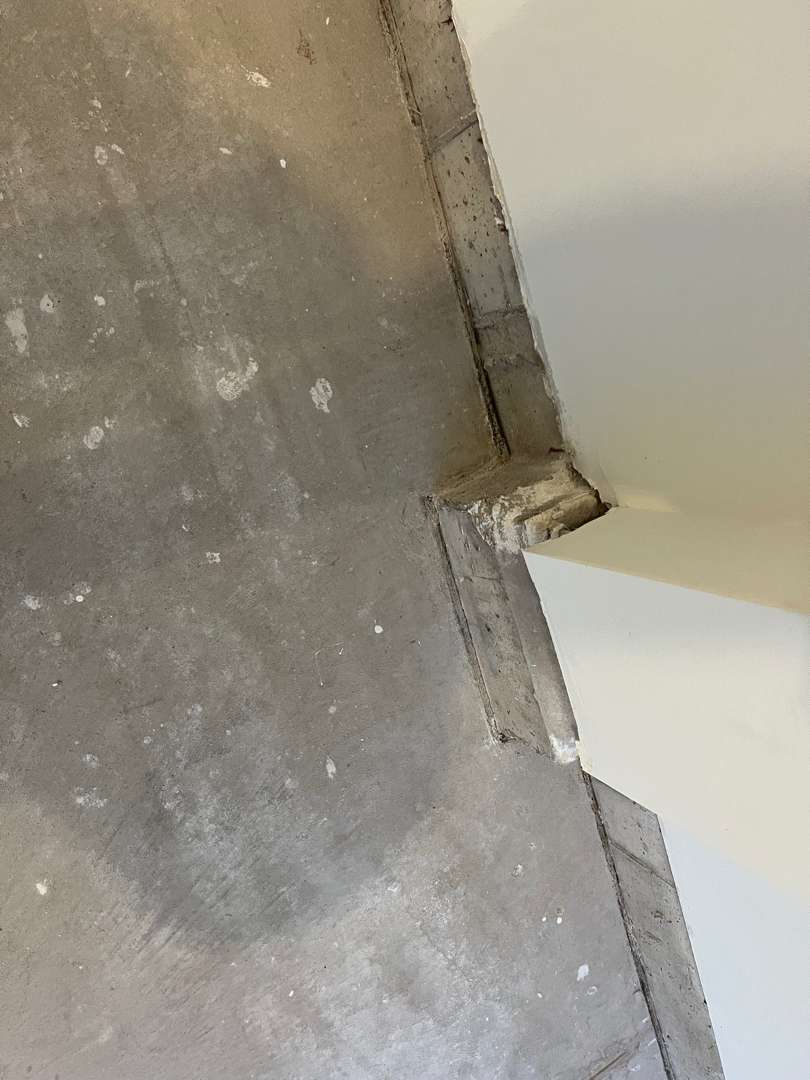
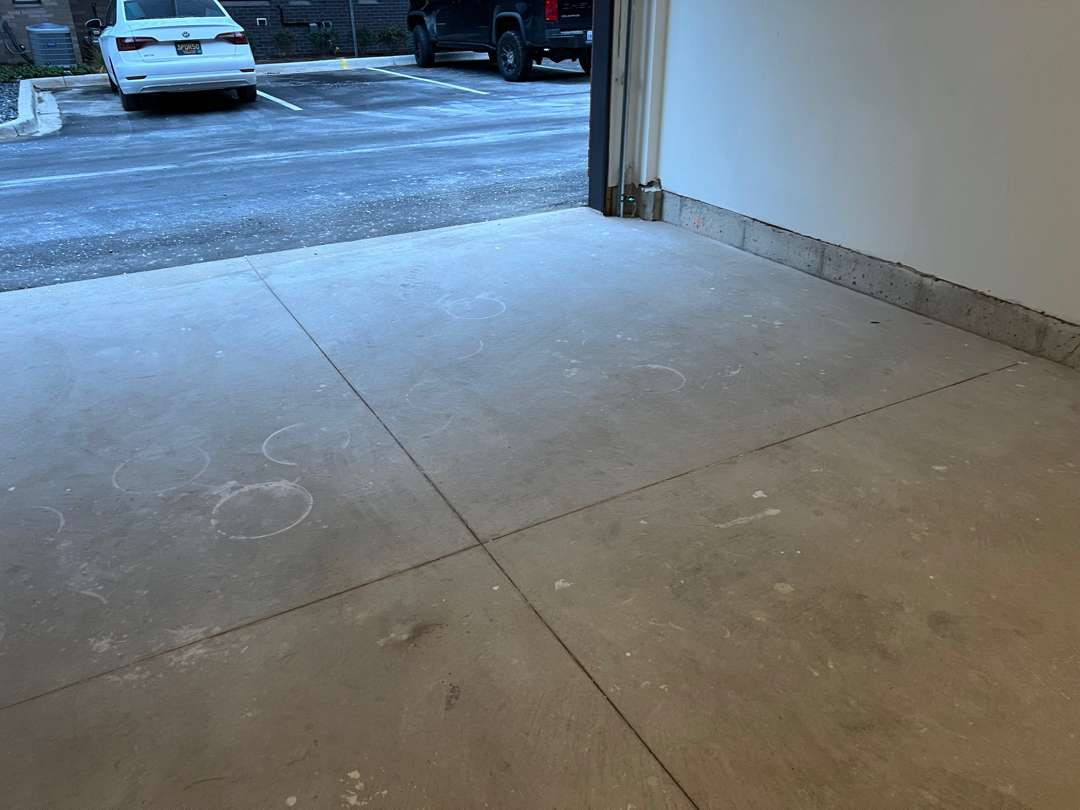
A cove base gets applied up the wall base because it carries the coating up the vertical face and seals the junction between floor and wall in one continuous finish. At the Edmund Place and Avery Street properties in Detroit, the wall bases showed moisture lines and deterioration along the full perimeter, so our crew hand-ground the vertical surfaces for mechanical adhesion, then ran the cove base 56 and 59 linear feet to seal each junction. Without a cove base, the floor-wall seam stays open to moisture and debris. MotorCity Floors and Coatings finishes the wall base with a sealed cove on every job where verticals are in scope.
A newly poured Detroit garage slab still needs diamond grinding because fresh concrete carries a surface laitance layer that no coating will bond to until it is mechanically opened. At the Lincoln Street property, part of a new downtown condo development, the slab had no oil or prior coating, yet our crew still ground the full 500 square feet to profile the surface and expose a single crack that had formed at the center control joint during curing. New construction is not a shortcut past preparation. MotorCity Floors and Coatings grinds and profiles every slab, new or old, before the polyurea-polyaspartic system goes down.
Oil-saturated concrete gets removed by diamond grinding because coating applied over contaminated concrete cannot bond and will fail at the surface. At the Avery Street property in Detroit, oil had pooled and saturated the center of the slab on a floor already damaged by a poor original pour, so our crew ran the grinder across the full surface to cut away the oil-saturated layer and open clean concrete underneath. The grind also revealed the full crack network and pitting for repair. MotorCity Floors and Coatings grinds oil-saturated zones back to sound concrete before any repair or coating begins.
The MotorCity Advantage
MotorCity Floors and Coatings specializes in professional-grade polyurea-polyaspartic systems. These dual-coating systems are replacing epoxy products constrained by older chemistry. Our systems deliver strong chemical resistance, superior durability, greater flexibility, shorter cure times, and proven UV stability that maintains color for decades. We back every installation with an industry-leading warranty.
Each project includes thorough diamond grinding preparation, flexible polyurea crack repair, and careful application to ensure consistent coverage across the full slab. In confined enclosed garages — where the walls leave little margin for error at the perimeter — our crew works systematically from the far end toward the opening, applying base coat, flake broadcast, and topcoat in careful, overlapping passes. The same standard of preparation and coverage applies regardless of the space constraints.